January 23 in Art History
6 real events recorded on January 23, the earliest from 1775. 2 artists were born , 1 died on this date.
Born on this day 2
- 1775 Born
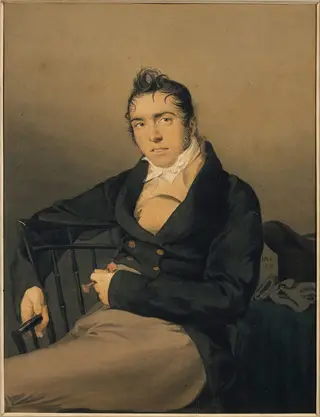
Born this day: John Rubens Smith
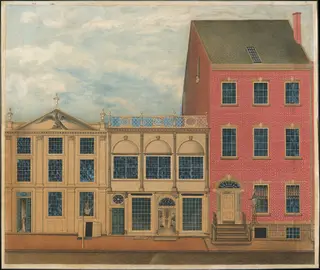
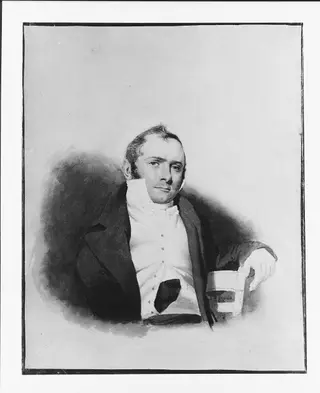
John Rubens Smith, born on January 23, 1775, was a London-born painter, printmaker, and art instructor who worked in the United States, creating notable works such as portraits and cityscapes. His art reflects his experience in both England and America.
John Rubens Smith's work remains a significant part of American art history, bridging British and American artistic traditions.
- 1832 Born
Born this day: Edouard Manet
Edouard Manet, a French painter, was born on January 23, 1832. He is known for his contributions to French Realism and Impressionism, characterized by dark backgrounds, sharp light, and rough brushstrokes. His work often featured everyday life and Spanish influences.
Manet's innovative style and techniques paved the way for future art movements, leaving a lasting impact on the development of modern art.
Died on this day 1
- 1947 Died
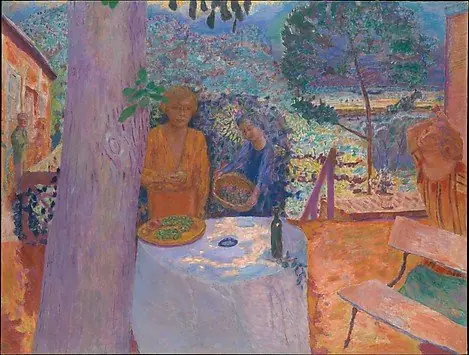
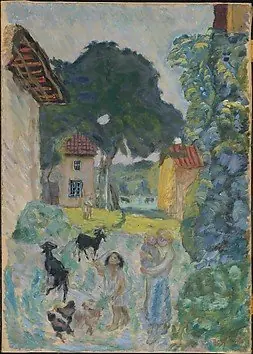
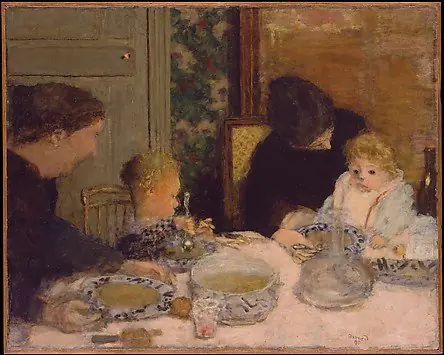
Died this day: Pierre Bonnard
Pierre Bonnard, a French painter and printmaker, was known for his stylized and decorative paintings with bold use of color. As a founding member of Les Nabis, his work transitioned from Impressionism to Modernism, influenced by Gauguin and Japanese artists. He painted various scenes, prioritizing backgrounds and colors over subjects.
Bonnard's innovative style and contribution to the development of Modernism continue to influence artists today.
Exhibitions & salons 3
- 1984 Exhibition
The Precious Legacy opens in Miami Beach
The U.S. tour of The Precious Legacy: Judaic Treasures from the Czechoslovak State Collections opened at the Bass Museum in Miami Beach after its record-setting Smithsonian presentation. The exhibition gathered ritual objects, textiles, silver, pottery, drawings, portraits, and Holocaust-era material from the State Jewish Museum in Prague, much of it originally seized from Jewish communities in Bohemia and Moravia. Its Miami stop, running from January 23 to March 18, was part of a Smithsonian-organized tour that brought rarely seen Judaica to North American museum audiences. The show mattered not only as decorative-art and ethnographic history, but also as a Cold War-era revelation of a preserved Jewish material culture that had survived Nazi confiscation and Communist-era isolation.
The tour helped make Prague's Jewish Museum and surviving Judaica collections internationally visible.
- 1997 Exhibition
Projects 57 pairs Lee Bul and Chie Matsui
The Museum of Modern Art opened Projects 57: Bul Lee, Chie Matsui, a two-person installation exhibition running from January 23 to March 25. The MoMA catalogue framed installation as a major avant-garde practice in Korea and Japan and emphasized how women artists used the medium to challenge institutional and social boundaries. Lee Bul and Chie Matsui brought different East Asian installation vocabularies into MoMA's Projects series, which was designed for experimental and emerging contemporary practices. The exhibition is significant because it placed Korean and Japanese installation art, and specifically the work of women artists, inside a major New York modern-art institution before either artist had the broad international museum profile they later gained.
The exhibition helped position Lee Bul and Chie Matsui within an international contemporary-art discourse on installation, gender, and postwar Asian avant-gardes.
- 2019 Exhibition
Lucio Fontana retrospective opens at the Met Breuer
Lucio Fontana: On the Threshold opened at the Met Breuer and the Metropolitan Museum of Art Fifth Avenue, running from January 23 to April 14 before traveling to Guggenheim Bilbao. The exhibition was the first major American retrospective of Fontana after his death, reconsidering him not only through the famous slashed and punctured Concetto spaziale canvases, but also through ceramics, sculpture, environments, and spatial experiments. Curated around Fontana's lifelong attempt to move beyond the flat picture plane, the show reframed Spatialism as an interdisciplinary response to architecture, technology, light, and postwar ideas of space. Its placement at the Met Breuer also mattered as one of the museum's late major modern-art projects in Marcel Breuer's building.
The retrospective broadened U.S. understanding of Fontana beyond the cut canvas and reasserted Spatialism's place in postwar art.