Artwork
Shop and Warehouse of Duncan Phyfe, 168–172 Fulton Street, New York City
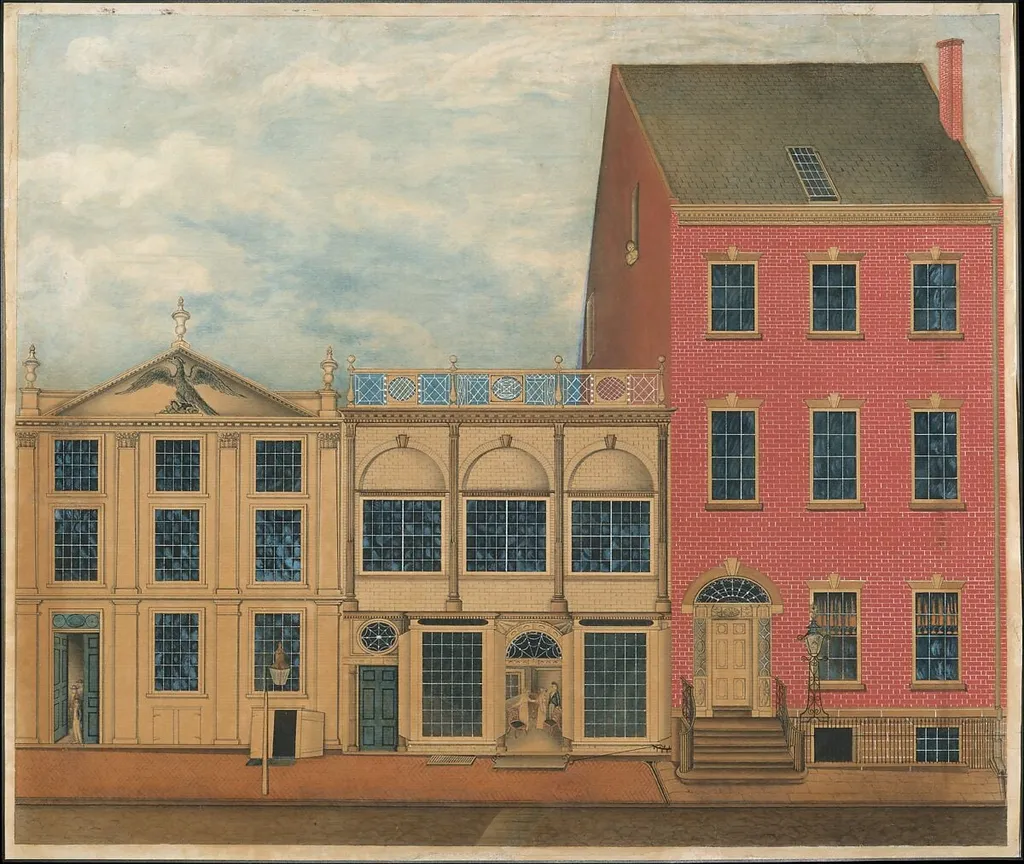
Shop and Warehouse of Duncan Phyfe, 168–172 Fulton Street, New York City is a watercolor work on paper by the American Folk Art artist John Rubens Smith. It dates from 1818 and is held in the collection of the Metropolitan Museum of Art.
About this work
This watercolor shows a busy street in 1817 New York. Wooden crates and barrels fill the warehouse doors along Fulton Street. A man in a top hat walks past, carrying a long stick.
The artist, John Rubens Smith, painted it while visiting New York. He wasn’t a New Yorker but captured the city’s early growth in bright, quick strokes.
Want to see more early New York? Check out the Met’s collection.
Technique & Style
The combination of ink with watercolor and gouache supports both crisp architectural delineation and tonal modeling of the building's facade and surroundings.
The work is executed in watercolor, ink, and gouache on white laid paper, a mixed-media combination that allowed the artist to combine fine linear detail with broader washes of color. Classified as a cityscape, it depicts the house, shop, and warehouse of Duncan Phyfe at 168–172 Fulton Street in New York City.
Measuring 40.3 cm in height by 49.8 cm in width, the composition is rendered in a horizontal format suited to the architectural subject. The combination of ink with watercolor and gouache supports both crisp architectural delineation and tonal modeling of the building's facade and surroundings.
History & Provenance
The watercolor, ink, and gouache on white laid paper was created in 1816 by John Rubens Smith, who depicted the shop and warehouse of the cabinetmaker Duncan Phyfe at 168–172 Fulton Street in New York City. The work is now held in the collection of the Metropolitan Museum of Art, classified within The American Wing as a cityscape. One source notes that the painting has been formerly attributed to John Rubens Smith, indicating a revised attribution history.
The piece measures 40.3 cm in height by 49.8 cm in width and depicts a house, shop, and warehouse. No further details about its commission, intermediate ownership, or acquisition by the Metropolitan Museum of Art are documented in the available sources.
The watercolor depicting Duncan Phyfe's shop and warehouse is held in the collection of the Metropolitan Museum of Art, specifically within its American Wing. Created in 1816, the work measures 40.3 by 49.8 centimeters. While the piece was formerly attributed to John Rubens Smith, current records reflect this historical attribution rather than a definitive current consensus.
The provided sources do not contain specific inventory accession numbers or a record of past exhibitions for this object.
Overview
John Rubens Smith, a London‑born artist who worked in the United States, produced a watercolor, ink, and gouache rendering in 1818 of the Duncan Phyfe shop and warehouse at 168–172 Fulton Street, New York City. Executed on white laid paper, the image records a bustling early‑19th‑century street scene and is catalogued within the museum’s American Wing.
Subject & Meaning
The composition presents a narrow urban thoroughfare lined with a residential house, a commercial shop, and a warehouse whose doors are filled with wooden crates and barrels. A solitary figure in a top hat, carrying a staff, walks past, suggesting the everyday activity of a growing port city.
Context
The scene reflects New York’s expansion in the years following the War of 1812, when waterfront streets like Fulton Street became hubs for trade and manufacturing. Duncan Phyfe, a prominent furniture maker, operated his shop and warehouse there, linking the image to the city’s emerging consumer culture.
Artist & collection

Artist
John Rubens Smith (January 23, 1775 – August 21, 1849) was a London-born painter, printmaker and art instructor who worked in the United States.

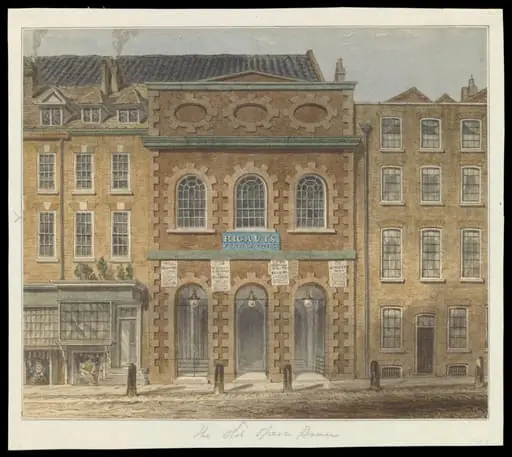
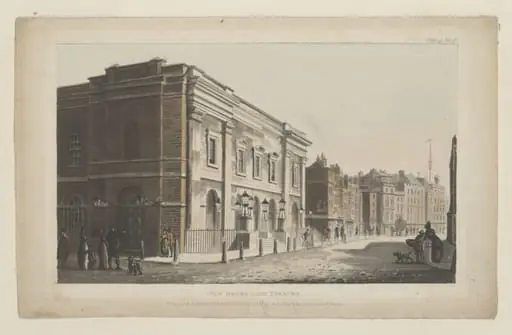
- The Italian Opera House, Haymarket, prior to the fire of June 1789
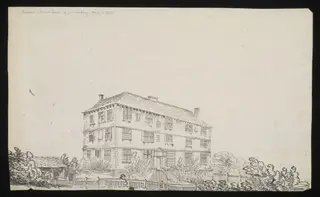 Residence of Richard Dann, Esq., at Hackney
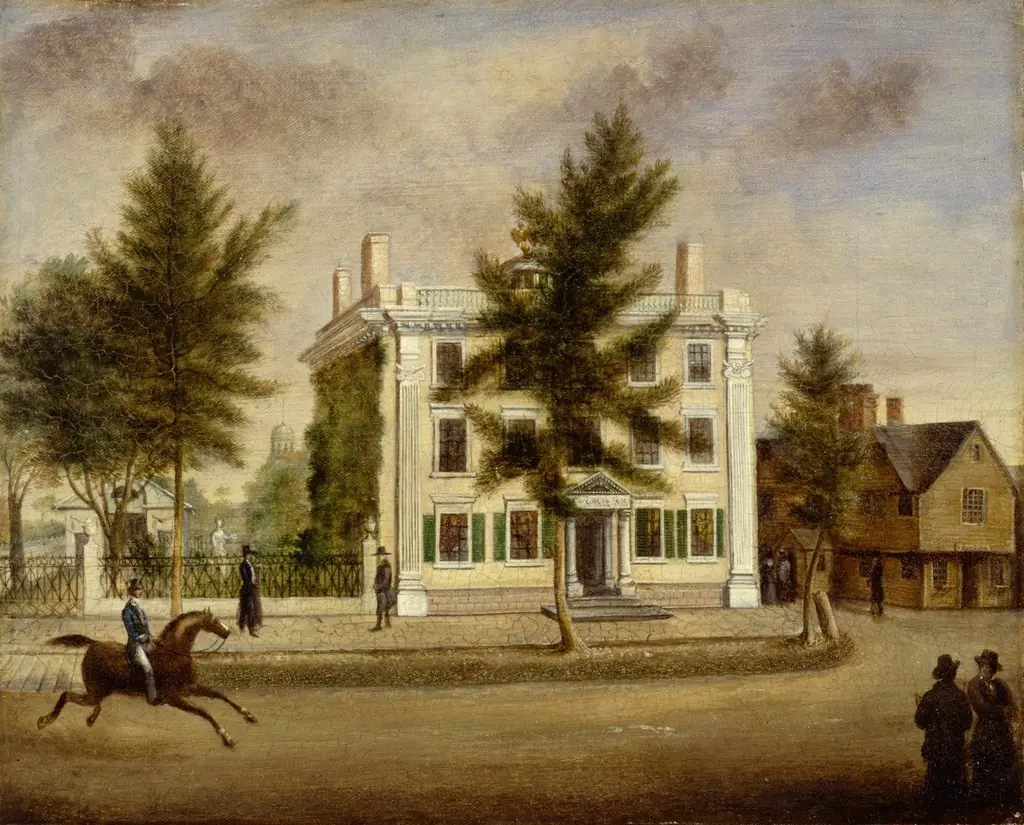 Pickman-Derby House, 70 Washington Street, Salem, Massachusetts
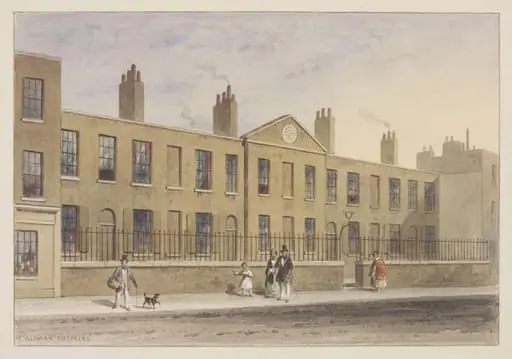 Untitled
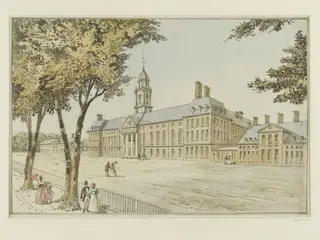 Chelsea Hospital
 H Beard Print Collection
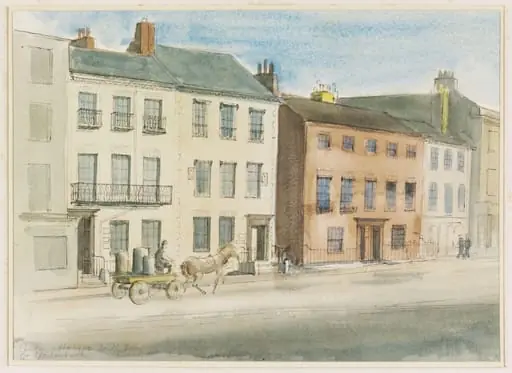 18th Century Houses, South Quay, Great Yarmouth
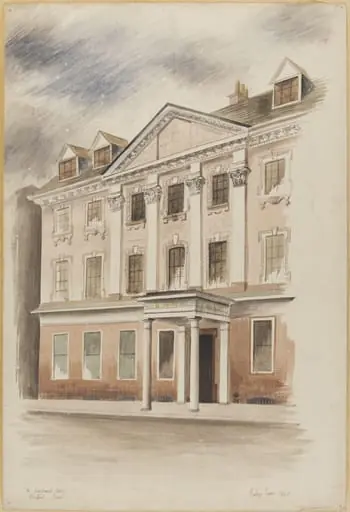 The Greyhound Hotel, Blandford
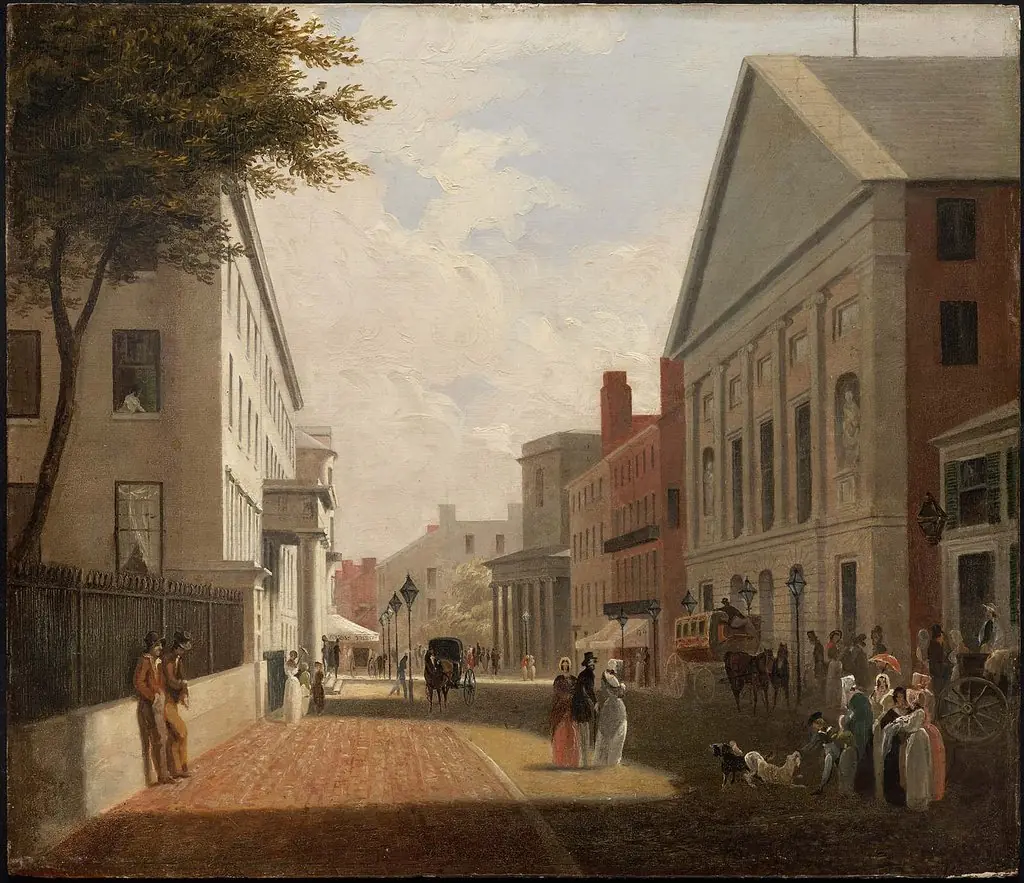 Tremont Street, Boston
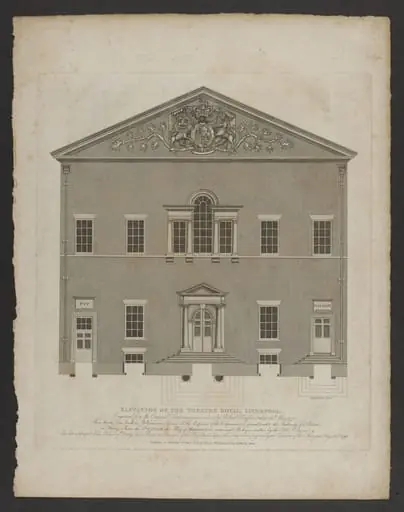 Harry Beard Print Collection
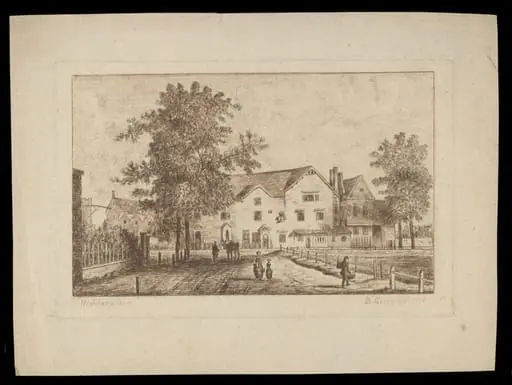 H Beard Print Collection
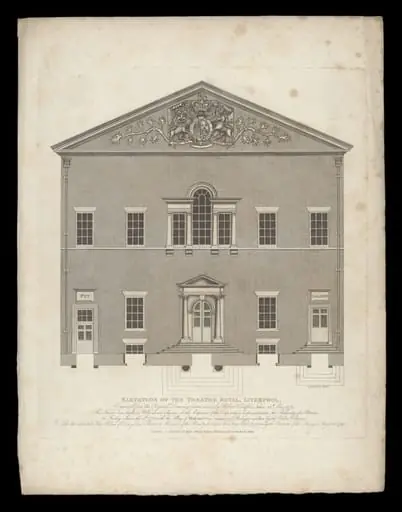 H Beard Print Collection