Historic House
Bowood House

Image: Wikimedia Commons.
Bowood House is a historic house in Derry Hill & Studley, United Kingdom.
About Bowood House
Bowood is a Grade I listed Georgian country house in Wiltshire, England, that has been owned for more than 250 years by the Fitzmaurice family. The house, with interiors by Robert Adam, stands in extensive grounds which include a garden designed by Lancelot "Capability" Brown. It is adjacent to the village of Derry Hill, halfway between Calne and Chippenham. The greater part of the house was demolished in 1956.
Since 1754 the estate has been the seat of the Earls of Shelburne, created Marquess of Lansdowne in 1784. The ninth and present Marquess is Charles Petty-Fitzmaurice. Notable guests have included Founding Father Benjamin Franklin and Mirabeau, an early leader of the French Revolution, among others.
Plan your visit
Bowood House
- Website
- www.bowood.org
Overview
Bowood House is a Grade I listed Georgian country house in Wiltshire, England, adjacent to the village of Derry Hill and situated roughly halfway between the towns of Calne and Chippenham. The estate has served as the seat of the Earls of Shelburne, later Marquesses of Lansdowne, since 1754, and remains in the ownership of the Fitzmaurice family after more than 250 years. Though the greater part of the house was demolished in 1956, the surviving wing retains interiors by Robert Adam and stands within extensive grounds designed by Lancelot "Capability" Brown. The house holds particular significance in the history of science as the site where Joseph Priestley isolated oxygen in 1774, an achievement recognized in 2000 when Bowood was designated an ACS National Historic Chemical Landmark.
Founding & history
The first house at Bowood was built around 1725 by Sir Orlando Bridgeman, 2nd Baronet, on the site of a hunting精诚hunting lodge that had been granted to his grandfather by Charles II. Bridgeman's financial difficulties led to a Chancery decree in 1739, through which the property passed to his principal creditor, Richard Long. In 1754, Long sold Bowood to John Petty, 1st Earl of Shelburne, who commissioned architect Henry Keene to extend the house. The estate's political prominence rose with William Petty, 2nd Earl of Shelburne, who served as Prime Minister from 1782 to 1783 and was created Marquess of Lansdowne in 1784 to negotiate peace with America after the War of Independence. He amassed significant collections of paintings and classical sculpture at Bowood and at Lansdowne House in London, and engaged Robert Adam to decorate the grander rooms, add an orangery, and build a mausoleum for the first earl. Adam also commissioned Benjamin Carter to sculpt chimney-pieces. In the 1770s, the two parts of the house, known as the "Big House" and the "Little House," were joined by an enormous drawing room. During World War I, the 5th Marchioness established an auxiliary Red Cross hospital in the orangery. In World War II, the Big House was first occupied by a school, then by the Royal Air Force. Left empty afterwards, it became so dilapidated by 1955 that the 8th Marquess demolished it, employing architect F. Sortain Samuels to convert the Little House into a more comfortable residence. The mausoleum was designated Grade I listed in 1960, and the remaining parts of the main house received the same status in 1972.
Collection scope
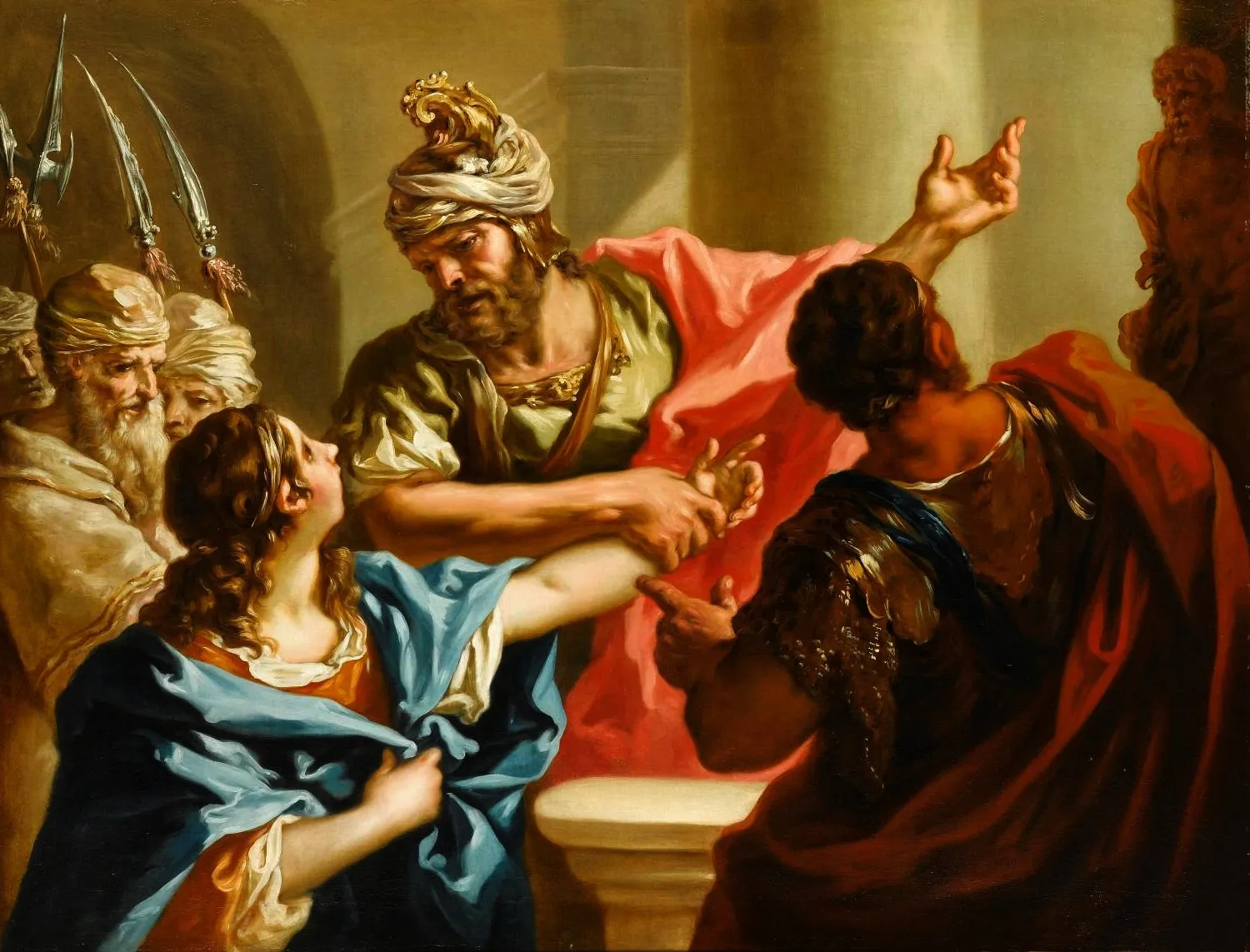
The collections at Bowood were shaped by the connoisseurship of William Petty, 2nd Earl of Shelburne and 1st Marquess of Lansdowne, who furnished the house with superb collections of paintings and classical sculpture. The French Wikipedia source indicates that the Marquess of Lansdowne also acquired works by Gilbert Stuart Newton, including two paintings inspired by The Beggar's Opera: The Captain Macheath reprimanded by Polly and Lucy (1826) and Polly Peachum, as well as The Vicar of Wakefield reconciling his wife with Olivia (1828), after Oliver Goldsmith's novel. The surviving wing of the house continues to display rooms, paintings, and sculpture to the public.
Notable holdings
Among the most significant features preserved at Bowood is the laboratory of Joseph Priestley, where he discovered oxygen on 1 August 1774. The house also retains its Adam interiors, including chimney-pieces sculpted by Benjamin Carter. The orangery, added by Robert Adam, survived the 1956 demolition and had previously served as a Red Cross hospital during World War I. Before the demolition of the Big House, the Adam dining room was auctioned and purchased by Lloyd's of London insurance market, which reinstalled it as the Committee Room in its 1958 building; the room was subsequently moved to the 11th floor of Lloyd's current building on Lime Street in 1986. A portico from the house was re-erected at Roath Court, Cardiff. The mausoleum built by Adam for the first earl remains on the estate and was designated Grade I listed in 1960.
Building & site
Bowood House stands in grounds laid out over 2,000 acres in the 1760s by Lancelot "Capability" Brown, replacing an earlier formal garden of avenues and wildernesses. Brown's design features a sinuous lake nearly one kilometer long, with lawns sloping gently from the house and drifts of mature trees. The lake was formed at the sacrifice of Manning's Hill village, whose cottages and stone walls were rediscovered by divers in 2007 beneath shallow, heavily sedimented water. Brown also planted an arboretum of rare trees in the Pleasure Grounds behind Warren Garden, later expanded with a pinetum in the mid-19th century. The Doric Temple folly, originally placed by Brown in the Pleasure Grounds, was moved to its present position beside the lake. In the 1780s, Charles Hamilton, with artisan stonemason specialized in Josiah Lane, added a cascade, grottoes, and a hermit's cave to the lakeside. The Italianate terrace gardens on the south front were commissioned by the 3rd Marquess: the Upper Terrace by Sir Robert Smirke was completed in 1818, and the Lower Terrace by George Kennedy was added in 1851, originally planted with intricate designs of hundreds of thousands of annuals. In 1987, the formal garden, pleasure ground, park, and woodland were listed as Grade I on the Register of Historic Parks and separately, a golf course was laid out towards the west in the late 1990s and a hotel opened nearby on the Home Farm site in 2009.
Visiting
Bowood House is located in Derry Hill, between Calne and Chippenham in Wiltshire, England. The front wing of the surviving house is open to the public, with rooms, paintings, and sculpture on display. The estate is owned by the Fitzmaurice family, and the ninth and present Marquess of Lansdowne is Charles Petty-Fitzmaurice. The grounds include an adventure playground for children aged 12 and under, a large waterfall, and extensive gardens incorporating two miles of rhododendron walks in May and June, and carpets of daffodils, narcissi, and bluebells in spring. The house can be visited through its official website at www.bowood.org.
Museums near Bowood House
- Art Museum Ashmolean Museum Oxford, United Kingdom
- Art Museum Southampton City Art Gallery Southampton, United Kingdom
- Art Museum Compton Verney Art Gallery Compton Verney, United Kingdom
- Art Museum Victoria and Albert Museum Royal Borough of Kensington and Chelsea, United Kingdom
- Art Museum Schorr Collection City of Westminster, United Kingdom
- Gallery Matthiesen Gallery London, United Kingdom