Castle
Castle Church, Wittenberg

Image: Wikimedia Commons.
Castle Church, Wittenberg is a castle in Lutherstadt Wittenberg, Germany.
About Castle Church, Wittenberg
All Saints' Church, commonly referred to as Schlosskirche (Castle Church) to distinguish it from the Stadtkirche (Town Church) of St. Mary's, sometimes known as the Reformation Memorial Church, is a Lutheran church in Wittenberg, Saxony-Anhalt, Germany. It is the site where, according to Philip Melanchthon, the Ninety-five Theses were posted by Martin Luther in 1517, launching the beginning of the Protestant Reformation.
Beginning in 1883, the church was restored as a memorial site and re-inaugurated on 31 October 1892, 375 years after Luther's posting.
Castle Church, Wittenberg by the numbers
- Founded
- 1346
Plan your visit
Castle Church, Wittenberg
Overview
The Castle Church, known in German as the Schlosskirche and formally as All Saints' Church (Allerheiligenkirche), is a Lutheran church in Lutherstadt Wittenberg, Saxony-Anhalt, Germany. Dedicated to All Saints' Day, the church stands at the western edge of the old town, physically connected to Wittenberg Castle as its northern wing. Its founding dates to 1346, though the present structure largely derives from a late 15th-century rebuilding. The church holds exceptional significance as the site where, according to Philip Melanchthon, Martin Luther posted his Ninety-five Theses on 31 October 1517, an act traditionally regarded as sparking the Protestant Reformation. Inscribed on the UNESCO World Heritage List in 1996 as part of the Luther Memorials in Eisleben and Wittenberg, the church remains an active place of worship, a tourist destination, and a center for academic and cultural life.
Founding & history
The earliest chapel dedicated to All Saints was erected around 1340 by Ascanian Duke Rudolf I of Saxe-Wittenberg and consecrated on 6 May 1346, placed under the direct jurisdiction of the Holy See. His successor Rudolf II endowed it with income and statutes in 1361, and in 1400 Pope Boniface IX designated it the main church of Wittenberg, subordinating the town church and the Marienkapelle on the Apollensberg to it.
In the late 15th century, Elector Frederick III the Wise of Saxony (1463-1525, elector from 1486) commissioned a complete rebuilding of the Ascanian fortress. Architect Conrad Pflüger designed a new All Saints' Church in Late Gothic style, constructed between 1490 and 1511 and consecrated on 17 January 1503. The church became part of Frederick's electoral residence, the Residenzschloss. After Frederick founded the University of Wittenberg (Leucorea) in 1502, the church was incorporated as the university chapel in 1507, evolving into an important academic and worship center where students received doctorates and Philipp Melanchthon delivered his famous inaugural address.
The church's fate became intertwined with the Reformation. On 31 October 1517, the eve of All Saints' Day, Martin Luther reportedly posted his Ninety-five Theses on the main portal to promote academic disputation on indulgences. Though the historicity of this specific act remains debated, Luther did send his theses to bishops that day. Frederick the Wise was buried here in 1525, the same year the Lutheran rite was introduced. Martin Luther was buried in the church in 1546, Philipp Melanchthon in 1560.
Disaster struck in 1760 during the Seven Years' War, when Imperial forces bombarded the Prussian-occupied fortress and the church burned, leaving only half the foundation and destroying the original wooden portals and much interior furnishing. Rebuilding followed, though many artworks were lost forever. Further damage came in 1814 during the Wars of Liberation. After Wittenberg passed to Prussia in 1815 and the university moved to Halle in 1817, the church was given to the newly founded Protestant Preacher's Seminary.
A pivotal 19th-century restoration began in 1883 under Prussian architect Friedrich Adler, with his disciple Paul Ferdinand Groth supervising the Neo-Gothic redesign. The church was re-inaugurated on 31 October 1892, 375 years after Luther's posting, in the presence of Kaiser Wilhelm II. The 88-meter steeple was rebuilt, and the interior received its present rib vault ceiling, pilasters, matronea, and apse. A parish was established in 1949. The church gained renewed significance from 1978 when Friedrich Schorlemmer served as preacher, becoming known for the peace movement symbol of beating swords into ploughshares. In 1983, twelve new stained glass windows by Renate Brömme were installed for the 500th anniversary of Luther's birth, commissioned by the Lutheran World Federation. A new glazed brick roof was added in 1999-2000, and general renovation occurred from 2012 to 2016.
Collection scope
The Castle Church does not function as a traditional museum with a curated art collection, but rather preserves significant historical and artistic elements within its functioning religious space. Its holdings encompass memorial and funerary art, Reformation-era artifacts, and commemorative installations that document its role in Protestant history. The church houses the town's historical archives and is home to the Riemer-Museum. The interior's Neo-Gothic design from the 1883-1892 restoration creates a unified memorial atmosphere, with the 1983 stained glass windows by Renate Brömme representing Luther's most important Reformation students from various European countries. These windows, commissioned by the Lutheran World Federation, were designed in what was described as a timeless style. The church also contains metal art monuments that survived the 1760 fire, most notably bronze funerary works, as well as paintings by Lucas Cranach the Elder and his son that are part of the interior decoration.
Notable holdings
The most celebrated feature of the Castle Church is the bronze Theses Door (Thesentür), installed in 1858 on the initiative of King Frederick William IV of Prussia to commemorate the 375th anniversary of Luther's birth. Weighing approximately one metric ton (2,200 pounds), the doors bear Luther's Ninety-five Theses inscribed in their original Latin. The ornaments were modeled by Friedrich Drake. Above the doors, a tympanum painting depicts the crucified Christ with Martin Luther on the left holding his German Bible translation, and Philipp Melanchthon on the right with the 1530 Augsburg Confession, the principal confession of faith in the Lutheran Church.
The church contains the graves of three towering Reformation figures. Elector Frederick the Wise was buried here in 1525; his bronze tomb monument by the renowned Nuremberg bronze caster Peter Vischer, created in 1527, survived the 1760 fire as one of the few metal monuments to endure. Martin Luther was interred in 1546, and Philipp Melanchthon in 1560. Their bronze grave plates occupy prominent positions within the church. Elector John the Steadfast (Johann der Standhafte) is also buried near the altar.
The 88-meter tower, rebuilt during the 1883-1892 restoration, features a mosaic band with the text "Ein feste Burg ist unser Gott, ein gute Wehr und Waffen" ("A Mighty Fortress Is Our God"), the opening lines of Luther's most famous hymn, encircling the tower. The 1983 stained glass windows by Renate Brömme portray thirteen important Reformation students of Luther from different European countries.
Building & site
The Castle Church occupies a distinctive position at the western entrance to Wittenberg's old town, forming the northern wing of the eastward-open three-wing complex of Wittenberg Castle. The church is not strictly oriented eastward; its longitudinal axis deviates approximately 14 degrees south from true east. Access is through the visitor center in the castle courtyard.
The present structure originated in the Late Gothic style between 1490 and 1511 under Conrad Pflüger, replacing the earlier Ascanian chapel. The original design featured a hall church configuration with extensive furnishings by artists including Tilman Riemenschneider, Jacopo de' Barbari, and Albrecht Dürer. The 1760 fire and subsequent rebuilding altered the exterior, with the castle tower converted to a church tower in 1770.
The 1883-1892 Neo-Gothic restoration fundamentally reshaped the interior, introducing the present rib vault ceiling, pilasters, matronea, and apse. The 88-meter steeple, rebuilt at this time, is topped with a copper-green patinated dome. The tower offers views over Wittenberg and the surrounding countryside. The 1999-2000 restoration added a colorful glazed tile roof matching the 1892 appearance. The church's physical integration with the castle complex reflects its dual role as both electoral chapel and university church, situated at the nexus of princely power and academic life in early modern Wittenberg.
Visiting
The Castle Church is located in Lutherstadt Wittenberg, Saxony-Anhalt, Germany, at the end of Schlossstraße extending from the market square. The church is accessible through the visitor center in the castle courtyard. Its official website is http://www.schlosskirche-wittenberg.de/.
As a UNESCO World Heritage Site since 1996, the church functions as both an active Lutheran parish and a major tourist attraction. It serves as a training church for the Protestant Seminary for Preachers (Evangelisches Predigerseminar), continuing its centuries-old connection to theological education. Together with the Castle Church congregation and supported by the Evangelical Wittenberg Foundation, it maintains a multifaceted parish and cultural life.
The surrounding castle complex has been renovated to create a new center for science, culture, education, and church life, housing the Research Library for Reformation Studies, the Protestant Seminary for Preachers, the Christian Art Foundation, and the Castle Church Visitor Centre. The church also accommodates a youth hostel and the municipal historical archives. The comprehensive renovation completed in 2016, marking the 500th anniversary of the Reformation, modernized facilities while preserving the church's historical character. Visitors are drawn particularly to the Theses Door, the graves of Luther and Melanchthon, and the tower with its panoramic views.
Museums near Castle Church, Wittenberg
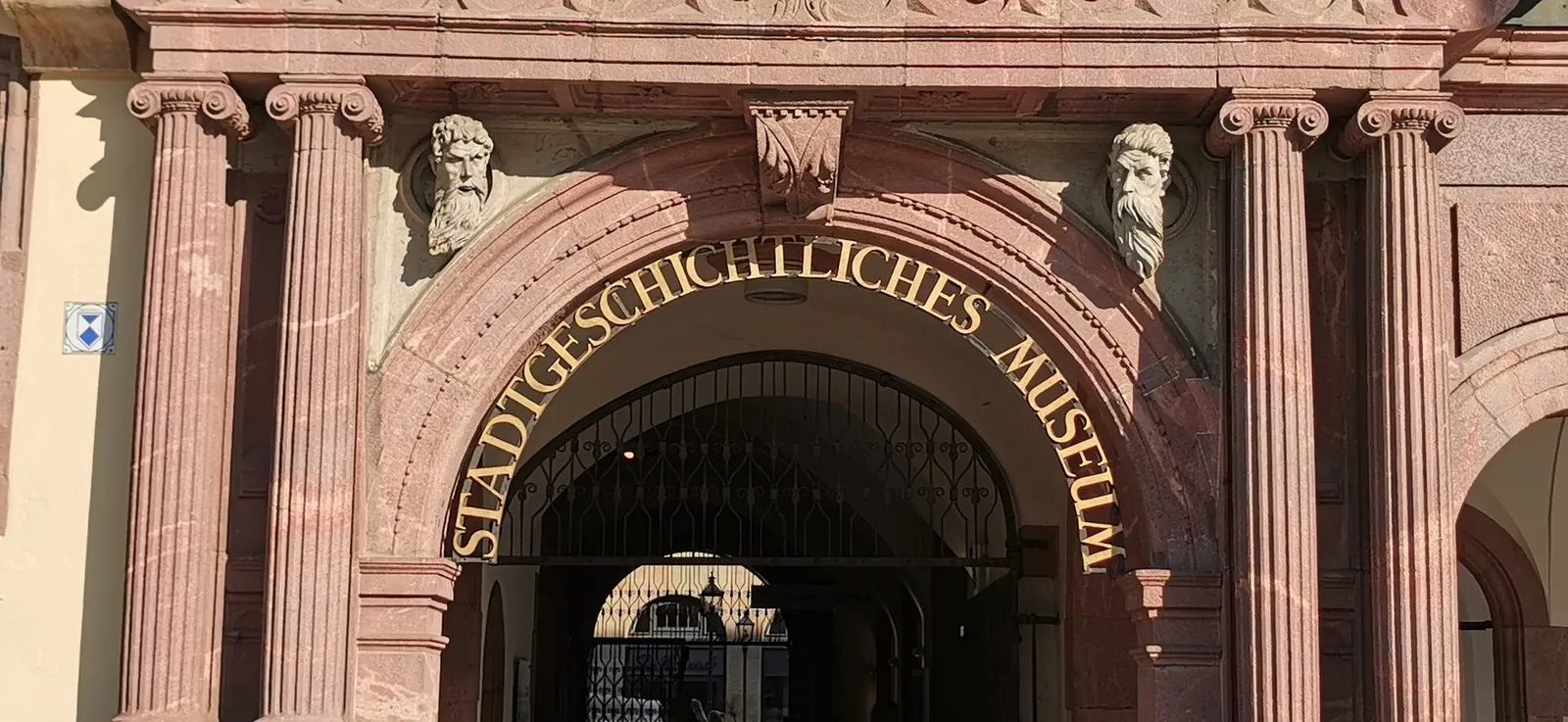
- Museum of City History Leipzig Leipzig, Germany
- Collection Impressionism: The Hasso Plattner Collection Potsdam, Germany
- Allied Museum Steglitz-Zehlendorf, Germany
- Botanic Garden and Botanical Museum Berlin Steglitz-Zehlendorf, Germany
- Art Museum Gemäldegalerie Berlin Bezirk Mitte, Germany
- Art Museum Bode Museum Bezirk Mitte, Germany