Museum
Corsham Court

Image: Wikimedia Commons.
Corsham Court is a museum in Corsham, United Kingdom.
About Corsham Court
Corsham Court is a 16th-century country house in a park designed by Capability Brown. It is in the town of Corsham, 3 miles (5 km) west of Chippenham, Wiltshire, and is notable for its fine art collection, based on the nucleus of paintings inherited in 1757 by Paul Methuen from his uncle, Sir Paul Methuen, the diplomat. The house is Grade I listed and is the home of the present Baron Methuen, James Methuen-Campbell, the eighth generation of the Methuens to live there.
Plan your visit
Corsham Court
- Website
- corsham-court.co.uk
Overview
Corsham Court is a historic country house located in the town of Corsham, Wiltshire, approximately three miles west of Chippenham. The estate is renowned for its significant fine art collection, which originated from a nucleus of paintings inherited by Paul Methuen from his diplomat uncle, Sir Paul Methuen, in 1757. The property features a park designed by Lancelot Capability Brown and stands as a Grade I listed building. It remains the private residence of the Methuen family, currently home to James Methuen-Campbell, the eighth Baron Methuen.
Founding & history
The manor of Corsham has ancient royal origins, reputedly serving as a seat of the Saxon king Ethelred the Unready. Following the Norman Conquest, it remained within the royal family and frequently formed part of the dower of English queens during the late fourteenth and early fifteenth centuries, becoming known as Corsham Reginae. In the sixteenth century, the manor belonged to two of Henry VIII's wives, Catherine of Aragon until 1536 and Katherine Parr until 1548. Under Elizabeth I, the estate left the royal family, and the present house was built in 1582 by Thomas Smythe. Sir Paul Methuen purchased the property in 1745 for his cousin, also named Paul Methuen. The Methuen family has owned the house ever since, with the grandson of the initial purchaser becoming the first Baron Methuen.
Collection scope
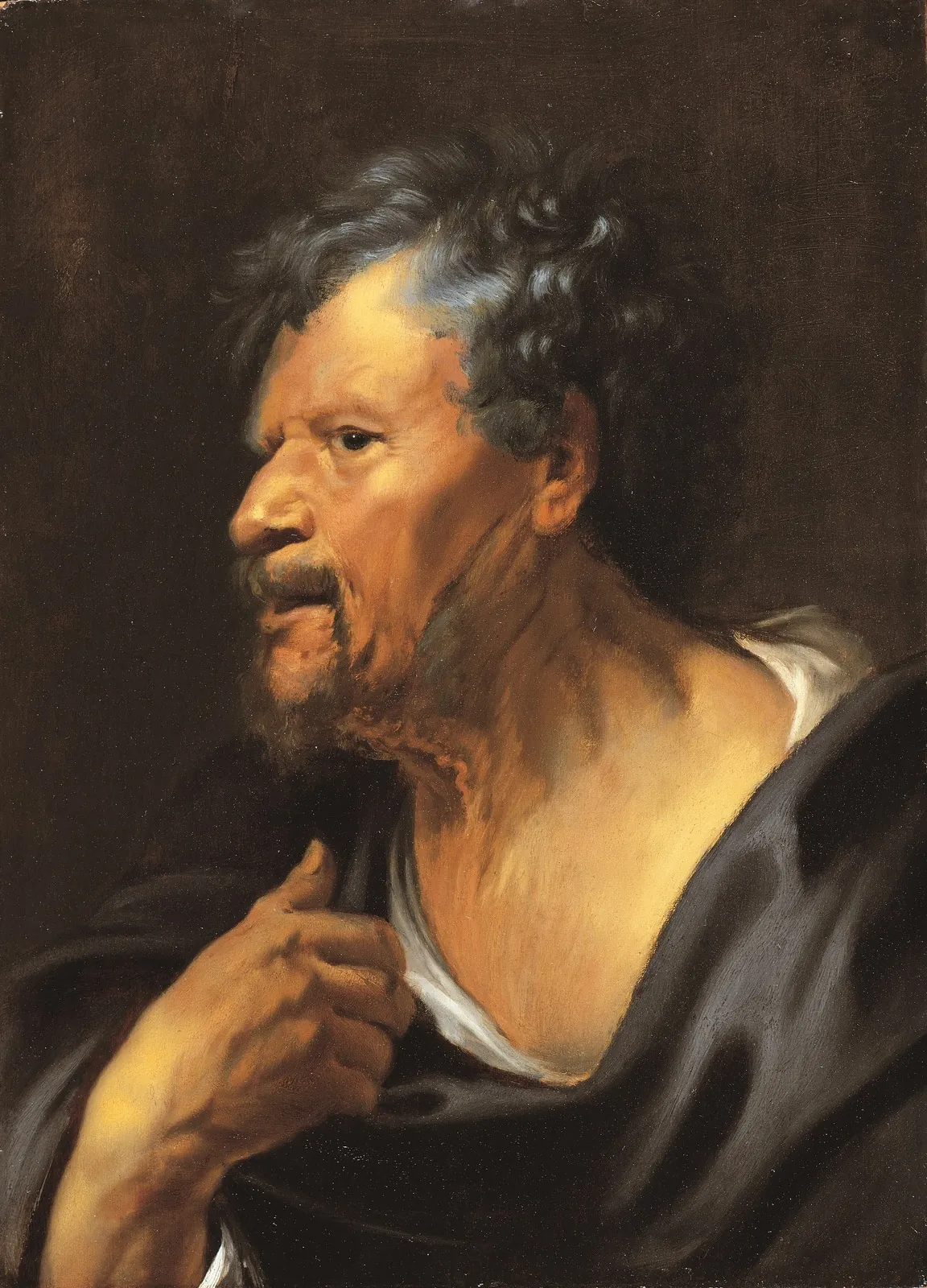
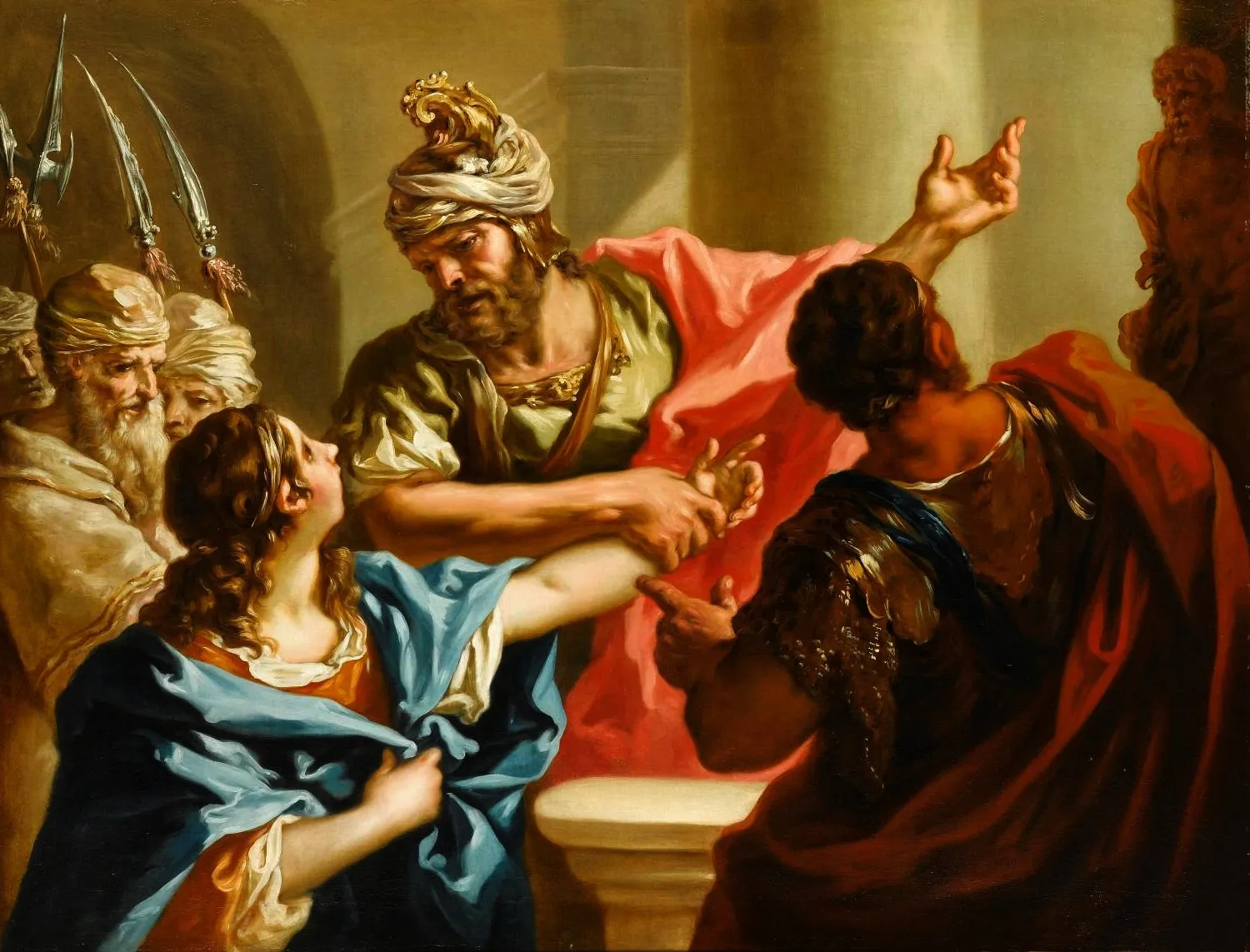
The art collection at Corsham Court is regarded as one of the most important in Great Britain. Its core consists of the Old Master paintings inherited from Sir Paul Methuen in 1757. The collection was significantly expanded in the mid-nineteenth century when the private art collection of the Reverend John Sanford was added to the gallery. Sanford's collection entered the house through his relative, who married a Methuen heir in 1844. The holdings encompass Italian Old Masters, with works by artists such as Lippi, Salvatore Rosa, and Romney, alongside pieces by Reynolds, Rubens, and Van Dyck. The interiors also house notable furniture, including a marquetry commode and matching candlestands by John Cobb from 1772, four pier glasses designed by Robert Adam in 1770, and a large library table associated with a payment to Thomas Chippendale's partner Haig in 1779.
Notable holdings
The painting collection features works by prominent masters including Anthony van Dyck, Peter Paul Rubens, Joshua Reynolds, George Romney, Filippino Lippi, and Salvatore Rosa. The decorative arts holdings are anchored by the 1772 marquetry commode and matching candlestands crafted by John Cobb, and four pier glasses designed by Robert Adam in 1770. The library holds a large table linked to the cabinetmaker Haig, a partner of Thomas Chippendale, paid in 1779.
Building & site
The architecture of Corsham Court blends its original Elizabethan structure with later Georgian modifications. Capability Brown was commissioned in 1761 to enlarge the house, doubling the depth of the great gabled front while retaining the Elizabethan stables and riding school. He added gabled wings at either end, creating the Picture Gallery and State Rooms in the east wing, and a library and kitchens in the west wing. The Picture Gallery, designed as a triple cube, features a coffered plasterwork ceiling over a high cove stuccoed in scrolls, executed by Thomas Stocking of Bristol between 1763 and 1766. Brown also landscaped the park, separating it from the pleasure grounds with a ha-ha and creating a mile-long Great Walk. His landscape work here represents his most important commission after Blenheim Palace. After Brown's death, Humphry Repton completed the unfinished lake and planted specimen trees including American oaks and an oriental plane. John Nash subsequently remodeled the north facade in Strawberry Hill Gothic style starting in 1796, creating an Octagonal Room imitating the Henry VII chapel at Westminster Abbey. However, Nash's use of unseasoned timber led to structural failures, and between 1844 and 1849, Thomas Bellamy replaced nearly all of Nash's work, sparing only the library. The grounds also feature a baroque entrance archway built around 1700 to 1720, a Gothic Bath House designed by Brown, and a folly ruin built by Nash around 1797 incorporating medieval stonework and materials from Brown's earlier Bath House. The house and Bath House received Grade I listing in 1960, the stables and arch received Grade II listing, and the park was registered as Grade II in 1987.
Visiting
Corsham Court is located in Corsham, Wiltshire, United Kingdom. It remains the private home of the Methuen family, currently occupied by James Methuen-Campbell, the eighth generation of the family to reside there. Beyond its role as a private residence, the estate has a significant educational history. After World War II, the Bath Academy of Art moved to Corsham Court in 1946 at the invitation of Paul Ayshford Methuen, the fourth Baron Methuen, a distinguished painter and president of the Royal West of England Academy. The academy remained there until 1986, hosting prominent British art teachers such as Kenneth Armitage, Terry Frost, Peter Lanyon, Adrian Heath, Bernard Meadows, William Scott, and Howard Hodgkin. In 2008, Bath Spa University returned to the site to open facilities for research projects and postgraduate study. The house has also served as a filming location for major films, including Stanley Kubrick's 1975 film Barry Lyndon and James Ivory's 1993 film The Remains of the Day. It is also speculated to have been the model for Blandings Castle in the novels of P.G. Wodehouse, who spent school holidays in Corsham.
Museums near Corsham Court
- Art Museum Ashmolean Museum Oxford, United Kingdom
- Art Museum Southampton City Art Gallery Southampton, United Kingdom
- Art Museum Compton Verney Art Gallery Compton Verney, United Kingdom
- Art Museum Victoria and Albert Museum Royal Borough of Kensington and Chelsea, United Kingdom
- Art Museum Schorr Collection City of Westminster, United Kingdom
- Gallery Matthiesen Gallery London, United Kingdom