Art Museum
Foundling Museum

Image: Wikimedia Commons.
Foundling Museum is an art museum in London Borough of Camden, United Kingdom.
About Foundling Museum
The Foundling Museum in Brunswick Square, London, tells the story of the Foundling Hospital, Britain's first home for children at risk of abandonment. The museum houses the nationally important Foundling Hospital Collection as well as the Gerald Coke Handel Collection, an internationally important collection of material relating to Handel and his contemporaries. After a major building refurbishment, the museum was reopened to the public in June 2004.
The museum explores the history of the Foundling Hospital, which continues today as the children's charity Coram. Artists such as William Hogarth and the composer George Frideric Handel are central to the Hospital story and today the museum celebrates the ways in which creative people have helped improve children's lives for over 275 years.
Foundling Museum by the numbers
- Founded
- 2004
- Visitors / year
- 37,000
Plan your visit
Foundling Museum
- Website
- www.foundlingmuseum.org.uk
Overview
The Foundling Museum is a museum in Brunswick Square, in the London Borough of Camden, United Kingdom. It opened to the public in June 2004 after a major building refurbishment, and tells the story of the Foundling Hospital, Britain's first home for children at risk of abandonment. The museum holds the nationally important Foundling Hospital Collection and the internationally important Gerald Coke Handel Collection, which documents the life and work of composer George Frideric Handel and his contemporaries. Through its collections and programming, the museum celebrates how creative figures including William Hogarth and Handel supported the Hospital's mission, and how artistic engagement has improved children's lives for more than 275 years. The museum is a member of The London Museums of Health & Medicine group.
Founding & history
The Foundling Hospital was established by philanthropist Thomas Coram in 1739, following a Royal Charter granted by King George II after seventeen years of campaigning. By the early 1920s, the original Bloomsbury site had become unsuitable due to urban pollution, and the trustees relocated operations to Berkhamsted. The original hospital building was demolished in 1926 after the land was sold. Between 1935 and 1937, the Thomas Coram Foundation (now Coram) constructed a new headquarters at 40 Brunswick Square, incorporating architectural features and Rococo interiors salvaged from the original building. The Foundling Museum was established as a separate charitable organisation in 1998. An agreement reached in 2002 allowed the museum to raise funds to acquire pictures lent by Coram over a 25-year period. The headquarters underwent refurbishment between 2003 and 2004 by the architectural firm Jestico + Whiles, after which the museum opened to the public in June 2004. In 2013, Attorney General Dominic Grieve expressed concern that Coram's treatment of the museum did not align with the spirit of the 2001 arrangements. Caro Howell MBE served as CEO and Artistic Director from 2011 until June 2023, when Emma Ridgway was appointed to the position.
Collection scope
The museum cares for two principal collections: the Foundling Hospital Collection and the Foundling Museum Collection, which includes the Gerald Coke Handel Collection. These collections span the eighteenth to the twentieth centuries and include works by prominent eighteenth-century British artists such as William Hogarth, Thomas Gainsborough, Joshua Reynolds, and Louis-Francois Roubiliac. Many of these works were donated by the artists themselves to support the Hospital, effectively making it the UK's first public art gallery. The collections also encompass everyday objects from the Hospital, archival materials, books, documents, musical scores, librettos, photographs, oral history recordings, clocks, furniture, and interiors. Among the most poignant objects are the Foundling Hospital tokens, items such as coins, buttons, jewellery, and poems left by mothers with their babies so that mother and child might be matched should she return. The overwhelming majority of children never saw their mothers again.
Notable holdings
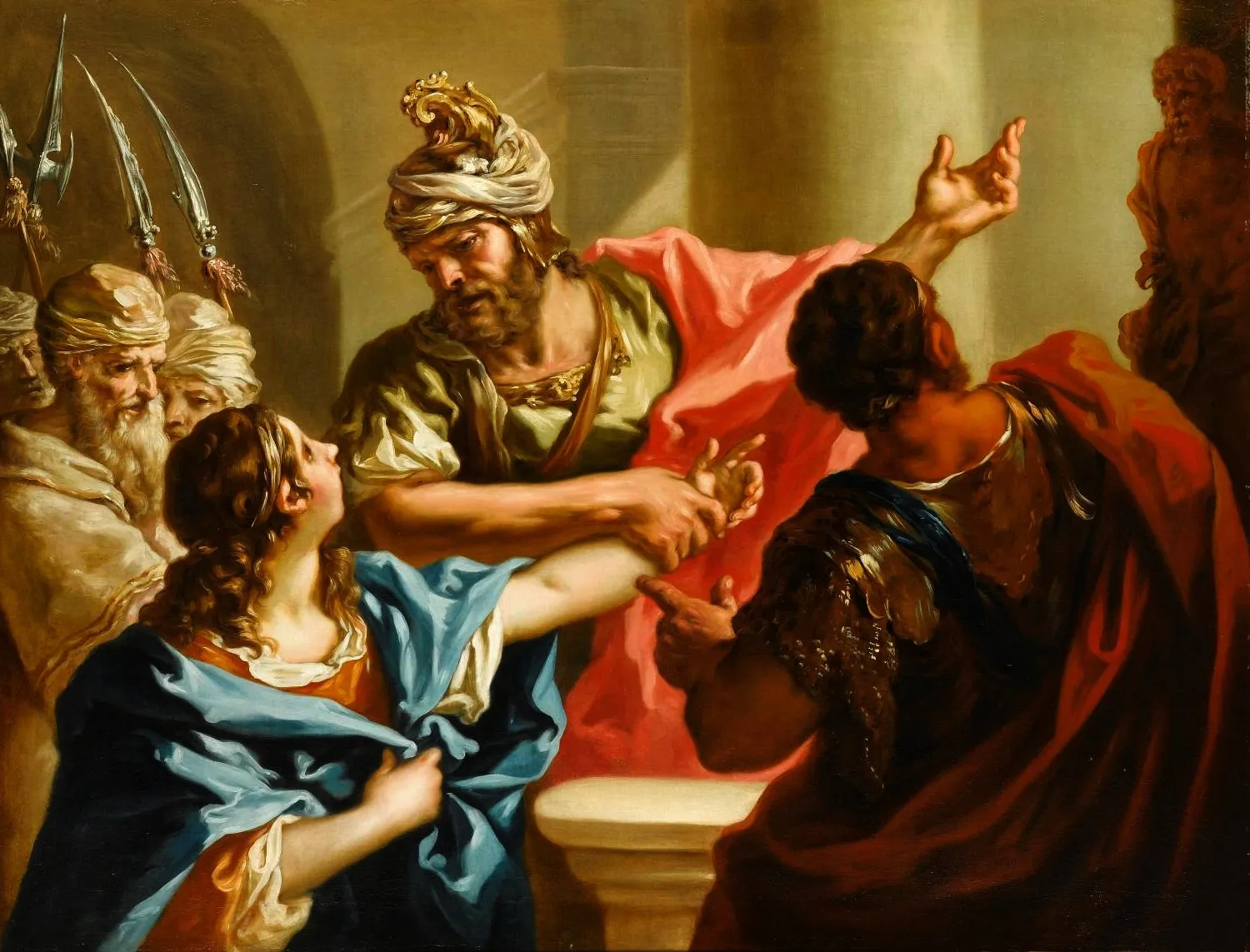
The museum contains several reconstructed historic interiors displaying significant works. The Committee Room, where mothers were interviewed before leaving their babies, displays Hogarth's satirical painting The March of the Guards to Finchley and a series of paintings by Emma Brownlow depicting scenes from the lives of the children. The Picture Gallery reconstructs the original West Wing gallery and displays portraits of governors and officials, including Hogarth's painting of Thomas Coram, Allan Ramsay's portrait of Dr Richard Mead, Reynolds' portrait of the Earl of Dartmouth, and Thomas Hudson's portrait of architect Theodore Jacobsen. The Court Room, where Governors conducted business and entertained guests, survives as one of London's best Rococo interiors, featuring a plasterwork ceiling gifted by William Wilton, Hogarth's Moses before Pharaoh's Daughter, and Gainsborough's picture of London's Charterhouse. The uppermost floor houses the Gerald Coke Handel Collection, where visitors can see Handel's Will, a fair copy of his Messiah left to the Hospital at his death, manuscripts, printed scores, books, works of art, programmes, and ephemera. Four armchairs with built-in speakers play nine hours of Handel's music. In 2008, Tracey Emin created a small bronze sculpture of a mitten from her Baby Things series, and in 2010 the museum acquired a painted bronze sculpture attached to a wrought iron fence, also referencing a lost mitten.
Building & site
The museum occupies 40 Brunswick Square, a building constructed between 1935 and 1937 as the London headquarters of the Thomas Coram Foundation. This structure incorporated architectural features and Rococo interiors from the original Foundling Hospital building of 1741, which had been demolished in 1926. The 2003-2004 refurbishment by Jestico + Whiles added a modern extension, resulting in a building that combines eighteenth-century Georgian elements, 1930s architecture, and contemporary design.
Visiting
The Foundling Museum is located at Brunswick Square in the London Borough of Camden. It is an independent charitable organisation, having separated from Coram in 1998, though it maintains close ties to the charity that continues the Foundling Hospital's work. The museum's website is http://www.foundlingmuseum.org.uk.
Museums near Foundling Museum
- Art Museum British Museum London Borough of Camden, United Kingdom
- Art Museum National Gallery City of Westminster, United Kingdom
- Gallery Matthiesen Gallery London, United Kingdom
- Art Museum Tate Modern London Borough of Southwark, United Kingdom
- Art Museum National Portrait Gallery City of Westminster, United Kingdom
- Art Museum Schorr Collection City of Westminster, United Kingdom