Art Museum
Gardiner Museum

Image: Wikimedia Commons.
Gardiner Museum is an art museum in Ontario, Canada.
About Gardiner Museum
The George R. Gardiner Museum of Ceramic Art (commonly shortened to the Gardiner Museum) is a ceramics museum in Toronto, Ontario, Canada. The museum is situated within grounds of Victoria University on the University of Toronto's St. George campus. The 4,299.2-square-metre (46,276 sq ft) museum building was designed by Keith Wagland, with further expansions and renovations done by KPMB Architects and Urbacon.
The museum was established by George and Helen Gardiner, and was opened to the public on 6 March 1984. In 1987, management of the institution was assumed by the Royal Ontario Museum (ROM). The ROM continued to manage the Gardiner Museum until 1996, when an additional endowment to the museum allowed it to reincorporate as an independent institution.
Gardiner Museum by the numbers
- Founded
- 1984
Plan your visit
Gardiner Museum
- Website
- www.gardinermuseum.on.ca
Overview
The George R. Gardiner Museum of Ceramic Art, commonly known as the Gardiner Museum, is Canada's only museum devoted exclusively to ceramic art. Located in Toronto, Ontario, on the grounds of Victoria University within the University of Toronto's St. George campus, the museum opened to the public on 6 March 1984. Founded by collectors George and Helen Gardiner, the institution has become a premier destination for the study and appreciation of ceramics, housing a permanent collection of over 4,000 pieces spanning ancient civilizations to contemporary practice. Its significance lies not only in its specialized focus but also in its role as a cultural hub that bridges historical traditions with innovative contemporary expression, including a landmark commitment to Indigenous ceramic art.
Founding & history
The museum's origins trace to the early 1980s, when George and Helen Gardiner sought to exhibit their collection at the Royal Ontario Museum. When complications arose, they proceeded to establish an independent institution. A building was constructed in 1983, and the museum opened on 6 March 1984. To support operations, a volunteer committee formed from Royal Ontario Museum volunteers held its first formal meeting on 28 March 1984, with public tours commencing in spring 1985. Financial pressures led George Gardiner to arrange for Royal Ontario Museum management takeover in 1987. The museum remained under ROM administration until 1996, when an additional endowment from the Gardiner family, supplemented by federal and provincial support, enabled reincorporation as an independent institution effective 1 January 1997. An independent Board of Trustees assumed governance, comprising five members from Victoria University's Board of Regents, one Toronto City Council member, and nine provincial appointees. The museum closed for six weeks in 1997 for minor renovations. In 2000, George Gardiner engaged Bruce Kuwabara to design a ceramics exhibition; this successful collaboration led to Kuwabara's commission for a major building redesign and expansion. The museum closed to the public in January 2004 for a C$25 million renovation, maintaining temporary offices on McCaul Street and continuing educational programs offsite. It reopened in June 2006, though the project was not fully completed until 2008. In 2012, the museum launched an art intervention program to expand audience engagement. Public art installations followed: Jun Kaneko's striped-head sculpture was placed on the plaza in 2013, and Shary Boyle's Cracked Wheat was installed in the courtyard in 2018. From 2024 to late 2025, the museum underwent further significant renovation, particularly to the ground floor and permanent collection galleries, including creation of the first permanent gallery dedicated to Indigenous ceramics in its history.
Collection scope
The Gardiner Museum's permanent collection encompasses over 4,000 works of earthenware and porcelain, representing one of the most comprehensive ceramic collections in North America. The collection spans multiple civilizations and periods, including Pre-Columbian American works, Italian Renaissance ceramics, English Delftware, and porcelain from China, Japan, France, and other European nations. A dedicated contemporary gallery showcases modern and contemporary ceramic practice. The 2024-2025 ground floor renovation introduced Indigenous Immemorial: Ceramics of the Great Lakes Region, the museum's first permanent gallery devoted to Indigenous ceramics, signaling a major expansion of the collection's geographic and cultural scope. Beyond its permanent holdings, the museum organizes and hosts contemporary ceramic art exhibitions and presents three temporary exhibitions annually. The institution also maintains active programming including lectures, talks, tours, and educational courses in pottery for adults and children.
Notable holdings
The collection's strength lies in its temporal and geographic breadth rather than single signature objects. Highlights include a giant 16th-century Italian pharmacy jar and contemporary works that challenge material expectations, such as a ceramic suitcase resembling leather. The contemporary collection features works by significant international and Canadian artists. Among contemporary holdings are Ruth Duckworth's Earth, Air, Water series, characterized by abstract organic forms; Ken Price's Happy's Curious Yellow, a vibrant biomorphic sculpture; and Jun Kaneko's Dango installation of massive ceramic forms. The museum also holds work by prominent Canadian artists including Kent Monkman, Shary Boyle, and Sami Tsang. The Indigenous gallery presents ancestral belongings and contemporary works from the Great Lakes Region territory. The 2025 reopening featured exhibitions including Highways of Harlan House and In Search of Imperfection, alongside Linda Rotua Sormin's immersive third-floor installation Uncertain Ground, which combines clay, sculpture, video, hand-cut watercolour painting, and digital fabrication. Nadia Myre's installation welcoming visitors to the renovated space incorporates clay pipe stems found along the River Thames into a beaded composition evoking the Canadian Shield.
Building & site
The museum building occupies a 4,299.2-square-metre (46,276 sq ft) site at Queen's Park Crescent on the grounds of Victoria University, a federated college of the University of Toronto. The nearest Toronto subway station is Museum station. The original building, completed in 1983 at a cost of C$6 million, measured 2,969.0 square metres (31,958 sq ft) across two storeys, though designed to accommodate future vertical expansion. Architect Keith Wagland designed the structure in a neoclassical modernist style, positioning it on the property's back court to preserve views of the adjacent Lillian Massey Building. The building cantilevers toward Queen's Park and originally featured a modest pink granite facade. Bruce Kuwabara led the 2004-2006 redevelopment as design partner, with Shirley Blumberg as partner-in-charge at KPMB Architects. The C$25 million renovation re-clad the exterior in Indiana limestone and black granite with sharp vertical windows, chosen to match the Lillian Massey Building's facade. The project added a third floor and reconfigured the first two floors. Construction management firm Urbacon executed the work. The 2024-2025 renovation, costing C$15.5 million, remodeled 9,000 square feet of interior space on the ground floor. Montgomery Sisam Architects and Andrew Jones Design, with Chris Cornelius of studio: indigenous, designed the transformation, which includes the Indigenous ceramics gallery featuring a wood and copper mesh structure.
Visiting
The Gardiner Museum operates as an independent institution with affiliations to the Canadian Heritage Information Network, Canadian Museums Association, and Virtual Museum of Canada. The museum emphasizes accessibility in its operations, with policies and facilities designed to accommodate visitors with disabilities. On-site amenities include a restaurant featuring seasonal menus by Chef Bianca Azupardo, with Gardiner Friends receiving a 15% discount, and a gift shop offering handmade ceramic items by local artists. The museum offers multi-week clay classes, two-hour workshops, and family-friendly clay activities in its Makerspace. Educational programming includes drop-in sessions for children on Sundays. The museum promotes annual membership options, including a C$30 annual pass. Visitors can access current exhibition information and plan visits through the museum's website at www.gardinermuseum.on.ca.
Museums near Gardiner Museum
- Art Museum Art Gallery of Ontario Toronto, Canada
- Art Museum Agnes Etherington Art Centre Ontario, Canada
- Art Museum Cleveland Museum of Art Cleveland, United States
- Art Museum Detroit Institute of Arts Detroit, United States
- Art Museum National Gallery of Canada Ontario, Canada
- Art Museum Flint Institute of Arts Flint, United States


What's on
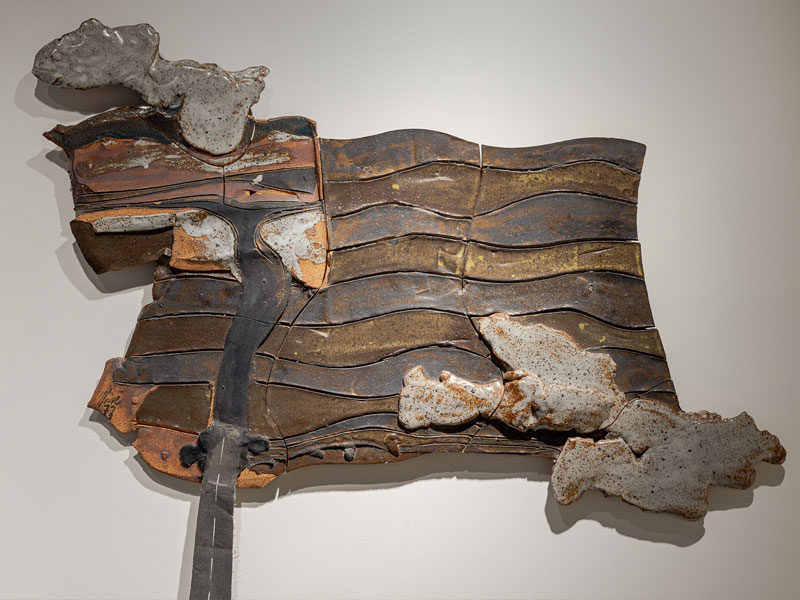
Highways of Harlan House
8 May 2026 – 13 Sep 2026
On view for the first time in over 50 years, discover a virtually unknown group of early wall sculptures on the theme of environmental distress, made by one of Canada's most…

International Ceramic Art Fair 2026
28 May 2026 – 16 Aug 2026
The International Ceramic Art Fair (ICAF) is the Gardiner Museum’s biennial celebration of innovation and contemporary directions in ceramics.