Art Museum
Labirinto della Masone

Image: Wikimedia Commons.
Labirinto della Masone is an art museum in Fontanellato, Italy.
About Labirinto della Masone
Labirinto della Masone (Mason Labyrinth), is a maze in the town of Fontanellato near Parma, Italy. It was built by art publisher, designer and editor Franco Maria Ricci (1937–2020) on the suggestion of the Argentine writer Jorge Luis Borges, who was one of Ricci's closest friends. Entirely made of bamboo, the time of its realization, the maze was the largest in the world. Following Ricci's death, the about eight hectares maze is to these days a local tourist attraction. It is adjoined by an arts complex including a museum displaying Ricci's art collection and typeface holdings (especially those of Giambattista Bodoni) and another art gallery exhibiting Ricci's work as a graphic designer.
Labirinto della Masone by the numbers
- Founded
- 2015
- Visitors / year
- 92,000
- Collection
- 400 objects
Plan your visit
Labirinto della Masone
- Get Tickets
- Book on Tiqets
We may earn a commission from ticket bookings, at no extra cost to you.
Overview
Labirinto della Masone is a cultural park and labyrinth located near Fontanellato in the Province of Parma, Italy. Conceived by the art publisher, designer, and editor Franco Maria Ricci, the site spans approximately seven to eight hectares and is distinguished by its massive bamboo maze. At the time of its completion, the maze was the largest in the world, and it remains the largest labyrinth constructed entirely from bamboo plants. Beyond the labyrinth, the complex functions as a multifaceted cultural institution, housing Ricci's art collection, his publishing house archives, temporary exhibition halls, conference facilities, concert venues, and culinary spaces including a restaurant, a cafe, and a local gastronomy area.
Founding & history
The project originated from Ricci's lifelong fascination with labyrinths, which was significantly reinforced through his friendship with the Argentine writer Jorge Luis Borges. During a twenty-day stay at Ricci's home in the 1980s, Borges, who frequently cited labyrinths in his work, inspired Ricci to build a real one. The concept materialized in the early 2000s when Ricci collaborated with Davide Dutto, a young architecture student, on a digital reconstruction of the mythical island of Cythera from the Hypnerotomachia Poliphili. The computer-generated images reminded Ricci of his earlier conversations with Borges. A definitive project was drawn up in 2005, the first bamboo plants were planted that summer, and construction of the adjoining buildings began in 2010. The completed Labirinto della Masone was inaugurated on May 29, 2015.
Collection scope
The art collection, displayed across five thousand square meters of gallery space, was assembled by Franco Maria Ricci over approximately fifty years. It reflects his personal tastes and professional trajectory as a publisher and designer. The holdings encompass fine art alongside significant typeface and typographic materials, with a particular emphasis on the works of Giambattista Bodoni. A separate gallery within the complex is dedicated to Ricci's own work as a graphic designer. The institution also preserves the archive of Ricci's publishing house, which notably published the series La Biblioteca di Babele directed by Borges.
Notable holdings
While the specific fine art objects in Ricci's collection are not individually detailed, the most notable holdings of the institution are its typographic and botanical assets. The museum's typeface holdings are especially distinguished by works related to Giambattista Bodoni. Botanically, the labyrinth itself serves as a living collection, featuring over two hundred thousand bamboo plants across roughly twenty different species. These include giant varieties such as Phyllostachys viridis Sulfurea and Phyllostachys nigra Henonis, which can reach up to eighteen meters in height, as well as medium and dwarf species like Phyllostachys bissetii, Hibanoubambusa tranquillans Shiroshima, and Pseudosasa Japonica.
Building & site
The architectural and landscape design of the site integrates classical and Renaissance ideals. The labyrinth's perimeter forms an eight-pointed star, referencing the ideal Renaissance city plans of fortified towns like Palmanova and Sabbioneta. At the center of the maze sits a pyramidal temple, evoking esoteric themes. The labyrinth's internal layout is based on Roman models depicted in two ancient mosaics, one held in the Museo del Bardo and the other in the Kunsthistorisches Museum in Vienna, though Ricci introduced dead ends and forks to increase complexity. The adjoining buildings were designed by the internationally renowned Parmesan architect Pier Carlo Bontempi. The bamboo was chosen for its rapid growth, resilience, evergreen nature, and high carbon dioxide absorption.
Visiting
The Labirinto della Masone is situated near the town of Fontanellato in the Province of Parma, Italy. Following the death of Franco Maria Ricci in 2020, the site continues to operate as a local tourist attraction and cultural venue. The museum is part of the Association of Castles of the Dukes of Parma, Piacenza, and Pontremoli. Although the labyrinth lost its status as the world's largest maze overall in 2018 to the Yancheng Dafeng Dream Maze in China, it maintains its distinction as the largest bamboo labyrinth globally.
Museums near Labirinto della Masone


What's on
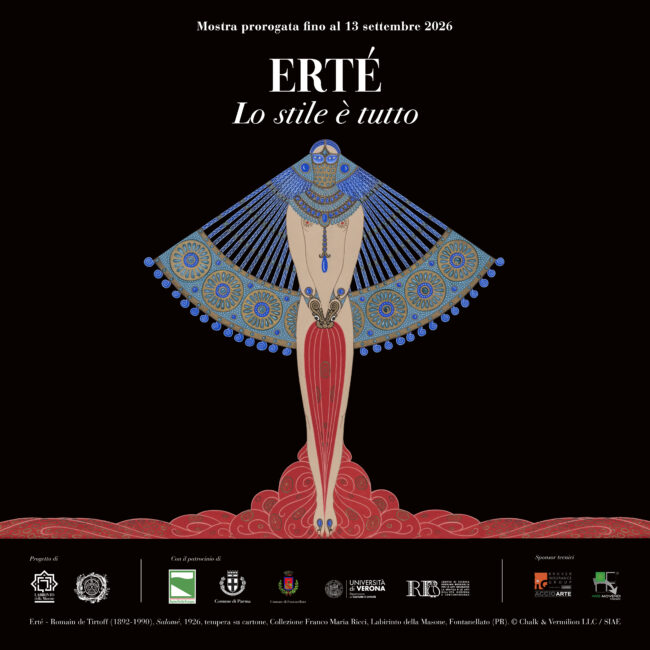
Erté Lo stile è tutto
28 Mar 2026 – 13 Sep 2026
Il Labirinto della Masone dedica una grande mostra a Erté, una delle figure più emblematiche del gusto Art Déco.
We may earn a commission from ticket bookings, at no extra cost to you.