Art Museum
Musée de Cluny

Image: Wikimedia Commons.
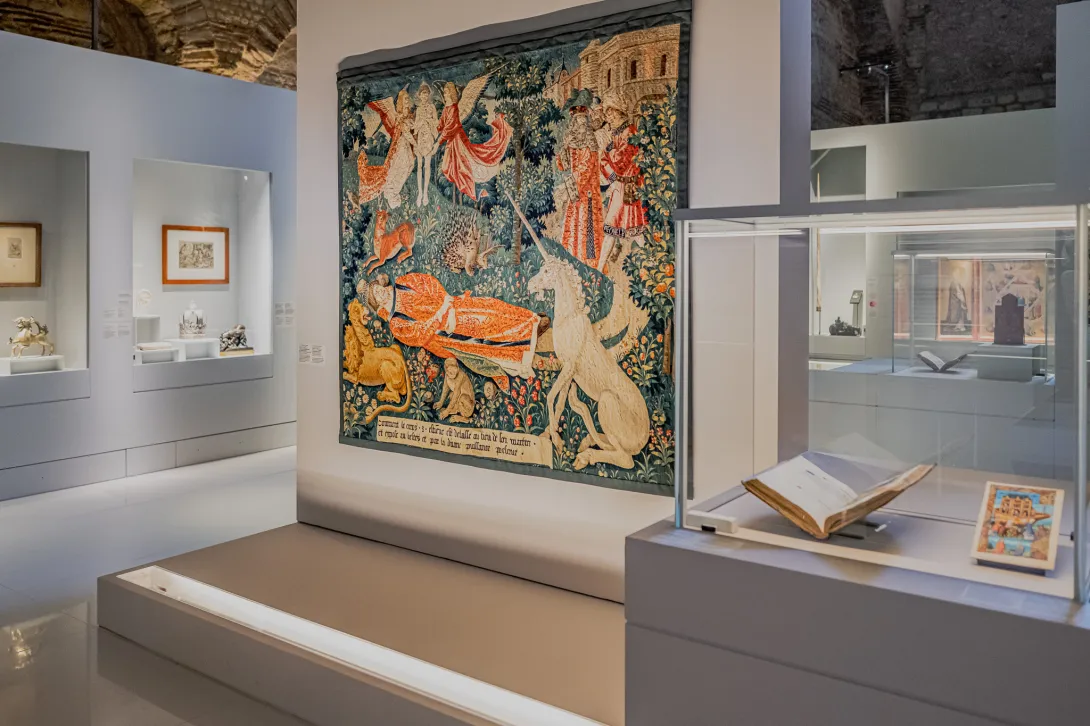
Musée de Cluny is an art museum in 5th arrondissement of Paris, France.
About Musée de Cluny
The Musée de Cluny, officially Musée de Cluny-Musée National du Moyen Âge (lit. 'Cluny Museum-National Museum of the Middle Ages'), is a museum of medieval art in Paris. It is located in the 5th arrondissement of Paris, bordered by square Samuel-Paty to the south, boulevard Saint-Michel to the west, boulevard Saint-Germain to the north, and rue Saint-Jacques to the east.
Its building combines Roman-era thermae, the Thermes de Cluny, including a well-preserved frigidarium, and the 15th-century Hôtel de Cluny, the Parisian mansion of the Abbey of Cluny. The museum houses one of the largest collections of art from the Middle Ages, consisting of 23,000 items, of which about 2,300 are exhibited.
Musée de Cluny by the numbers
- Founded
- 1844
- Visitors / year
- 217,827
Plan your visit
Musée de Cluny
- Website
- www.musee-moyenage.fr
Overview
The Musée de Cluny, officially the Musée de Cluny-Musée National du Moyen Âge, is a museum of medieval art located in the 5th arrondissement of Paris, France, at the heart of the Latin Quarter. Its building unites two exceptional structures: the Roman-era Thermes de Cluny, including a well-preserved frigidarium, and the 15th-century Hôtel de Cluny, the Parisian mansion of the Abbey of Cluny. The museum holds one of the world's most important collections of medieval art, comprising approximately 23,000 objects spanning from the Gallo-Roman period to the 16th century, with about 2,300 works on display. Operated by the French Ministry of Culture, it is considered among the most significant attractions in Paris and forms part of the Réunion des musées nationaux et du Grand Palais des Champs-Élysées.
Founding & history
The museum's origins trace to 1833, when archaeologist and art collector Alexandre Du Sommerard established his residence in the Hôtel de Cluny and began organizing his collection of medieval and Renaissance objects. Upon his death in 1842, the French state purchased both the building and his collection; the museum opened in 1844, with Sommerard's son Edmond Du Sommerard serving as its first director from 1843 to 1885. The architect Albert Lenoir, son of preservationist Alexandre Lenoir, directed the restoration of the buildings. The Hôtel de Cluny received monument historique status in 1846, and the thermal baths in 1862. In February 1926, the museum was placed under the Louvre's department of decorative arts, a relationship that lasted until 1977. A garden opened in 1971, featuring a 'unicorn's forest' inspired by the museum's celebrated tapestries. In 1977, the museum's Renaissance collections were transferred to the newly created Musée National de la Renaissance at the Château d'Écouen, creating additional space for medieval works. The museum was officially renamed the Musée National du Moyen Âge in 1992. A comprehensive renovation began in 2011, dubbed 'Cluny 4' in reference to Cluny Abbey's famous church. This project included a redesigned display of the Lady and the Unicorn tapestries in 2013, cleaning of the Roman baths and medieval chapel from 2015 to 2017, construction of a new building by architect Bernard Desmoulin from 2016 to 2018, and a complete reorganization of the collections according to chronological rather than technical criteria from 2019 to 2022. The museum reopened on 12 May 2022, at a total cost of 23.1 million euros, partly financed by proceeds from the Louvre Abu Dhabi contract.
Collection scope
The museum's collections encompass approximately 23,000 artifacts dating from the Gallo-Roman period through the 16th century, drawn from Europe, the Byzantine Empire, the Islamic world, and the Maghreb. The exhibition space covers 2,000 square meters within a total building area of 3,500 square meters. The holdings span from antiquity to the early Middle Ages, with particular strength in medieval art. Following the 1977 transfer of more than 5,000 Renaissance objects to Écouen, the museum sharpened its focus on the medieval period. The collections are notable for their geographic and chronological breadth, incorporating works from the Romanization of Gaul through the late medieval period. Since the 2022 renovation, the museum presents its holdings in a chronological and thematic arrangement, replacing the earlier system organized by craftsmanship techniques such as stonework, ironwork, and glasswork that had been in place since the late 1940s.
Notable holdings
The museum's most celebrated holding is the Lady and the Unicorn (La Dame à la licorne), a series of six late 15th-century millefleurs tapestries from the southern Netherlands, possibly Brussels or Tournai. Woven from wool and silk on a high-warp loom, five tapestries allegorize the five senses, while the sixth bears the inscription 'Mon seul désir' (My only desire), depicting the lady placing her necklace in a casket. The tapestries display the arms of the Le Viste family and interweave courtly love themes with Christian unicorn symbolism. The ancient collections feature the Pillar of the Boatmen, a 1st-century monument offered to Emperor Tiberius by the boatmen of Paris, discovered beneath Notre-Dame de Paris in the 18th century, and the 2nd-century Saint-Landry pillar, both displayed in the frigidarium. Also of note are two 4th-5th-century rock crystal lion heads from the Roman Empire. In 1977, heads from the Gallery of Kings of Notre-Dame cathedral were discovered, and a dedicated room was created for them in 1981. The 2022 renovation redesigned the display of the Lady and the Unicorn tapestries and integrated these rediscovered sculptures into the newly chronological presentation.
Building & site
The museum occupies a unique architectural ensemble combining Roman and late medieval structures. The Thermes de Cluny were constructed around 200 CE in ancient Lutetia; though largely destroyed around 380 CE, the frigidarium (cold bath) remained substantially preserved and was integrated into later construction. At over 20 meters in length, it was among the largest cold baths in the province of Gaul. In 1330, Pierre II de Chastelux, Abbot of Cluny, acquired the remains of the baths to establish a residence for abbey visits to the royal court. The present Hôtel de Cluny was built from 1455 to 1510 under Jacques d'Amboise, abbot in commendam from 1485 to 1510, combining late Gothic and early Renaissance elements. The chapel is a single-vaulted space highly regarded by Eugène Viollet-le-Duc. The U-shaped plan with a corps de logis and two wings enclosing a trapezoidal courtyard represents the oldest surviving example of a Parisian hôtel particulier built between courtyard and garden. The 18th-century tower served as an observatory for astronomers Joseph-Nicolas Delisle, Jérôme Lalande, and Charles Messier, who published his catalog there in 1771. A medieval garden (Jardin médiéval) of approximately 5,000 square meters was created in September 2000 immediately north of the Hôtel de Cluny. The 2016-2018 extension by Bernard Desmoulin added 400 square meters on a 250-square-meter footprint, including a bridge over the ancient remains, with ticketing, bookshop, cloakroom, temporary exhibition space, and educational facilities.
Visiting
The Musée de Cluny is situated in the Latin Quarter of the 5th arrondissement, bordered by square Samuel-Paty to the south, boulevard Saint-Michel to the west, boulevard Saint-Germain to the north, and rue Saint-Jacques to the east. The main entrance is on place Paul-Painlevé, facing the Sorbonne. Following the 2010s renovation, visitors now enter from the west on rue du Sommerard rather than through the courtyard of the Hôtel de Cluny as previously. The museum is operated by the French Ministry of Culture and has been directed by Séverine Lepape since 2019, succeeding Elisabeth Taburet-Delahaye (2005-2019). The 2022 reopening followed a closure of approximately two years and introduced full accessibility for visitors with reduced mobility, including wheelchair users. The redesigned visitor route offers a chronological and thematic journey through the collections, with all spaces now accessible to the public. Information is available through the museum's website at www.musee-moyenage.fr.
Museums near Musée de Cluny
- Art Museum Musée National d'Art Moderne Quartier Saint-Merri, France
- Art Museum Louvre Museum Saint-Germain-l'Auxerrois, France
- Art Museum Musée d'Orsay 7th arrondissement of Paris, France
- Art Museum Petit Palais 8th arrondissement of Paris, France
- Art Museum Musée d'art moderne de Paris 16th arrondissement of Paris, France
- Art Museum Musée Marmottan Monet 16th arrondissement of Paris, France


What's on
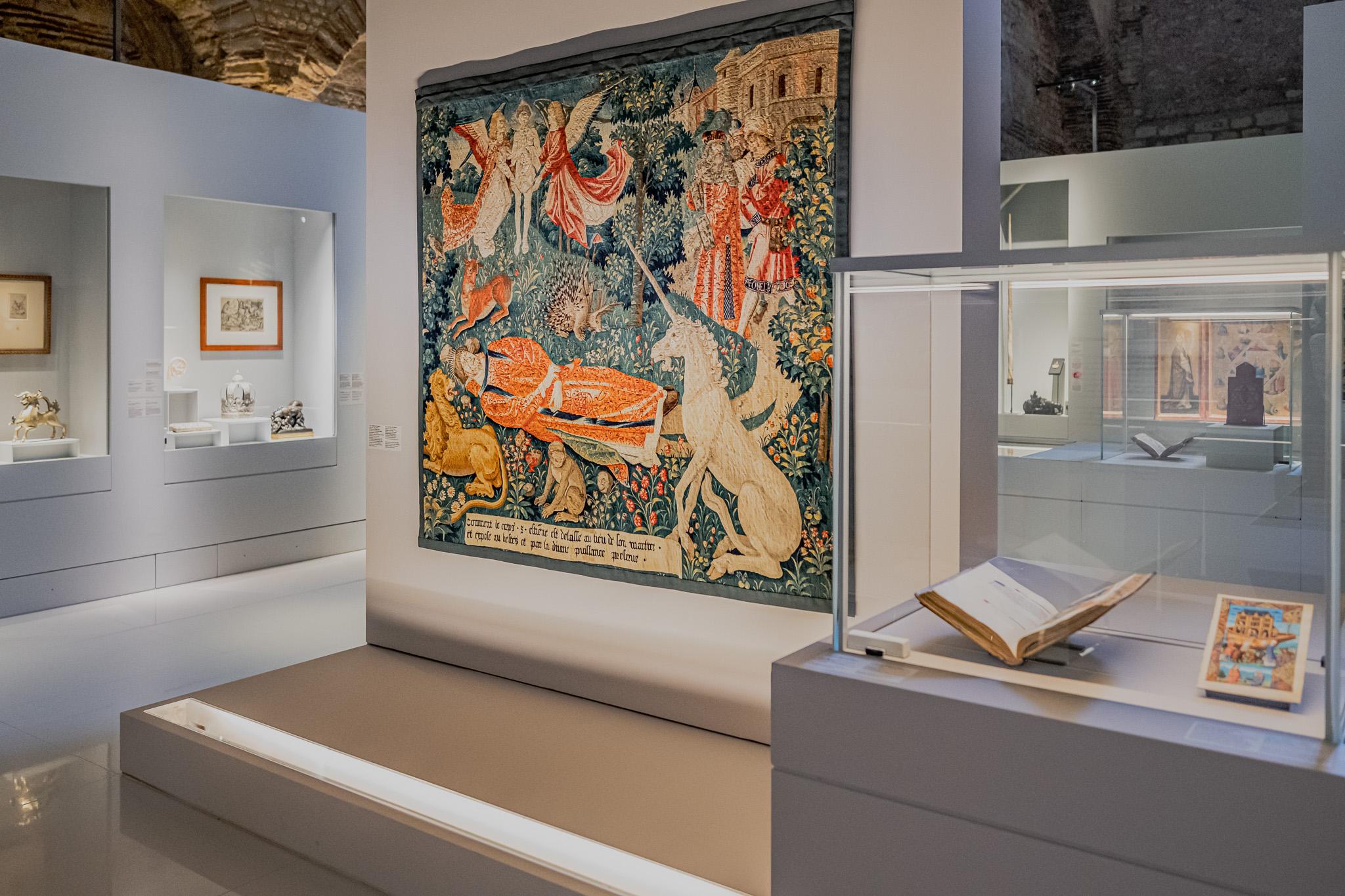
Exposition Licornes!
From 10 Mar 2026
Vue de l'exposition "Licornes !" (2026) © Dubontemps / musée de Cluny – musée national du Moyen Âge