Museum
Sønderborg Castle

Image: Wikimedia Commons.
Sønderborg Castle is a museum in Sønderborg Municipality, Denmark.
About Sønderborg Castle
Sønderborg Castle (German: Schloss Sonderburg; Danish: Sønderborg Slot) is located in the town of Sønderborg, Denmark on the island of Als in South Jutland. It houses a museum focusing on the history and culture of the area. The castle is located in the middle of the town, in a park setting overlooking Als Fjord. The museum is open year-round.
Sønderborg Castle by the numbers
- Founded
- 1158
Plan your visit
Sønderborg Castle
- Website
- msj.dk
Overview
Sønderborg Castle is a historic fortress and museum in the town of Sønderborg on the island of Als in South Jutland, Denmark. Founded around 1158 as a fortified tower by King Valdemar the Great, it stands as one of Denmark's oldest surviving royal residences and among the oldest secular buildings in the region. The castle now houses the Museum at Sønderborg Castle (Museet på Sønderborg Slot), the main museum for the former Duchy of Slesvig, which presents the history and culture of the border region from the Middle Ages to the present. Its strategic position overlooking Als Fjord, its layered architectural history spanning medieval, Renaissance, and Baroque periods, and its central role in Danish-German territorial conflicts make it a site of exceptional historical and cultural significance.
Founding & history
The castle originated as a fortified tower constructed in 1158 on an islet in Als Strait (Als Sund), later connected to the island of Als, as part of a broader system of defenses against Wendish attacks. Ownership shifted repeatedly between Danish kings and the dukes of Schleswig; a pivotal early event was the 1340 wedding of Valdemar IV of Denmark to Helvig of Schleswig at the castle. Around 1350, the Blue Tower (Blåtårn) and massive outer walls were added. In 1490 the fortress became negotiated to the Danish crown, and Kings Hans and Christian II subsequently strengthened it into one of Denmark's most formidable fortresses.
In 1532, the deposed King Christian II was imprisoned here for seventeen years until 1549, living under guard but in relatively comfortable conditions. Between 1549 and 1557, Christian III commissioned architect Hercules von Oberberg to convert the fortress into a four-wing Renaissance castle; von Oberberg later built the castle chapel in 1568-1570 for Queen Mother Dorothea. After Dorothea's death in 1571, the castle became the seat of the Duchy of Schleswig-Holstein-Sonderburg under Hans the Younger, remaining with the southern Jutland dukes until 1667 when the ruined duchy reverted to the Danish crown.
Frederik IV rebuilt the castle in Baroque style between 1718 and 1726 under contractor general Wilhelm von Platen. The Blue Tower was demolished in 1755, and in 1764 the castle passed to the Duke of Augustenborg but was used as a warehouse rather than a residence. During the First and Second Schleswig Wars (1848-1850 and 1864), it served as a field hospital and troop quarters. After 1864, Prussia controlled the castle, using it as barracks until the 1920 reunification with Denmark. The last Duke of Augustenborg, Ernst Günther, allowed Sønderborg County Museum to occupy part of the castle in 1920; the Danish state purchased it in 1921. The castle served briefly as an internment camp in 1945-1946. A comprehensive restoration from 1964 to 1973 by royal inspectors Peter Koch and Jørgen Stærmose returned the building to its Frederik IV-era Baroque form, replacing barracks-era windows with reconstructed "mask" windows in Platen's style.
Collection scope
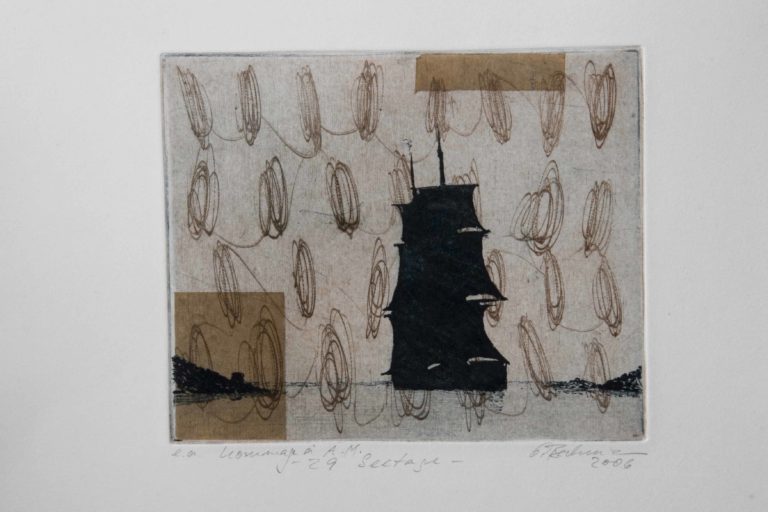
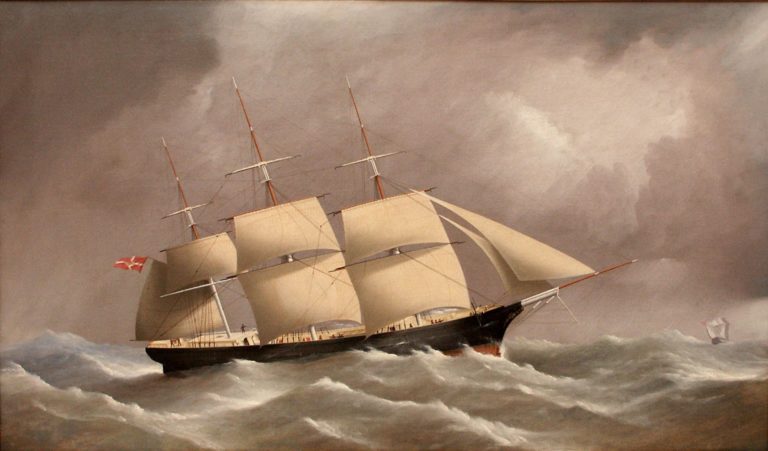
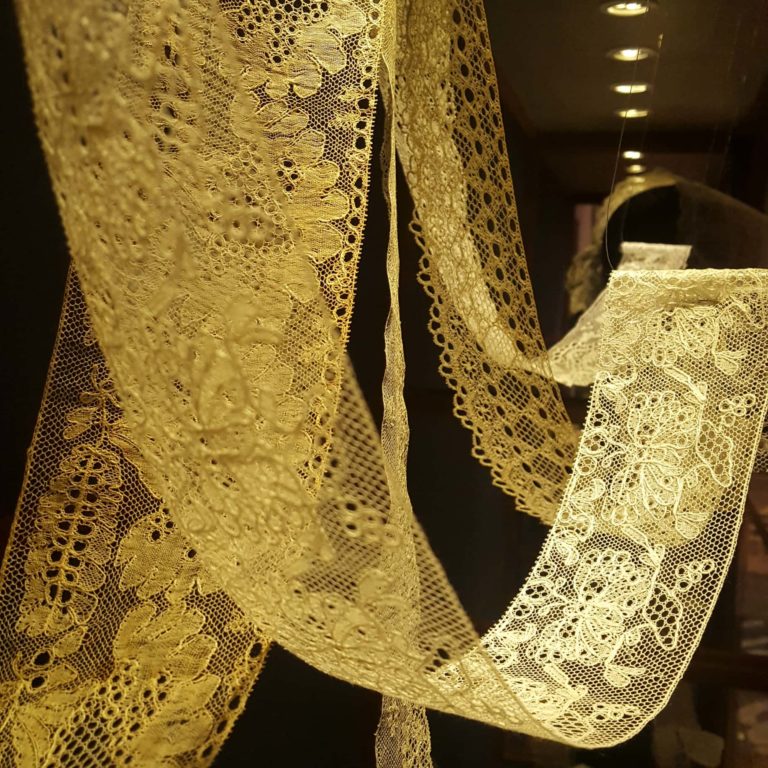
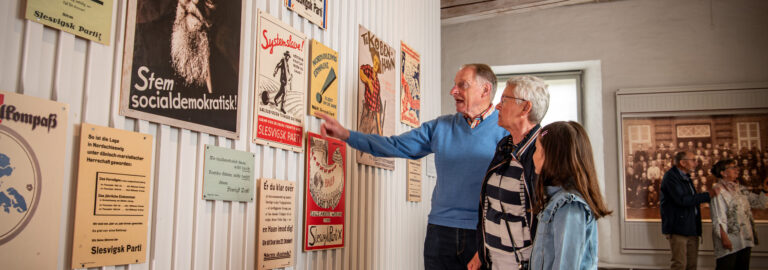
The Museum at Sønderborg Castle, part of the Museum Sønderjylland network, holds the principal collections for the former Duchy of Slesvig. Its holdings span local and regional history from the Middle Ages to the present, with particular emphasis on the Schleswig Wars of 1848-1850 and 1864, World War I, and the 1920 Reunification. The museum presents these events from Danish, German, and civilian perspectives. Exhibitions also cover navigation, textiles, and handicrafts, alongside a small art collection featuring prominent Southern Jutland painters. The collections address border trade, local dialects, and the distinctive cultural political history of Southern Jutland, including the period of German rule from 1864 to 1920.
Notable holdings
The most celebrated interior space is Queen Dorothea's Chapel (Dronning Dorotheas Kapel), built 1568-1570 by Hercules von Oberberg, considered one of Europe's oldest and best-preserved Lutheran royal chapels. Its wooden gallery, pulpit, and painted panels have survived nearly five centuries with minimal alteration, and many of its furnishings were produced in the Antwerp workshop of Frans Floris. The chapel is regarded as the oldest preserved Renaissance room in the Nordic region.
The castle also preserves the 34-meter-long Knights' Hall (Rittersaal), one of the largest of its kind. Visitors can explore the former dungeon areas, including spaces associated with Christian II's imprisonment, as well as sixteenth-century princely chambers. The 1864 exhibition is particularly notable, displaying soldiers' letters, uniforms, and personal effects from the siege of Dybbøl. The museum also maintains historical rooms including the Banqueting Hall and the Night Watchman's Passage, with traces of the medieval fortress visible beneath later reconstructions.
Building & site
Sønderborg Castle is a four-winged, roughly rhombus-shaped structure around an inner courtyard, constructed primarily of red brick on foundations of large stone blocks. The three-story building retains only fragmentary traces of its original corner towers: a blunt tower stump survives at the northwest corner, while foundations of the others remain. Three slender staircase turrets ornament the courtyard.
The architectural fabric records successive transformations. The north wall still shows the medieval entrance, now walled up, with the present broader east-side access dating from later periods. The interior preserves some original room layouts, including the Knights' Hall and the chapel. Renaissance-era gables and dormers were removed during the eighteenth-century Baroque rebuilding, leaving the severe facades animated primarily by numerous windows. The original ramparts, made visible in the gardens during the 1970s, are partly preserved on the east side. The castle sits in a park setting in the center of Sønderborg town, overlooking Als Fjord.
Visiting
Sønderborg Castle is owned by the Danish state and operated as a museum by Museum Sønderjylland, a consortium of ten museums in Southern Jutland. It is located in the town center of Sønderborg on the island of Als, accessible by road via King Christian X's Bridge and by air through nearby Sønderborg Airport.
The museum is open year-round with seasonal hours: daily from 10:00 to 17:00 from late March through early November, and Tuesday through Sunday at the same hours during winter months. Admission is DKK 115 for adults; children under 18 enter free, students receive a 20 percent discount, and groups of ten or more receive 10 percent off. A Holiday Pass (DKK 185) provides unlimited access to all ten Museum Sønderjylland locations within fourteen days.
The castle offers guided tours in Danish, German, and English. Family activities include the digital treasure hunt MuseumsM不失时机, costume dressing in the Duke's Wardrobe, a children's workshop, and a puppet theatre. The castle café, located in the former kitchen, serves local and regional specialties with courtyard seating available in summer. The museum shop sells historical literature and souvenirs. The building has disabled access with a lift to the first and second floors, two wheelchairs and two walkers available for loan, and free entry for companions with companion cards.
Museums near Sønderborg Castle
- Art Museum Faaborg Museum Faaborg-Midtfyn Municipality, Denmark
- Art Museum Hamburger Kunsthalle Hamburg-Mitte, Germany
- Rosenborg Castle Copenhagen Municipality, Denmark
- Art Museum Hirschsprung Collection Copenhagen Municipality, Denmark
- Art Museum Statens Museum for Kunst Copenhagen Municipality, Denmark
- Art Museum Herzog Anton Ulrich Museum Brunswick, Germany