Museum
Woburn Abbey

Image: Wikimedia Commons.
Woburn Abbey is a museum in Woburn, United Kingdom.
About Woburn Abbey
Woburn Abbey (), occupying the east of the village of Woburn, Bedfordshire, England, is a country house, the family seat of the Duke of Bedford. Although it is still a family home to the current duke, it is open on specified days to visitors, along with the diverse estate surrounding it, including the historic landscape gardens and deer park (by Humphry Repton), as well as more recently added attractions including Woburn Safari Park, a miniature railway and a garden/visitor centre. It was built by William Russell, 1st Baron Russell of Thornhaugh.
Woburn Abbey by the numbers
- Founded
- 1101
Plan your visit
Woburn Abbey
- Website
- www.woburnabbey.co.uk
Overview
Woburn Abbey is a country house and historic estate occupying the east of the village of Woburn, Bedfordshire, England. It serves as the family seat of the Duke of Bedford and remains a private home to the current duke. The estate encompasses historic landscape gardens and a deer park designed by Humphry Repton, alongside modern attractions such as the Woburn Safari Park, a miniature railway, and a visitor centre. The house is renowned for housing one of the finest private art collections in the world, comprising around 250 paintings alongside significant holdings of furniture, porcelain, and silverware. It is a member of the Treasure Houses of England consortium and operates as a major public heritage site.
Founding & history
The site was founded as a Cistercian abbey in 1145 by Hugh de Bolebec as a daughter house of Fountains Abbey. The monastery suffered financial difficulties before regaining prosperity around 1280, with an annual income valued at 391 pounds in 1535. During the Dissolution of the Monasteries, Henry VIII dissolved the community in 1538, executing the last abbot, Robert Hobbes, and two monks. In 1547, the crown granted the monastic lands and buildings to John Russell, 1st Earl of Bedford, establishing it as the Russell family seat. Francis Russell, 4th Earl of Bedford, initiated the first major rebuilding around 1630, constructing a manor house on the monastic site while retaining the Abbey name. The 18th century brought further transformations: architects Henry Flitcroft and John Sanderson rebuilt the west wing between 1747 and 1761, and Henry Holland directed further rework of the south wing between 1787 and 1790. During World War II, the Abbey served as the headquarters of the Political Warfare Executive from 1941. Postwar dry rot necessitated the demolition of half the building, including the east wing built by Holland. When the 12th Duke died in 1953, the 13th Duke faced 14 million dollars in death duties on a half-derelict estate. Choosing to retain ownership rather than transfer the property to the National Trust, he opened the house to the public in 1955, generating 11 million dollars in ticket sales within a decade to pay the duties. He later moved to Monte Carlo in 1974, leaving his son the Marquess of Tavistock to manage the estate. In the early 1990s, plans to convert the property into a theme park with the Tussauds Group were abandoned when the company purchased Alton Towers instead. The Marquess became the 14th Duke in 2002 but died in June 2003, making him the briefest holder of the dukedom. His son, the 15th Duke, continues to run the estate today.
Collection scope
The art collection of the Dukes of Bedford encompasses a wide range of Western art and is considered one of the finest private collections in the world. Its core consists of approximately 250 paintings spanning multiple European schools, including the Dutch, English, Flemish, and French schools. Beyond paintings, the holdings feature premier examples of English and French furniture across numerous periods, alongside diverse and historically significant collections of porcelain and silverware. The collection also includes classical antiquities, which have been the subject of dedicated scholarly cataloging.
Notable holdings
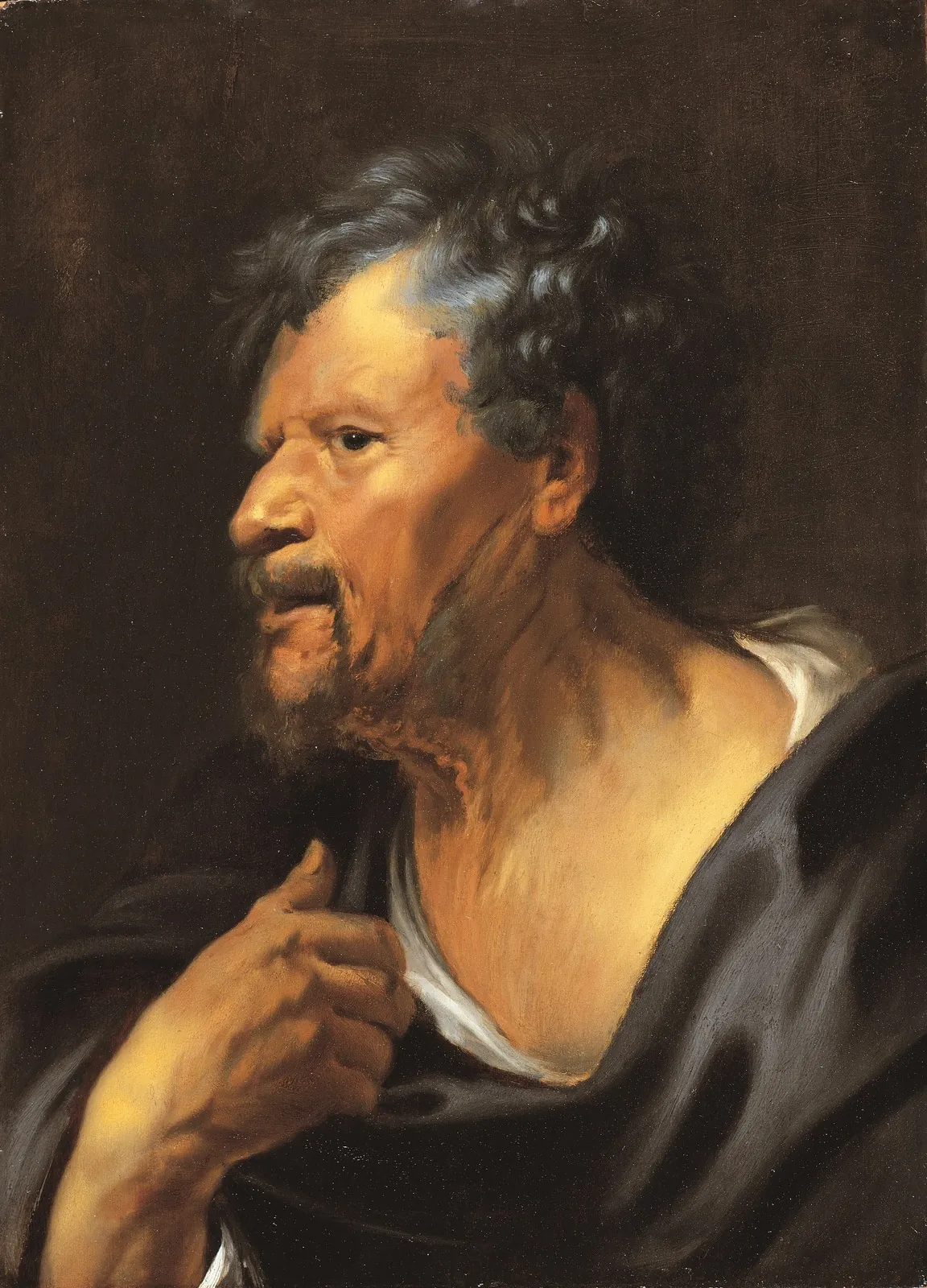
The painting collection features major works by masters such as Rubens, Canaletto, and Velazquez. The Dutch school is particularly well represented, with two paintings by Rembrandt van Rijn, including a self-portrait from 1640 and Boaz from 1643, alongside works by Aelbert Cuyp and Paulus Potter. The Flemish school holds ten works by Anthony van Dyck, including his portrait of Aubert Lemire, Dean of Antwerp from circa 1630. The English school is anchored by twelve paintings by Joshua Reynolds and the Armada Portrait of Elizabeth I from circa 1588 by George Gower, which is regarded as one of the greatest English portraits in existence. In 1939, the MP Henry Channon noted the sheer volume of the holdings, describing whole rooms devoted specifically to the Reynolds, Canaletto, and Van Dyck collections.
Building & site
Nothing remains of the original Cistercian monastic buildings, though the cloister likely occupied the area of the current courtyard. The present structure evolved through successive building campaigns. The north wing, constructed around 1630 by the 4th Earl of Bedford, incorporates the foundations of the monastic north wing. The 18th-century expansions defined the remainder of the house, with Henry Flitcroft constructing the west wing and Henry Holland designing the south and east wings. Following the discovery of severe dry rot after World War II, the Holland-designed east wing was demolished around 1950, leaving the house at half its former size. The building is a Grade I listed structure. The surrounding estate features historic landscape gardens and a deer park laid out by Humphry Repton, with the grounds later incorporating the Woburn Safari Park established in 1970.
Visiting
Woburn Abbey is located in Bedfordshire, United Kingdom, roughly 1.5 kilometers southeast of the village of Woburn. Although it remains the private family home of the Duke of Bedford, the estate is open to visitors on specified days. The public offerings include access to the house, the historic gardens, the deer park, the Woburn Safari Park, a miniature railway, and a garden and visitor centre. The site gained significant public exposure between 1999 and 2002 when the daily life and business of running the estate were documented in the BBC Two reality series Country House, which spanned 29 episodes across three series.
Museums near Woburn Abbey
- Art Museum Ashmolean Museum Oxford, United Kingdom
- Art Museum Fitzwilliam Museum Cambridge, United Kingdom
- Art Museum Schorr Collection City of Westminster, United Kingdom
- Art Museum Victoria and Albert Museum Royal Borough of Kensington and Chelsea, United Kingdom
- Art Museum British Museum London Borough of Camden, United Kingdom
- Art Museum National Gallery City of Westminster, United Kingdom