Family group with a black man by Willem Cornelisz Duyster
View the artwork: Family group with a black man →
Willem Cornelisz Duyster spent his short career painting guardroom scenes: soldiers smoking, gambling, lounging. But in 1631, four years before his death at thirty-six, he tried something else entirely. Family group with a black man, now in the Rijksmuseum, is the rare domestic portrait from an artist who otherwise never painted families.
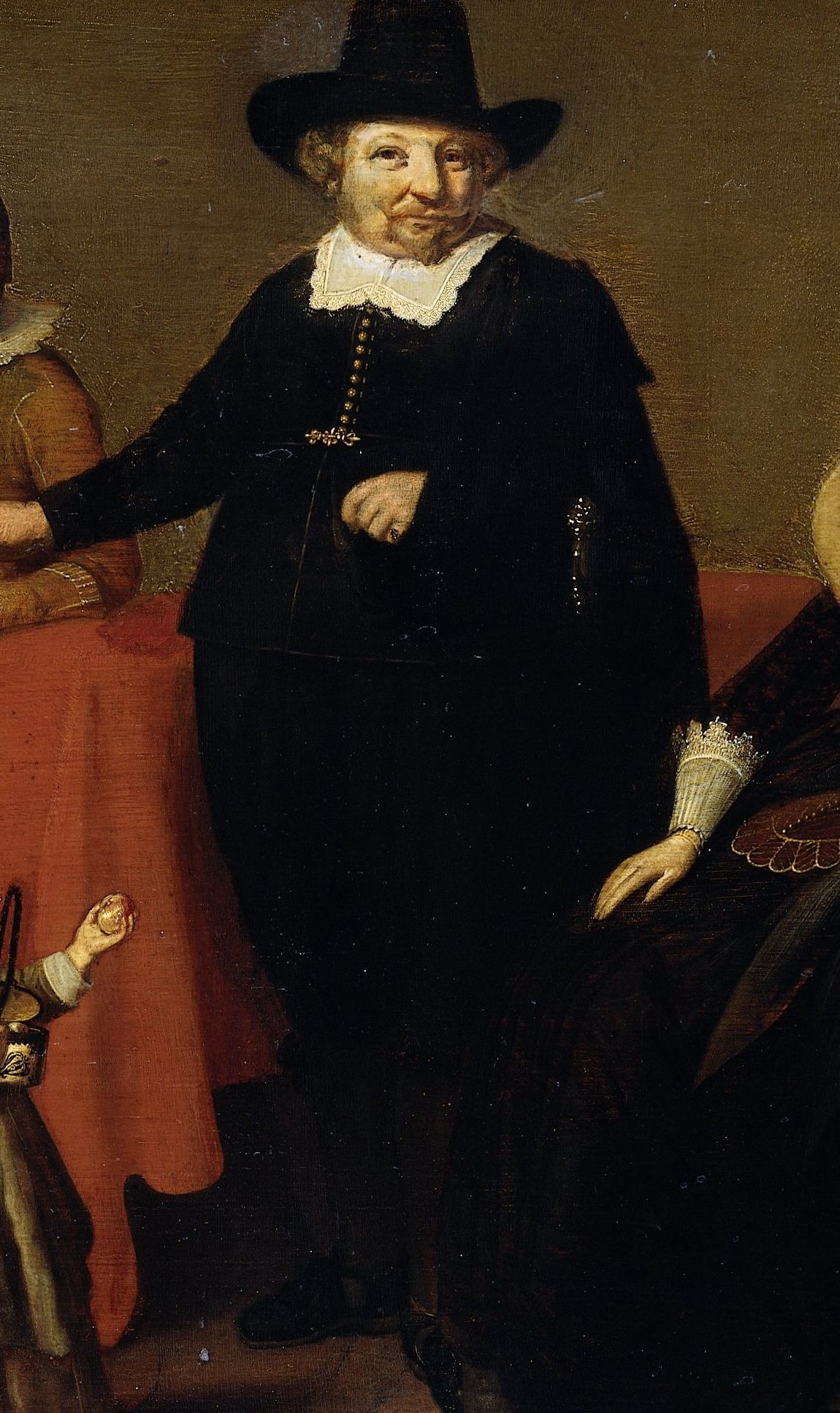
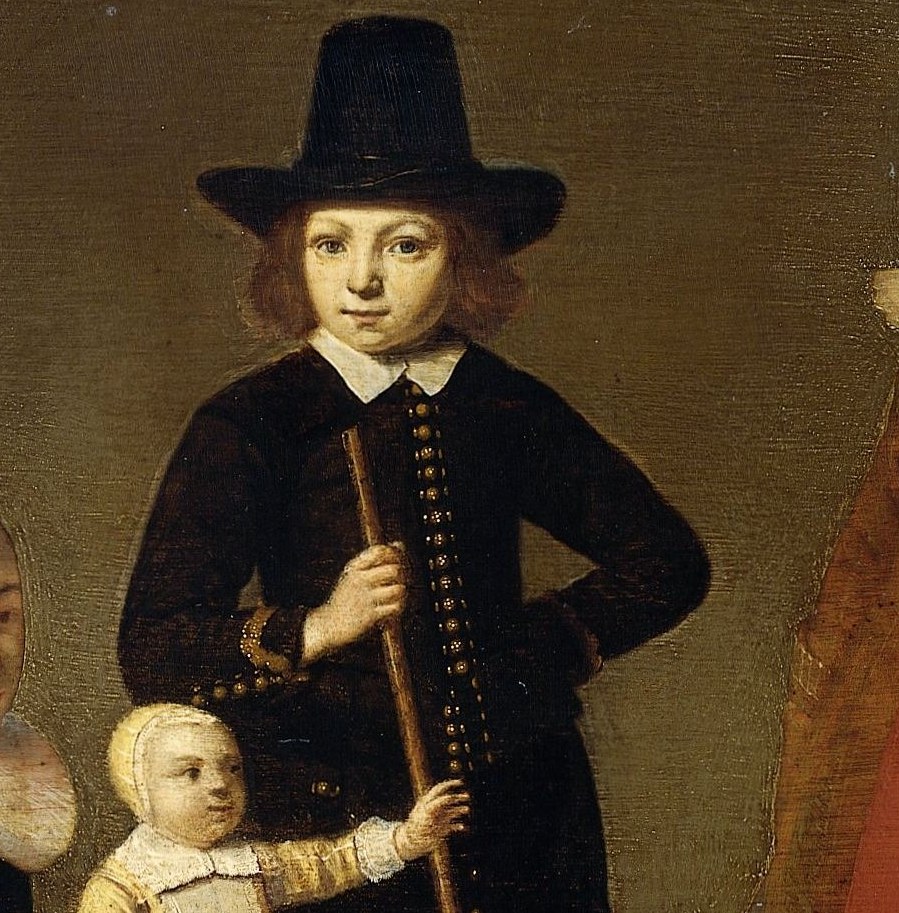
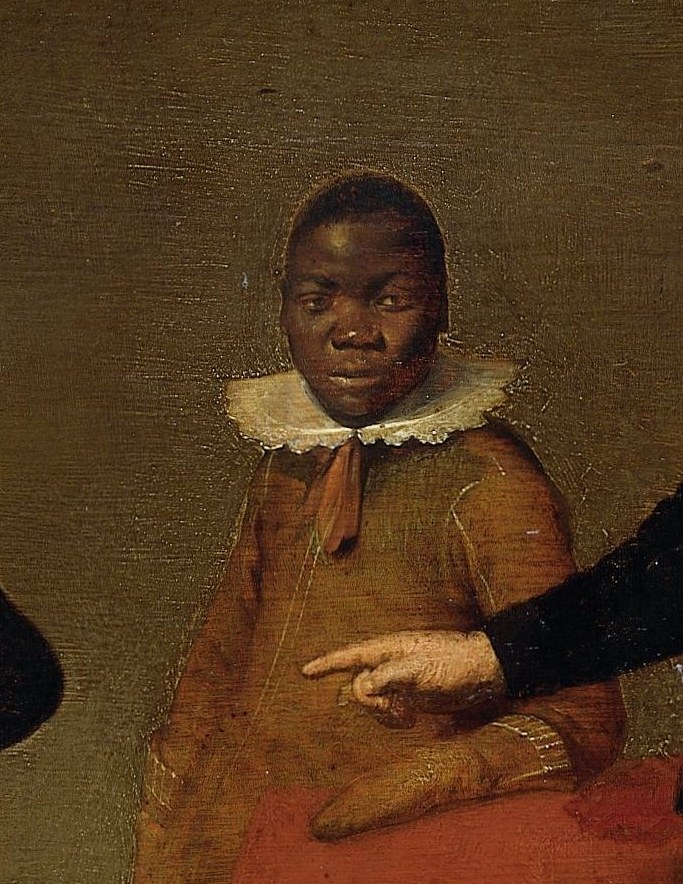
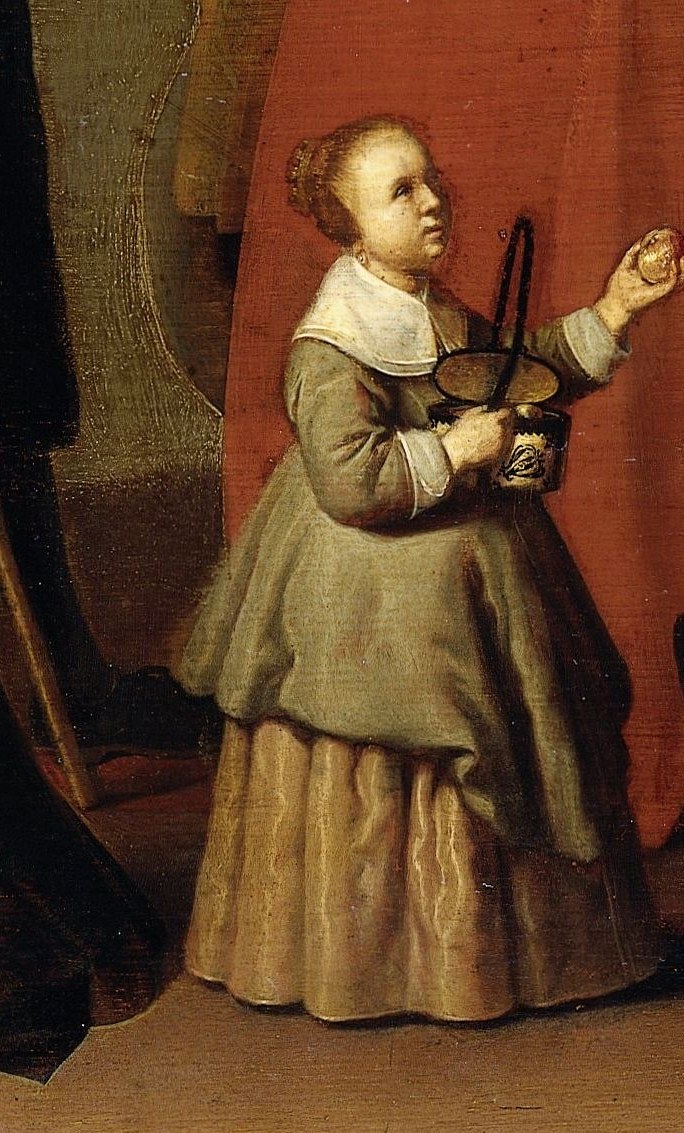
Look first at the hands. The woman in red clasps hands with the Black man beside her, a mutual and equal gesture. The father in the black hat holds your gaze. The son carries a violin, a mark of a refined household. The Black man points outward: he is not at the margin, he is in the group.
In 17th-century Dutch painting, Black figures almost always appeared as servants or exotic additions, placed at the edges of compositions. Duyster's choice to integrate this man into the core of a family group is an early and unusual one. The painting passed through several Dutch estates before entering the Rijksmuseum, where it now anchors discussions of race and representation in early modern Europe.
Duyster died at thirty-six. He left behind soldiers in candlelit rooms, and one family portrait that still asks us to look again.
Details
Transcript
Amsterdam, 1631. The painter usually does soldiers. The father in black meets our eyes. His son holds a violin, a mark of refinement. A Black man stands among them, hand clasped with the woman in red. In this era, Black figures in Dutch art were almost always servants. He points. He belongs in this room.