Self Portrait by Émile Bernard
View the artwork: Self Portrait →
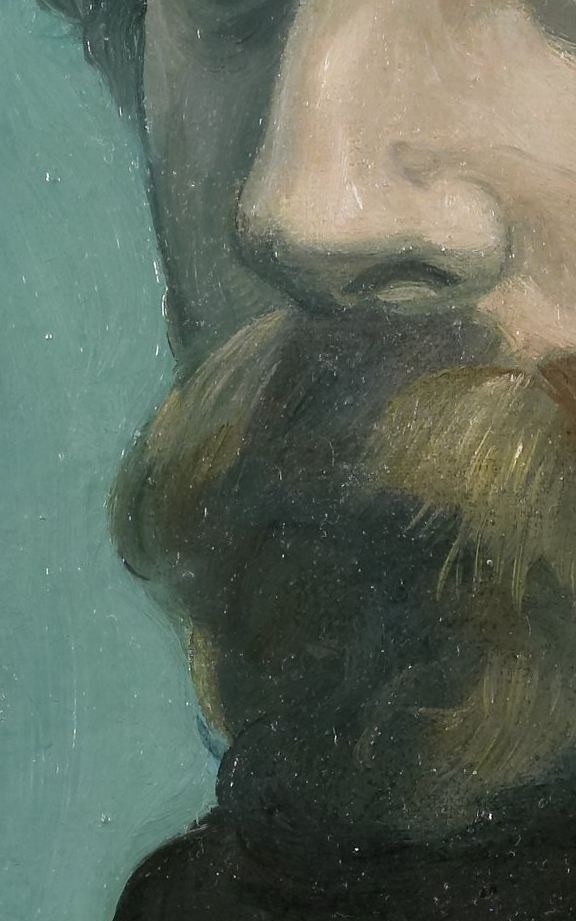
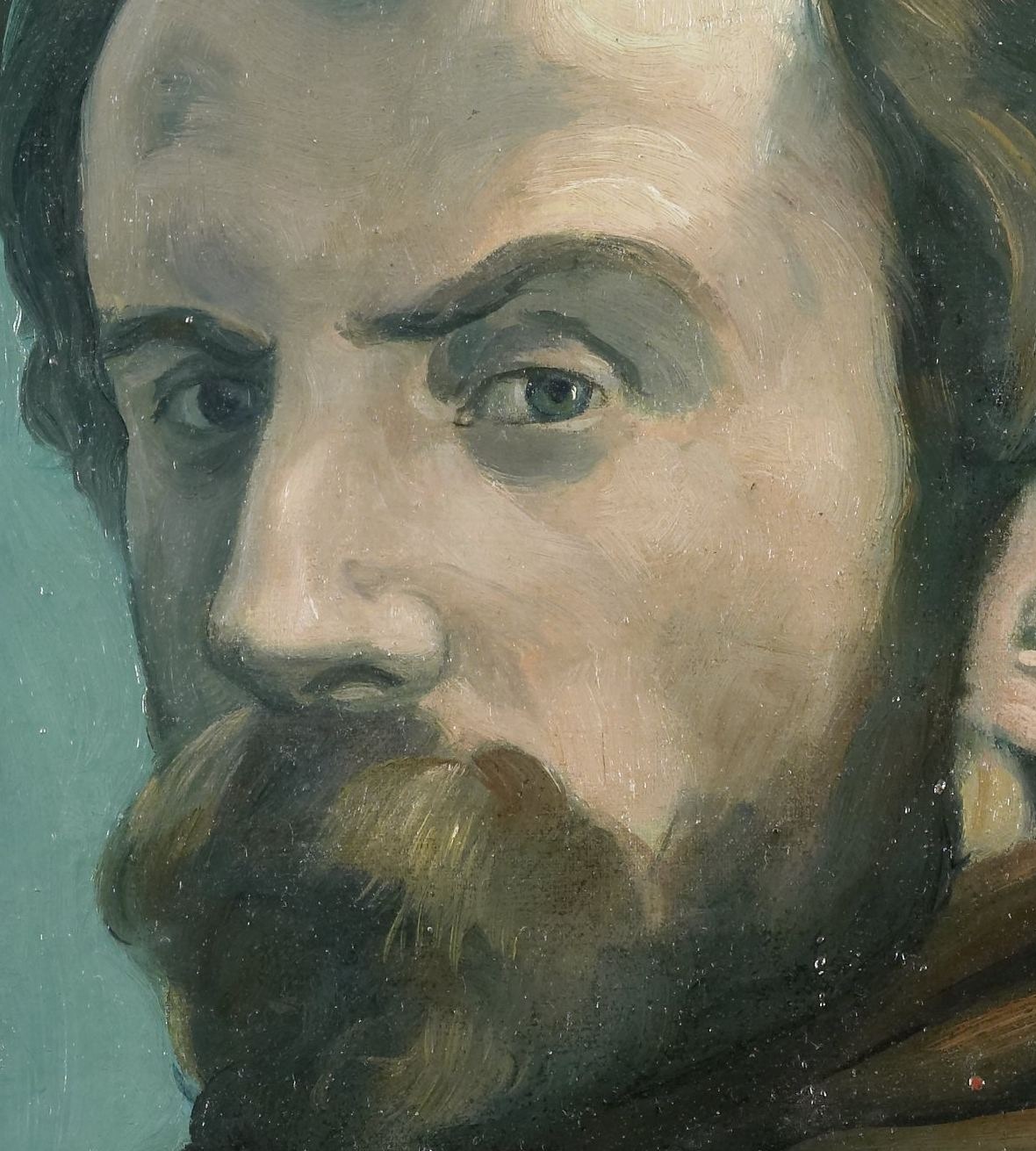
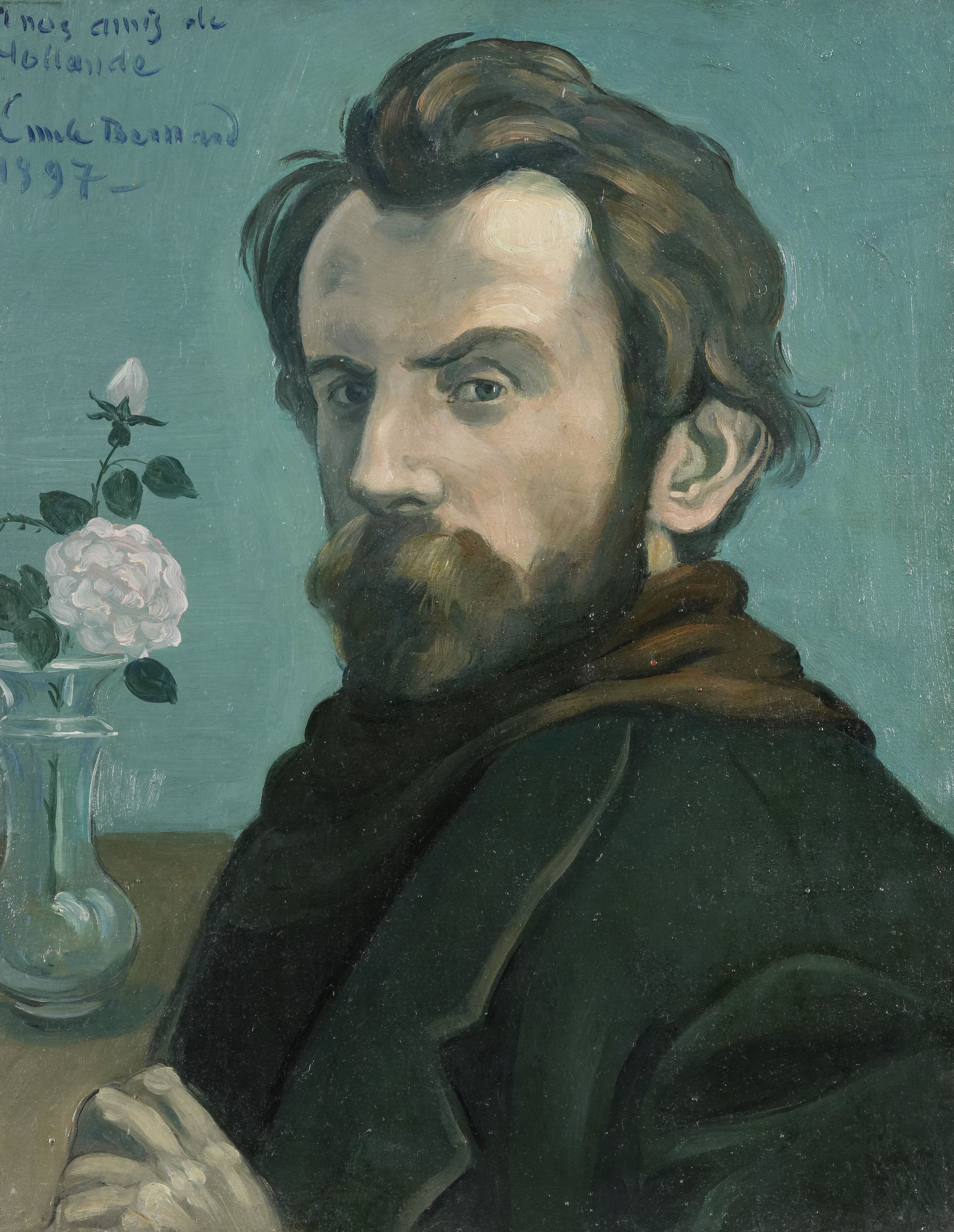
Émile Bernard painted his Self Portrait in 1897 as a coded message to friends in Holland. It hangs today in the Rijksmuseum in Amsterdam.
The inscription reads A nos amis en Hollande: To our friends in Holland. Behind him, a single white rose in a glass vase. In nineteenth-century portraiture, a white rose meant purity, or a life cut short. He painted his own face directly, sending his likeness as a personal letter across a border.
Bernard was twenty-nine and had already co-invented two art movements, Cloisonnism and Synthetism, working alongside Paul Gauguin and Vincent van Gogh. Van Gogh, his Dutch friend, had died seven years earlier. The dedication, the rose, and the direct gaze form a quiet message of remembrance sent home to Holland.
The signature has faded under the varnish. The message remains. What does a self-portrait say that a letter cannot?
Details
Transcript
He was twenty-nine. He had co-invented two art movements. The inscription reads: To our friends in Holland. A single white rose in a glass vase behind him. In portrait language, a white rose: purity, or a life cut short. He sent his own face to his friends in Holland. His friend Vincent van Gogh was Dutch. He died in 1890.