Woman from Edam by http://www.wikidata.org/.well-known/genid/686dd2c2d3f1f3b5f5891f36b95ed728
View the artwork: Woman from Edam →
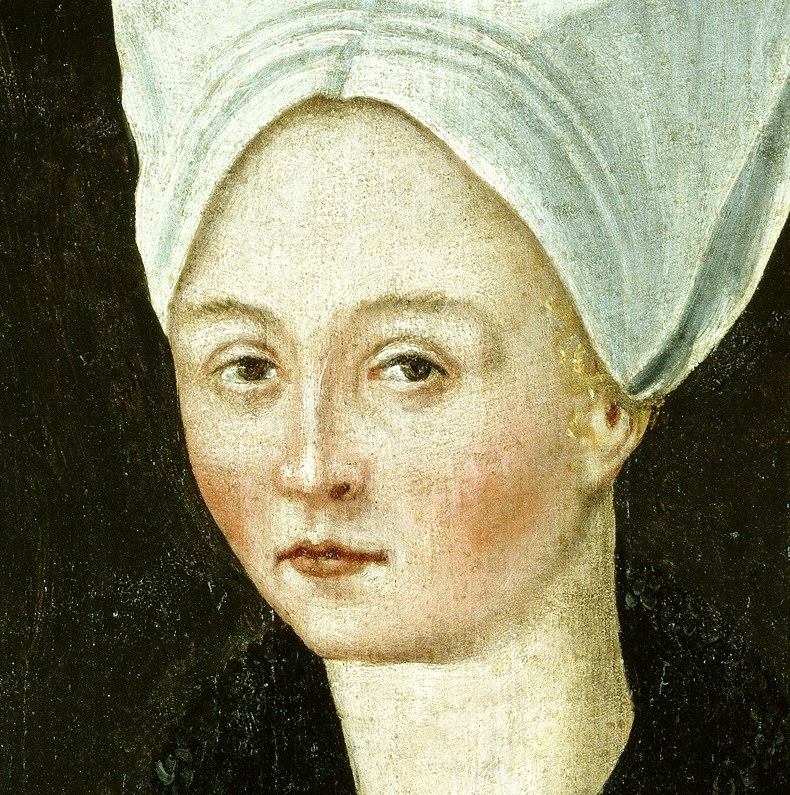
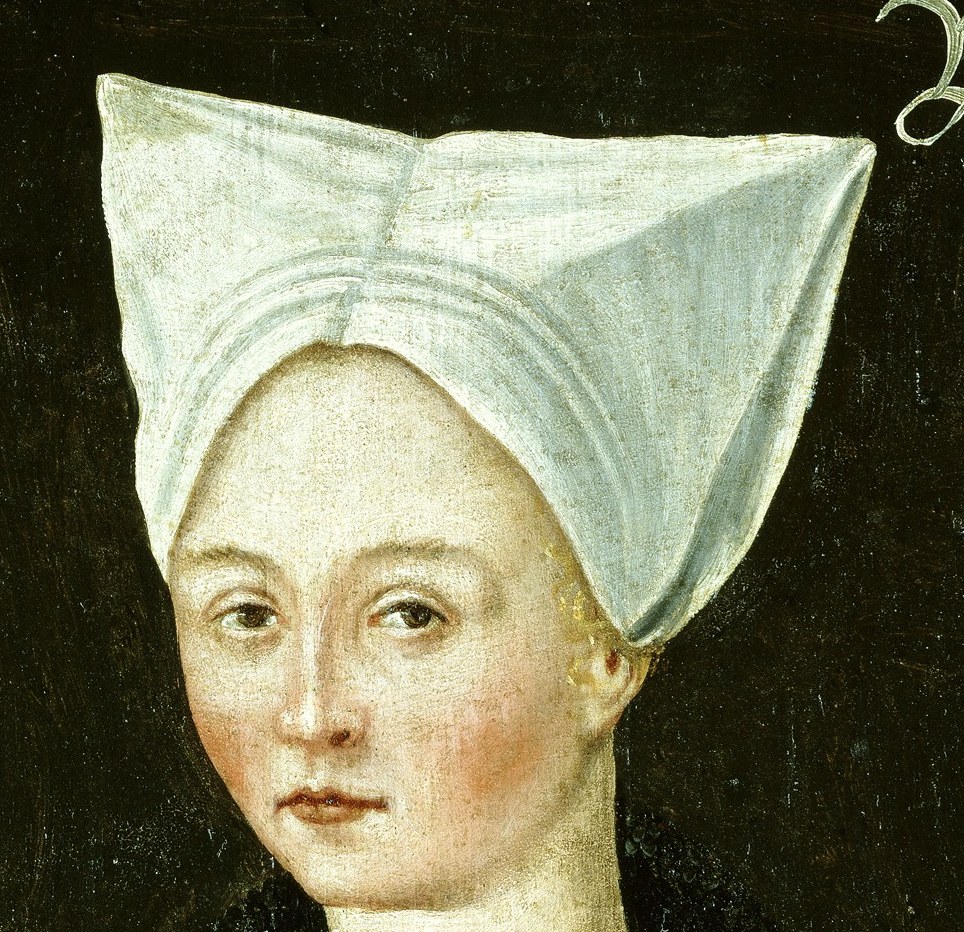
The painting is Woman from Edam by an unknown Dutch artist, dated around 1550. It is a modest portrait of an ordinary woman, identified only by the two words painted at the top of the canvas: Edamer (from Edam) and Vrouw (woman).
Look at the precision of her clothing: the crisp white cap, the gold buttons, the ornamented belt, the elaborate gold embroidery at her cuff. Against the near-black background, every detail is made to count. The white flower in her right hand is a small but deliberate symbol of purity or innocence.
Edam in the 16th century was a prosperous market town known for shipbuilding and cheese. This portrait reflects a tradition of documenting local identity rather than aristocratic lineage. The sitter's name was never recorded, but her face and her town have lasted nearly five centuries.
She is one of thousands of ordinary people painted into history without a name. And yet here she still is, looking back at us.
Details
Transcript
Around 1550, a painter in Holland finished this portrait. Edamer. A word for someone from Edam. And Vrouw. The Dutch word for woman. Her face is calm. Her town is what the painter named. Oil paint, nearly five centuries old. Her face.