The phrase ukiyo-e translates as “pictures of the floating world.” In Edo-period Japan, the floating world was the licensed pleasure quarters of the cities — the theatres, teahouses, and entertainment districts where merchants spent the money a rigid social order would not let them spend on rank. The art that grew up around that world was made not for temples or lords but for ordinary city people, and it was printed in numbers so that they could afford it.
A printed art for a paying public
Ukiyo-e was a workshop art, not a solo one. A publisher commissioned a design; a painter drew it; a carver cut the blocks, one for each colour; a printer pulled the sheets by hand, registering each impression against the last. The result was a picture that could be sold cheaply and widely. This was the deep difference between ukiyo-e and the European painting of the same centuries. A Dutch still life was a single object for a single wall. A ukiyo-e print was an edition, designed from the start to travel through a city’s bookshops and stalls.
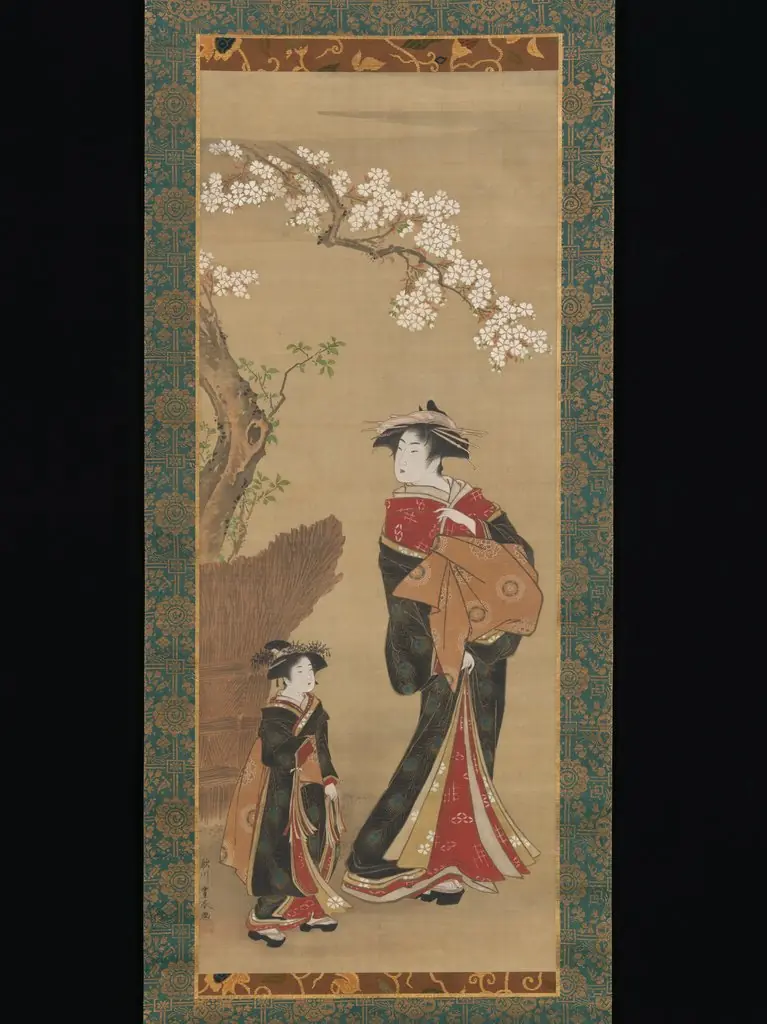
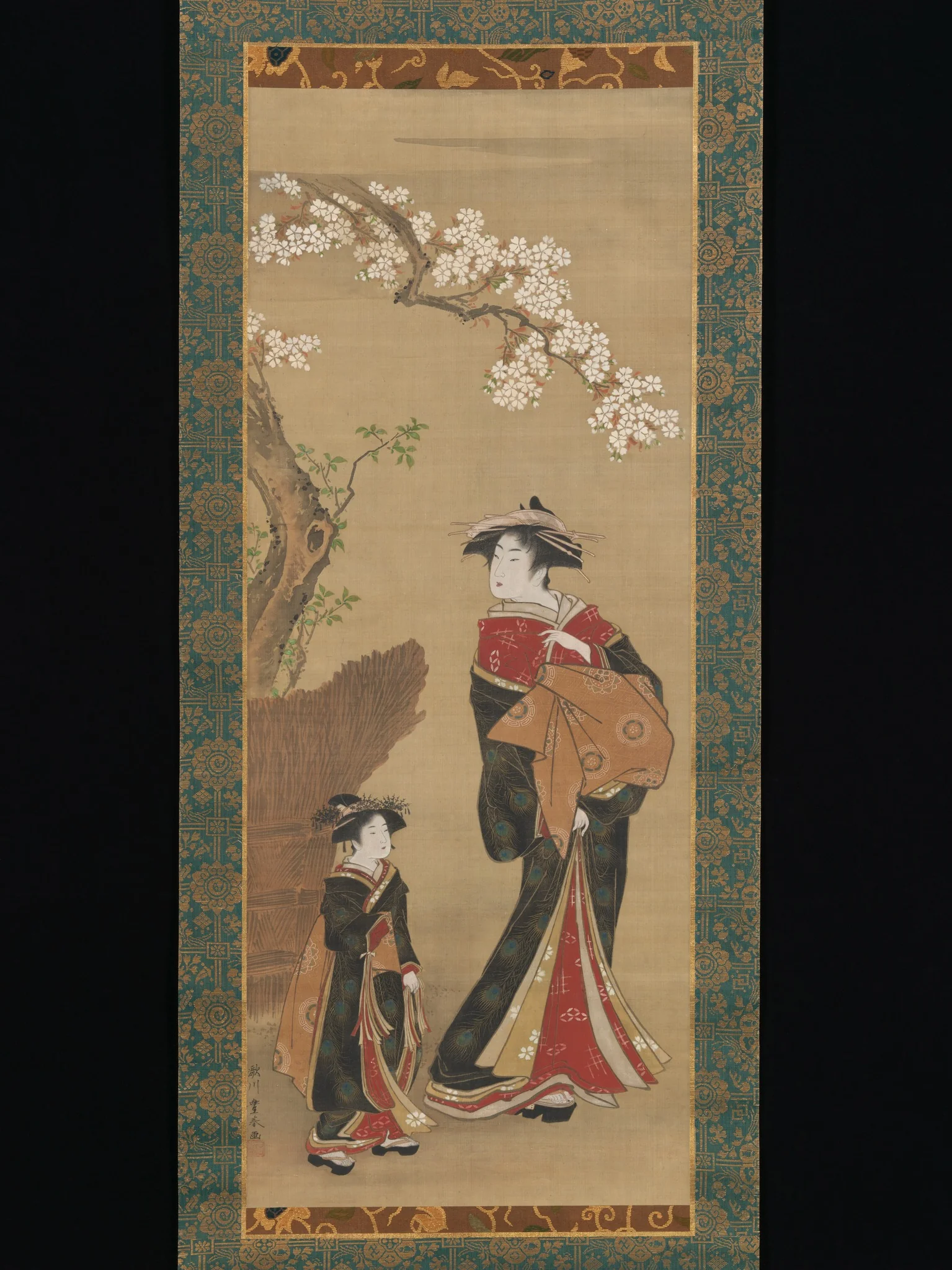
That commercial logic shaped the style. Because the image had to read at a glance and survive translation into carved blocks, the designers reduced everything to its essentials: flat areas of colour, strong contour lines, and bold, asymmetric compositions. Utagawa Toyoharu’s Courtesan and her Attendant under a Cherry Tree shows the method — figures defined by clean outline and pattern, set against blossom rendered as a few decisive shapes rather than modelled in light and shade.
Subjects of the floating world
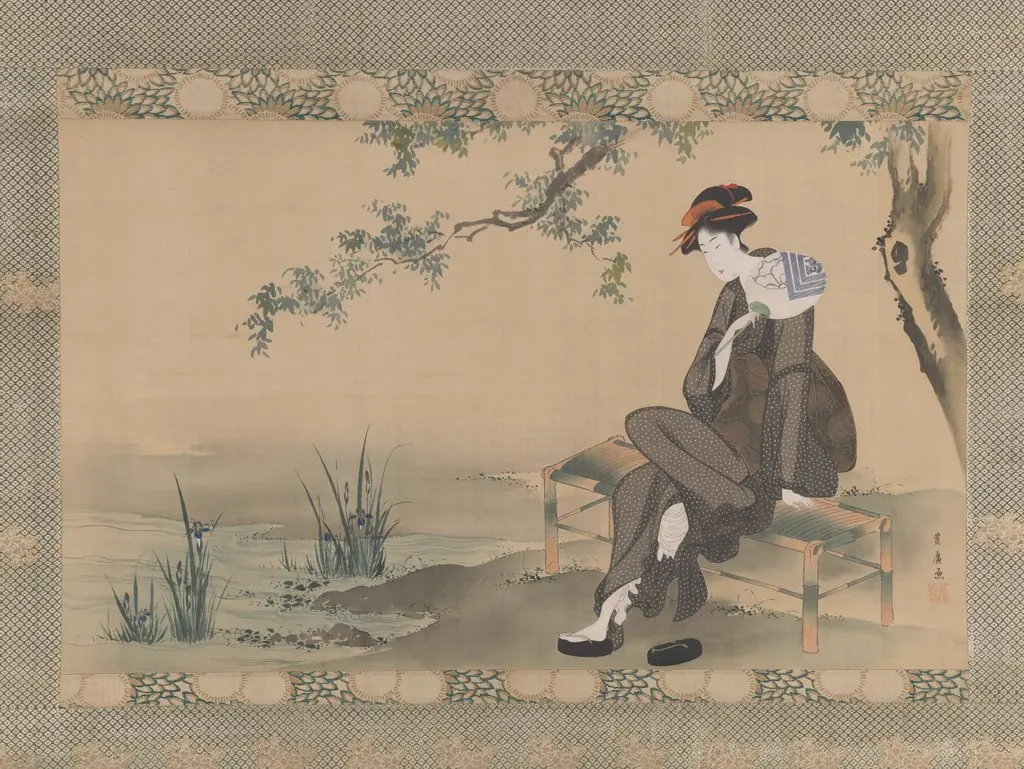
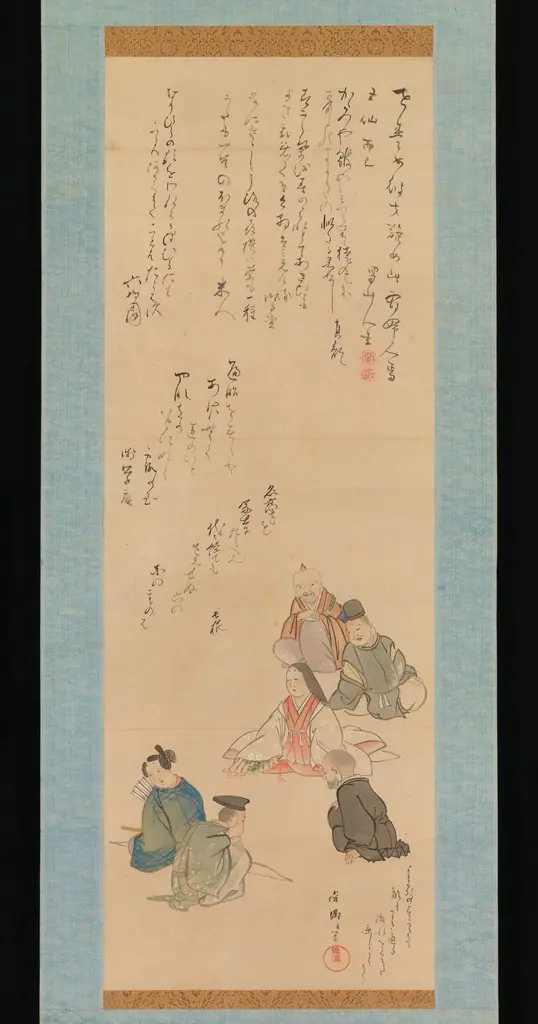
The classic ukiyo-e subjects were the people and pleasures of the city. Bijin-ga, pictures of beautiful women, made up a large share of the output: Utagawa Toyohiro’s Woman Cooling Herself is typical, a single elegant figure caught in an everyday gesture, the fall of her robe doing most of the design work. Actor prints captured the stars of the kabuki stage in their famous roles. Other prints turned to literature and legend, like Kubo Shunman’s The Six Poetic Immortals, gathering classical poets into a single composed scene.
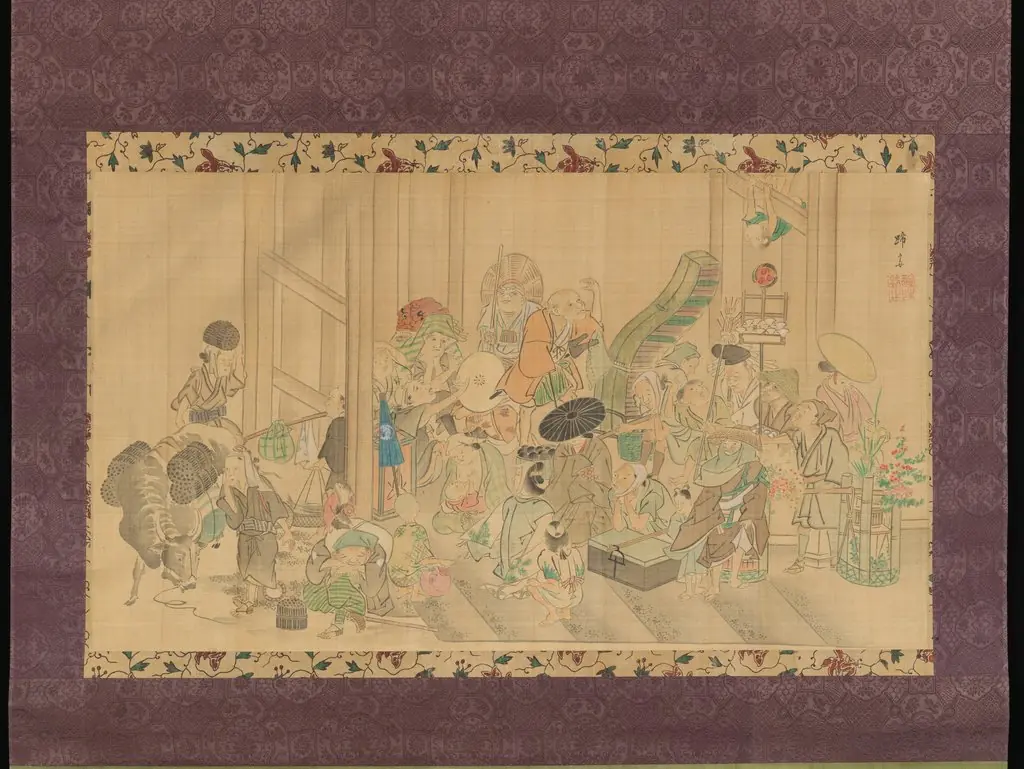
Weather and travel became their own genre. Teisai Hokuba’s Taking Shelter from the Rain belongs to a recurring ukiyo-e theme — figures caught by a sudden downpour, umbrellas tilted, robes pulled close. The print finds a small, shared human moment and gives it the same clean graphic treatment as a courtesan or an actor. Nothing is too ordinary for the floating world.
A design language that travelled
When ukiyo-e prints reached Europe in the nineteenth century, they changed the course of Western painting. The flat colour, the cropped compositions, the willingness to let a pattern carry a picture — all of it fed directly into the work of the Impressionists and Post-Impressionists, who were already looking for a way out of academic modelling. The floating world, made for the shops of Edo, ended up reshaping the studios of Paris.
For the modern viewer the appeal is direct. The ukiyo-e print is design reduced to what it needs and nothing more: a line, a shape, a flat field of colour, arranged with a confidence that still looks contemporary centuries later.
For the full tradition, see the Ukiyo-e movement page.