Artwork
Courtesan and her Attendant under a Cherry Tree
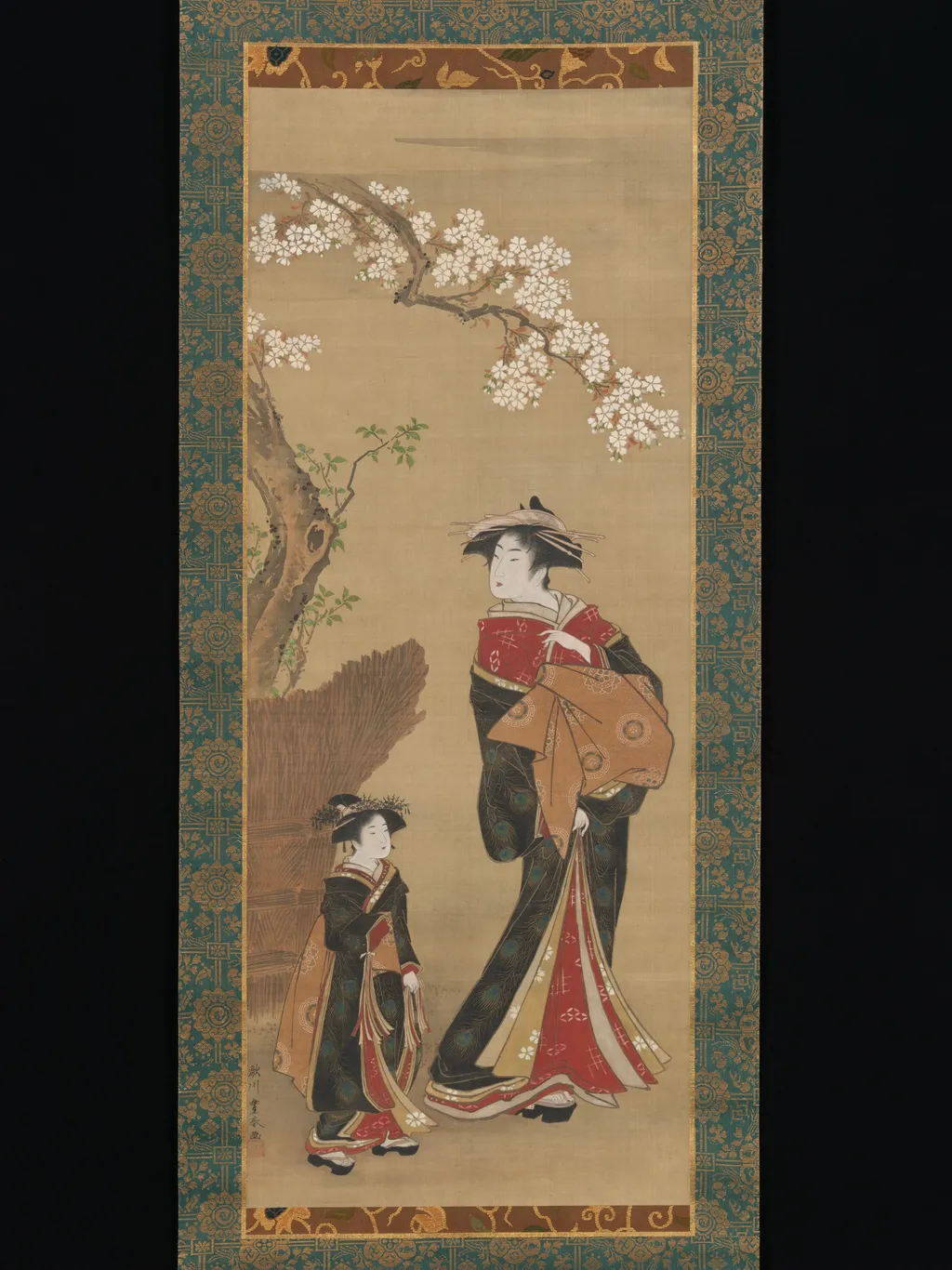
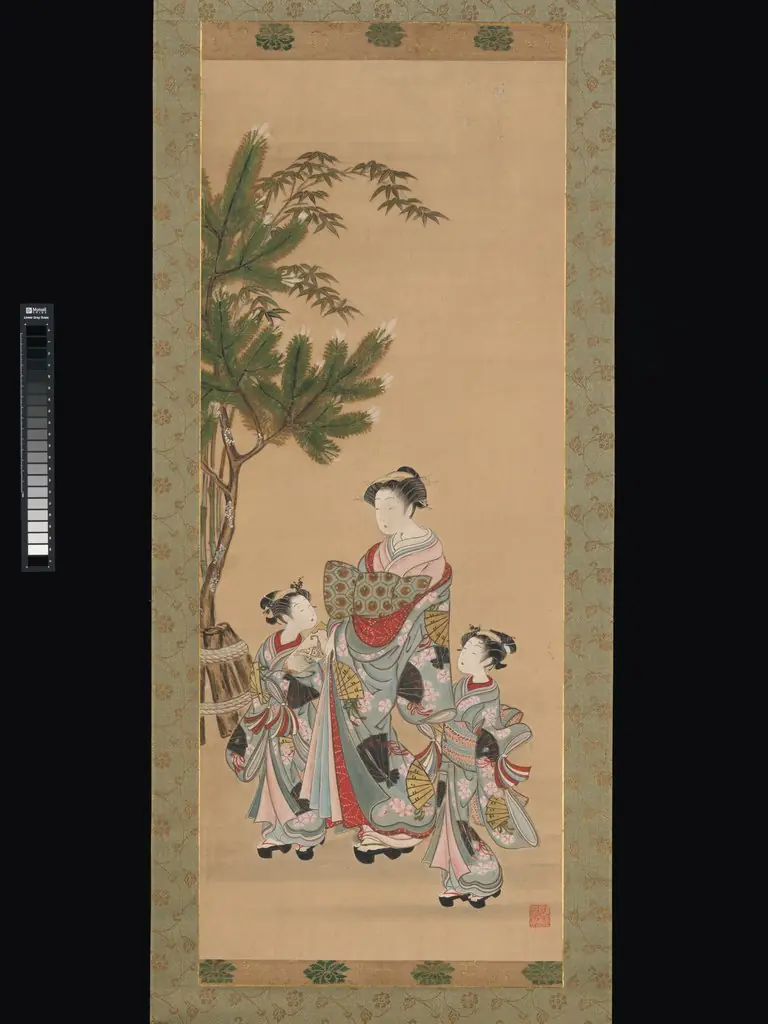
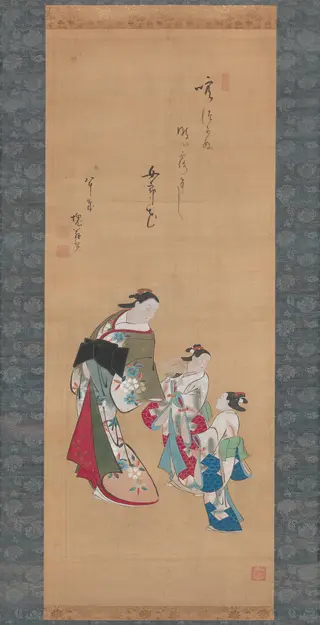
Courtesan and her Attendant under a Cherry Tree is an unspecified painting by the Ukiyo-e artist Utagawa Toyoharu. It is held in the collection of the Metropolitan Museum of Art.
About this work
Subject & Meaning
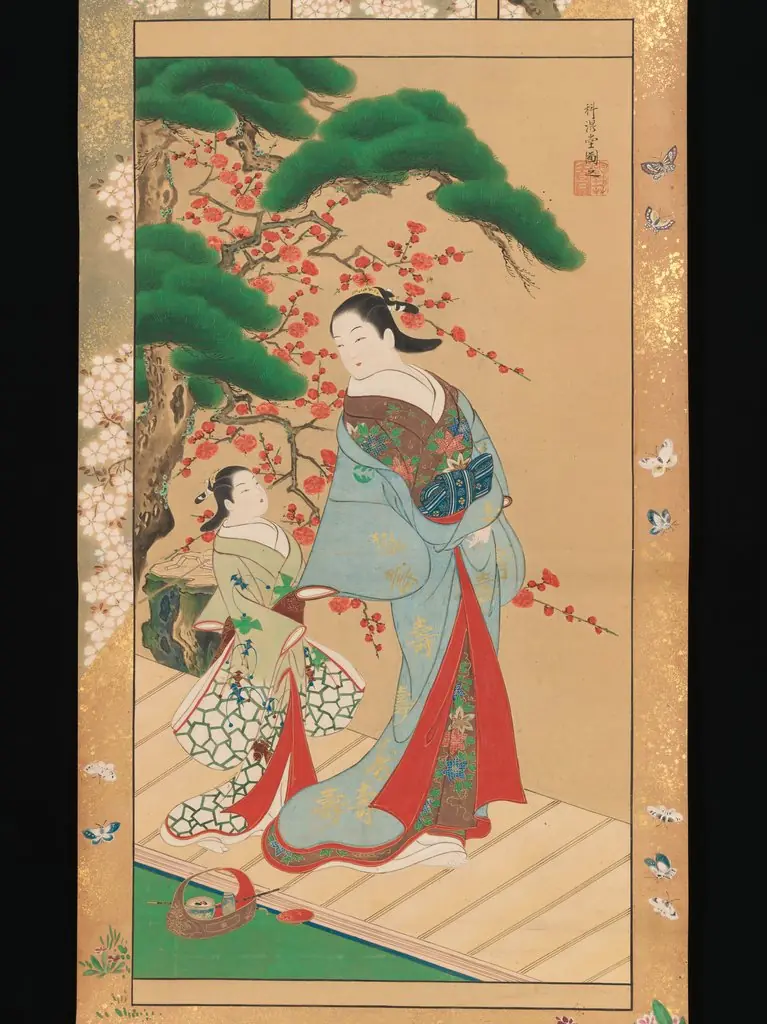
The scene centers on a courtesan seated beneath a flowering cherry tree, accompanied by a younger attendant holding a cosmetic box.
The scene centers on a courtesan seated beneath a flowering cherry tree, accompanied by a younger attendant holding a cosmetic box. The cherry blossoms evoke the ephemeral beauty and transience celebrated in Edo-period ukiyo-e, while the courtesan's refined attire and gesture signal her elevated status within the pleasure quarters. The composition underscores themes of seasonal pleasure and fleeting time, common in bijinga imagery of the era.
The attendant's presence suggests service within a licensed quarter, reinforcing the work's depiction of urban leisure culture rather than a purely romantic landscape.
History & Provenance
Created in 1816 by the Japanese artist Utagawa Toyoharu, the painting depicts a courtesan and her attendant beneath a cherry tree. The work originated in Japan during the early 19th century and is held in the collection of the Metropolitan Museum of Art. Further details regarding original commission or prior ownership are not recorded in available sources.
Context
Courtesan and her Attendant under a Cherry Tree, created in 1816 by Utagawa Toyoharu, is held in the Metropolitan Museum of Art. Depicting a courtesan, her attendant, and cherry blossoms, the work reflects subject matter characteristic of Edo-period Japanese art. Its inclusion in the museum's collection situates it within the broader trajectory of Japanese bijinga painting and the artist's output.
Overview
Utagawa Toyoharu created Courtesan and her Attendant under a Cherry Tree in 1816. This painting depicts two elegantly dressed women beneath a flowering cherry tree, a common motif in Japanese art. It is currently housed in The Metropolitan Museum of Art, representing a significant example of early 19th-century Japanese painting from the ukiyo-e tradition.
Technique & Style
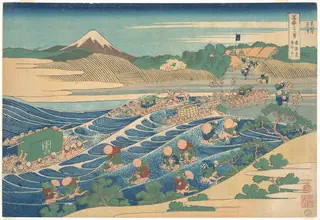
The artwork employs vibrant colors, particularly in the women's robes, which feature bright red and gold details that convey a sense of dynamic movement. Against a minimalist gold-beige background, the delicate white cherry blossoms on the tree's bare branches stand out. The painting is framed by decorative dark green and gold patterns along its edges, enhancing its visual richness.
Own this work as a print
Artist & collection

 Studied in the Edo/Japonisme course