Artist
John Harrison Witt
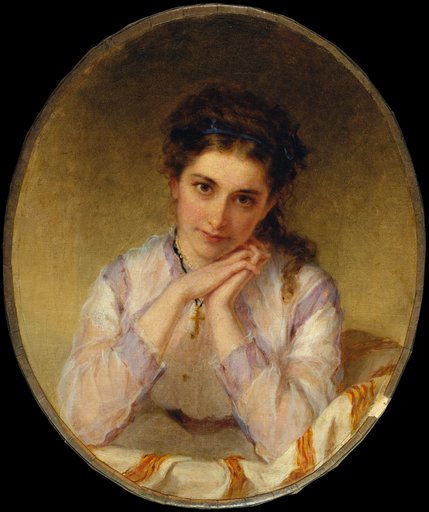
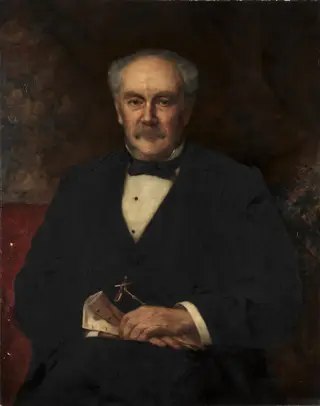
John Harrison Witt is an American Impressionism artist. 2 works are cataloged here, principally at Cleveland Museum of Art.
John Harrison Witt (1840–1901) was an American artist.
Overview
John Henry Witt (1840-1901) was an American painter known for portraits, genre scenes, landscapes, and religious subjects. Born in Indiana, he built his career primarily in Ohio before relocating to New York City, where he died in 1901. Witt achieved particular recognition as a portraitist, producing official gubernatorial portraits for the Ohio Statehouse, and also worked as a teacher with a notable circle of pupils. His career illustrates the trajectory of a nineteenth-century American artist moving from regional markets to the nation's artistic center.
Biography & dates
Witt was born on May 21, 1840, in Wayne County, Indiana, though some sources list his birthplace as Dublin, Indiana. He studied in Cincinnati during the late 1850s under Joseph Oriel Eaton. In 1862, he settled in Columbus, Ohio, where he initially focused on Biblical scenes. His first major effort, "Rebecca at the Well," sold for five hundred dollars, but subsequent works proved less commercially successful. To support himself, he worked for several years as a photographer tinter for Michael Witt. In 1865, he received a cash award at the Ohio State Fair for "best oil painting by an Ohio artist." By the 1870s, he had established a solid reputation as a portrait painter, securing commissions for thirteen gubernatorial portraits for the Ohio House. He was also active as a teacher during this period. Witt moved to New York City in 1877 or 1878, and he died there in 1901.
Style & movement
Witt worked across multiple genres including portrait, landscape, genre, and still-life painting, with his early career marked by a concentration on religious and Biblical subjects. His technical training under Joseph Oriel Eaton in Cincinnati provided a foundation in traditional academic methods. The shift from religious scenes to portraiture and then to broader genre and landscape work reflects the adaptive strategies of American artists in the post-Civil War period, when portrait commissions offered more reliable income than history painting. His Ohio State Fair award in 1865 suggests early recognition for his oil painting technique within a regional context.
Major works
Witt's earliest documented major work is "Rebecca at the Well," a Biblical scene that brought him his first significant sale of five hundred dollars sums. His most substantial commissions came in the 1870s, when he painted thirteen gubernatorial portraits for the Ohio House in Columbus. These official portraits represent his most prominent sustained body of work and securedrase his reputation as a leading portraitist in Ohio. No specific current locations for individual works are documented in the available sources, though his paintings are held in at least four museum collections according to exhibition records.
Influences & students
Witt's primary documented teacher was Joseph Oriel Eaton, under whom he studied in Cincinnati during the late 1850s. Eaton was a respected portrait and landscape painter who provided Witt with foundational academic training. Witt later became a teacher himself, and among his many pupils were Silas Martin and James Henry Moser. This transmission of training from Cincinnati-based instruction to Witt's own teaching practice in Ohio illustrates the regional networks of artistic education in the Midwest during the late nineteenth century.
Legacy
Witt's posthumous reputation rests primarily on his official portraits of Ohio governors and his role as a teacher. His move to New York City in 1877 or 1878 positioned him within the nation's dominant art market, though details of his later career there remain sparse. His works are recorded in four museum collections, indicating a modest but persistent presence in institutional holdings. The market for his paintings appears to have been primarily regional during his lifetime, centered on Ohio patronage, before his relocation to New York. No significant auction records or posthumous critical reassessments are documented in the available sources.
Works by John Harrison Witt
Collections represented

Artists in a similar vein