Artist
Lemuel Francis Abbott
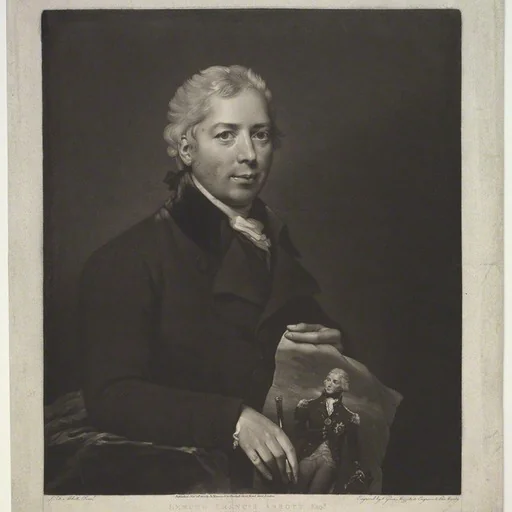
British, 1760–1803
Lemuel Francis Abbott was a British Neoclassicism artist. 2 works are cataloged here, principally at Museum of New Zealand Te Papa Tongarewa. Lemuel Francis Abbott was born in Leicestershire.
Lemuel Francis Abbott (born Lemuel Abbott; 1760/61 – 5 December 1803) was an English painter who specialised in portrait painting. He is known for his portrait of Horatio Nelson, 1st Viscount Nelson and other naval officers and literary figures of the late 18th and early 19th centuries.
Overview
Lemuel Francis Abbott (circa 1760/61-5 December 1803) was an English portrait painter who achieved prominence in late eighteenth and early nineteenth-century British art through his depictions of naval heroes, scientists, and literary figures. His reputation rests primarily on multiple portraits of Horatio Nelson, executed during the admiral's lifetime, alongside a substantial body of work portraying other notable contemporaries. Abbott's career was marked by professional success but personal tragedy; he was declared insane in 1798 and died in London at approximately forty years of age. His paintings are now held in major British collections including the National Portrait Gallery, the National Maritime Museum, and the Birmingham Museum and Art Gallery.
Biography & dates
Abbott was born Lemuel Abbott in Leicestershire, probably in 1760 or 1761, the son of clergyman and poet Lemuel Abbott, curate of Anstey and later vicar of Thornton, and his wife Mary. In 1775, at about fourteen years of age, he became a pupil of the painter Francis Hayman in London, but returned to his family following Hayman's death on 2 February 1776. He subsequently developed his skills independently, though some sources suggest possible further study with Joseph Wright of Derby. Around 1780 he settled permanently in London, establishing his residence in Caroline Street, Bloomsbury, where he remained for many years. On 16 November 1786 he married Anna Maria Magdalen Tracey; their son Edward Francis Abbott was born on 20 December 1787. Abbott exhibited at the Royal Academy of Arts between 1788 and 1800, showing fifteen portraits of distinguished men, though he never attained membership. His later years were spent in Penton Street, Islington, where he died on 5 December 1803. The German Wikipedia gives the death date as 5 December 1802, though the English and French sources consistently state 1803.
Style & movement
Abbott worked within the tradition of British portraiture contemporary with the late eighteenth century, producing exclusively male portraits throughout his career. His approach is distinguished by a pronounced realism in the depiction of his subjects' heads, while the rendering of their bodies and any landscape backgrounds received notably less artistic attention. A recurring compositional formula placed the sitter's body parallel to the picture plane while turning the head in three-quarter profile, creating an effect of momentary distraction. This technique appears across numerous works and contributes to a sense of immediacy in his portraits. No female portraits by Abbott are known to survive. Some of his paintings are believed to have been completed by other artists, suggesting a workshop practice or the intervention of assistants due to his heavy commission load. Several of his portraits were reproduced as engravings by printmakers including Valentine Green, Joseph Skelton, William Walker, W. Barnard, J. F. Smith, and C. Turner; Green notably engraved Abbott's self-portrait in 1805.
Major works
Abbott's most celebrated work is his 1797 portrait of Horatio Nelson, begun while both men lodged in Bond Street, London. The painting received enthusiastic approval from Nelson and his wife, with Lady Nelson recording that 'the likeliness is great; I am well pleased with Abbott.' Abbott executed numerous variants of Nelson's portrait, and examples are held at the National Maritime Museum in Greenwich and the National Portrait Gallery in London. The Nelson portrait long hung in the Terracotta Room at 10 Downing Street, the British Prime Minister's official residence. Other significant naval subjects include Admiral Sir Robert Calder and Rear-Admiral Sir Thomas Pasley, both at the National Maritime Museum, and Captain William Locker. His 1792 portrait of the poet William Cowper and his 1785 portrait of the German-British astronomer William Herschel are held at the National Portrait Gallery. Abbott's circa 1802 portrait of the engineer and entrepreneur Matthew Boulton is in the collection of the Birmingham Museum and Art Gallery. His portrait of Henry Callender, Captain General of the Royal Blackheath Golf Club, painted in 1790 and depicting what may be Captain William Innes, is considered one of the earliest representations of golf and has been widely reproduced for golf clubs internationally; the original was sold at Bonhams, London, on 9 December 2015. A portrait of the sculptor Joseph Nollekens, dated circa 1797, is also regarded among his most accomplished works and is held at the National Portrait Gallery.
Influences & students
Abbott's initial training came from Francis Hayman, a painter and illustrator who had served as the first president of the Society of Artists, though Hayman's death in 1776 cut short this apprenticeship after little more than six months. The possibility of subsequent study with Joseph Wright of Derby, while suggested by some authorities, remains unconfirmed. Wright's influence, if it occurred, would have connected Abbott to a painter celebrated for dramatic lighting and provincial subject matter. Abbott's own teaching activity was limited, consistent with reports of his miserly disposition and reluctance to employ assistants. However, the hunting painter Ben Marshall is documented as his pupil in 1791, indicating that Abbott did maintain at least one formal studio relationship despite his reputed unwillingness to delegate work or share commissions.
Legacy
Abbott's posthumous reputation has been shaped by the enduring fame of his Nelson portraits and the pathos of his personal decline. His mental illness, declared in July 1798, was attributed to overwork and domestic unhappiness, though his October 1800 will described his wife as 'beloved spouse' and named her his heir, complicating straightforward narratives of marital discord. Treatment by Thomas Munro, chief physician to Bethlem Hospital and specialist in mental disorders who had also attended King George III, places Abbott within the orbit of advanced psychiatric care of the period. His exhibitions at the Royal Academy continued for two years after his declaration of insanity. The widespread reproduction of his golf portrait and the institutional presence of his works in major national collections have sustained his visibility, while scholarly attention has focused on his technical strengths in facial characterization and his representative role in British portraiture of the Napoleonic era. The Art UK website lists sixty-nine works by or after Abbott, indicating substantial surviving attribution.
Works by Lemuel Francis Abbott
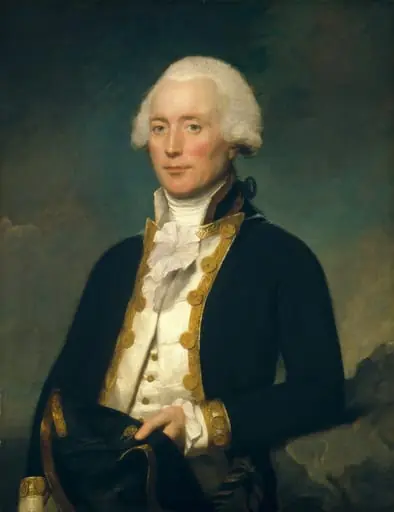
![Portrait of John Greenwood [senior]](https://artifactworldgallery.com/img/lemuel-francis-abbott--portrait-of-john-greenwood-senior--915cfc98b30902c8-w320.webp)
Collections represented


Artists in a similar vein