Artist
Paul Nash

United Kingdom
Paul Nash is an United Kingdom Aestheticism artist. 18 works are cataloged here, principally at Victoria and Albert Museum.
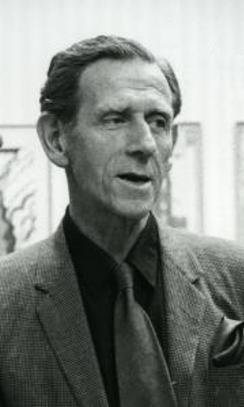
Paul Nash (11 May 1889 – 11 July 1946) was a British surrealist painter and war artist, as well as a photographer, writer and designer of applied art. Nash was among the most important landscape artists of the first half of the twentieth century. He played a key role in the development of Modernism in English art. Born in London, Nash grew up in Buckinghamshire where he developed a love of the landscape. He entered the Slade School of Art but was poor at figure drawing and concentrated on landscape painting. Nash found much inspiration in landscapes with elements of ancient history, such as burial mounds, Iron Age hill forts such as Wittenham Clumps and the standing stones at Avebury in Wiltshire. The artworks he produced during World War I are among the most iconic images of the conflict. After the war Nash continued to focus on landscape painting, originally in a formalized, decorative style but, throughout the 1930s, in an increasingly abstract and surreal manner. In his paintings he often placed everyday objects into a landscape to give them a new identity and symbolism. During World War II, although sick with the asthmatic condition that would kill him, he produced two series of anthropomorphic depictions of aircraft, before producing a number of landscapes rich in symbolism with an intense mystical quality. These have perhaps become among the best known works from the period. Nash was also a fine book illustrator, and designed stage scenery, fabrics and posters. He was the older brother of the artist John Nash.
Works by Paul Nash
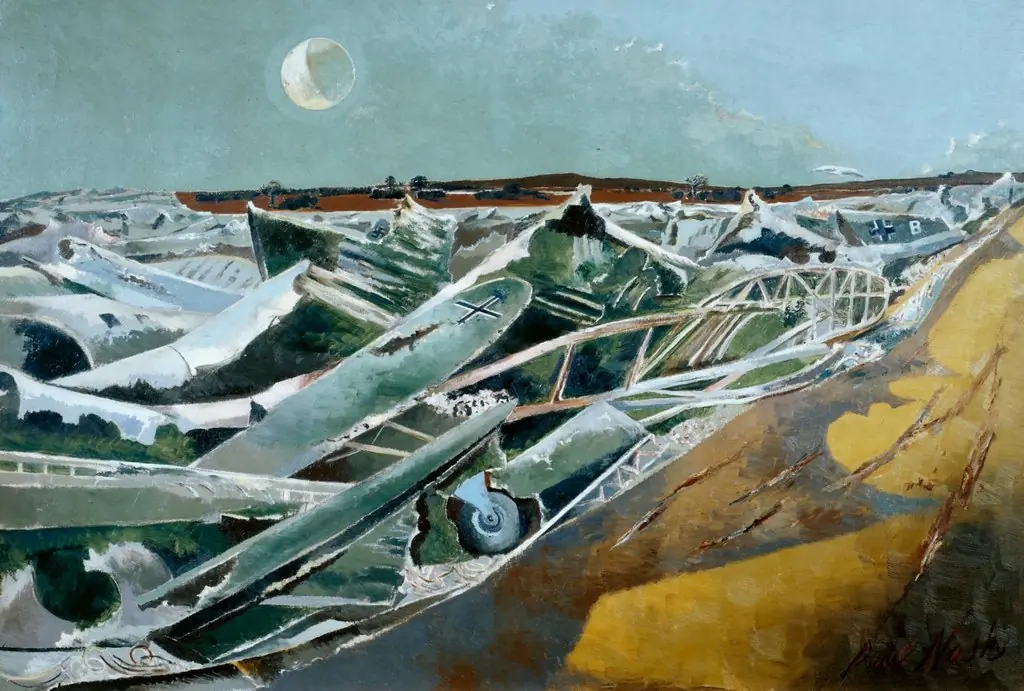 Totes Meer (Dead Sea)
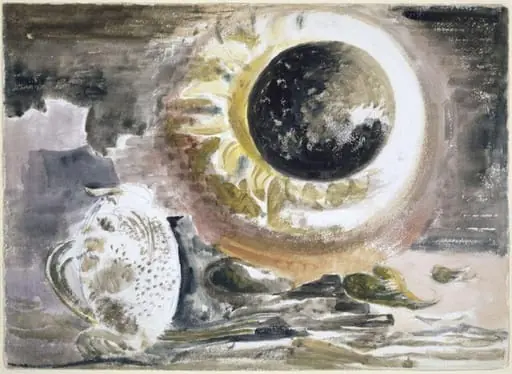 The Eclipse of the Sunflower
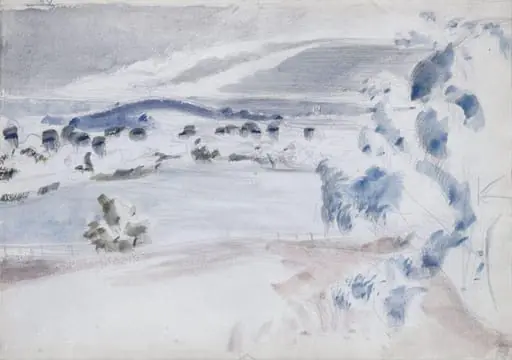 Landscape study II, Isle of Wight
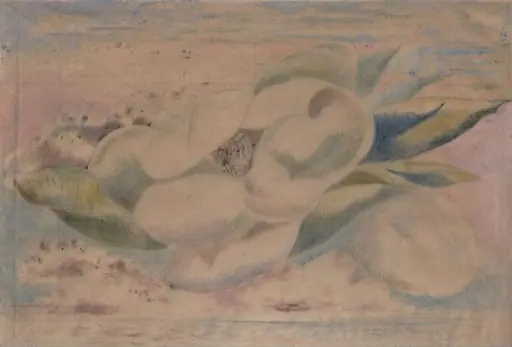 Flight of the Magnolia
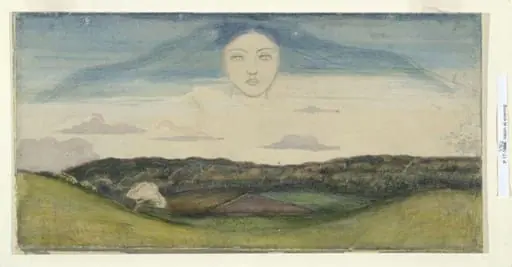 Vision at Evening
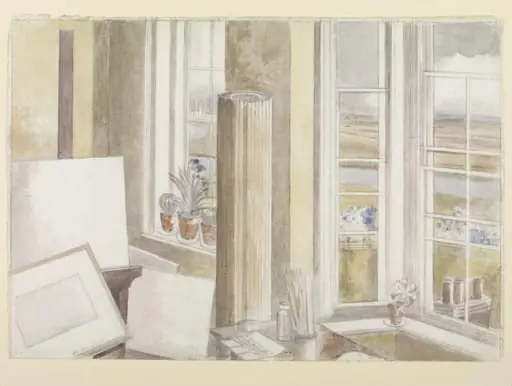 The Studio, New House, Rye
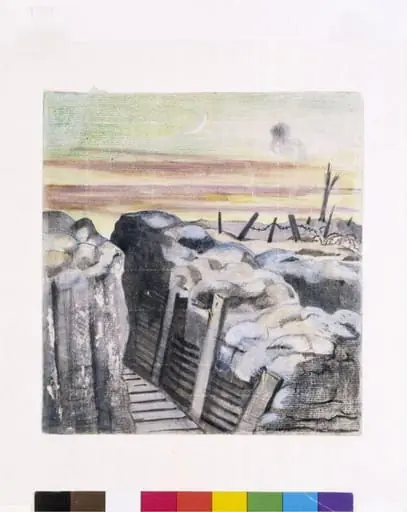 The Old Front Line, St Eloi, Ypres Salient
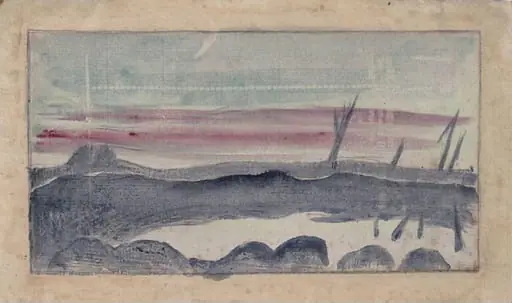 The Pool, Ypres Salient
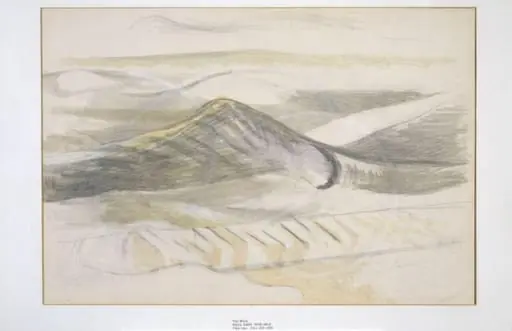 The Wave
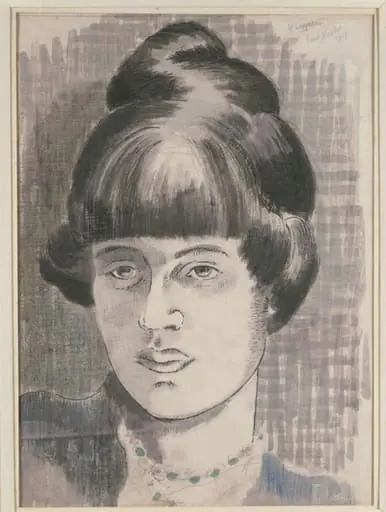 Margaret Nash
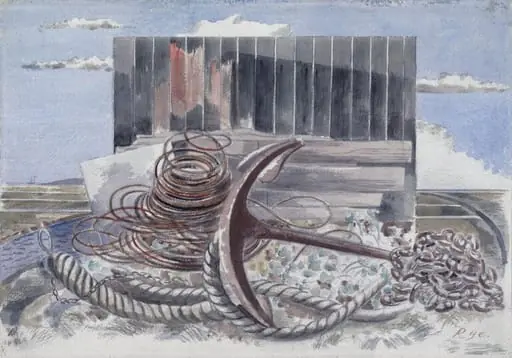 Rye
Rye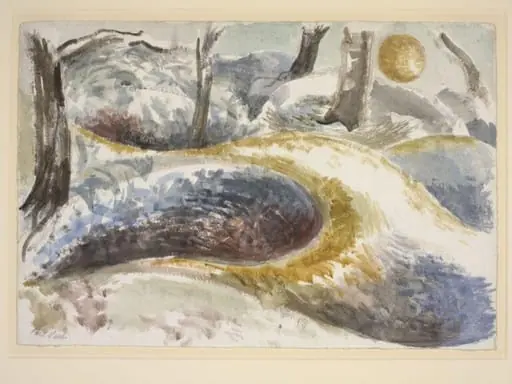 Landscape at Pen Pitts
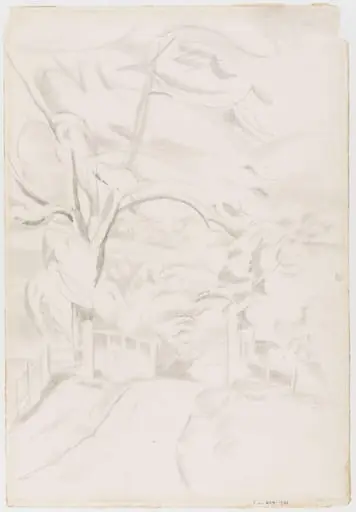 The edge of the lake
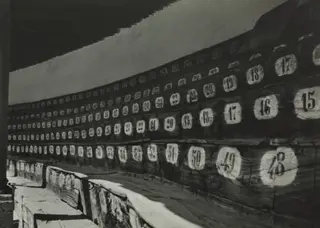 The Bull Ring, Ronda, Spain
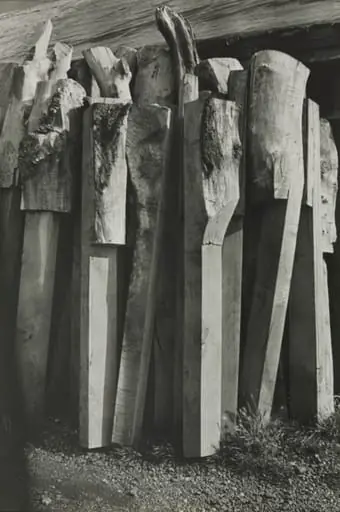 Totems, Old Shipyard, Rye
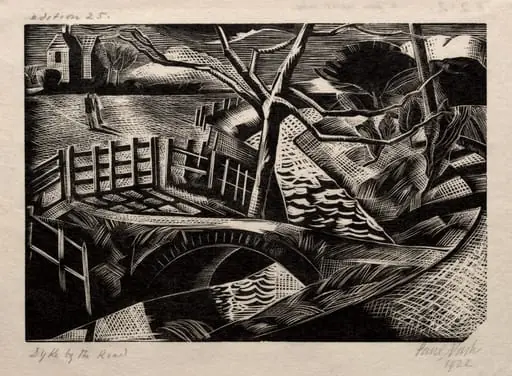 Dyke by the Road
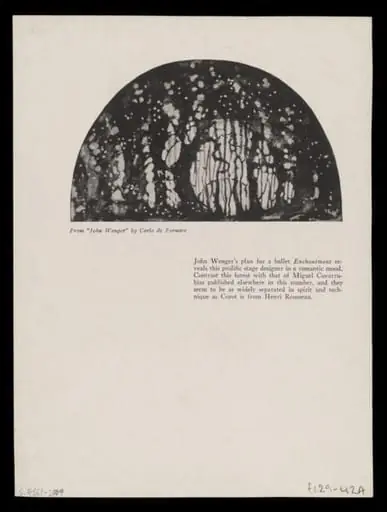 H Beard Print Collection
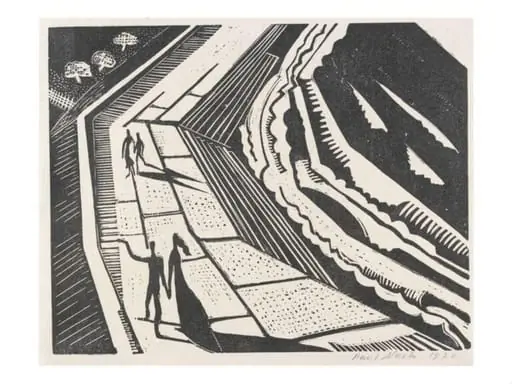 Promenade No. 1
Collections represented


Artists in a similar vein

Artist