Artist
James Seymour
United Kingdom
James Seymour is an United Kingdom Baroque artist. 5 works are cataloged here, principally at National Gallery of Art.
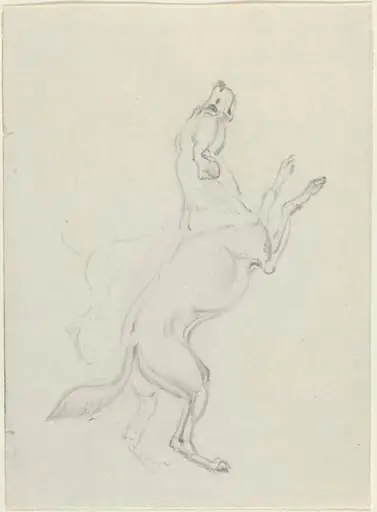
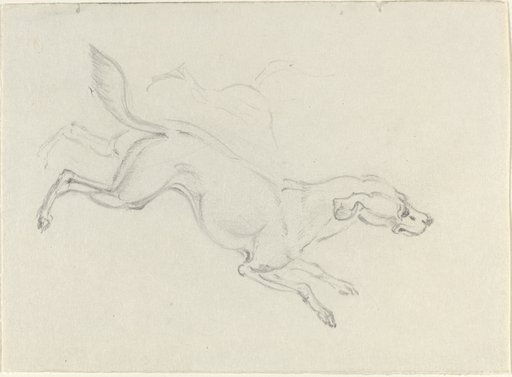
![Huntsmen with Hounds and a Crouching Hare [recto]](https://artifactworldgallery.com/img/james-seymour--huntsmen-with-hounds-and-a-crouching-hare-recto--e2b42c7824fe6842-w320.webp)
![Mounted Horsemen [verso]](https://artifactworldgallery.com/img/james-seymour--mounted-horsemen-verso--7e115ac519b61a2c-w320.webp)
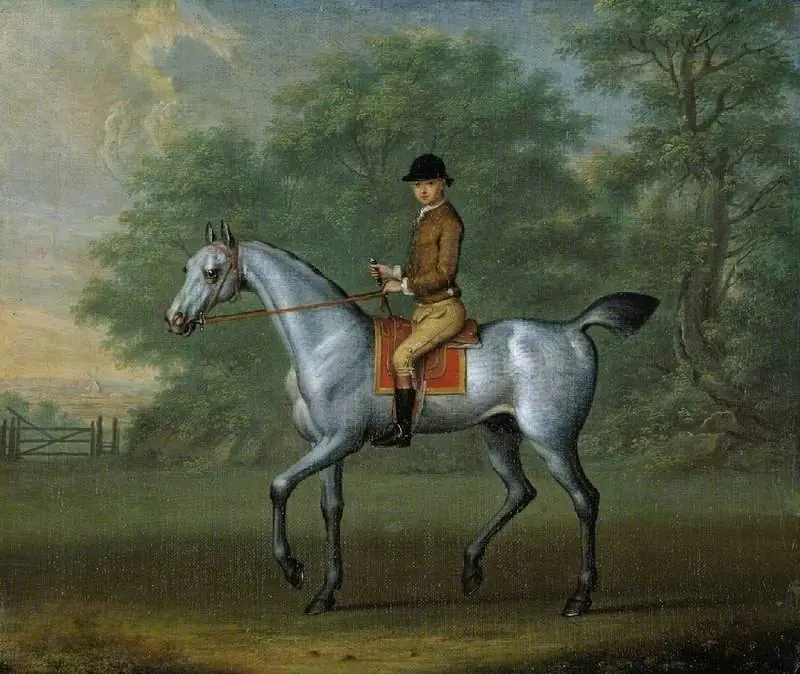
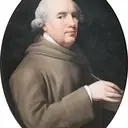
James Seymour (1702–1752) was an English painter, widely recognized for his equestrian art.
Seymour was born in London. His father was an amateur artist and art dealer, whose other business dealings (as a banker, goldsmith, and diamond merchant) afforded young Seymour the leisure time to study art on his own, either his father's or the art at the Virtuosi Club of St. Luke - a gentleman's club his father belonged to, specializing in art. In a short time the boy was a self-taught artist, familiar with many of the prominent artists of the period. Seymour's love of art was matched only by his love of horses. He began spending time at racetracks early on, and before long found himself absorbed in the sport - drawing, painting, owning, breeding, and racing horses. His art proved popular among the prominent sporting families of the day, eventually garnering Seymour patrons in Sir William Jolliffe and Charles Seymour, 6th Duke of Somerset. Jolliffe's love for horses and art proved great, and his will would later establish an equestrian statue in Hampshire. In time, Seymour's work and fame had spread throughout Europe and America. Though ultimately his love for horseracing led to his financial ruin, Seymour still ranks among the most important early sporting artists, together with John Wootton and Peter Tillemans being considered one of the three founders of the sporting school.
Overview
James Seymour (1702-1752) was an English painter who ranks among the most important early practitioners of British sporting art. Alongside John Wootton and Peter Tillemans, he is considered one of the three founders of the sporting school. Seymour devoted his entire career to equestrian subject matter, producing prolific depictions of racehorses, hunters, hunting scenes, and stable subjects that earned him international recognition during his lifetime. Despite his professional success and patronage from prominent aristocratic families, his extravagant lifestyle and passion for horseracing led to financial ruin, and he died in poverty in Southwark, London.
Biography & dates
Seymour was born in London in 1702, the only son of James Seymour (1658-1739), a man of diverse commercial interests. His father worked as a banker, goldsmith, and diamond merchant, and also operated as an amateur artist and art dealer. The elder Seymour supplied plate for racing trophies, organized race meetings at Guildford, and served as steward of the Virtuosi of St Luke in 1702. He collected pictures and curiosities, maintained connections with artists and connoisseurs, and subscribed to Kneller's academy in Great Queen Street in 1711. Some of his drawings survive in the collections of the British Museum and the Huntington Art Gallery, San Marino, California. The younger Seymour's artistic education was largely self-directed. He studied his father's collection and works available at the Virtuosi Club of St Luke, a gentleman's club to which his father belonged. He may have received some informal drawing instruction from the topographer Francis Place. In 1720, he attended the academy in St Martin's Lane under Louis Cheron and John Vanderbank, paying an extra subscription of ten guineas in October of that year. Seymour's earliest signed and dated work, a portrait of the racehorse Old Fox, dates to 1721, indicating that he had already established a professional reputation by age nineteen. His involvement with horseracing extended beyond painting, he owned, bred, and raced horses himself. George Vertue's contemporary account describes a life of extravagance: 'The darling of his Father run thro some thousands - livd gay high and loosely - horse raceing gameing women &c.' Vertue recorded that Seymour's excesses caused his father's bankruptcy in 1737, and that 'the latter part of his life was spent in the lowest circumstances & in debt.' Seymour died unmarried on 30 June 1752 at lodgings in Blackman Street, Southwark, aged about fifty.
Style & movement
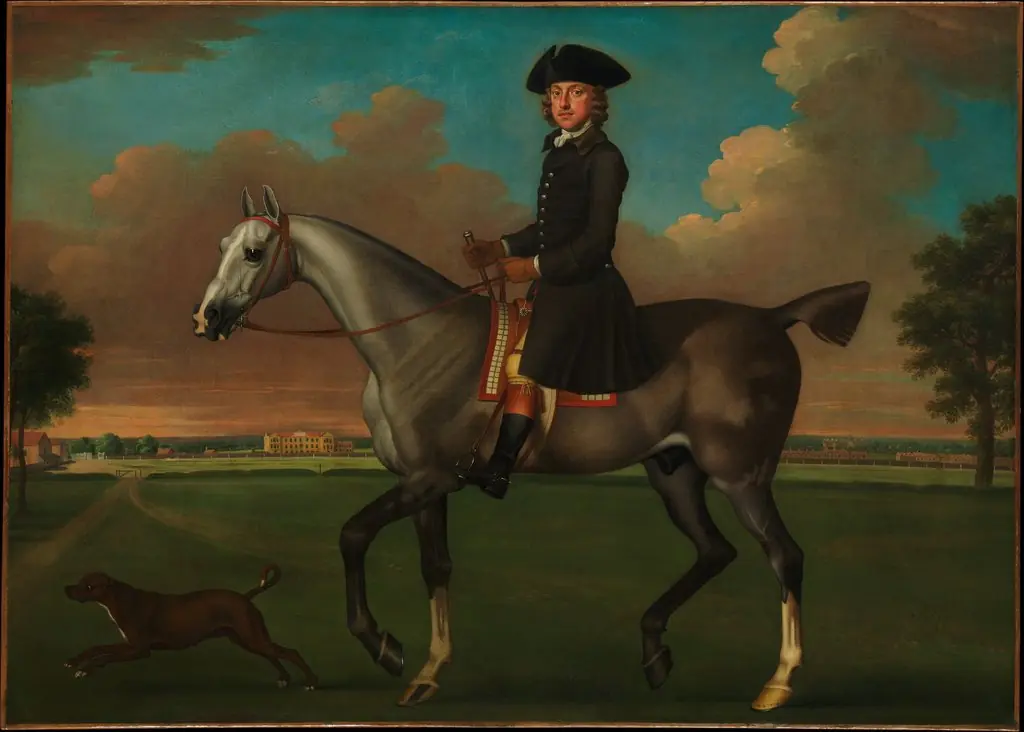
Seymour was among the first English painters to specialize exclusively in sporting subject matter, and he had no other subject matter, unlike contemporaries such as John Wootton. His style combined meticulous attention to detail with what has been described as a self-conscious stylistic naivety. His paintings of horses lack the anatomical knowledge that George Stubbs later brought to the art; instead, his originality lay in his ability to enliven the conventional horse portrait by conveying, sometimes humorously, some sense of the personality of a horse and of its accompanying groom or dog.
His compositions could be eerily static, yet this quality, combined with precise detail, created curiously memorable and powerful images. In his most ambitious work, A Kill at Ashdown Park (1743), this liveliness animates a scene in which some weaknesses of perspective and composition are apparent. His finest works often gain from greater simplicity, as in small groups of riders and hounds set across open landscapes.
Seymour was an inveterate draughtsman, and numerous lively sketches of horses in action survive, whether depicting dressage, racing, or hunting. These drawings, often in pen and ink and pencil, are relatively slight but possess great immediacy and acute observation. Fully-worked presentation drawings are rarer. His paintings feature distinctive angular qualities and vigorous chalk drawings that emphasized clarity in equine subjects. Many of his racing and hunting scenes were engraved in the 1740s and 1750s, helping to popularize sporting art through print.
Major works
Seymour's best-known painting, endlessly copied, was The Chaise Match Run on Newmarket Heath on Wednesday 29th of August 1750, depicting an improbable wager. The original painting is probably the picture in the Yale Center for British Art, New Haven, Paul Mellon Gift. This work was engraved by Charles Grignion, published soon after the event, and frequently pirated. A Kill at Ashdown Park (1743) is held in the Tate collection and represents his most ambitious composition, though it reveals certain weaknesses in perspective and composition. Peter Delme's Hounds on the Hampshire Downs (1738), commissioned by the banker Peter Delme and now in the Virginia Museum of Fine Arts through the Paul Mellon Gift, is counted among his finest paintings. It depicts a small group of riders and hounds set off across the Hampshire downs in a palpably early morning atmosphere, benefiting from its greater simplicity. Some of his finest works were painted for Sir William Jolliffe, MP, of Petersfield, Hampshire. He was employed by Charles Seymour, 6th Duke of Somerset, to decorate a room at Petworth House in Sussex with portraits of the Duke's racehorses, though this project was never completed due to a quarrel between artist and patron. The dispute reportedly arose when the Duke took offence at Seymour claiming he was related to him. His graphic works include Twelve Prints of Hunters and Running Horses, Taken in Various Actions, a series of mezzotints published around 1750; a series of thirty-four racehorse portraits engraved in mezzotint with rococo borders, published 1741-1754; and Twelve prints, representing managing and training horses, with coursing, shooting, setting, etc. Many of his works were engraved by Thomas Burford and Richard Houston.
Influences & students
Seymour's artistic formation was shaped by his father's collection and the artistic circles accessible through the Virtuosi Club of St Luke. He studied pictures that passed through his father's hands, and one of his earliest known works is a sketch of a horse's head after van Dyck. His possible informal instruction from Francis Place, the topographer, provided some foundation, though he remained essentially self-taught. He appears to have been a friend and associate of John Vanderbank, whose profligacy George Vertue similarly deplored. Some of their drawings of haute ecole exercises in riding schools may have been made sitting side by side. Seymour had at least one documented pupil, Thomas Spencer (1710-1756). He also had many followers, and his works were widely reproduced through engraving, spreading his influence throughout British sporting circles and abroad. By 1739, the Universal Spectator recorded that he was 'reckoned the finest draughtsman in his way [of horses, hounds etc.] in the whole world,' and he was preferred to his chief rival John Wootton by many sporting patrons.
Legacy
Seymour's posthumous reputation rests on his position as a pioneering specialist in sporting art and one of the founders of the British sporting school. His obituary in the Gentleman's Magazine (vol.22, London 1752, p.336) referred to him as 'particularly eminent in horse-painting.' Vertue's disapproving account of his personal life has colored subsequent biographical treatment, yet his artistic significance remains acknowledged.
His works are held in major collections including the Tate, the Yale Center for British Art, the British Museum, and the Virginia Museum of Fine Arts. The proliferation of engravings after his paintings, including numerous pirated versions, testifies to their popularity and commercial viability throughout the eighteenth century and beyond. His graphic series, particularly the racehorse portraits with rococo borders and the hunting and training prints, circulated widely and influenced the visual culture of British sport.
The market for Seymour's work has been sustained by his historical importance and the enduring British interest in equestrian and sporting subjects. His paintings command attention as documents of eighteenth-century racing and hunting culture, while his drawings are valued for their spontaneity and observational acuity. Art UK lists twenty-three artworks by or after James Seymour in British public collections.
Works by James Seymour
Collections represented


Artists in a similar vein