Art Museum
Petworth House

Image: Wikimedia Commons.
Petworth House is an art museum in Petworth, United Kingdom.
About Petworth House
Petworth House is a late 17th-century Grade I listed country house in the parish of Petworth, West Sussex, England. It was built in 1688 by Charles Seymour, 6th Duke of Somerset, and altered in the 1870s to the design of the architect Anthony Salvin. It contains intricate wood-carvings by Grinling Gibbons (d. 1721). It is the manor house of the manor of Petworth. For centuries it was the southern home for the Percy family, earls of Northumberland.
Petworth is famous for its extensive art collection made by the Northumberland and Seymour/Somerset families and George Wyndham, 3rd Earl of Egremont (1751–1837), containing many works by his friend J. M. W. Turner. It also has an expansive deer park, landscaped by Capability Brown, which contains a large herd of fallow deer.
Petworth House by the numbers
- Founded
- 1688
Plan your visit
Petworth House
- Website
- www.nationaltrust.org.uk
Overview
Petworth House is a late 17th-century Grade I listed country house in the parish of Petworth, West Sussex, England. Built in 1688 by Charles Seymour, 6th Duke of Somerset, it stands as the manor house of the manor of Petworth and was for centuries the southern residence of the Percy family, earls of Northumberland. The house is celebrated for its extensive art collection, assembled by the Northumberland and Seymour/Somerset families and later by George Wyndham, 3rd Earl of Egremont, which includes numerous works by his friend J. M. W. Turner. Its setting is equally notable: an expansive deer park landscaped by Capability Brown, home to a large herd of fallow deer. Now owned by the National Trust, Petworth House remains one of England's most significant historic estates, combining Baroque architecture, exceptional interiors, and a landscape of national importance.
Founding & history
The manor of Petworth entered the Percy family in the 12th century through a royal gift from Adeliza of Louvain, widow of King Henry I, to her half-brother Joscelin of Louvain accompanying his marriage to the Percy heiress. For centuries the Percys, based primarily at Alnwick Castle in Northumberland, used Petworth only occasionally. A fortified manor house was built by Henry de Percy, 1st Baron Percy, in 1308-09, and its chapel and undercroft survive within the present building. The family's staunch Catholicism brought conflict during the English Reformation: Petworth was briefly seized by Henry VIII, restored by Mary I, and under Elizabeth I the family came under scrutiny. After Thomas Percy, 7th Earl of Northumberland, led the failed 1569 Rising of the North, his brother Henry Percy, 8th Earl, was confined to Petworth under court observation, prompting transformation of the house into the family's permanent southern home with grand stables and a pleasure garden. A 'lost' north wing from this period was discovered during archaeological excavations in 2012-15, having been demolished in 1692.
The decisive transformation came when Josceline Percy, 11th Earl, died without male heir in 1670, leaving his two-year-old daughter Lady Elizabeth Percy as sole heiress. In 1682 she married Charles Seymour, 6th Duke of Somerset, and between 1688 and 1702 they rebuilt the house in Baroque style, probably to designs by Daniel Marot, inspired by Versailles and incorporating older walls. Formal gardens including a lime avenue, canal, fishponds, parterre, greenhouse, and orangery were laid out, with Quarter Piece Lawn and Rampart terraces carved into the hill.
The estate passed to the Wyndham family in 1750 through Charles Wyndham, 4th Baronet, nephew and co-heir of Algernon Seymour, 7th Duke of Somerset. The 7th Duke had received new titles including Earl of Egremont in 1749 with special remainder to Wyndham. After the 7th Duke's death, the great Percy inheritance was split: his daughter Lady Elizabeth Seymour and husband Hugh Smithson took the northern estates and Northumberland titles, while Charles Wyndham received Petworth as Earl of Egremont. The 2nd Earl commissioned Rococo mirrors and antique statues and employed Capability Brown to landscape the park in the 1750s-60s, demolishing the formal gardens. His son George Wyndham, 3rd Earl, presided over a golden age, expanding the North Gallery in 1824-27 for his growing collection and hosting Turner between 1827 and 1837.
After the 3rd Earl's death, his illegitimate son George Wyndham was created Baron Leconfield in 1852 and inherited Petworth. Henry Wyndham, 2nd Baron, had Anthony Salvin remodel the south wing in baroque style between 1869 and 1872. Facing heavy death duties, the 3rd Baron transferred the house to the National Trust in 1947 while retaining living rights.
Collection scope
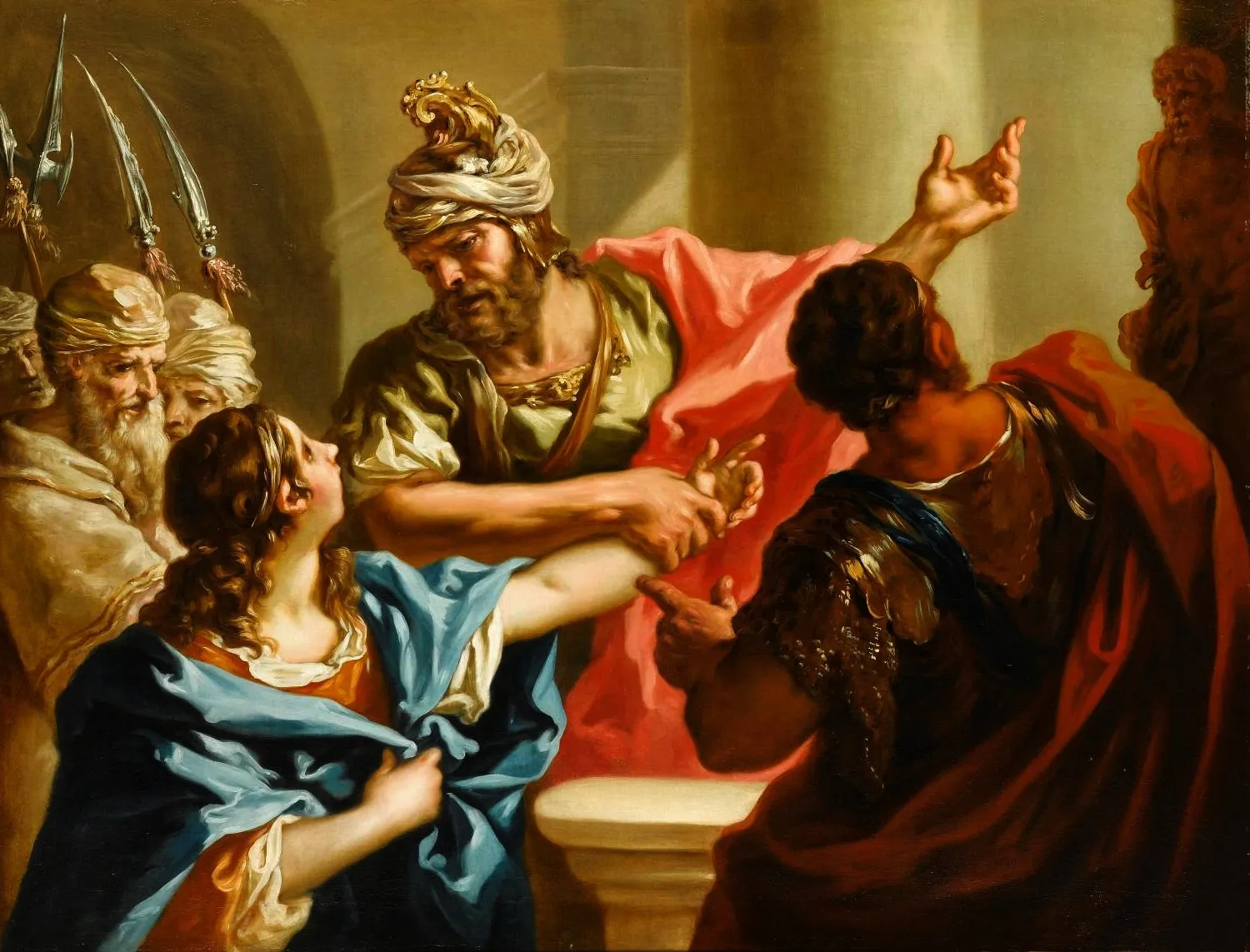
The art collection at Petworth was formed over centuries by successive generations of the Northumberland, Seymour/Somerset, and Wyndham families, with its character decisively shaped by George Wyndham, 3rd Earl of Egremont. It encompasses paintings, sculpture, decorative arts, and manuscripts, representing one of the most important private collections ever assembled in England. The holdings are particularly strong in 17th-century European painting, 18th-century British art, and the work of J. M. W. Turner, who produced twenty oil paintings and approximately one hundred watercolours at Petworth between 1827 and 1837, depicting the park, interiors, and estate life. The collection also features significant neoclassical sculpture, intricate wood-carvings by Grinling Gibbons, and Chinese porcelain from the 17th century. Among its rare non-art objects is a manuscript of the Canterbury Tales made between 1410 and 1430.
Notable holdings
The collection's greatest distinction lies in its Turner holdings: it contains the largest collection of paintings by William Turner outside a museum, including works painted during his extended stays at Petworth. These capture the house, its interiors, and the landscaped park in both oils and watercolours.
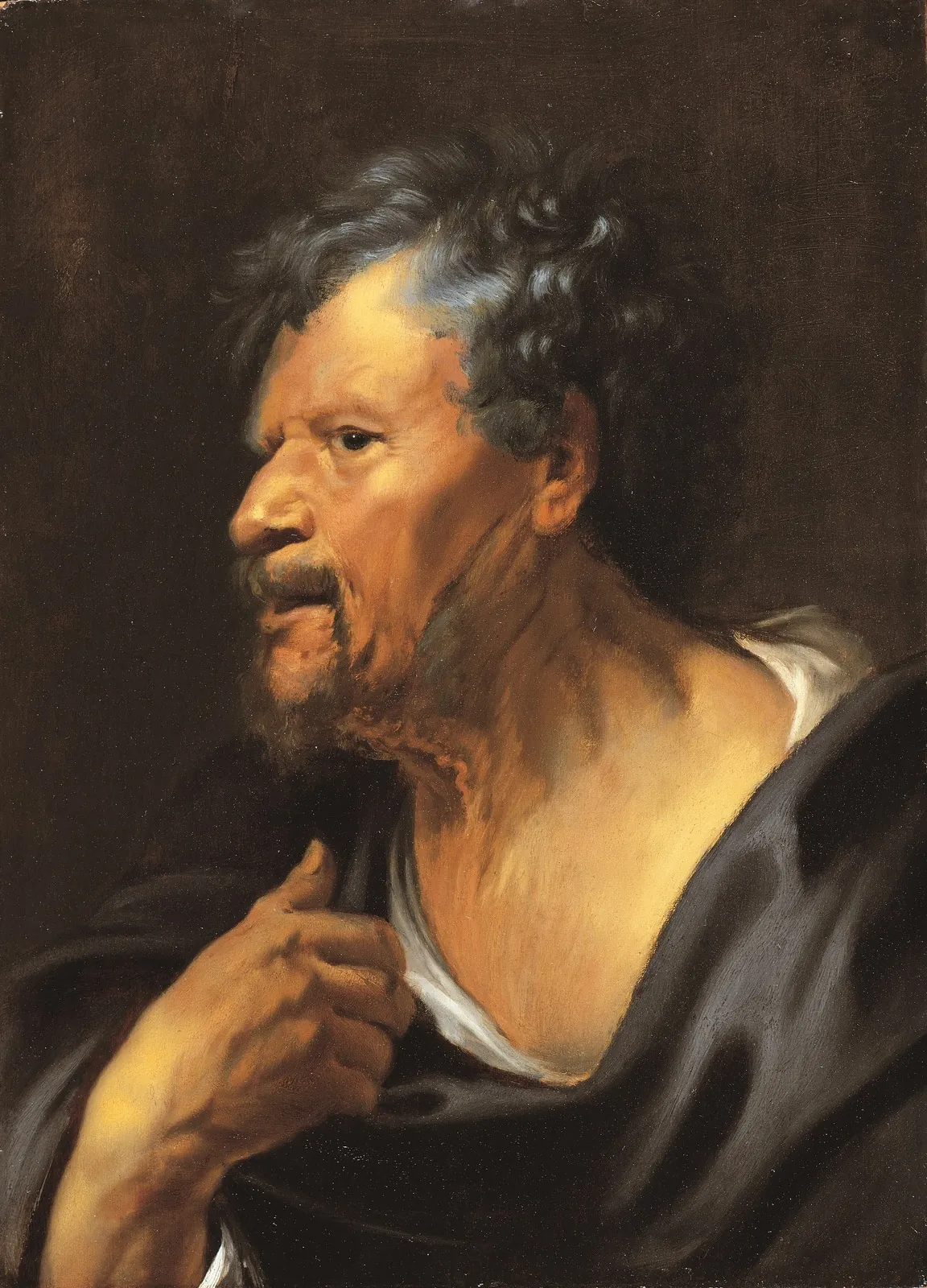
The 17th-century foundation was laid by the 10th Earl of Northumberland in the 1630s, who acquired eight miniatures by Adam Elsheimer, a Titian, and eighteen paintings by Anthony van Dyck. These were augmented by successors with works by Rogier van der Weyden, Meindert Hobbema, Hieronymus Bosch, Claude Lorrain, David Teniers, Thomas Gainsborough, Angelica Kauffmann, William Blake, and Joshua Reynolds. The Somerset Room displays paintings by Frans Snyders, Bernardo Bellotto, Paul Bril, and Peter Lely alongside Chinese porcelain and the Canterbury Tales manuscript. The Square Dining Room, created in 1764 and furnished between 1795 and 1815, contains two van Dyck portraits of the 1st Earl of Strafford and the Earl of Northumberland, plus Reynolds's large 1786 painting Macbeth and the Witches.
Grinling Gibbons's intricate wood-carvings adorn the house, and the Marble Hall, built around 1692 probably to Marot's designs, retains its Baroque character. The grand staircase was redecorated by Louis Laguerre after a fire in 1715-20. The North Gallery, added as a museum space by Matthew Brettingham between 1756 and 1763 and extended in 1824-27, was specifically designed to display the sculpture and painting collections.
Building & site
Petworth House presents a nearly 100-metre-long, three-storey block with two principal floors, its west facade facing the park articulated by twenty-one windows per floor with ground-floor windows opening directly onto the terrace. The original flat dome was removed in 1778. The east side features an 18th-century two-storey service wing running parallel to the house, with extensive stables beyond arranged around a courtyard; these stables were expanded and remodelled in the mid-19th century.
The house incorporates substantial earlier fabric: the 13th-century chapel and undercroft from Henry de Percy's fortified manor survive within the Baroque structure. The 'Proud Duke's' rebuilding of 1688-1702 established the symmetrical Baroque plan, while Anthony Salvin's 1870s alterations, particularly to the south wing, introduced baroque revival elements.
The parkland, landscaped by Capability Brown in the 1750s-60s, replaced the earlier formal gardens with naturalistic scenery designed to enhance the house's setting. This working landscape had previously supported quarries for the building works. The park contains a large herd of fallow deer and remains freely accessible.
Visiting
Petworth House is located in the town of Petworth, West Sussex, England. It is owned by the National Trust, having been transferred by the 3rd Baron Leconfield in 1947 due to heavy death duties; the family retained living rights in the house. The upper floor remains a private residence for the Wyndham family, while the principal reception rooms, kitchen, and former servants' quarters are open to visitors. The park is freely accessible. The estate continues to function as a historic house museum and working landscape, managed by the National Trust in partnership with the family.
Museums near Petworth House
- Art Museum Southampton City Art Gallery Southampton, United Kingdom
- Art Museum Victoria and Albert Museum Royal Borough of Kensington and Chelsea, United Kingdom
- Art Museum Tate Britain City of Westminster, United Kingdom
- Gallery Matthiesen Gallery London, United Kingdom
- Art Museum Schorr Collection City of Westminster, United Kingdom
- Art Museum National Gallery City of Westminster, United Kingdom