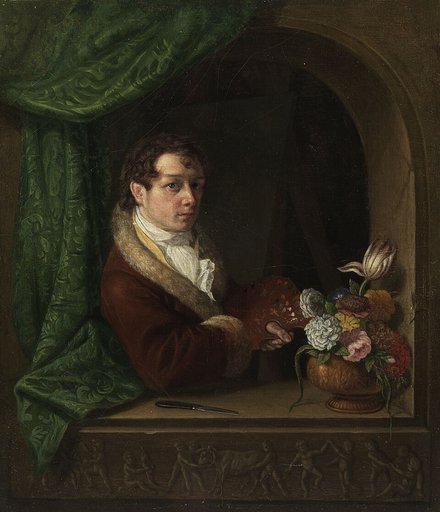
Artist
Lancelot Théodore Turpin de Crissé

France
Lancelot Théodore Turpin de Crissé is a France Romanticism artist. 3 works are cataloged here, principally at Museum of Fine Arts Boston.
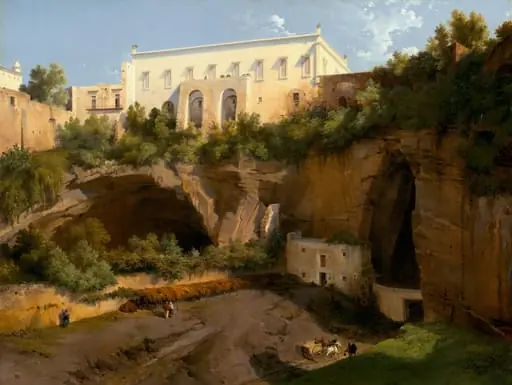
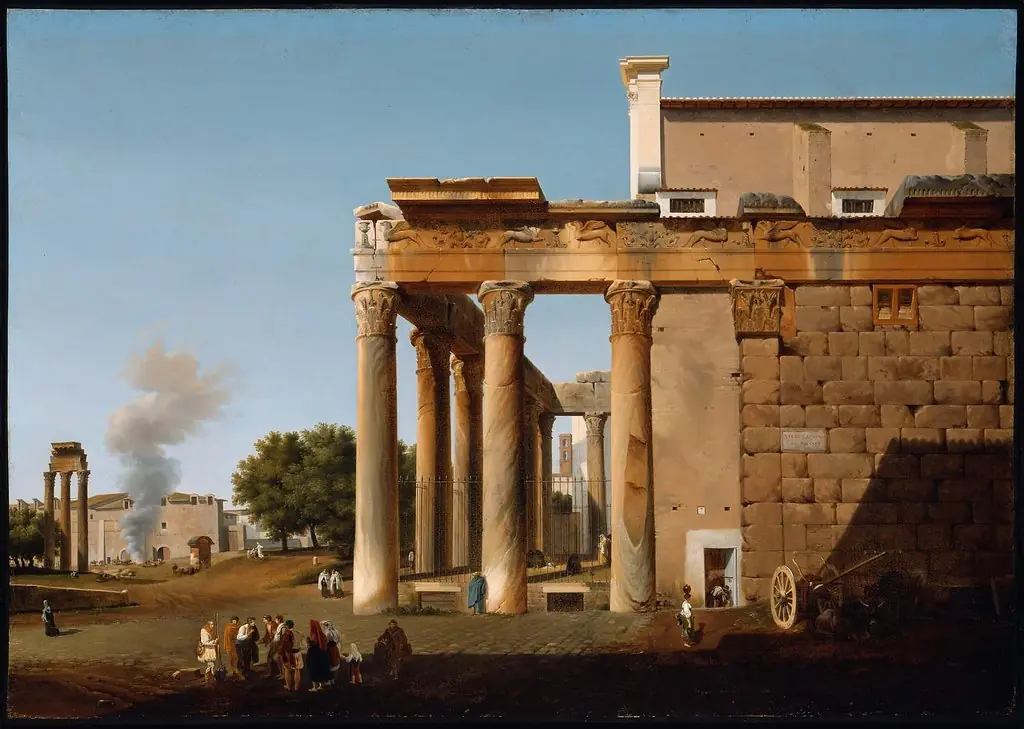
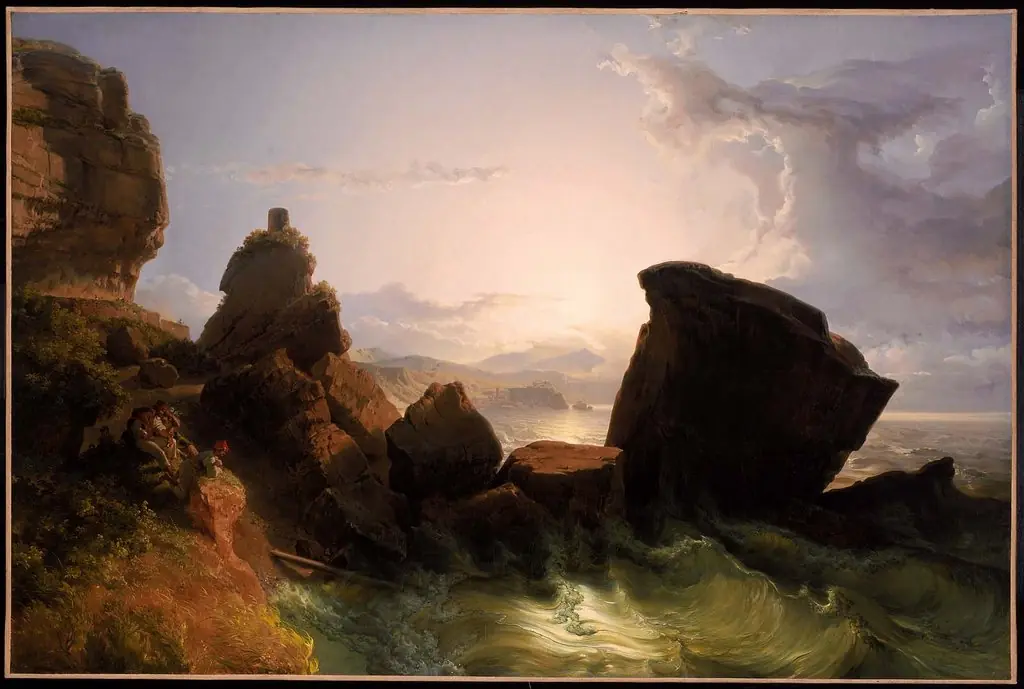
Lancelot-Théodore, Comte de Turpin de Crissé (9 July 1782 – 15 May 1859) was a French writer and painter from Paris. His most familiar works are landscapes with structures, usually set in Italy.
Overview
Lancelot-Théodore, Comte de Turpin de Crissé (9 July 1782-15 May 1859) was a French painter, writer, and administrator whose career bridged the Napoleonic and Restoration eras. Born into an aristocratic family ruined by the Revolution, he rebuilt his fortunes through artistic talent, court connections, and strategic marriages, becoming a respected landscape painter, an influential arts official, and one of the most significant French art collectors of his generation. His best-known works are landscapes with architectural structures, typically set in Italy, which he produced during repeated study trips across the peninsula. Today he is remembered equally for his own painted oeuvre and for the rich collection of antiquities and contemporary art that he bequeathed to the city of Angers.
Biography & dates
Turpin de Crissé was born in Paris on 9 July 1782 into a prominent Angevin family of aristocrats, amateur artists, and military officers. His father, Colonel Henri Roland Lancelot Turpin de Crissé, was an amateur painter who exhibited at the Salon of 1787 and entered the Académie royale de peinture et de sculpture in 1785; his mother, Émilie-Sophie de Montullé, also painted miniatures to support the family after the Revolution confiscated their property. The elder Turpin de Crissé fled to England and then America, dying in Philadelphia around 1800, while his wife and children endured poverty in Anjou.
The young artist's fortunes changed when his godfather, Marie-Gabriel-Florent-Auguste de Choiseul-Gouffier, provided financial support for his education. In the early 1800s they traveled together in Switzerland, where Turpin de Crissé made his first studies from nature. Between 1807 and 1808, again through Choiseul-Gouffier's patronage, he undertook his first Italian study trip, lodging at the Trinità dei Monti in Rome thanks to a recommendation from Talleyrand. He returned to France in 1809 and exhibited at the Salon, receiving a gold medal as a landscape painter.
His connections to the imperial court deepened when he became chamberlain to the former Empress Joséphine after her divorce from Napoleon, accompanying her on a trip to Switzerland and Savoy in 1810. In 1813 he married into a noble family and received a substantial inheritance from a cousin. The following year he became a free member of the Académie des Beaux-Arts, and his administrative career advanced rapidly: in 1824 he joined the Conseil des musées royaux, and in 1825 he was named Inspector-General of the Département des Beaux-Arts and awarded the Légion d'honneur. In 1829 he was appointed honorary gentleman of the Maison du Roi and became an honorary member of the Accademia di Belle Arti di Venezia.
Despite his Bonapartist associations, Turpin de Crissé was a committed Legitimist. He resigned all offices after the July Revolution of 1830 and withdrew to private life, though he continued to exhibit, including at the Royal Academy of Arts in London in 1832. In 1835 he published Souvenirs du vieux Paris, exemples d'architecture de temps et de styles divers. He died in Paris on 15 May 1859.
Style & movement
Turpin de Crissé worked primarily as a landscape painter, though he also produced history paintings and genre scenes. His most characteristic works combine topographical accuracy with architectural interest: Italianate views in which ancient or Renaissance structures provide the organizing focus within broad, carefully observed natural settings. This approach placed him within the tradition of French paysage historique, the classical landscape tradition that stretched back through Claude Lorrain and Poussin, but updated with the documentary precision that Napoleonic and Restoration-era artists brought to their Italian subjects. His technique relied on extensive preparatory drawing. During his Italian sojourns he produced numerous studies of Roman views and antiquities, many now in the Département des Arts Graphiques at the Louvre. These drawings served as the foundation for his finished paintings, which he exhibited regularly at the Salon. The repeated returns to Italy, spanning from 1807-1808 to final trips in 1836 and 1838, allowed him to build an substantial body of work centered on the peninsula's monuments and landscapes. In later years he also copied antiquities at the request of Charles de Clarac, keeper of Antiquities and Modern Sculpture at the Louvre, suggesting a scholarly engagement with archaeological accuracy.
Major works
Turpin de Crissé's painted oeuvre is dominated by Italian landscapes with architectural elements, though specific titles and locations of individual major works are not fully documented in the available sources. His drawings of Roman and Italian views are preserved in the collection of the Musée du Louvre, Département des Arts Graphiques. The most significant institutional holding of his work is the Musée des Beaux-Arts d'Angers, which received his entire personal collection by testamentary bequest and has subsequently become the principal repository for both his own art and the works he collected.
In 1835 he published the illustrated volume Souvenirs du vieux Paris, exemples d'architecture de temps et de styles divers, a documentary record of Parisian architecture that extended his artistic practice into print. From December 2006 to April 2007, the Musée des Beaux-Arts d'Angers mounted a major retrospective exhibition, Lancelot-Théodore Turpin de Crissé: peintre et collectionneur, accompanied by a scholarly catalogue by Patrick Le Nouëne and Caroline Chaine, aimed at reviving critical attention to his work.
Influences & students
Turpin de Crissé's earliest artistic formation came through family example: his father was an accomplished amateur painter, and his mother supported the family through miniature painting during their years of hardship. His godfather Choiseul-Gouffier provided the essential patronage that enabled his professional training, introducing him to the Swiss and Italian landscapes that would define his subject matter.
During his first Roman sojourn at the Trinità dei Monti, he formed a significant friendship with François Marius Granet, the painter who was also resident there. This connection proved lasting, Granet later became one of the contemporary artists whose work Turpin de Crissé collected. His collecting activity more broadly placed him within a circle of initiated connoisseurs and museum curators; he maintained close relationships with conservators and played an active role in the circulation of collections among this network.
No pupils or direct followers are recorded in the sources, and his influence appears to have operated more through administrative example and collecting patronage than through teaching.
Legacy
Turpin de Crissé's posthumous reputation rests on two distinct achievements: his own work as a painter and his extraordinary activity as a collector. Over more than forty years he assembled a rich and eclectic collection of antiquities and contemporary art, purchased in Italy and Paris at auctions and from private sellers, and received as gifts from artists he supported. His acquisitions included works by Blondel, Granet, and Ingres, among many others. By testamentary bequest, the entire collection passed to the city of Angers, where it remains the foundation of the Musée des Beaux-Arts d'Angers holdings. The 2006-2007 retrospective at Angers, organized with the Bibliothèque Marmottan and accompanied by the scholarly monograph by Patrick Le Nouëne and Caroline Chaine, represented the most significant effort to restore his name to public awareness. The exhibition and publication emphasized both his painted oeuvre and his collecting activity, positioning him as an figure whose importance to French cultural life in the first half of the nineteenth century extended well beyond his own artistic production. His resignation from all posts in 1830 and subsequent withdrawal from public life under the July Monarchy left him without the institutional presence that might have sustained his reputation more continuously; instead, his legacy has been preserved primarily through the intact survival of his collection in Angers.
Works by Lancelot Théodore Turpin de Crissé
Collections represented


Artists in a similar vein