Artwork
View of a Villa, Pizzofalcone, Naples
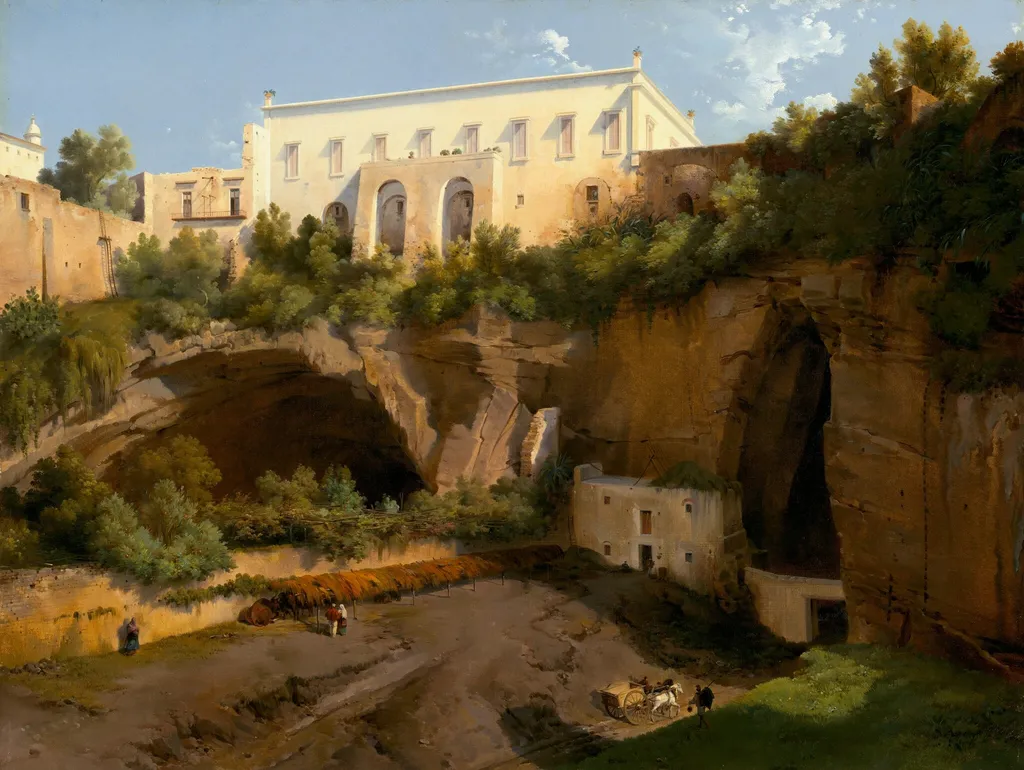
View of a Villa, Pizzofalcone, Naples is an oil painting by the Romanticist artist Lancelot Théodore Turpin de Crissé. It dates from 1819 and is held in the collection of the National Gallery of Art. Created circa 1819, this oil on canvas presents a panoramic view of a Neapolitan villa perched on a cliff.
About this work
Subject & Meaning
The composition emphasizes the interplay of light and architecture, reflecting the era's fascination with pictorial documentation of Mediterranean scenery.
The painting depicts a sunlit villa set against the rocky promontory of Pizzofalcone in Naples, rendered in a topographical landscape style characteristic of early 19th-century European travel art. The composition emphasizes the interplay of light and architecture, reflecting the era's fascination with pictorial documentation of Mediterranean scenery. As a work by Lancelot-Théodore Turpin de Crissé, it aligns with the neoclassical tradition of idealized yet accurate vedute, serving as both a visual record and an aesthetic interpretation of a specific locale.
The villa's placement on the coastal cliff underscores themes of elevation and accessibility, potentially symbolizing the allure of the southern Italian landscape to European elites. The surrounding terrain, rendered with meticulous brushwork, highlights the natural grandeur of the Neapolitan coast, reinforcing the cultural significance of such vistas in shaping perceptions of beauty and leisure during the period.
Technique & Style
The work is executed in oil on canvas, measuring 41 × 54 cm. Handling aligns with early nineteenth-century topographical landscape practice: crisp, evenly lit modeling of architectural volumes and foliage is combined with a restrained palette of ochers, umbers, and muted greens, punctuated by small accents of red and white in windows and distant figures. The composition is structured through a measured recession of planes, from the sharply silhouetted foreground wall and tree to the middle-ground villa and terraced hillside, culminating in a low horizon under a pale sky. Brushwork remains largely smooth and blended, with minimal impasto, emphasizing clarity and descriptive finish rather than textural bravura.
History & Provenance
View of a Villa, Pizzofalcone, Naples is an 1819 oil on canvas landscape painting by Lancelot-Théodore Turpin de Crissé. It entered the National Gallery of Art's collection after being purchased on 3 November 1997 from Parisian dealer Marc Blondeau. Prior to this acquisition, the work appeared in a 1904 auction catalog (sale No. 54, 2ème vente) as noted by a label on its frame. The painting remains in the National Gallery of Art's collection in Washington, D.C.
The work is held by the National Gallery of Art, Washington, D.C., where it is accessioned as an oil-on-canvas painting by Lancelot-Théodore Turpin de Crissé dated 1819.
It entered the Gallery’s collection on 3 November 1997, purchased through Marc Blondeau, Paris, from a private collection in Berne.
Legacy
Lancelot-Theodore Turpin de Crissé's View of a Villa, Pizzofalcone, Naples (1819) is recognized as an early example of the veduta tradition that later influenced French landscape painters seeking topographical accuracy blended with romantic ambience. The work's detailed rendering of a Neapolitan villa contributed to 19th-century discussions of Mediterranean scenery and was cited in 20th-century scholarship on European vedute as a reference point for artists exploring regional identity through architecture. Its presence in the National Gallery of Art collection has allowed continued study of the artist's role in bridging neoclassical and romantic approaches to landscape.
Overview
Created circa 1819, this oil on canvas presents a panoramic view of a Neapolitan villa perched on a cliff. The composition balances the built structure with the surrounding landscape, capturing a sunlit sky that bathes the scene in warm light. The work exemplifies the early‑19th‑century French interest in Italian topography.
Context
The early 1800s saw many French artists turning to Italy for inspiration, drawn by its classical ruins and picturesque scenery. Turpin de Crissé’s focus on architectural subjects aligns with this broader trend, situating the villa within a broader narrative of Romantic‑era landscape painting that emphasized the harmony of nature and human construction.
Own this work as a print
Artist & collection

Artist
Lancelot Théodore Turpin de Crissé
Lancelot-Théodore, Comte de Turpin de Crissé (9 July 1782 – 15 May 1859) was a French writer and painter from Paris. His most familiar works are landscapes with structures, usually set in Italy.

 View of Ariccia
 The Waterfall at Tivoli
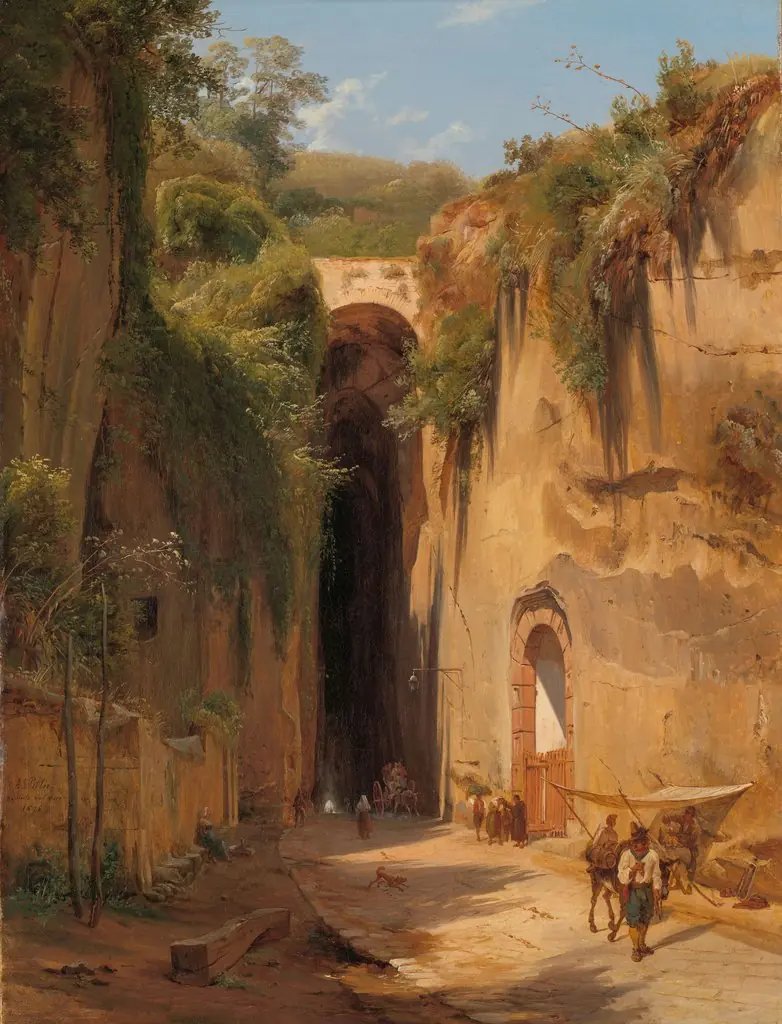 The Grotto of Posillipo at Naples
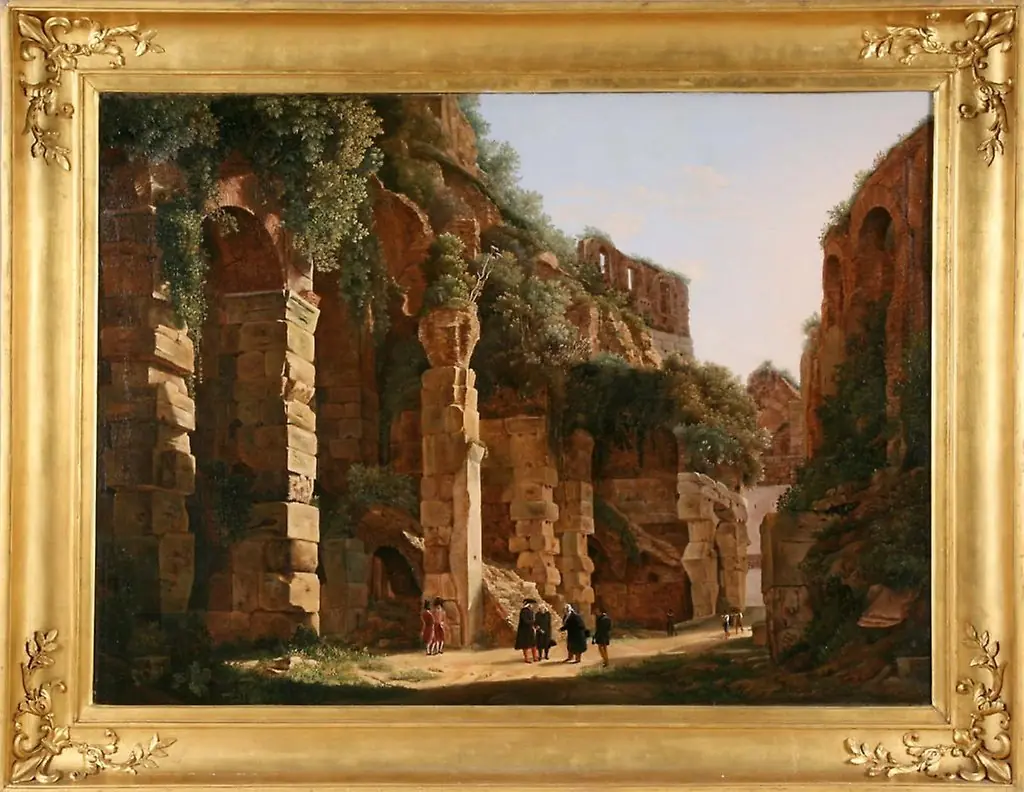 Inside the Colosseum
 De waterval van Tivoli
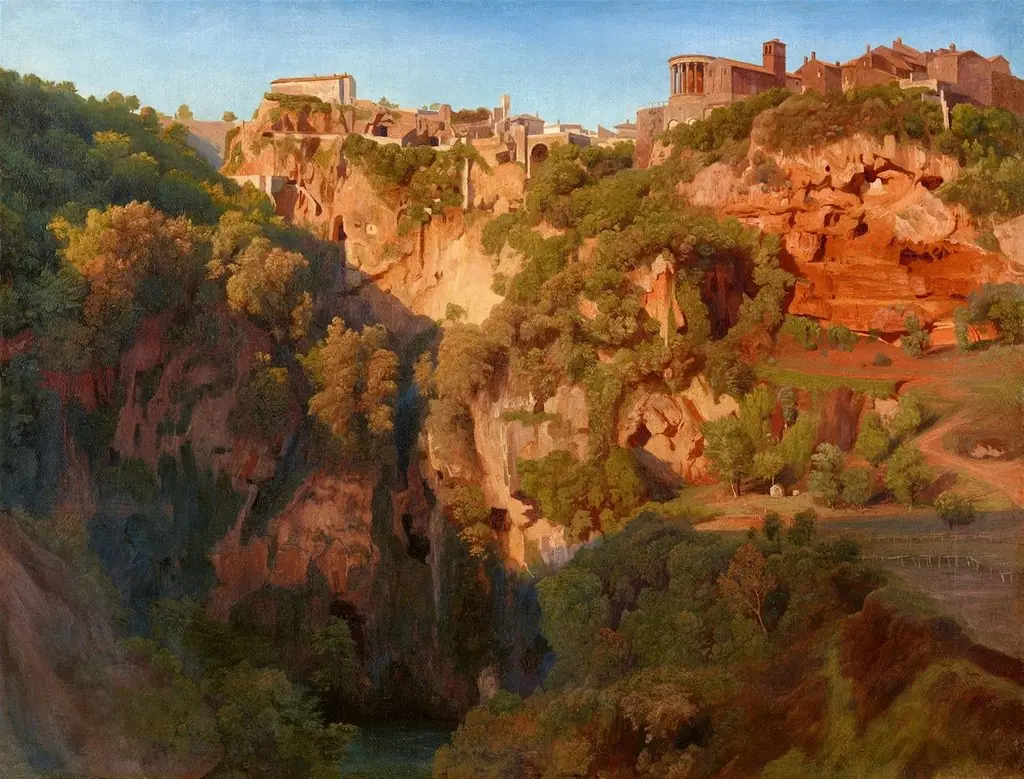 The Waterfalls at Tivoli with the Ponte Lupo, Temple of Vesta, and Temple of Sibyl The Waterfalls at Tivoli with the Ponte Lupo, Temple of Vesta, and Temple of Sibyl
 Châteauvieux-sur-Suran
 Inside the Colosseum
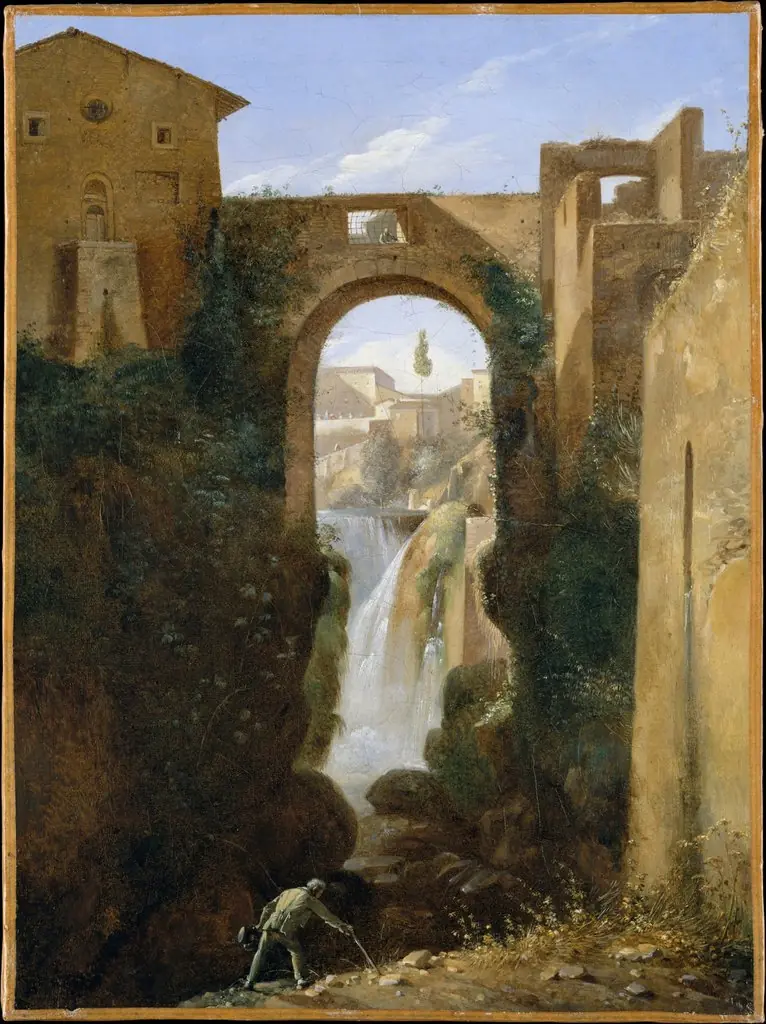 Ponte San Rocco and Waterfalls, Tivoli
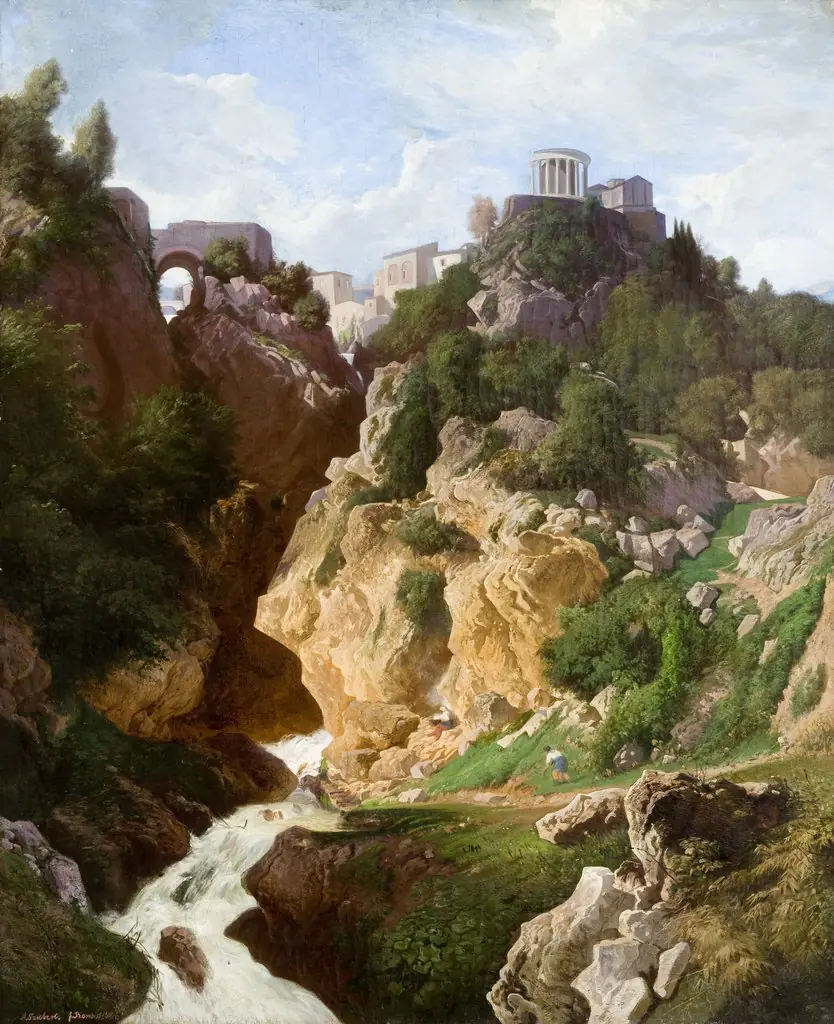 Temple of Vesta in Tivoli
 Porta Angelica and Part of the Vatican
- La Grotta di Posillipo bij Napels