Artist
Master PS
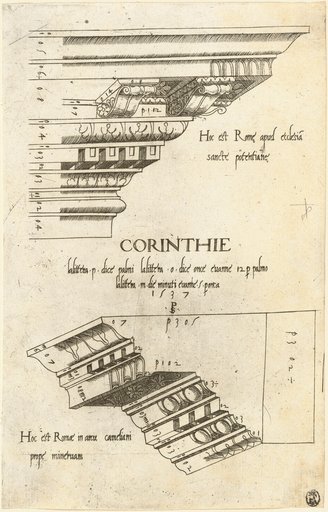
Master PS is an Early Renaissance artist. 12 works are cataloged here, principally at National Gallery of Art.
Master PS (1537–1537) was an artist.
Overview
Pseudo-Pier Francesco Fiorentino is the conventional name given to an Italian painter or group of painters active in Florence during the second half of the 15th century, roughly between 1460 and 1500. The name was coined by art historian Bernard Berenson in 1932 to categorize an artist whose work had previously been confused with that of Pier Francesco Fiorentino, a distinct painter active around San Gimignano. Unlike the sharp, pale style of the actual Pier Francesco, the works grouped under the Pseudo designation are well-crafted adaptations of compositions by Filippo Lippi and Pesellino. This master or workshop specialized in half-length Madonna and Child compositions, producing numerous variants that were highly sought after in late 15th-century Florence.
Biography & dates
The true identity of the Pseudo-Pier Francesco Fiorentino remains unknown, and the entity is generally dated to the last third of the 15th century. Berenson originally assembled the group in 1932, but by 1928 his pupil Frederick Mason Perkins realized the internal inconsistencies in the grouping, proposing that the Lippi and Pesellino adaptations belonged to one or more anonymous personalities rather than the historical Pier Francesco. In 1976, Federico Zeri argued that the label actually described a workshop of multiple artists imitating Lippi and Pesellino, coining the alternative term Lippi-Pesellino Imitators. Attempts to identify the individual behind the name include Creighton Gilbert's 1988 proposal of Riccardo di Benedetto, known as Riccardo delle nostre donne for his painted Madonnas. Another hypothesis, advanced by Annamaria Bernacchioni and Carl Brandon Strehlke, suggests the master could be Piero di Lorenzo del Pratese, a collaborator of Pesellino who was passed over for a commission in favor of Fra Filippo Lippi after Pesellino's death in 1457, though this identification remains unproven.
Style & movement
The artistic style of the Pseudo-Pier Francesco Fiorentino is defined by its accumulative approach to composition and its lavish, archaic use of materials. Rather than creating original designs, the workshop systematically combined motifs from multiple preexisting works by Lippi and Pesellino. For instance, a single painting might derive its Madonna and Child from a Pesellino panel in the Isabella Stewart Gardner Museum, the Infant Saint John from Lippi's Adoration in Berlin, and an angel from Pesellino's Madonna in the Toledo Museum of Art. The resulting compositions are well-crafted but mechanical, characterized by limited variations in backgrounds and attendant figures. Visually, the works are marked by a sumptuous application of gold leaf and elaborate rose-hedge backgrounds, the latter likely derived from Domenico Veneziano. Iconographically, the paintings are enriched with symbolic objects such as goldfinches alluding to the Passion, pomegranates signifying the Resurrection, white lilies for the Virgin's purity, and roses representing her love.
Major works
The corpus attributed to this master or workshop is extensive, with roughly 160 firmly attributed panels featuring at least 64 different figural motifs repeated in near-infinite combinations. A prominent example is the Madonna and Child with the Infant Saint John the Baptist and an angel, a tempera on panel that passed through the collections of Charles T.D. Crews and R. Langton Douglas before being bequeathed to the Metropolitan Museum of Art in 1965. Another significant work is the Virgin Adoring the Christ Child in the chapel of the Palazzo Medici Riccardi in Florence, which directly replaced Lippi's original altarpiece for the Medici Palace chapel. The group's prolific output is dispersed globally across institutions including the Musee du Petit Palais in Avignon, the Gallerie degli Uffizi in Florence, the Szepmuveszeti Muzeum in Budapest, the Gemaldegalerie in Berlin, the Walters Art Museum in Baltimore, and the Cleveland Museum of Art.
Influences & students
The primary artistic influences on the Pseudo-Pier Francesco Fiorentino were Filippo Lippi and Francesco Pesellino, whose designs served as the foundational resource for the workshop's output. The workshop relied heavily on Lippi's paintings from the 1450s, frequently combining figural groups and motifs from more than one of his compositions into a single new panel. Pesellino's Madonnas provided another frequent template. A secondary influence is observed in the elaborate rose-hedge backgrounds, which were likely adapted from the work of Domenico Veneziano. It is possible that the artist or workshop had direct contact with Lippi and Pesellino, allowing them to copy directly from the original paintings. While the workshop itself likely consisted of multiple imitators rather than traditional pupils, the sheer volume of their production suggests a highly organized operation capable of churning out devotional panels to meet market demands.
Legacy
The posthumous reputation of the Pseudo-Pier Francesco Fiorentino is largely defined by the critical reevaluation of the group's attribution. What Berenson initially codified as a single anonymous master was progressively deconstructed by scholars. Zeri's reclassification of the artist as a workshop of Lippi-Pesellino Imitators has heavily influenced modern scholarship, shifting the understanding of these works from individual authorship to a broader model of 15th-century workshop replication and market production. The high survival rate of these panels, which exist in numerous variants across major public collections, demonstrates the significant contemporary demand for Lippi and Pesellino compositions among Florentine patrons. The workshop's legacy thus lies in illustrating how popular Renaissance designs were mechanically reproduced, recombined, and commodified in late 15th-century Florence.
Works by Master PS
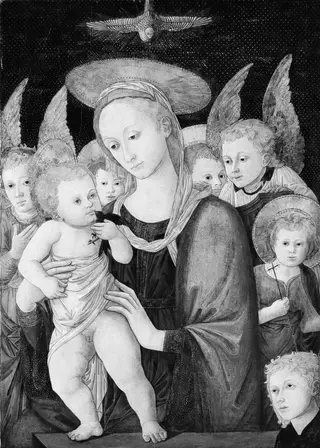 Madonna and Child with the Infant Saint John the Baptist and Angels
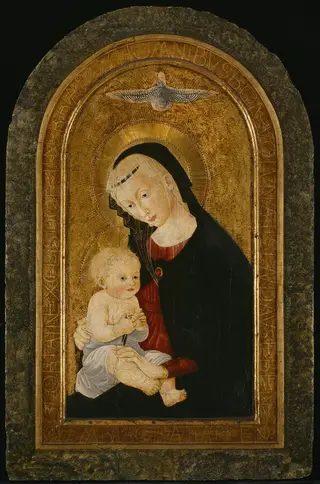 Virgin and Child
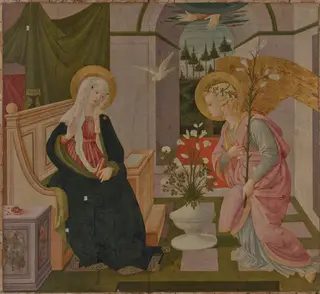 The Annunciation to the Virgin
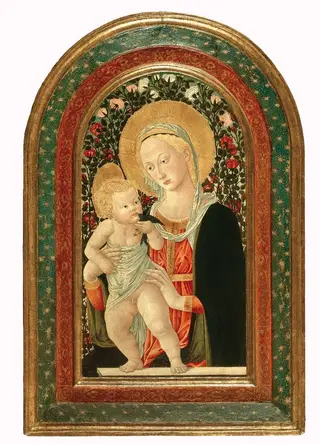 Maria col bambino
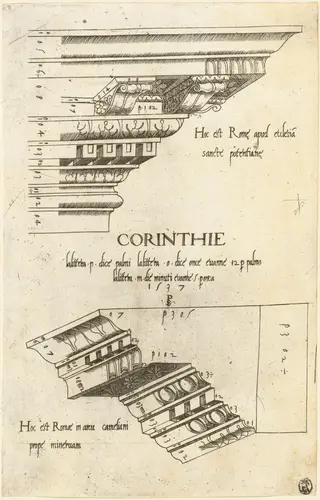 Entablatures from Santa Pudenziana and the Arch of Camigliano, Rome
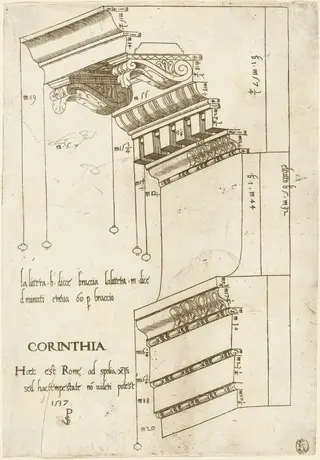 Entablature from the Basilica Ulpia, Rome
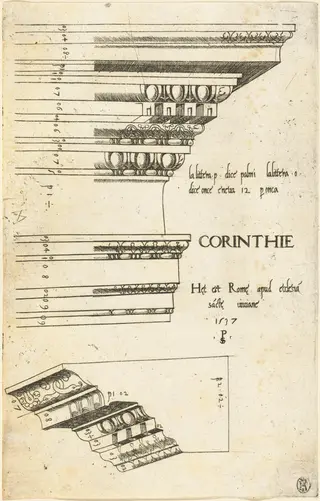 Entablature from the Church of Saint Bibiana, Rome
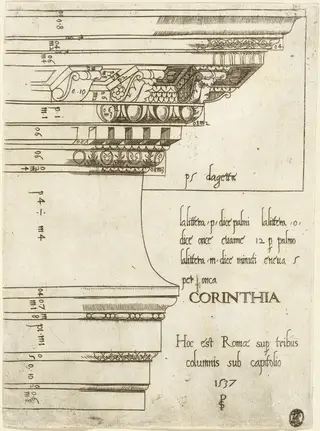 Entablature from the Temple of Castor and Pollux, Rome
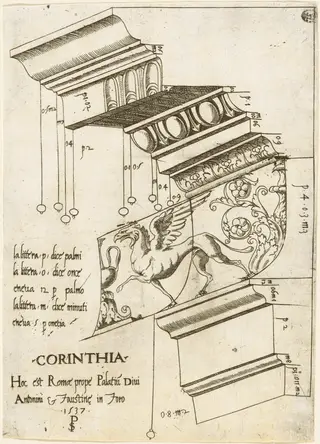 Entablature from the Temple of Antoninus and Faustina, Rome
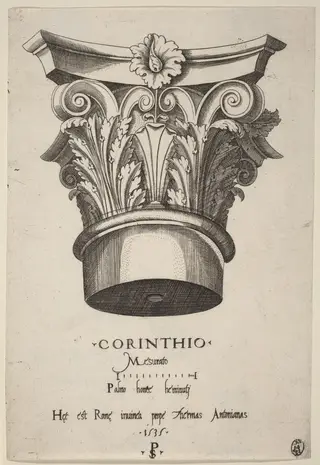 Capitals from the Baths of Antoninus, Rome
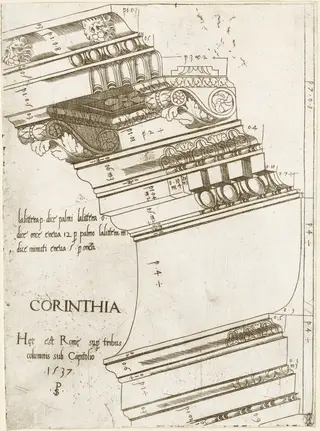 Entablature from the Temple of Vespasian, Rome
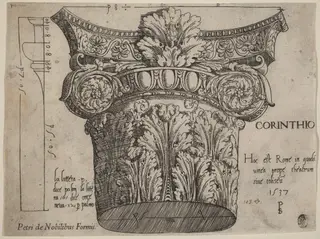 Capital from the Colosseum, Rome
Collections represented


Artists in a similar vein