Artist
Thomas Frye
Ireland
Thomas Frye is an Ireland Rococo painting artist. 9 works are cataloged here, principally at National Gallery of Art.
Overview
Thomas Frye (c. 1710-3 April 1762) was an Anglo-Irish artist whose career spanned portraiture, printmaking, and industrial design. Born in Ireland, he established himself in London as a portraitist in oil and pastel, including miniatures, and gained recognition for his early mezzotint engravings. His most distinctive contribution to British art history lies in his late series of life-size fancy portraits in mezzotint, which transformed the conventions of portraiture through the concept of the fancy picture. Beyond fine art, Frye was the patentee and manager of the Bow porcelain factory in London, where he attempted to manufacture porcelain using kaolin imported from Virginia. Though his epitaph claimed he was the inventor and first manufacturer of porcelain in England, the Chelsea porcelain factory had already brought wares to market. His career exemplifies the collapsing boundaries between high art and industrial production in the eighteenth century.
Biography & dates
Frye was born at Edenderry, County Offaly, Ireland, in 1710, the second of seven children of John Fry (1670-1752) and Anne Harrington. In his youth he traveled to London to practice as an artist. His earliest documented works are a pair of pastel portraits of boys, one dated 1734 and held in the collection of the Earl of Iveagh. In 1736, he painted a full-length portrait of Frederick, Prince of Wales for the Worshipful Company of Saddlers; this painting was later destroyed in 1940. He engraved this portrait in mezzotint and published it in 1741. In November 1745, Frye and his silent partner, the London merchant Edward Heylyn, took out a patent on kaolin to be imported from the English colony of Virginia. He became manager of the Bow porcelain factory from its obscure beginnings in the 1740s. He retired to Wales in 1759 for the sake of his lungs, but soon returned to London and resumed work as an engraver. He died of consumption on 2 April 1762 and was buried at Hornsey. He had five children; his two daughters assisted him in painting porcelain at Bow until their marriages.
Style & movement
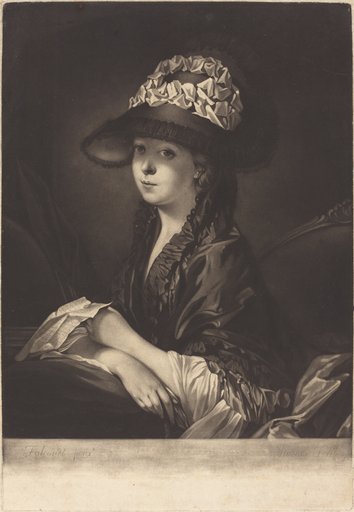
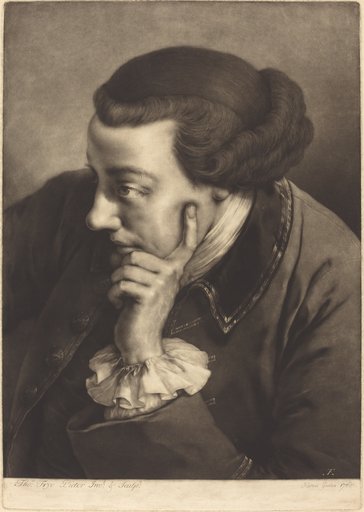
Frye's artistic practice encompassed multiple media and techniques, reflecting a versatility unusual in an age of increasing specialization. His portraiture in oil and pastel demonstrated conventional skills, but his most innovative work emerged in mezzotint engraving. The character heads of Giambattista Piazzetta served as his self-acknowledged inspiration for his late series of life-size fancy portraits. In these works, Frye adopted a portrait-like format transformed by the concept of the fancy picture, creating what scholars describe as a different form of portraiture altogether. He exploited the capacity of mezzotint, known as the Black Art, for pictorial richness in ways unlike any other artist working in the medium. His two series of life-size fancy portraits were published in 1760-1762 and received abundant publicity in the London press. The faces, though drawn from real subjects, were presented as genre pieces of class. At the Bow factory, he attempted to recreate Chinese porcelain technology using American raw materials, producing inexpensive ceramics both decorative and utilitarian in a variety of designs.
Major works
Frye's earliest surviving works include the pair of pastel portraits of boys from 1734, with one in the collection of the Earl of Iveagh. His full-length portrait of Frederick, Prince of Wales (1736), painted for the Worshipful Company of Saddlers, was destroyed in 1940, but its composition survives through his own mezzotint engraving published in 1741. His most celebrated works are the series of life-size fancy portraits in mezzotint, published between 1760 and 1762, by which he is most remembered. These prints, advertised extensively in the London press, represented a novel fusion of portraiture and genre. As manager of the Bow porcelain factory, he oversaw production of ceramics including a Chinoiserie tea service created for the Duke of Leinster, though the sources do not specify the current location of this service. Works by Frye are held in various public collections including the Victoria and Albert Museum, the Metropolitan Museum of Art, the National Portrait Gallery, the Tate, the Art Institute of Chicago, the National Gallery of Art, and the British Museum.
Influences & students
Frye acknowledged the influence of Giambattista Piazzetta's character heads on his late mezzotint series. His training as an artist in London remains obscure, and no specific teachers are documented in the sources. The Bow porcelain factory represented a collaborative enterprise with his silent partner Edward Heylyn, though Heylyn's role was financial rather than artistic. Frye's two daughters assisted him in painting porcelain at Bow until their marriages, constituting a form of familial workshop practice. One daughter, who married a Mr Willcox, was subsequently employed by Josiah Wedgwood at the Wedgwood Etruria works in painting figure-subjects from 1759 until her death in 1776. This connection links Frye's circle to one of the most significant figures in British ceramic history. No pupils or formal followers of Frye are recorded in the sources.
Legacy
Frye's posthumous reputation rests on his achievement as a printmaker and his role in early English porcelain manufacture. The Bow porcelain works did not long survive his death; their final auctions took place in May 1764, and the factory was later purchased by William Duesbury, owner of the Derby porcelain factory, at auction in May 1774 before closing definitively in 1776. For much of the subsequent centuries, Frye remained a neglected figure, known primarily to specialists in British printmaking and ceramics. His reputation has undergone recent reassessment: a 2006-2007 exhibition at the National Portrait Gallery, titled Drawn From Nature and as Large As Life: Thomas Frye's Fancy Heads, brought scholarly attention to his mezzotints. In 2024, the exhibition Neglected Genius Thomas Frye: An Irish Artist in London at Dublin Castle presented the first comprehensive examination of his multifaceted career, placing his portraiture, enamel miniatures, mezzotints, and porcelain production on equal footing. This exhibition positioned him as among the earliest European artists to collapse the distinction between high art and factory-produced design, and as having a strong claim to the title of Ireland's most successful printmaker, industrial artist, and design entrepreneur.
Works by Thomas Frye
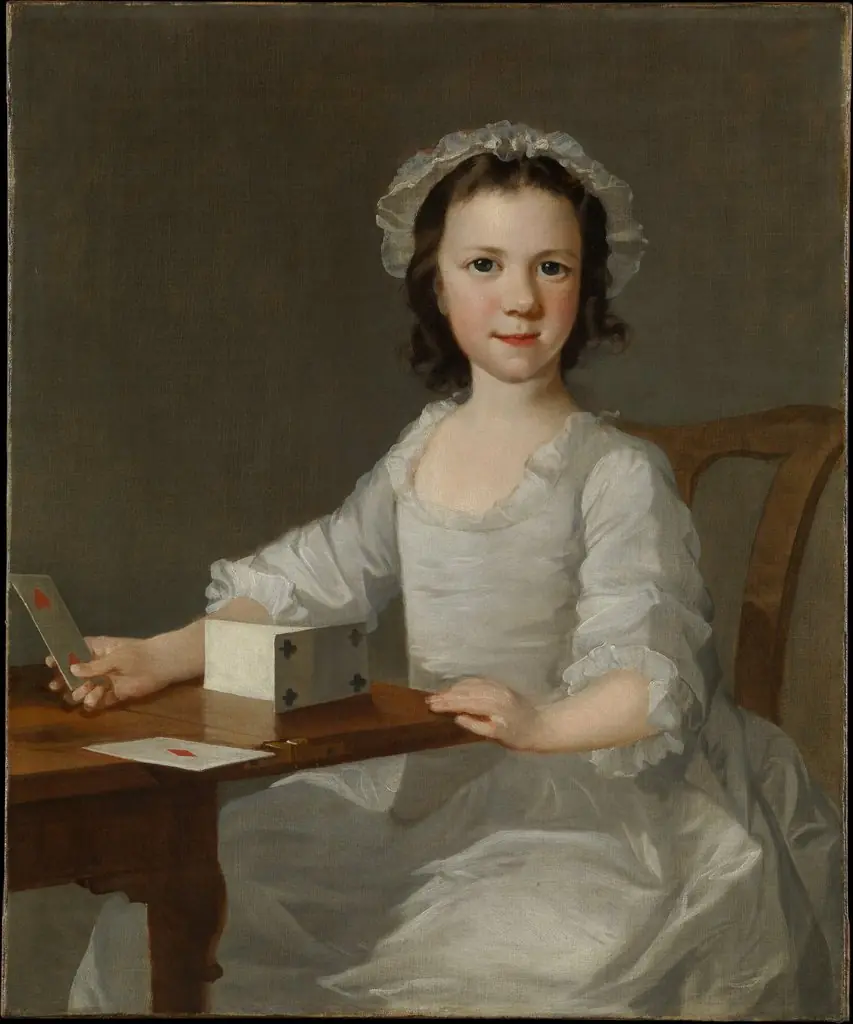 Girl Building a House of Cards
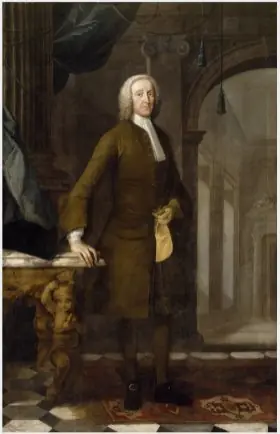 Portrait of John Allen of Bridgewater
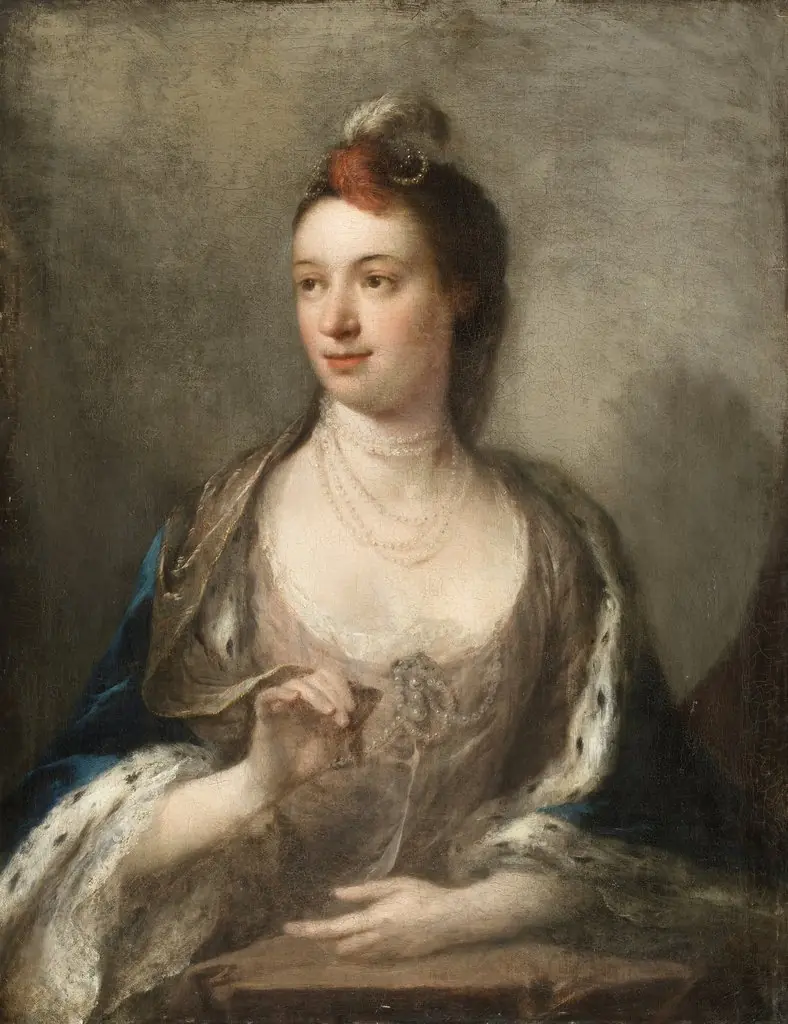 Portrait of Susannah Walker
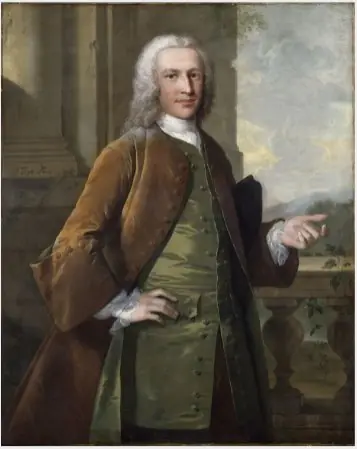 Portrait of Sir Charles Kemeys-Tynte, Baronet (1710-1785)
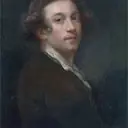
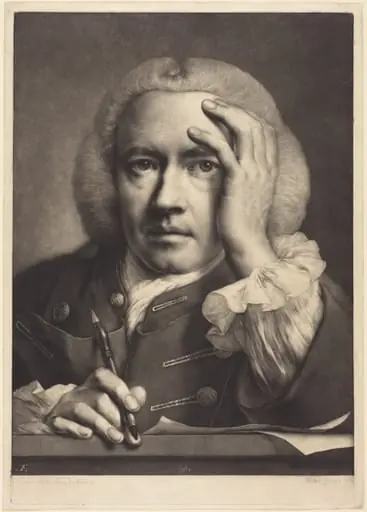 Self-Portrait
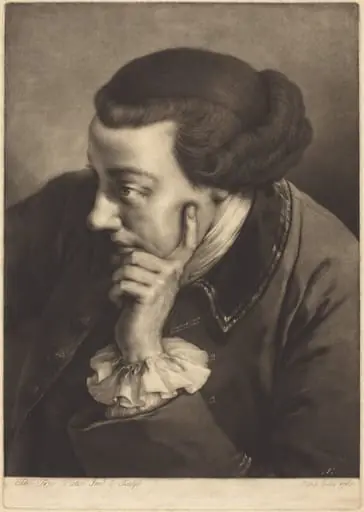 Imaginary Portrait of an English Gentleman
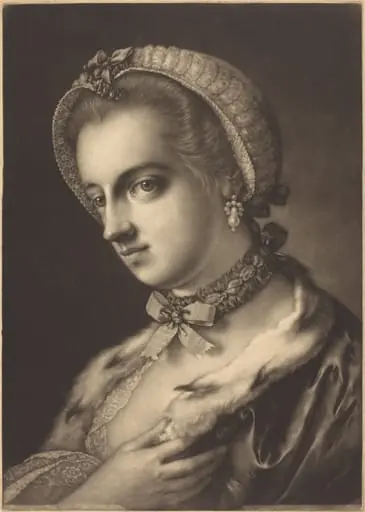 Imaginary Portrait of an English Beauty
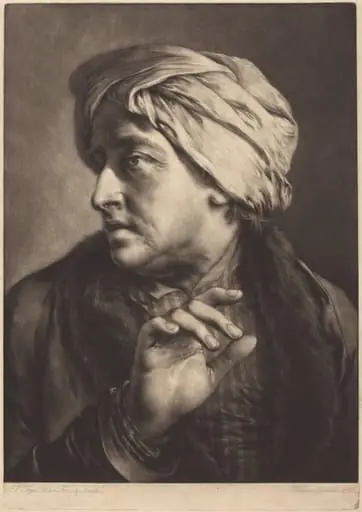 A Man with a Turban and Striped Shirt
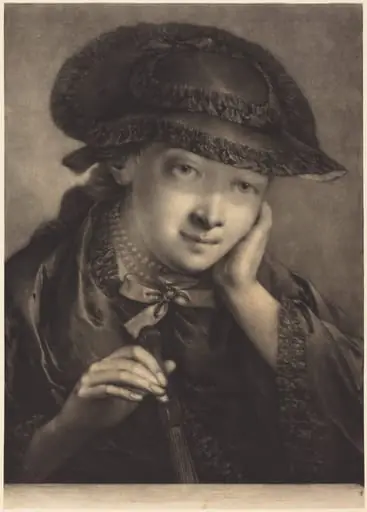 Young Woman Holding a Fan
Collections represented


Artists in a similar vein