Artist
Bhima
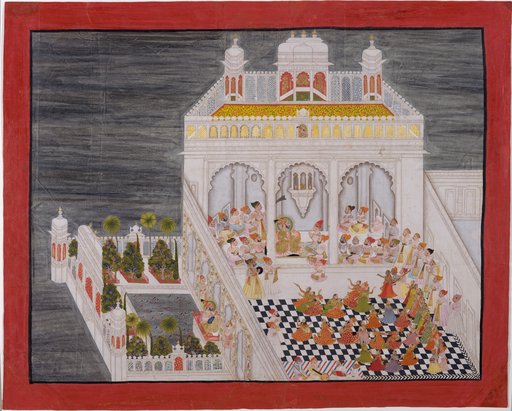
Bhima is a Romanticism painter. 1 work is cataloged here, principally at Metropolitan Museum of Art.
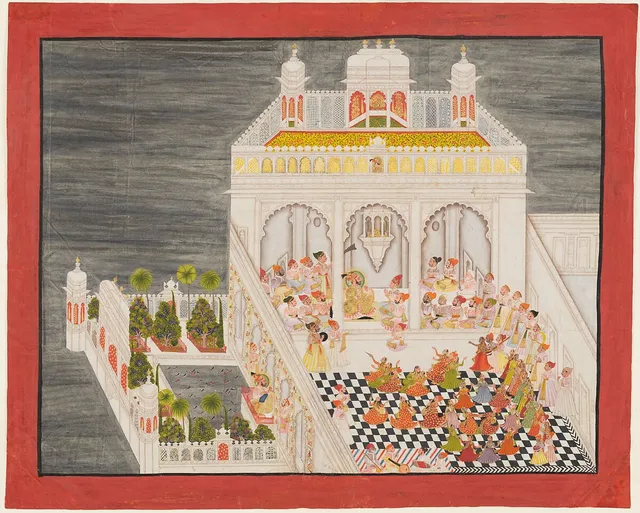
Bhima, Kesu Ram, Bhopa, and Nathu were Indian court painters active in the royal atelier at Udaipur, capital of the Mewar kingdom in Rajasthan, during the reign of Maharana Ari Singh II (1761–1773). They are best known for their collaborative work "Maharana Ari Singh with His Courtiers Being Entertained at the Jagniwas Water Palace," dated 1767 and now in the collection of the Metropolitan Museum of Art. This monumental painting, executed in ink, opaque watercolor, and gold on paper, measures over 32 inches across and depicts the ruler and his nobles attending a dance performance at the lake palace.
Scholars note that although four artists contributed, Bhima appears to have been the principal author. The work combines saturated colors and multiple perspectives drawn from earlier Rajasthani tradition with highly detailed architectural settings and receding space reflecting Mughal influence. Beyond this group collaboration, individual works attest to the painters' separate careers.
Kesu Ram painted "Maharana Ari Singh with two sardars" in 1762, now at the National Gallery of Victoria in Melbourne, and a boar hunt scene dated 1765–66. Bhima individually created "Maharana Ari Singh II hunting deer by a stone quarry" around 1767, held by the City Palace Museum in Udaipur. Bhima and Kesu Ram also paired together on a 1764 moonlight gathering painting now at the Freer Gallery of Art in Washington, D.C. Their inscriptions on these works follow Mewar court practice of artists presenting paintings as nazar to the ruler, and their collaborative output exemplifies the mid-eighteenth century shift in Mewar painting toward secular, naturalistic court reportage.
Works by Bhima
Collections represented