Artwork
Untitled
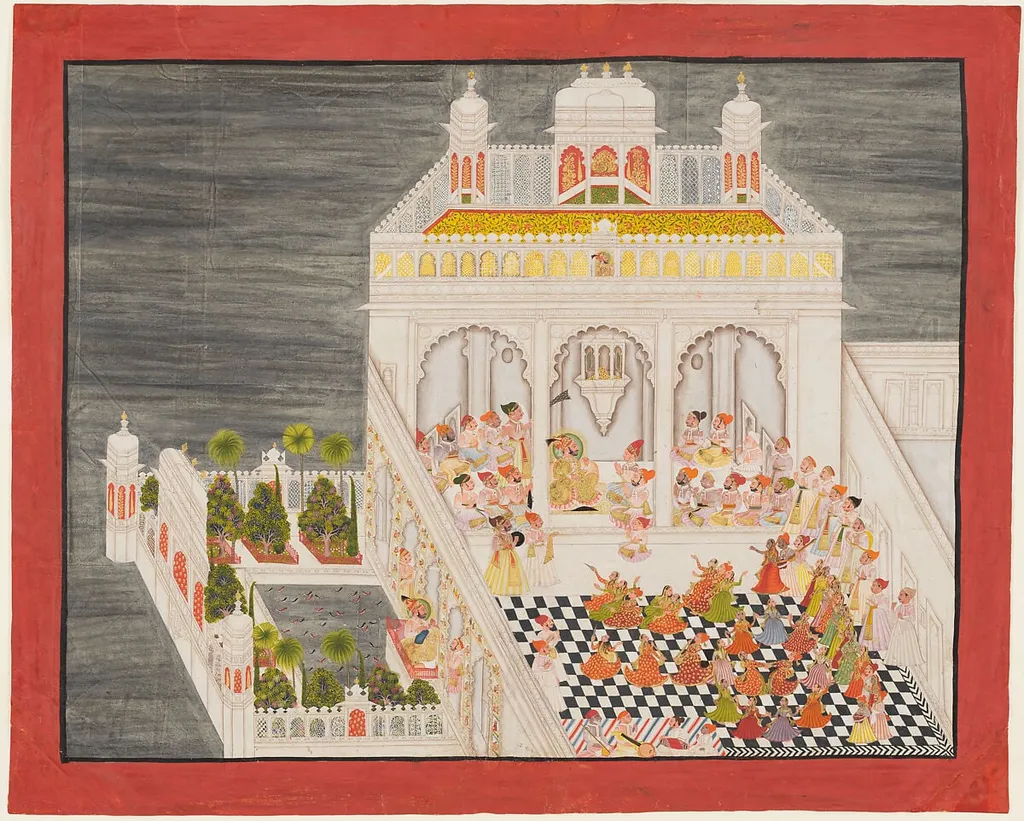
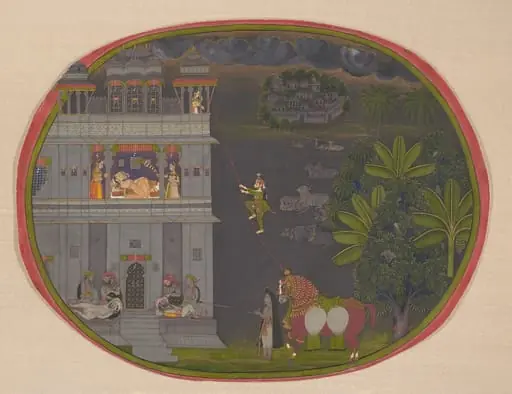
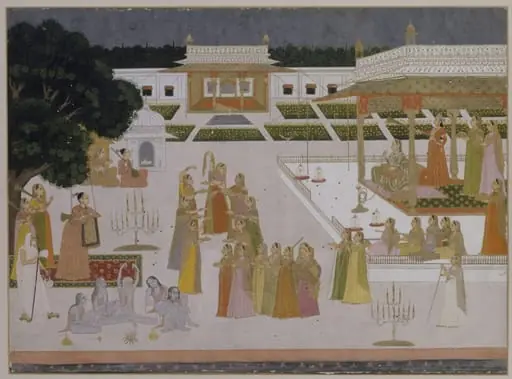
Untitled is a watercolor painting by the Mughal Painting artist Bhima. It dates from 1767 and is held in the collection of the Metropolitan Museum of Art. This large-format painting, created in 1767 by four Mewar artists, depicts Maharana Ari Singh of Udaipur.
About this work
In 1767, four Mewar painters, Bhima, Kesu Ram, Bhopa, and Nathu, worked together on a sprawling scene of Maharana Ari Singh receiving courtiers at the Jagniwas Water Palace in Udaipur. Dancers and musicians fill a checkerboard courtyard, and the ruler appears twice: enthroned with nobles and alone beside a fish-filled pool. The painting is ink, opaque watercolor, and gold on paper.
Subject & Meaning
The inclusion of specific figures such as the king and the audience underscores the social hierarchy and the communal nature of these ceremonial gatherings.
Created in 1767, this history painting portrays a royal performance set within a palace environment. The composition features a king observing a dance, accompanied by other spectators witnessing the event. The work functions as a depiction of courtly life, emphasizing the cultural significance of dance and performance as entertainment for royalty in eighteenth-century India.
By focusing on the interaction between the monarch and the performers, the image highlights the patronage of the arts within the palace sphere. The inclusion of specific figures such as the king and the audience underscores the social hierarchy and the communal nature of these ceremonial gatherings.
Technique & Style
Created in 1767 in India, this history painting is executed in ink, opaque watercolor, and gold on a paper support. The application of these materials reflects traditional Indian painting techniques, utilizing fine ink linework combined with the rich, luminous tones of opaque watercolor and metallic gold highlights. Stylistically, the work is characterized by its detailed narrative composition and formal qualities, depicting a dynamic performance scene within a palace setting.
The composition integrates multiple figures, including a king, spectators, and dancers, capturing the energy of the dance and performance while maintaining the structured, decorative aesthetic typical of the period. While specific condition details are not documented, the delicate nature of the water-based media and paper support suggests standard conservation considerations for works of this age.
History & Provenance
The painting, executed in 1767, was produced in India by the artists Bhima, Kesu Ram, Bhopa, and Nathu. Created using ink, opaque watercolor, and gold on paper, it belongs to the genre of history painting and depicts a scene of dance featuring a king, a palace, a performance, and spectators. The work is now part of the collection of the Metropolitan Museum of Art in New York, where it is held in the Department of Asian Art's Indian painting collection; the precise accession or catalogue number is not disclosed in the available records.
No additional details regarding an earlier commission history or intermediate ownership are documented, and exhibition history for this specific piece is not recorded in the sources examined.
Overview
This large-format painting, created in 1767 by four Mewar artists, depicts Maharana Ari Singh of Udaipur. It captures a vibrant court scene within the Jagniwas Water Palace, showcasing the ruler's authority through a complex composition. Executed with ink, opaque watercolor, and gold on paper, the work blends traditional Rajasthani aesthetics with influences from Mughal painting, reflecting a significant stylistic shift in Mewar court art during the 18th century.
Legacy
Recognized as a pivotal example of Mewar court art from its later period, this painting illustrates the "Mughalized" aesthetic that emerged in the region. It demonstrates how Rajput workshops selectively adopted and integrated imperial Mughal artistic conventions, such as naturalistic elements and detailed settings, while consciously preserving and reinterpreting their own distinct Rajput traditions and visual vocabulary.
Artist & collection
Artist
Bhima, Kesu Ram, Bhopa, and Nathu were Indian court painters active in the royal atelier at Udaipur, capital of the Mewar kingdom in Rajasthan, during the reign of Maharana Ari Singh II (1761–1773).

- Maharana Jagat Singh Attending the Raslila
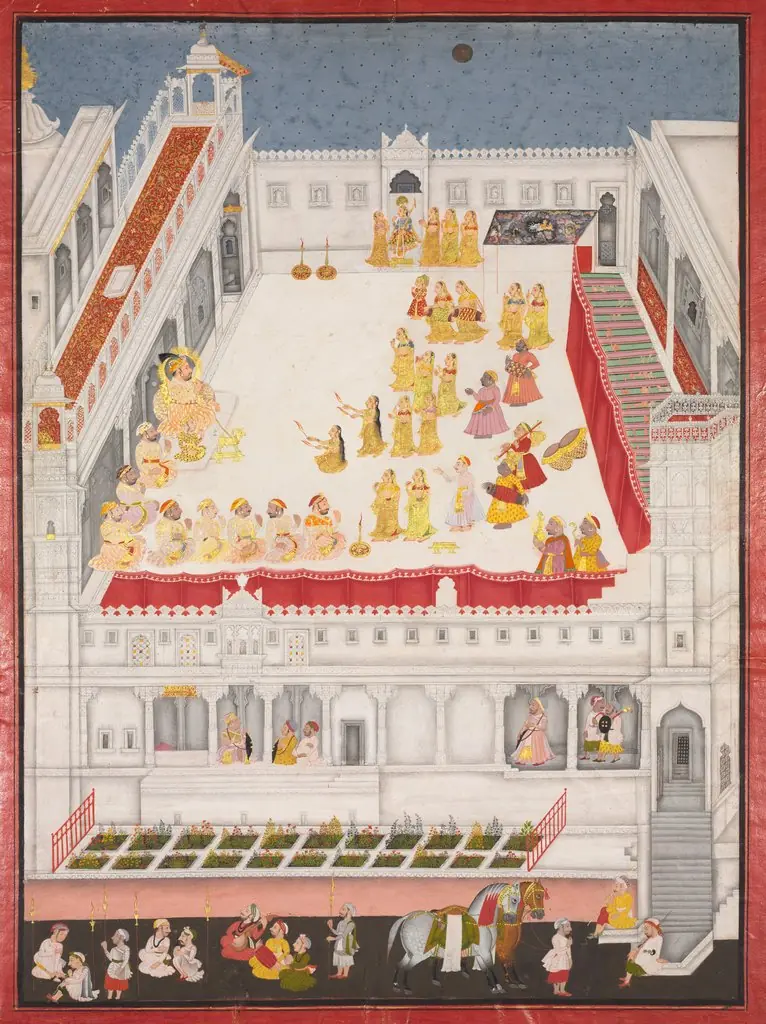 Maharana Jagat Singh Attending the Raslila
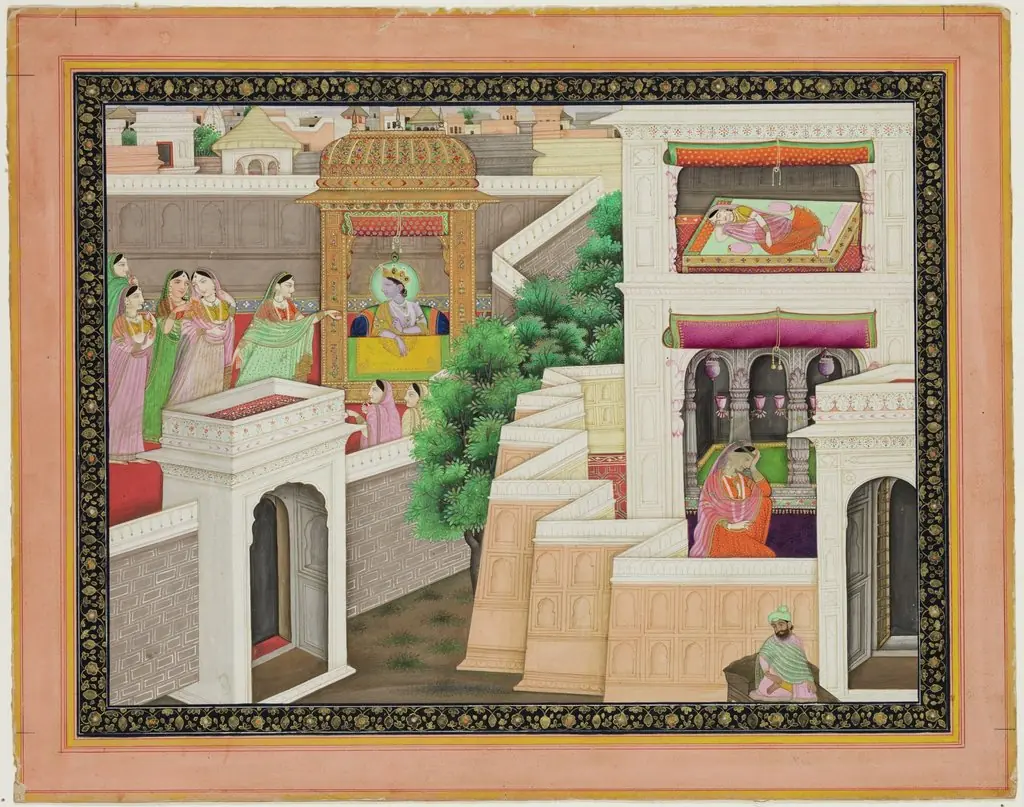 Story of Krishna and Radha
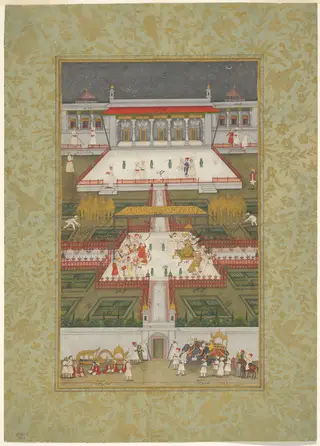 Ruler Entertained by Dancers in a Paradise Garden
 Court Scene
 Court Scene
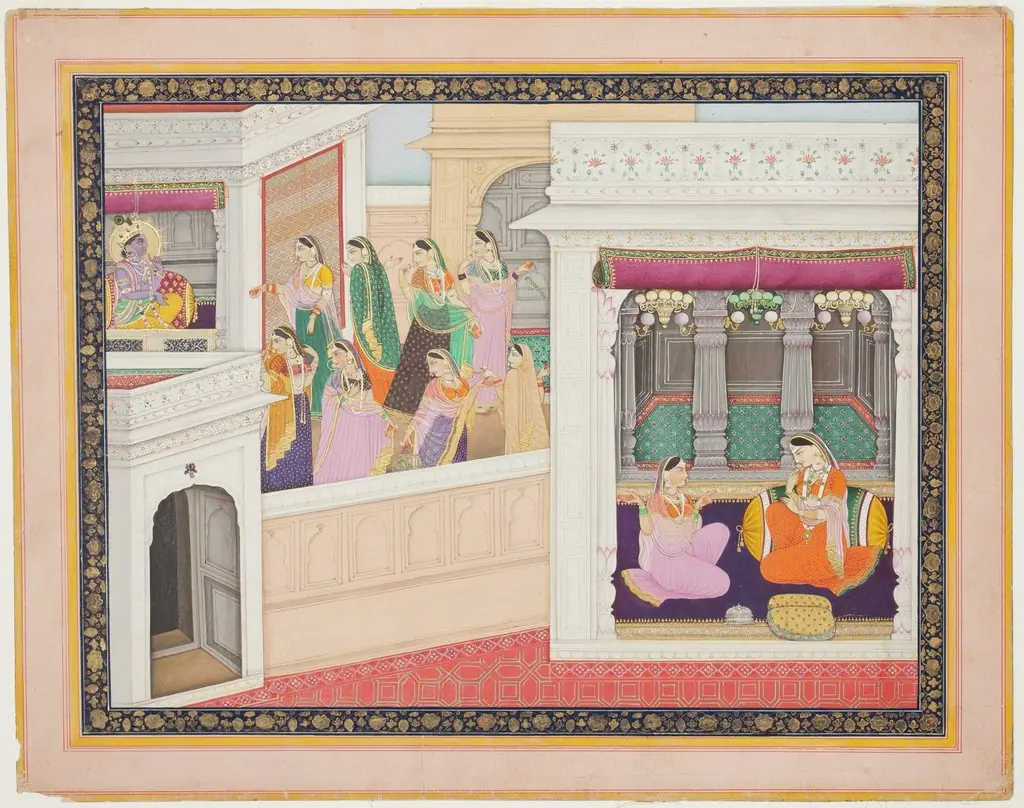 Krishna and Radha: Court Scene
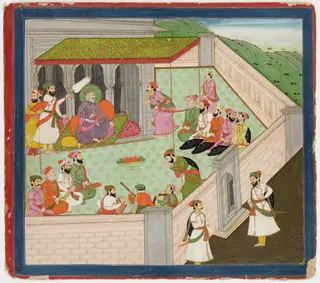 Illustrations to Life of Dhurva Maharaj: #1 Durbar of King Uttan Pad
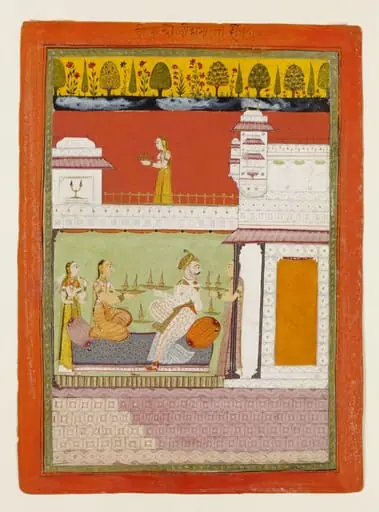 Dipak ragini
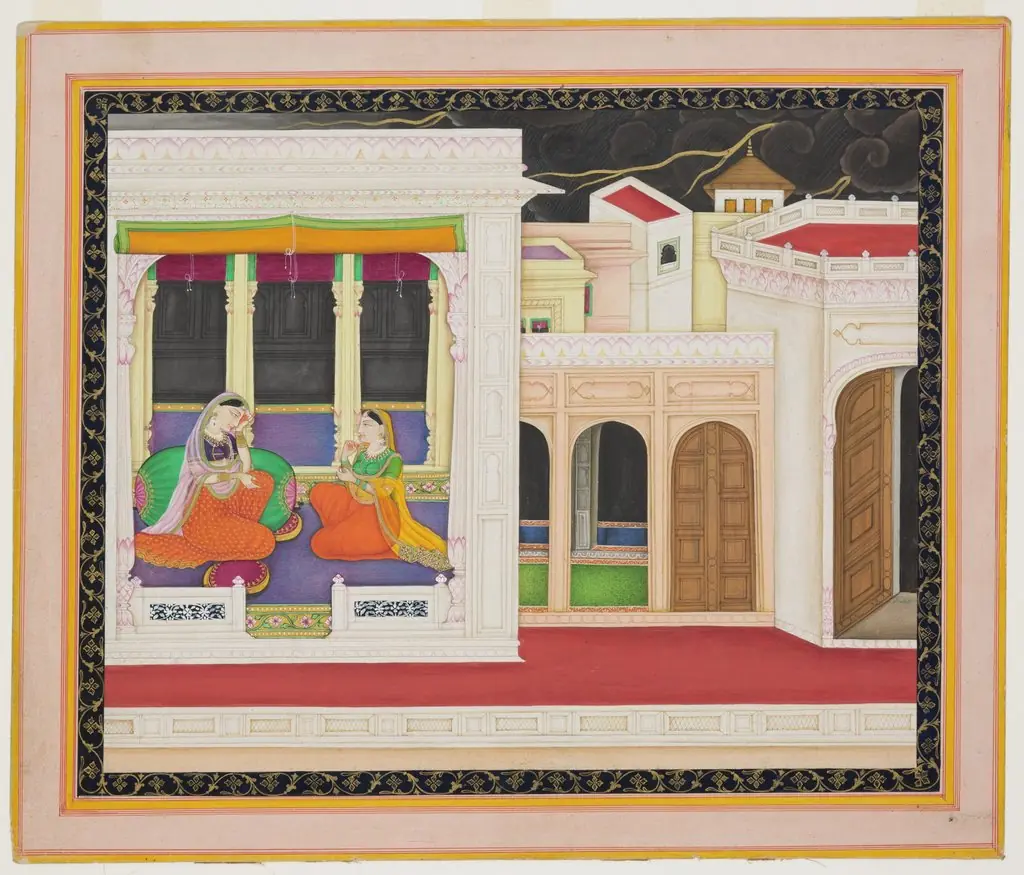 Story of Krishna and Radha
 Ala-ud-din
 Untitled