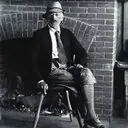
Artist
Frank K. M. Rehn

United States
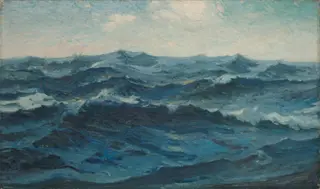
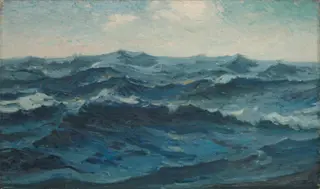
Frank K. M. Rehn is an United States American Impressionism artist. 2 works are cataloged here, principally at Cleveland Museum of Art.
Frank Knox Morton Rehn (April 12, 1848 – July 7, 1914) was an American marine painter, and president of the Salmagundi Club.
Overview
Frank Knox Morton Rehn (April 12, 1848, July 7, 1914) was an American painter who achieved prominence as one of the leading marine artists of the late nineteenth and early twentieth centuries. Born in Philadelphia, he established his reputation through detailed seascapes and coastal views, eventually serving as president of the Salmagundi Club, the distinguished New York artists' organization. His work bridged the transition from academic marine painting to a more atmospheric, naturalistic approach, and his paintings entered major American museum collections during his lifetime.
Biography & dates
Rehn was born in Philadelphia, Pennsylvania, on April 12, 1848. He trained at the Pennsylvania Academy of the Fine Arts under Christian Schussele, a respected history and portrait painter. For several years following his studies, Rehn worked as a portrait painter in Philadelphia, earning income that would enable his eventual move to the New Jersey coast. There he shifted his focus to marine subjects and landscape. In 1881, he married Margaret Selby, and the couple relocated to New York City, where Rehn maintained a studio on the top floor of the Hotel Chelsea alongside other artists. His career gained significant recognition in the 1880s: in 1882 he won first prize for marine painting at the St. Louis Exposition, followed by first prize at the American Art Association watercolor exhibition in 1885 and a gold medal at the Prize Fund Exhibition in 1886. Between 1910 and 1911, he served as president of the Salmagundi Club. Rehn built a summer home in Magnolia, Massachusetts, in 1896, and died there on July 7, 1914. His son, Frank Knox Morton Rehn (1886-1956), became a prominent Manhattan art dealer who represented Edward Hopper, among other artists.
Style & movement
Rehn's artistic development reflects a clear trajectory from academic training to specialized marine and landscape painting. His early work in portraiture, grounded in the rigorous academic environment of the Pennsylvania Academy of the Fine Arts, provided technical foundation for his later specialization. Upon relocating to the New Jersey coast, he dedicated himself to marine painting, working in both oil and watercolor. His membership in the American Watercolor Society indicates his serious engagement with that medium. Rehn's marine paintings typically depicted coastal scenes, harbor views, and seascapes, often characterized by careful attention to atmospheric conditions and light effects on water. His work emerged during a period of significant growth in American marine painting, when artists were moving away from strictly documentary or heroic nautical subjects toward more naturalistic and aesthetically contemplative treatments of the sea and shore.
Major works
Rehn's known works span the 1880s and 1890s, with several significant paintings held in public collections. "Looking down on the Sea from the Rocks at Magnolia, Mass." dates from 1884-85, reflecting his connection to that Massachusetts coastal community. "A Missing Vessel" (1885) is held by the Detroit Institute of Arts. "Close of a Summer Day" (1887) belongs to the collection of the Buffalo Fine Arts Academy. "Evening, Gloucester Harbor" (1887) depicts one of the most important fishing ports and artists' colonies on the American East Coast. "In the Glittering Moonlight" entered the collection of the Corcoran Gallery. Additional works by Rehn are held at the Smithsonian American Art Museum in Washington, the Cleveland Museum of Art, and the Albright-Knox Art Gallery in Buffalo.
Influences & students
Rehn's primary documented teacher was Christian Schussele at the Pennsylvania Academy of the Fine Arts. Schussele, a European-trained painter known for historical and literary subjects, provided Rehn with formal academic training that informed his early portraiture and later marine compositions. Rehn's professional circle included fellow artists at the Hotel Chelsea studios in New York, though specific names beyond his own studio companions are not recorded in available sources. The sources do not document any pupils or formal teaching role for Rehn, though his son's later career as an art dealer suggests a family connection to the art world across generations. Rehn's association with the Salmagundi Club placed him within a network of prominent American artists of the period.
Legacy
Rehn's posthumous reputation rests primarily on his marine paintings in museum collections and his institutional role in American art organizations. His works are distributed across several major American museums, including the Detroit Institute of Arts, the Buffalo Fine Arts Academy, the Smithsonian American Art Museum, the Cleveland Museum of Art, and the Albright-Knox Art Gallery. The dispersal of "In the Glittering Moonlight" with the Corcoran Gallery collection requires updated provenance tracking following that institution's dissolution. Rehn's broader cultural significance is partly transmitted through his son, Frank Knox Morton Rehn Jr., whose Manhattan gallery represented Edward Hopper and other significant American artists, suggesting a family influence on twentieth-century American art markets. Rehn's presidency of the Salmagundi Club between 1910 and 1911 marked his standing among his contemporaries, though scholarly attention to his work has remained limited compared to some marine painters of the same era.
Works by Frank K. M. Rehn
Collections represented

Artists in a similar vein