Artwork
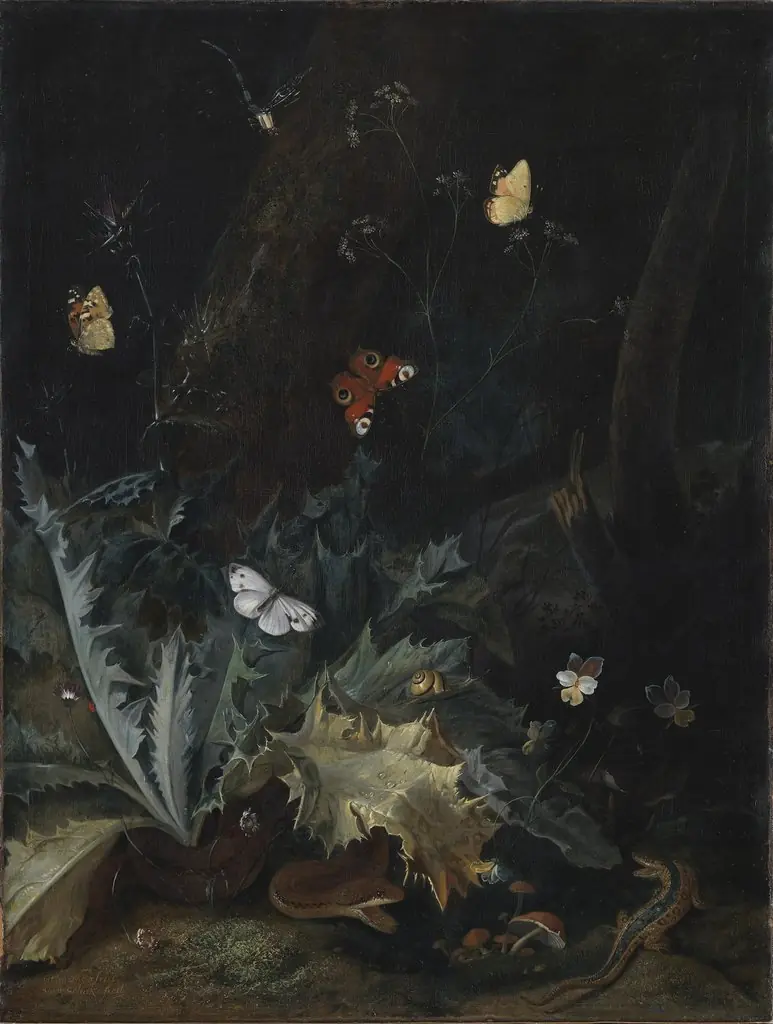
Thistles, butterflies and a lizard
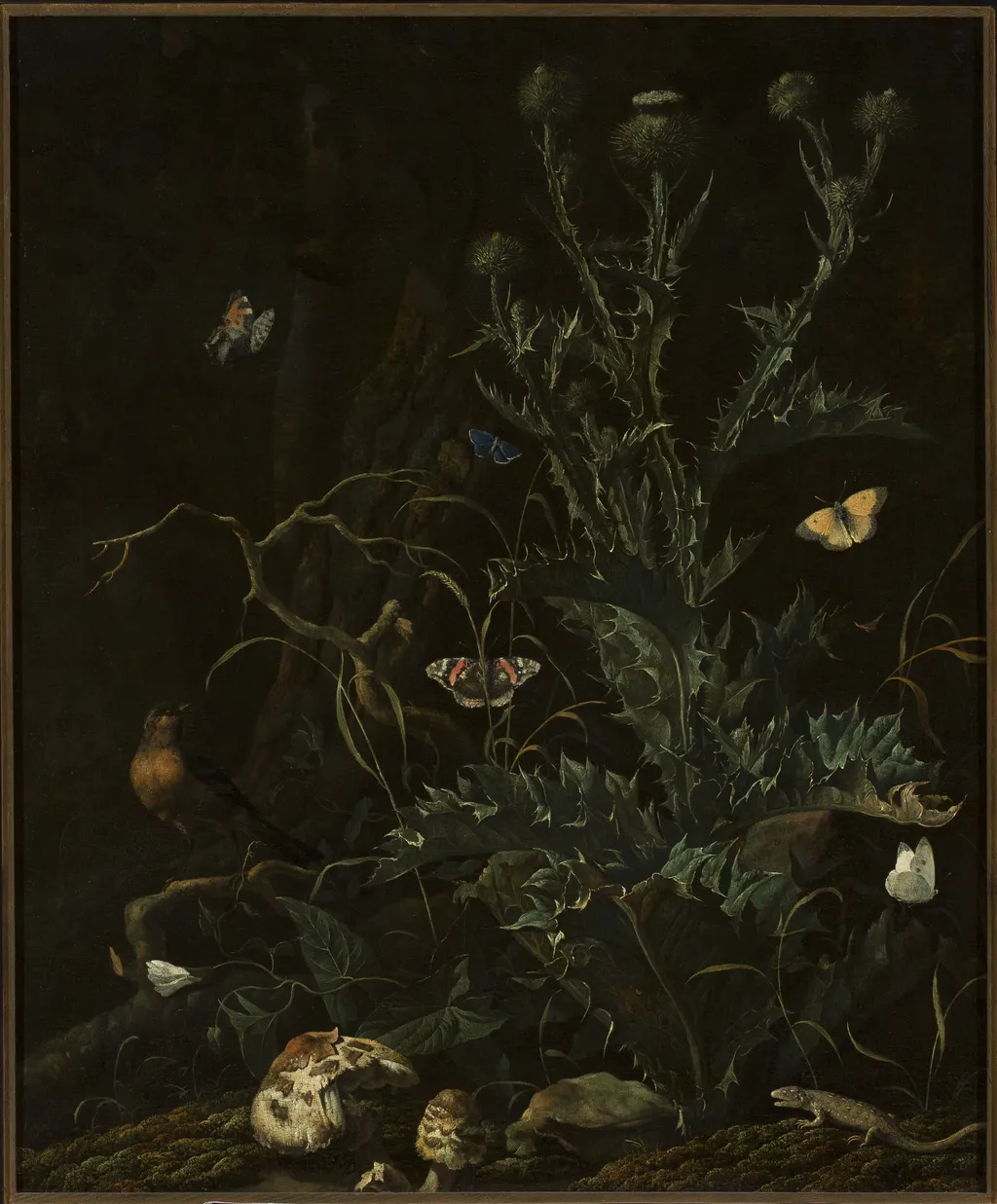
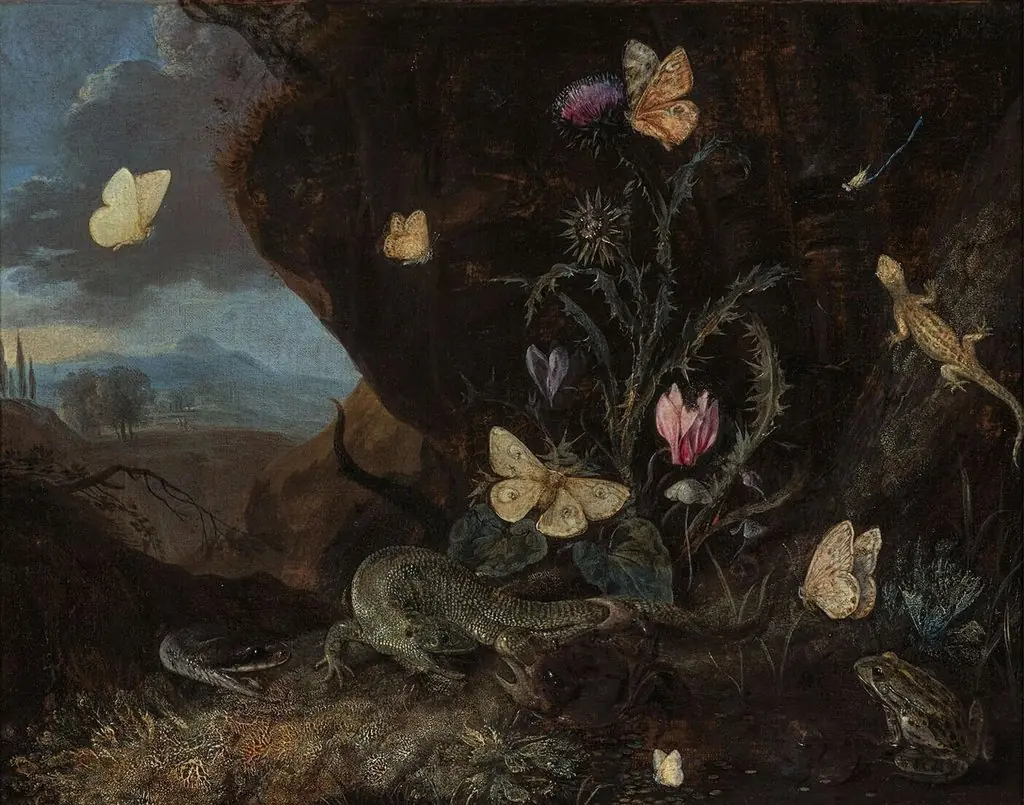
Thistles, butterflies and a lizard is an oil painting by the Dutch Golden Age artist Abraham Begeyn. It dates from 1677 and is held in the collection of the National Museum in Warsaw.
About this work
Overview
Begeyn, who trained in Leiden and later worked in Rome, is known for his landscapes and still lifes that often incorporate such naturalistic details.
Painted in 1677 by the Dutch artist Abraham Begeyn, 'Thistles, butterflies and a lizard' is a detailed still life executed in oil on canvas. The composition centers on a large, upright thistle plant, its prickly stems and serrated leaves rendered with precise botanical accuracy against a dark, neutral background. This stark contrast highlights the vibrant activity of several butterflies, depicted in shades of yellow, blue, and orange, as they hover around or rest upon the foliage.
In the lower right foreground, a small lizard is positioned on the ground, adding a dynamic element of natural observation to the scene. Begeyn, who trained in Leiden and later worked in Rome, is known for his landscapes and still lifes that often incorporate such naturalistic details. This work exemplifies the Dutch Golden Age tradition of combining floral studies with animal subjects to explore the textures and fleeting moments of the natural world.
The painting demonstrates Begeyn's skill in balancing complex organic forms within a unified, atmospheric setting, reflecting the era's scientific curiosity and appreciation for the intricacies of nature.
Subject & Meaning
At the centre of the canvas stands a robust thistle, its green foliage and spiny stems rendered with careful observation. Flitting around the plant are several butterflies in vivid yellows, blues and oranges, while a small lizard rests on the lower right, adding a touch of fauna that underscores the painter’s interest in the diversity of the natural world.
Technique & Style
Begeyn employs a pronounced chiaroscuro, using a deep, muted background to make the illuminated thistle and the bright insects emerge with striking contrast. The brushwork captures fine textures, the velvety petals, the delicate wing membranes, and the scaly skin of the lizard, demonstrating a meticulous approach to surface detail.
History & Provenance
Created in the late seventeenth century, the painting entered the National Museum in Warsaw’s holdings during the 20th century, though the exact path of acquisition remains undocumented in public records. Its presence in the museum reflects the institution’s broader collection of Dutch Baroque still‑life works.
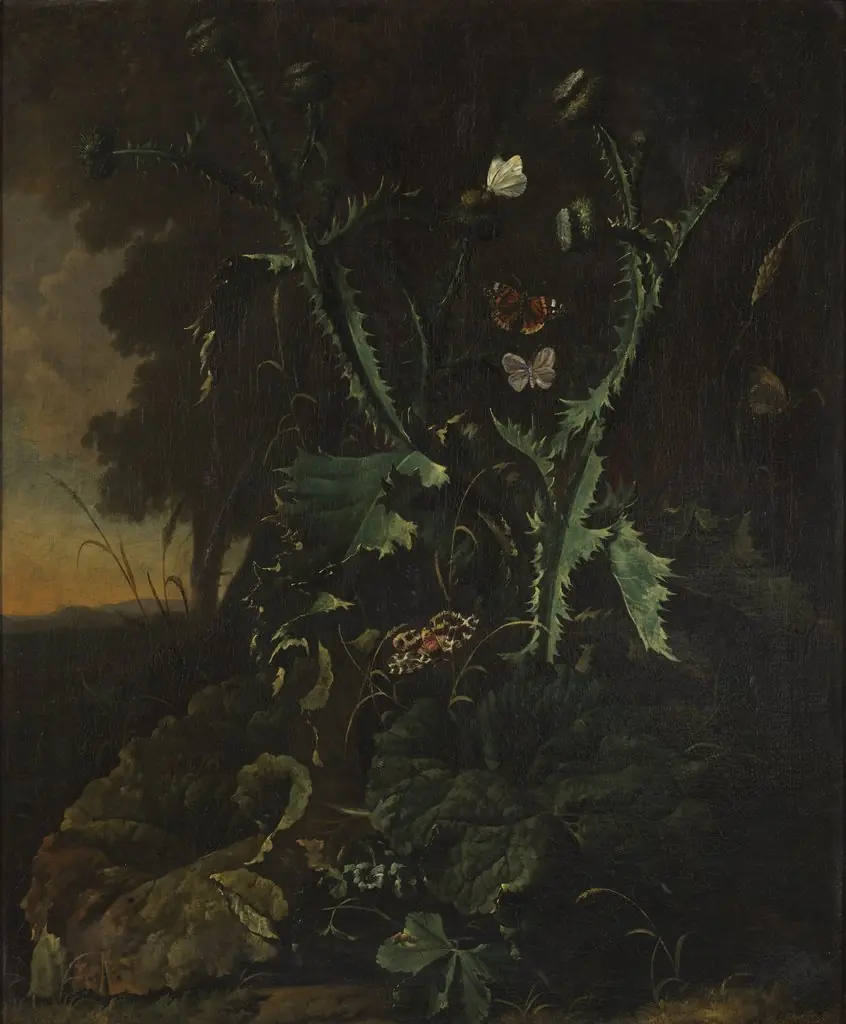
Own this work as a print
Artist & collection

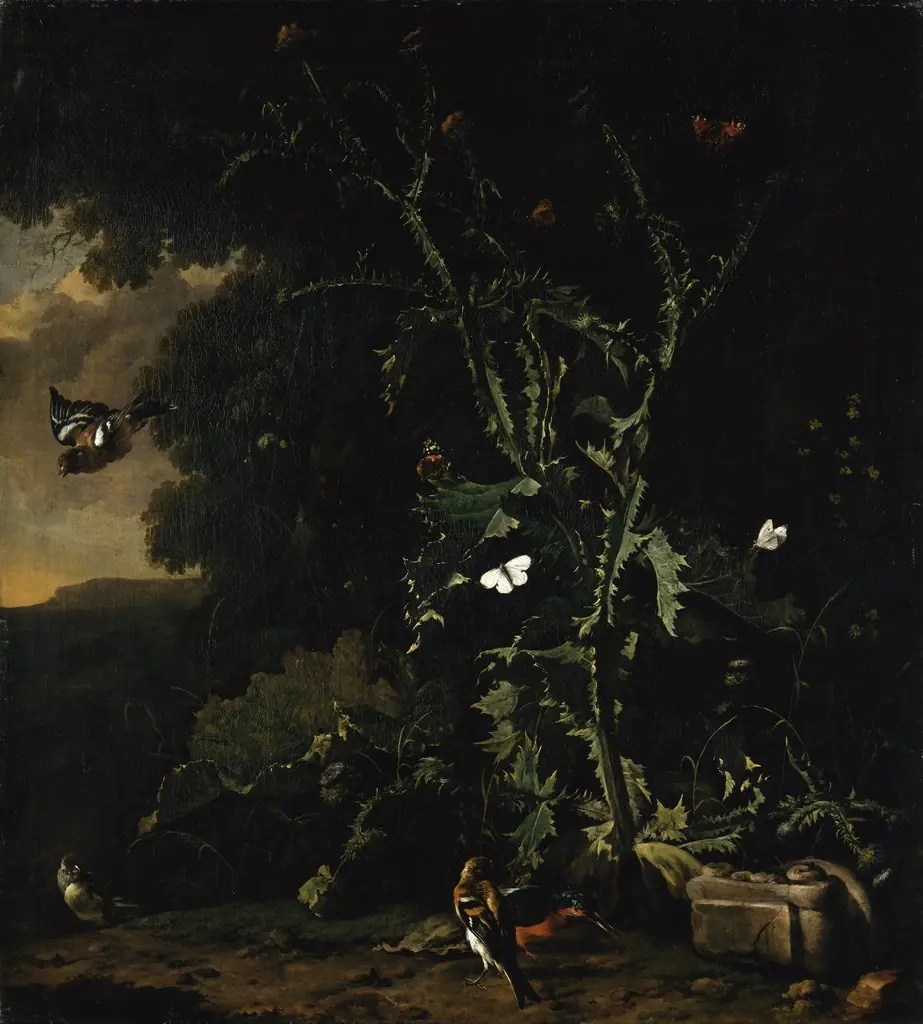
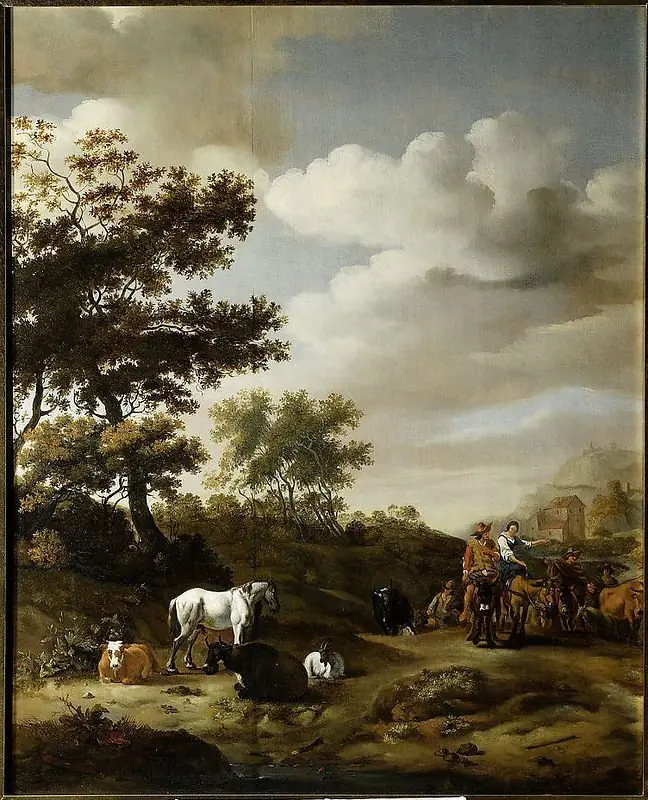
 A Forest Floor with a Thistle, a Snake, a Lizard and Butterflies
 A Forest Floor with a Thistle, a Snake, a Lizard and Butterflies
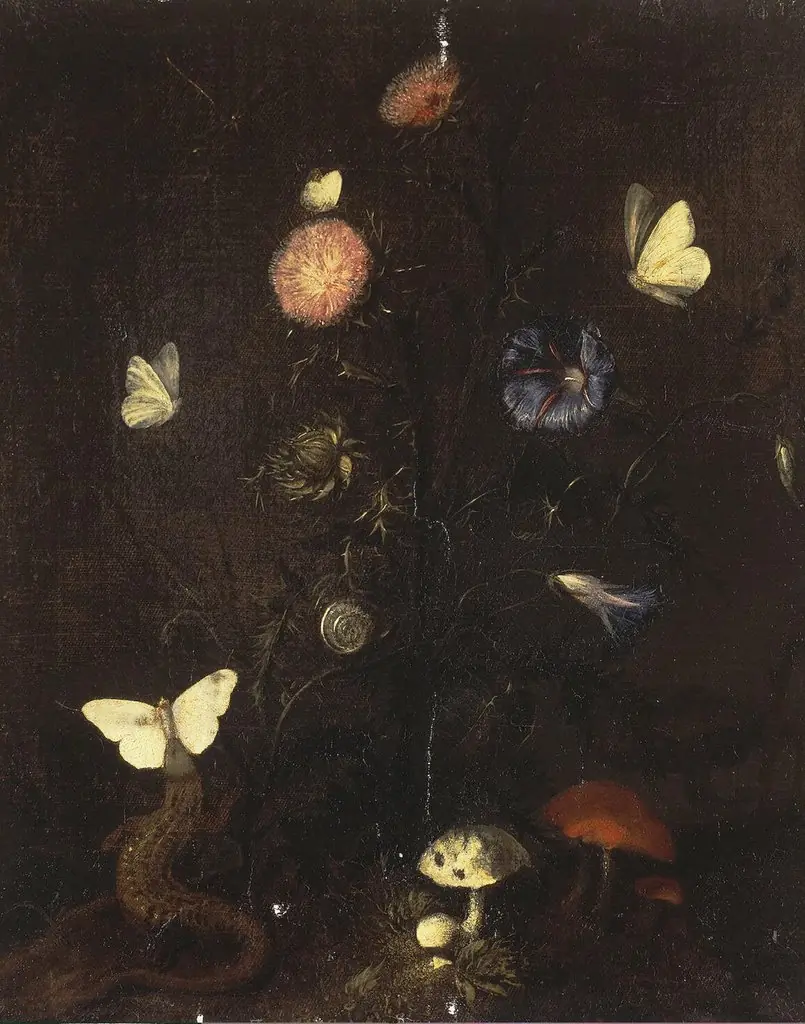 Flowers, Lizard and Butterflies
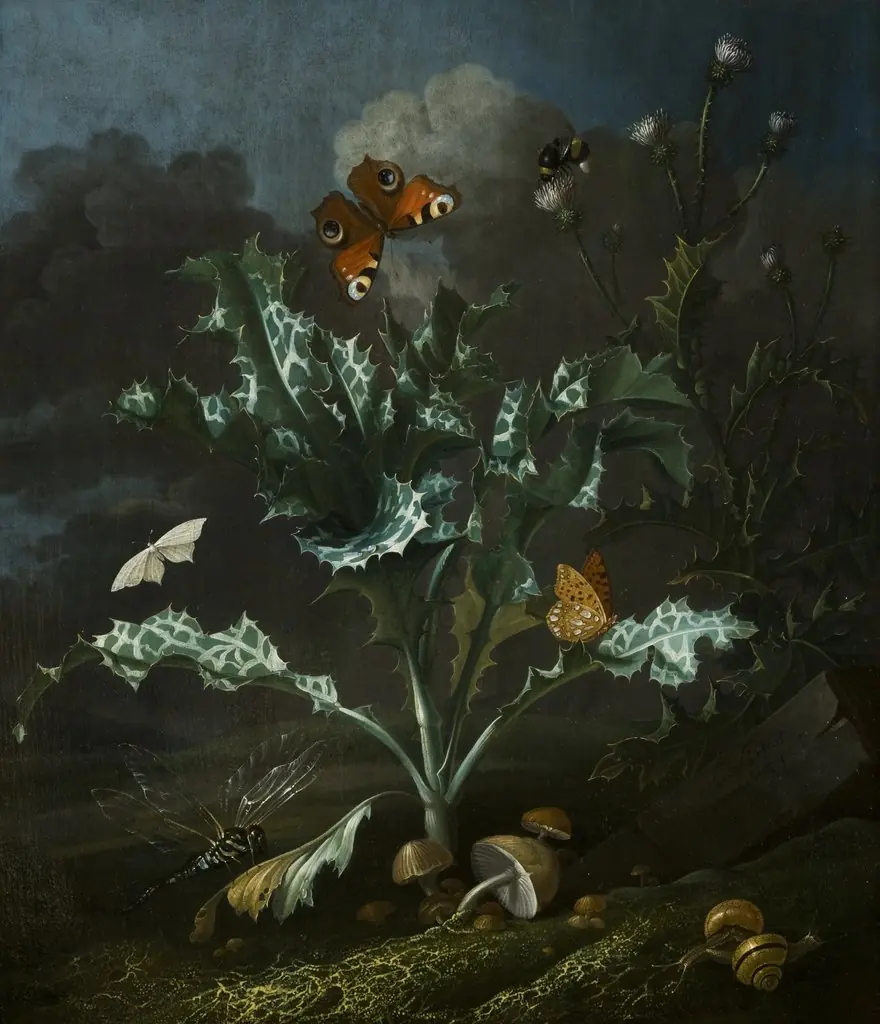 Thistles and Butterflies
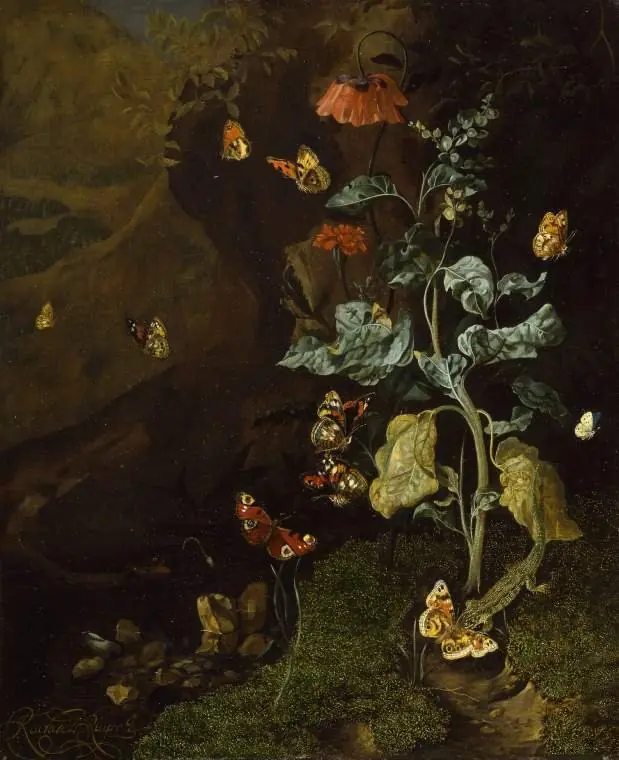 Insects and a lizard in a wood
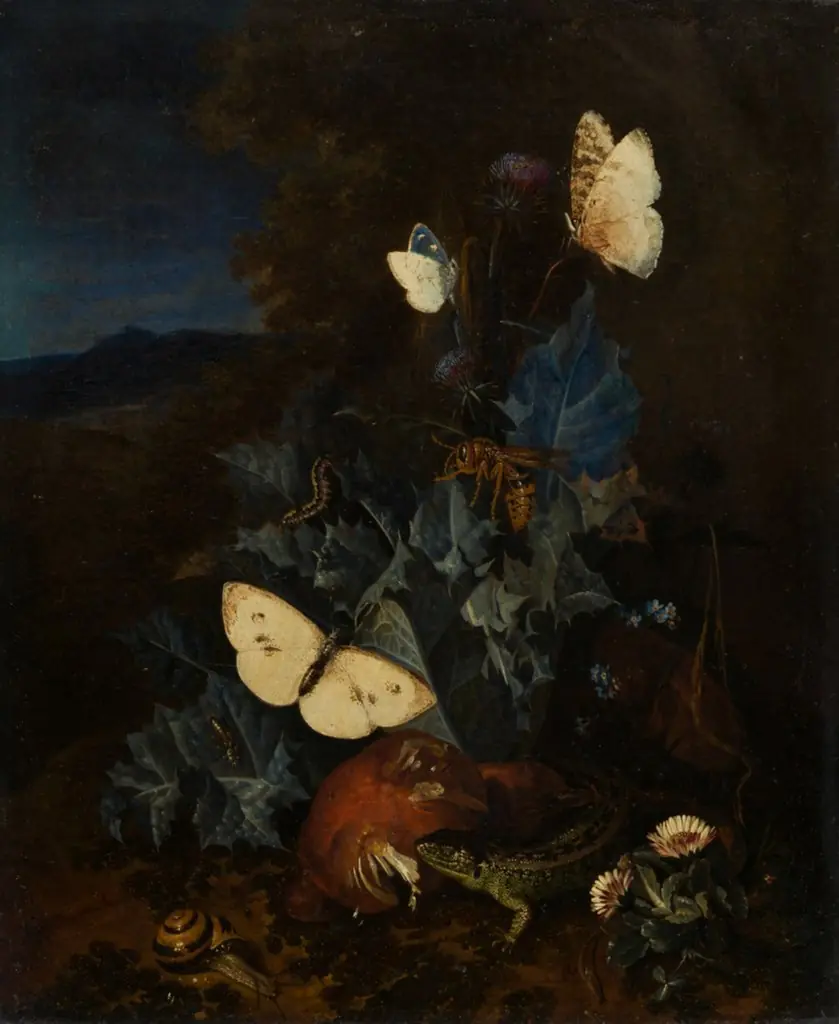 Still-life with a thistle, boletus, snail, lizard, butterflies and a bee in a landscape
 Landschap with insects, cyclamen and thistle
 Thistle with Insects