Artwork
Orpheus bezaubert die Tiere
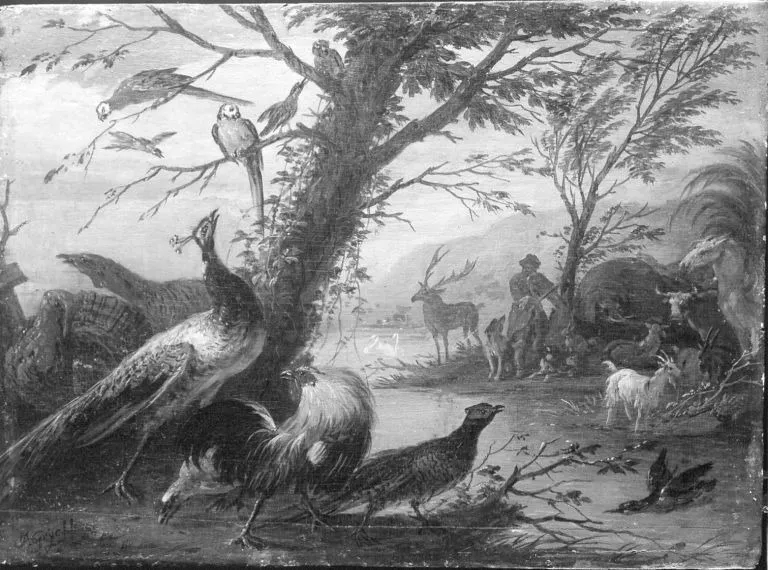
Orpheus bezaubert die Tiere is an oil painting by the Rococo painting artist Adriaen de Grijef. It dates from 1702 and is held in the collection of the Bavarian State Painting Collections.
About this work
Technique & Style
The stylistic handling emphasizes smooth brushwork and a restrained palette, reflecting the Baroque fascination with dynamic yet controlled movement.
The painting Orpheus bezaubert die Tiere is executed in oil paint on wood panel, a technique typical of early 18th‑century Dutch mythological works. Its formal composition centers the figure of Orpheus, whose gesture appears to charm the surrounding animals, creating a harmonious balance between narrative detail and decorative patterning. The stylistic handling emphasizes smooth brushwork and a restrained palette, reflecting the Baroque fascination with dynamic yet controlled movement.
The work is housed in the Alte Pinakothek, where it remains well preserved, showing only minor craquelure consistent with its age and support.
History & Provenance
The painting was created in 1702 by Adriaen de Grijef as an oil on panel work depicting the mythological figure Orpheus. It entered the collection of the Bavarian State Painting Collections and has been housed in the Alte Pinakothek in Munich since its acquisition. The work measures 22.3 cm in height and 29.7 cm in width.
Its creation is documented in contemporary records as part of de Grijef's mythological series produced during the early 18th century.
The painting is held in the Bavarian State Painting Collections and is located at the Alte Pinakothek in Munich. No specific inventory or accession number is recorded in the available sources.
No exhibition history is documented in the provided sources.
Overview
Created in 1702, this oil on canvas by Dutch painter Adriaen de Grijef presents a tranquil woodland tableau. A solitary figure, identified as the mythic musician Orpheus, stands near a tree while a variety of forest creatures, birds, deer, goats and a prominently displayed peacock, populate the surrounding foliage. The work is part of the collection of Munich’s Alte Pinakothek.
Subject & Meaning
The composition draws on the legend of Orpheus, whose music was said to charm all living things. Here the painter visualizes that power by arranging a diverse assembly of animals that appear untroubled and attentive, suggesting the harmonious influence of the hero’s song over nature.
Context
During the period, mythological subjects were frequently employed to demonstrate an artist’s skill in rendering both human figures and animal life. De Grijef, known for his animal scenes, combined narrative content with his specialty in depicting fauna, aligning the piece with contemporary tastes for allegorical landscapes that celebrated the unity of art and nature.
Artist & collection

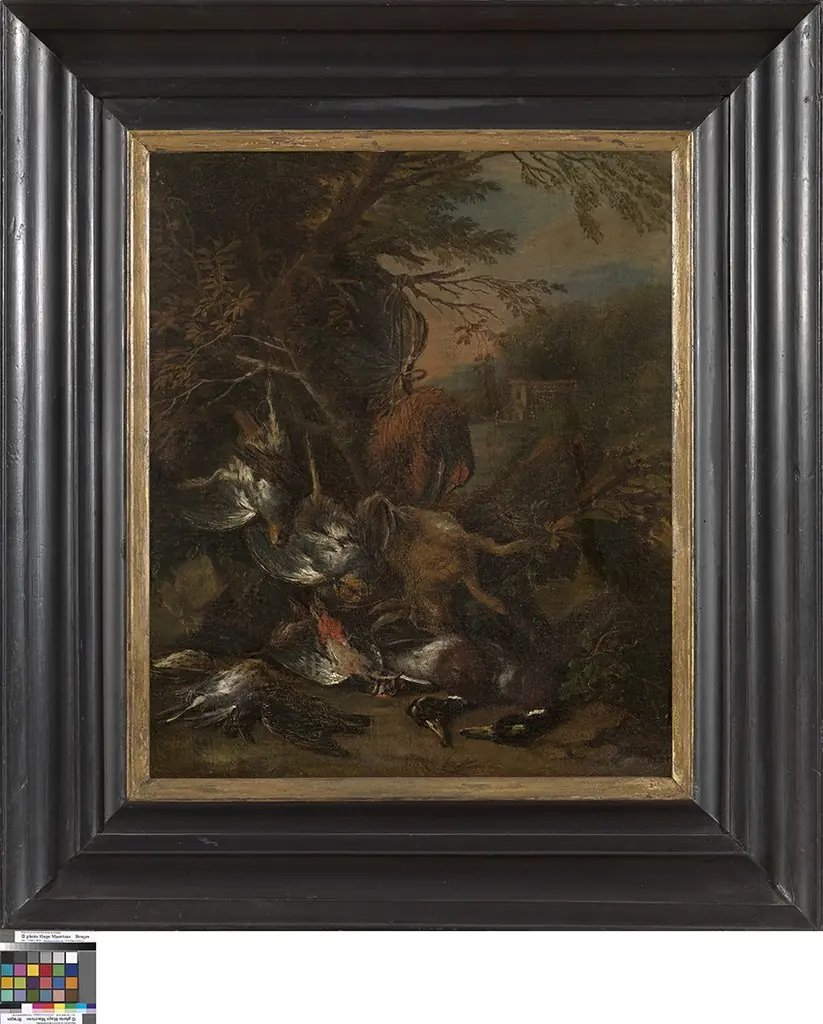
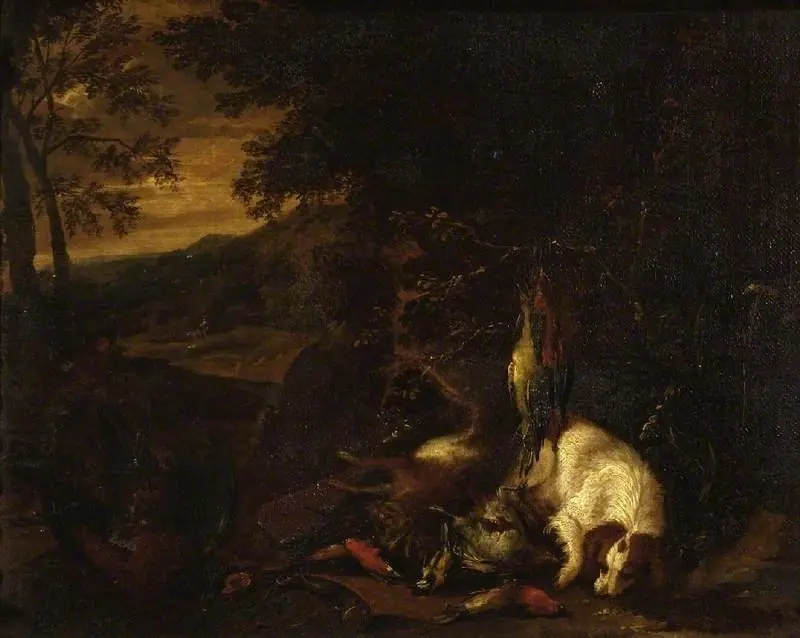
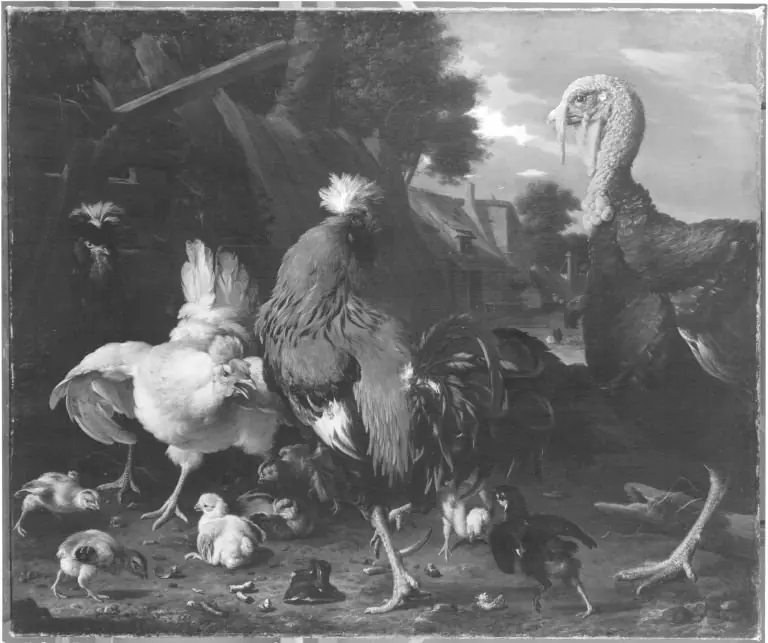
- A turkey, chickens and quails in a farmyard
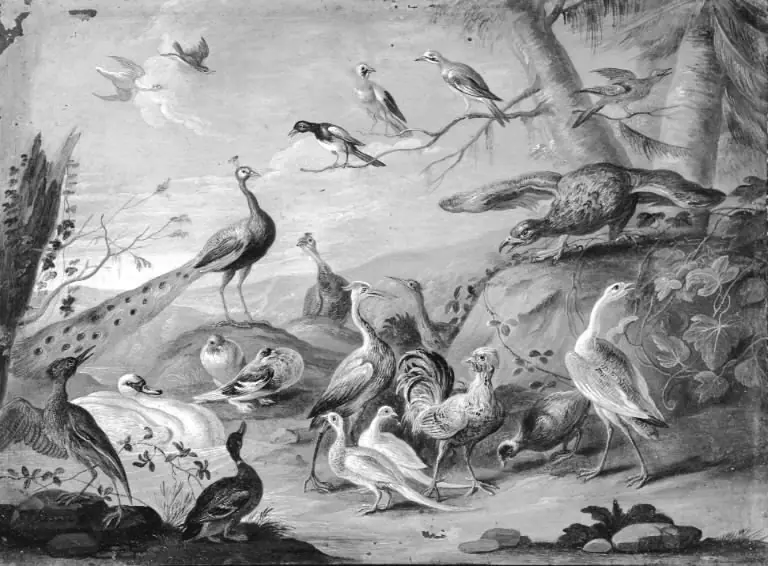 A Hilly Landscape with a Peacock, an Eagle and other Birds
 A Hilly Landscape with a Peacock, an Eagle and other Birds
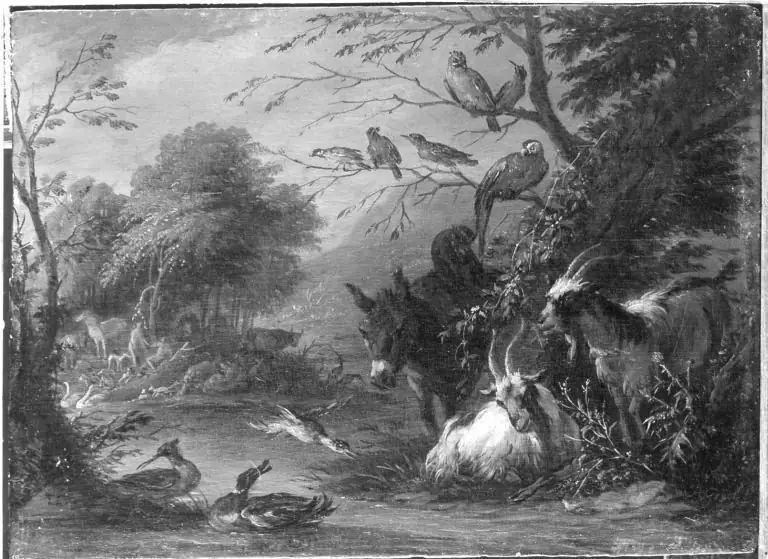
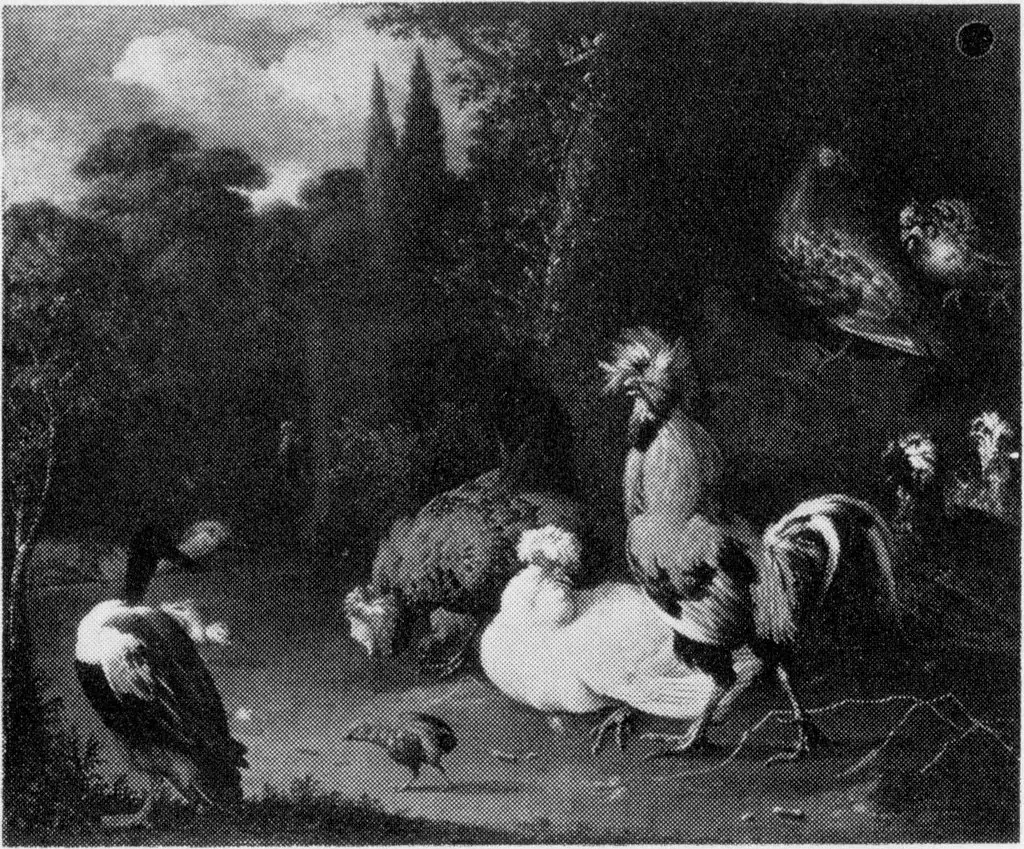 Poultry and ducks in a park
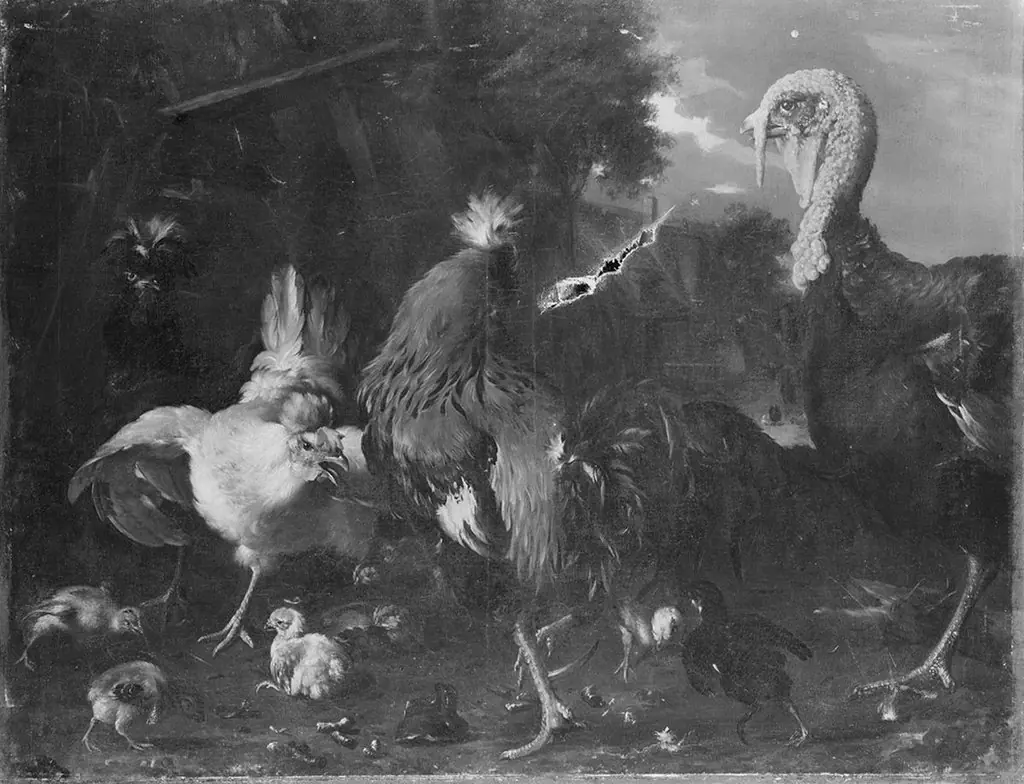 Geflügelhof
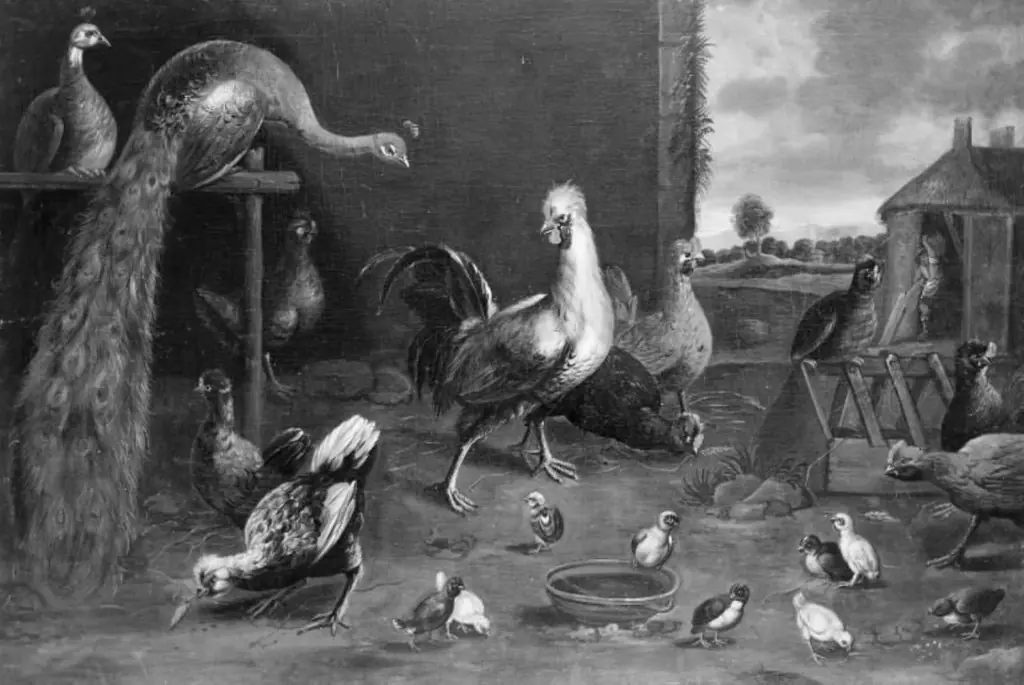 Mellem høns, haner og kyllinger, ses et par påfugle
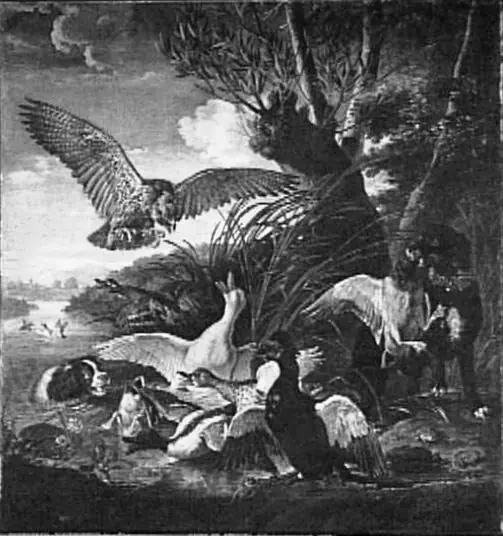 Hunting with the Falcon
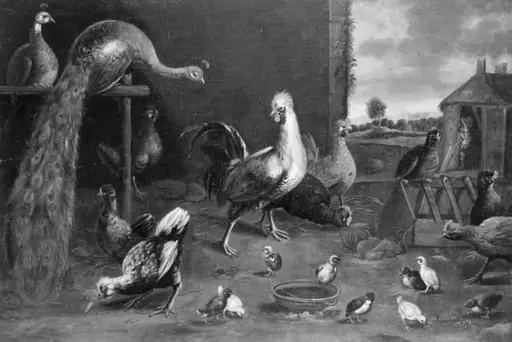 Mellem høns, haner og kyllinger, ses et par påfugle
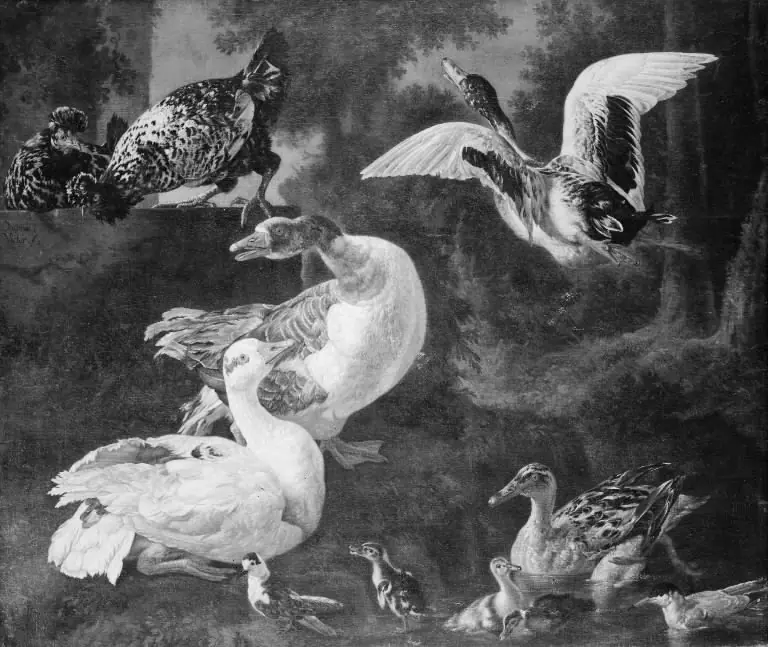 Poultry
 Poultry
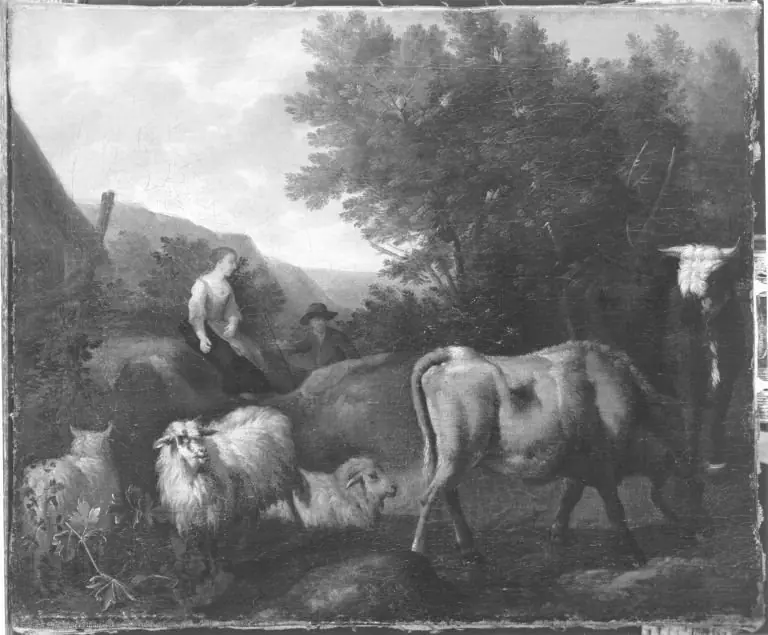 Landschaft mit Vieh und Hirten