Artwork
Bagpiper
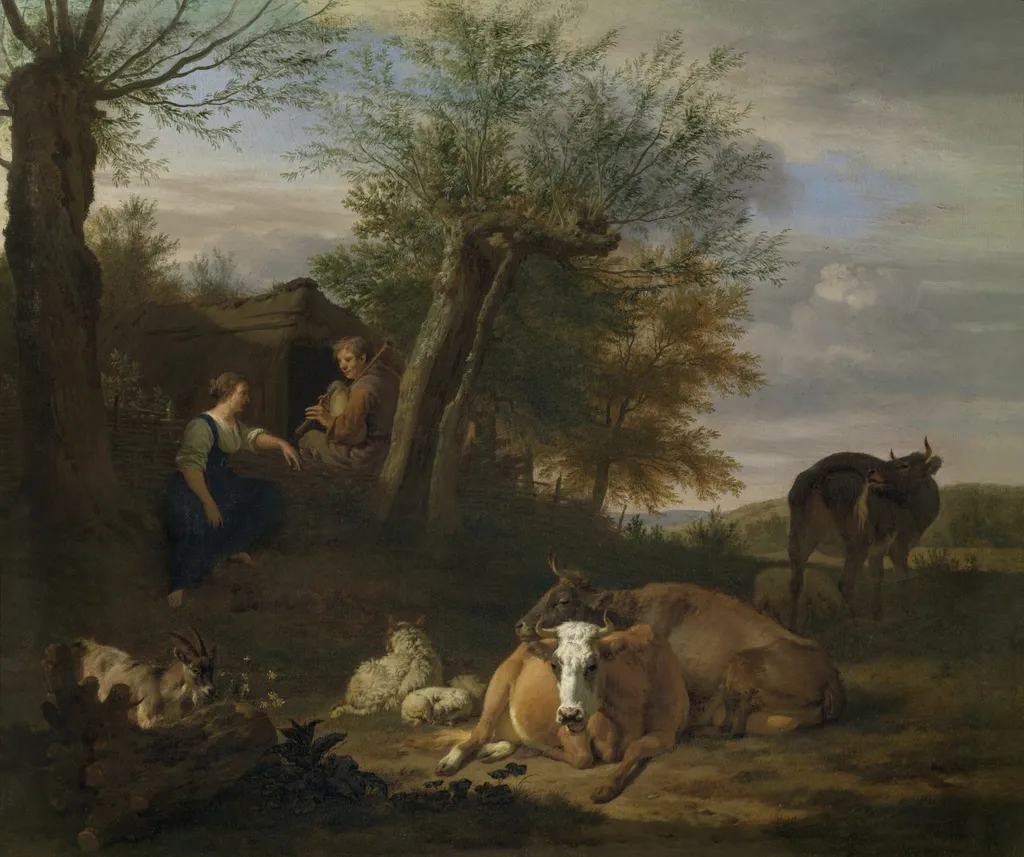
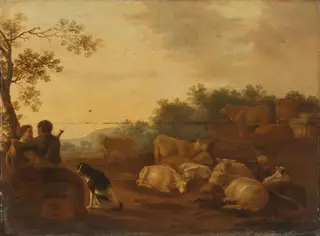
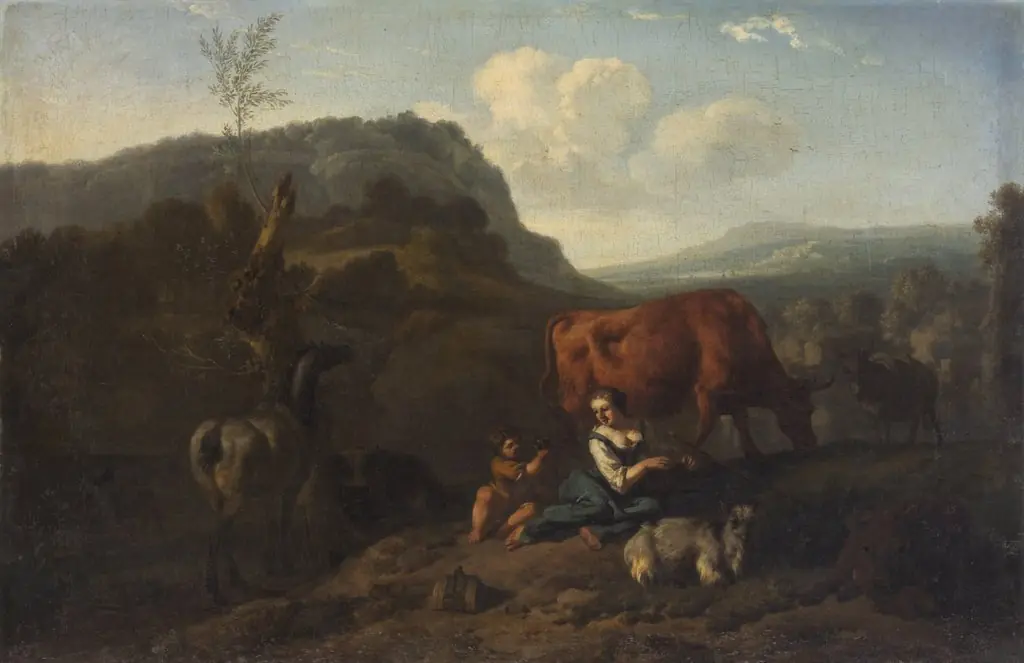
Bagpiper is an oil painting by the Dutch Golden Age artist Adriaen van de Velde. It dates from 1650 and is held in the collection of the Royal Museum of Fine Arts Antwerp.
About this work
Subject & Meaning
The inclusion of the bagpipe likely functions as a marker of pastoral identity and rustic leisure, common motifs in seventeenth-century Netherlandish art.
Adriaen van de Velde's 1650 oil painting presents a pastoral landscape populated by a shepherd, a woman, and livestock including cattle and sheep. The central figure is distinguished by the presence of a bagpipe, an instrument that anchors the work within the tradition of Dutch rural genre scenes.
The composition combines human activity with animal husbandry, depicting the figures alongside their flock in a naturalistic setting. While the specific narrative intent of the interaction between the bagpiper and the accompanying woman is not explicitly detailed in available records, the assembly of these elements serves to illustrate an idealized vision of countryside life. The inclusion of the bagpipe likely functions as a marker of pastoral identity and rustic leisure, common motifs in seventeenth-century Netherlandish art.
Technique & Style
Bagpiper is an oil painting executed on canvas mounted to panel. The work measures 33.1 × 39.9 cm. As a landscape by Adriaen van de Velde, it depicts rural figures and animals, specifically cattle, sheep, a shepherd playing bagpipes, and a woman, integrated within a pastoral setting. The artist's handling situates the scene within the Dutch landscape tradition, employing oil paint to render naturalistic detail across a modestly scaled support.
Overview
Adriaen van de Velde’s oil painting, dated around 1650, presents a tranquil rural tableau. The composition centers on a seated piper, a woman in a blue dress, and a small thatched hut, all set within a gently rolling landscape that is now part of the Royal Museum of Fine Arts Antwerp’s collection.
History & Provenance
Created circa 1650, the painting entered the collection of the Royal Museum of Fine Arts Antwerp, where it remains on display. Its attribution to van de Velde aligns with his known focus on pastoral subjects and his skill in integrating figures within natural surroundings.
Context
During the mid‑17th century, Dutch artists often depicted bucolic settings that idealized rural labor and leisure. Van de Velde’s work reflects this tradition, combining genre elements, a musician, a domestic figure, livestock, with a landscape that emphasizes calm and order.
Own this work as a print
Artist & collection

Artist
Adriaen van de Velde, was a Dutch painter, draughtsman, and print artist. His favorite subjects were landscapes with animals and genre scenes. He also painted beaches, dunes, forests, winter scenes, portraits in…

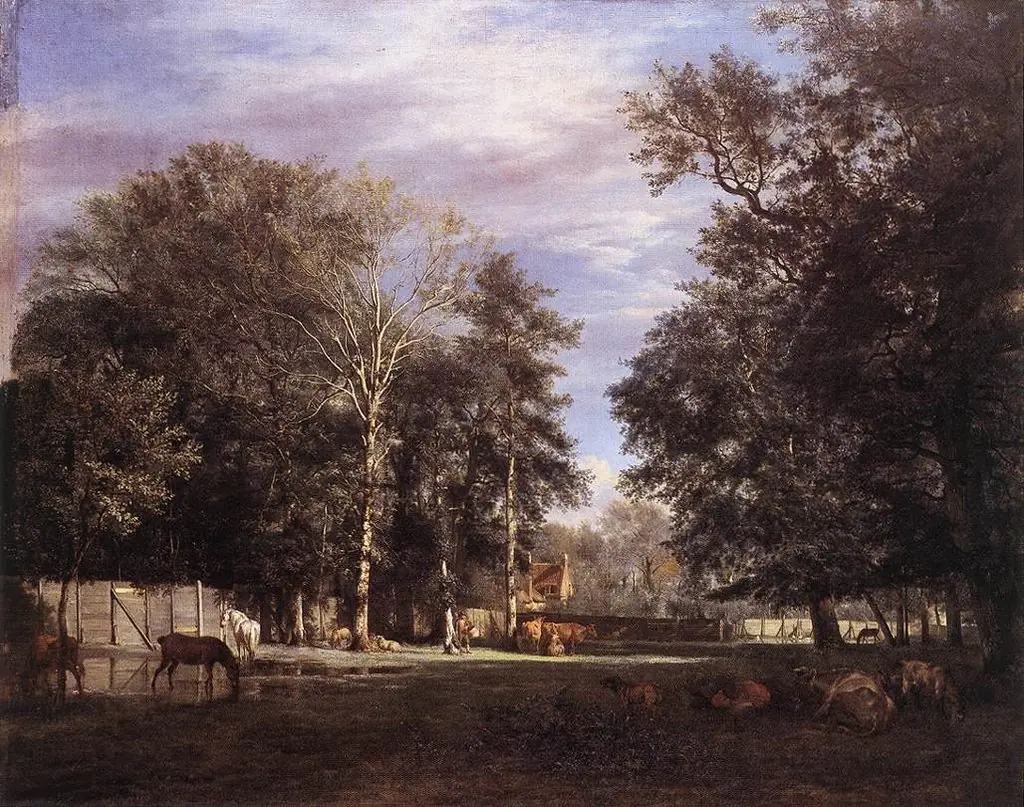
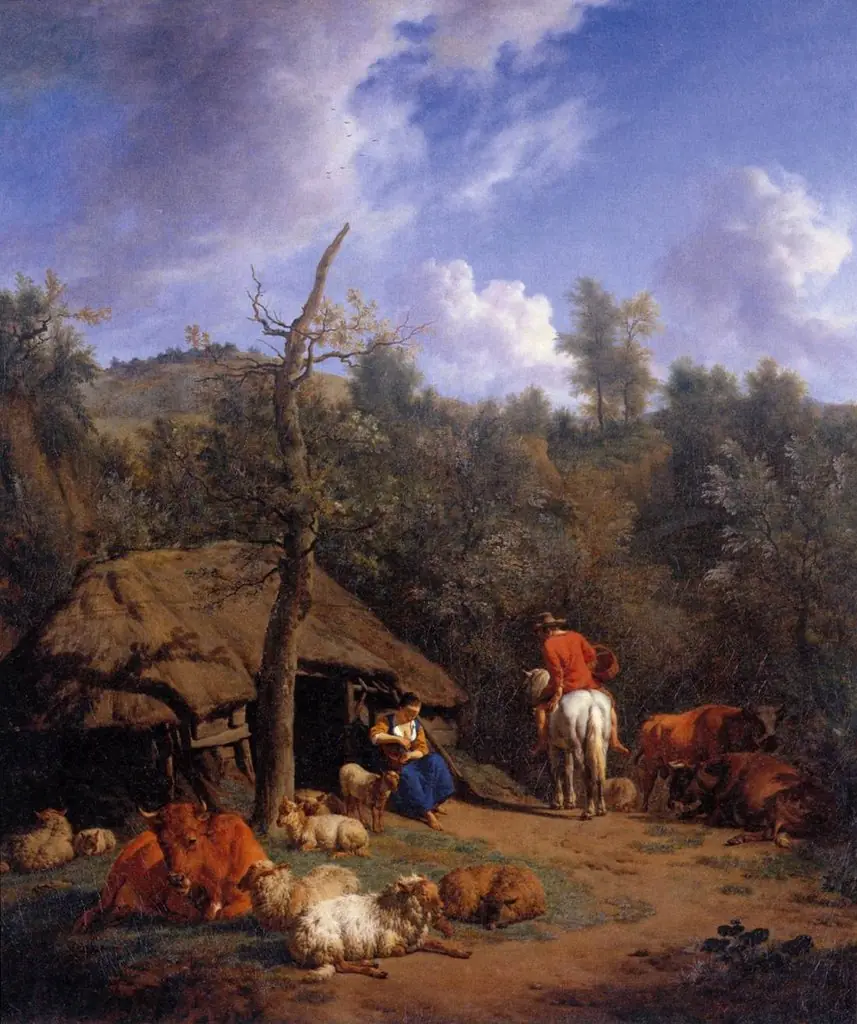
- Landscape with Shepherdess and Shepherd Playing Flute
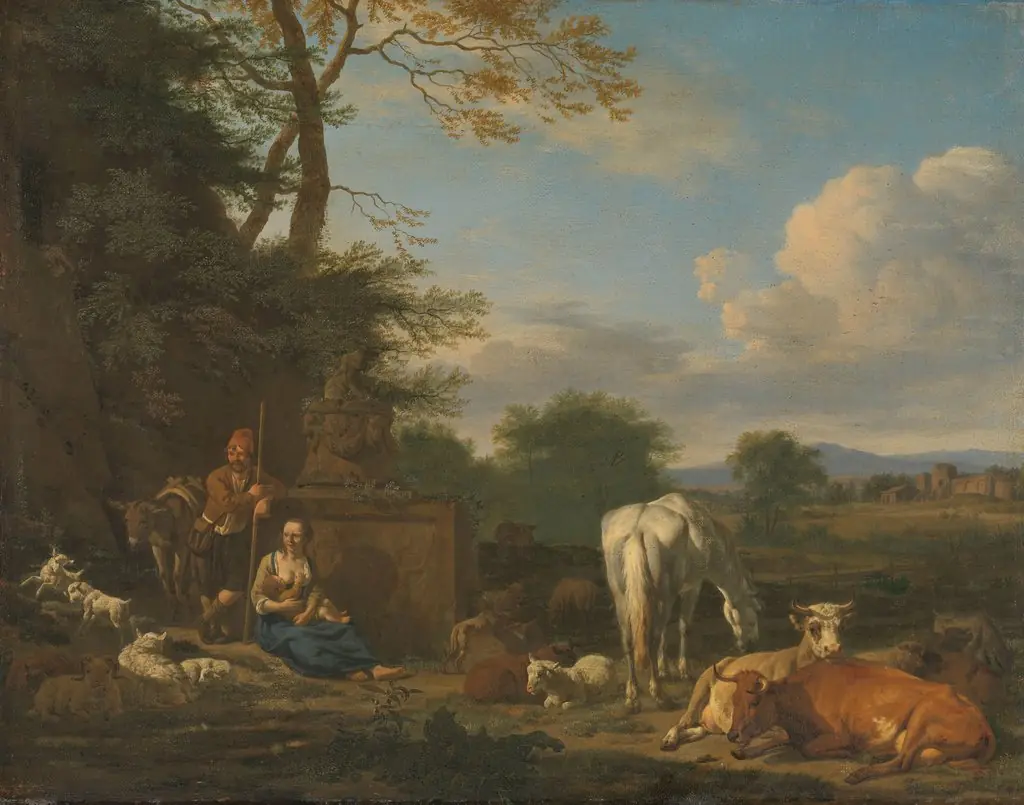 Arcadian landscape with resting herdsmen and cattle
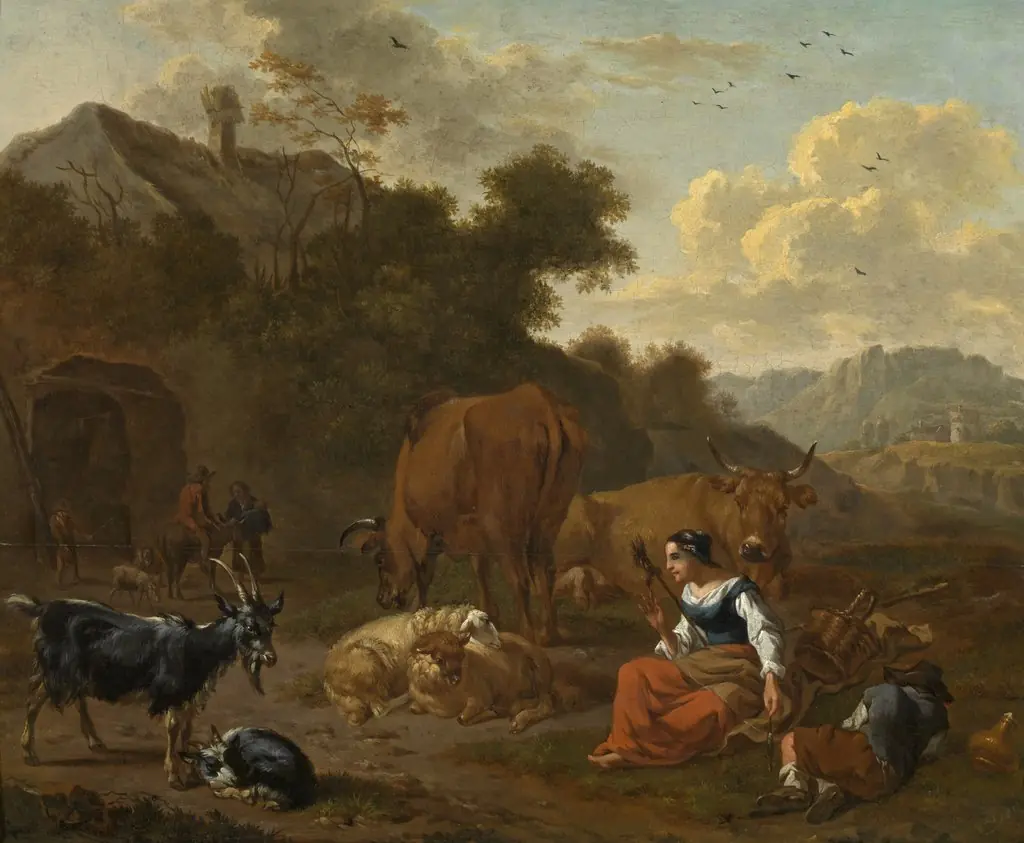 Landscape with a Spinner and Cattle
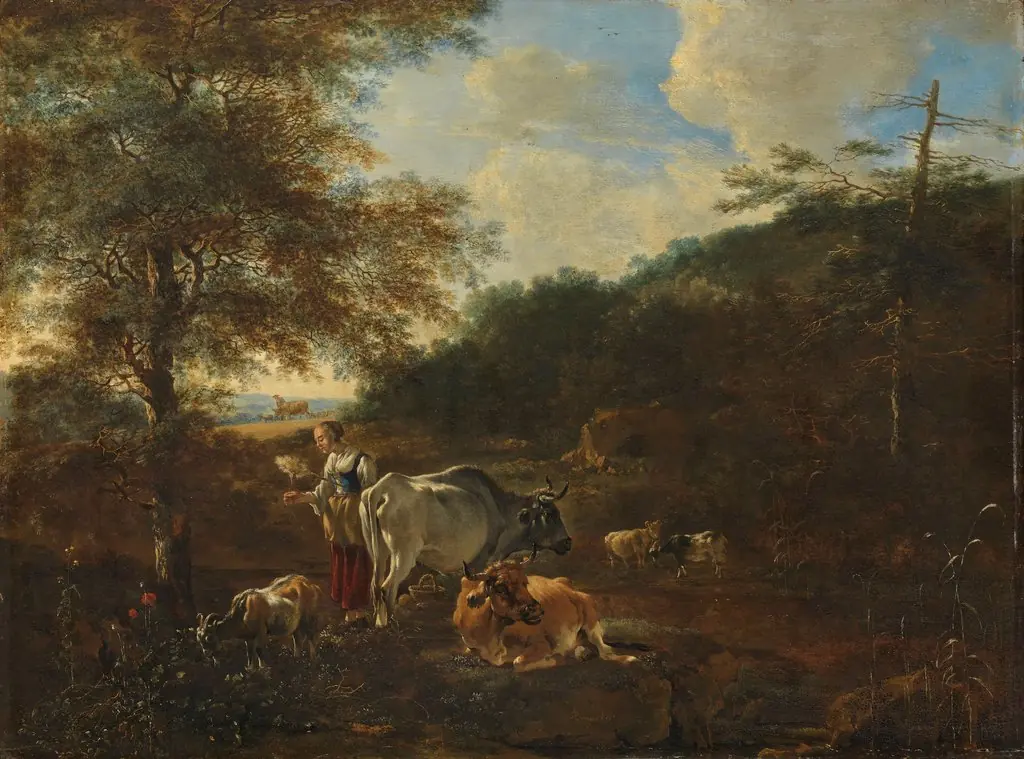 Landscape with cattle
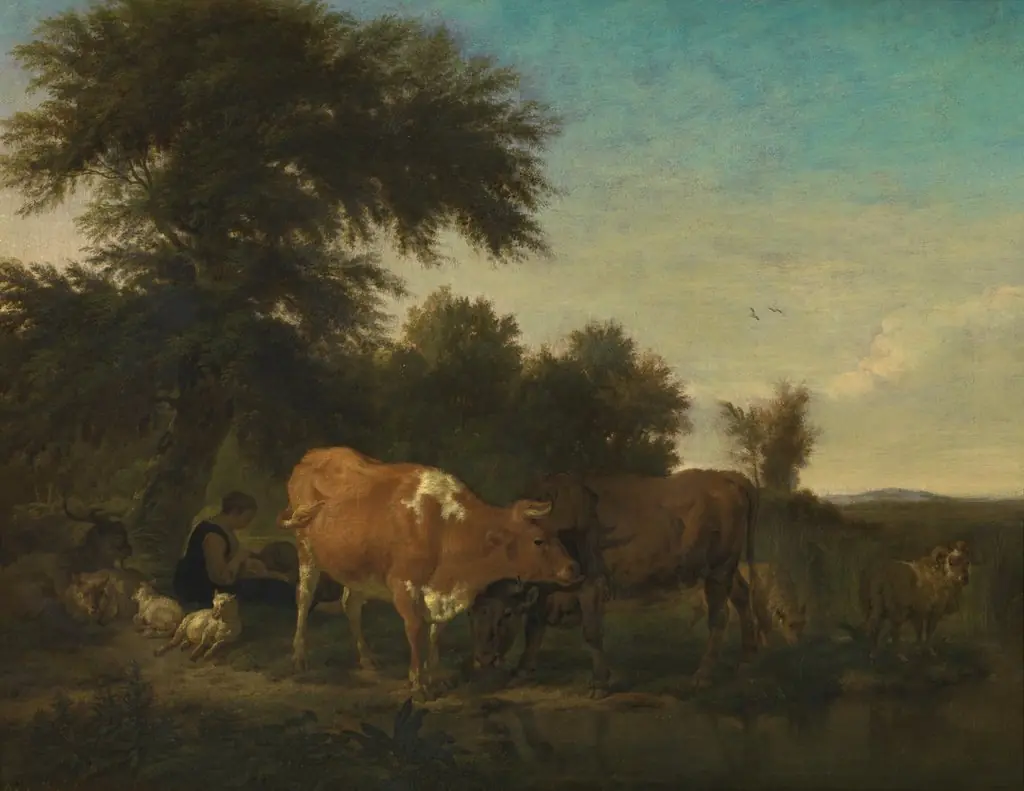 Landscape
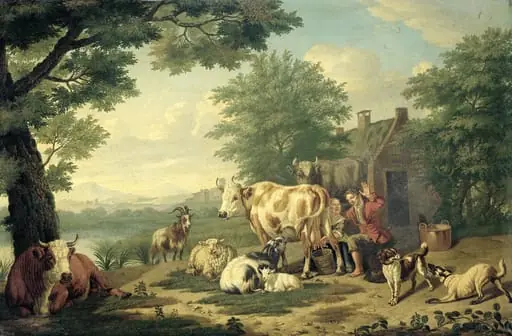 Milking Time
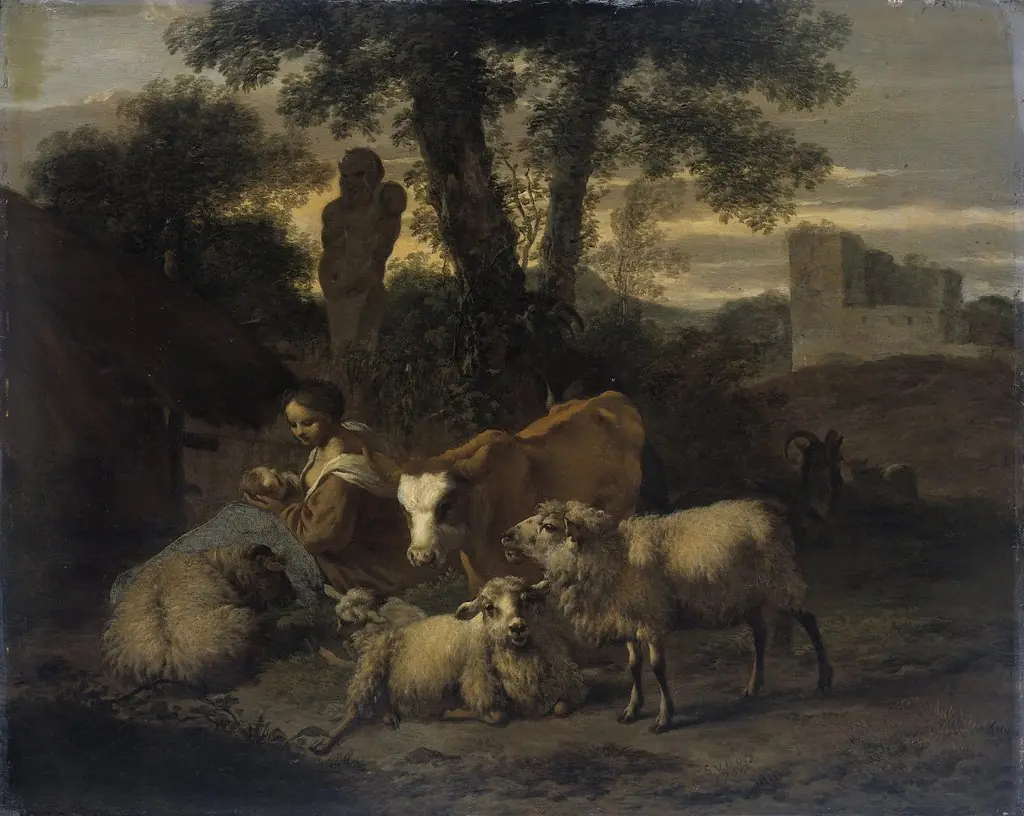 Italian landscape with sheperdess and flocks
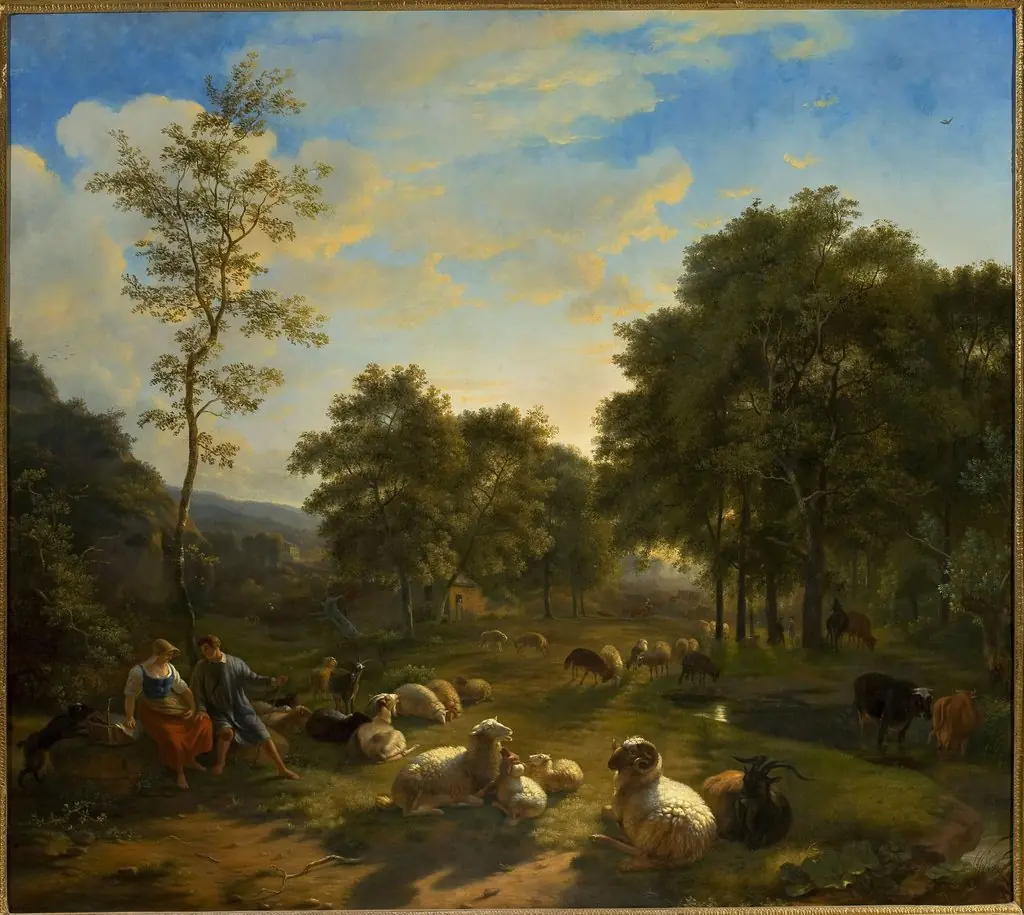 Pastoral scene
 Landscape with sheperd, sheperdess and cattle
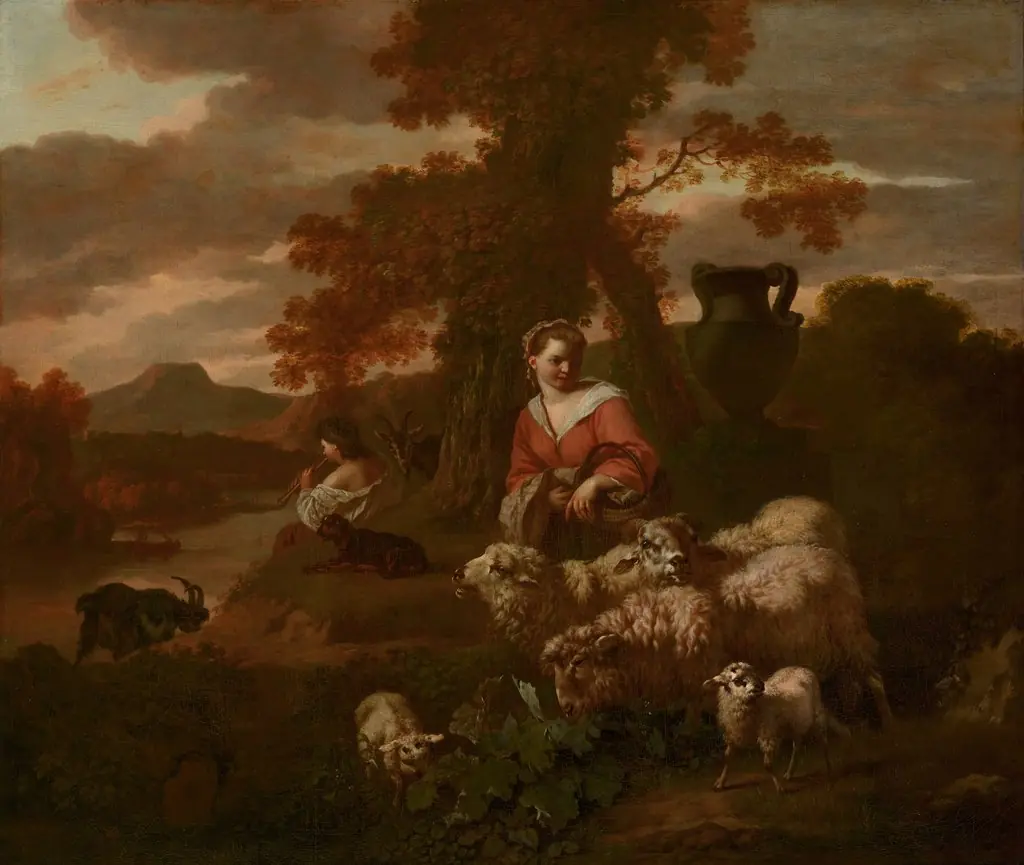 Shepherdess and Shepherd with Sheep and Goats
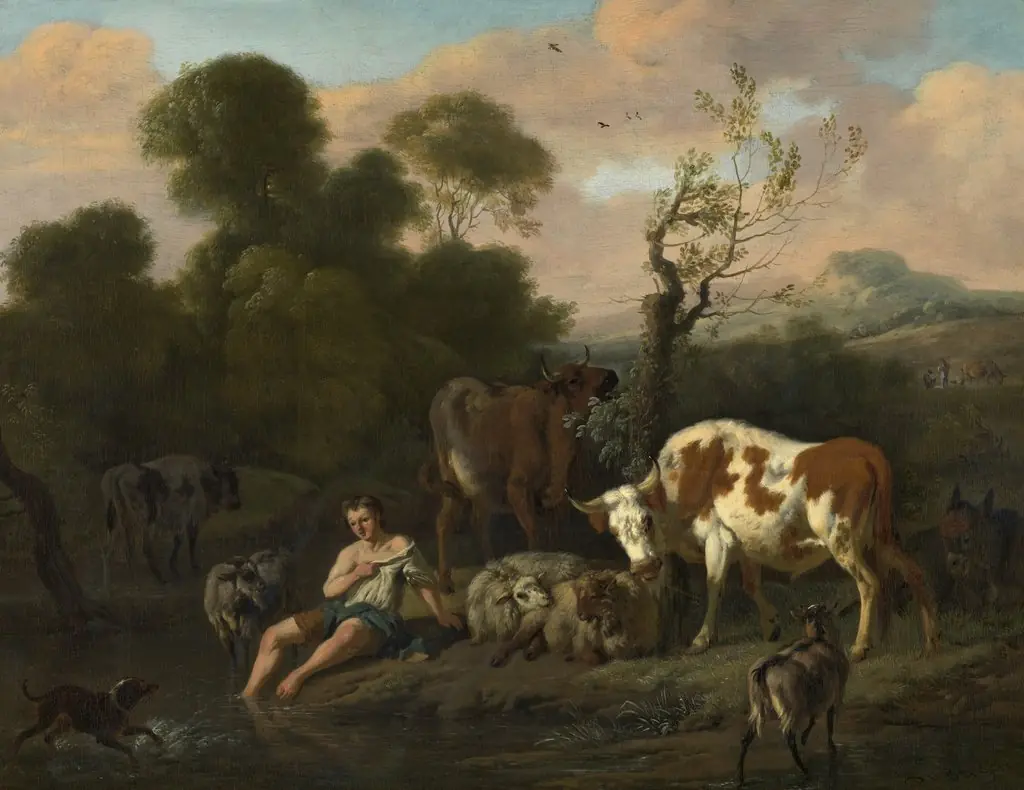 Landscape with a Shepherd
 Mountainous landscape with a shepherdess and cows