Artwork
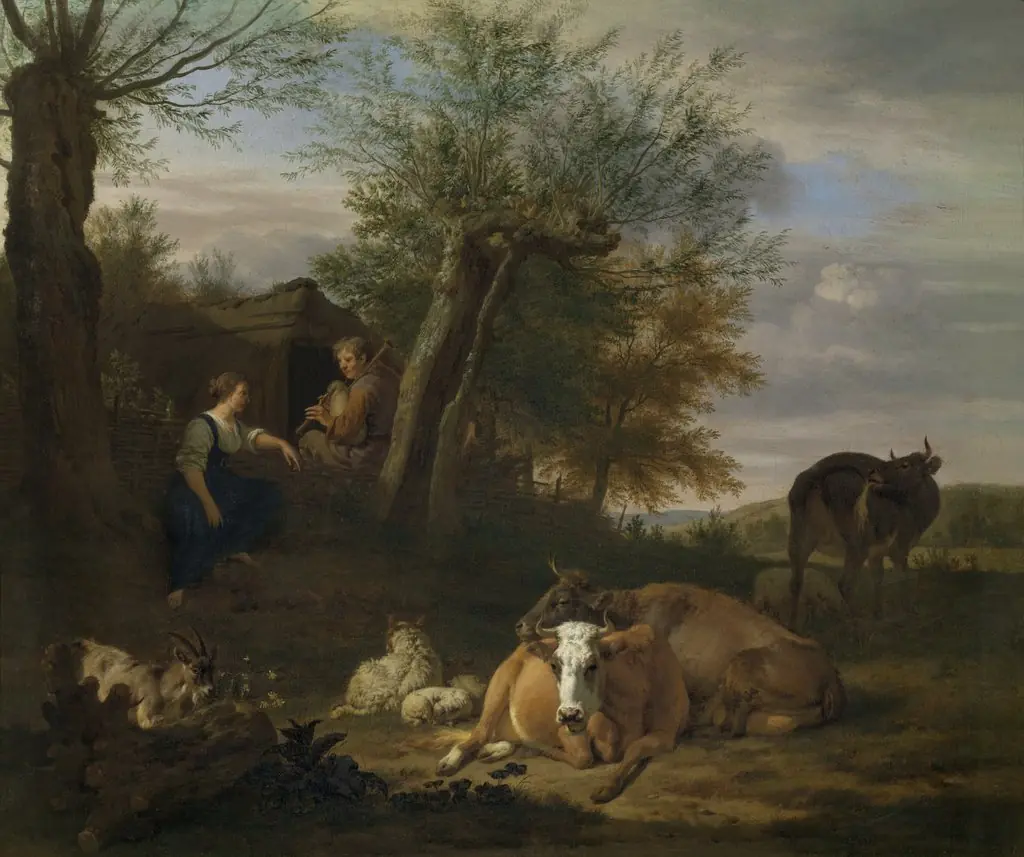
The Hut
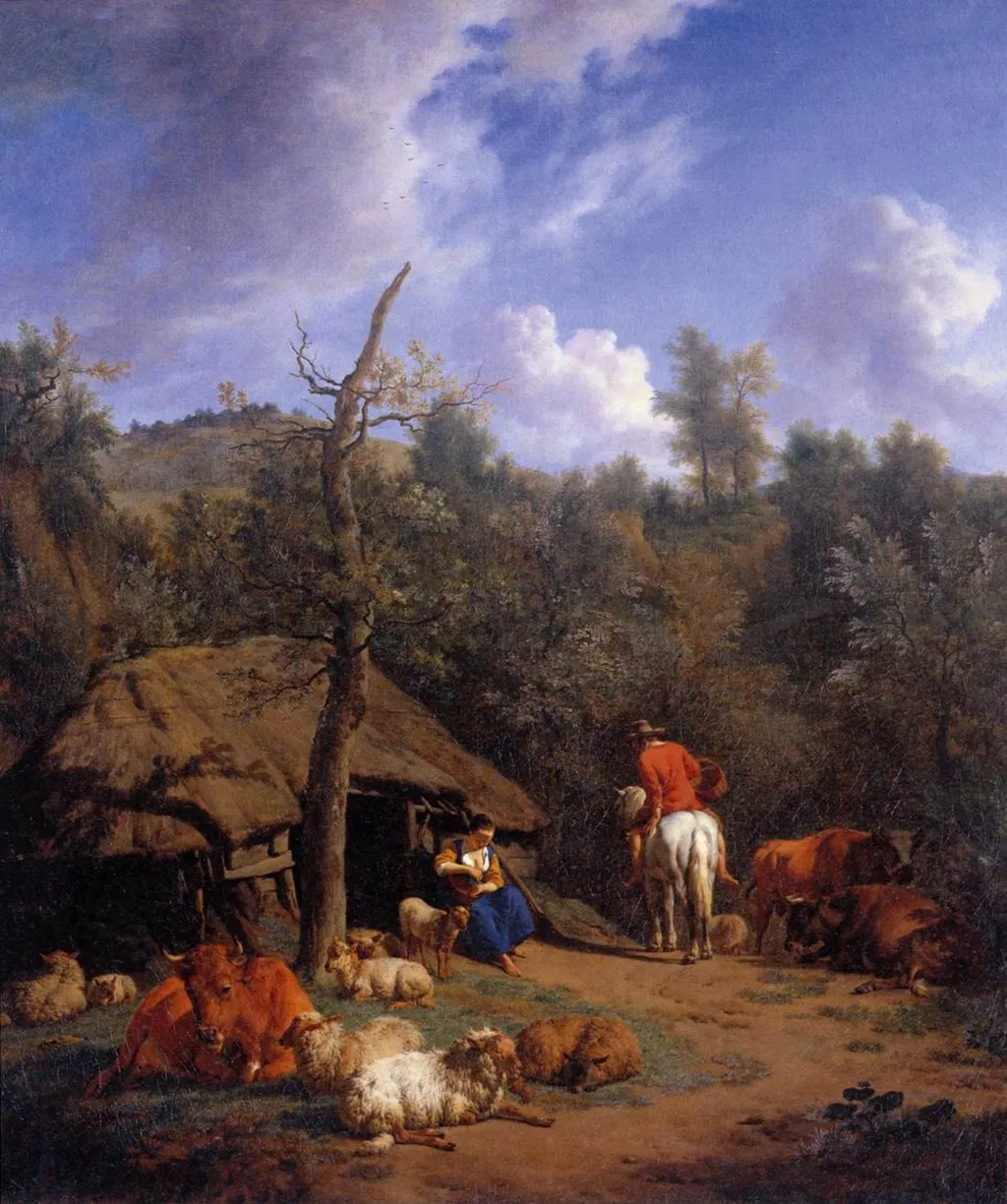
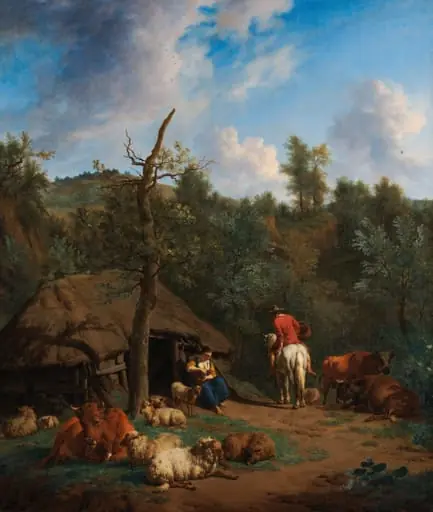
The Hut is an oil painting by the Dutch Golden Age artist Adriaen van de Velde. It dates from 1671 and is held in the collection of the Rijksmuseum.
About this work
Subject & Meaning
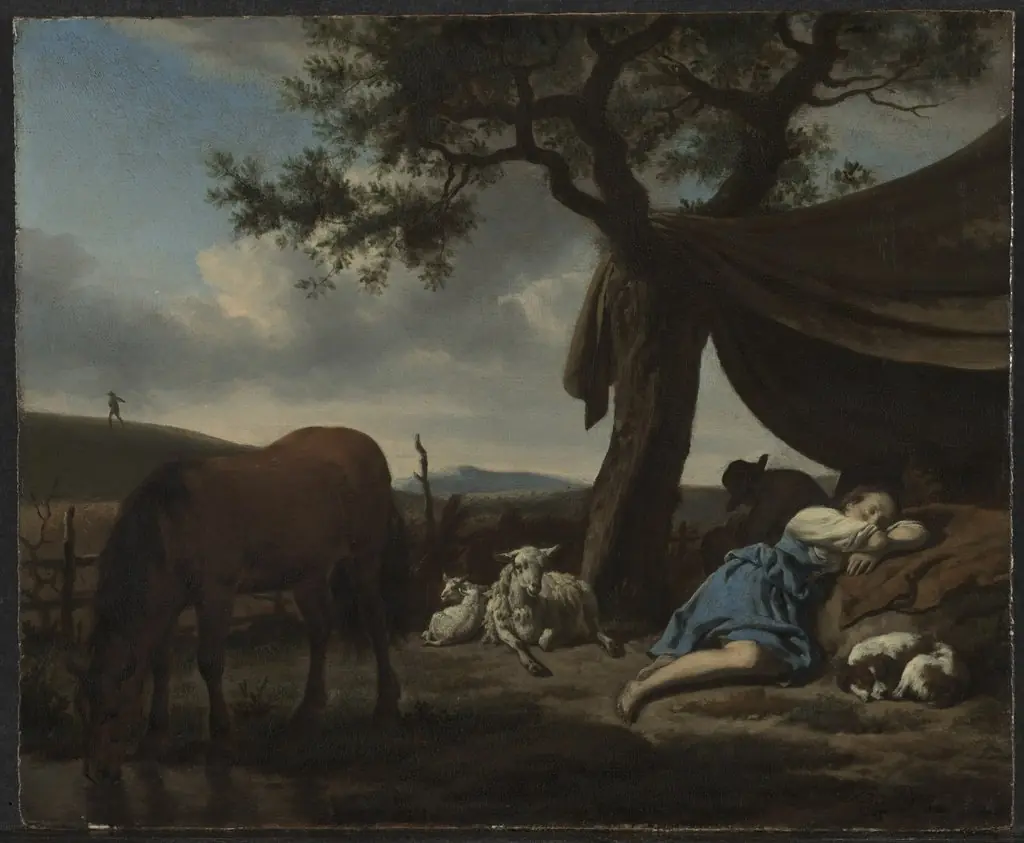
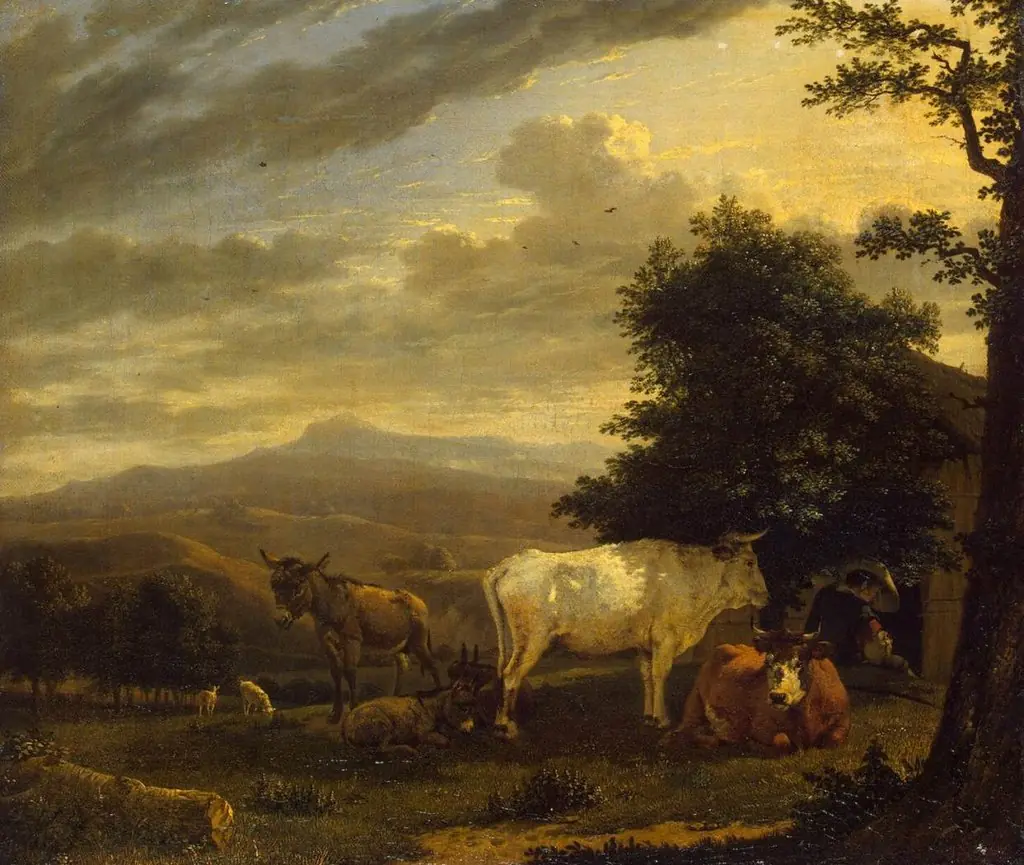
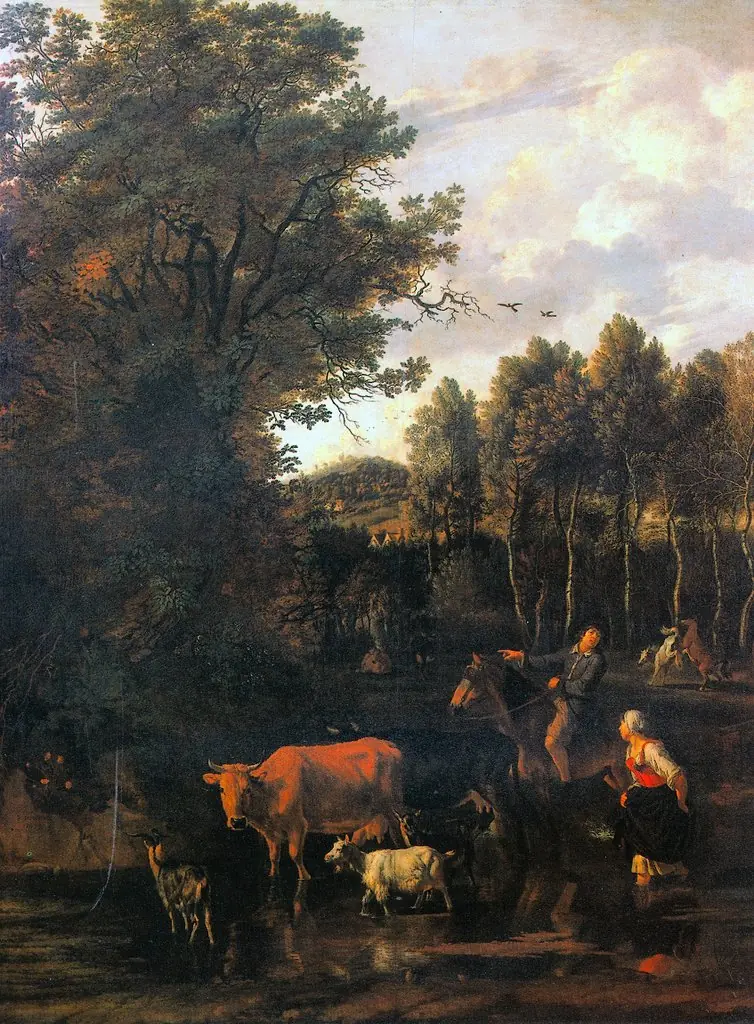
The composition primarily depicts a tree, which serves as the central visual element within the scene.
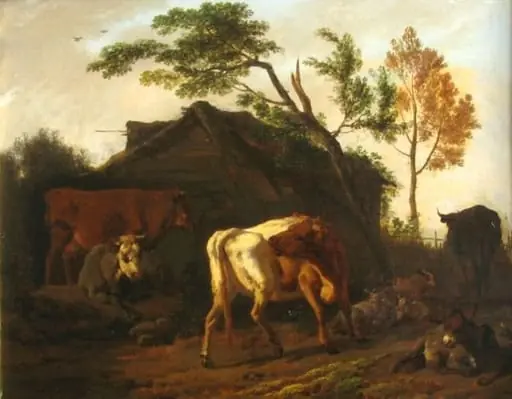
Adriaen van de Velde's 1671 oil painting, The Hut, is classified as a landscape work. The composition primarily depicts a tree, which serves as the central visual element within the scene. While the title suggests the presence of a hut, the specific iconography and deeper symbolic meaning of the structure or the landscape are not detailed in the available records.
The work functions as a representation of the natural environment, focusing on the interplay between the tree and its surroundings rather than conveying a complex allegorical narrative.
Technique & Style
Executed in 1671, The Hut is an oil painting on canvas by Adriaen van de Velde. The work measures 76 cm in height and 65 cm in width. As a landscape composition, the piece prominently features a tree as its central subject.
The painting is currently held in the collection of the Rijksmuseum, having previously been owned by Josephus Augustinus Brentano.
History & Provenance
The Hut was painted by Adriaen van de Velde in 1671 as an oil on canvas landscape. It entered the collection of Josephus Augustinus Brentano and is now held by the Rijksmuseum.
The work measures 76 cm in height and 65 cm in width and was created in the Netherlands during the Dutch Golden Age.
The Hut, an oil-on-canvas landscape painted by Adriaen van de Velde in 1671, is held in the collection of the Rijksmuseum. The work measures 76 cm in height by 65 cm in width. It was previously owned by Josephus Augustinus Brentano before entering the museum's holdings.
No exhibition history is documented in the available sources.
Overview
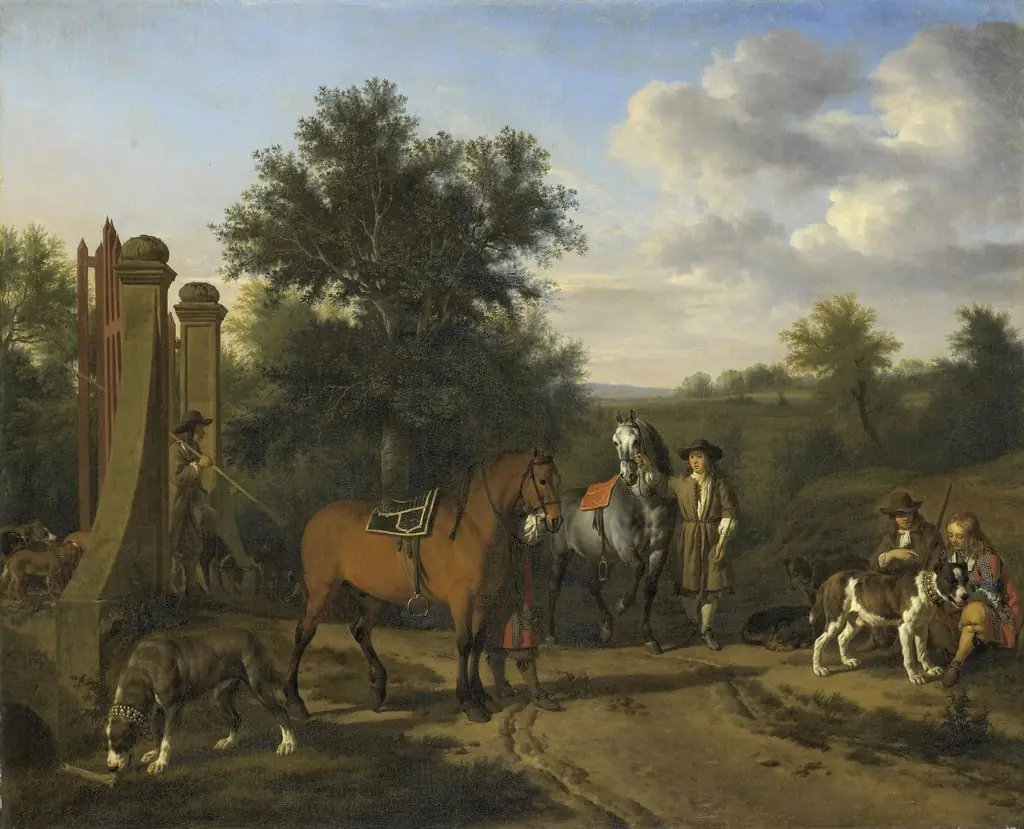
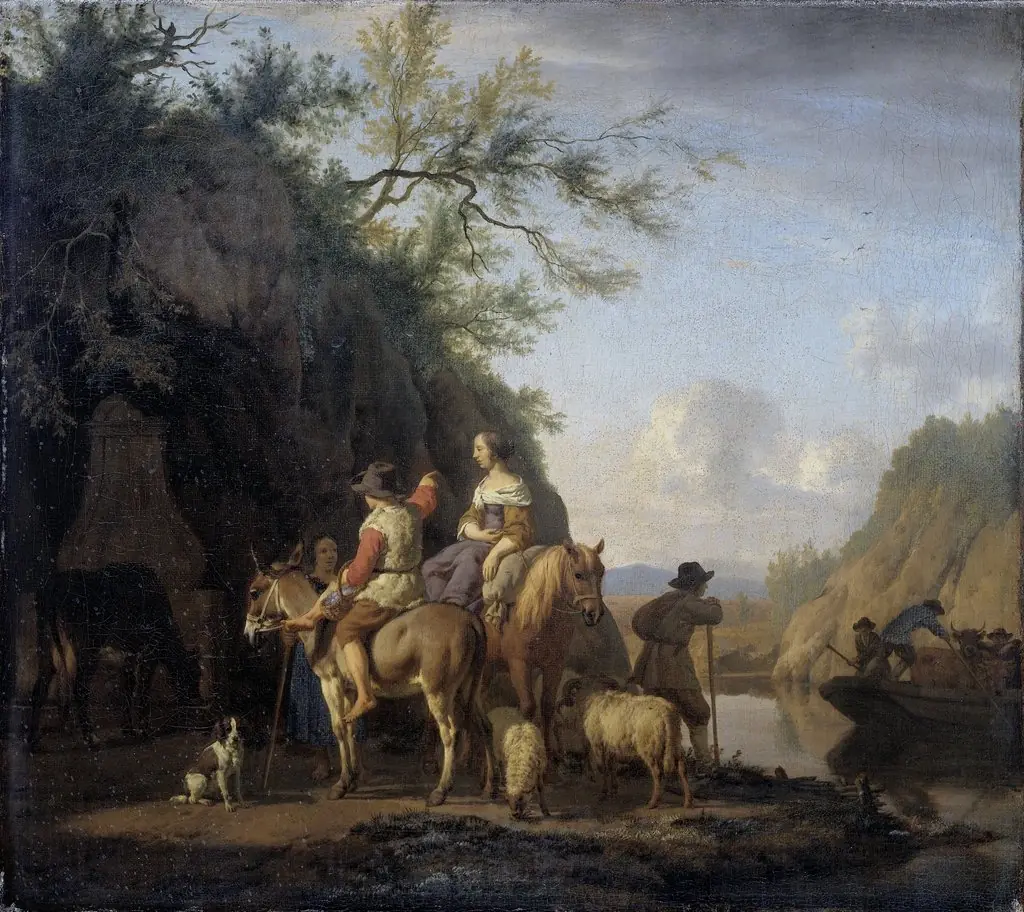
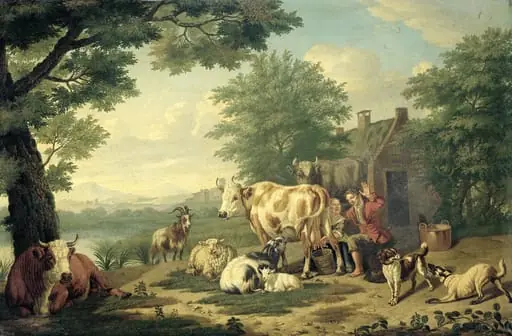
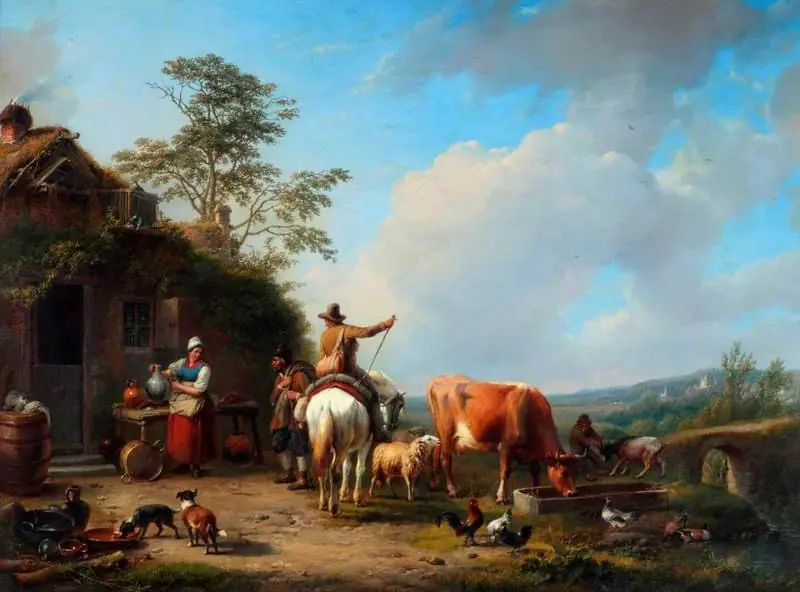
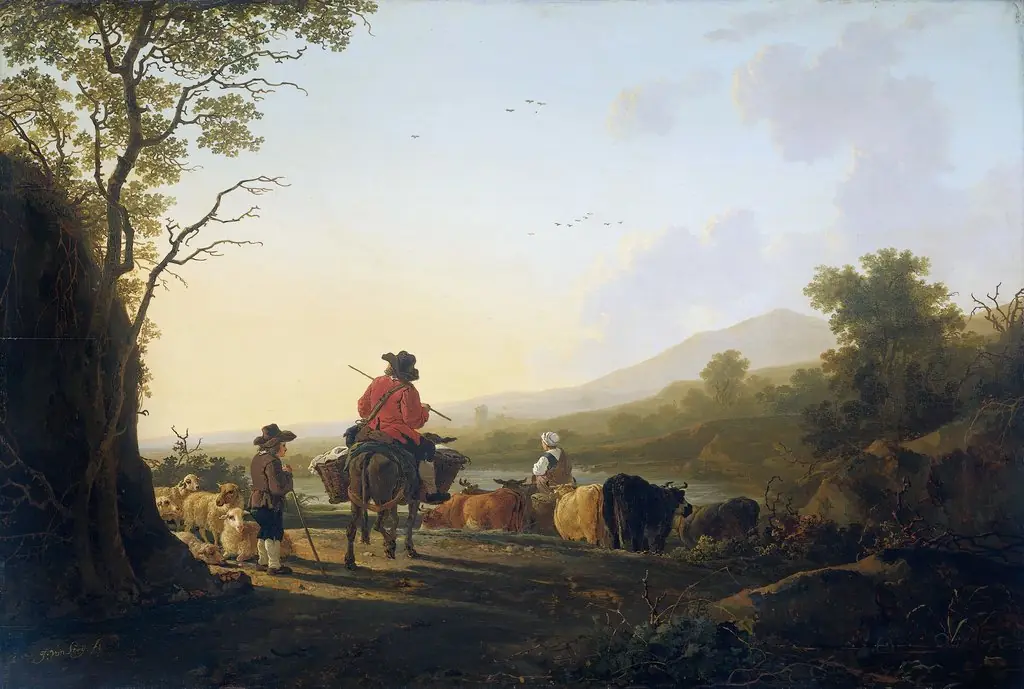
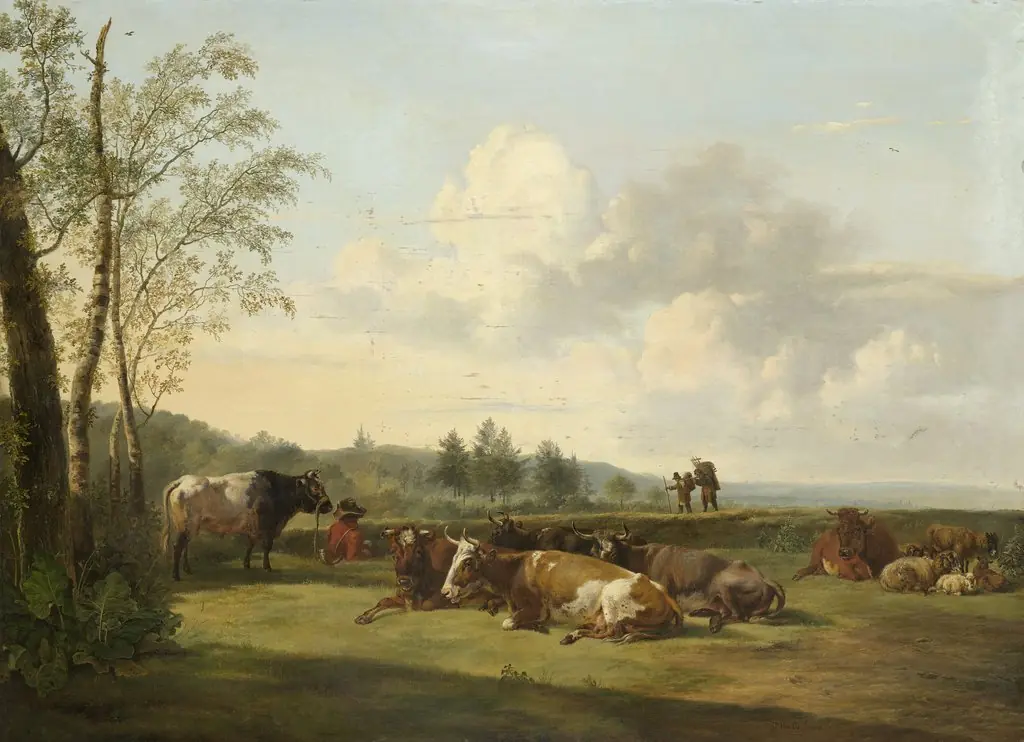
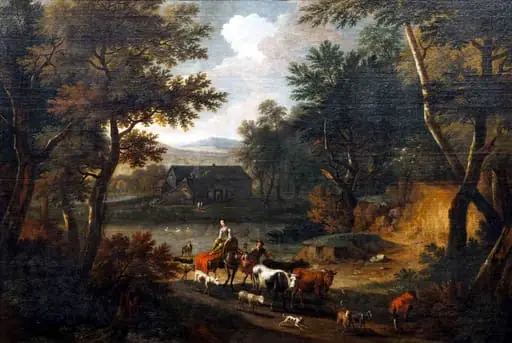
Painted in 1671, The Hut is a landscape by the Dutch Golden Age artist Adriaen van de Velde, executed in oil. The composition centers on a rustic wooden structure with a thatched roof, situated within a pastoral setting. A woman dressed in blue sits on the ground near the shelter, engaged with a book or paper, while a man in a red coat stands beside a white horse.
The scene is populated by grazing and resting livestock, including cows and sheep, which anchor the figures within the natural environment. The background features a soft blue sky with scattered clouds, characteristic of van de Velde's attention to atmospheric effects. Created shortly before the artist's death in 1672, this work exemplifies his mature style, which combined precise animal anatomy with serene, idealized rural life.
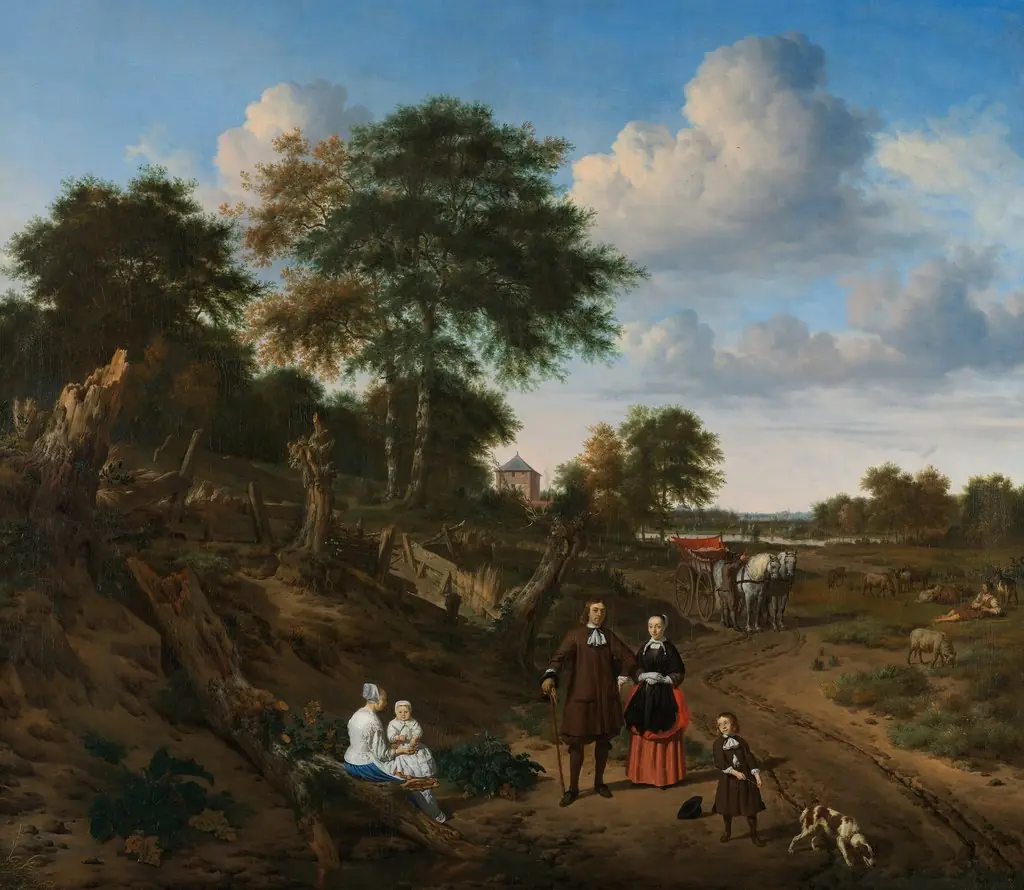
Van de Velde was renowned for his ability to integrate human figures and animals seamlessly into landscape settings, elevating the genre beyond mere topography. This painting reflects the Dutch appreciation for the countryside and the quiet dignity of daily rural activities, showcasing the artist's skill in rendering light, texture, and the harmonious relationship between humanity and nature.
Context
The work reflects the 17th‑century Dutch fascination with bucolic scenes that combined genre elements with landscape. Van de Velde, known for integrating figures into natural settings, aligns with contemporaries who emphasized realism and the subtle interplay of light, contributing to the period’s rich visual documentation of rural life.
Artist & collection

Artist
Adriaen van de Velde, was a Dutch painter, draughtsman, and print artist. His favorite subjects were landscapes with animals and genre scenes. He also painted beaches, dunes, forests, winter scenes, portraits in…