Artwork
Still life with a hare, dead birds and fish
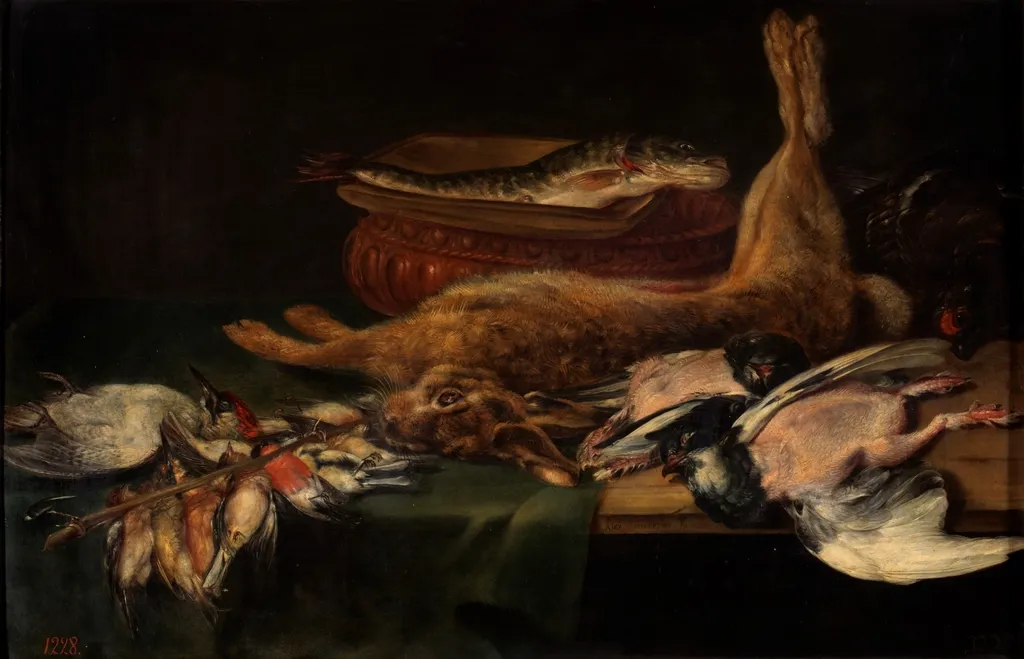
Still life with a hare, dead birds and fish is an oil painting by the Dutch Golden Age artist Alexander Adriaenssen. It dates from 1616 and is held in the collection of the Museo del Prado.
About this work
Technique & Style
As a still life, the composition depicts a fountain and a table laden with game, including a hare, various dead birds, and fish.
Created in 1616, Still Life with a Hare, Dead Birds and Fish is an oil painting executed on a wooden panel support. The work measures 60 cm in height and 91 cm in width. As a still life, the composition depicts a fountain and a table laden with game, including a hare, various dead birds, and fish.
The artist handles the medium to render these subjects with the precision characteristic of the genre, focusing on the textures and forms of the natural elements arranged within the scene.
History & Provenance
The still life is dated 1616 by the artist, marking its year of execution. By the early nineteenth century the painting entered the Spanish royal collection, where it is recorded as part of the holdings of Ferdinand VII. It remained in Spain and was later transferred to the Museo del Prado, where it is currently held.
The painting 'Still life with a hare, dead birds and fish' by Alexander Adriaenssen is held in the collection of the Museo del Prado in Madrid. Created in 1616, the work was formerly owned by Ferdinand VII of Spain. The museum houses this oil-on-panel piece as part of its permanent holdings of still-life paintings.
Overview
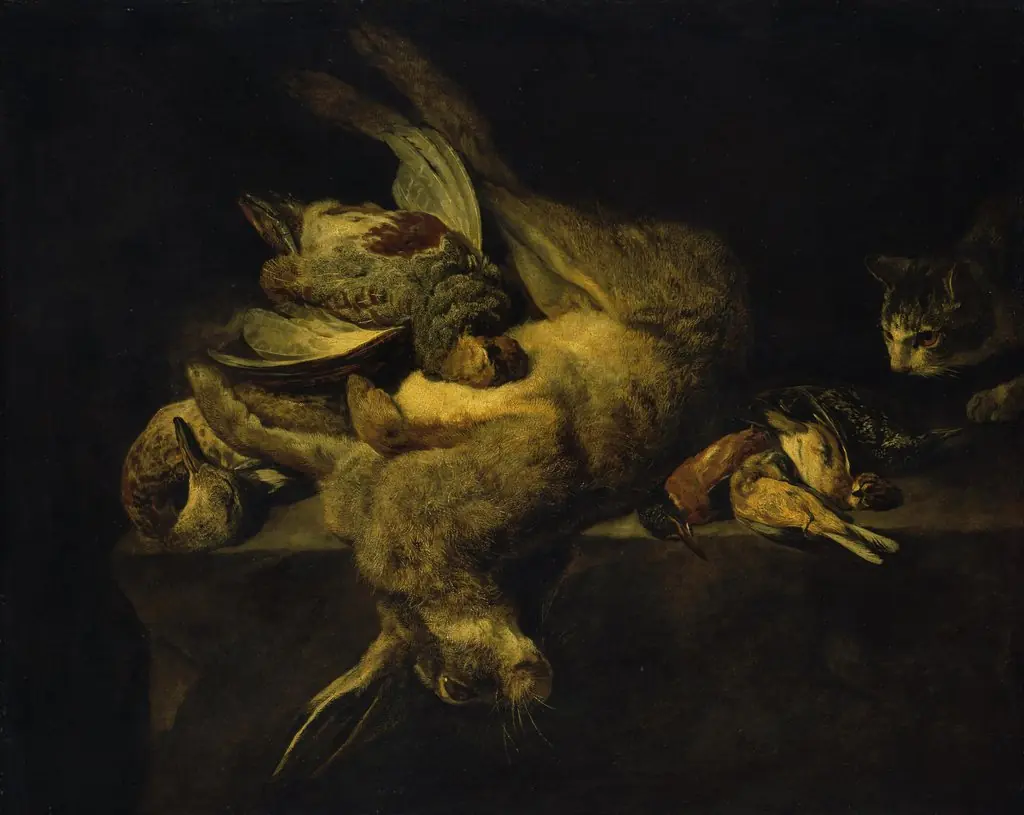
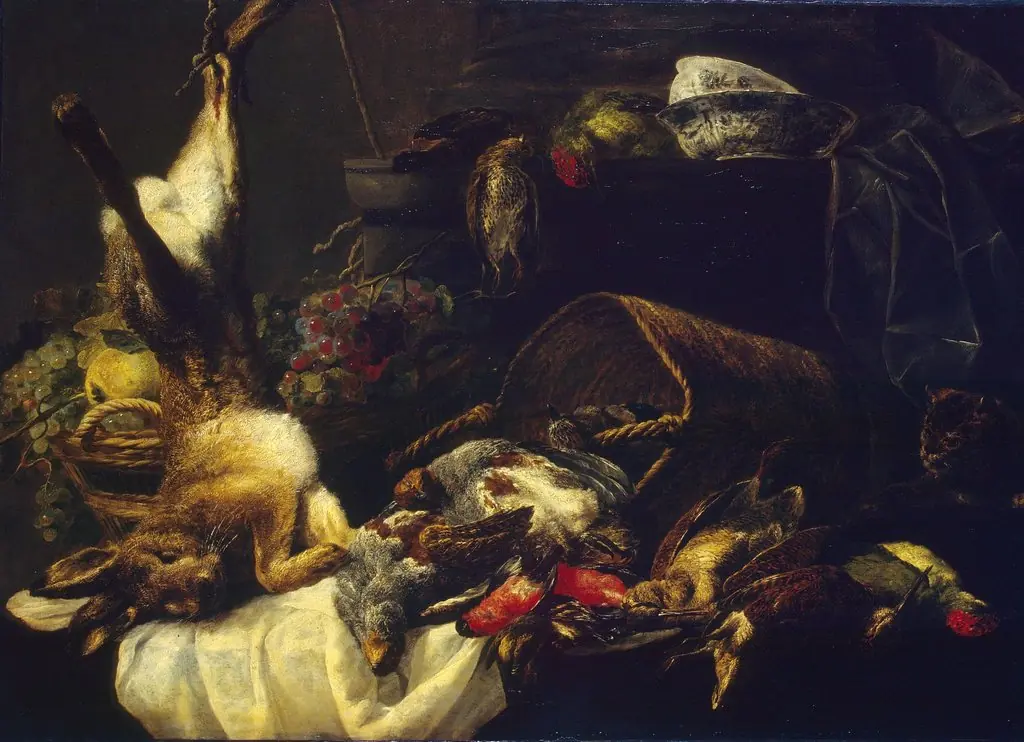
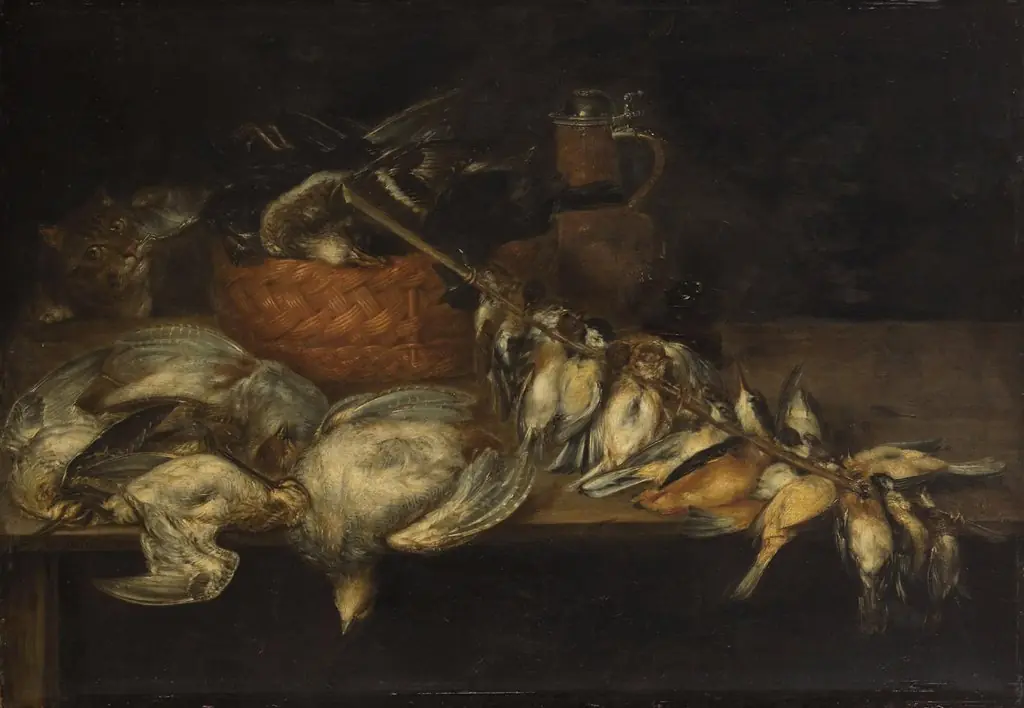
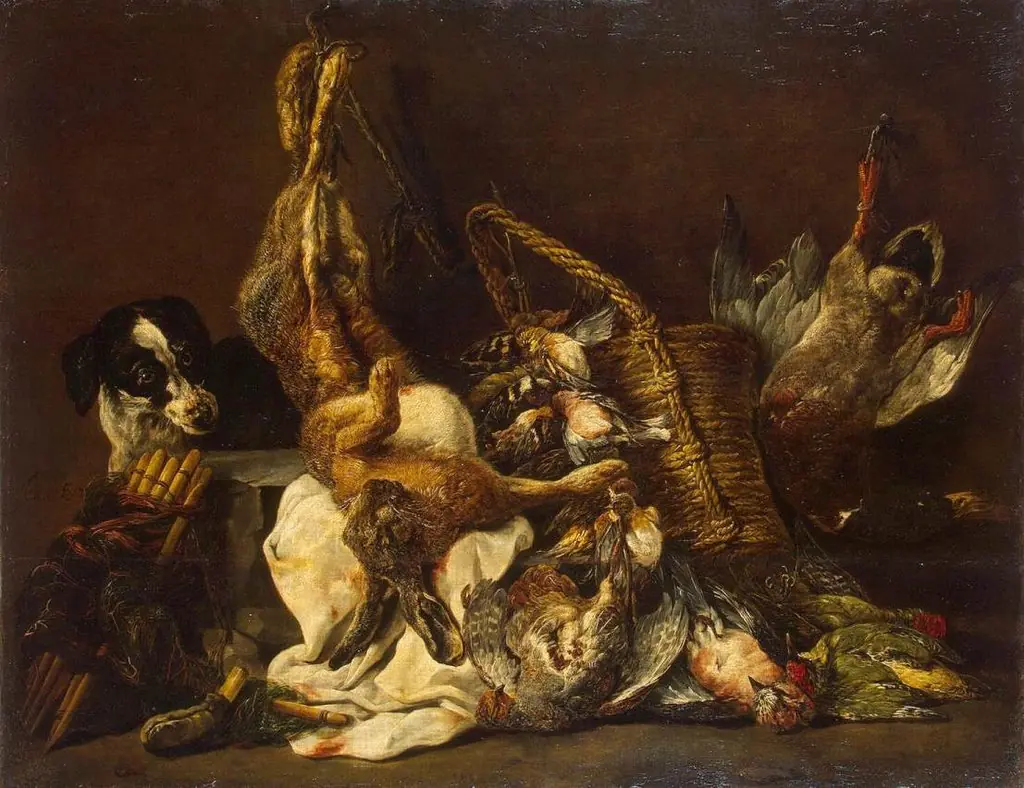
Created in 1616, this oil painting presents a somber tabletop arrangement of a recently killed hare, several plucked birds, and a modest assortment of fish. The composition is dominated by muted earth tones, punctuated by the occasional vivid feather, and is executed with a pronounced contrast of light and shadow that emphasizes the textures of fur, feathers, and scales.
Subject & Meaning
The work portrays a traditional banquet of game, a visual inventory of edible wildlife that reflects the period’s interest in abundance, mortality, and the transitory nature of feast. By displaying the animals in a lifeless state, the artist invites contemplation of the cycle of consumption and the fleeting pleasure of the table.
Context
Adriaenssen’s oeuvre aligns with the Dutch Golden Age tradition of still‑life painting, which often combined meticulous observation with symbolic references to wealth and the vanitas theme. The inclusion of a fountain and a basket reflects common compositional devices used to organize disparate objects within a single, cohesive scene.
Own this work as a print
Artist & collection
Artist
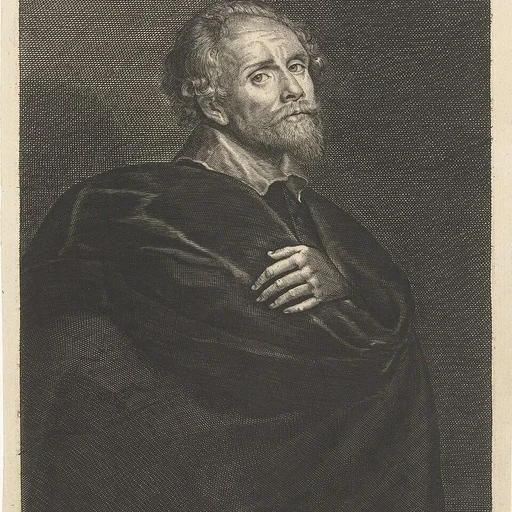
Alexander Adriaenssen (1587–1661) was a Flemish Baroque painter, particularly known for his still-lifes of fish and game pieces. He also painted banquet pieces with food and flower still lifes.

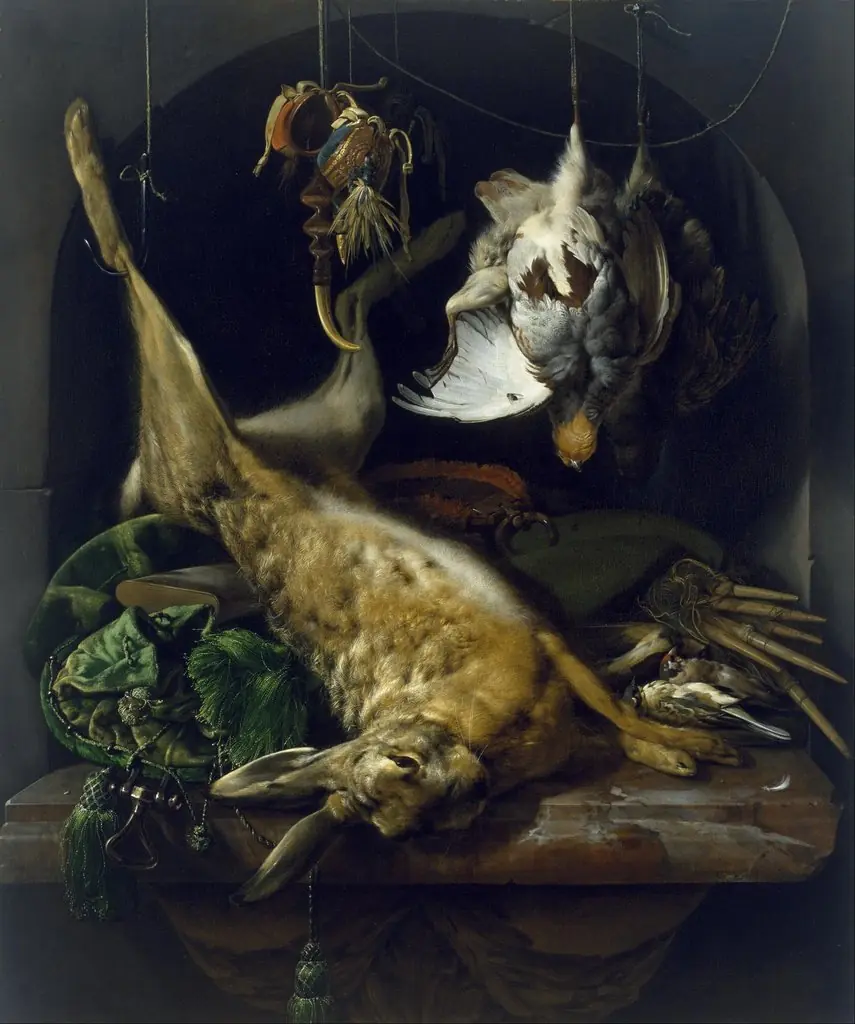
- Still Life of a Dead Hare, Partridges, and Other Birds in a Niche
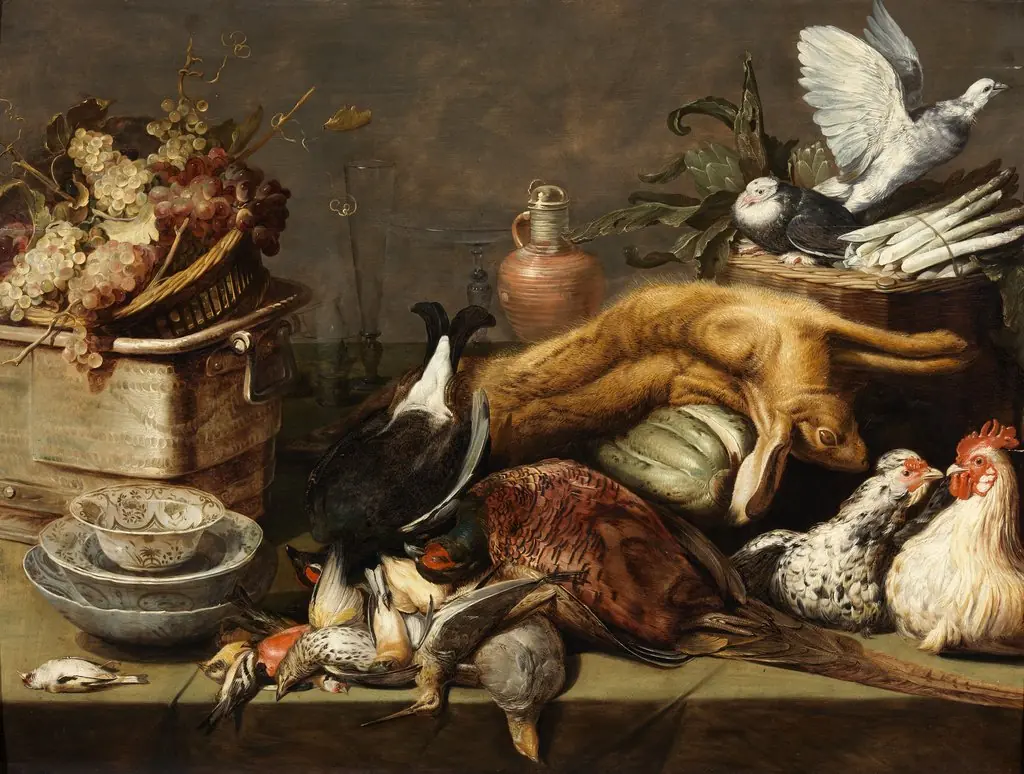 A Still Life with Dead Birds and a Hare
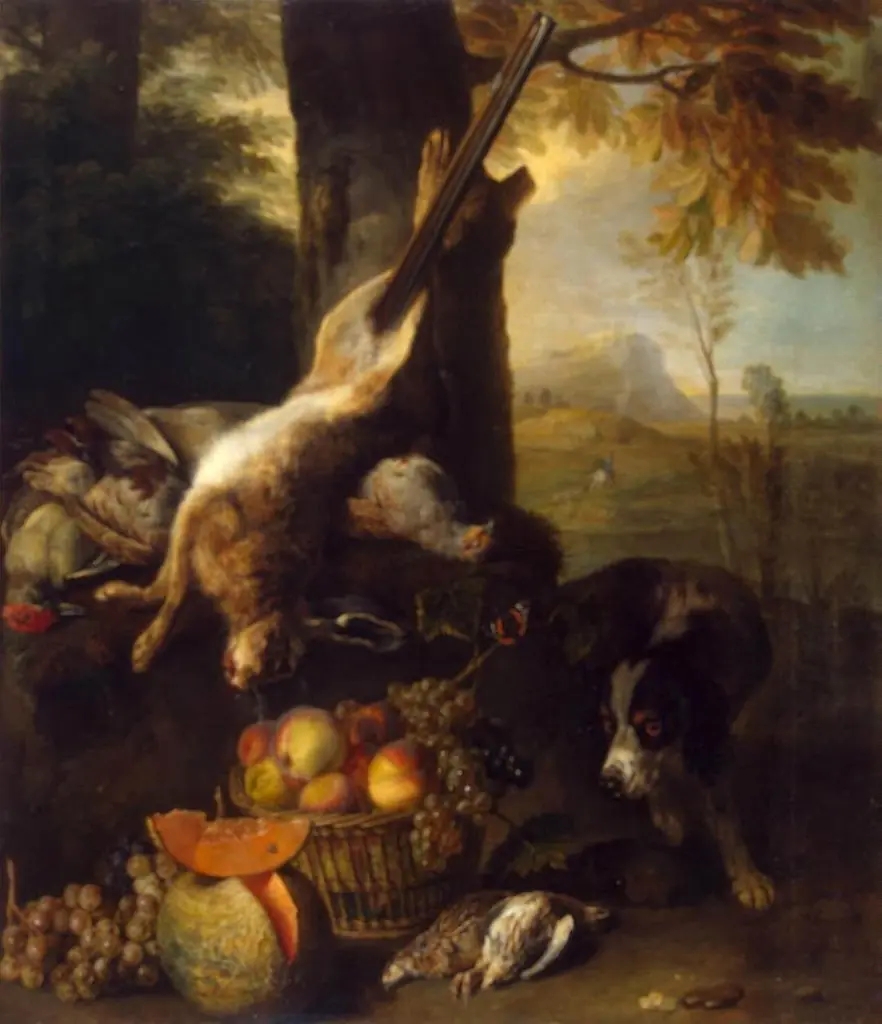 Still Life with a Dead Hare and Fruit
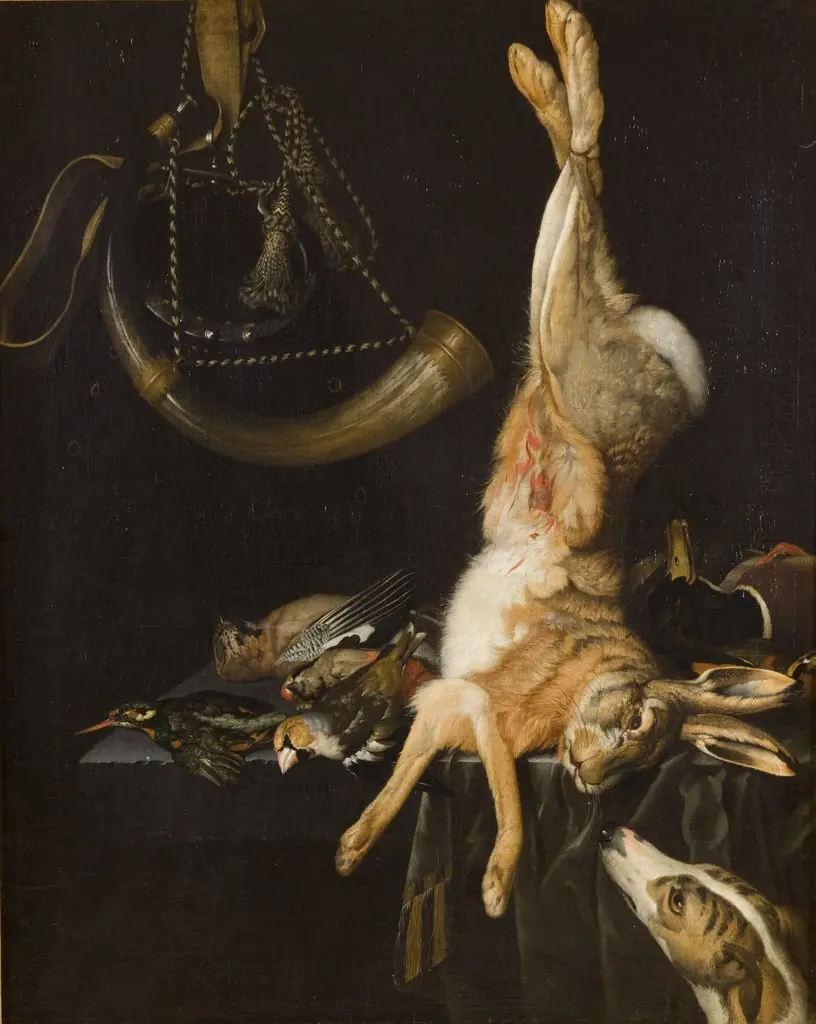 Still Life with a Hare
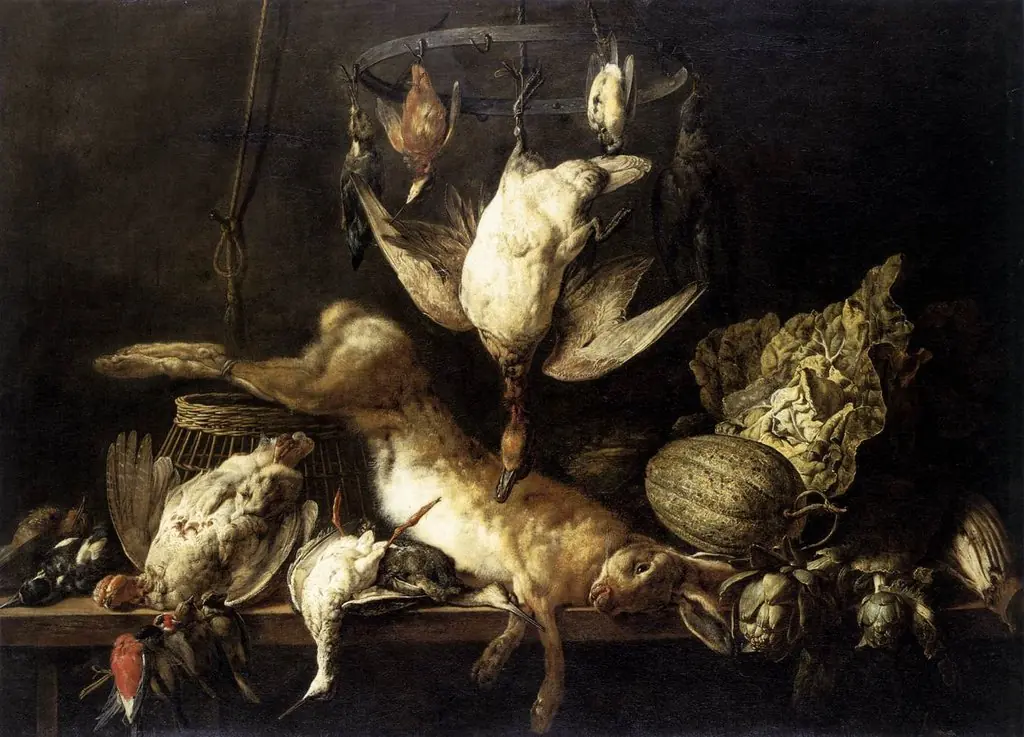 Still-Life with Hare and Birds on a Ring
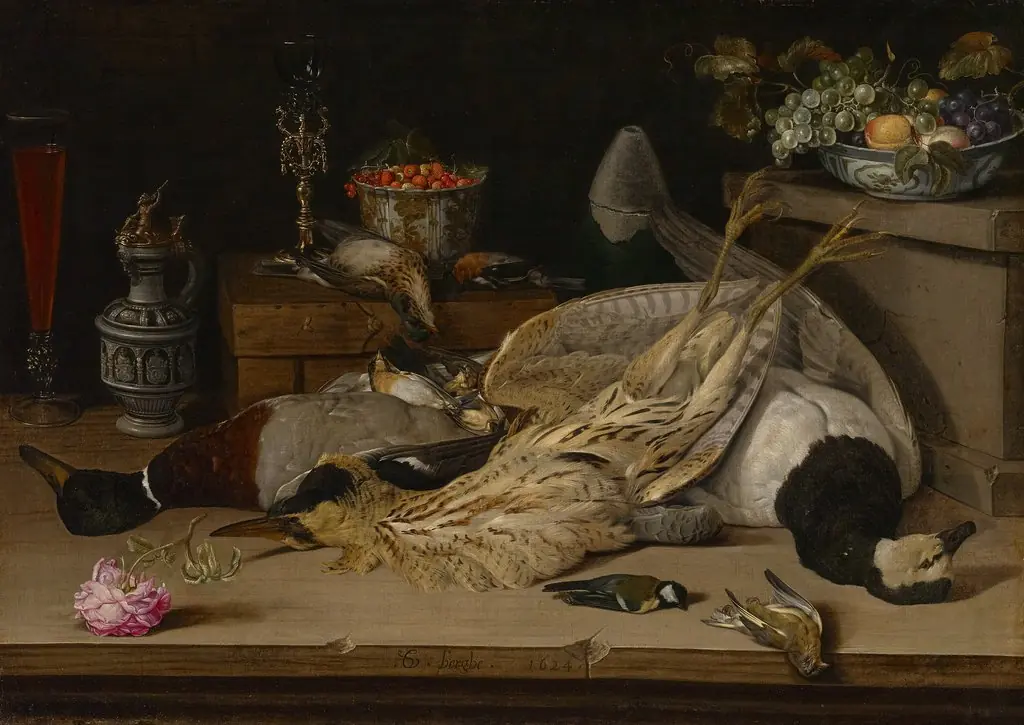 Still Life with Dead Birds
 Still Life with a Hare, Wild Fowl and a Hunter's Bag
 Hunting still life with a hare, two partridges and other birds