Artwork
Untitled
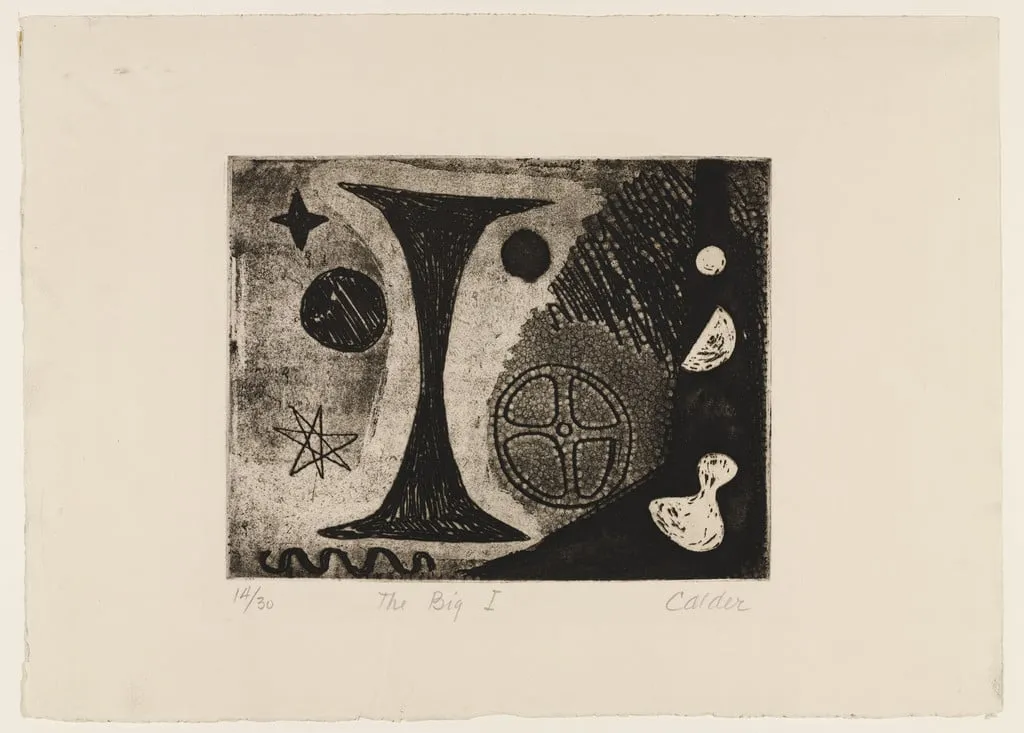
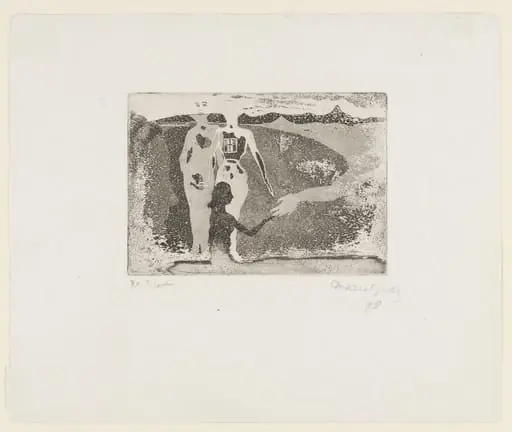
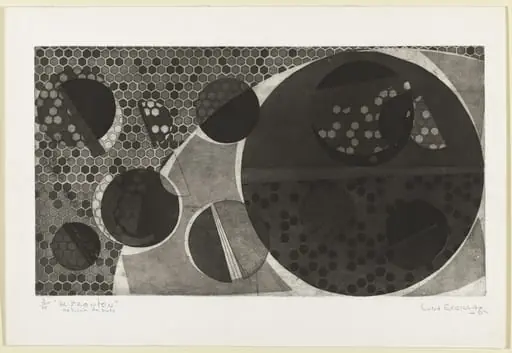
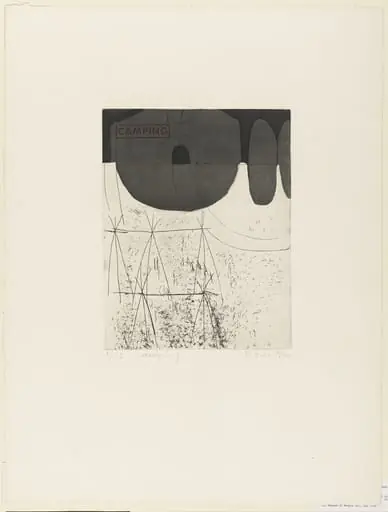
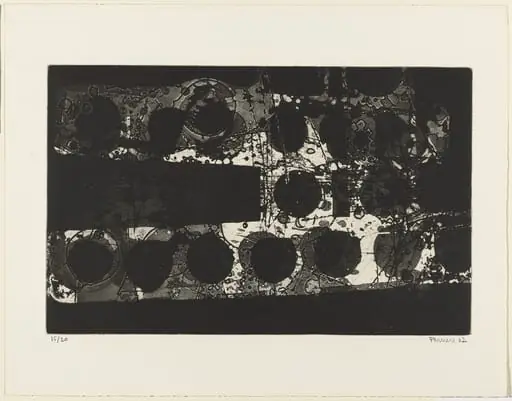
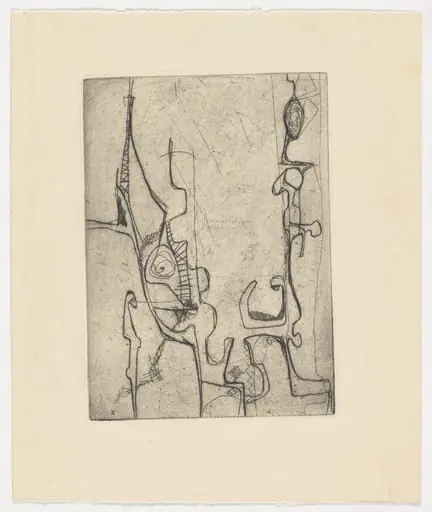
Untitled is an ink print by Alexander Calder. It dates from 1944 and is held in the collection of the Museum of Modern Art.
About this work
Overview
The artist’s signature appears plainly, and the piece was originally titled The Big I, though it is now commonly referred to as Untitled.
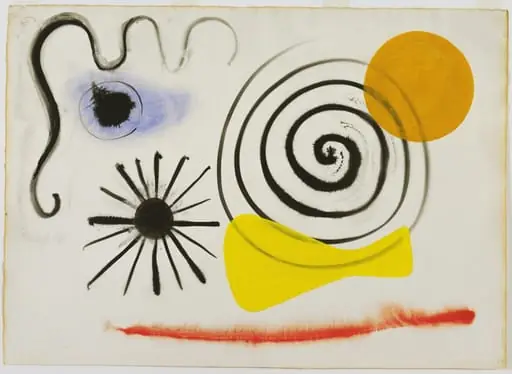
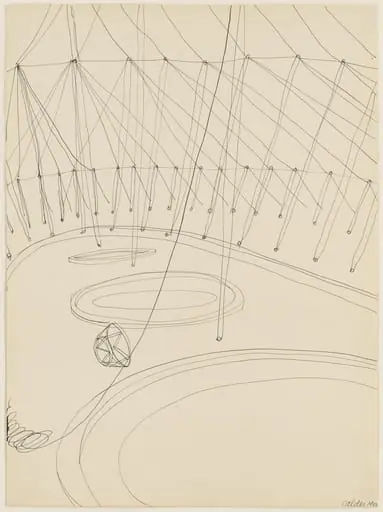
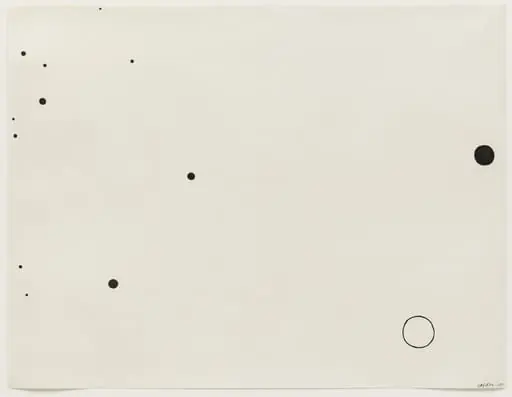
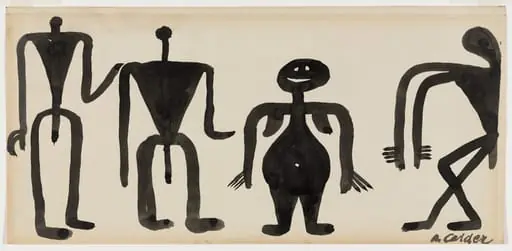
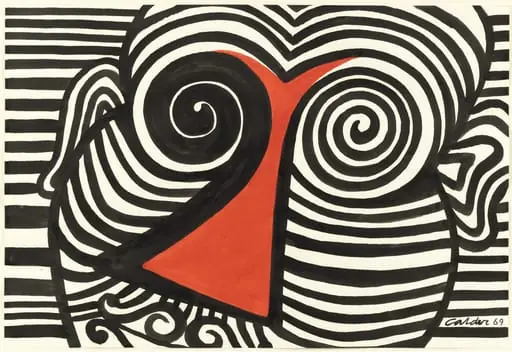
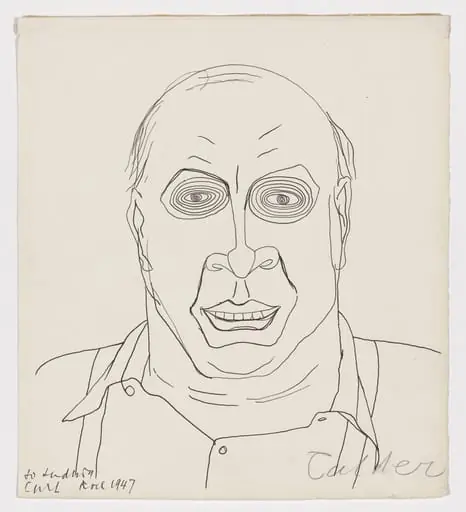
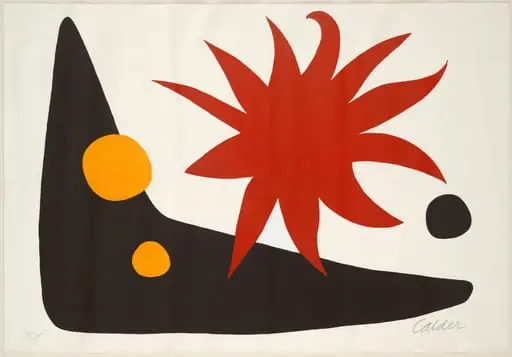
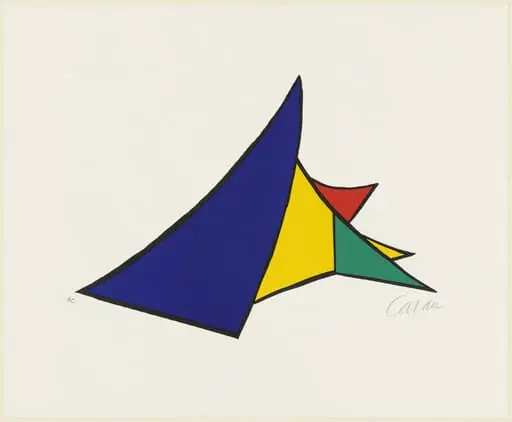
Created in 1944, this etching by Alexander Calder is part of The Museum of Modern Art’s collection. Unlike his better-known mobiles, this work is a singular print, executed in ink on paper. Its composition is abstract yet suggestive, combining gestural lines with symbolic forms.
The artist’s signature appears plainly, and the piece was originally titled The Big I, though it is now commonly referred to as Untitled.
Subject & Meaning
The central form resembles a distorted face or mask, rendered with irregular contours and dense black areas. Embedded within it are abstract symbols, a star, a circle, and a circular motif resembling a wheel, hinting at cosmic or personal iconography. A small, isolated vessel on the right introduces a quiet counterpoint, possibly suggesting containment or ritual. The work resists fixed interpretation, inviting contemplation rather than narrative.
Technique & Style
Calder employed etching to create bold, tactile lines scratched directly into a metal plate. The ink was pressed into these grooves, producing thick, uneven strokes that retain the energy of the artist’s hand. Areas of tone are built through hatching and washes, giving depth without smooth gradients. The roughness of the lines emphasizes process over polish, aligning with a spontaneous, intuitive approach to mark-making.
History & Provenance
The print was made in 1944 during a period when Calder was actively exploring graphic arts alongside his sculptural work. It entered The Museum of Modern Art’s collection shortly after its creation, likely through direct acquisition or donation. Its early inclusion in the museum’s holdings reflects institutional recognition of Calder’s versatility beyond sculpture, particularly in printmaking during the mid-20th century.
Context
In the early 1940s, Calder was engaged with Surrealist and abstract traditions, often blending playful forms with symbolic elements. This etching aligns with contemporaneous experiments by artists like Miró and Klee, who used simplified shapes to evoke psychological or metaphysical states. The work reflects a broader postwar interest in personal symbolism and the expressive potential of line, detached from literal representation.
Legacy
Though less known than his kinetic sculptures, this etching contributes to understanding Calder’s broader artistic language. Its raw, unrefined aesthetic influenced later generations of printmakers who valued gesture over precision. The piece remains a quiet example of how a sculptor’s sensibility, focusing on balance, weight, and spatial relationships, could translate effectively into two-dimensional media.
Artist & collection

Artist
Alexander "Sandy" Calder was an American sculptor known both for his innovative mobiles that embrace chance in their aesthetic, his static "stabiles", and his monumental public sculptures.