
Artist
Subject
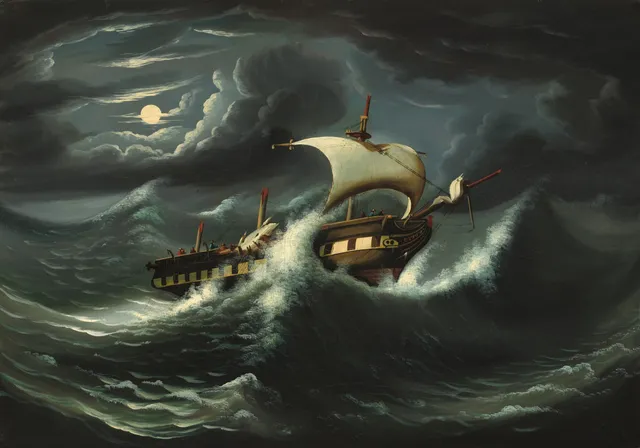
Moon is a subject in art. The gallery holds 121 works in this subject in art, including works by Albert Bierstadt, Thomas Chambers and William Trost Richards.
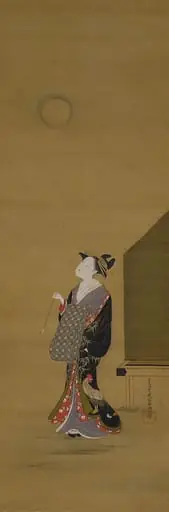
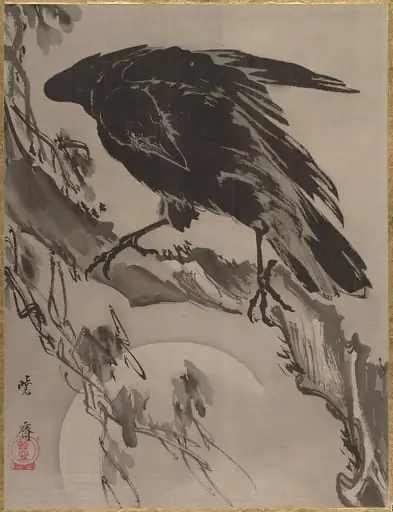
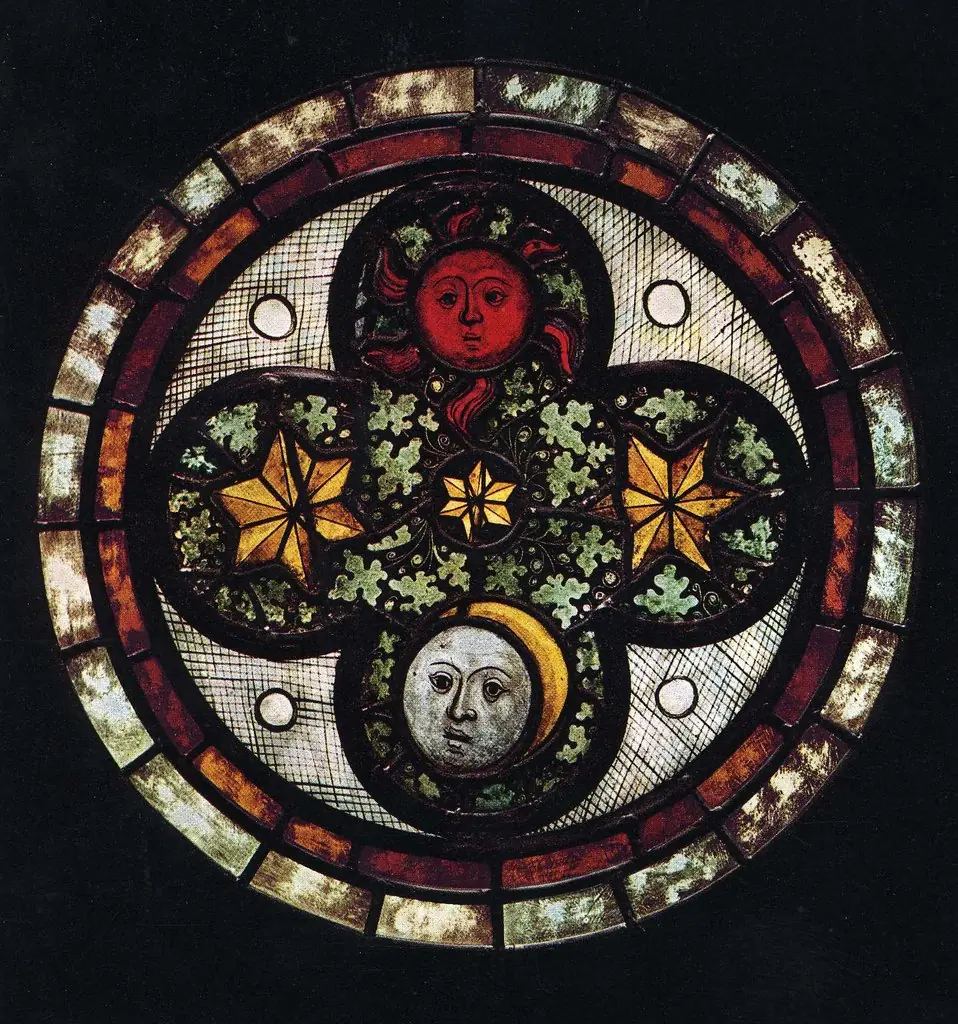
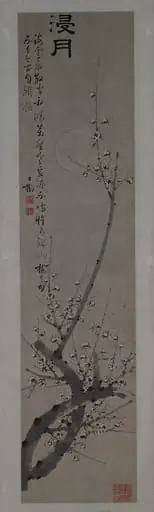
The moon is among the oldest and most enduring subjects in art, charged from antiquity with mythological and symbolic meaning. In the Greco-Roman world it was personified as a goddess—Selene to the Greeks, Luna to the Romans, often shown with a crescent headdress driving her chariot across the night sky—and identified with the virgin huntress Artemis, or Diana, so that the moon came to signify chastity, change, and the passage of time. In Islamic art the crescent became a sign of divine order and guidance, adorning domes and banners, while in East Asian ink painting the moon, paired with water or mountains, evoked stillness and contemplative harmony.
As an observed natural phenomenon rather than a mere emblem, the moon flourished in the seventeenth-century Dutch Republic, where Aert van der Neer specialized in moonlit river scenes whose silver light catches clouds and rippling water. The theme reached its philosophical height with German Romanticism. Caspar David Friedrich, who was nearly obsessed with capturing moonlight, made the motif an object of pious contemplation: in his "Two Men Contemplating the Moon" (first version 1819–20, Galerie Neue Meister, Dresden; the Metropolitan's version ca. 1825–30), two figures seen from behind—the rückenfigur device—stand before a gnarled oak and rising moon, identified as the artist and his disciple August Heinrich (1794–1822).
Visually the genre is defined by tonal restraint: a limited palette of blues, greys, and silvered greens, dramatic contrasts of dark land against luminous sky, and a single concentrated light source. These qualities made moonlight a natural vehicle for mood. In Victorian Britain, Atkinson Grimshaw rendered moonlit docks and lanes with near-photographic precision, while in America the theme fed Tonalism. Ralph Albert Blakelock (1847–1919) transformed dreamlike nocturnes—his scumbled, scraped, lacquer-like surfaces in works such as "Moonlight"—into proto-modernist exercises in pattern and abstraction; one of his moonlights sold for the highest price then paid for a living American artist.
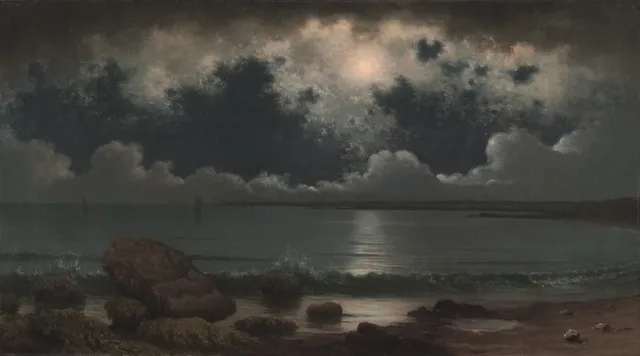
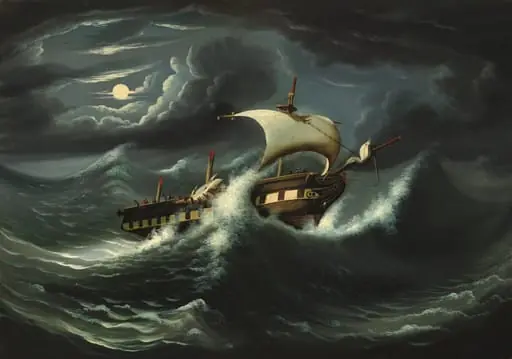
The moon's pull extended across genres held in this collection: the perilous night of Thomas Chambers's "Storm-Tossed Frigate," the luminist calm of Martin Johnson Heade's "Point Judith, Rhode Island," the fiery moonlit spectacle of Albert Bierstadt's "Mount Vesuvius at Midnight," and the memento mori of Hans Baldung Grien's "The Ages and Death." Alongside Whistler's Nocturnes and Tsukioka Yoshitoshi's print series "One Hundred Aspects of the Moon," these works trace a lineage that links Romantic landscape, Tonalism, and the threshold of modern abstraction.
Artist

Artist
 Storm-Tossed Frigate
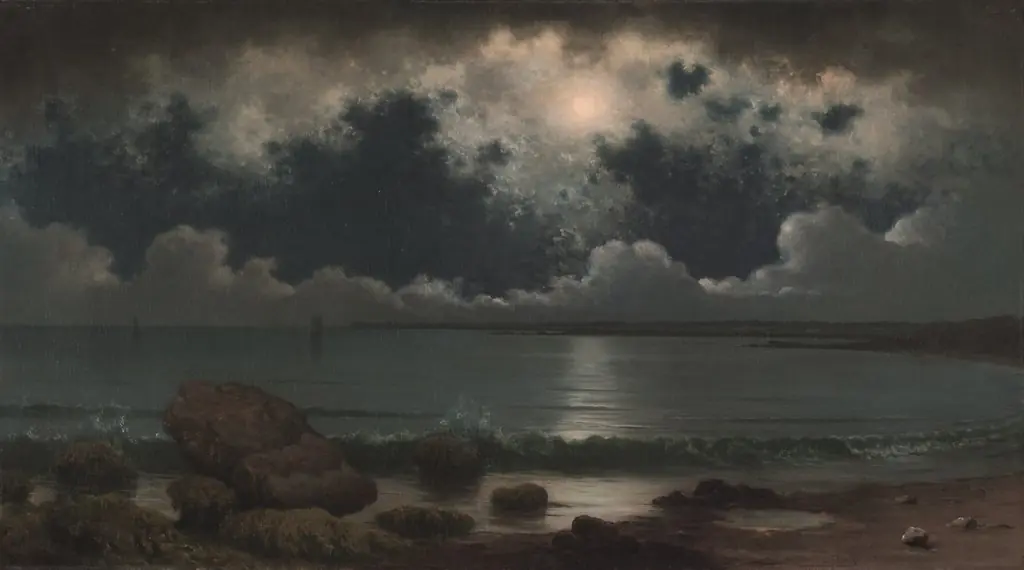 Point Judith, Rhode Island
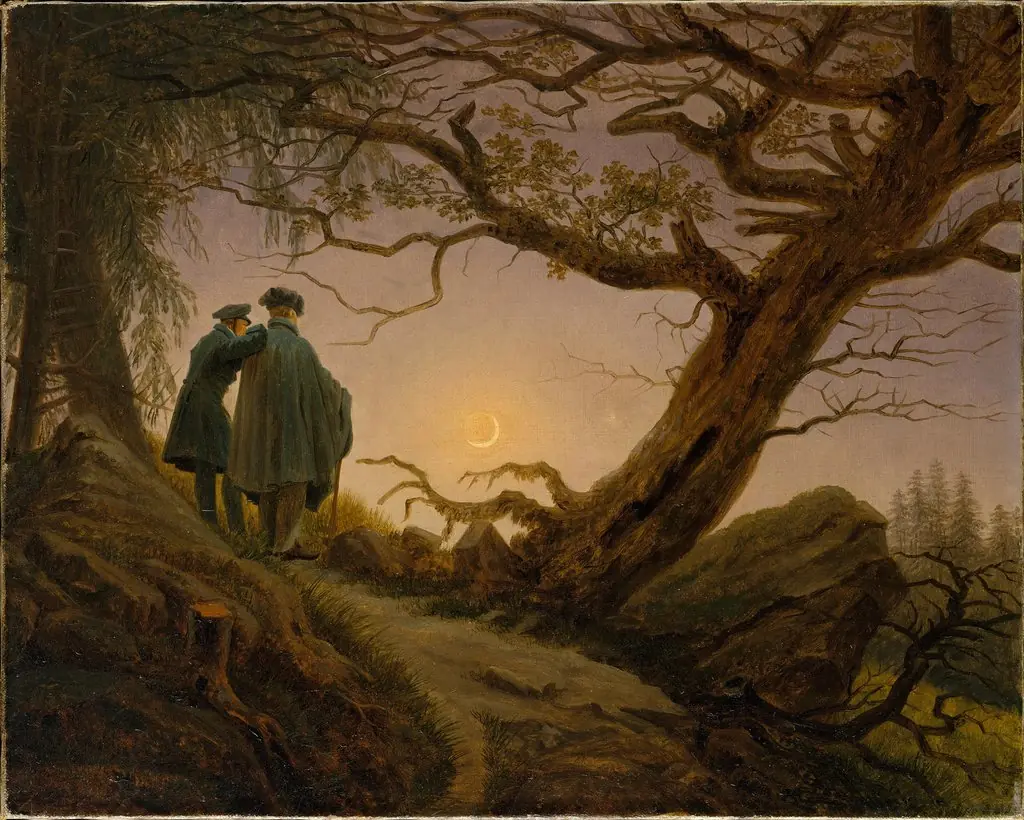 Two men contemplating the Moon
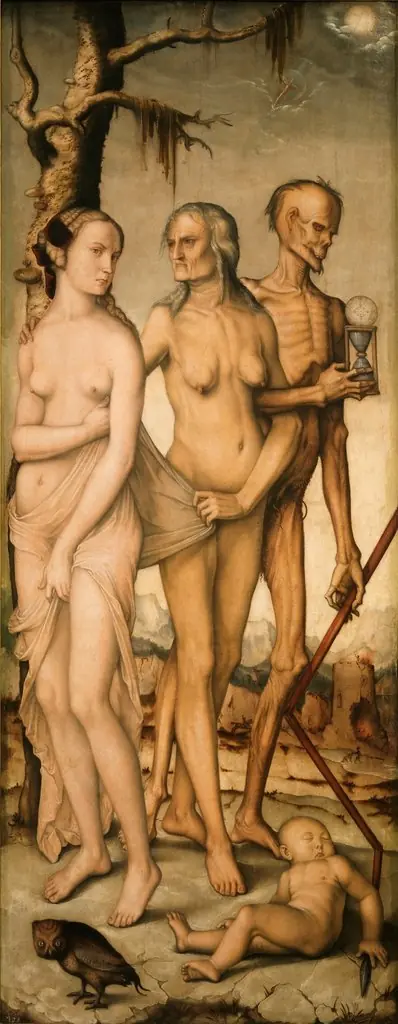 The Ages and Death
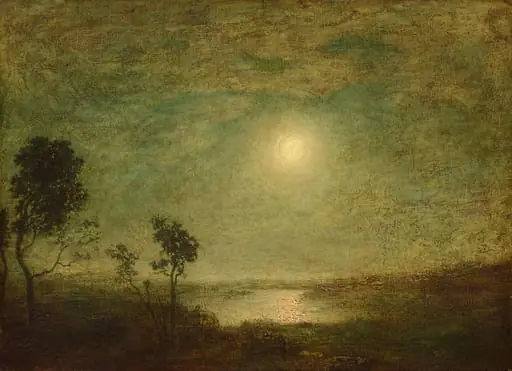 Moonlight
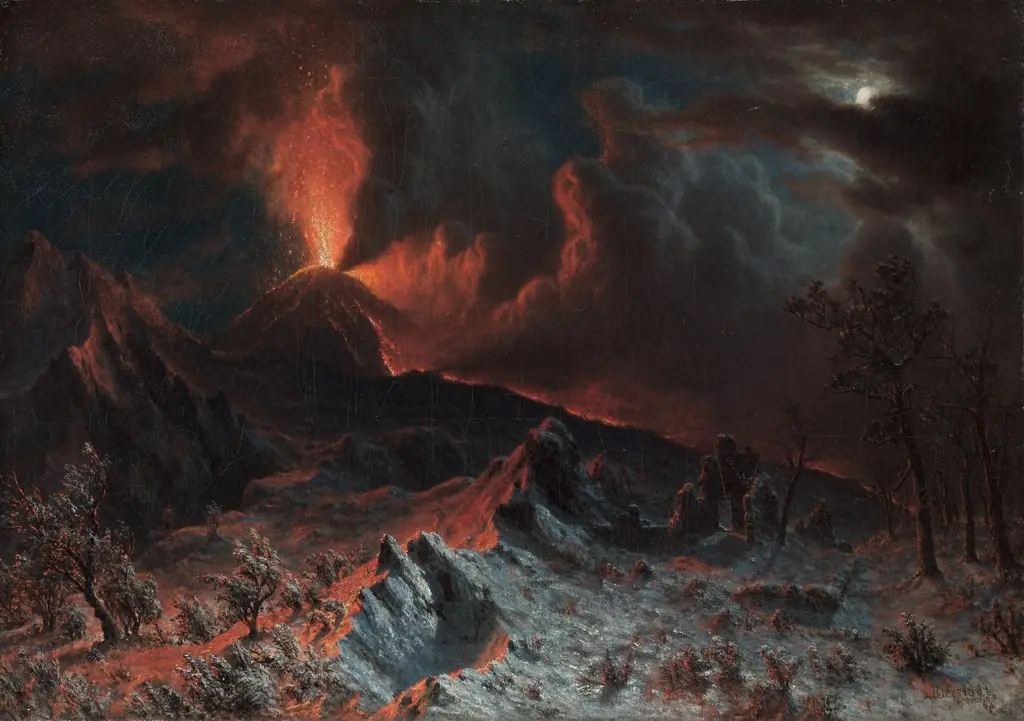 Mount Vesuvius at Midnight
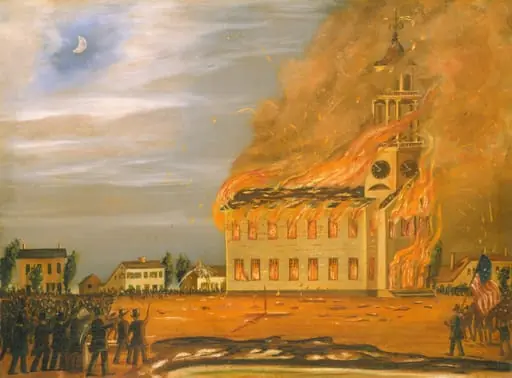 Burning of Old South Church, Bath, Maine
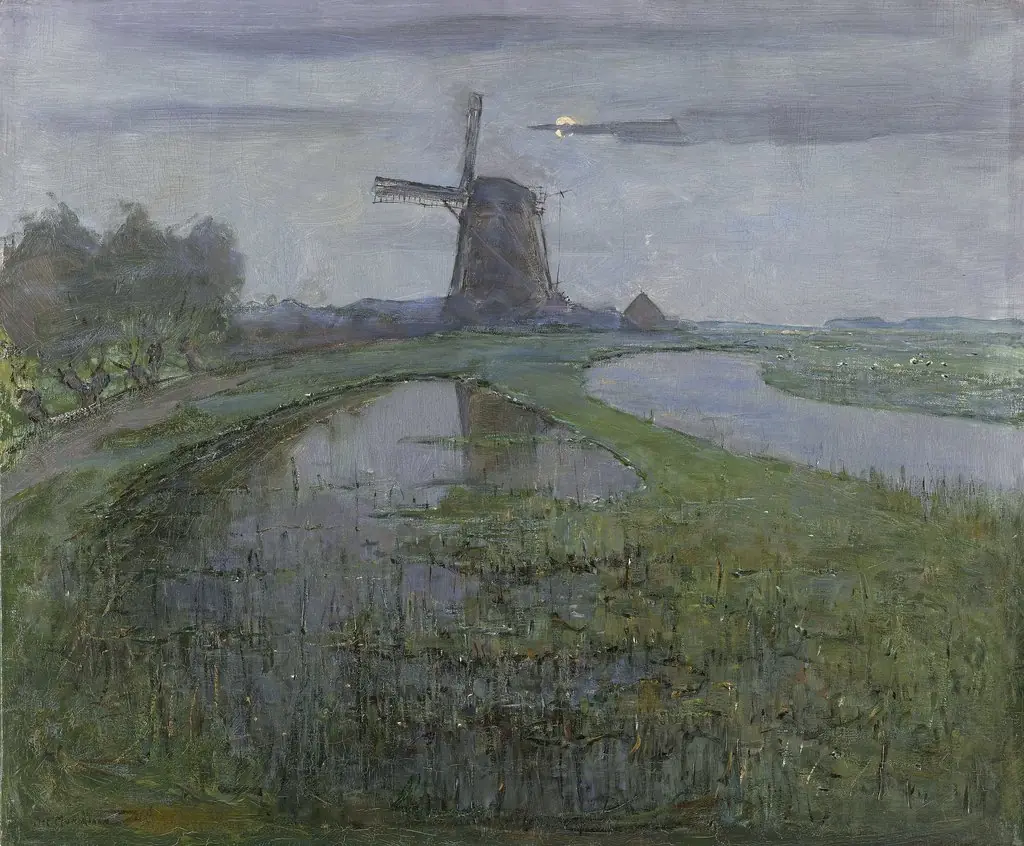 Oostzijdse Mill along the River Gein by Moonlight
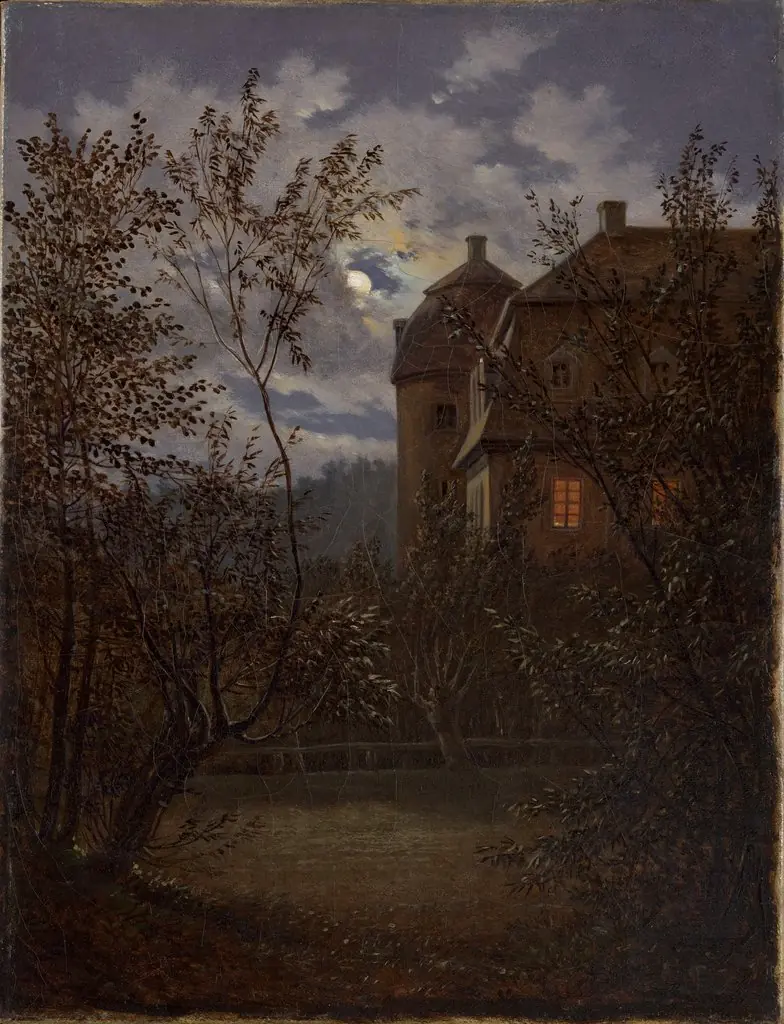 Schloss Milkel in Moonlight
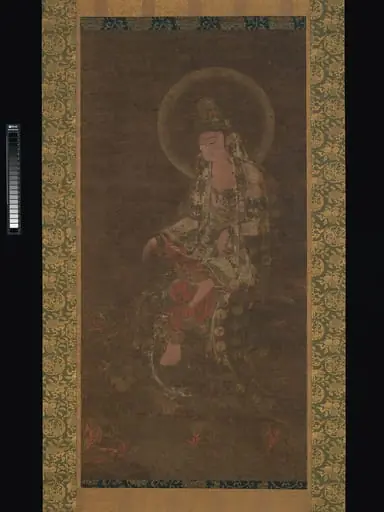 작자미상 수월관음도 고려|作者未詳 水月觀音圖 高麗|Water-Moon Avalokiteshvara
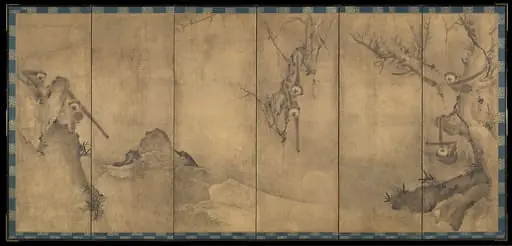 Untitled
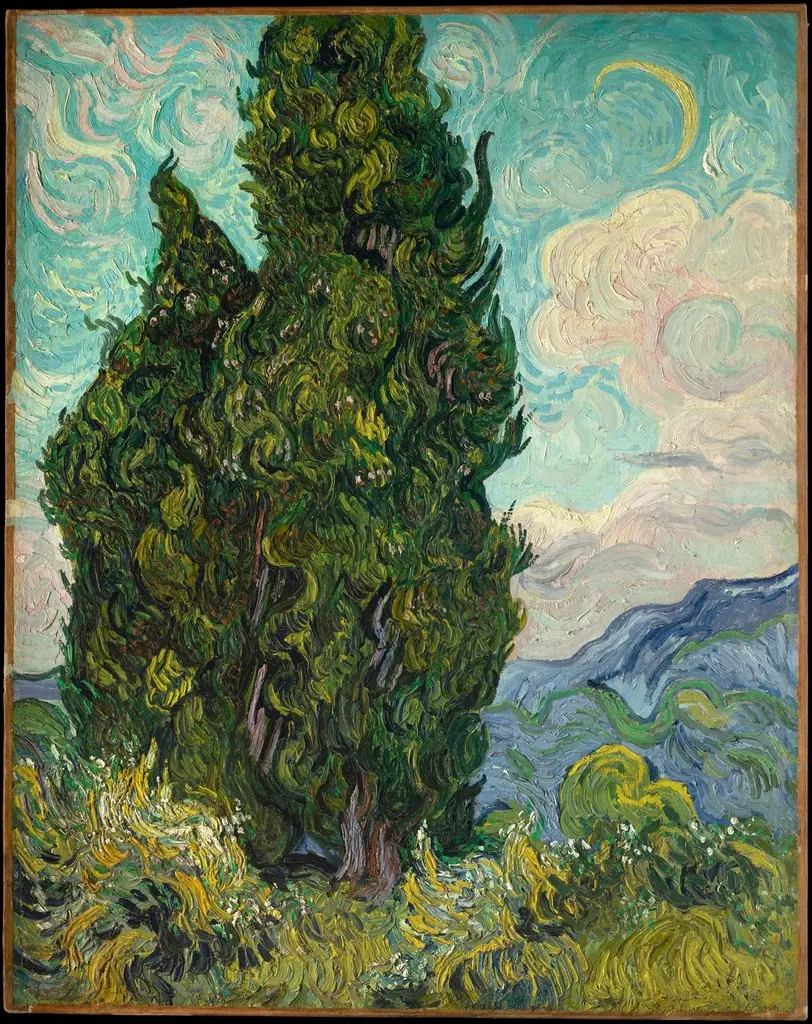 Cypresses
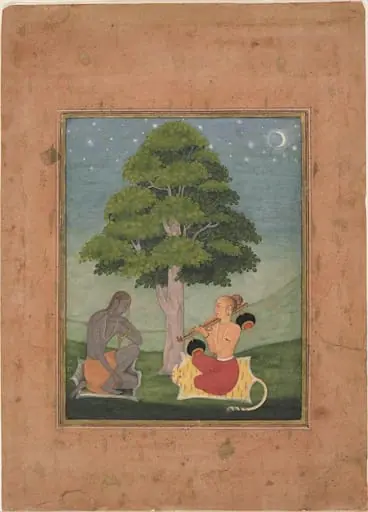 Untitled
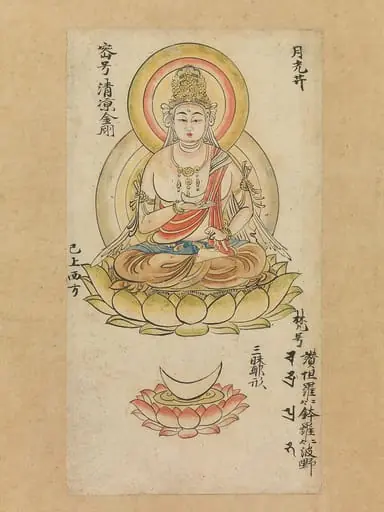 伝託磨為遠筆 月光菩薩像 「金胎仏画帖」断簡|Gakkō Bosatsu, from “Album of Buddhist Deities from the Diamond World and Womb World Mandalas” (“Kontai butsugajō”)
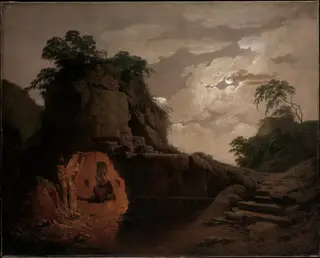 Virgil's Tomb by Moonlight, with Silius Italicus Declaiming
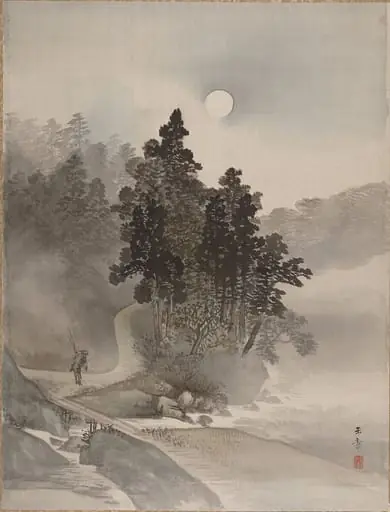 Untitled
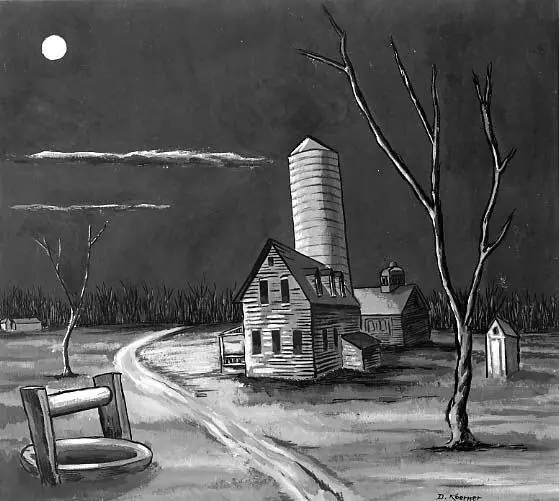 Farm in Moonlight
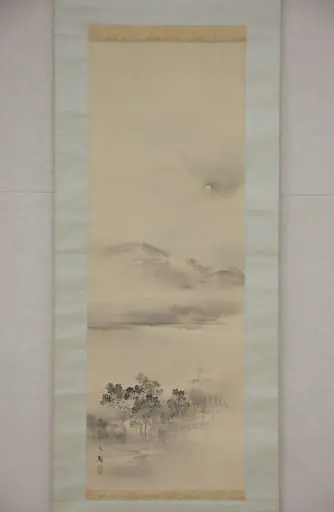 Untitled
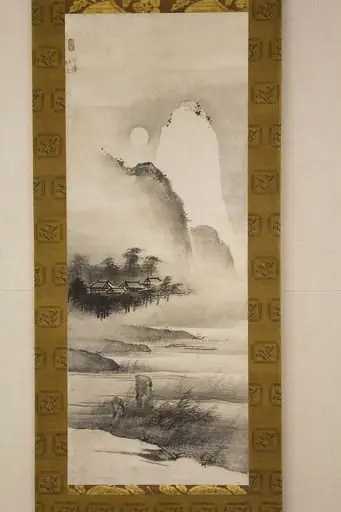 Untitled
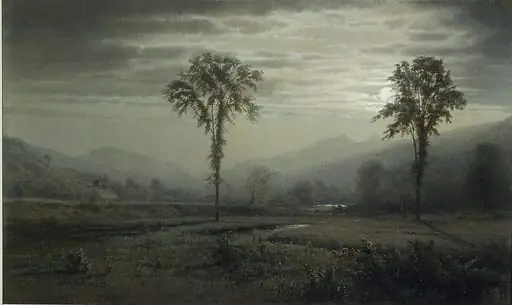 Moonlight on Mount Lafayette, New Hampshire
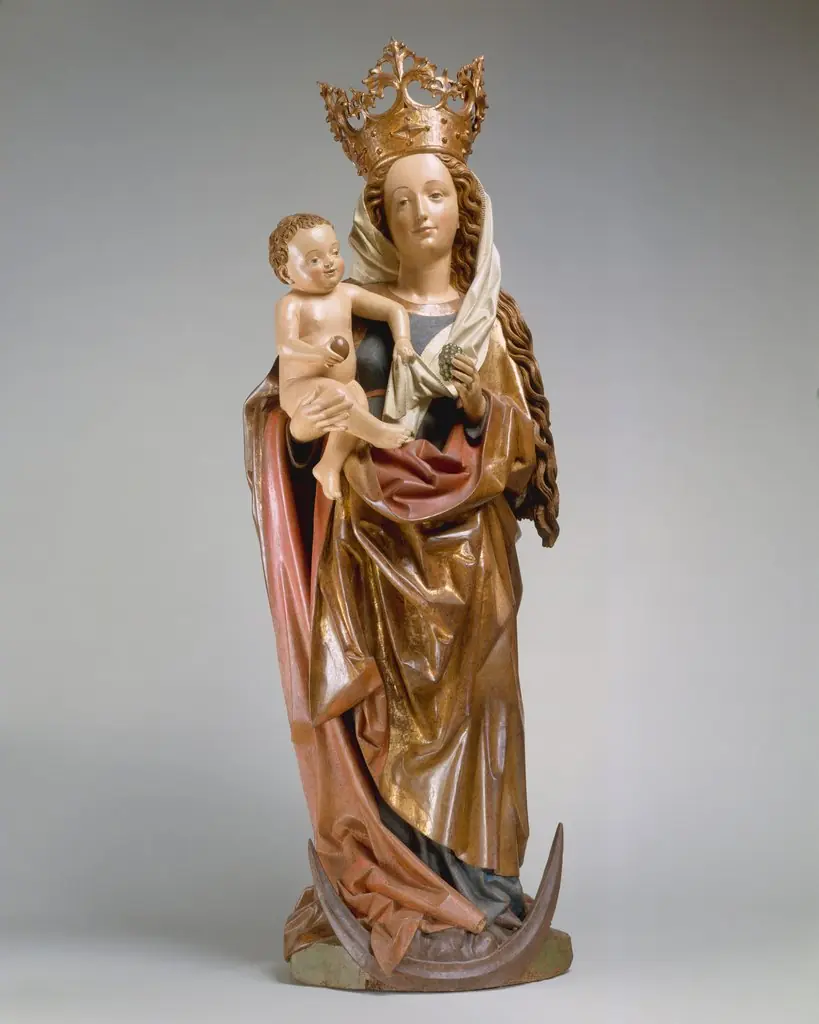 Virgin and Child on a Crescent Moon
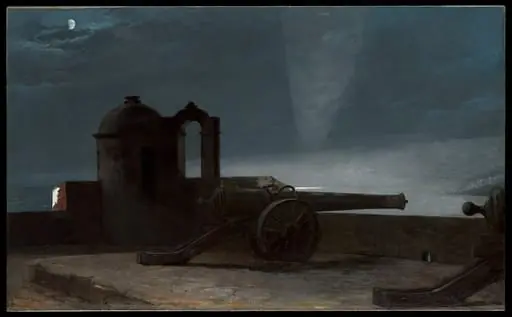 Searchlight on Harbor Entrance, Santiago de Cuba
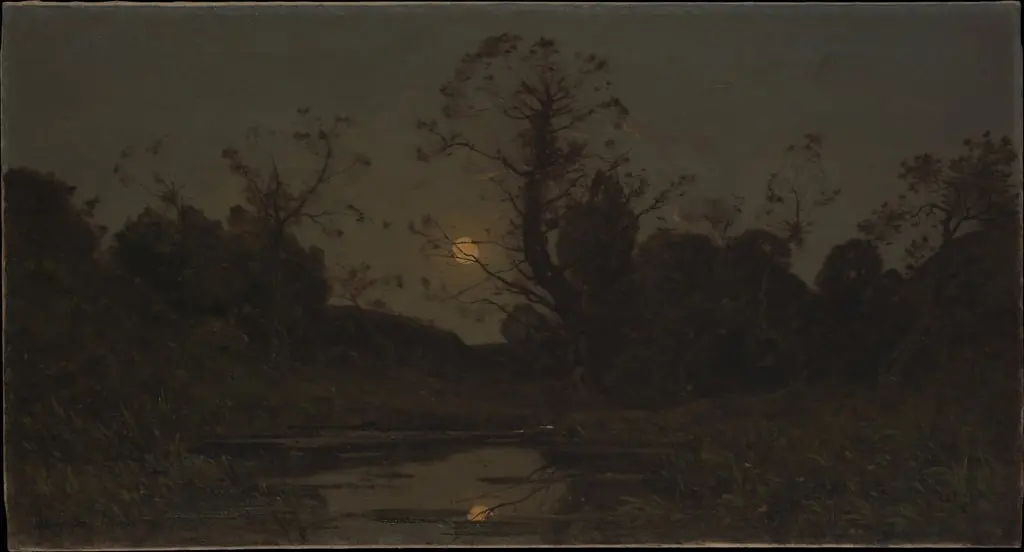 Moonrise
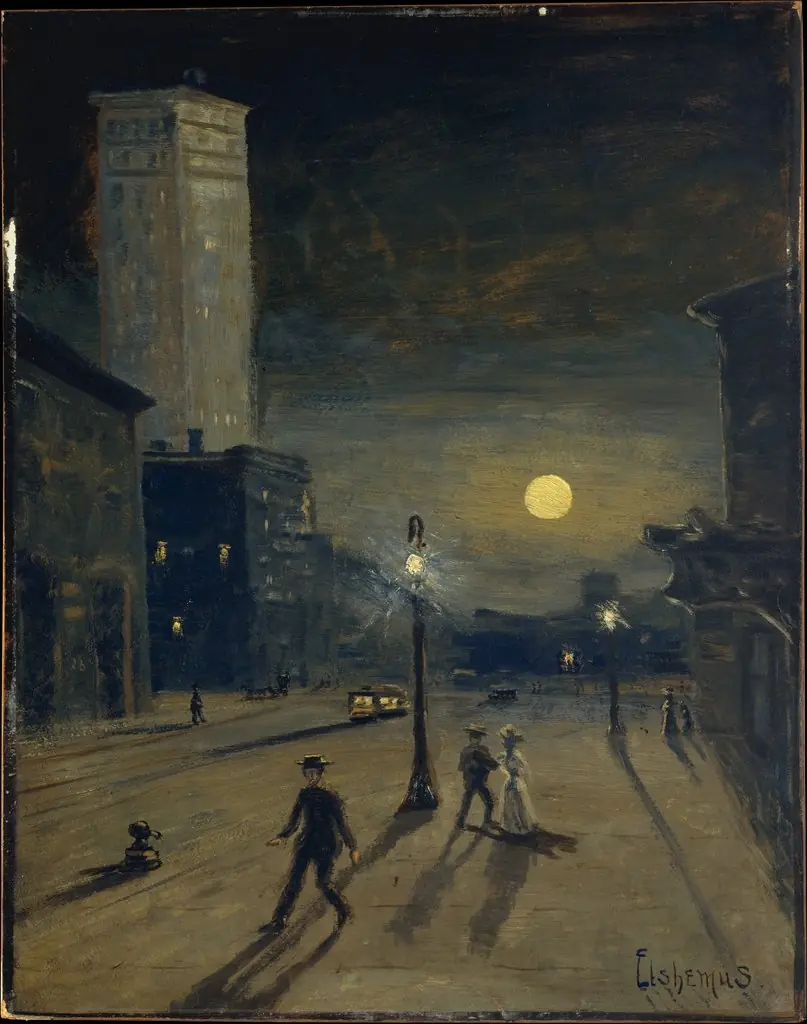 New York at Night
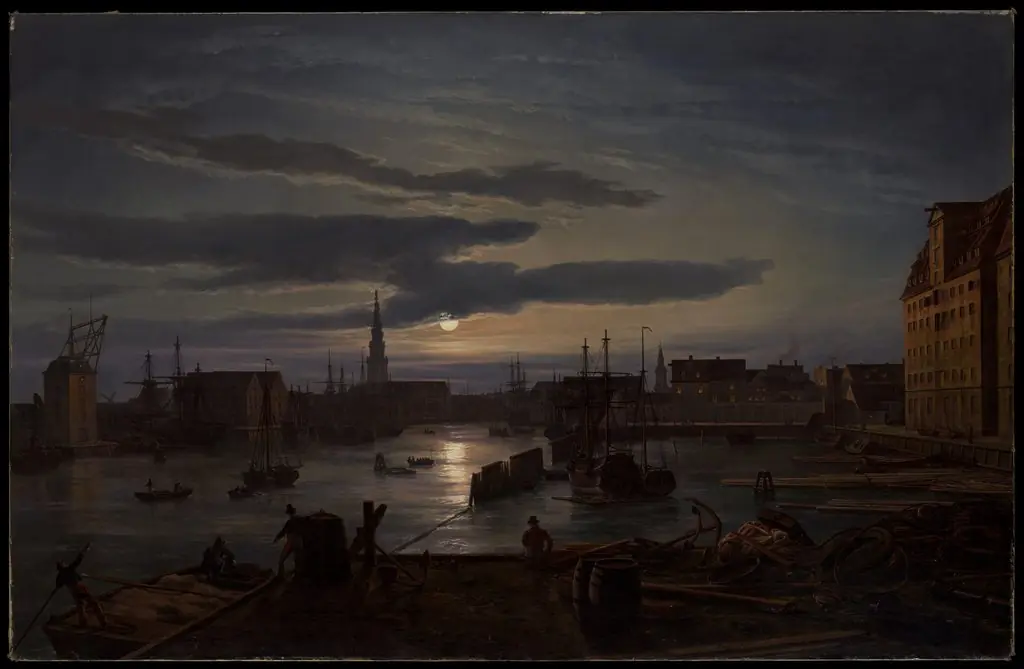 Copenhagen Harbor by Moonlight
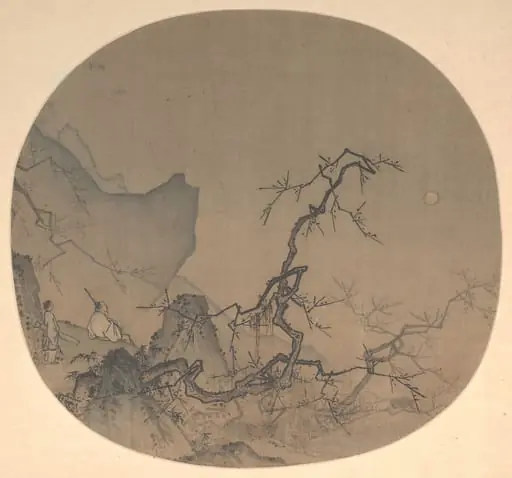 南宋 馬遠 月下賞梅圖 團扇|Viewing plum blossoms by moonlight
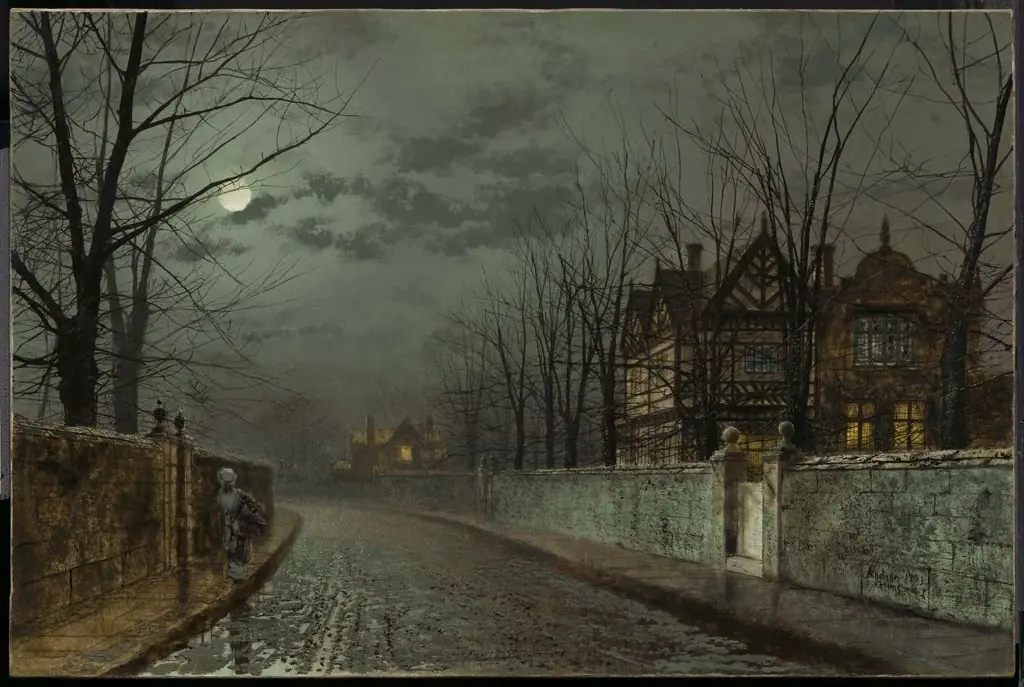 Old English House by Moonlight
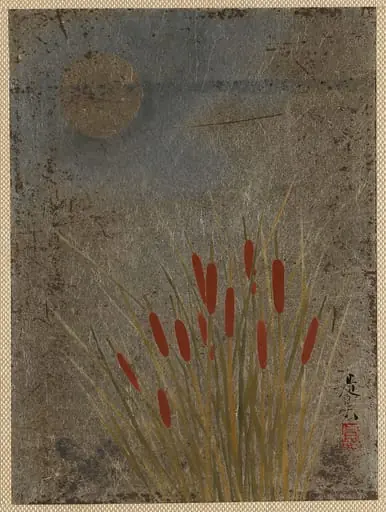 Untitled
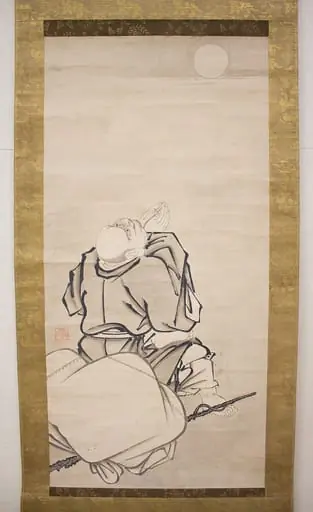 月見布袋図 (Tsukimi Hotei zu)|Hotei Admiring the Moon
 Untitled
 月に鴉図|Crow and the Moon
 Roundel
 清 童鈺 浸月圖 軸|Drenched in Moonlight
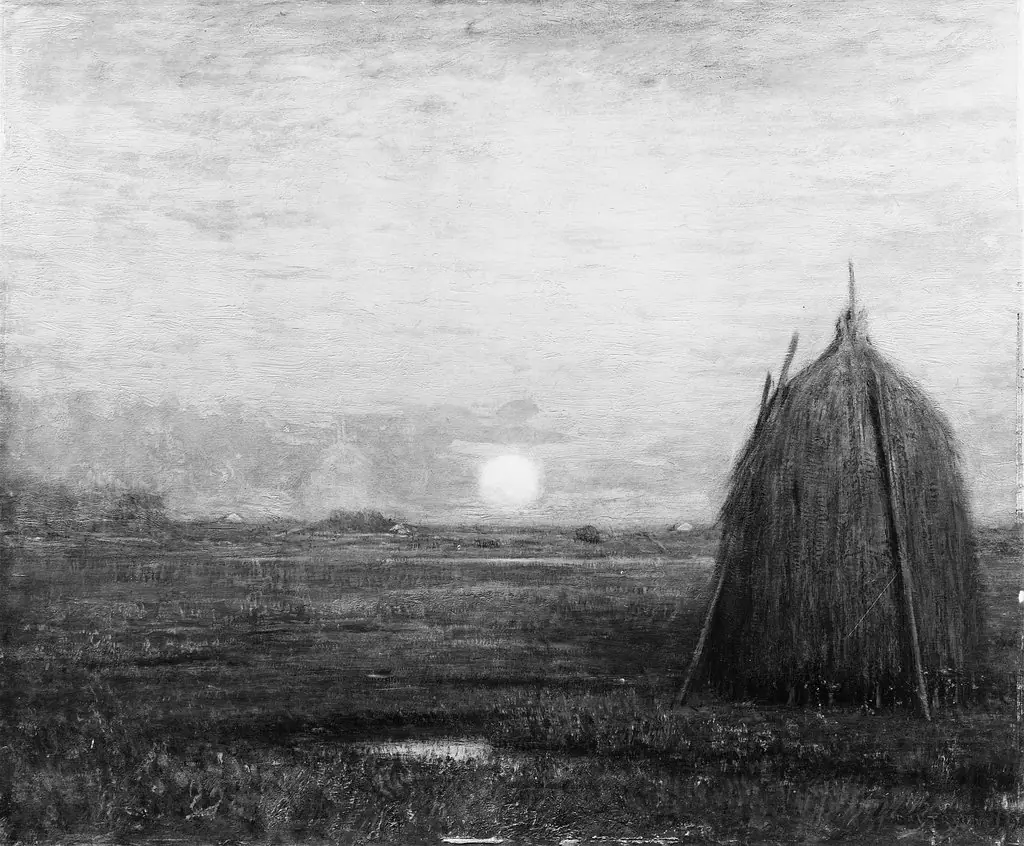 Moonrise at Sunset
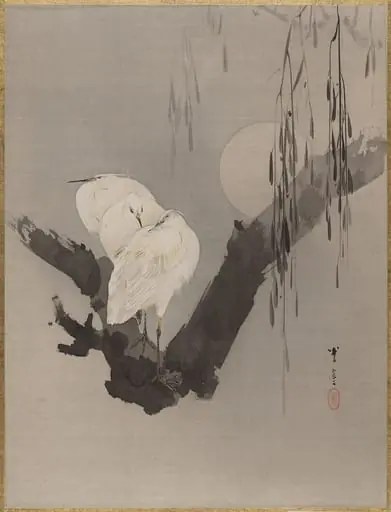 Untitled
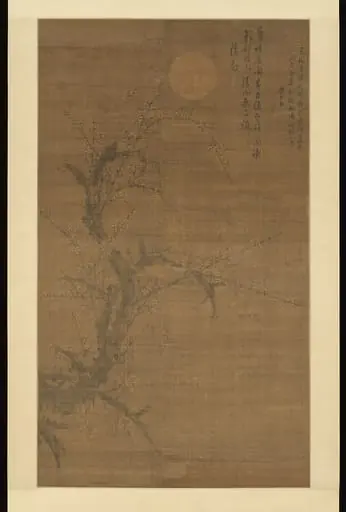 明 劉世儒 月下雪梅圖 軸|Flowering Plum in Moonlight and Snow
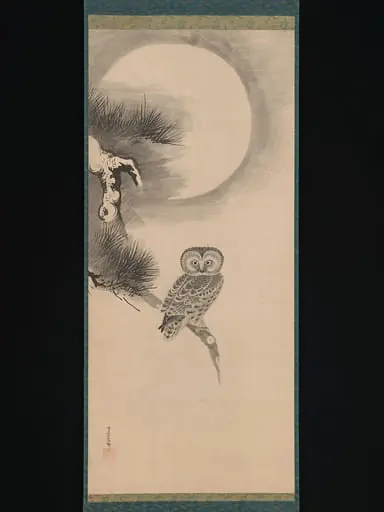 Untitled
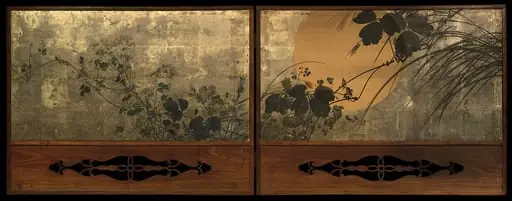 月に秋草図屏風|Autumn Grasses in Moonlight
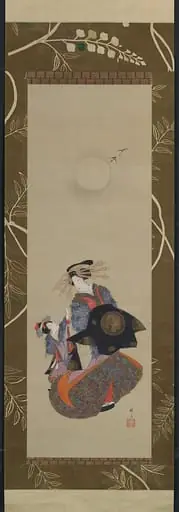 Untitled
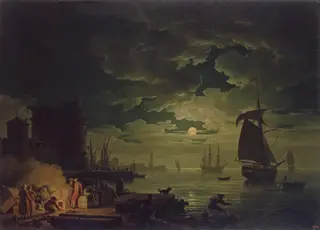 Entrance to the Port of Palermo by Moonlight
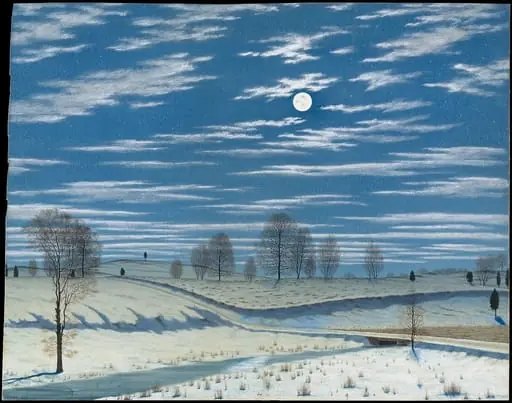 Winter Scene in Moonlight
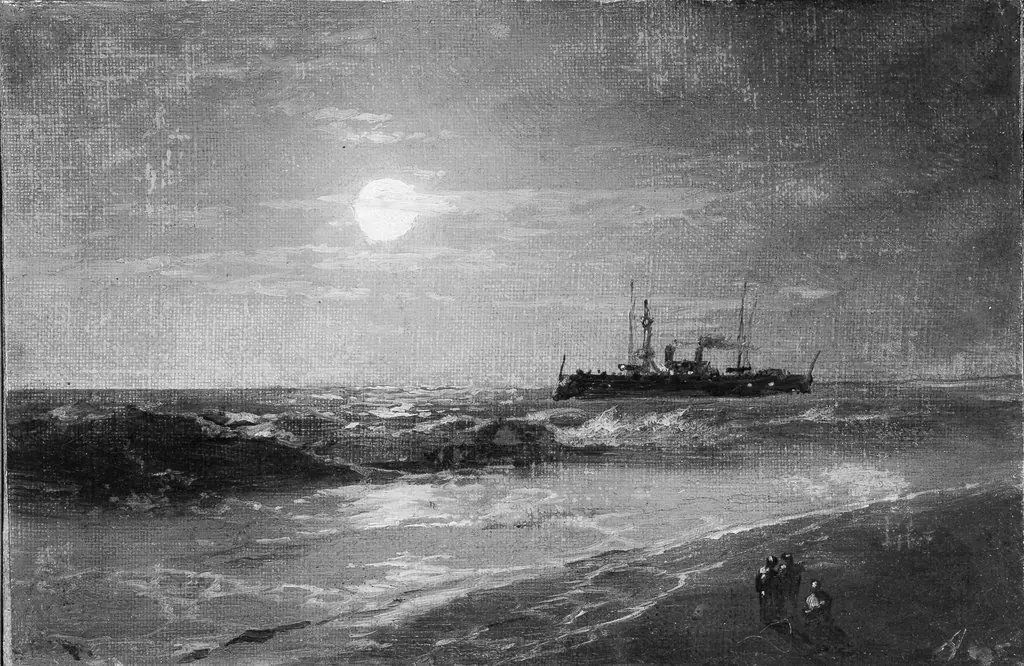 Ship by Moonlight
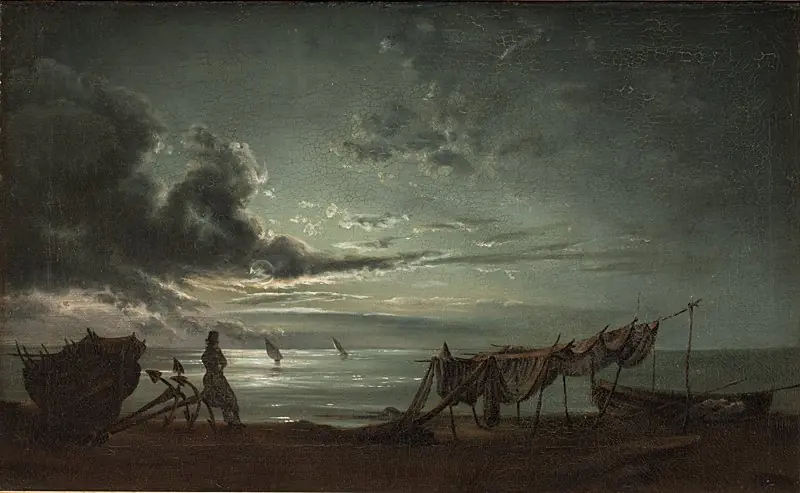 The Gulf of Naples. Moonlight
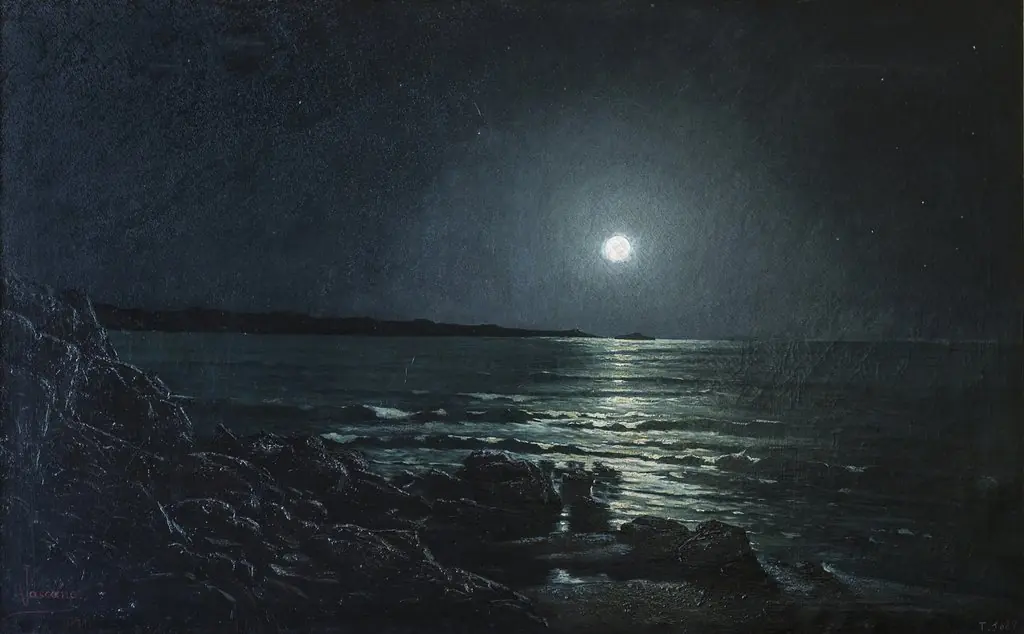 A Night at the Sea
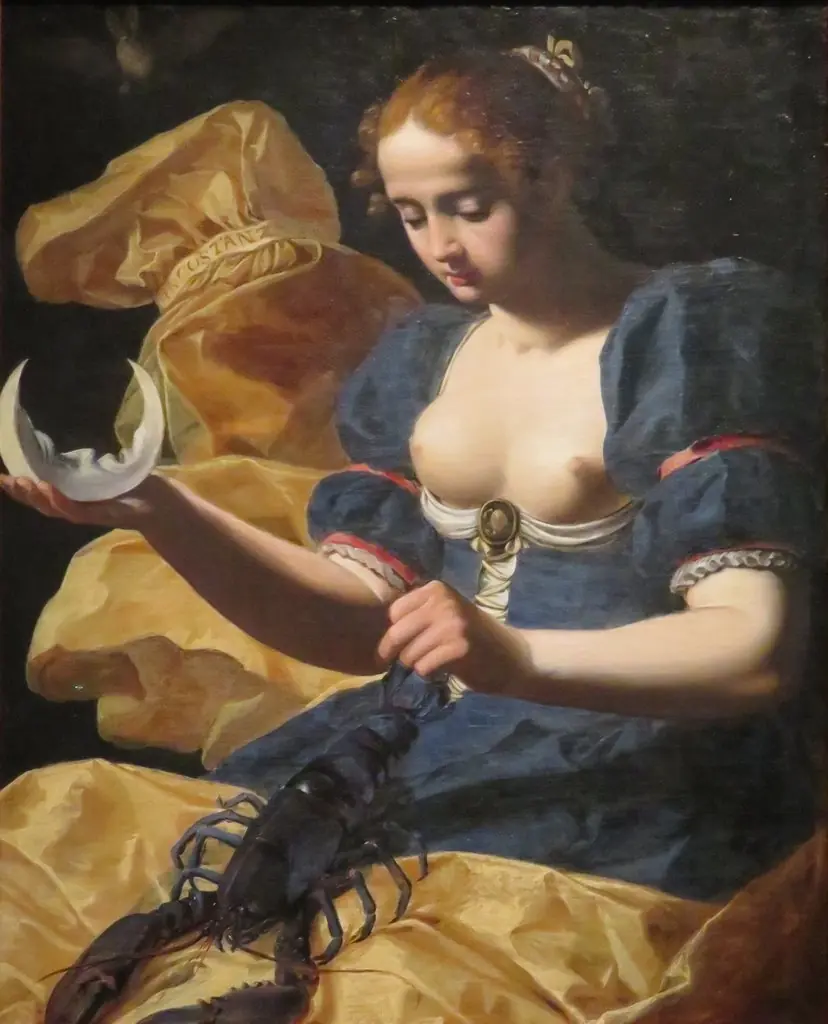 Incostanza. An Allegory of Fickleness
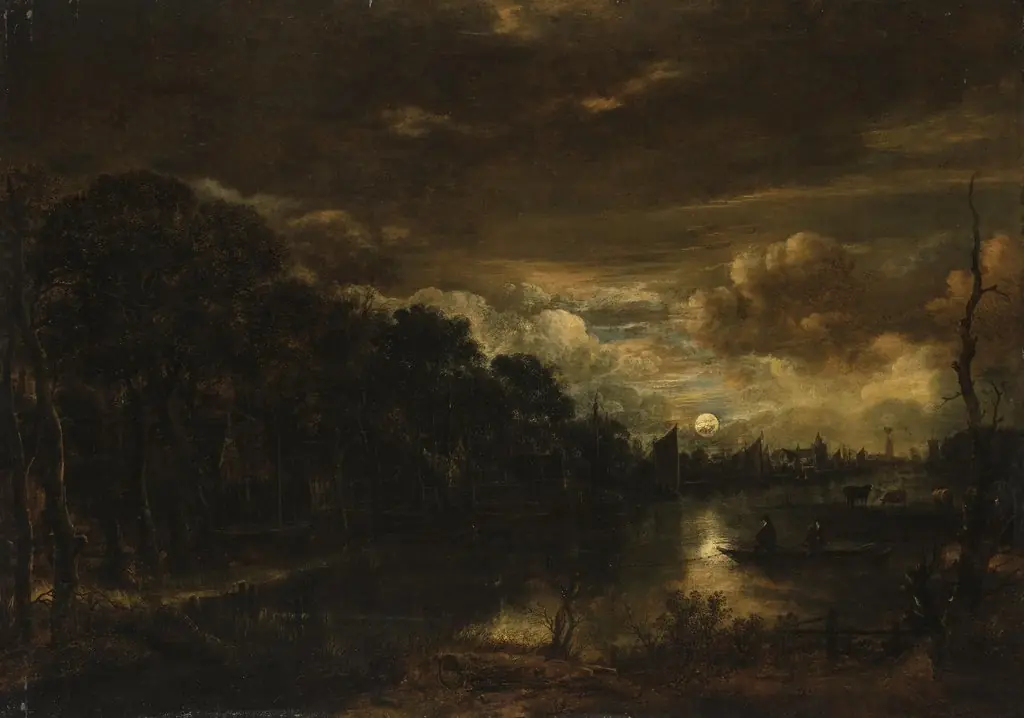 Night Landscape with a River
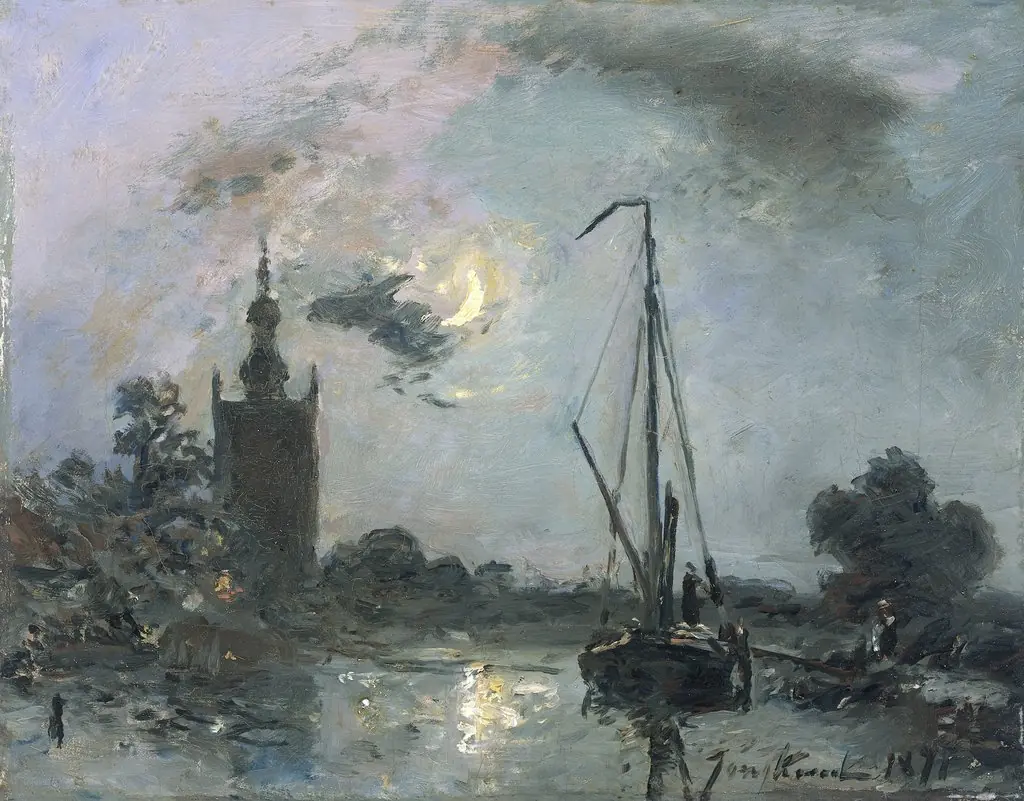 Overschie bij maneschijn
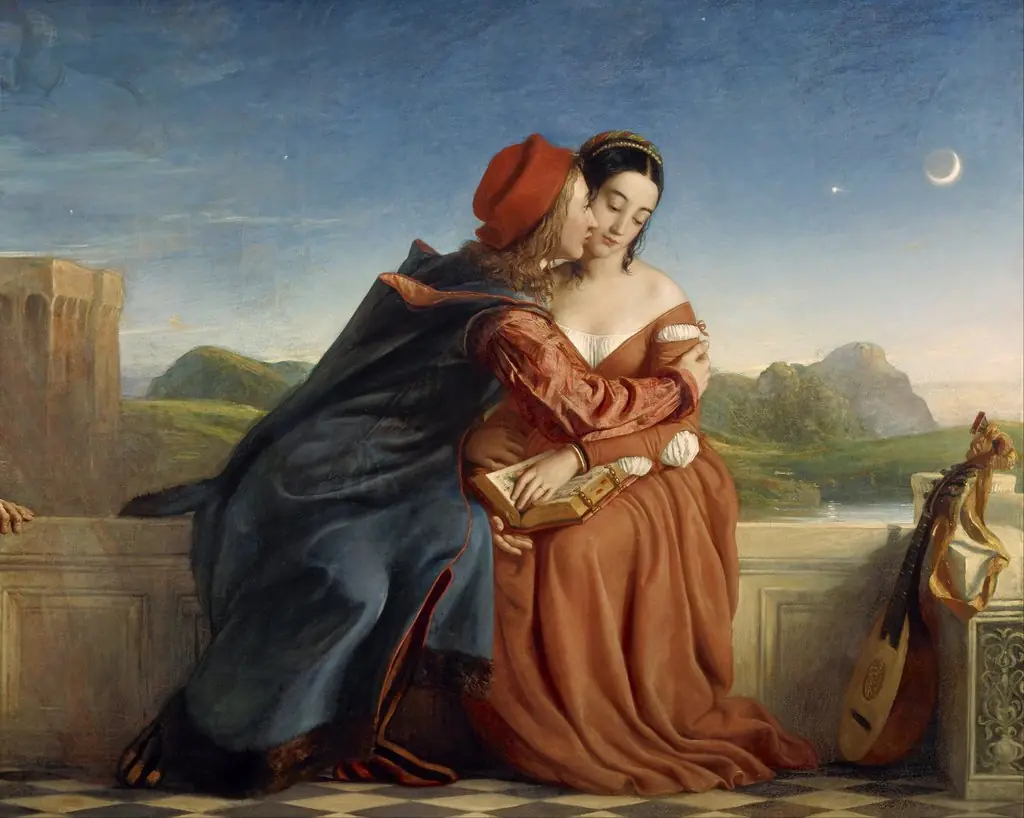 Francesca da Rimini
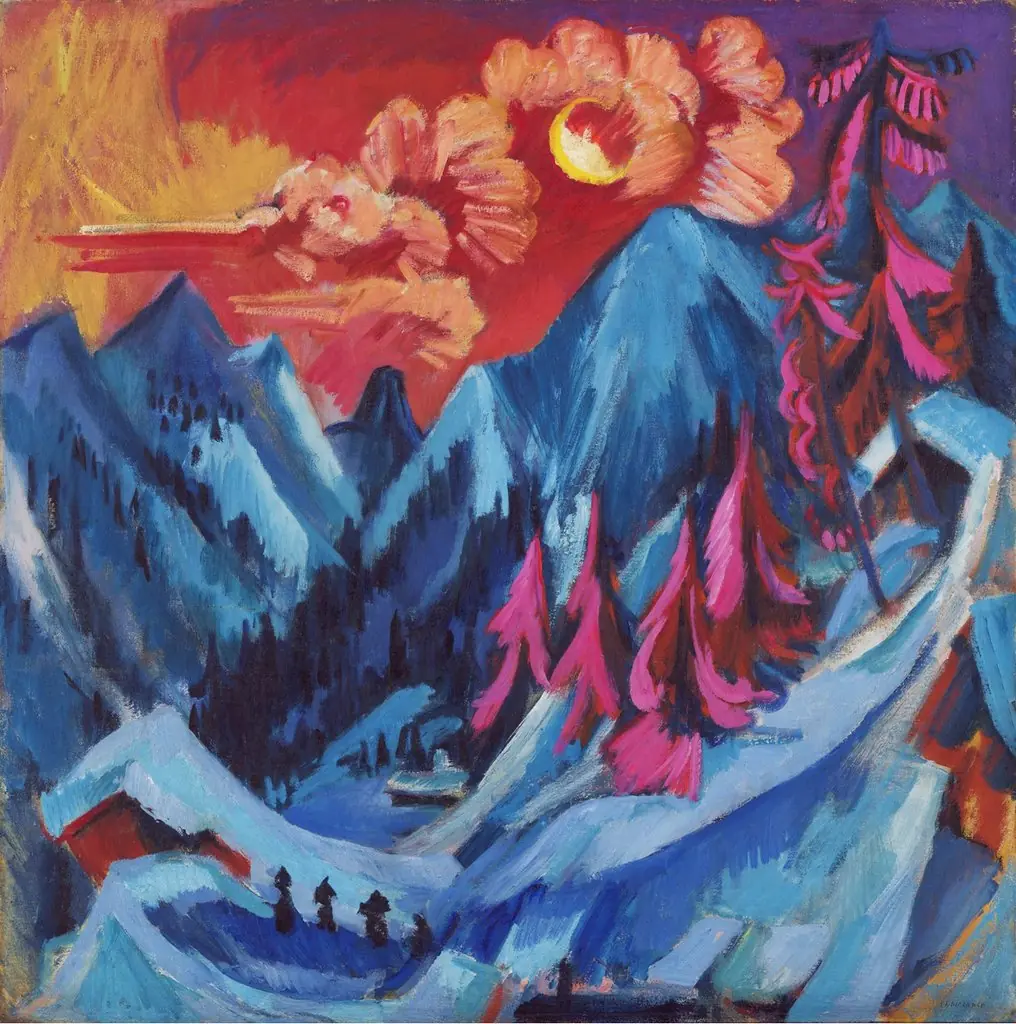 Winter Landscape in Moonlight
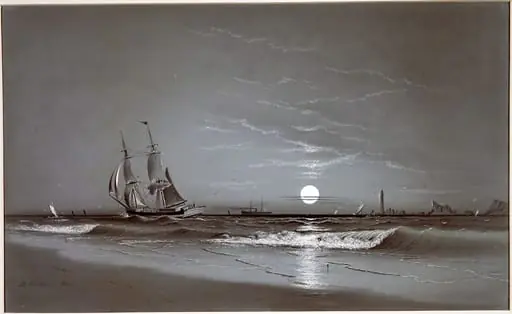 Entrance to Harbor—Moonlight
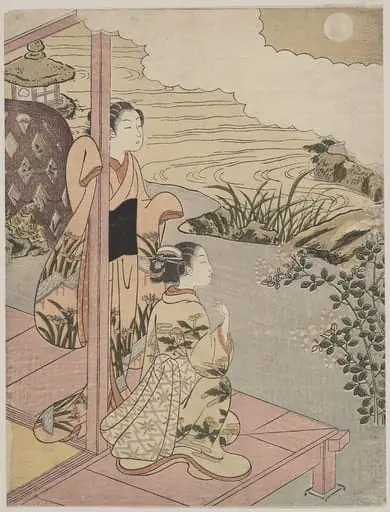 Untitled
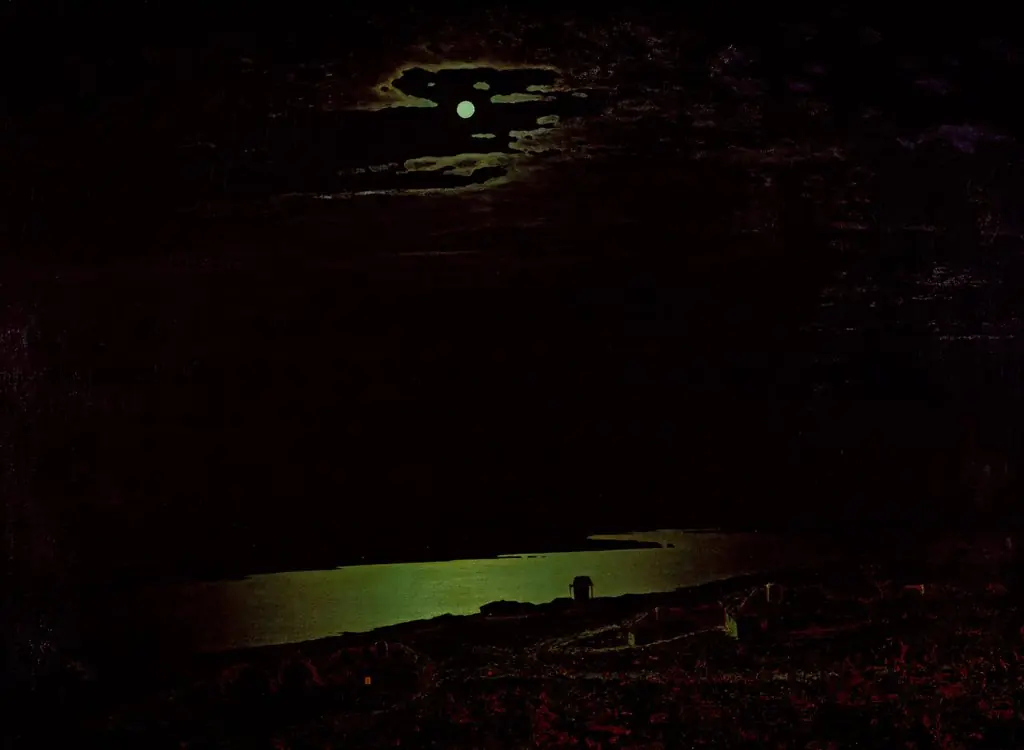 Night on the Dniepr
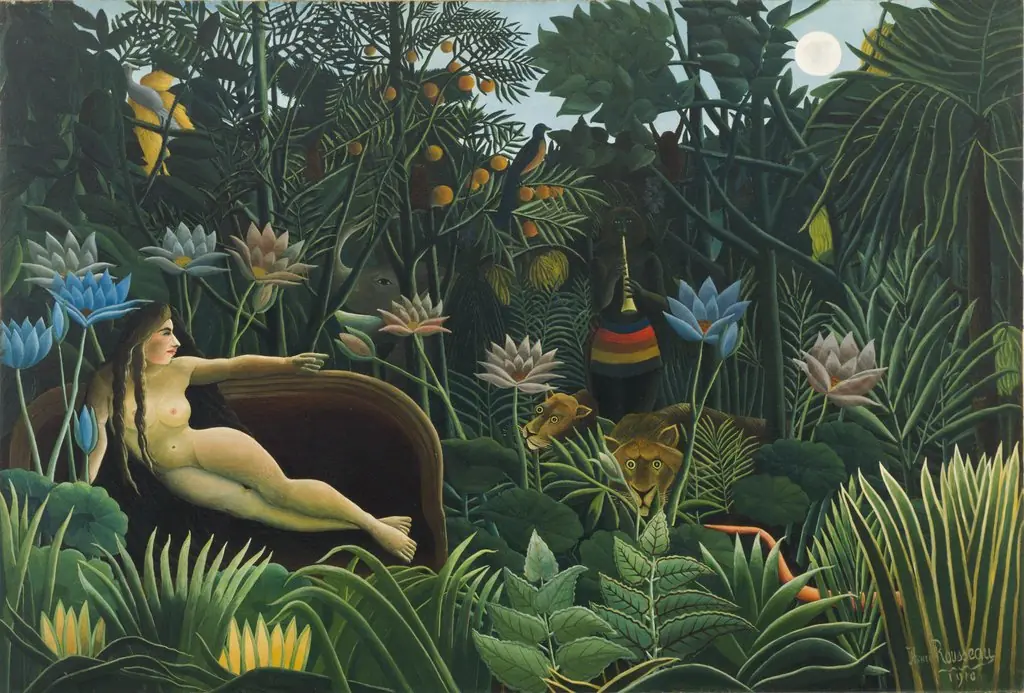 The Dream
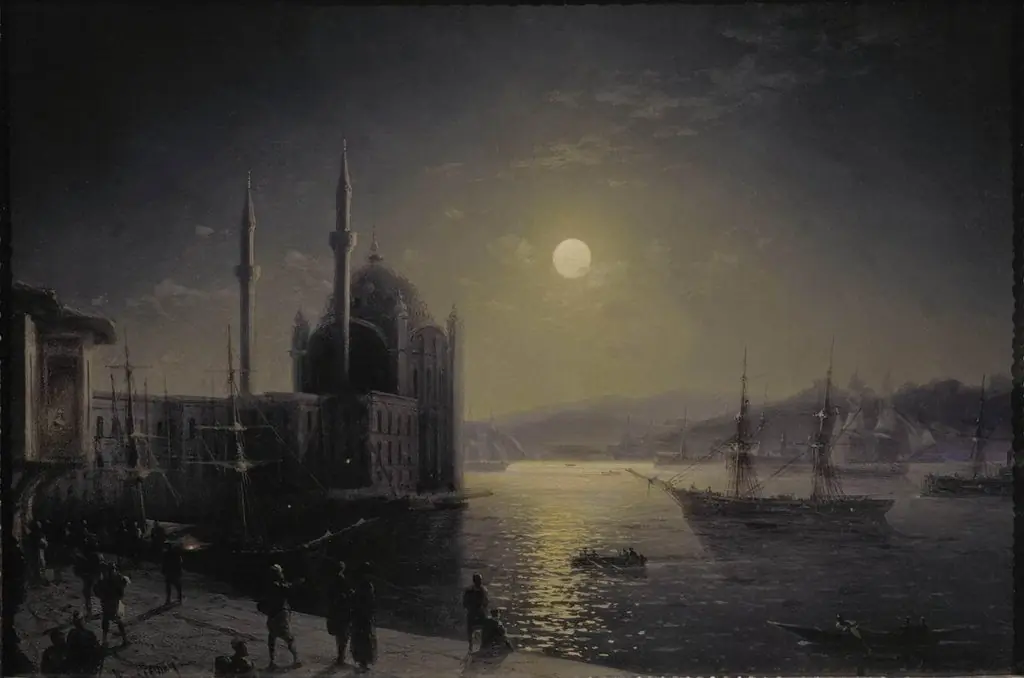 A Moonlit Night on the Bosphorus
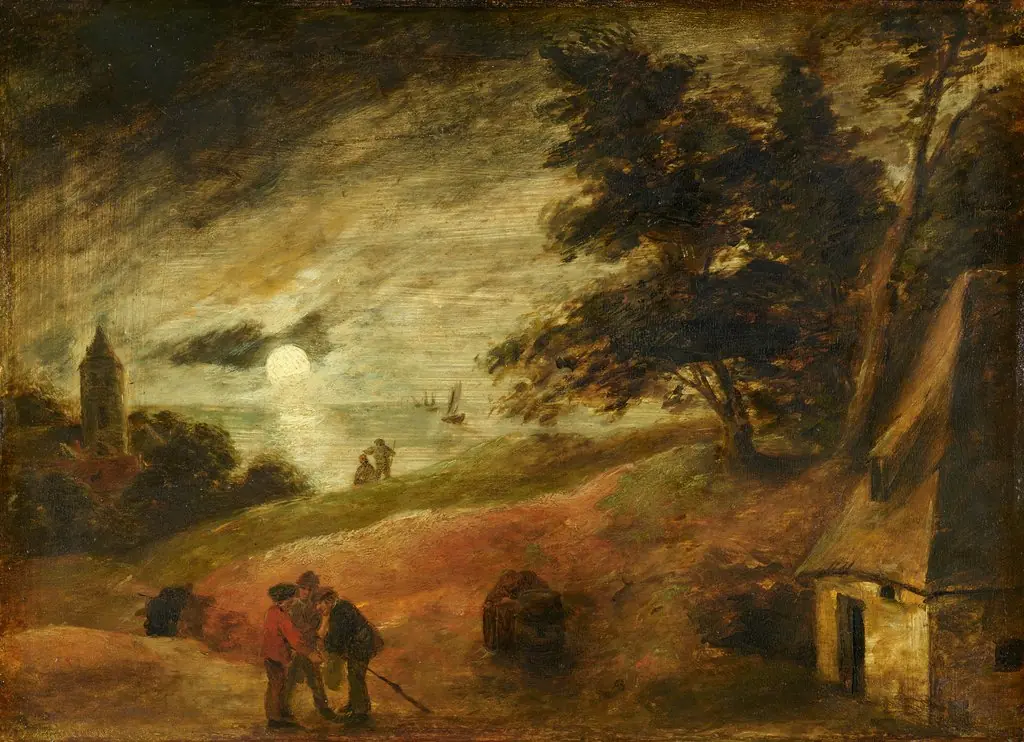 Landscape by Moonlight
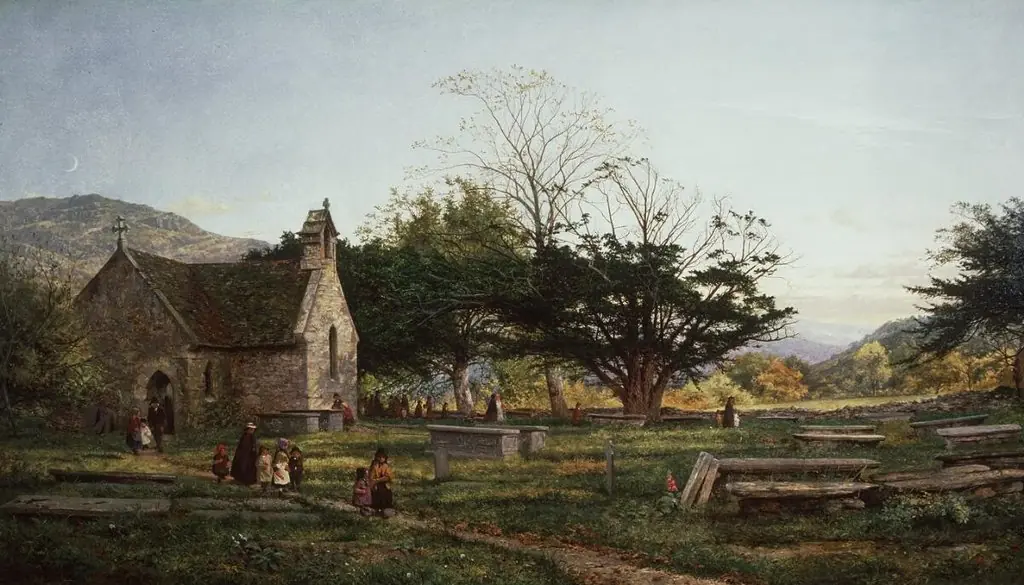 Bettws y Coed Church
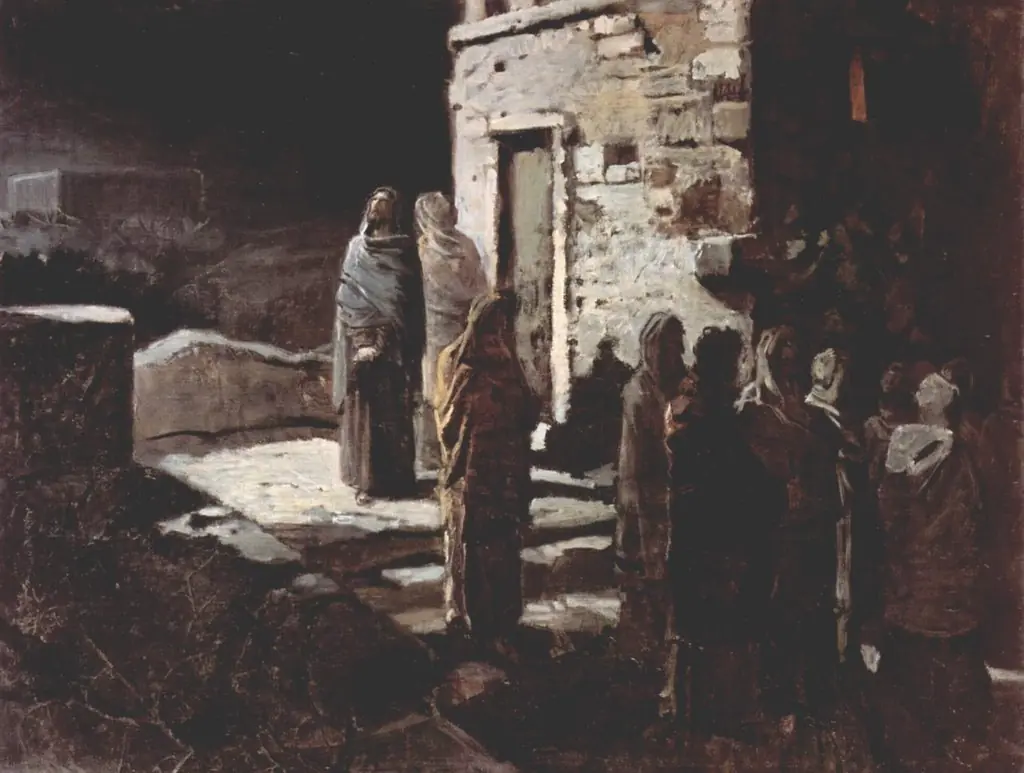 Le Départ du Christ avec ses disciples pour le jardin de Gethsémani
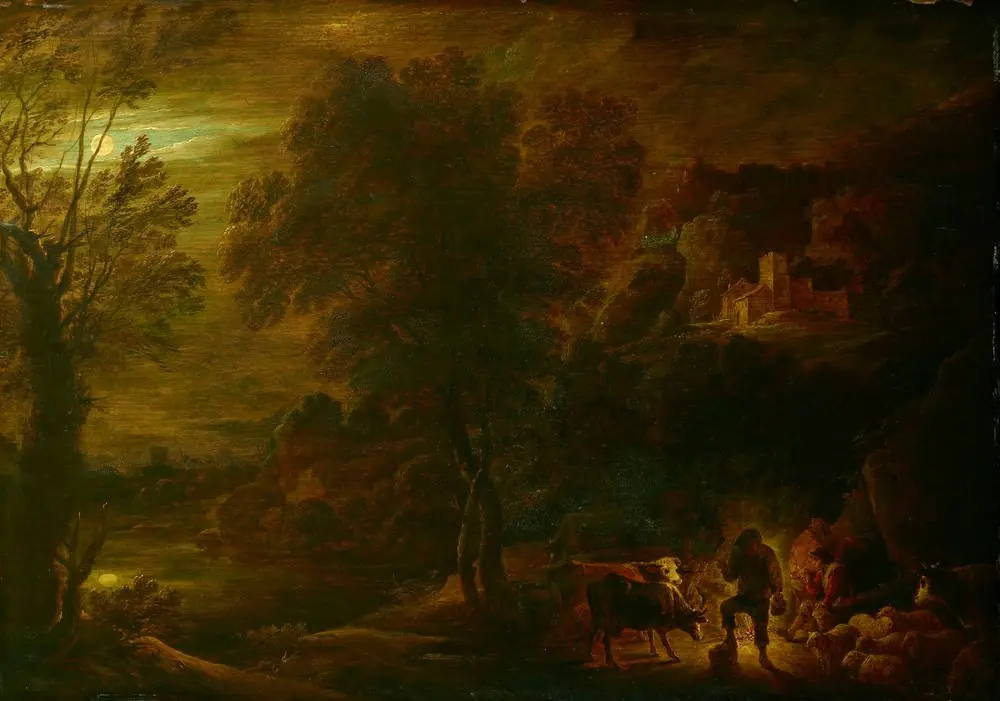 Moonlight landscape with shepherds at the fire
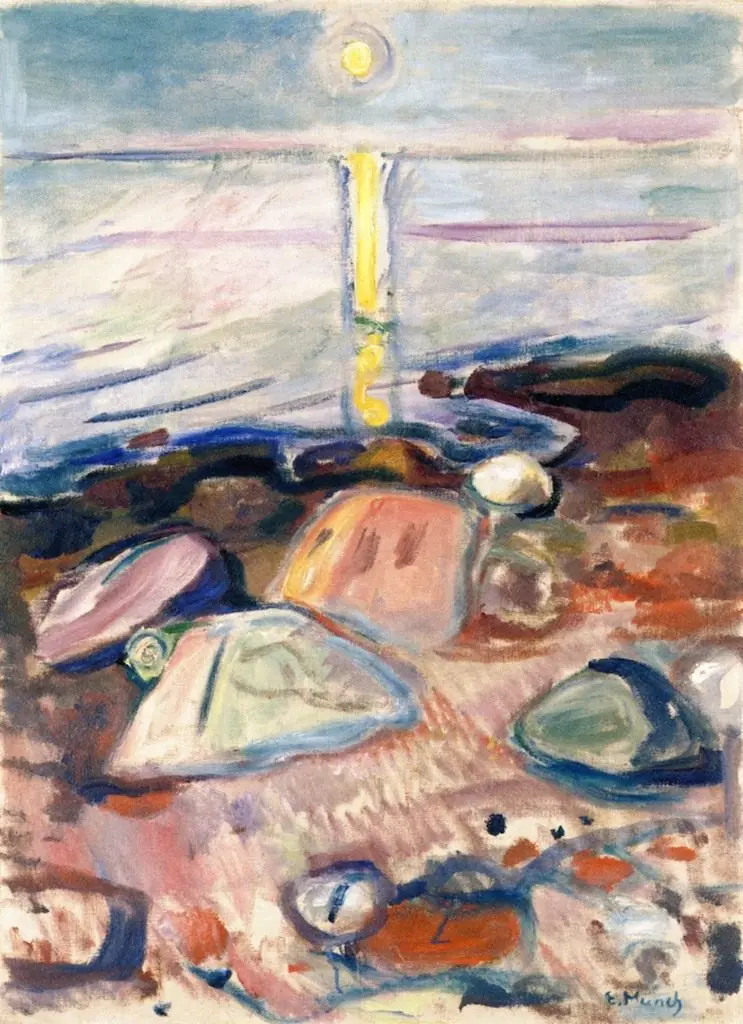 Moonlight on the Beach
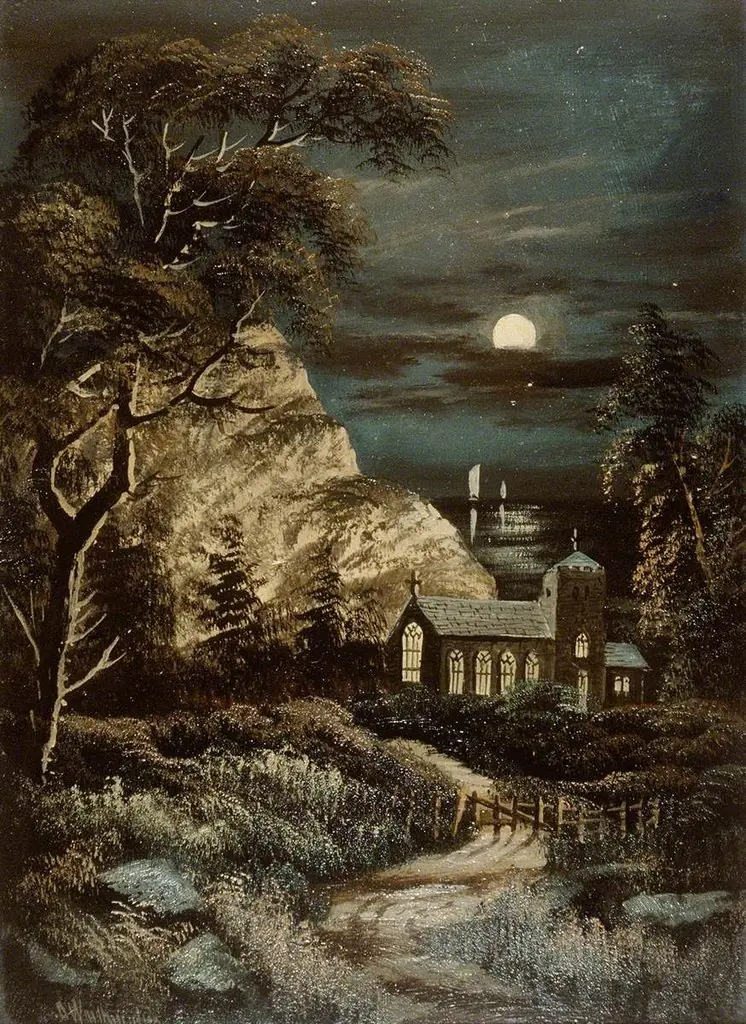 Church by Moonlight
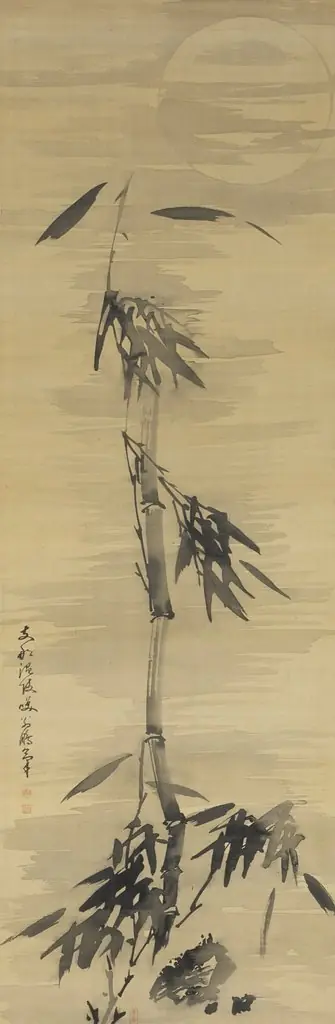 Bamboo in Moonlight
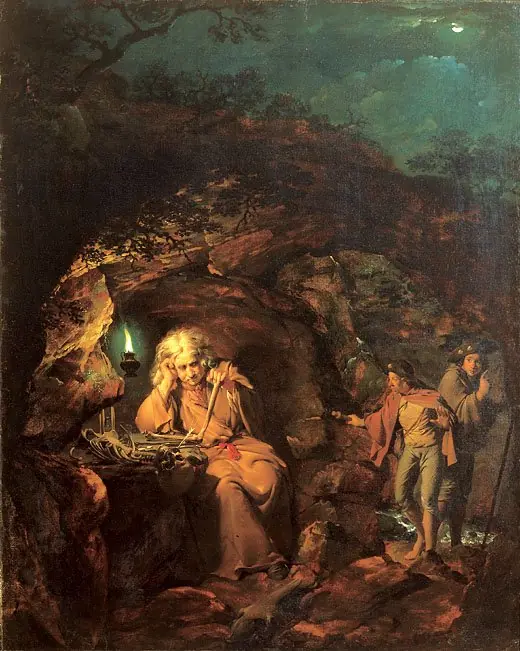 A Philosopher by Lamplight
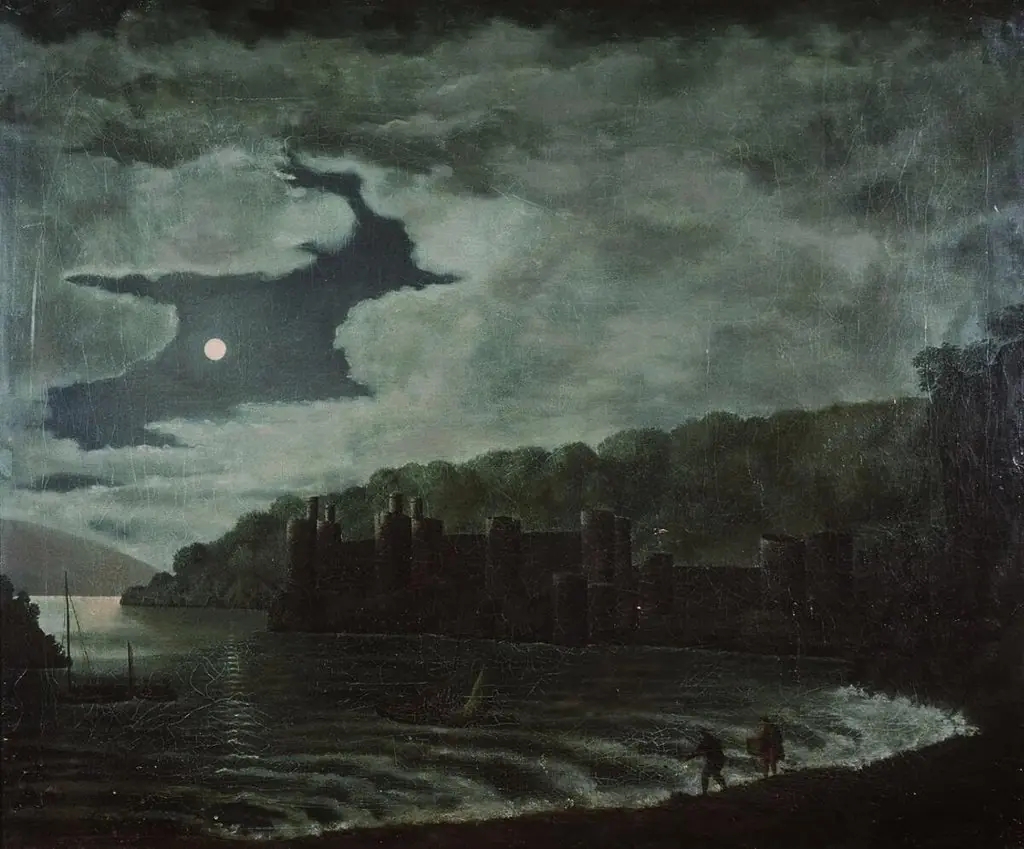 Conway Castle by moonlight
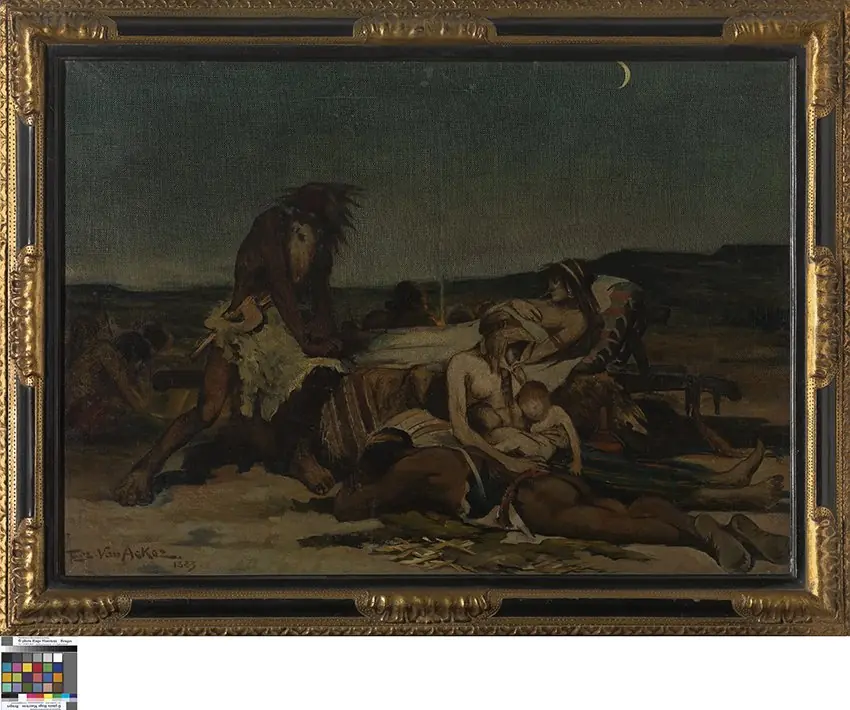 De wroeging van Kaïn
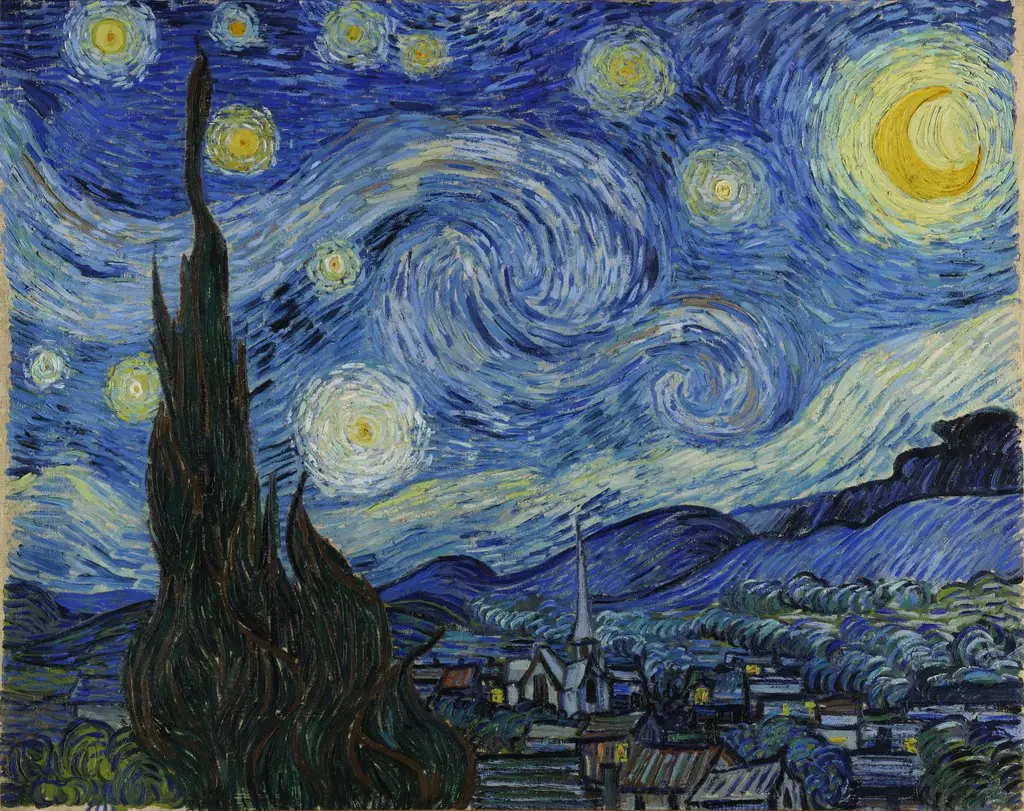 The Starry Night
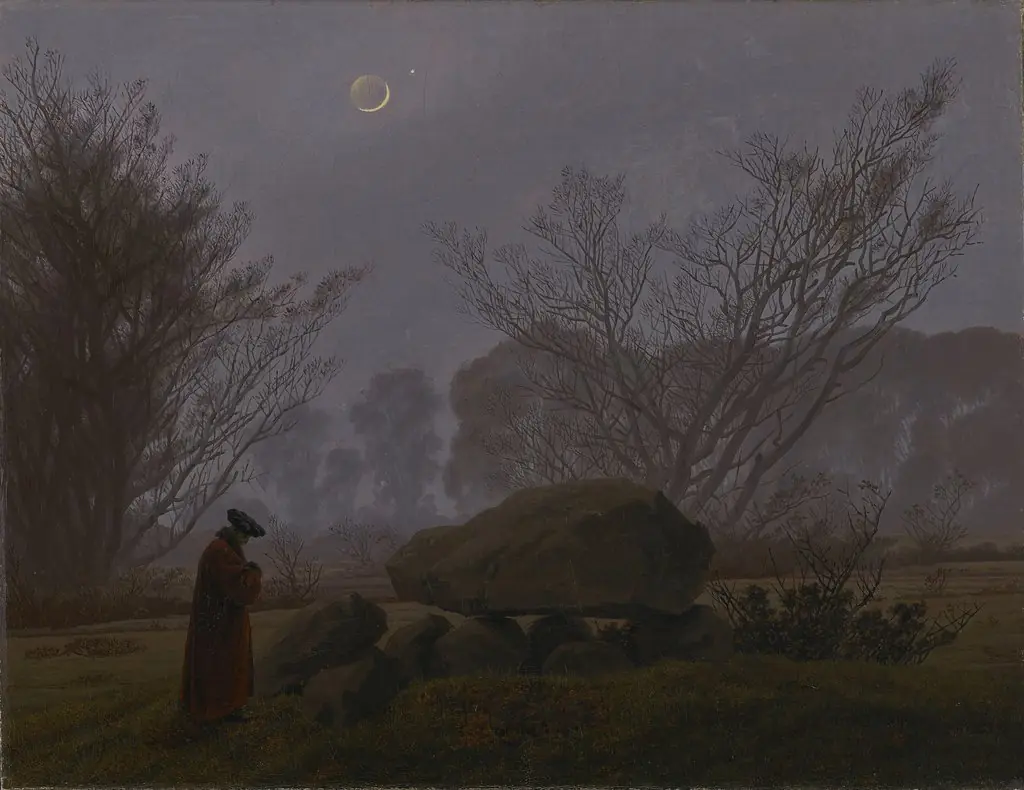 Walk at Dusk
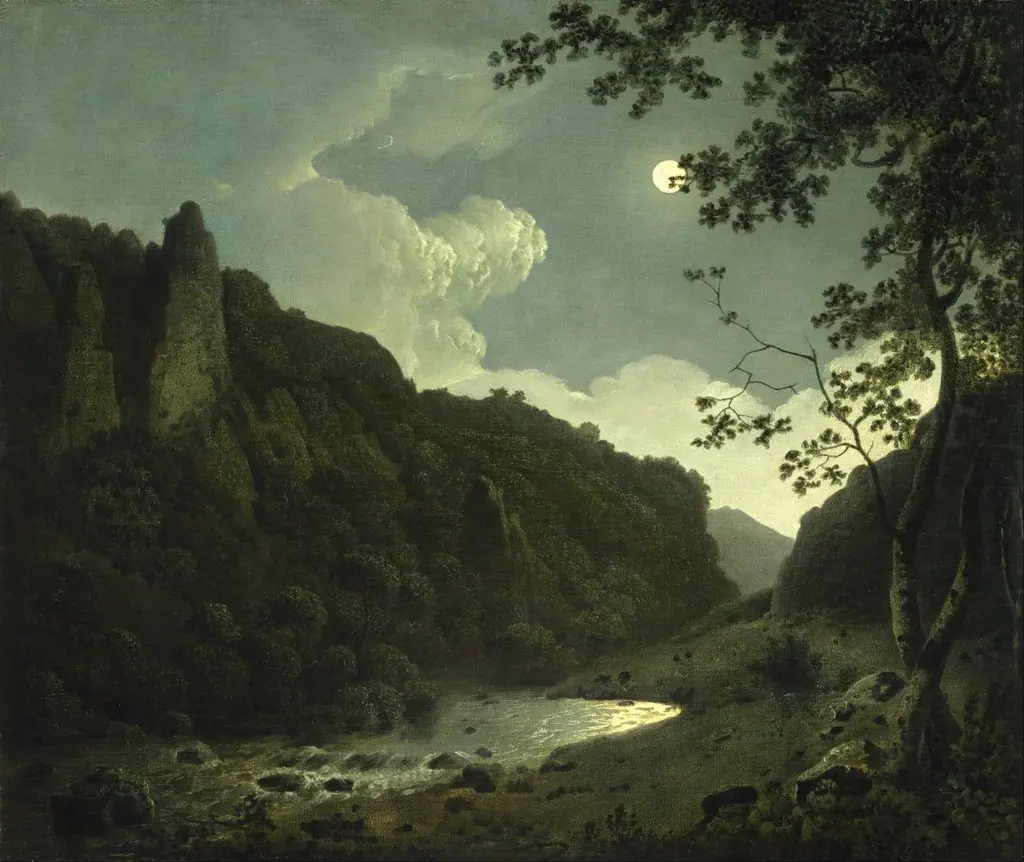 Dovedale by Moonlight
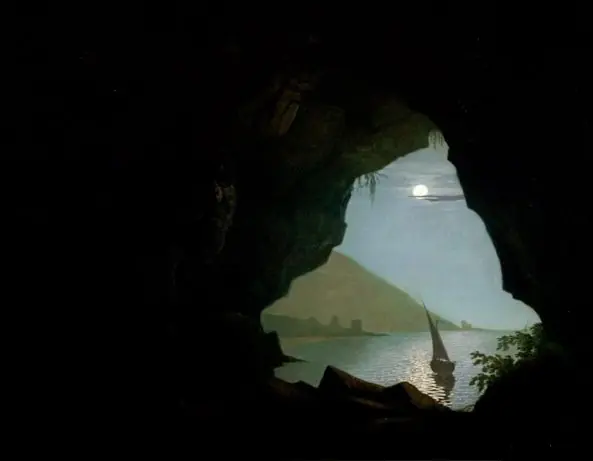 Grotto in the Gulf of Salerno
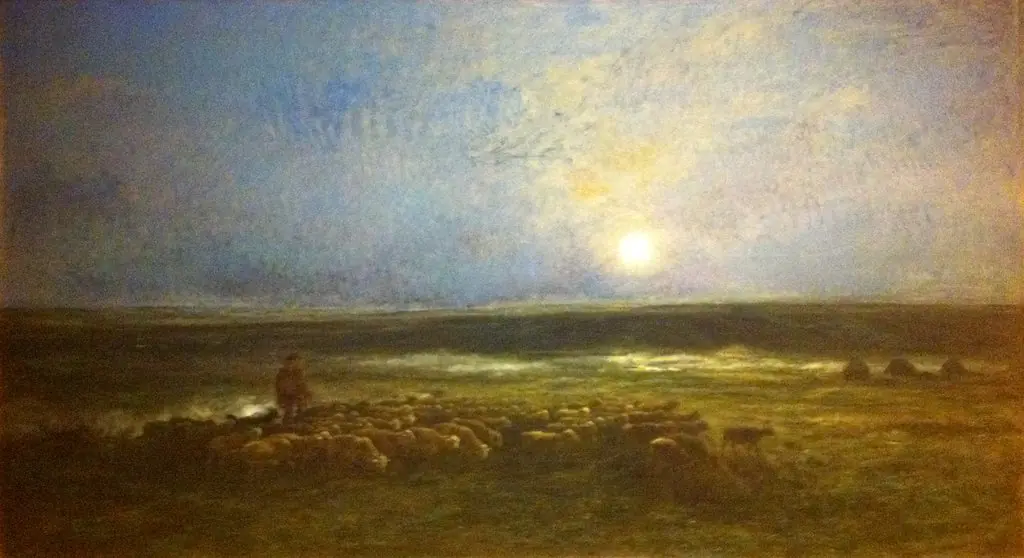 Lever de lune à Auvers
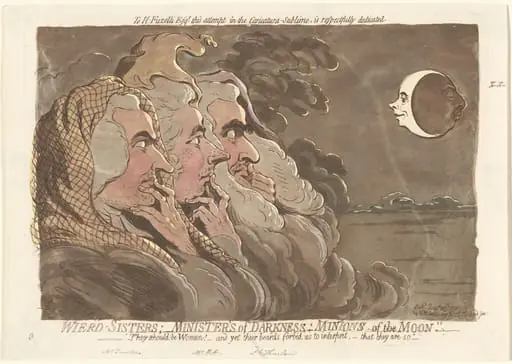 Wierd-Sisters; Ministers of Darkness; Minions of the Moon
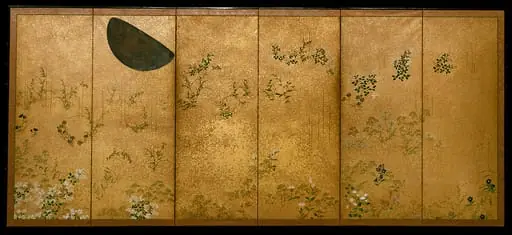 俵屋宗達工房 月に秋草図屏風|Moon and Autumn Grasses
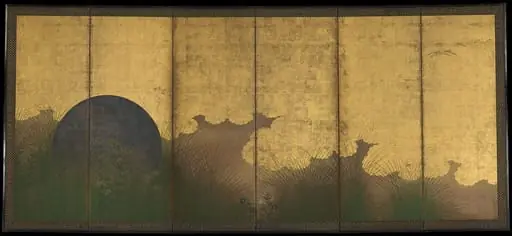 武蔵野図屏風|The Plains of Musashi
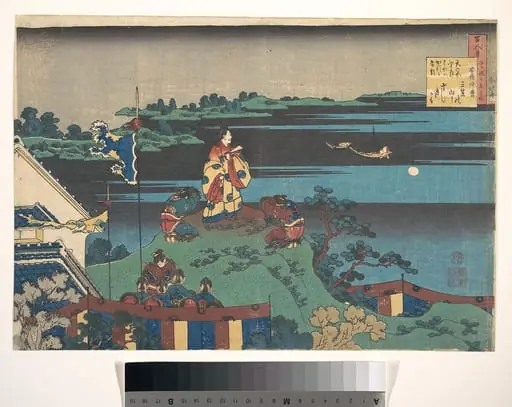 百人一首 宇波かゑとき 安部仲麿|Poem by Abe no Nakamaro, from the series One Hundred Poems Explained by the Nurse (Hyakunin isshu uba ga etoki)
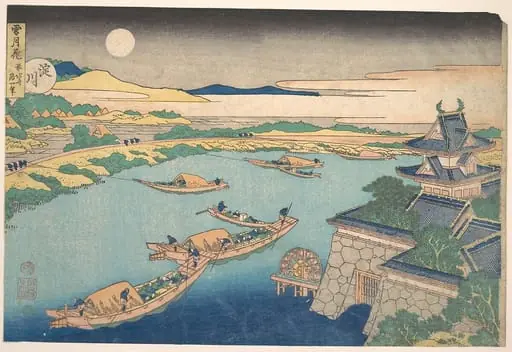 雪月花 淀川|Moonlight on the Yodo River (Yodogawa), from the series Snow, Moon, and Flowers (Setsugekka)
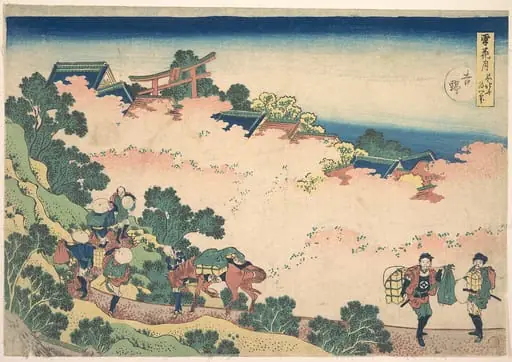 雪月花 吉野|Cherry Blossoms at Yoshino (Yoshino), from the series Snow, Moon, and Flowers (Setsugekka)
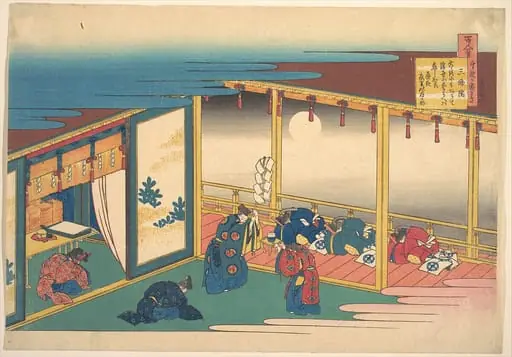 百人一首 うばがゑとき 三条院|Poem by Sanjō-in, from the series One Hundred Poems Explained by the Nurse (Hyakunin isshu uba ga etoki)
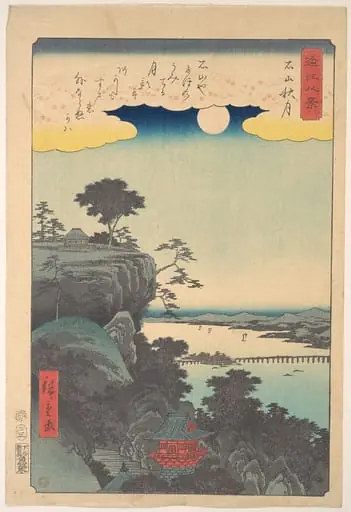 近江八景 石山秋月|The Autumn Moon on Ishiyama
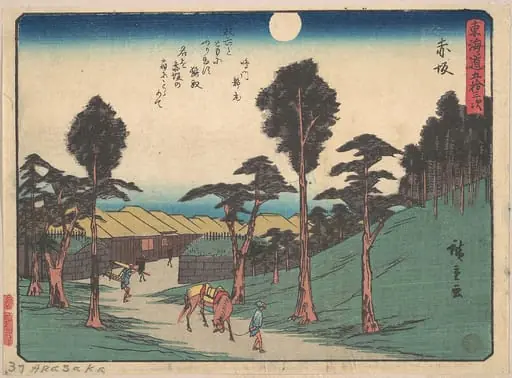 東海道五十三次 赤坂|Akasaka
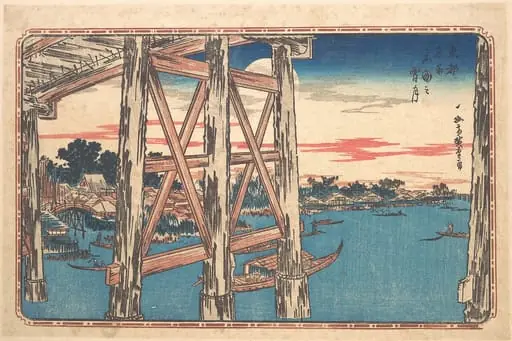 東都名所 両国之宵月|Twilight Moon at Ryōgoku Bridge
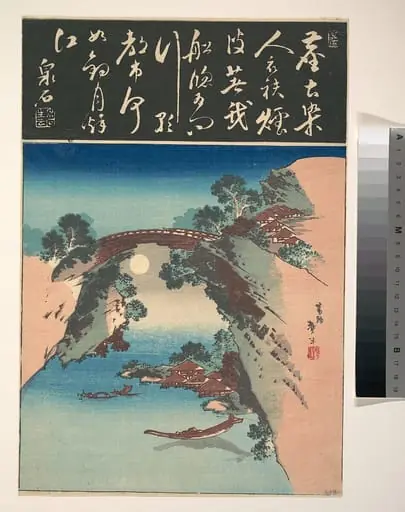 Untitled
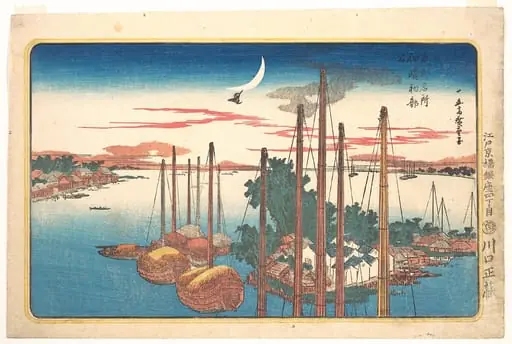 Tsukudajima hatsuhotogizu|東都名所 佃島初郭公|The Year's First Song of the Cuckoo at Tsukudajima
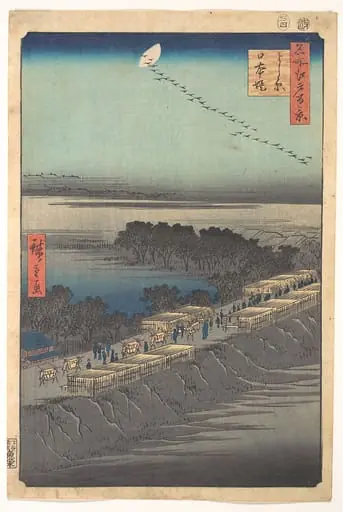 「名所江戸百景 よし原 日本堤」|“Nihon Embankment at Yoshiwara,” from the series One Hundred Famous Views of Edo (Meisho Edo hyakkei, Yoshiwara, Nihonzutsumi)
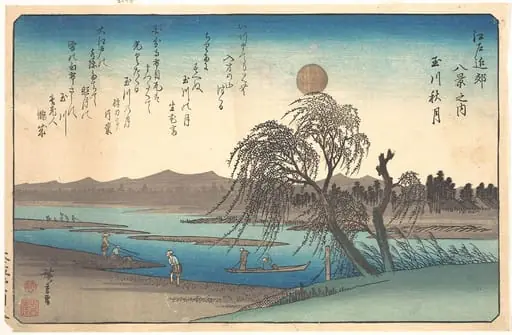 Tamagawa Shugetsu|江戸近郊八景之内 玉川秋月|Autumn Moon on the Tama River
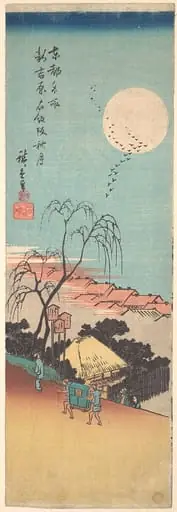 東都名所 新吉原衣紋阪秋月|Shin Yoshiwara Emonzaka Aki no Tsuki
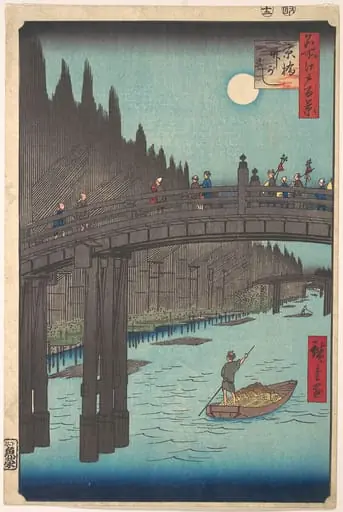 名所江戸百景 京橋竹がし|Full Moon Over Canal, with Bridge and Huge Stacks of Bamboo along the Bank
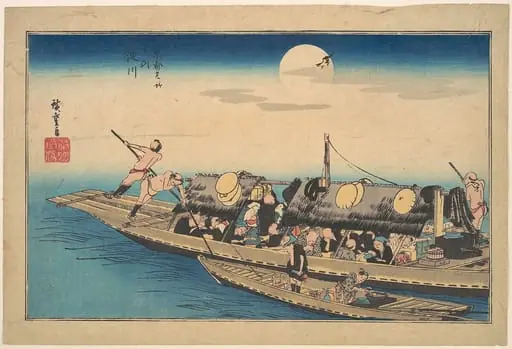 Yodogawa|京都名所之内 淀川|On the Yodo River
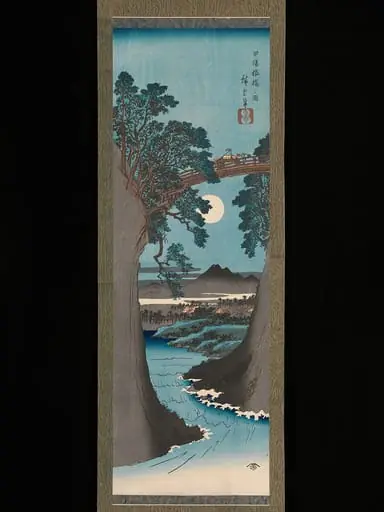 「甲陽猿橋之図」|The Monkey Bridge in Kai Province (Kōyō Saruhashi no zu)
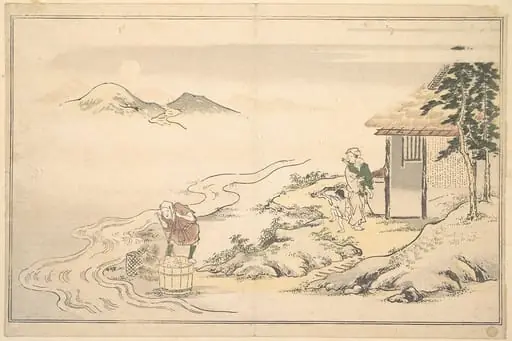 狂月坊|The Full Moon at the Time of the Imo Harvest
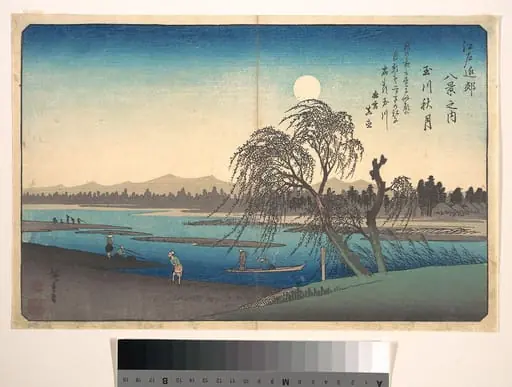 江戸近郊八景之内 玉川秋月|Autumn Moon on the Tama River
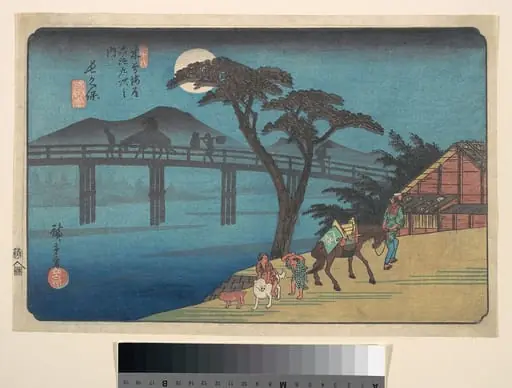 木曽海道六拾九次之内 長久保|Nagakubo Station
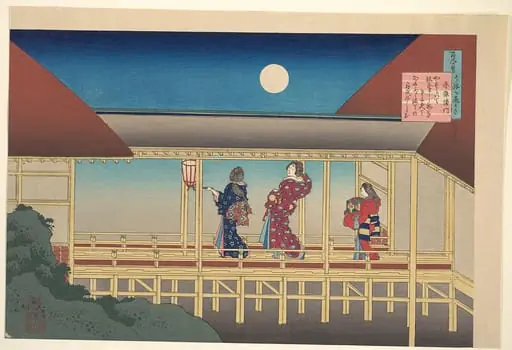 百人一首 うはかゑとき 赤染衛門|Poem by Akazome Emon, from the series One Hundred Poems Explained by the Nurse (Hyakunin isshu uba ga etoki)
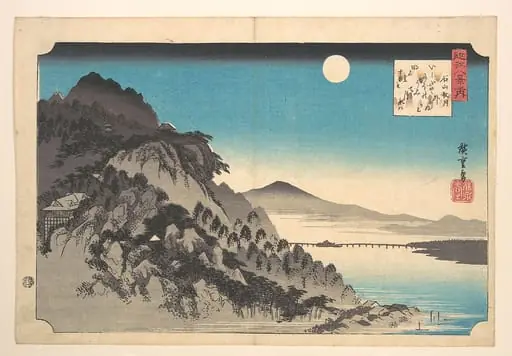 近江八景之内 石山秋月|The Autumn Full Moon at Ishiyama
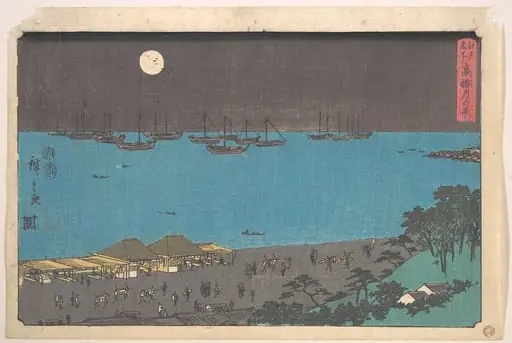 江戸名所 高輪月の景|Takanawa Tsuki no Kei
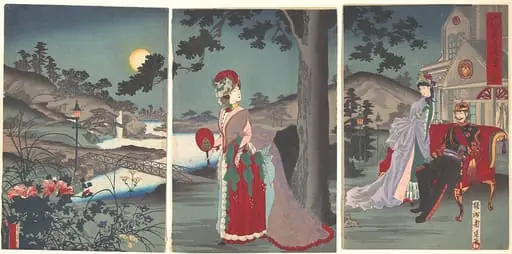 『高貴納涼ノ図』|Nobility in the Evening Cool (Koki nōryō no zu)
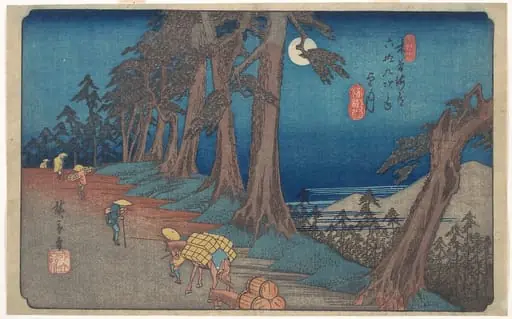 木曽海道六拾九次之内 望月|Mochizuki
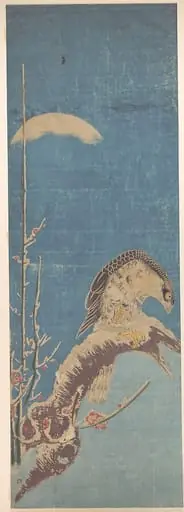 Untitled
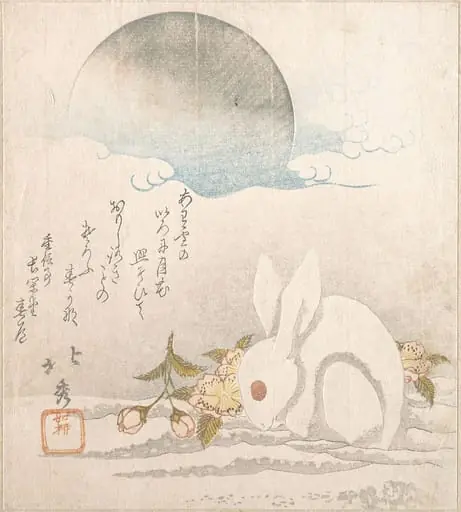 葛飾北秀画 月下の兎|Rabbit in the Snow beneath the Moon 月下の兎
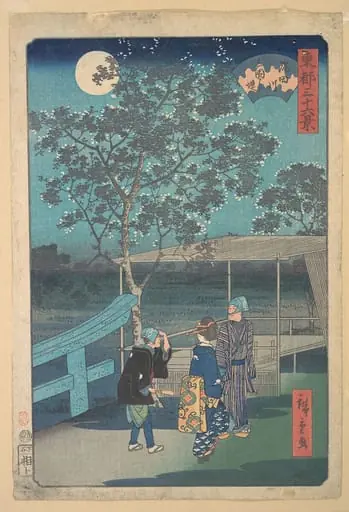 東都三十六景 隅田川三囲り堤|Sumidagawa, Mimeguri
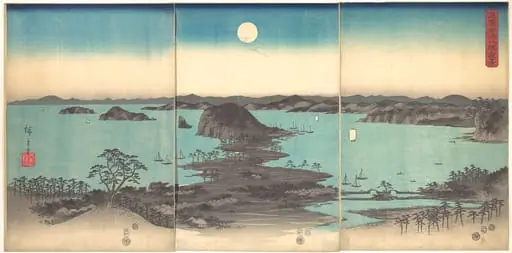 Buyō Kanazawa Hasshō Yakei|雪月花 武陽金沢八勝夜景|Full Moon at Kanazawa, Province of Musashi
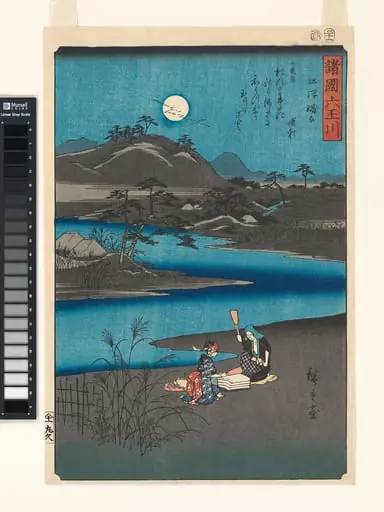 歌川広重画 『諸國六玉川』|Six Jewel Rivers from Various Provinces
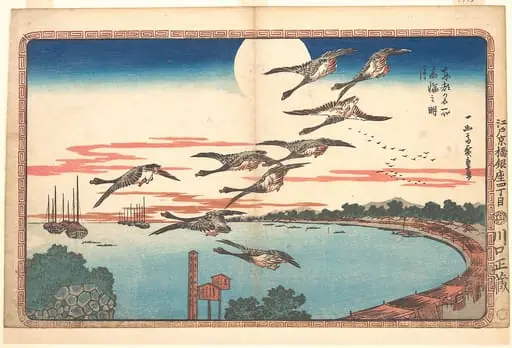 Takanawa no Meigetsu|東都名所 高輪之明月|Full Moon at Takanawa
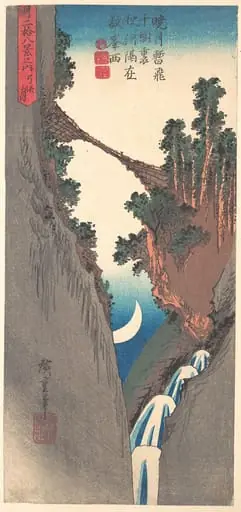 月二拾八景之内 弓張月|Bow Moon
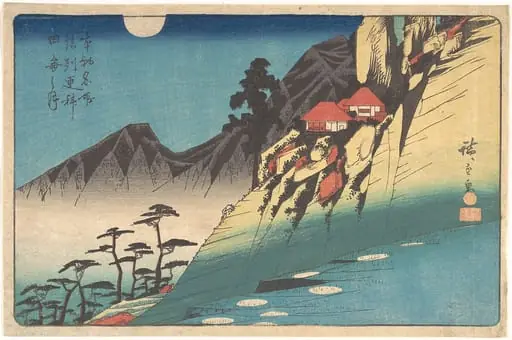 Shinshu-sarashina tagoto no tsuki|本朝名所 信州更科田毎之月|Reflections of the Moon in the Rice Fields of Sarashina in Shinshu
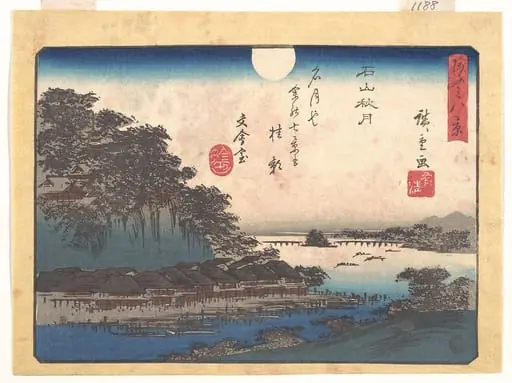 歌川広重画 「あふみ八景 石山秋月」|Autumn Moon at Ishiyama, from the series Eight Views of Ōmi (Ōmi hakkei)
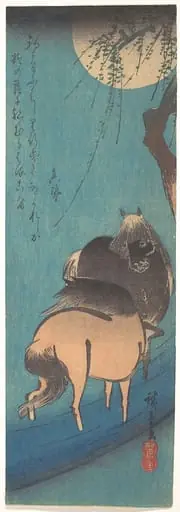 Untitled
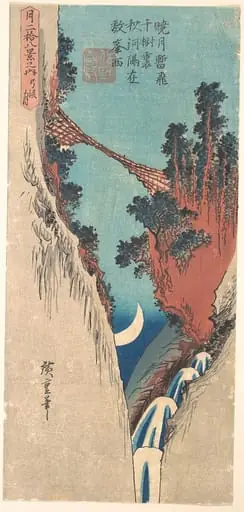 Zumihari Zuki|月二拾八景之内 弓張月|Bow Moon
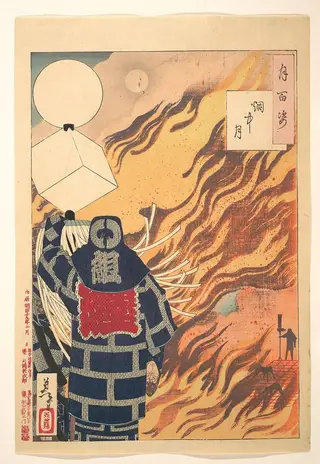 月百姿 - 煙中月|Moon in the Flame from the Series One Hundred Images of the Moon (Tsuki hyaku sugata-enchūgetsu)
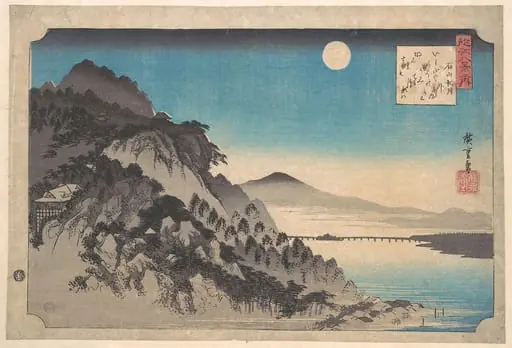 近江八景之内 石山秋月|The Autumn Moon at Ishiyama on Lake Biwa
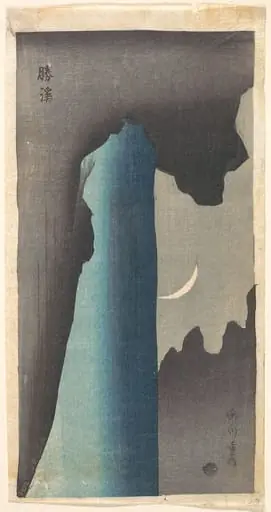 Shōkei|Celebrated Waterfall
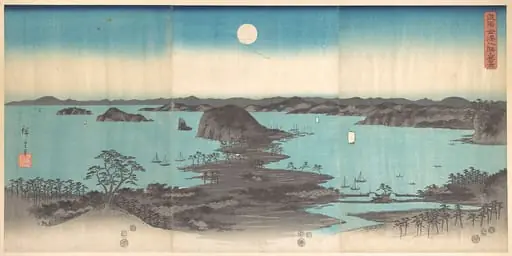 雪月花 武陽金沢八勝夜景|Panorama of the Eight Views of Kanasawa under a Full Moon
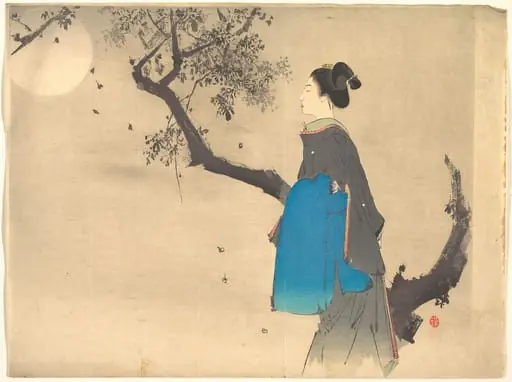 Untitled
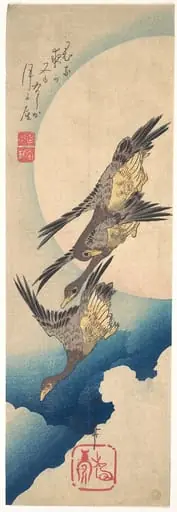 歌川広重画 月に雁|Wild Geese Flying under the Full Moon
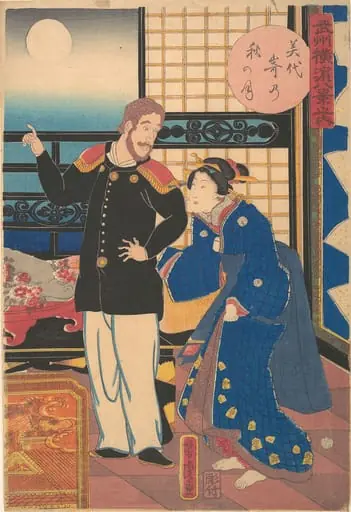 Miyozaki no shūgetsu|Autumn Moon at Miyozaki
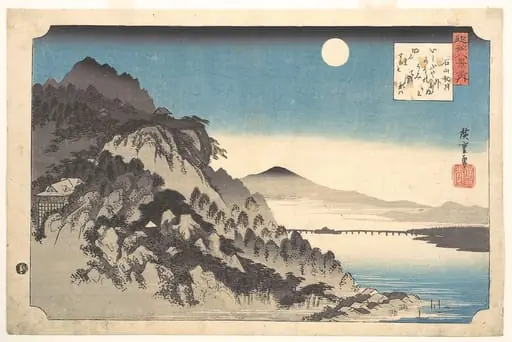 歌川広重画 近江八景之内 石山秋月|Autumn Full Moon at Ishiyama Temple (Ishiyama shūgetsu), from the series Eight Views of Ōmi Province (Ōmi hakkei)
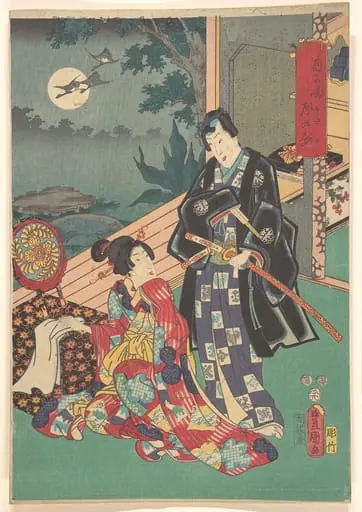 Untitled
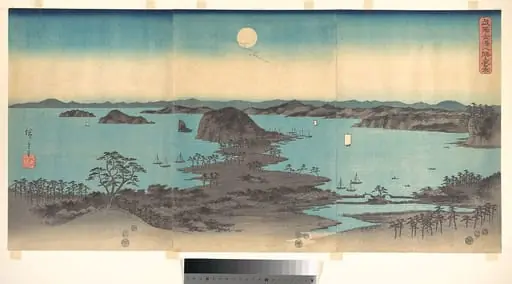 奥村 政信画 浮絵 「紋尽名古屋曽我」|Full Moon at Kanazawa, Province of Musashi
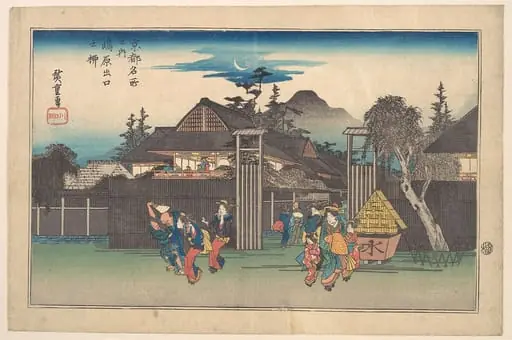 京都名所之内 嶋原出口之柳|Gate of the Shimbara
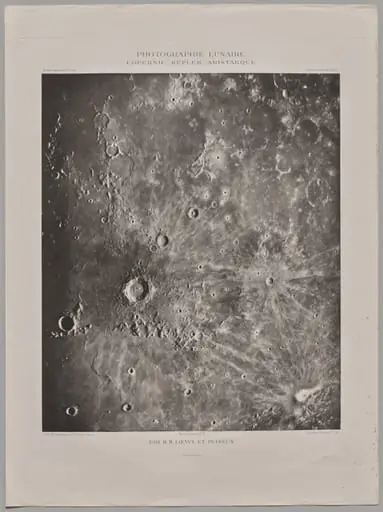 Photographie Lunaire: Copernic-Képler-Aristarique
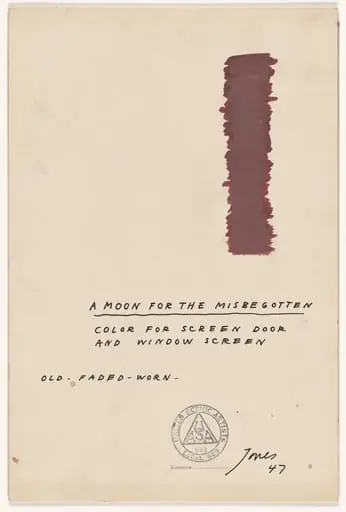 Untitled
 Untitled
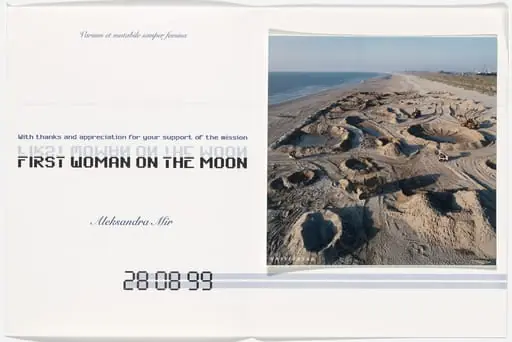 Untitled
Moon is a surname.
Artifact World Gallery holds 121 public-domain Moon works, all free to view and download.
Key Moon artists in the collection include Albert Bierstadt, Thomas Chambers and William Trost Richards.
Moon works in the collection are held by Metropolitan Museum of Art, Museum of Modern Art and National Gallery of Art.
Your cart is empty
Browse artworks →