Artwork
Fountain with Putti Riding Dolphins
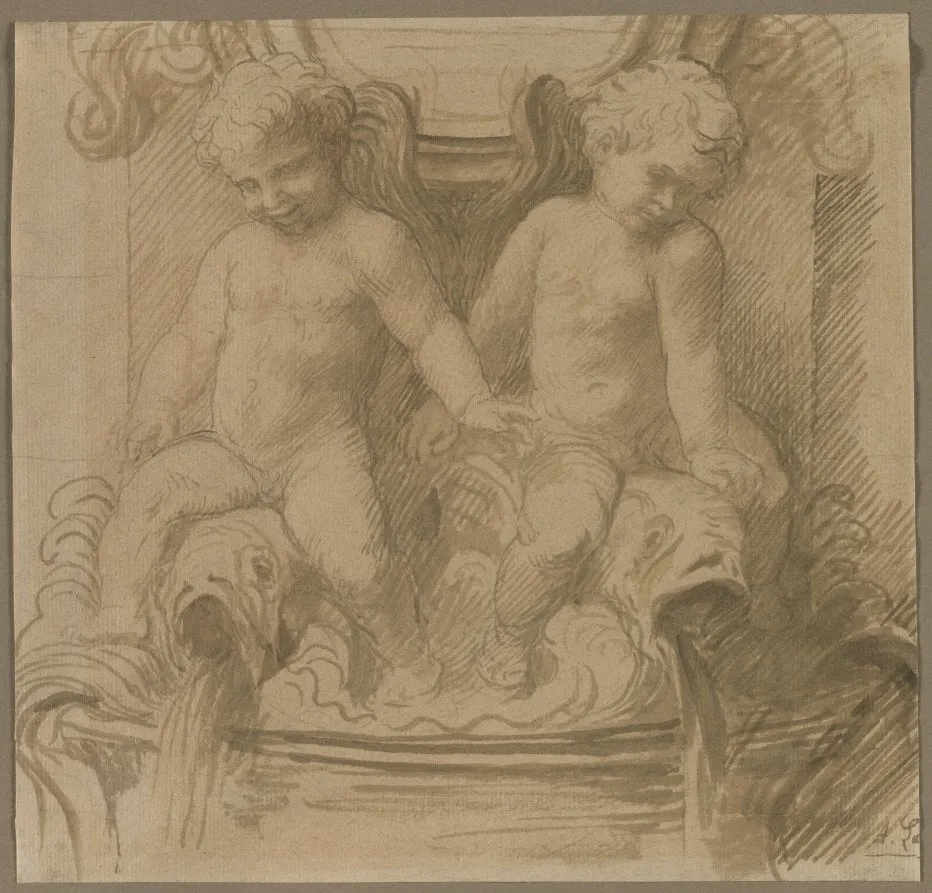
Fountain with Putti Riding Dolphins is a drawing by the Romanticist artist Alphonse Legros. It dates from 1804 and is held in the collection of the Cleveland Museum of Art.
- Accession no.
- 1974.232
- Credit line
- Gift of Mrs. Lewis B. Williams
About this work
Look up another playful fountain scene by the same hand: Alphonse Legros (French, 1837–1911).
A fountain sprays water in the foreground. Putti, cherub-like kids, ride dolphins, their bodies balanced on curved backs. Pink granite holds the scene together.
Legros loved old Italian art but lived in France. He mixed fresh technique with old themes like this crowd scene. The water looks wet. The stone looks solid.
Look up another playful fountain scene by the same hand: Alphonse Legros (French, 1837–1911).
Overview
This drawing, attributed to Alphonse Legros and dated around 1804, depicts a mythological fountain scene with putti riding dolphins. Executed in a detailed linear style, it reflects Legros’s engagement with classical themes and Italian Renaissance precedents. The work is part of the collection at The Cleveland Museum of Art, where it is preserved as an example of 19th-century French draftsmanship infused with historical inspiration.
Subject & Meaning
The composition centers on playful putti balancing atop dolphins, evoking classical aquatic mythology. The fountain’s spray suggests life and movement, while the pink granite base grounds the scene in tangible materiality. These elements together reference Renaissance and Baroque fountain iconography, where water, children, and sea creatures symbolized nature’s harmony and divine abundance, reinterpreted through Legros’s personal lens.
Technique & Style
Legros employed precise pen and ink lines to differentiate textures: the water is rendered with fluid, broken strokes suggesting motion, while the granite appears dense and solid through tightly controlled hatching. The putti and dolphins are delicately modeled, their forms animated by subtle shifts in line weight. His approach blends academic precision with a lively, almost sketch-like energy, revealing his study of Italian masters and his own inventive draftsmanship.
History & Provenance
Though dated approximately 1804, this drawing likely stems from Legros’s early years, before his move to England in 1863. It reflects his formative engagement with classical subjects during his training in France. The work entered The Cleveland Museum of Art’s collection through documented acquisition, preserving its connection to Legros’s lesser-known graphic output prior to his later prominence as a teacher and etcher.
Context
Legros, active in France during a period of renewed interest in antiquity, drew inspiration from Italian Renaissance and Mannerist fountains, particularly those in Rome and Florence. His work stands apart from contemporaneous academic trends by favoring intimate, dynamic compositions over grand historical narratives. This drawing exemplifies how 19th-century artists revisited classical motifs with personal, observational sensitivity.
Legacy
Though not among Legros’s most widely exhibited works, this drawing illustrates his consistent fascination with classical themes and his mastery of linear expression. It contributes to understanding his development as a draftsman before his influential teaching career in England. The piece remains a quiet testament to the enduring appeal of mythological water imagery in 19th-century European art.
Artist & collection

Artist
Alphonse Legros (French pronunciation:; 8 May 1837 – 8 December 1911) was a French, later British, painter, etcher, sculptor, and medallist.


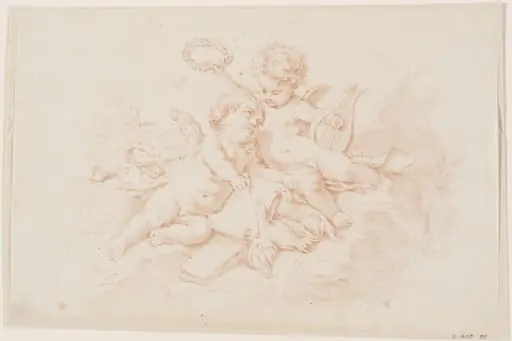 Poetry; two putti in a cloud
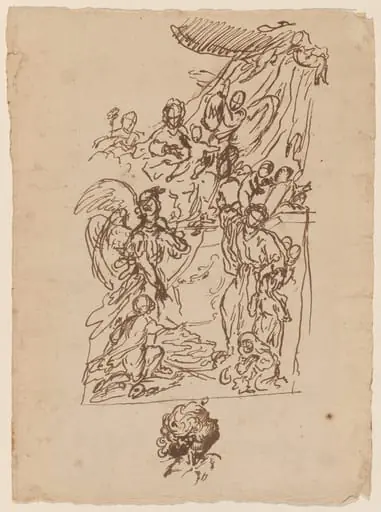 The Madonna and Child Seated on a Dais with Tobias and the Angel and a Saint Presenting Two Children
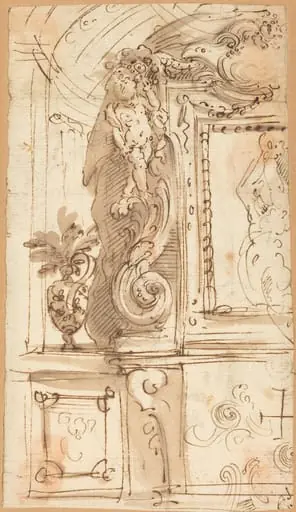 An Elaborately Sculpted Frame
![Two Standing Putti [recto], by Italian 17th Century](https://artifactworldgallery.com/img/italian-17th-century--two-standing-putti-recto--30f23a10b90bc89e-w320.webp) Two Standing Putti [recto]
Two Standing Putti [recto]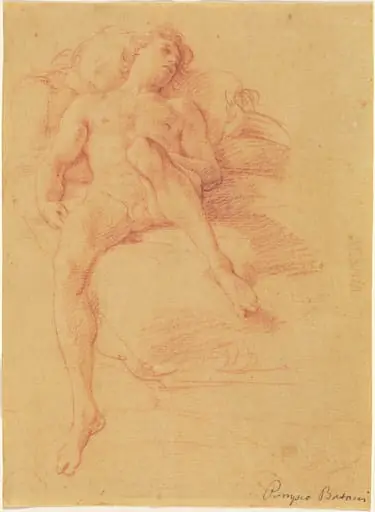 Male Nude Reclining on a Bed
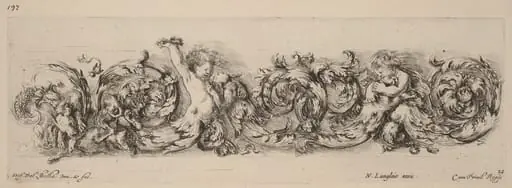 Ornamental Frieze with Children and Dogs
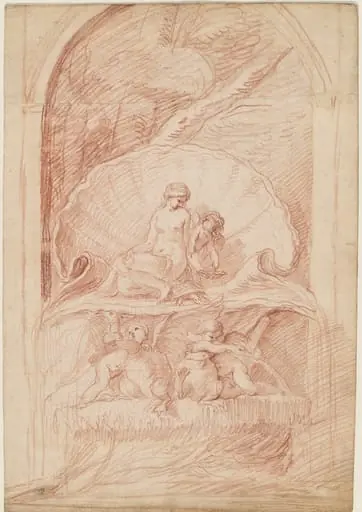 Rocaille Fountain with Venus, Amorini, and Swans
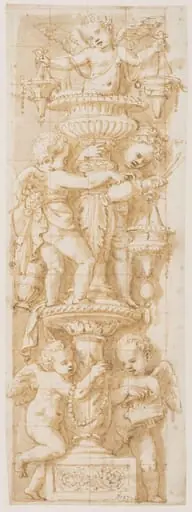 Design for the decoration of a pilaster: infant angels playing round the stem of a candelabrum
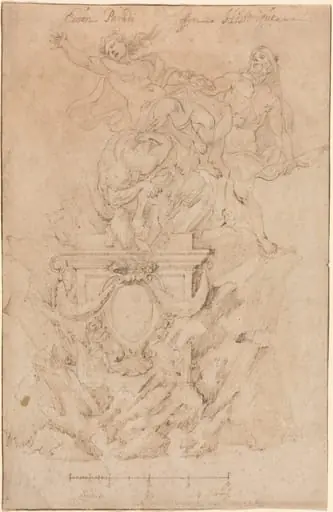 The Rescue of Deianeira
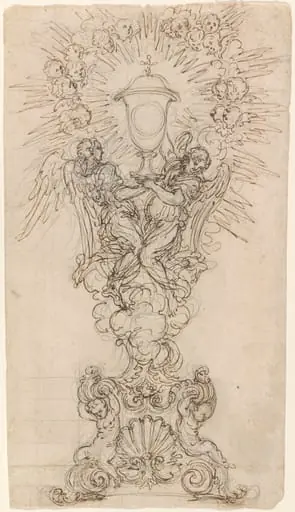 A Monstrance with Two Angels Supporting a Chalice
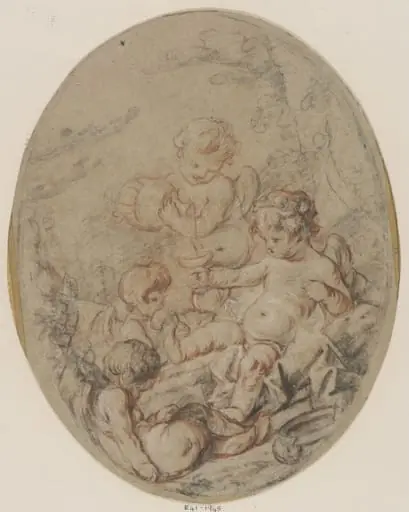 Untitled
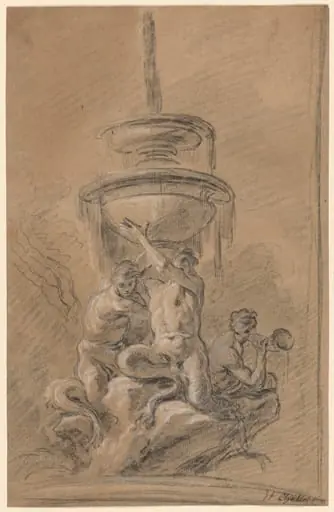
- A Fountain with Three Tritons