Movement
Italian Renaissance
![Ginevra de' Benci [obverse] — Leonardo da Vinci](https://artifactworldgallery.com/img/leonardo-da-vinci--ginevra-de-benci-obverse--afb6ec3a3e65f392-w640.webp)
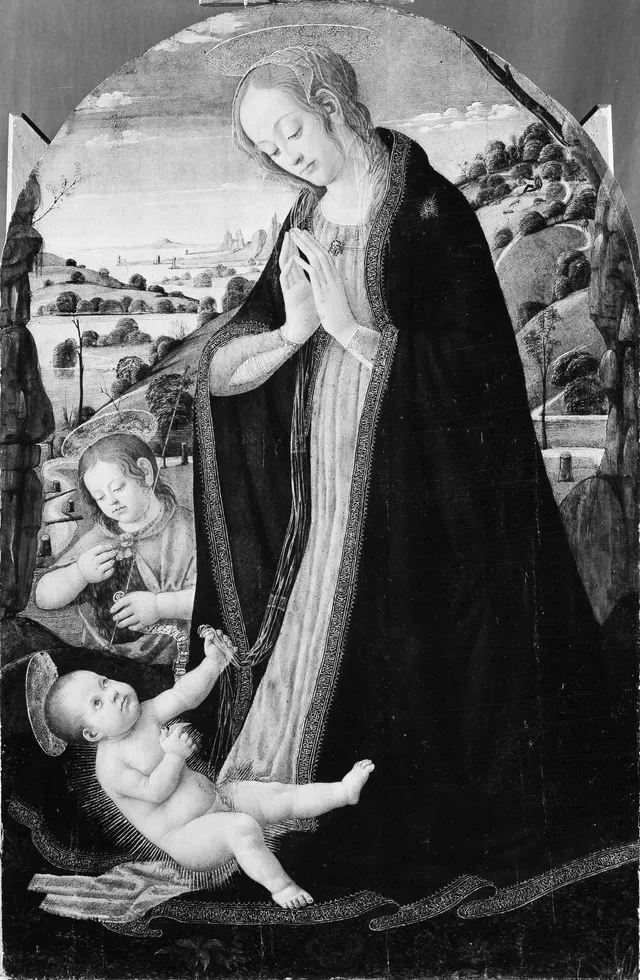
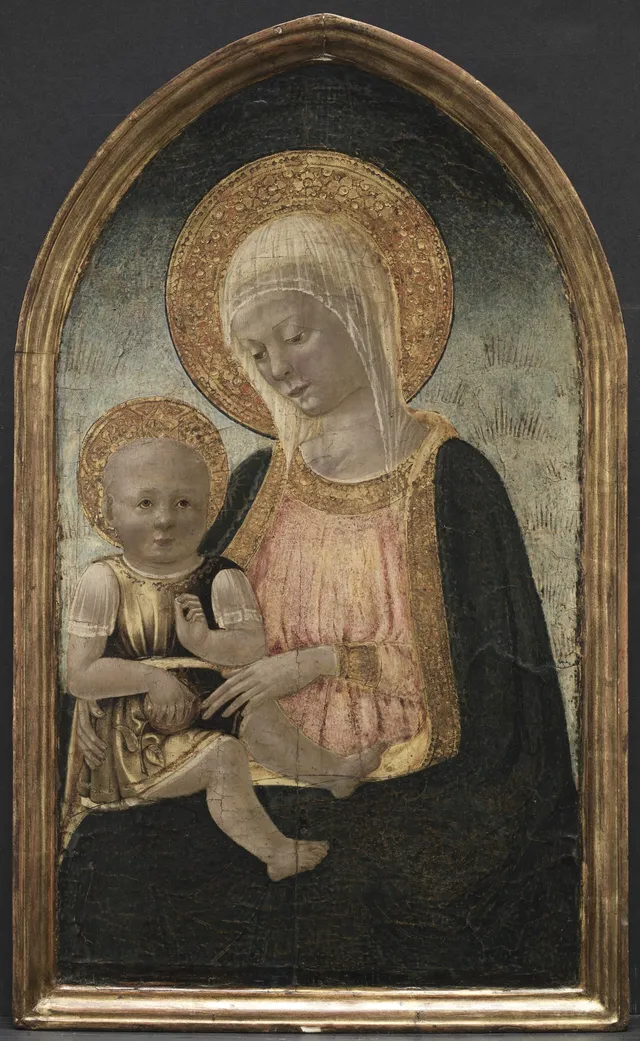
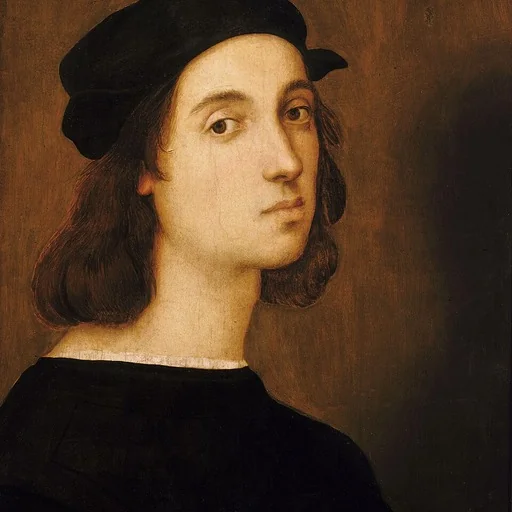
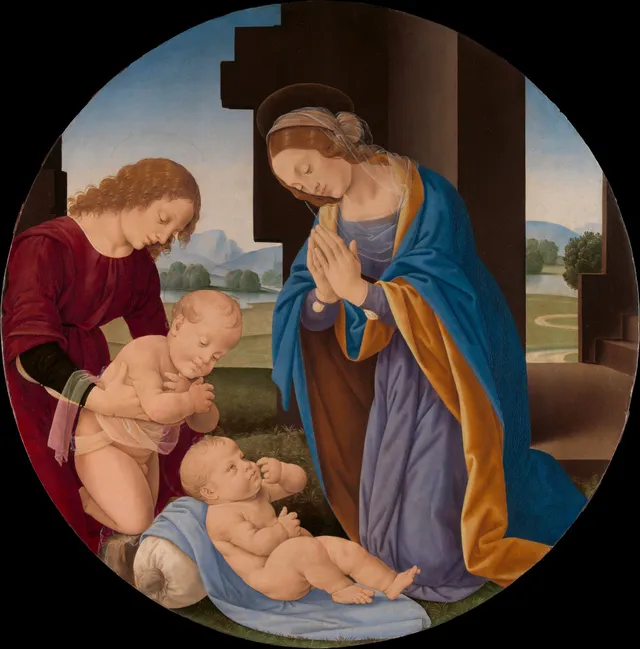
Italian Renaissance is an art movement of the 1350–1700 period. The gallery holds 19 works in this movement, including works by Raphael, Lorenzo di Credi and Andrea del Castagno. Browse Italian Renaissance paintings, portraits, pictures and artworks from the world's public-domain museum collections.
The Italian Renaissance was a cultural and artistic movement that unfolded between the 14th and 17th centuries, taking root in the prosperous, banking-rich city of Florence before spreading to Venice, Milan, Rome, and beyond. Its intellectual engine was humanism, the scholarly revival championed in the 14th century by Petrarch, Boccaccio, and Coluccio Salutati, which placed renewed value on human achievement and on the rediscovered texts and art of classical Greece and Rome. Fueled by wealthy patrons such as the Medici and the Church, artists began to treat the visible world, human anatomy, and antiquity as subjects worthy of disciplined, naturalistic study.
This new ambition produced a distinct visual language. Around 1420 the architect Filippo Brunelleschi demonstrated linear perspective, a system later codified by Leon Battista Alberti in his treatise On Painting (1435), allowing painters to construct convincing three-dimensional space on a flat surface. Masaccio was the first to apply it monumentally in his fresco the Holy Trinity (c. 1427) in Santa Maria Novella. Renaissance artists prized balanced composition, accurate proportion, modeling of figures through light and shadow, and emotional gravity, while Leonardo da Vinci added sfumato, the imperceptible blending of tone into shadow.
The Early Renaissance was shaped by Masaccio, the sculptor Donatello, Fra Angelico, and Andrea Mantegna; later figures such as Filippino Lippi and Lorenzo di Credi carried the Florentine tradition forward. The movement culminated in the High Renaissance (c. 1490–1527), dominated by Leonardo, Michelangelo, and Raphael. Leonardo's Last Supper and Mona Lisa, Michelangelo's Sistine Chapel ceiling with its Creation of Adam, and Raphael's School of Athens remain its defining achievements. Our own collection includes Leonardo's Ginevra de' Benci (c. 1474–78), the only painting by his hand in the Americas.
The Renaissance permanently elevated the status of the artist from anonymous craftsman to celebrated individual genius. Its naturalism and classicism radiated across the Alps to shape the Northern Renaissance, while its later, more restless phase gave rise to Mannerism and, eventually, the dramatic energy of the Baroque. The movement's marriage of empirical observation, classical learning, and technical innovation established the foundations of Western art for centuries to come.
![Ginevra de' Benci [obverse]](https://artifactworldgallery.com/img/ginevra-de-benci-obverse--afb6ec3a3e65f392-w640.webp)
Key artists


Works
![Ginevra de' Benci [obverse], by Leonardo da Vinci, 1476](https://artifactworldgallery.com/img/leonardo-da-vinci--ginevra-de-benci-obverse--afb6ec3a3e65f392-w320.webp) Ginevra de' Benci [obverse]
Ginevra de' Benci [obverse]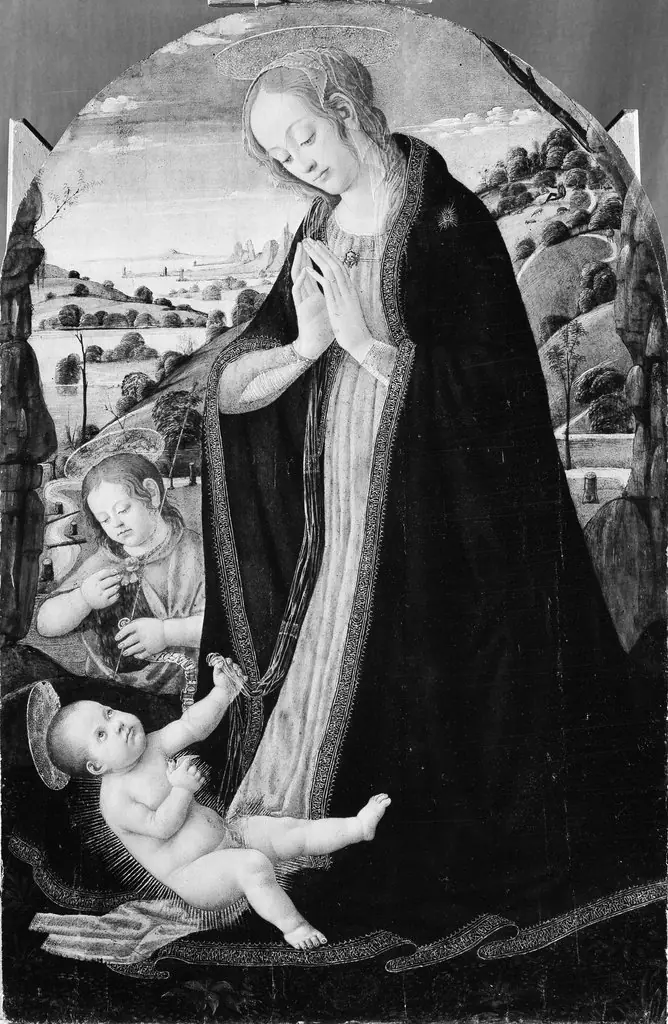 The Nativity
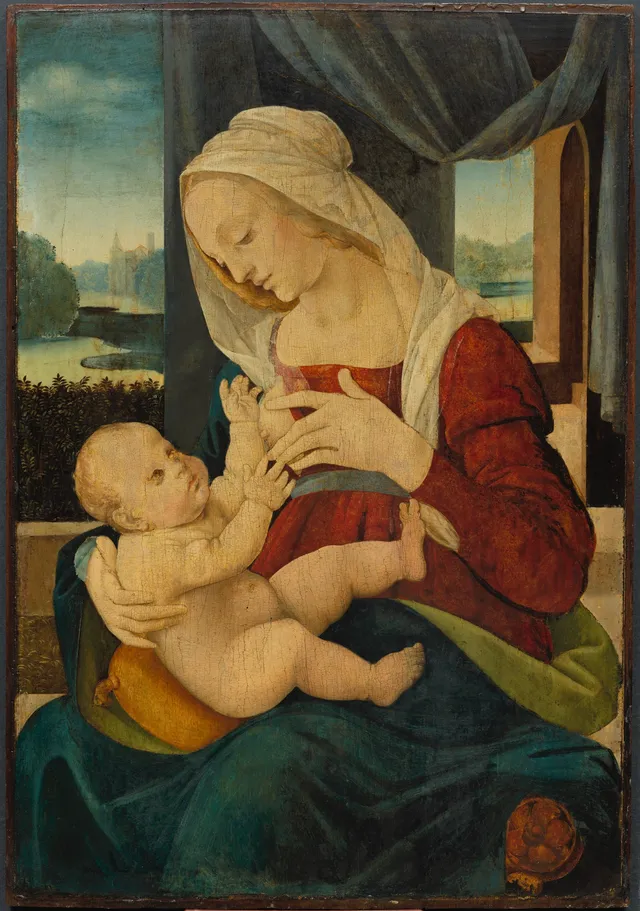
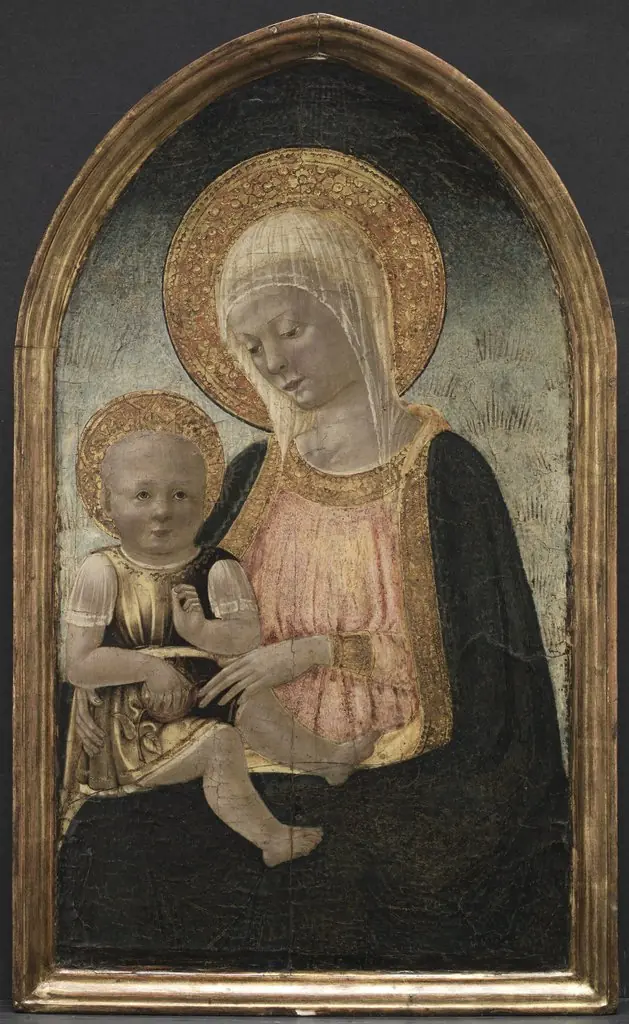 Virgin and Child
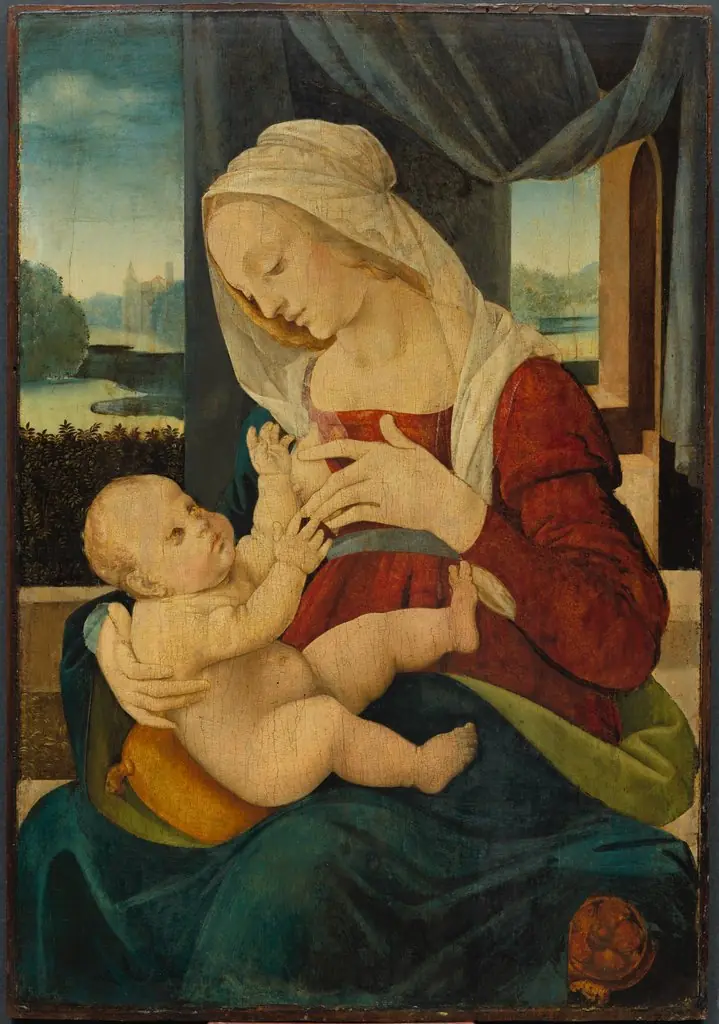 Virgin and Child
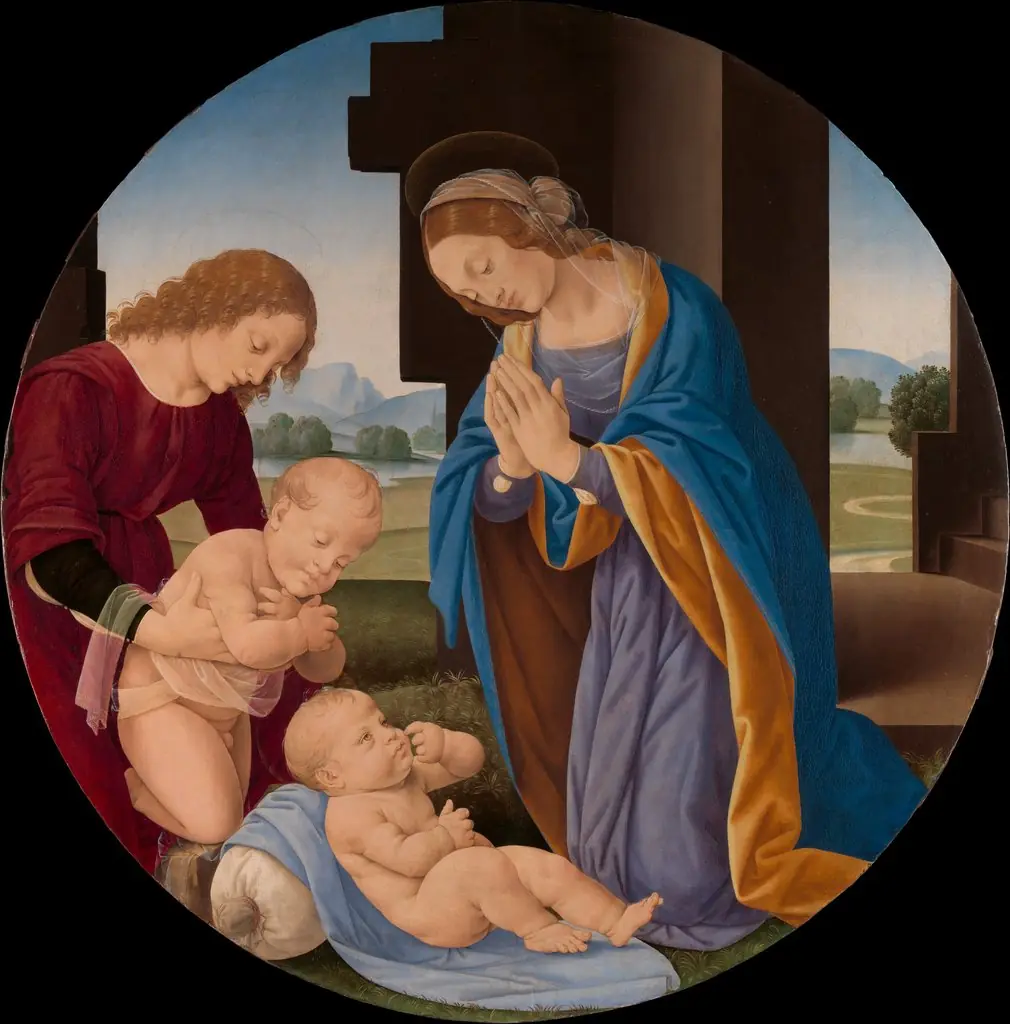 Madonna Adoring the Child with the Infant Saint John the Baptist and an Angel
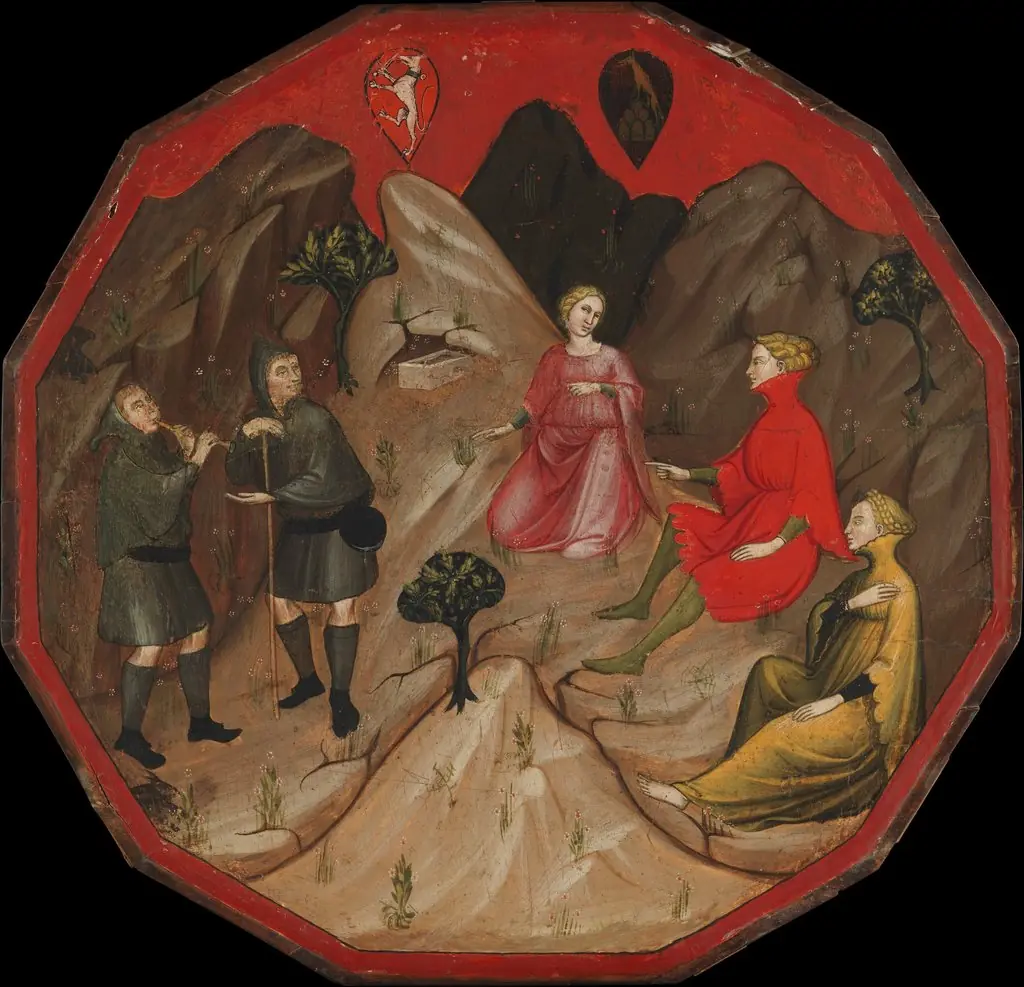 A Contest between the Shepherds Alcesto and Acaten
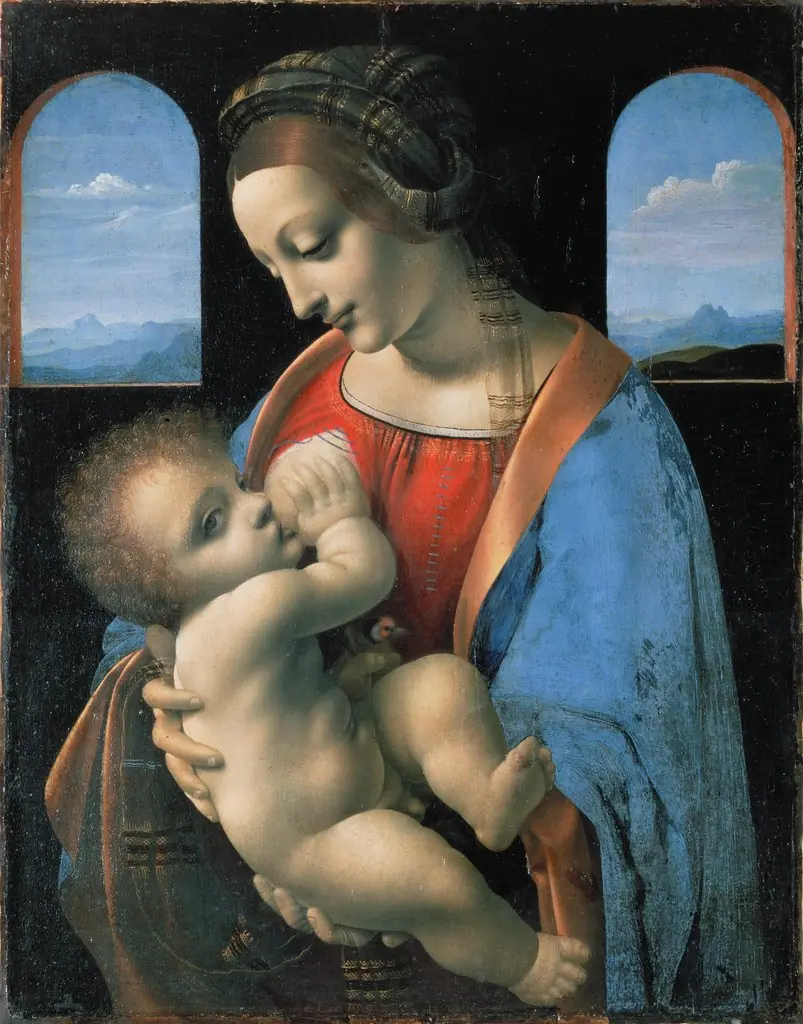 Madonna Litta
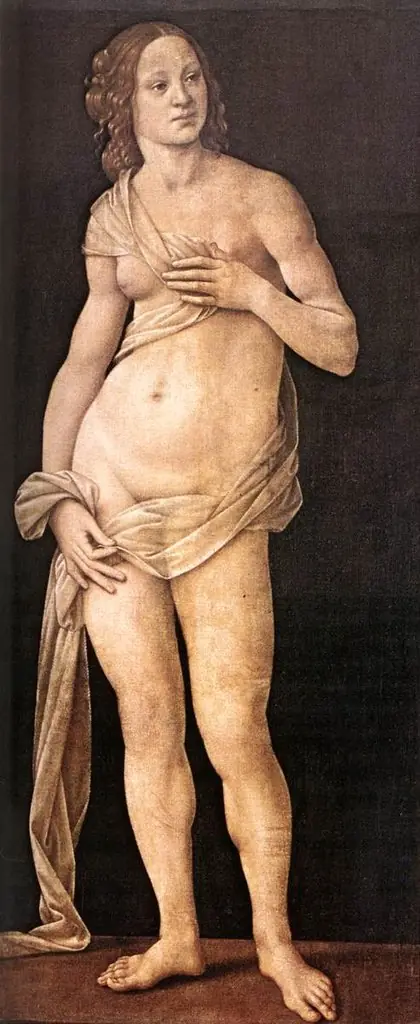 Venus
Venus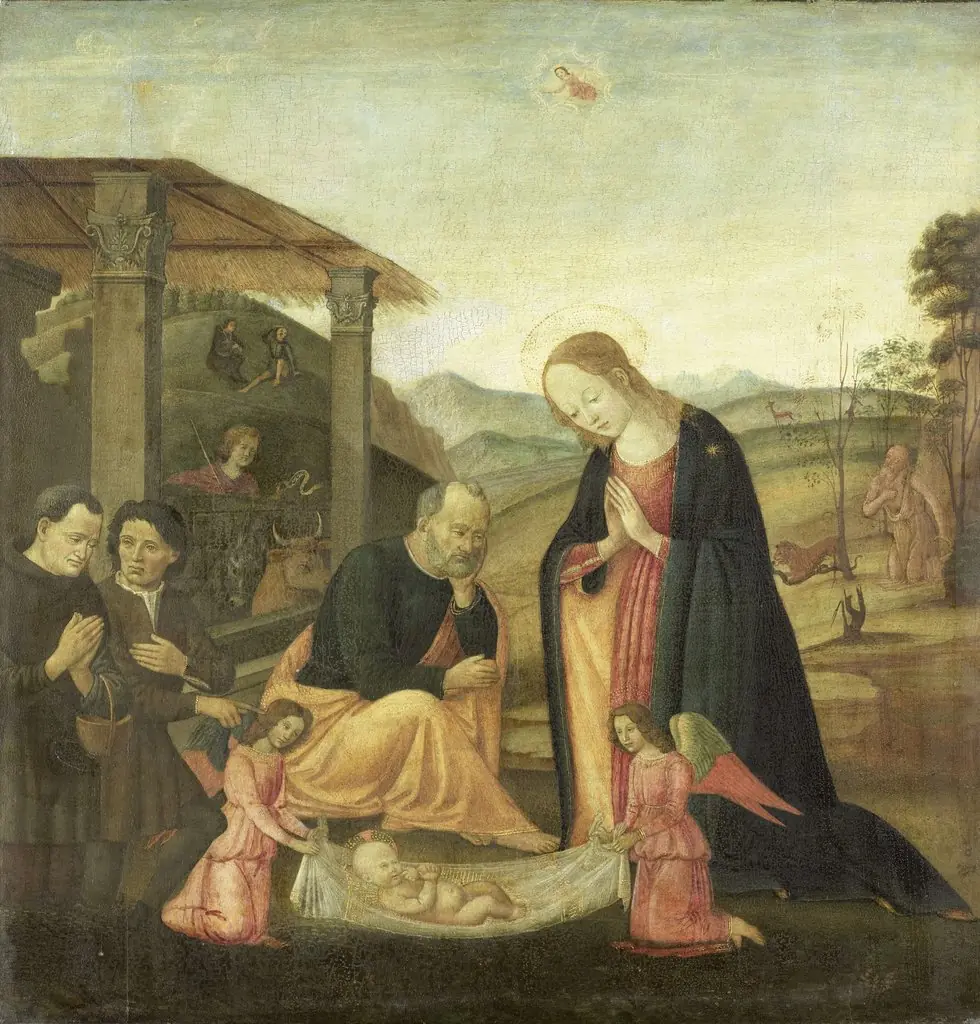 Adoration of the Christ Child
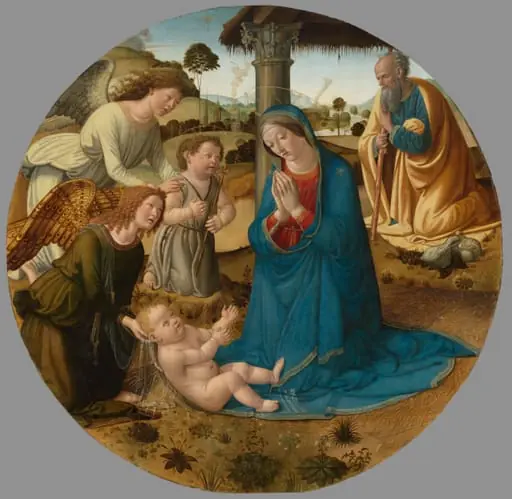 De aanbidding van het Christuskind
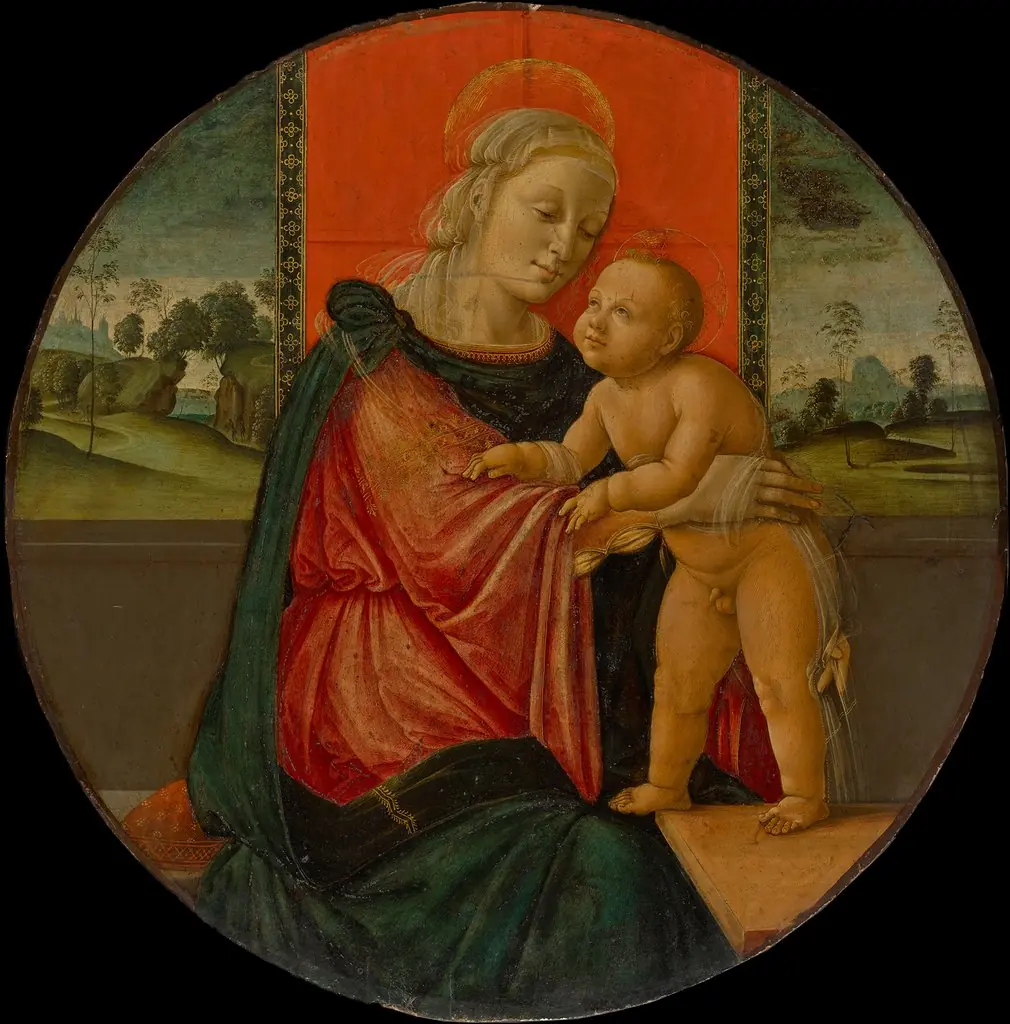 The Virgin and Child
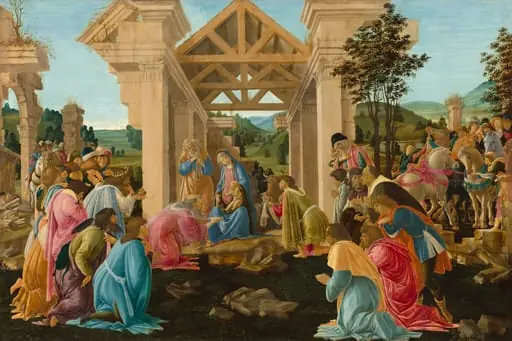
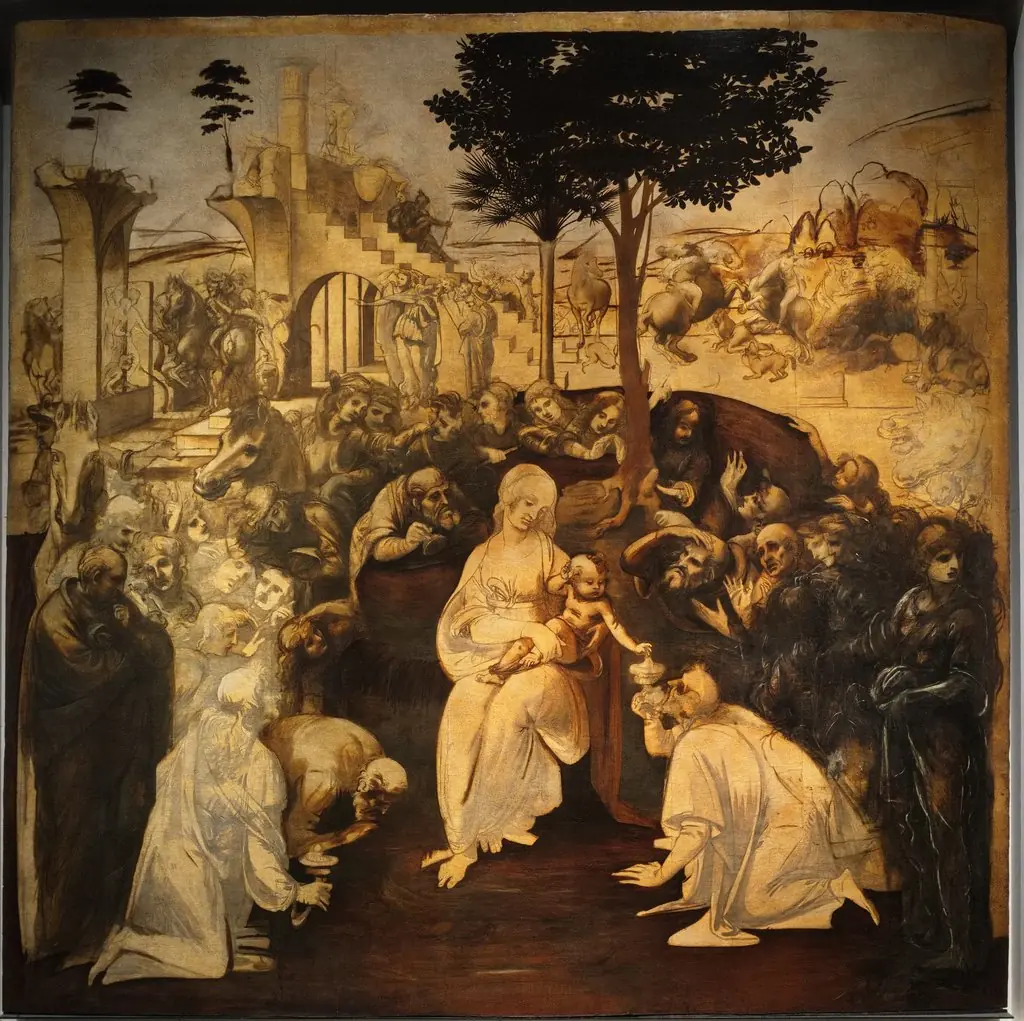 Adoration of the Magi
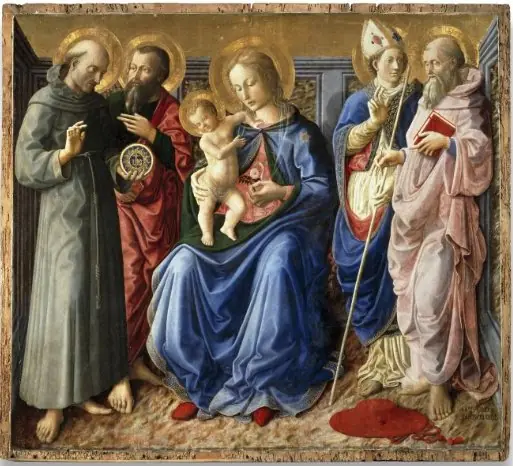 Virgin and Child Enthroned with Saints
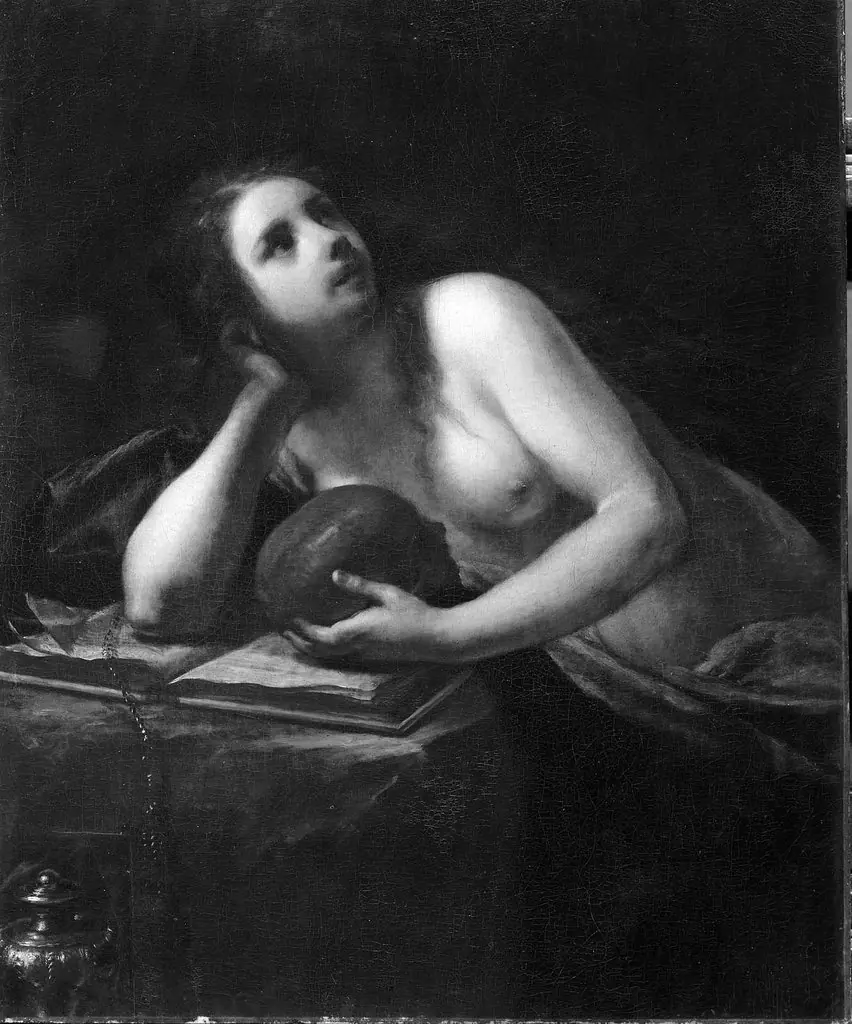 Saint Mary Magdalen Penitent
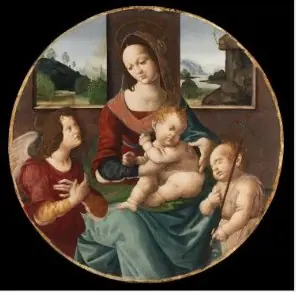 The Virgin and Child with Saint John the Baptist and an Angel
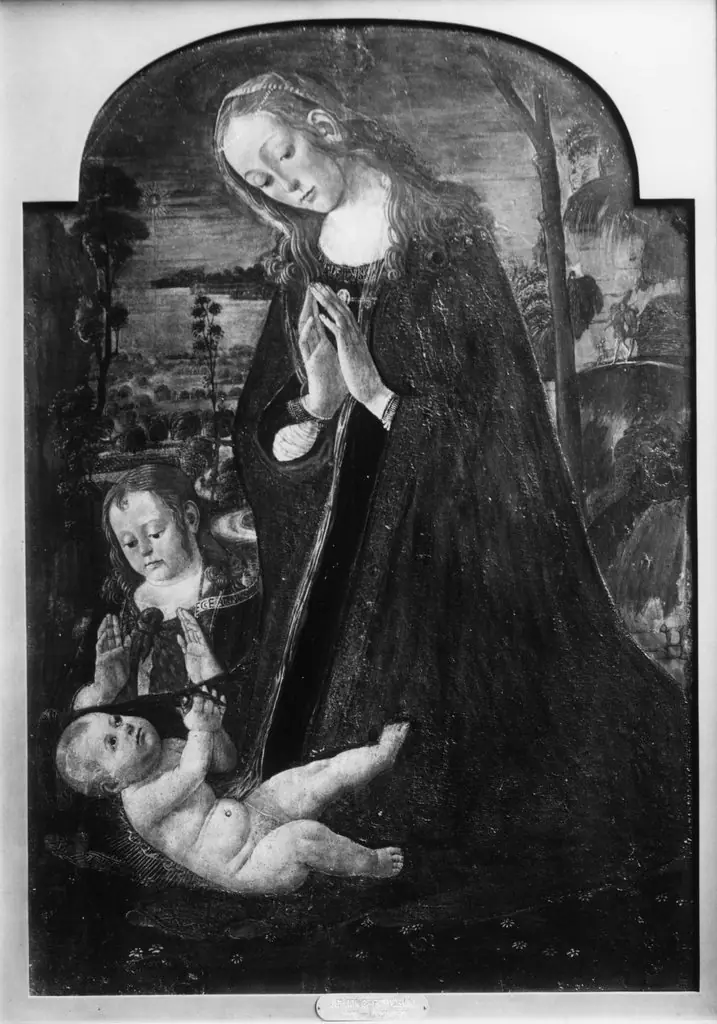 Madonna Adoring the Child
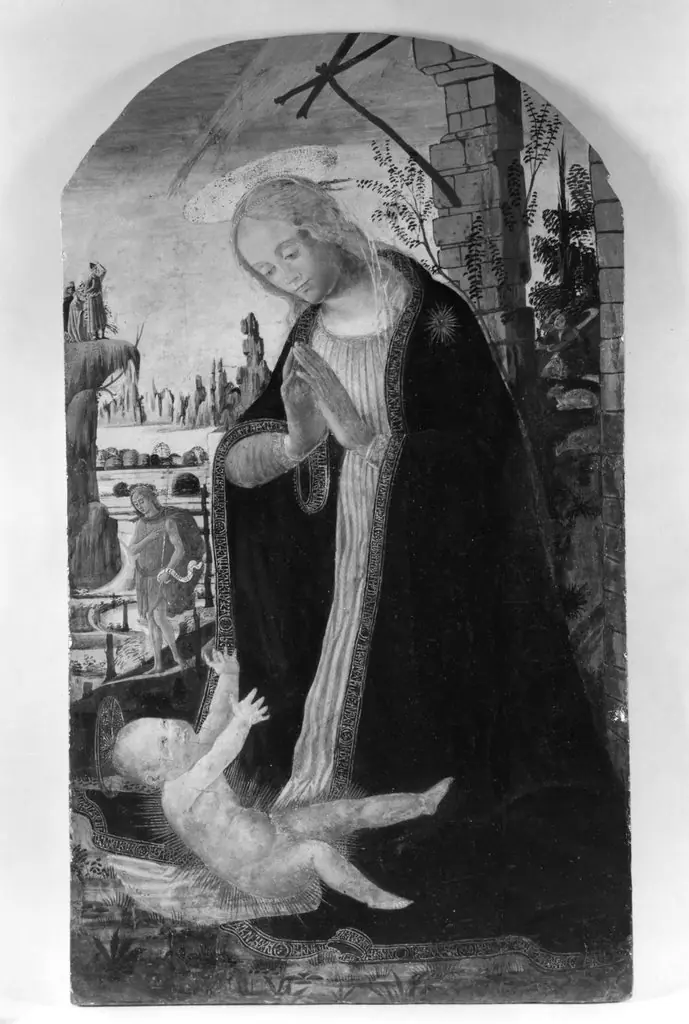 Madonna Adoring The Child
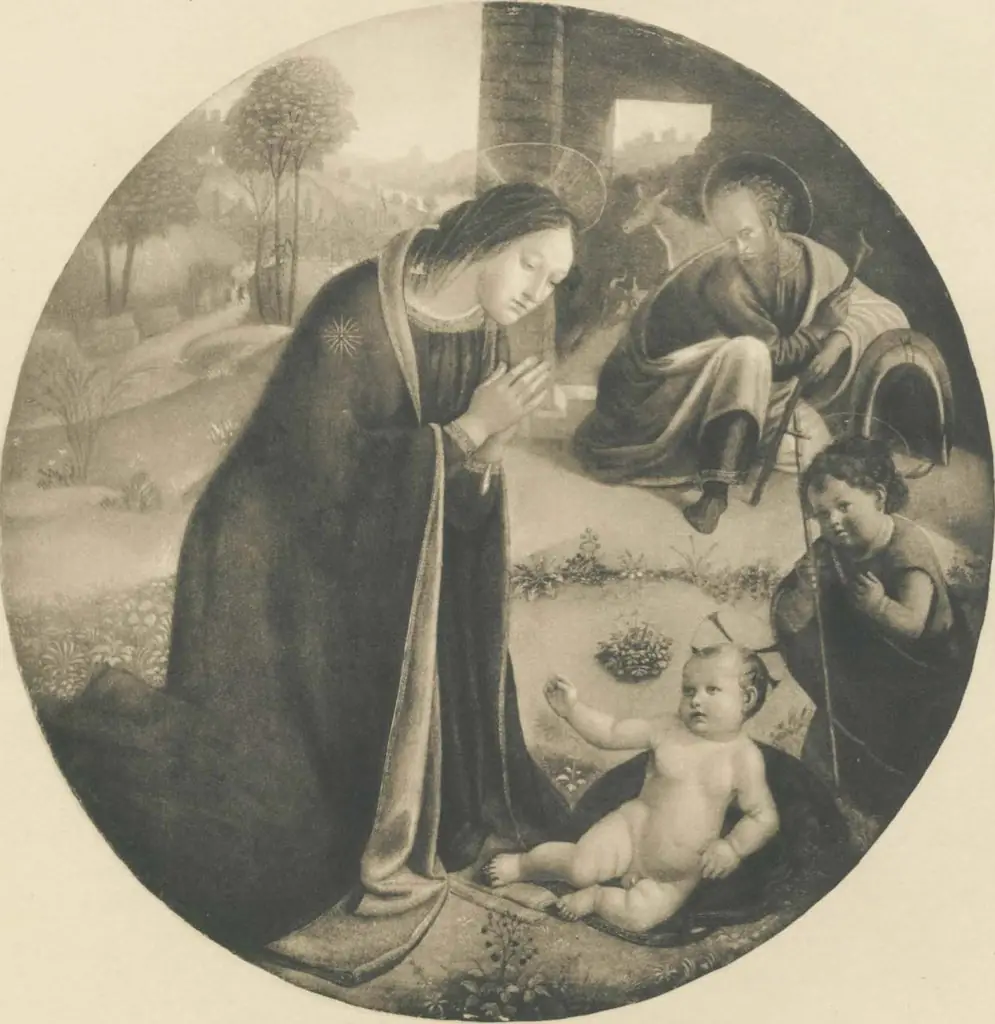 Madonna in Adoration
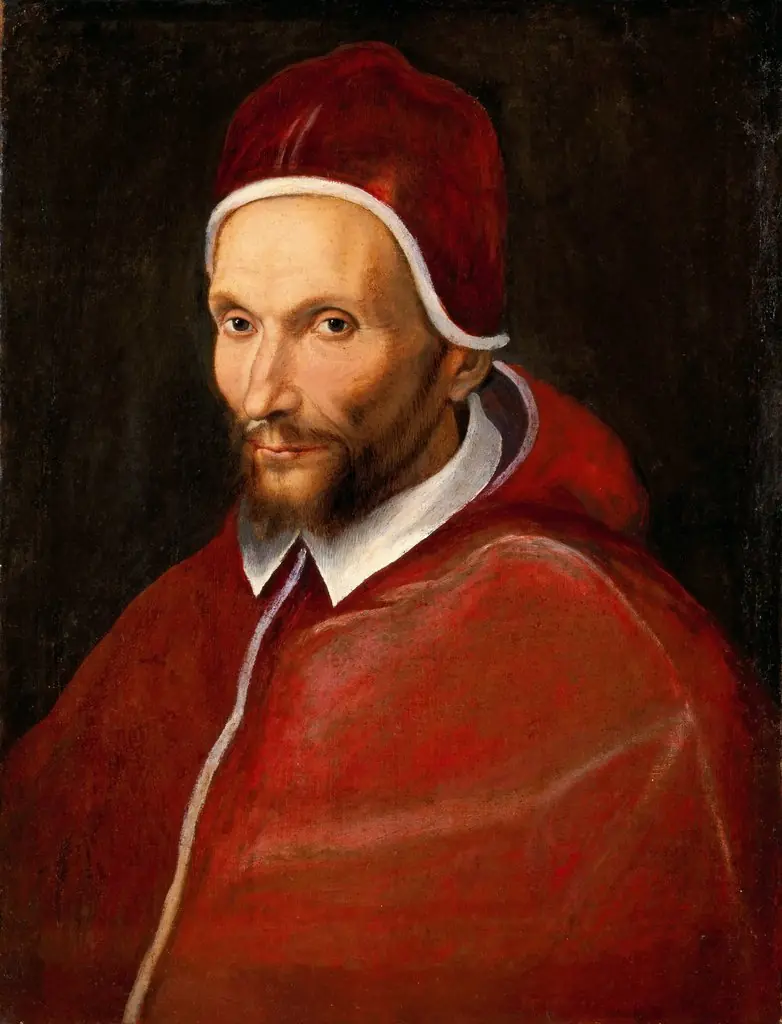 Portrait of Urban VII
Learn this movement
Frequently asked questions
What is Italian Renaissance?
Italian Renaissance is an art movement. The art produced in and around Florence during the Italian Renaissance — arguably the hinge of all Western art.
How many Italian Renaissance works does Artifact World Gallery have?
Artifact World Gallery holds 19 public-domain Italian Renaissance works, all free to view and download.
Who are the key Italian Renaissance artists?
Key Italian Renaissance artists in the collection include Raphael, Lorenzo di Credi and Andrea del Castagno.
When did Italian Renaissance take place?
Italian Renaissance dates from 1350–1700.
Where can I see Italian Renaissance works?
Italian Renaissance works in the collection are held by Metropolitan Museum of Art, Cleveland Museum of Art and Uffizi Gallery.