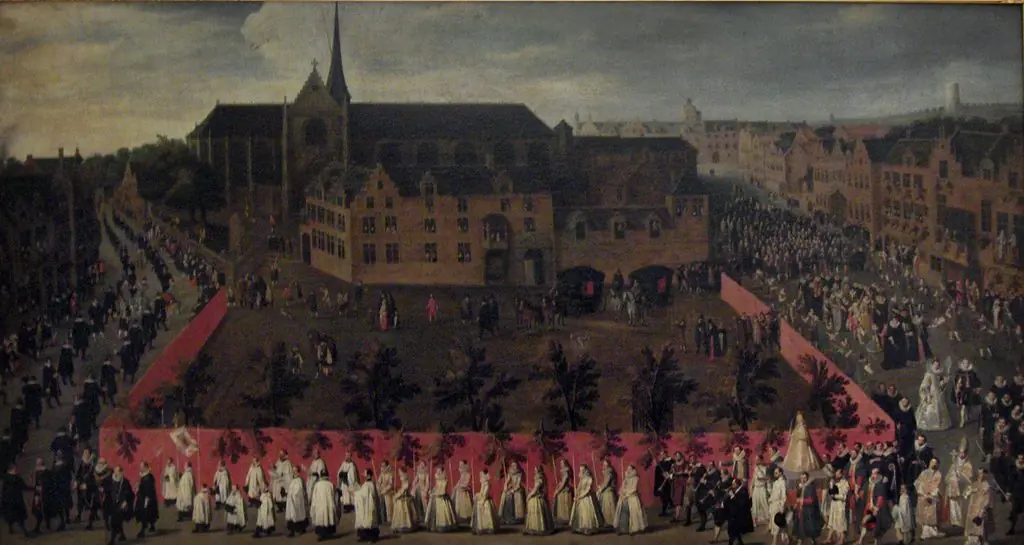
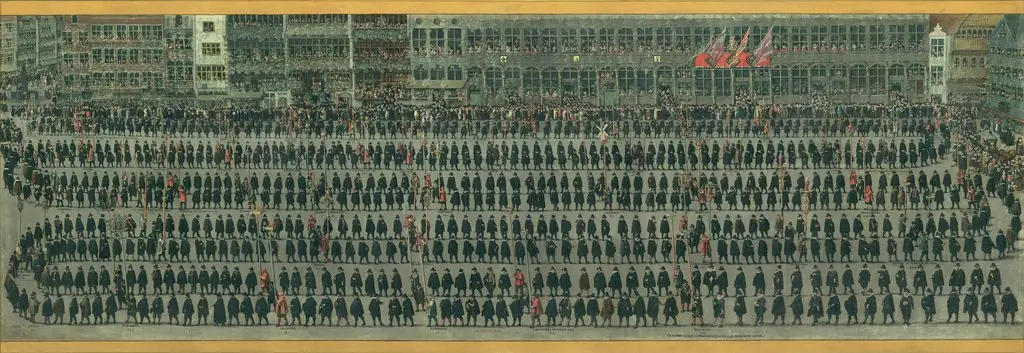
Artwork
The Ommegang in Brussels on 31 May 1615: The Triumph of Archduchess Isabella
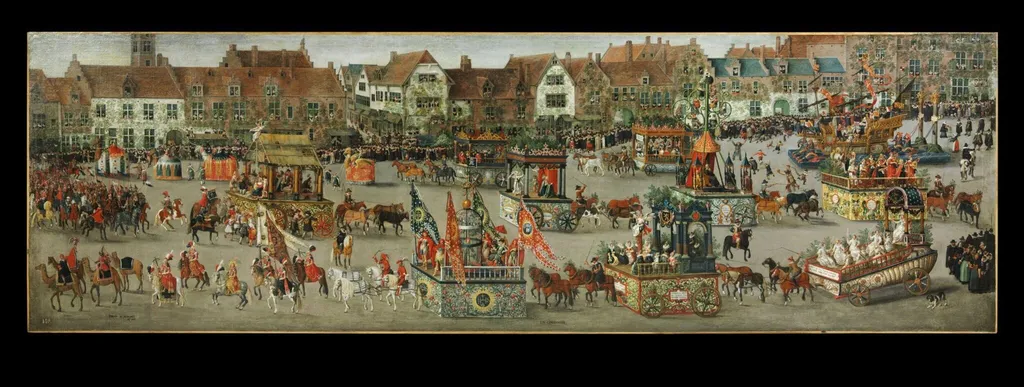
The Ommegang in Brussels on 31 May 1615: The Triumph of Archduchess Isabella is a paint painting by the Baroque artist Denys van Alsloot. It dates from 1616 and is held in the collection of the Victoria and Albert Museum.
About this work
It’s the Ommegang festival in Brussels, a big parade with nobles, soldiers, and giant floats.
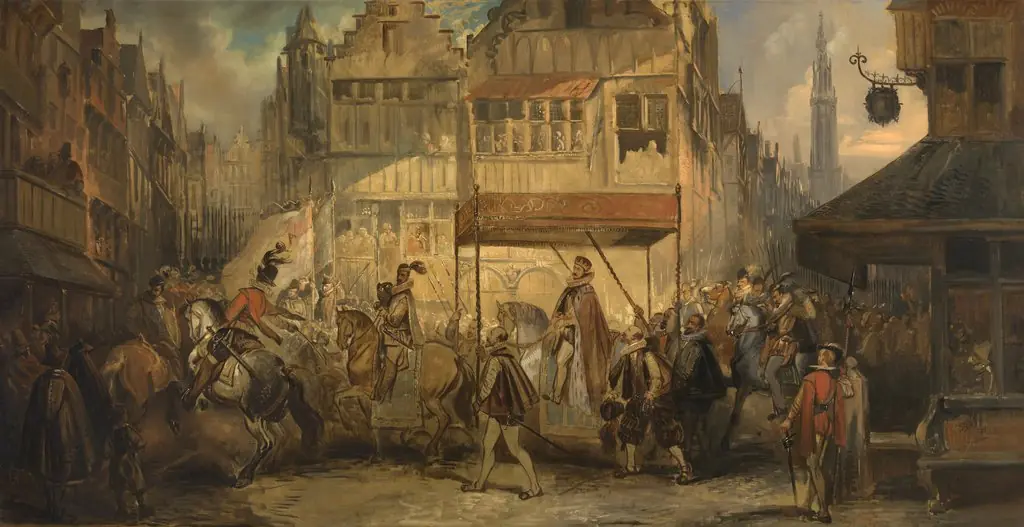
You’re looking at a huge crowd in a painting from 1616. It’s the Ommegang festival in Brussels, a big parade with nobles, soldiers, and giant floats. Archduchess Isabella sits on a raised platform in the middle, watching the spectacle.
This isn’t just a party scene. It’s a real event from 1615, painted the next year to show off the city’s wealth and power. Notice how the artist splits the crowd into neat rows, like a stage play.
If you like big public crowds, check out Alsloot, Denys van.
Overview
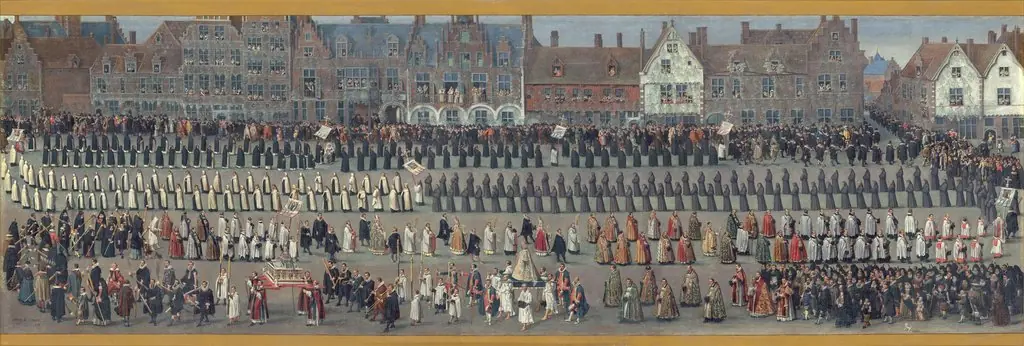
Painted in 1616 by Denys van Alsloot, this large-scale work documents the Ommegang procession in Brussels on 31 May 1615. Commissioned by Archduke Albert and Archduchess Isabella, it forms part of a trio of paintings recording the event. The scene captures the ceremonial crowning of Isabella as Queen of the Ommegang, a civic ritual tied to the Crossbowmen’s Guild. Its detailed depiction of floats, participants, and architecture serves as both record and political statement.
Subject & Meaning
The painting centers on Archduchess Isabella, honored after successfully shooting a jay from the spire of Notre-Dame-du-Sablon, a symbolic act affirming her role as patron of the Crossbowmen’s Guild. The ten elaborate pageant wagons, arranged in orderly rows, represent the guilds and civic institutions of Brussels. The composition elevates Isabella as both observer and focal point, reinforcing Habsburg authority through public spectacle and ritual.
Technique & Style
Alsloot employed a panoramic, elevated viewpoint to accommodate the vast crowd and complex procession. Figures are arranged in tiered, stage-like rows, enhancing clarity and order. Detailed rendering of costumes, architecture, and landscape reflects the Brussels school’s emphasis on topographical accuracy. The palette is restrained, favoring naturalistic tones to support documentary intent over dramatic flourish.
History & Provenance
Commissioned directly by Archduke Albert and Archduchess Isabella, the painting was created shortly after the 1615 event, likely to commemorate their public favor and the city’s loyalty. It was produced alongside two companion works, all intended for display in their residence. Alsloot, a lifelong Brussels resident, was a trusted court artist whose work documented key civic and dynastic events under Habsburg rule.
Context
The Ommegang was an annual procession rooted in medieval tradition, honoring the Virgin Mary and the Crossbowmen’s Guild, which held prestige in Brussels civic life. By 1615, it had become a tool for Habsburg propaganda, blending religious devotion with political display. The event showcased the city’s wealth and social hierarchy, with nobility, guilds, and military units participating in elaborate, costumed rituals.
Legacy
Alsloot’s painting remains a key visual source for understanding early 17th-century Brussels civic culture. Its meticulous detail offers insight into costume, architecture, and public ritual under Habsburg governance. Though not widely exhibited today, it stands as a representative example of the Brussels landscape tradition, where topography and ceremony merged in service of documented history.
Artist & collection

Artist
Denis van Alsloot or Denijs van Alsloot was a Flemish landscape and genre painter, draughtsman, and tapestry designer.

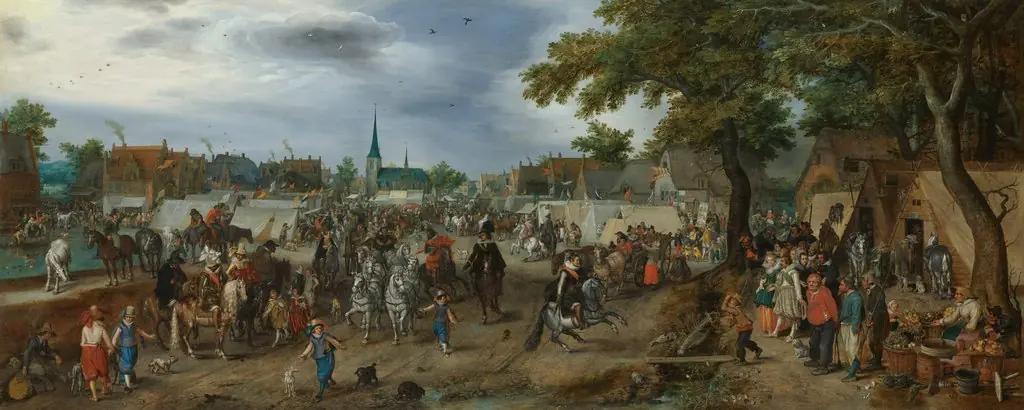 Prince Maurice and Frederick Henry at the Valkenburg Horse Fair
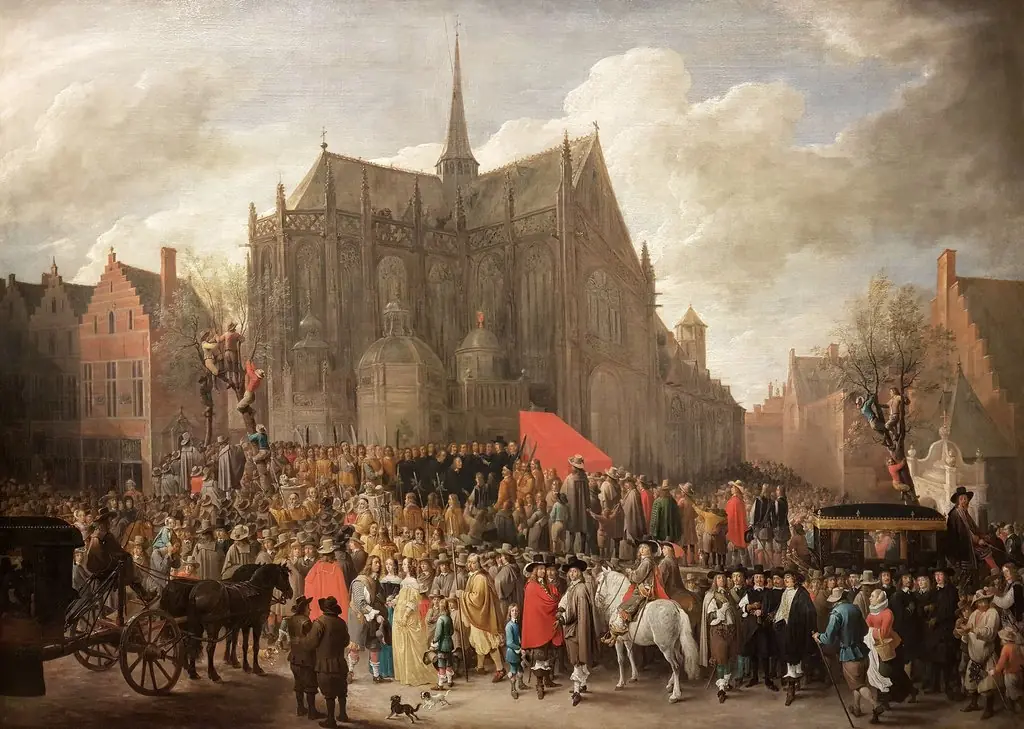 Bird Shoot in Brussels
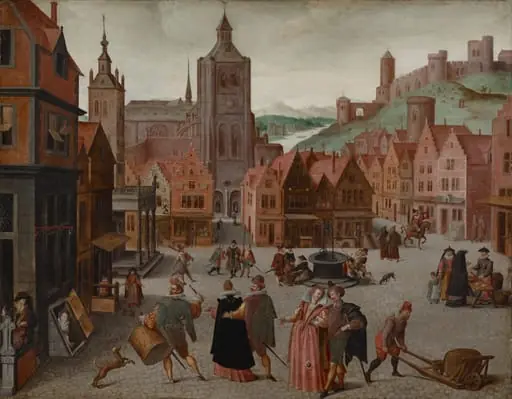 The Marketplace in Bergen op Zoom
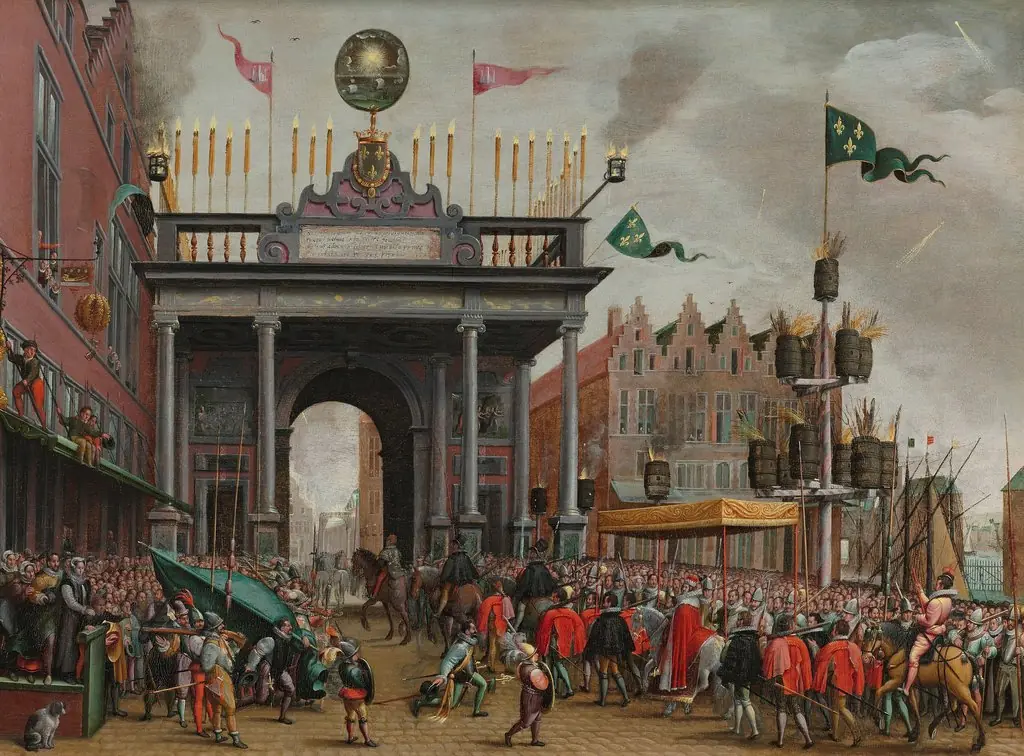 Joyous Entry of François, Duke of Anjou into Antwerp, 19 February 1582, with a Triumphal Arch on St. Jan's Bridge
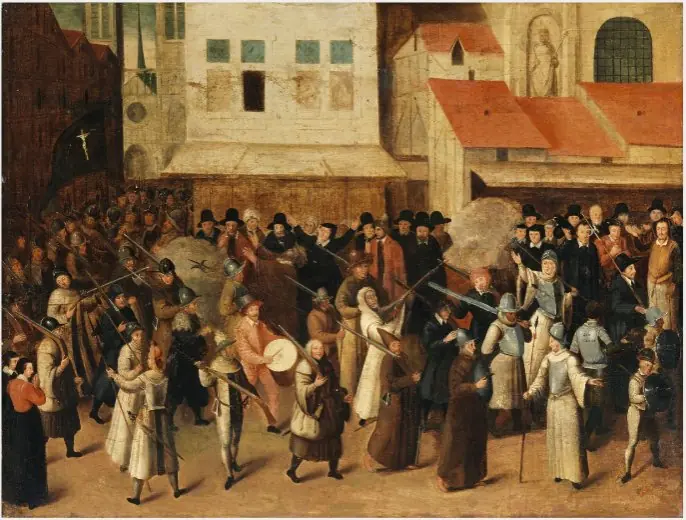 The Procession of the League
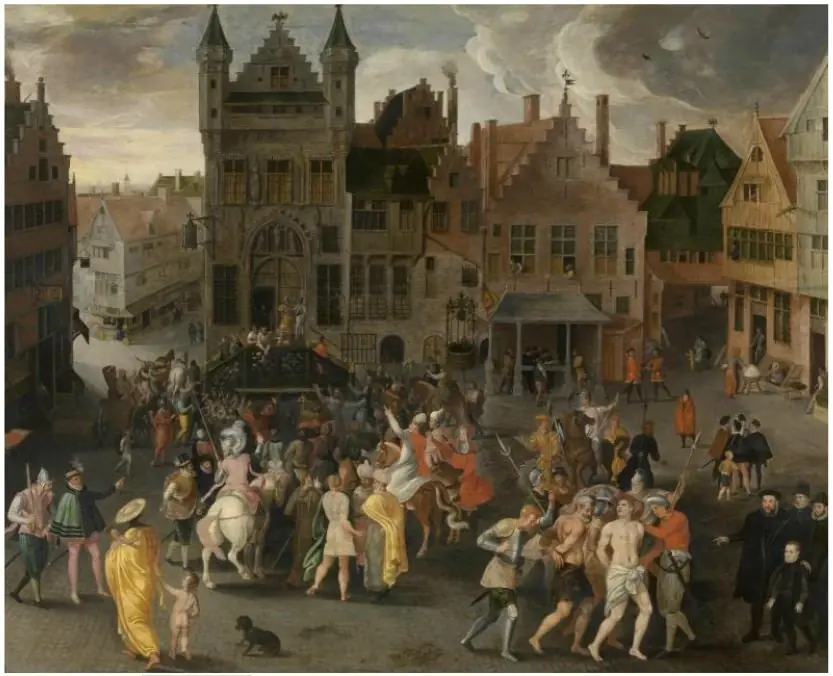 Passion Play on the Grote Markt in Antwerp
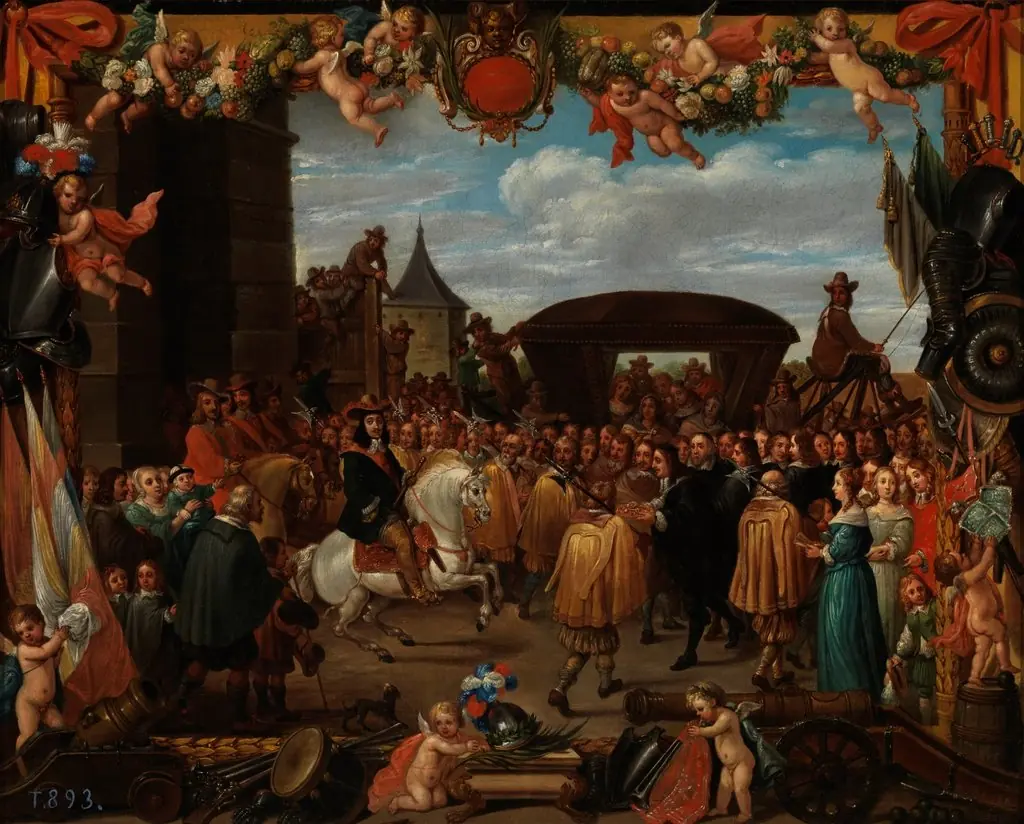 Entrada triunfal de don Juan José de Austria (?)
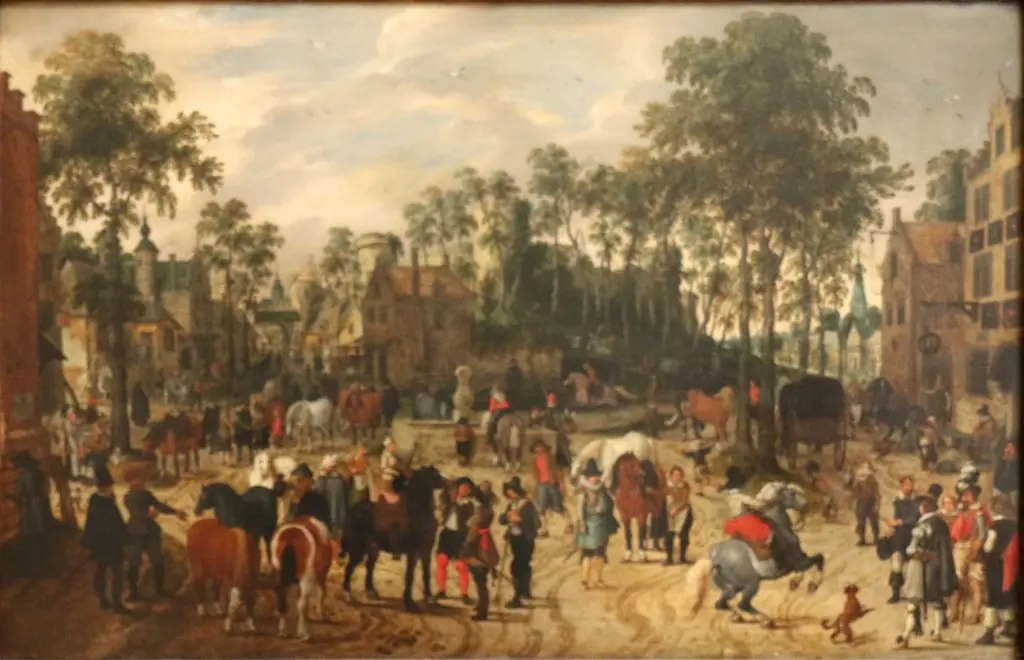 Horse market
 The Joyous Entry of the Duke of Anjou into Antwerp