
Subject
Music
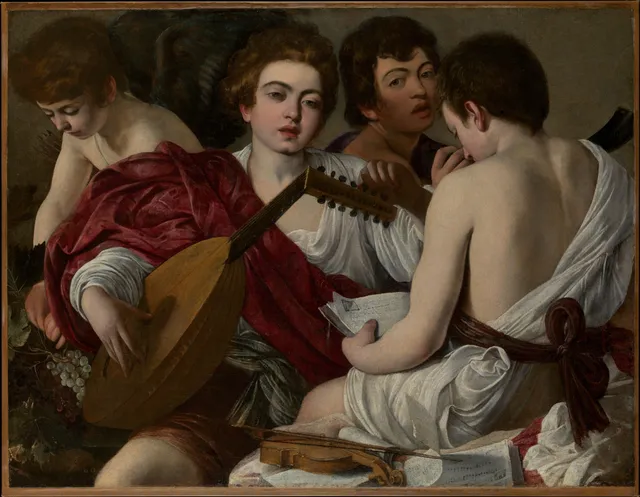
Music is a subject in art. The gallery holds 53 works in this subject in art, including works by Titian, Thomas Eakins and Henry Lerolle.
Music is the arrangement of sound to create some combination of form, harmony, melody, rhythm, or otherwise expressive content. Music is generally agreed to be a cultural universal that is present in all human societies.
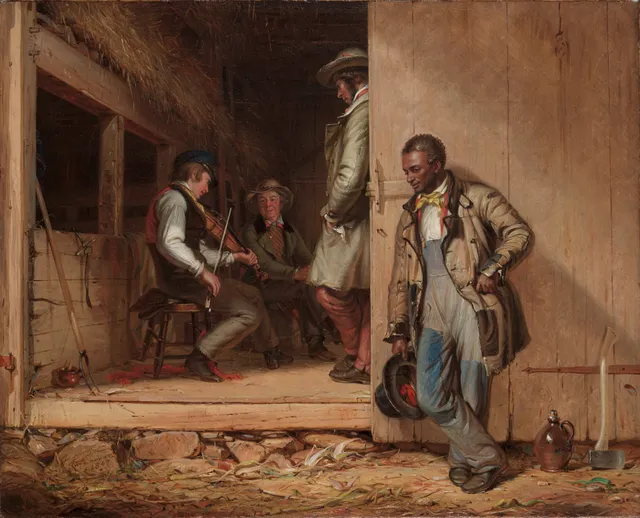
Key artists
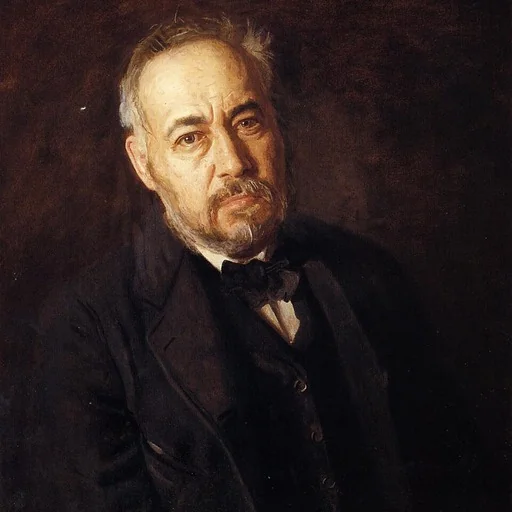
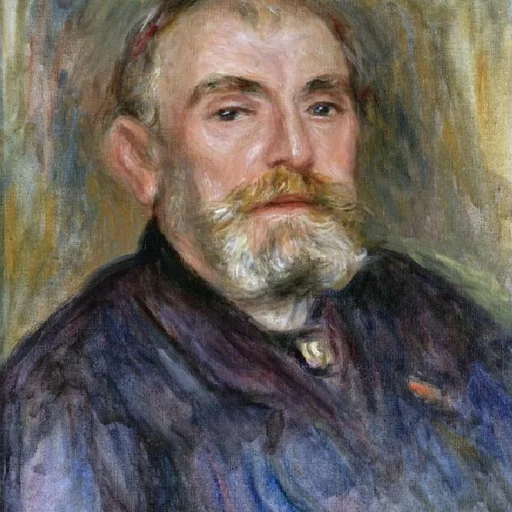
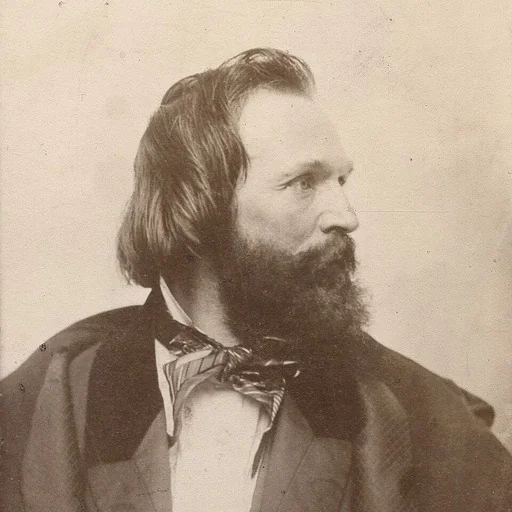
Overview
Music is the arrangement of sound to create some combination of form, harmony, melody, rhythm, or otherwise expressive content. It is generally agreed to be a cultural universal present in all human societies, though definitions vary widely in substance and approach. While scholars agree that music is defined by specific elements, there is no consensus on what these necessary components are. The term itself descends from the Ancient Greek mousiké technē, meaning the art of the Muses, the nine deities who presided over the arts and sciences. Over time, the Greek adjective mousikos flowed into Latin as musica, originally encompassing poetry and theory alongside sound, before entering modern European languages and narrowing to its current meaning.
Iconography & meaning
In visual art, music serves as a profound allegorical subject, carrying rich symbolism that has fascinated artists for centuries. In ancient art, music was depicted as a divine gift, epitomized by deities such as Apollo and the Muses, bringing harmony and order to the world. The figure of Orpheus, whose playing tamed wild animals and charmed nature, became a powerful symbol of music's captivating force, sometimes echoing depictions of King David whose harp playing was believed to soothe melancholy and connect to the divine. During the Renaissance, artists depicted instruments and musicians to symbolize the harmony of creation and humanist ideals. In the Baroque and Rococo periods, musical scenes explored human relationships and social interactions, portraying music as an expression of love, joy, and sorrow. By the 19th century, Romantics and Pre-Raphaelites used the allegory to address deep emotional longing, while modern artists like Wassily Kandinsky and Piet Mondrian employed musical elements to visualize abstract ideas and explore the relationship between sound, color, and form.
Across movements & periods
The visual treatment of music has shifted significantly across art historical periods, reflecting changing cultural values. In antiquity, frescoes and sculptures emphasized music as a celestial, ordering force tied to religious ceremony. The Renaissance shifted focus toward humanism, utilizing instruments and musicians to symbolize the beauty of human culture and the harmony of creation. During the Baroque and Rococo periods, the depiction of music became increasingly secular and emotional, with artists using musical scenes to navigate the intricacies of social interaction and human passion. The 19th century saw Romantics treating music as the ultimate language of feeling, emphasizing its connection to inner longing and emotional resonance beyond the visible world. In the 20th and 21st centuries, modern and contemporary artists moved away from representational scenes, instead using musical elements as metaphors for human experience, visualizing abstract ideas and expanding the boundaries of traditional art forms by linking sound, color, and form.
Notable depictions
Canonical depictions of music in art history often center on mythological or biblical figures whose playing carries supernatural weight. An ancient Roman mosaic of Orpheus depicts the musician sitting beneath a tree playing his lyre, taming wild and domestic animals drawn to his enchanting harmony. This motif of divine musical power is also seen in biblical subjects, such as Gerrit van Honthorst's painting King David Playing the Harp. In this work, David's elevated eyes and voice propose the divine element of his melody, further emphasized by a cherub's head listening at the helm of the harp, capturing the belief that his sweet sounds could sweep away King Saul's melancholy. Beyond these narrative scenes, the allegory of music itself became a notable subject, formalized in works like Allegory of Music, which visually codified the abstract concept into human and symbolic forms.
Legacy
The cultural afterlife of music as both an auditory phenomenon and a visual motif continues to evolve. In the 20th century, modernist composers drastically altered the musical landscape through experimentation, responding to social change, psychoanalysis, and world wars with innovative approaches to tone and instrumentation. This transformative period saw the creation of landmark works that forever changed classical music, such as Igor Stravinsky's The Rite of Spring and Pierre Boulez's Le Marteau sans maître, which challenged conventional harmony and melody. Concurrently, the visual legacy of music expanded as artists like Wassily Kandinsky and Piet Mondrian translated musical structures into abstract visual forms, cementing music's role as a metaphor for human experience. Today, music maintains a vital role in collective experience, adapting to challenging circumstances by finding new mediums for connection, from virtual choirs to balcony recitals, ensuring its continued function as a tool to pray, heal, protest, and celebrate.
Works
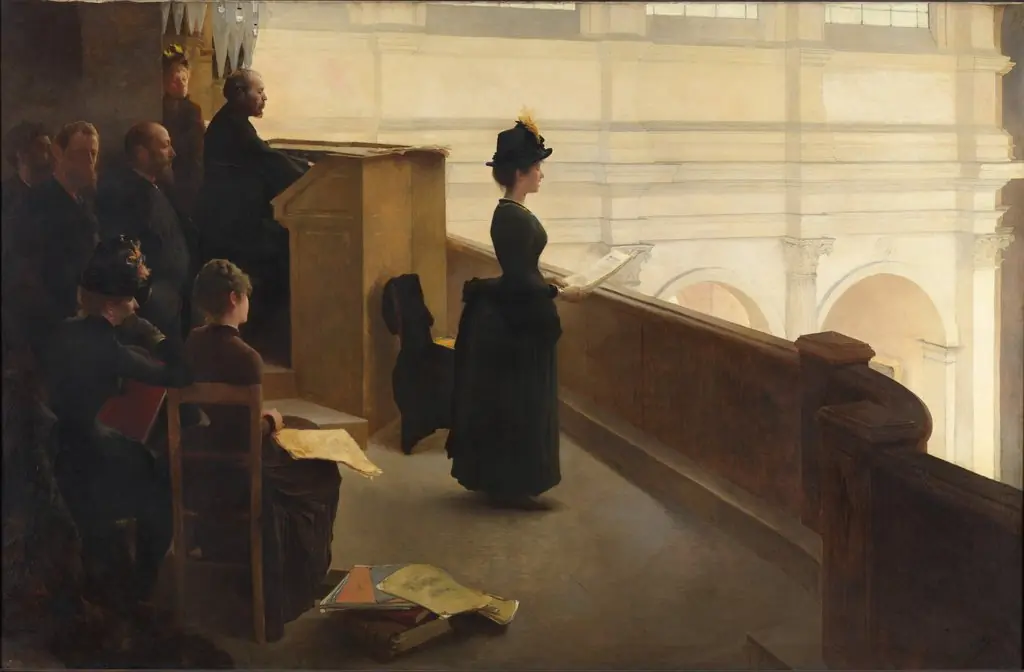 The Organ Rehearsal
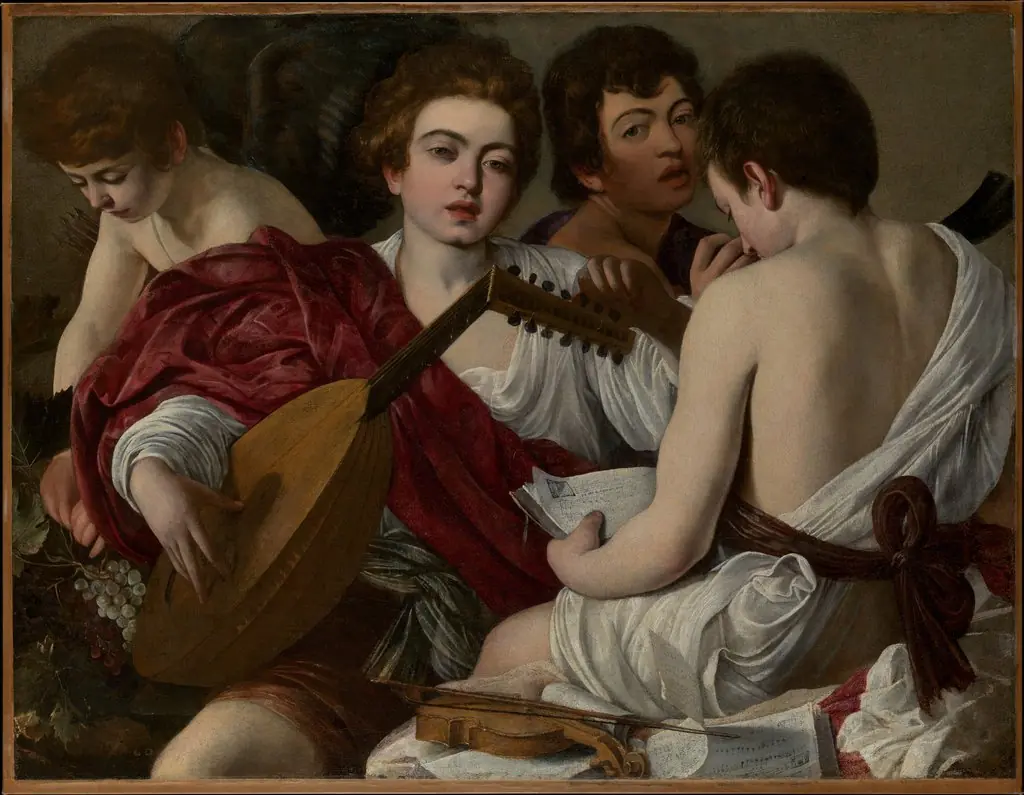 The Musicians
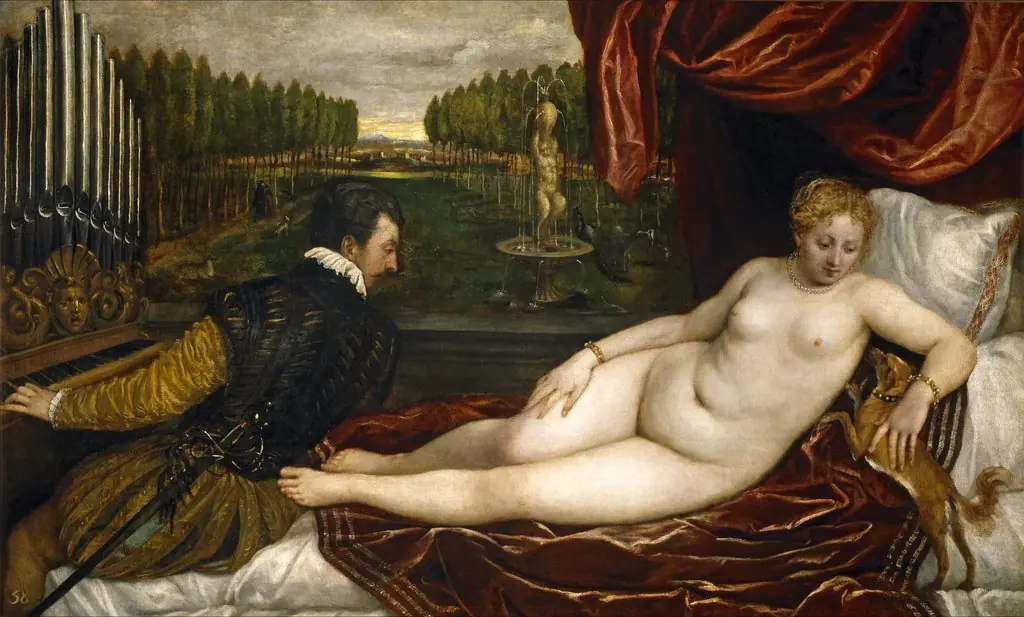 Venus and Music
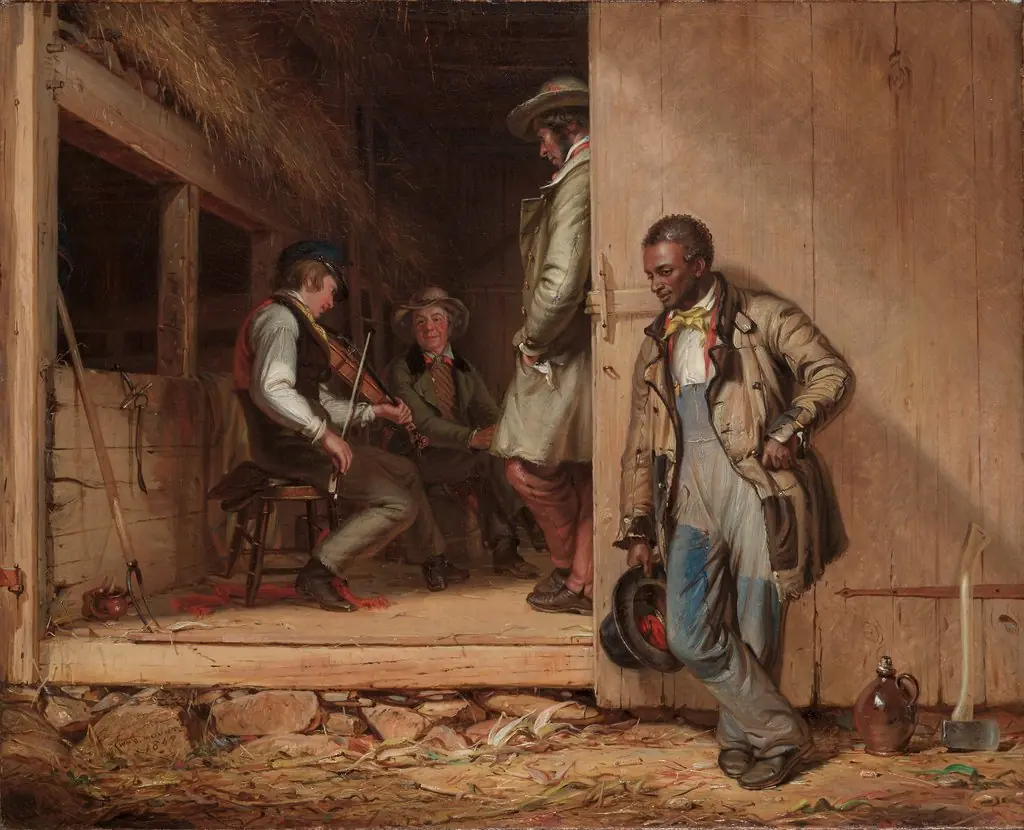 The Power of Music
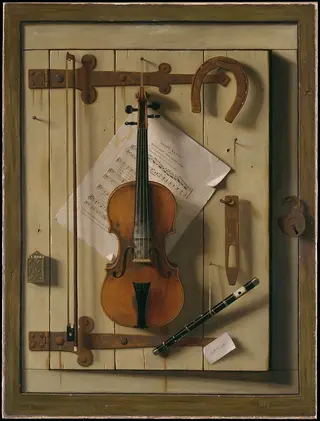 Still Life—Violin and Music
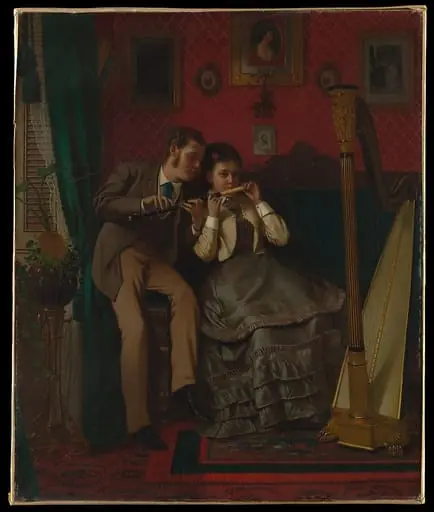 The Music Lesson
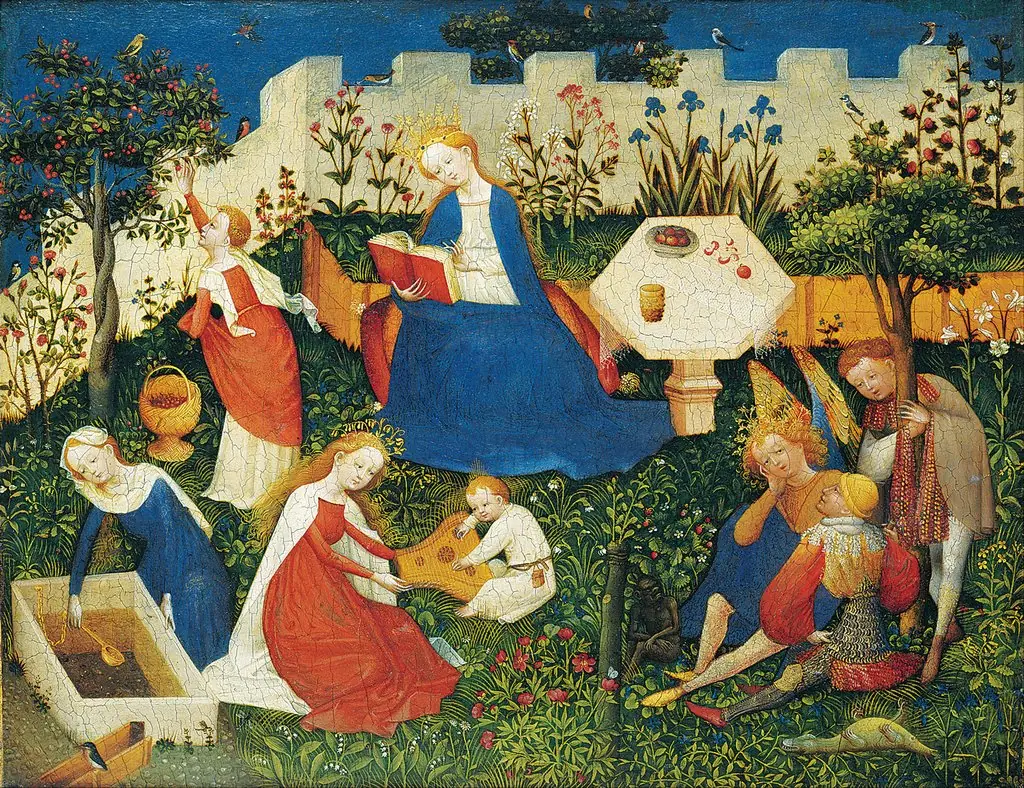 Paradiesgärtlein
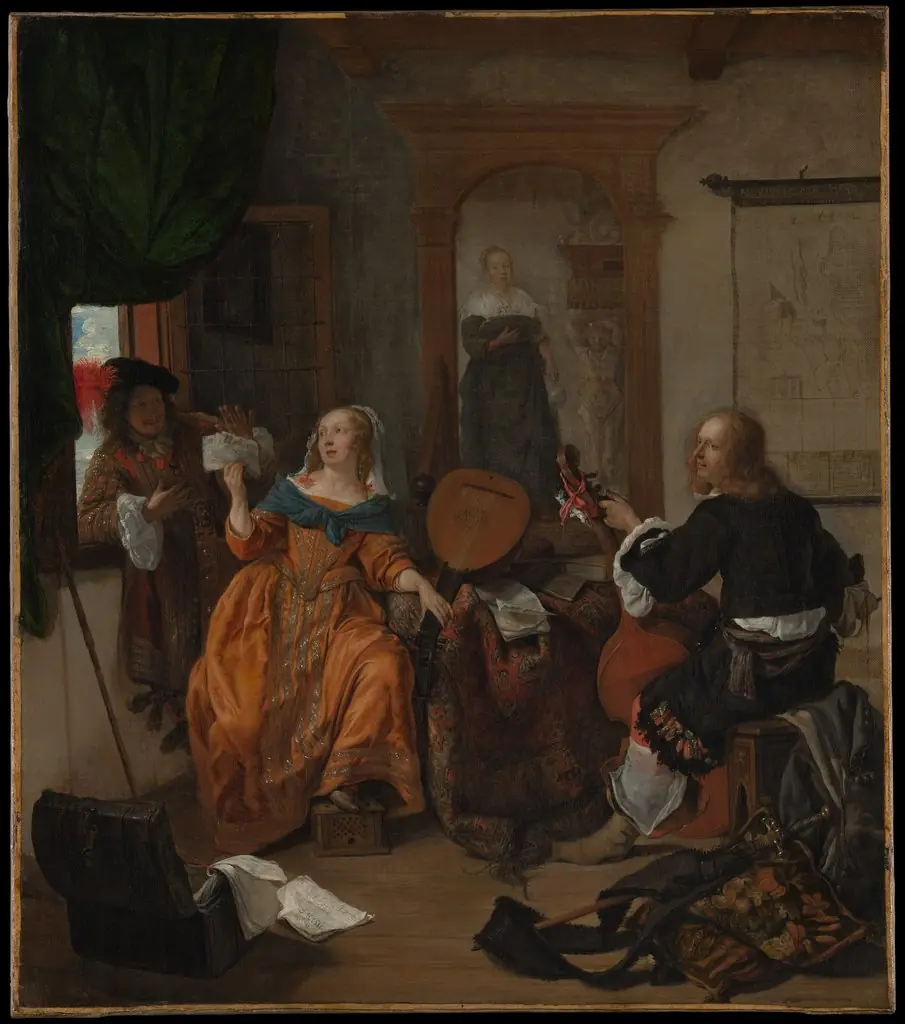 A Musical Party
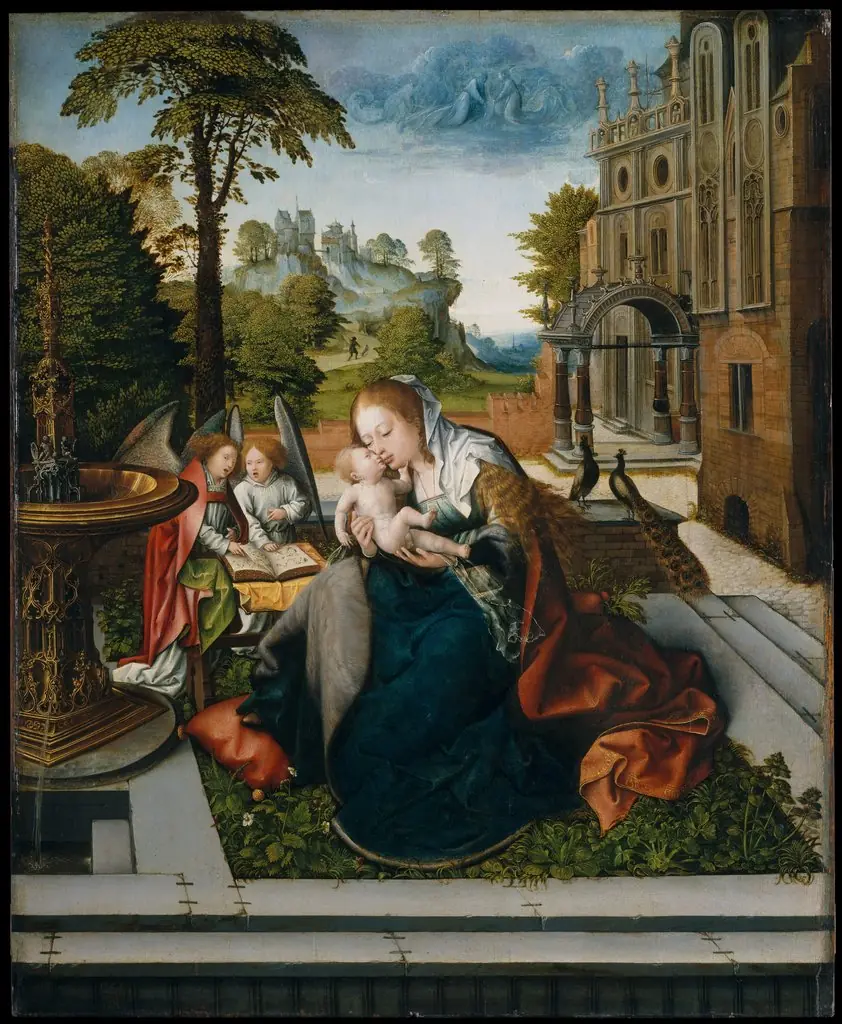 Virgin and Child with Angels
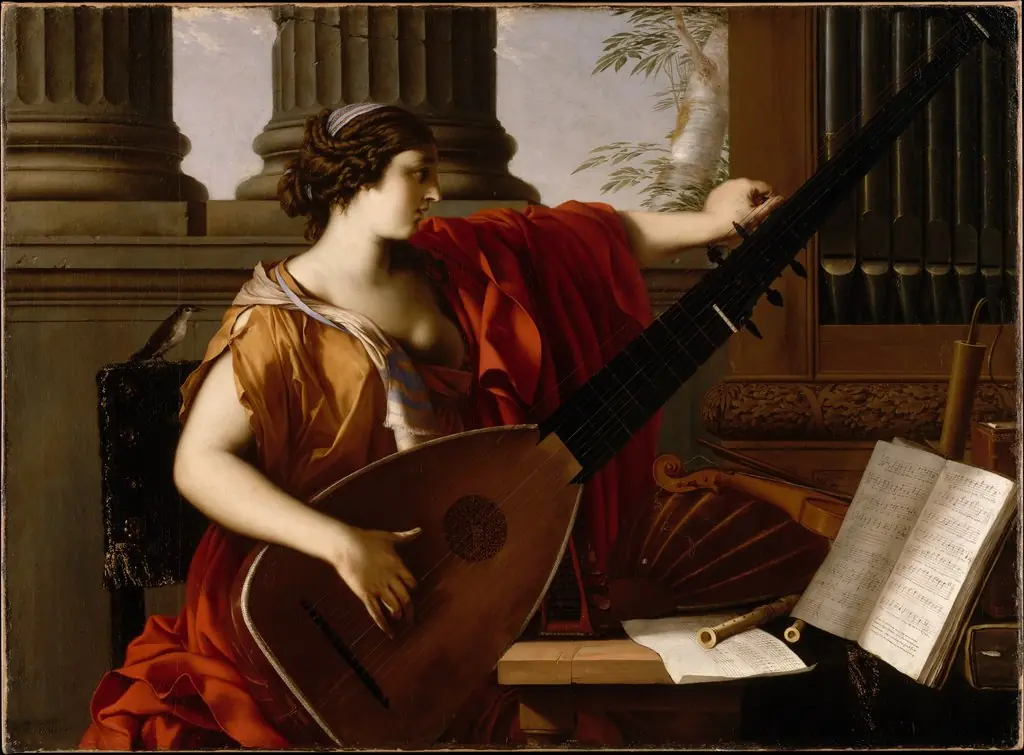 Allegory of Music
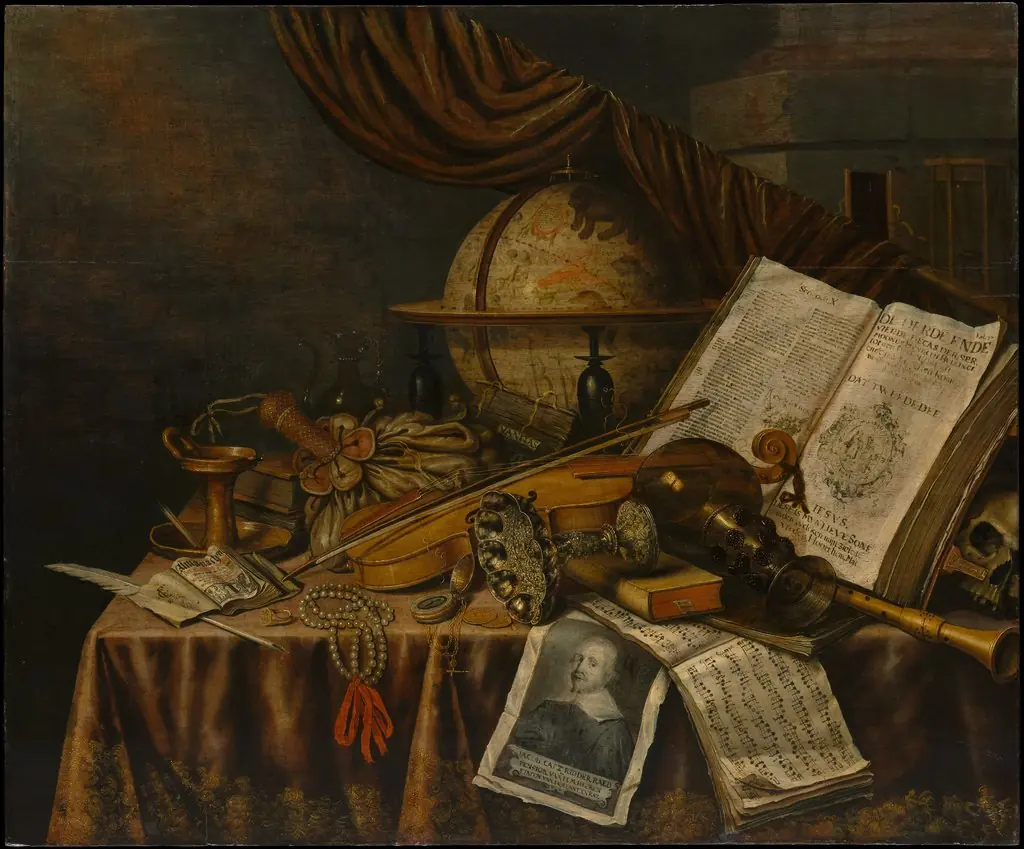 Vanitas Still Life
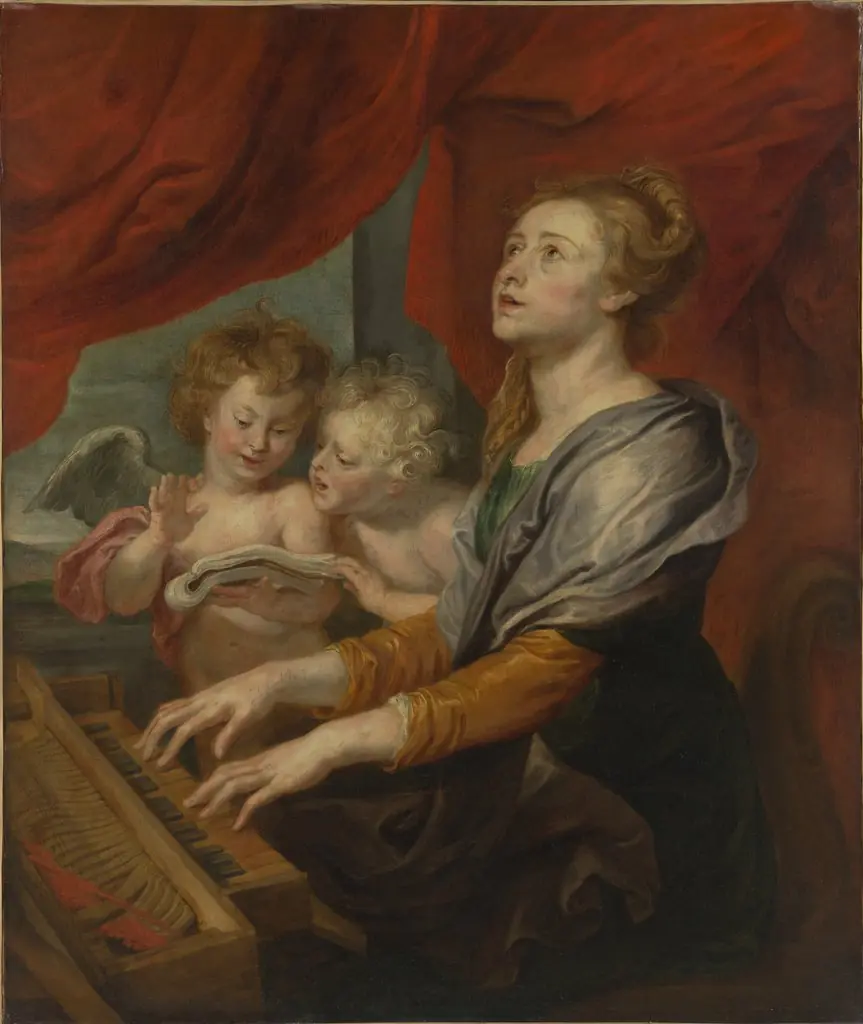 Saint Cecilia
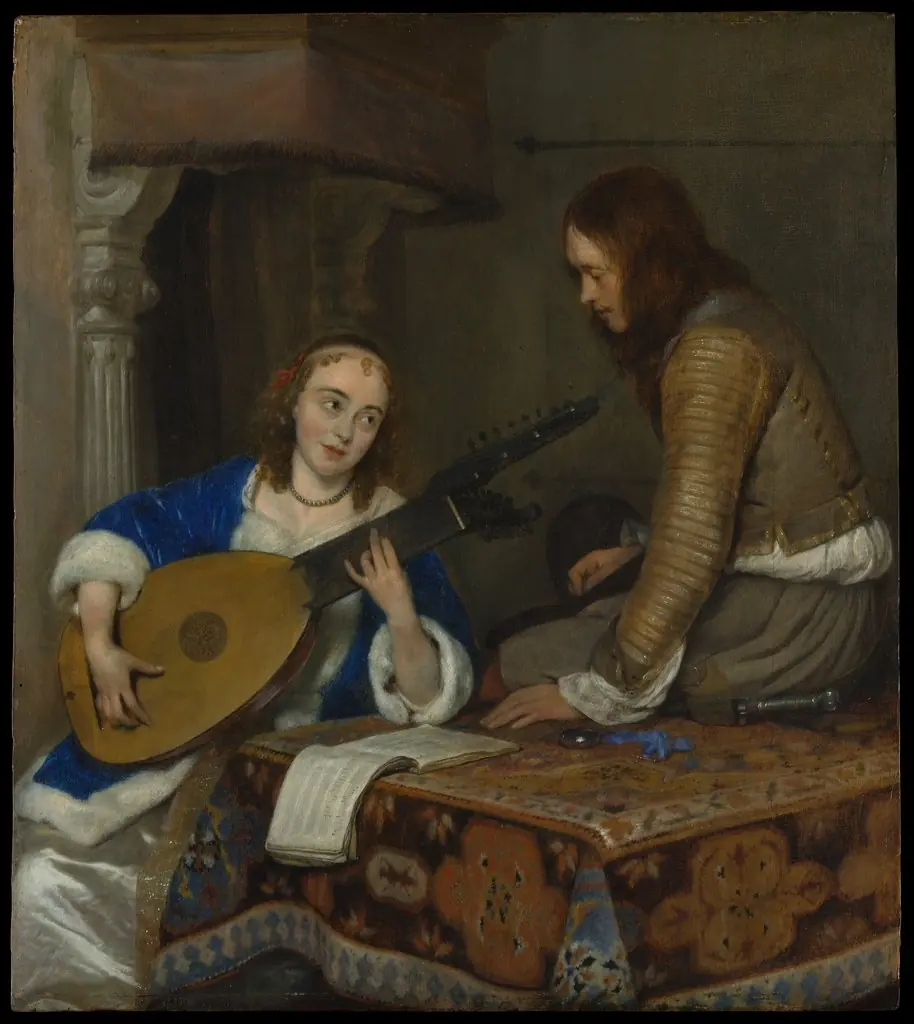 A Woman Playing the Theorbo-Lute and a Cavalier
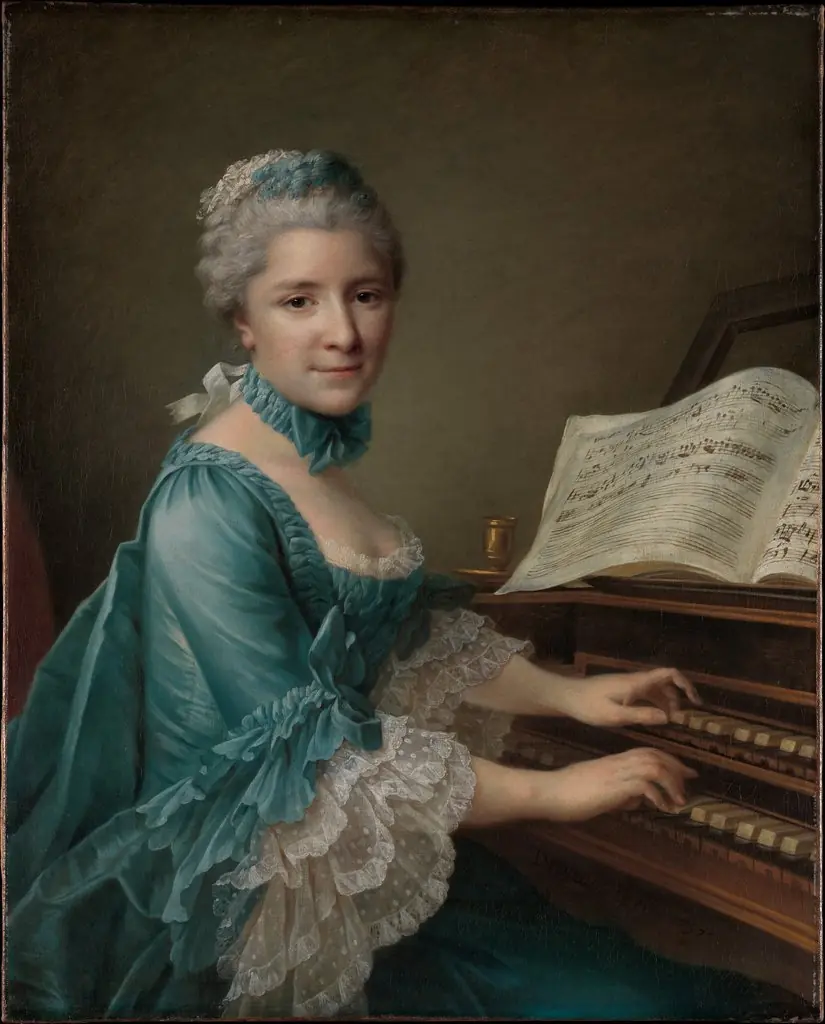 Portrait of a Woman, Said to be Madame Charles Simon Favart (Marie Justine Benoîte Duronceray, 1727–1772)
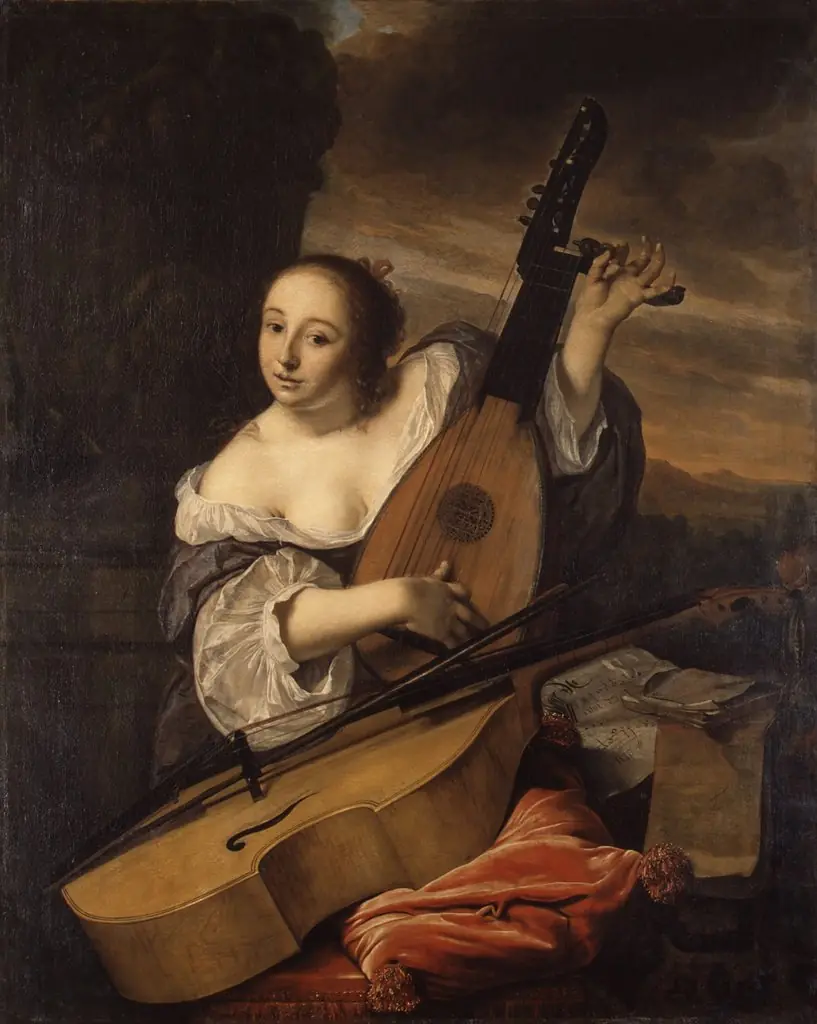 The Musician
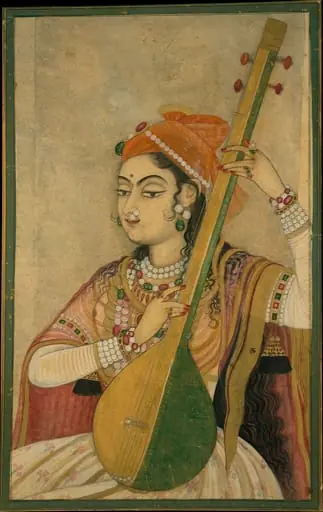 Untitled
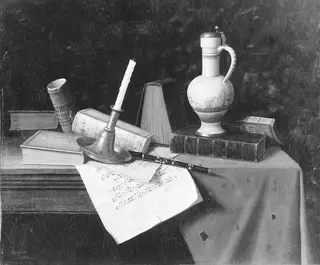 Still Life
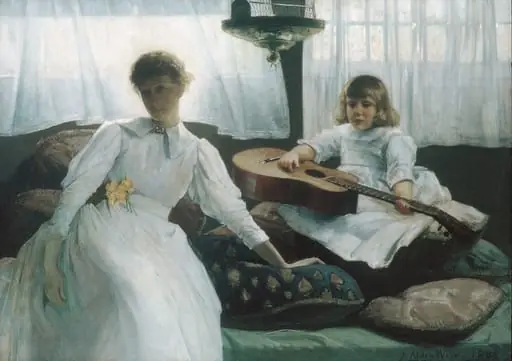 Idle Hours
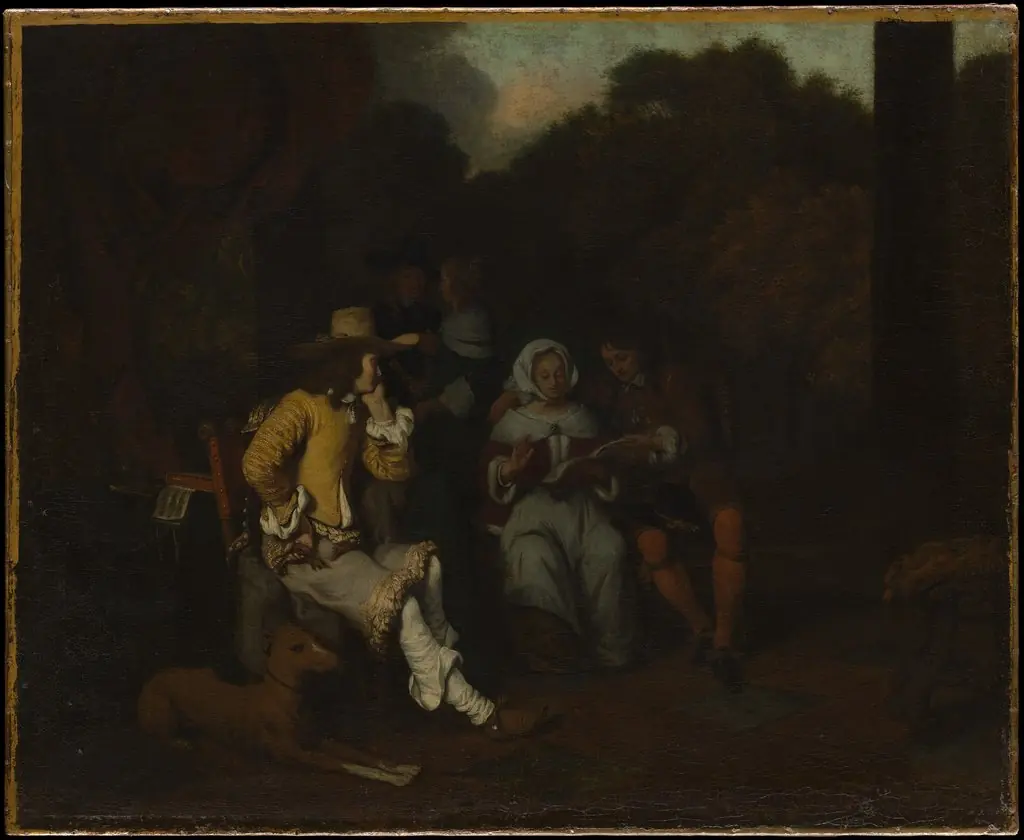 A Musical Party
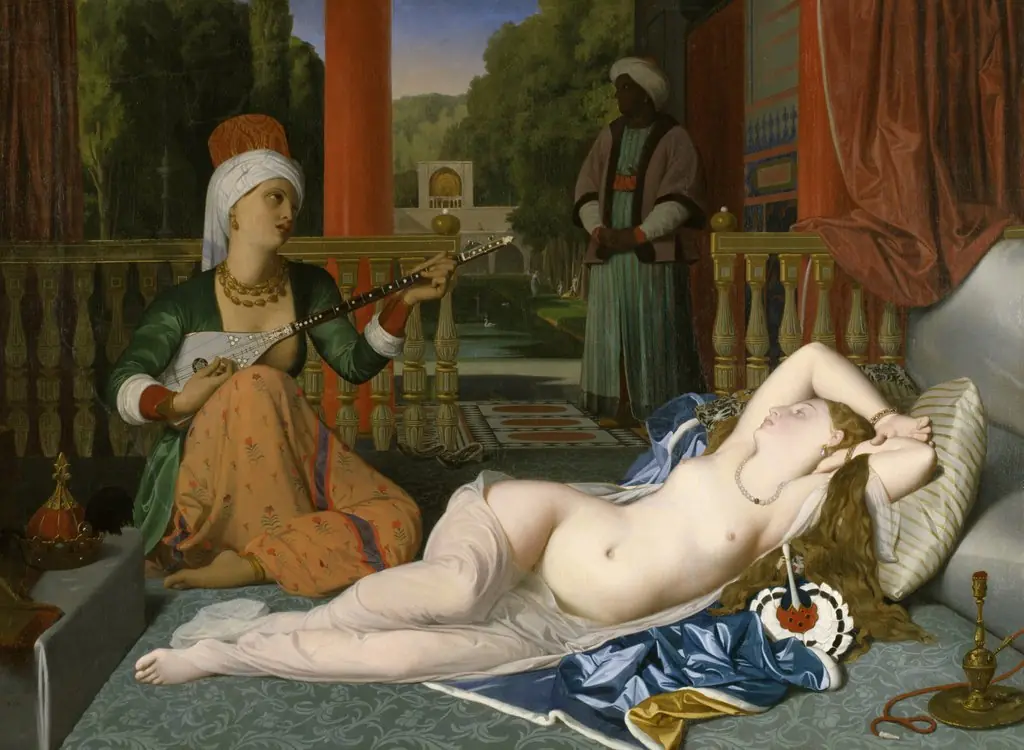 Odalisque with Slave
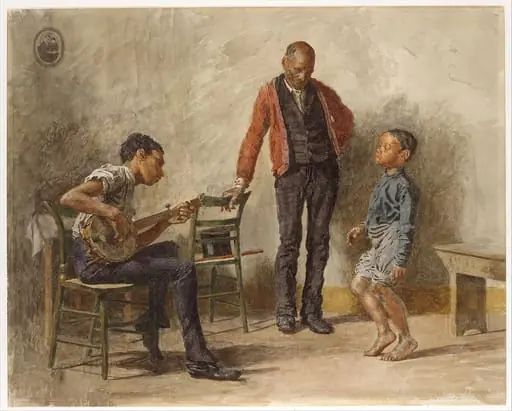 The Dancing Lesson
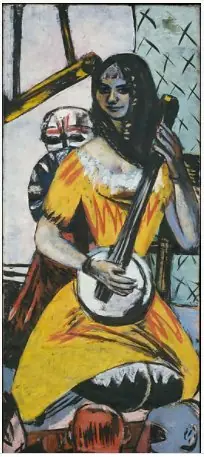 Vaudeville Act
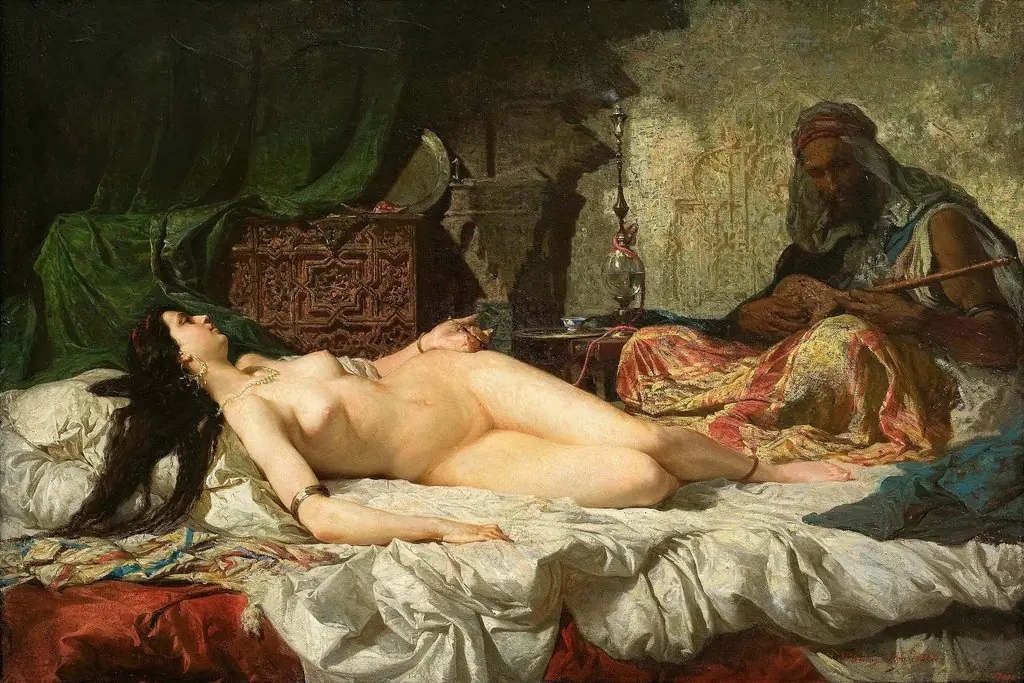 The Odalisque
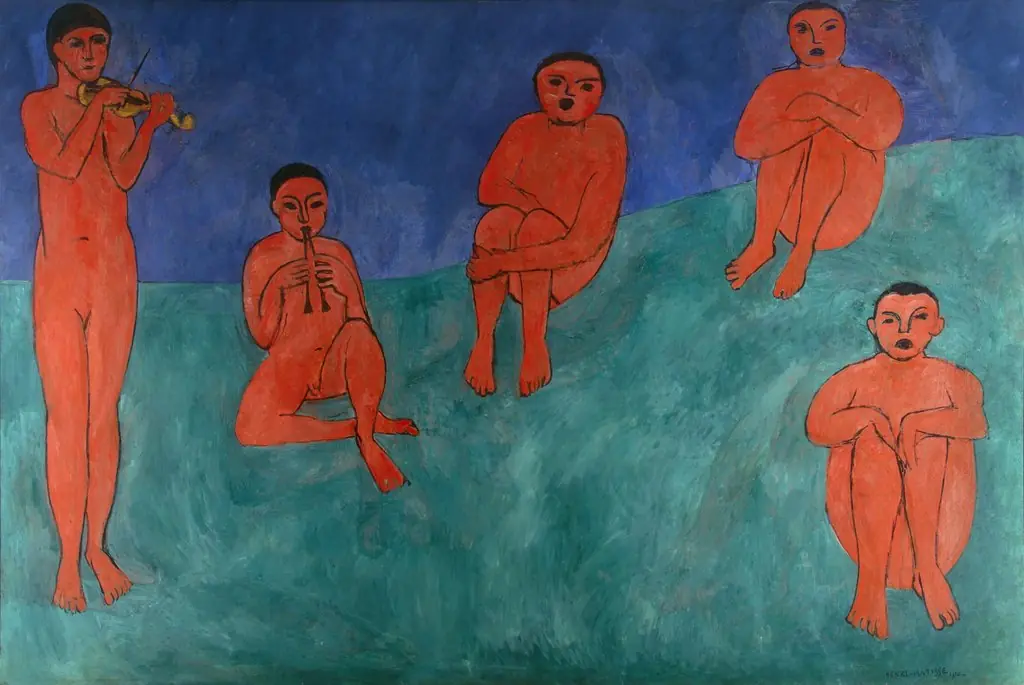 Music
Music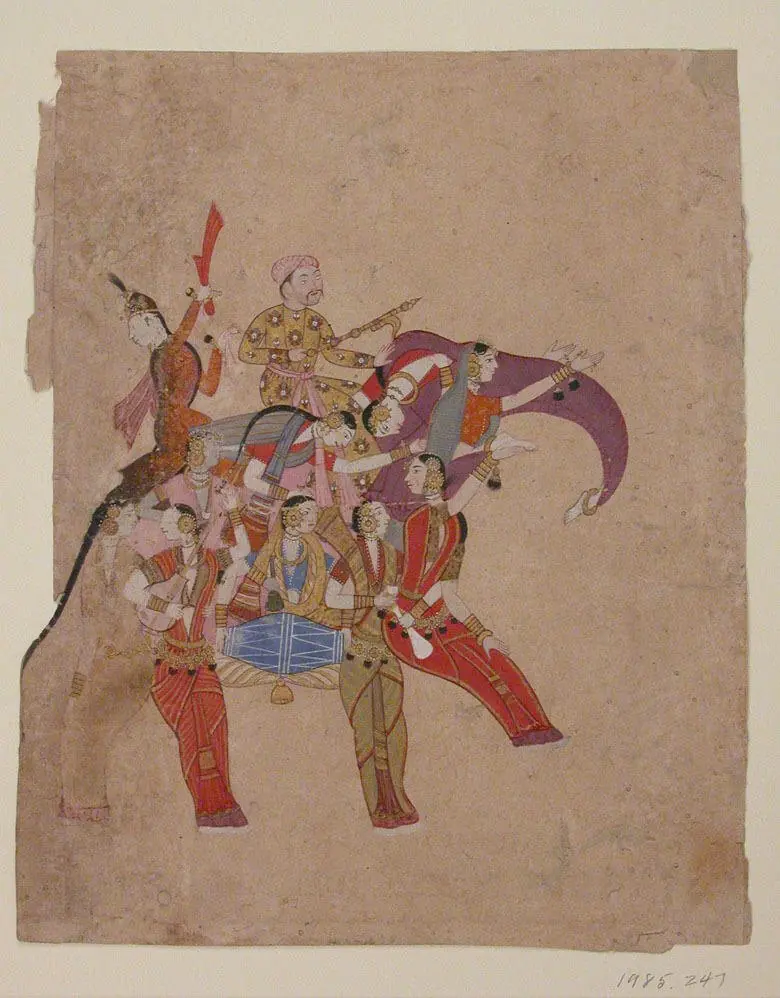 Composite Elephant - Deccan Painting Early 17th Century
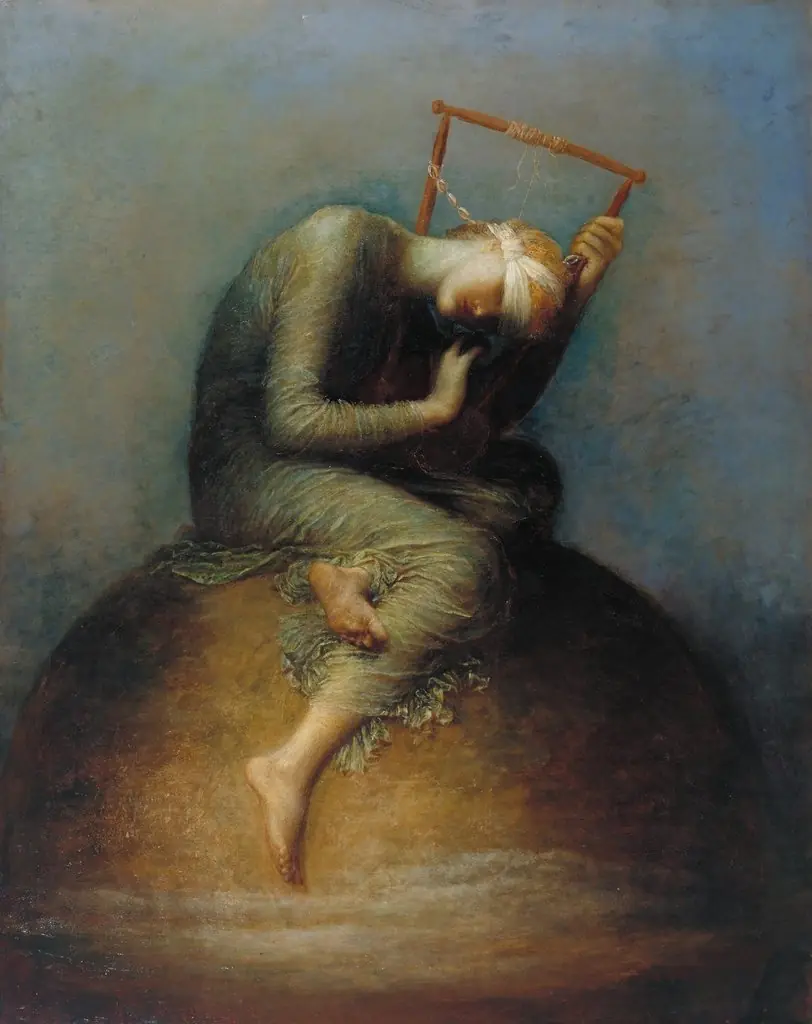 Hope
Hope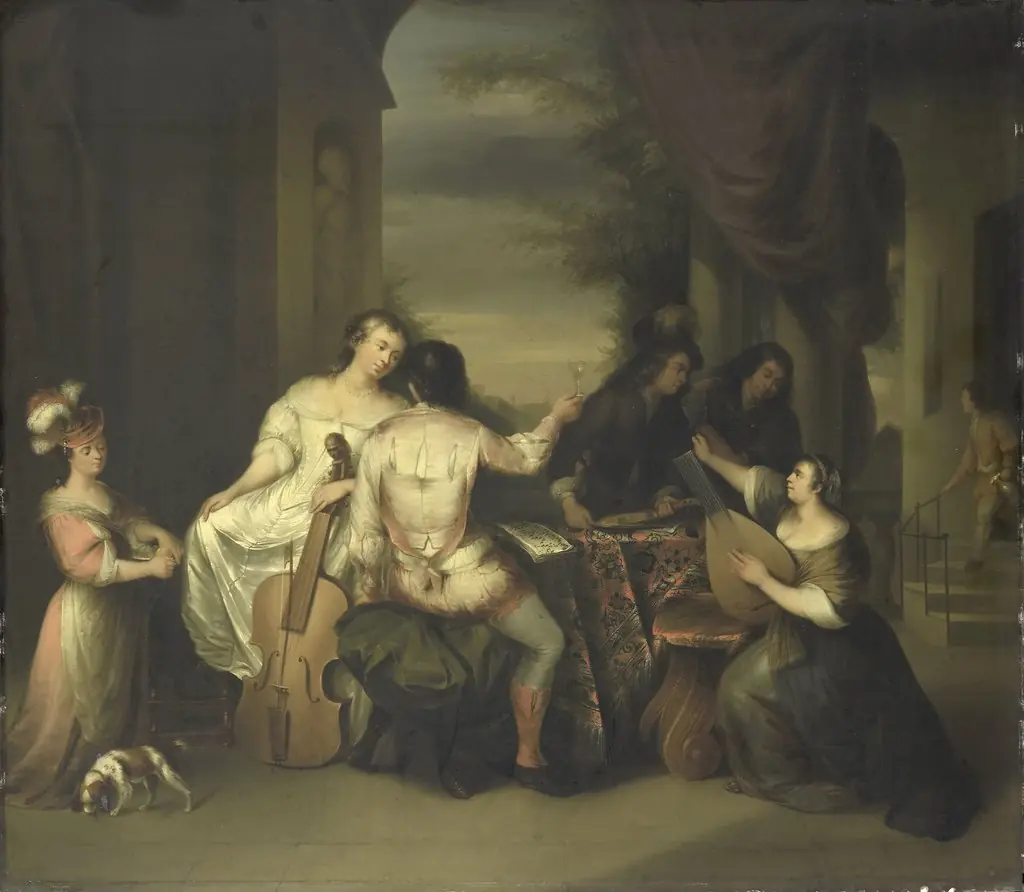 A Musical Company
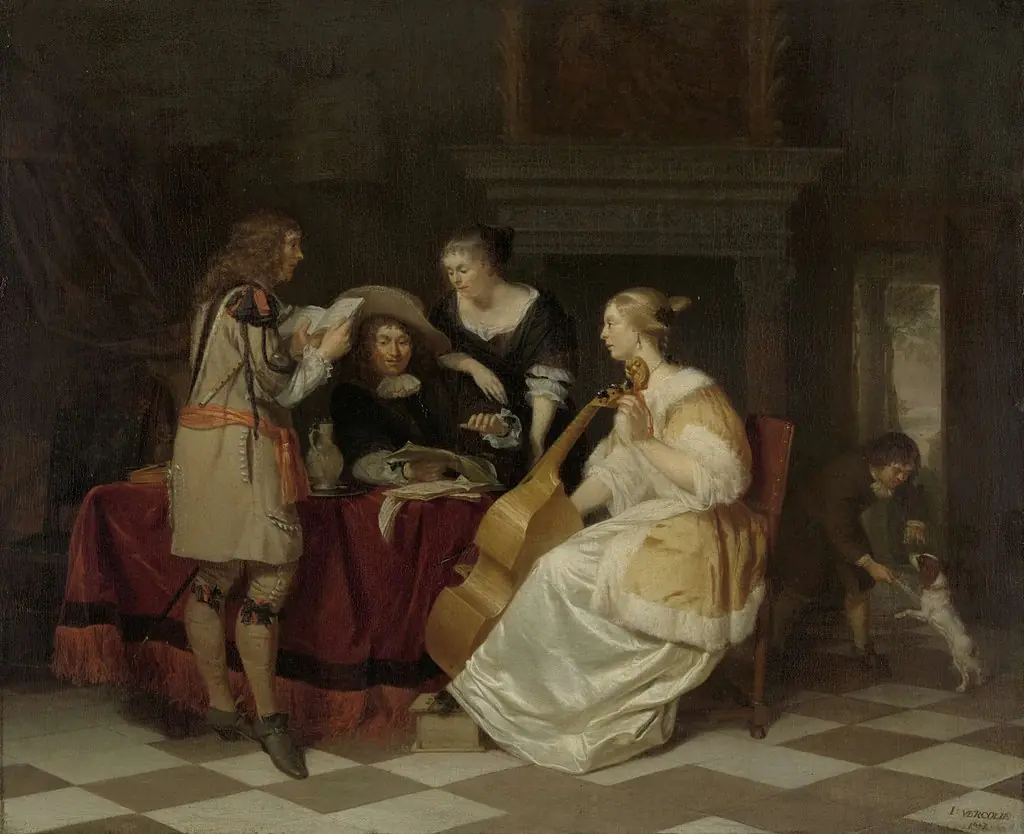 A Musical Company
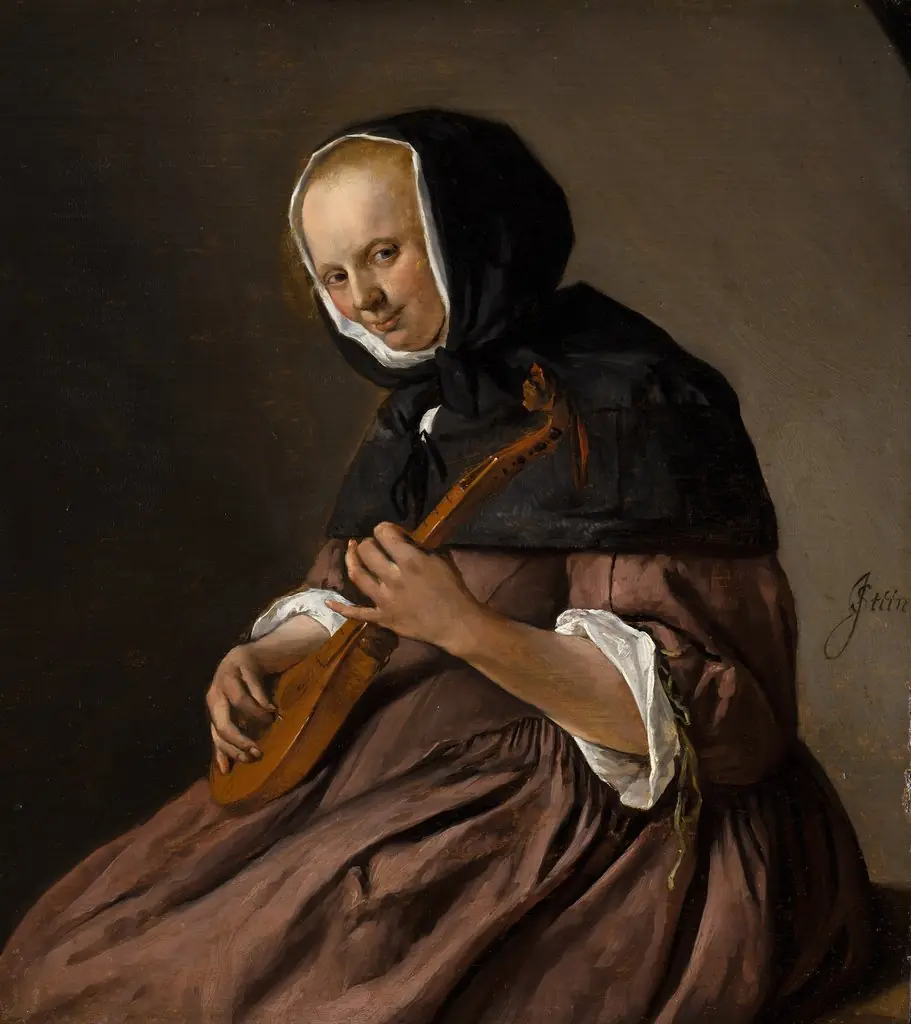 Woman Playing the Sistrum
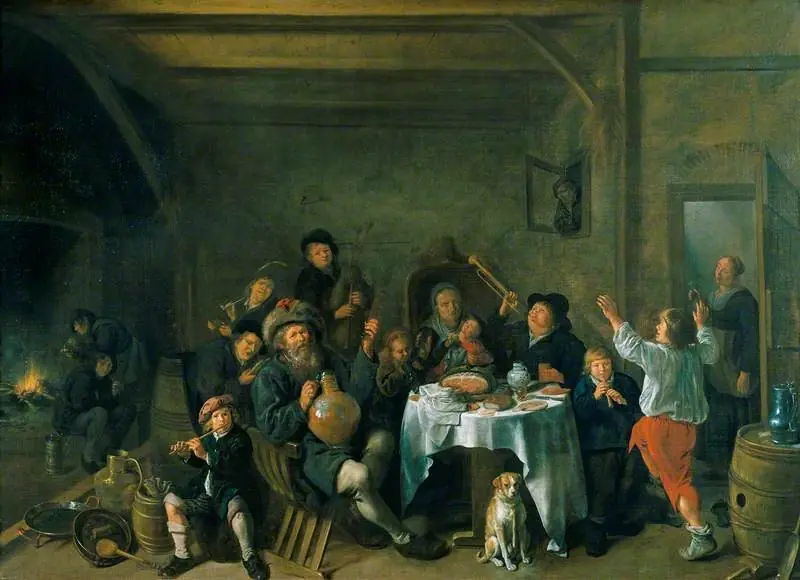 A Family Merrymaking
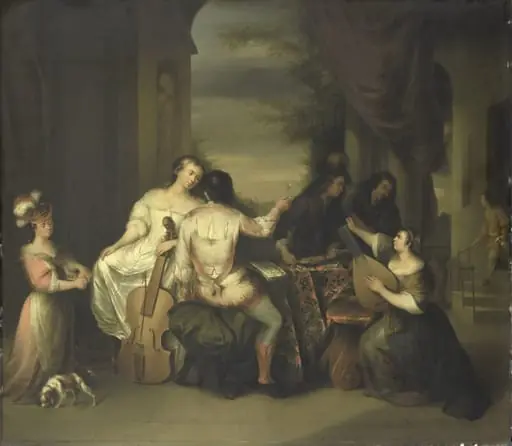 A Musical Company
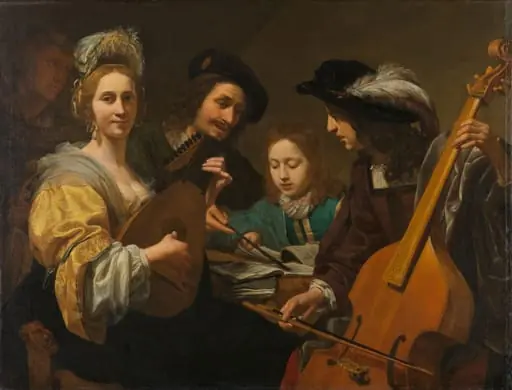 A Musical Company
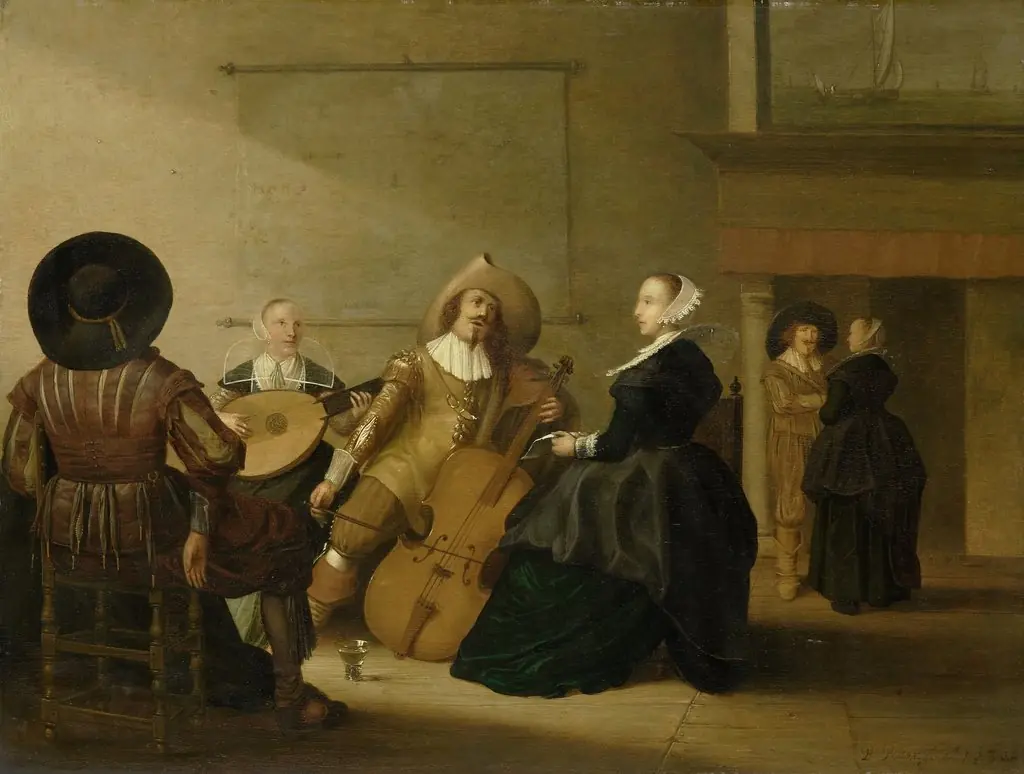 A musical company in an interior
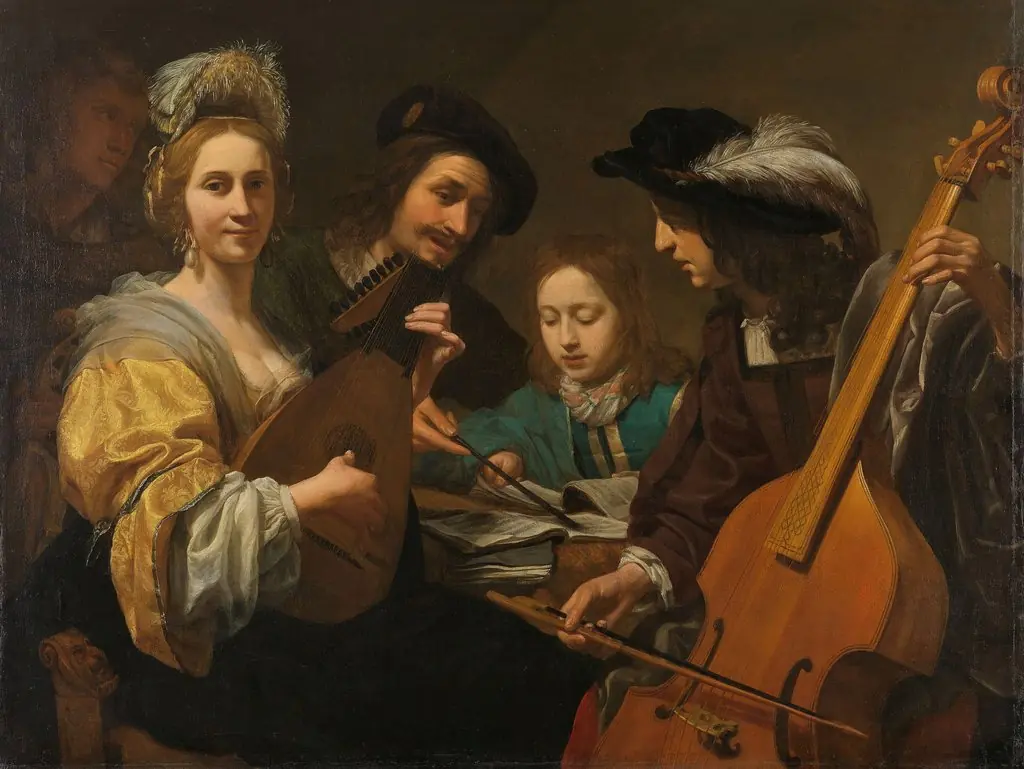 A musical company
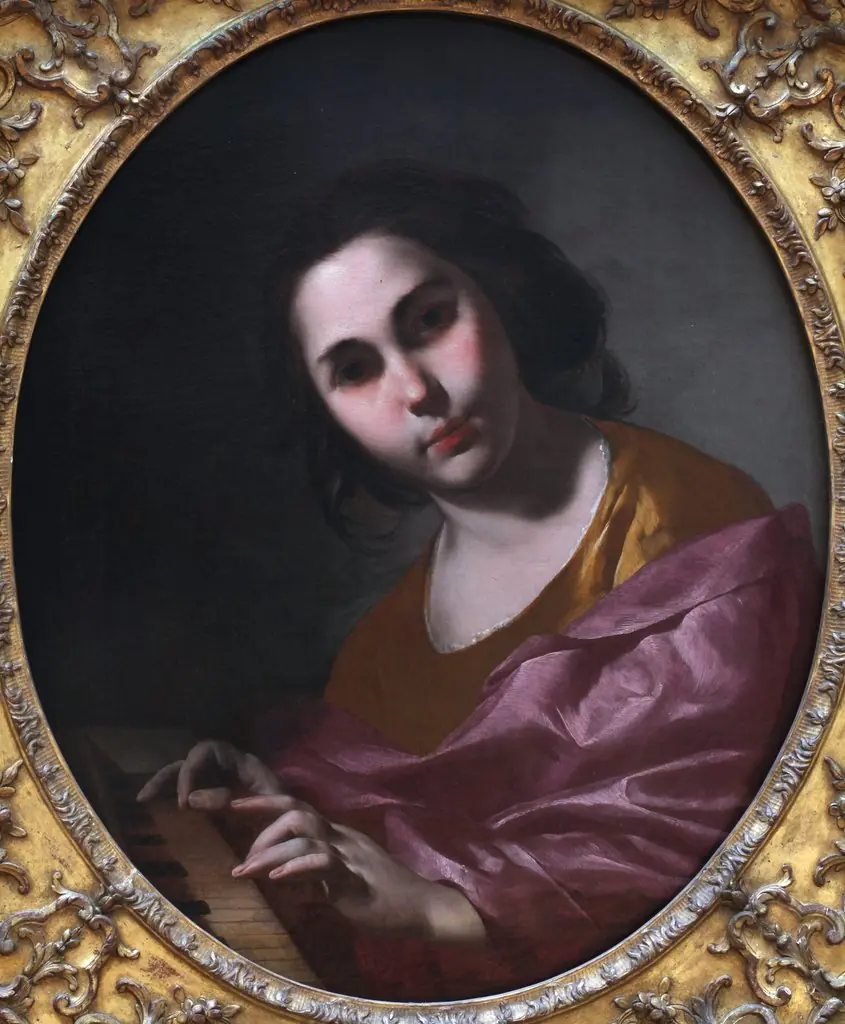 Woman Playing the Clavichord
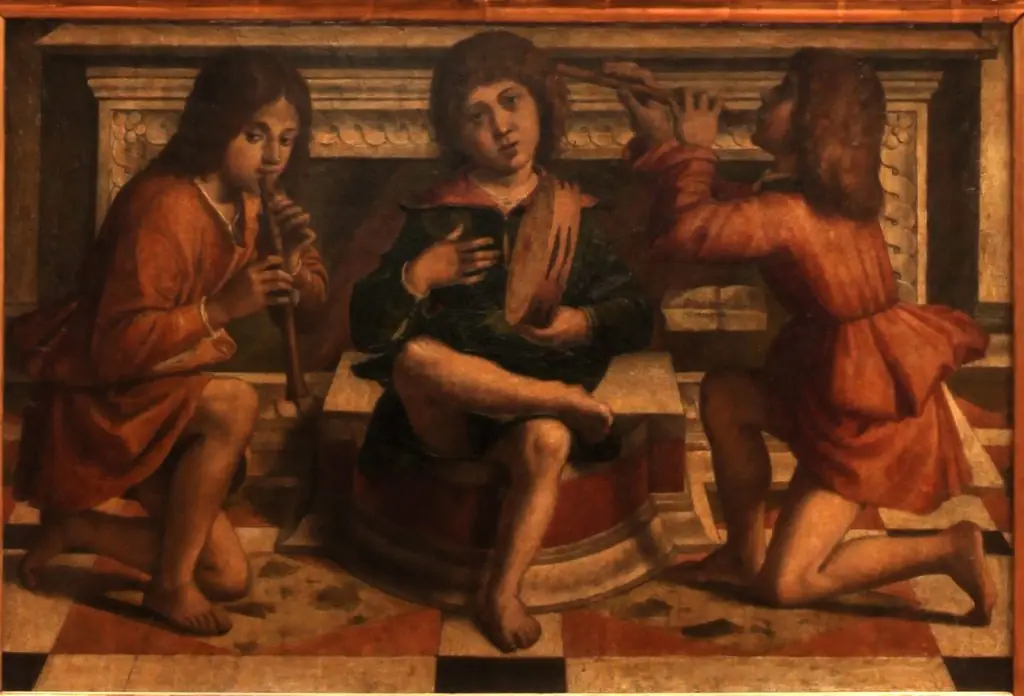 Trois anges musiciens
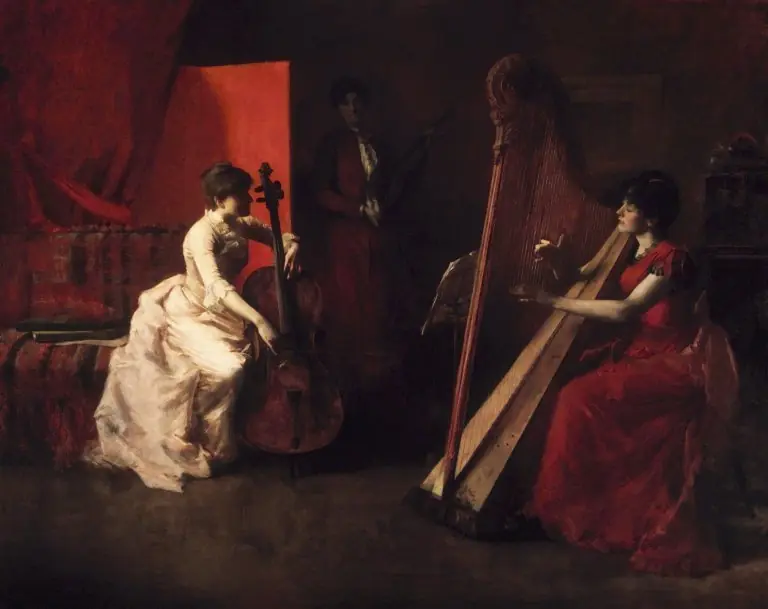 The Trio--Fantasie
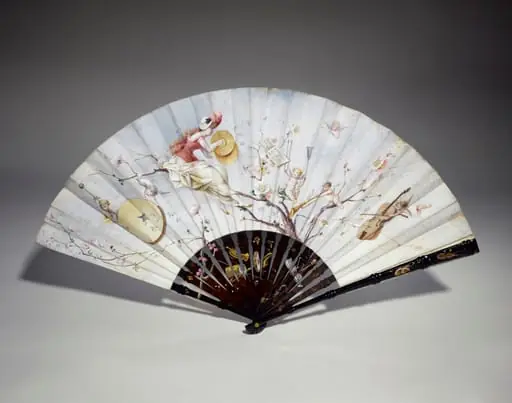 Eventail plié
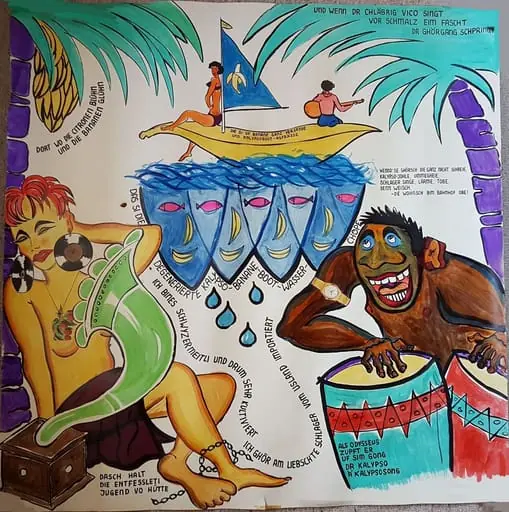 Fasnachtshelge "Kalypso"
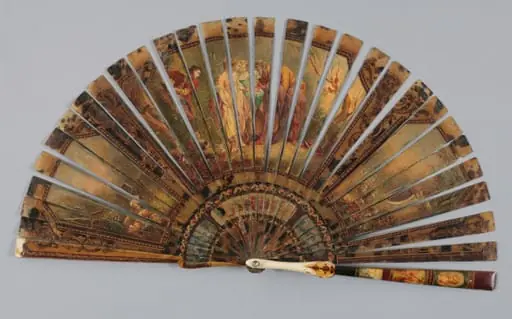 Eventail brisé
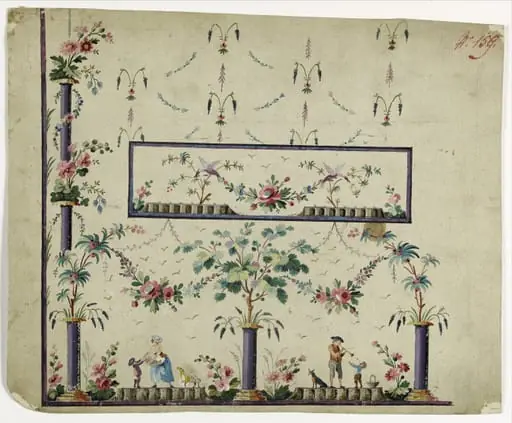 Gilet décor couple avec enfants, projets de broderies de gilet, XVIIIème siècle
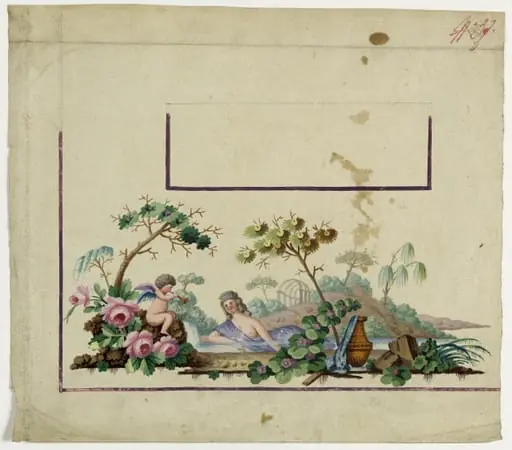 Gilet décor la déesse Flore au bain, projets de broderies de gilet, XVIIIème siècle
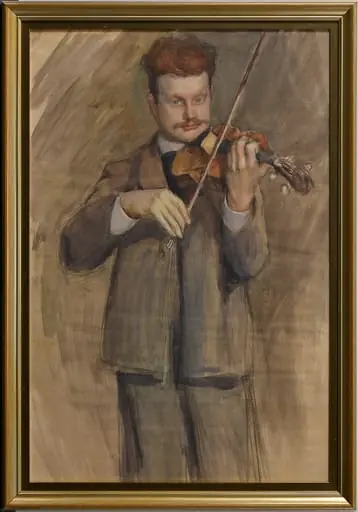 Sibelius soittaa viulua
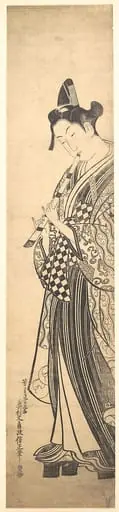 Untitled
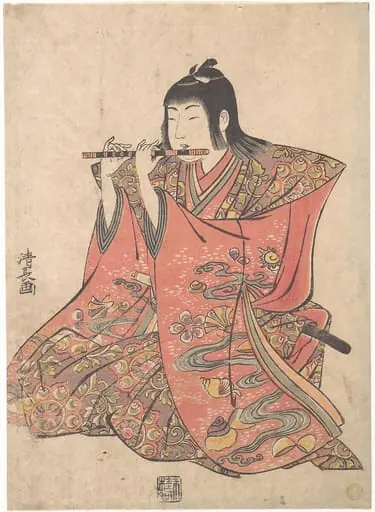 Untitled
 Untitled
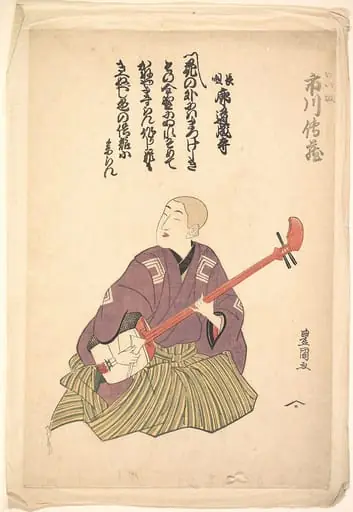 Untitled
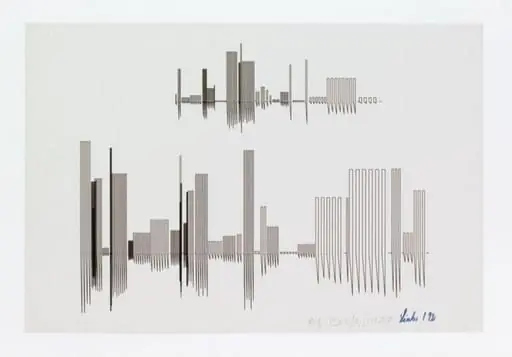 Untitled
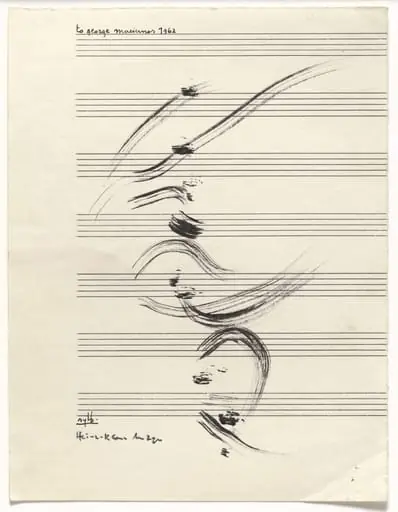 Untitled
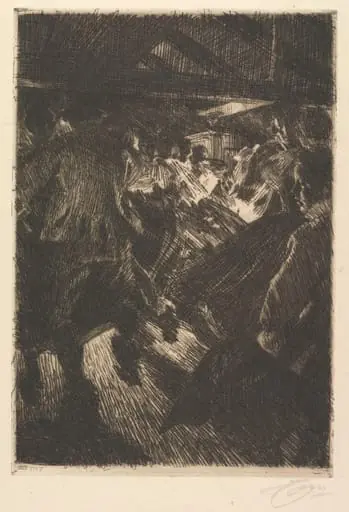 Gopsmor Cottage
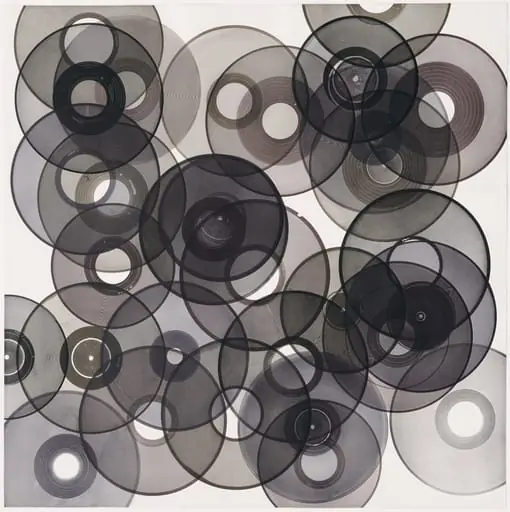 Untitled
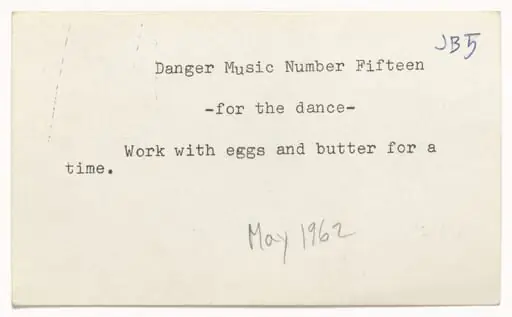 Untitled
 Untitled
Frequently asked questions
What is Music?
Music is the arrangement of sound to create some combination of form, harmony, melody, rhythm, or otherwise expressive content.
How many Music works does Artifact World Gallery have?
Artifact World Gallery holds 53 public-domain Music works, all free to view and download.
Who are the key Music artists?
Key Music artists in the collection include Titian, Thomas Eakins and Henry Lerolle.
Where can I see Music works?
Music works in the collection are held by Metropolitan Museum of Art, Rijksmuseum and Museum of Modern Art.