Artwork
Judith with the Head of Holofernes
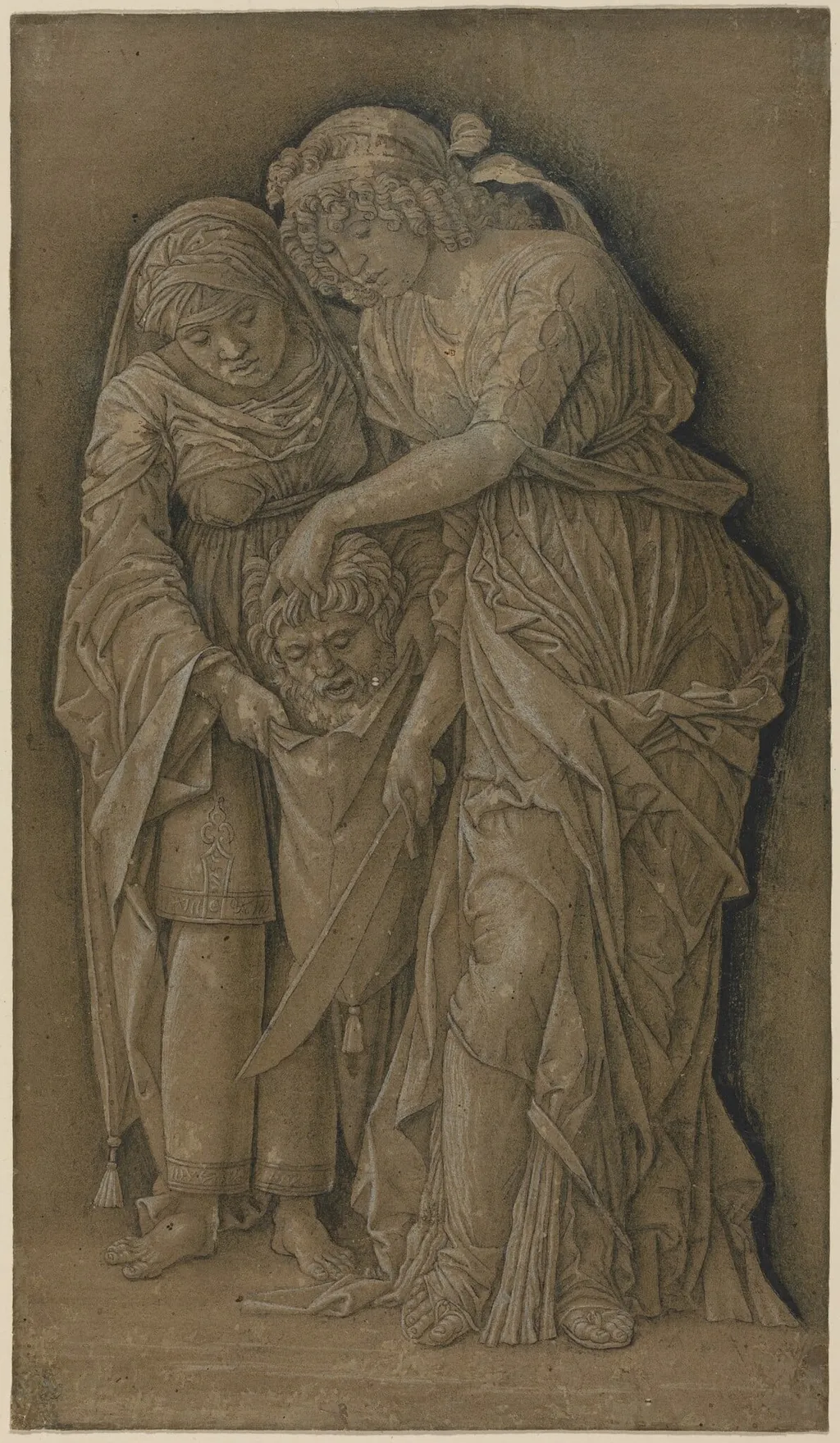
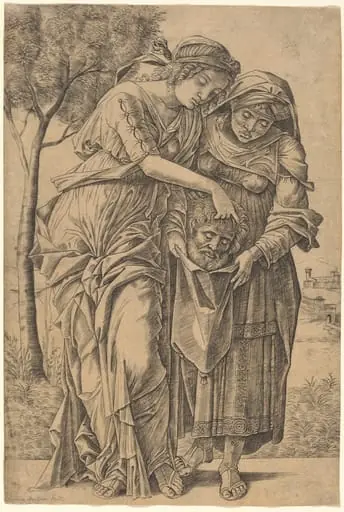
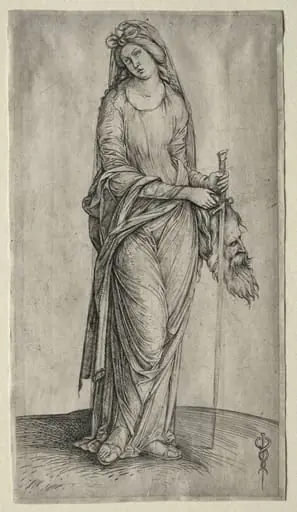
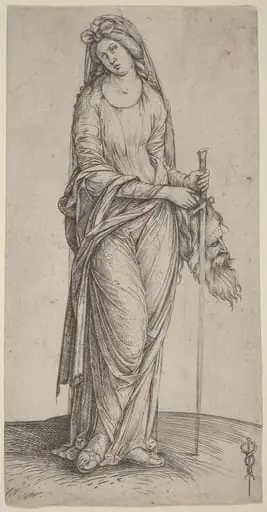
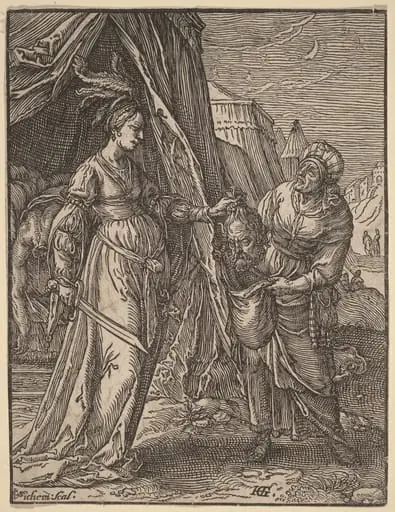
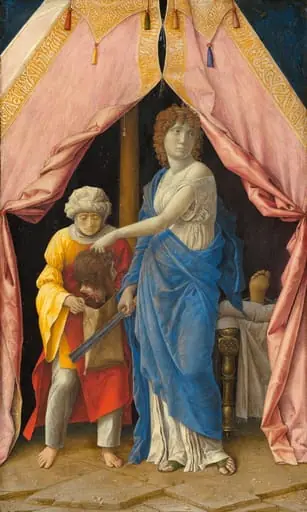
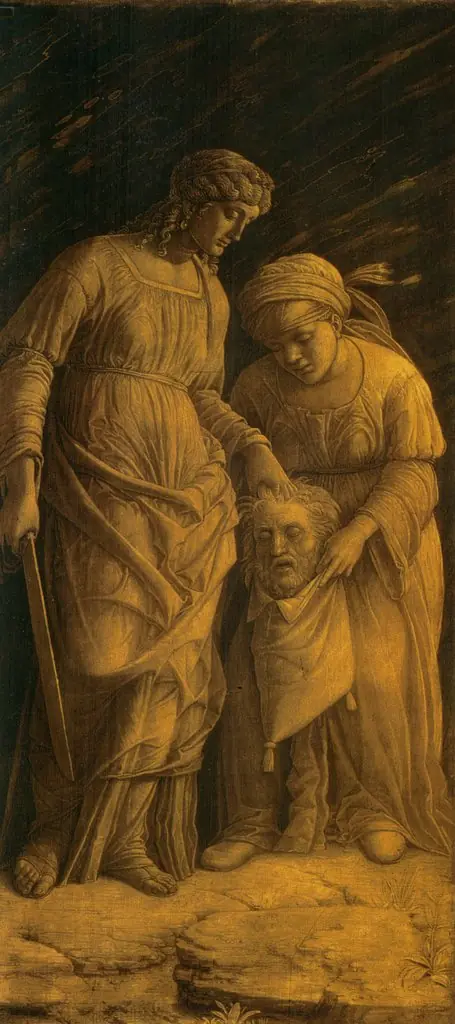
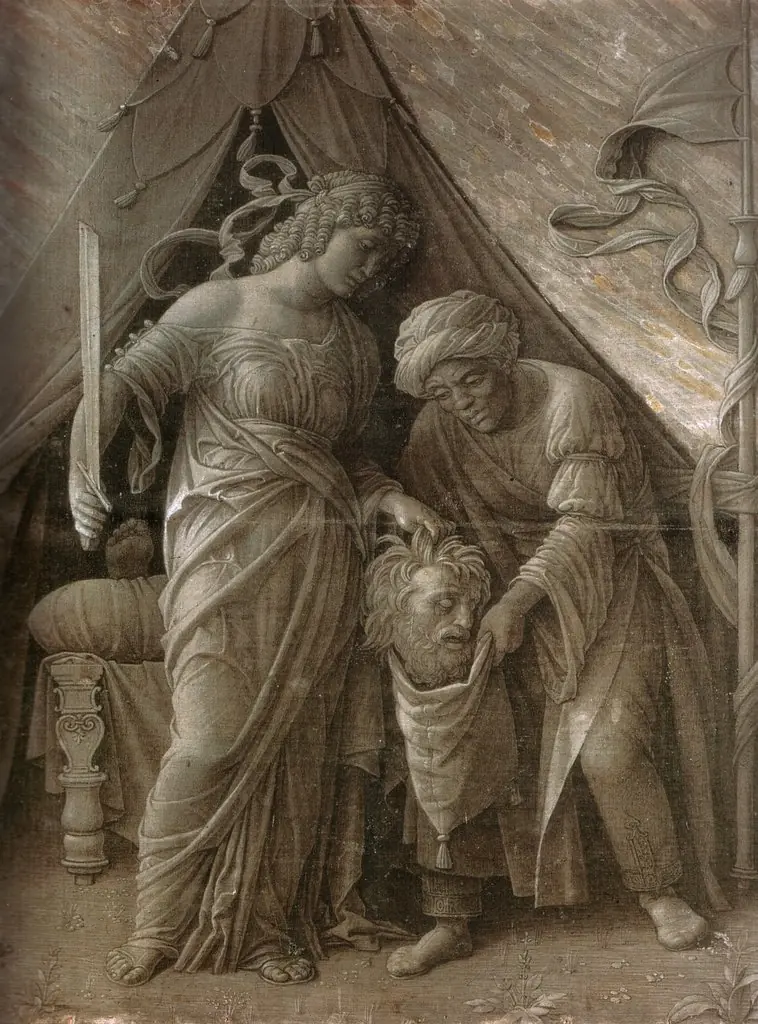
Judith with the Head of Holofernes is a chalk drawing by the Renaissance artist Follower of Andrea Mantegna. It dates from 1480 and is held in the collection of the National Gallery of Art.
About this work
Overview
The work entitled Judith with the Head of Holofernes is a drawing executed in pen and dark brown ink, enhanced with black chalk and white heightening. It is rendered on olive‑brown paper that has been mounted on canvas. The piece is held in the collection of the National Gallery of Art in Washington, D.C., and measures the figure of Judith in a composed, static pose.
Subject & Meaning
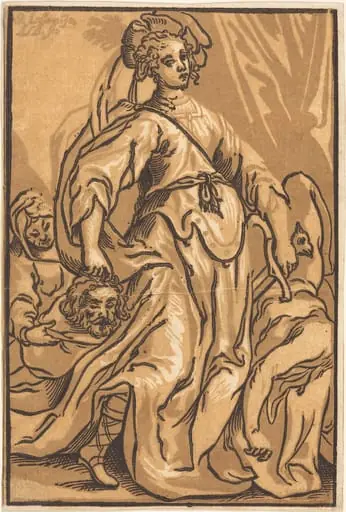
The composition depicts the biblical heroine Judith after she has beheaded the Assyrian general Holofernes. She stands calmly, clutching a blood‑stained sword, while the severed head lies on the ground beside her. The serene expression and upright posture emphasize Judith’s moral resolve and the triumph of virtue over tyranny, a theme recurrent in Western art.
Technique & Style
The artist employs fine, controlled lines to delineate the drapery of Judith’s high‑collared dress and the surrounding space.
The artist employs fine, controlled lines to delineate the drapery of Judith’s high‑collared dress and the surrounding space. Subtle shading with ink and chalk creates a sense of volume, while stark white highlights applied to the paper’s tan surface accentuate the gleam of the sword and the flesh of the head. The overall effect is a restrained chiaroscuro that conveys depth without heavy modeling.
History & Provenance
The drawing was created on prepared paper that has since been adhered to canvas, a practice sometimes used to preserve delicate works. It entered the National Gallery of Art’s collection through acquisition in the twentieth century, though the exact date of its donation or purchase is not recorded in the available documentation.
Context
Judith’s story was a popular subject for artists from the Renaissance onward, often serving as an allegory of virtuous resistance. This drawing reflects the continued interest in the narrative during the period in which the work was produced, aligning with a broader European tradition of illustrating biblical heroines with a focus on psychological composure rather than overt drama.
Artist & collection
Artist