Artwork
Marie-Antoinette
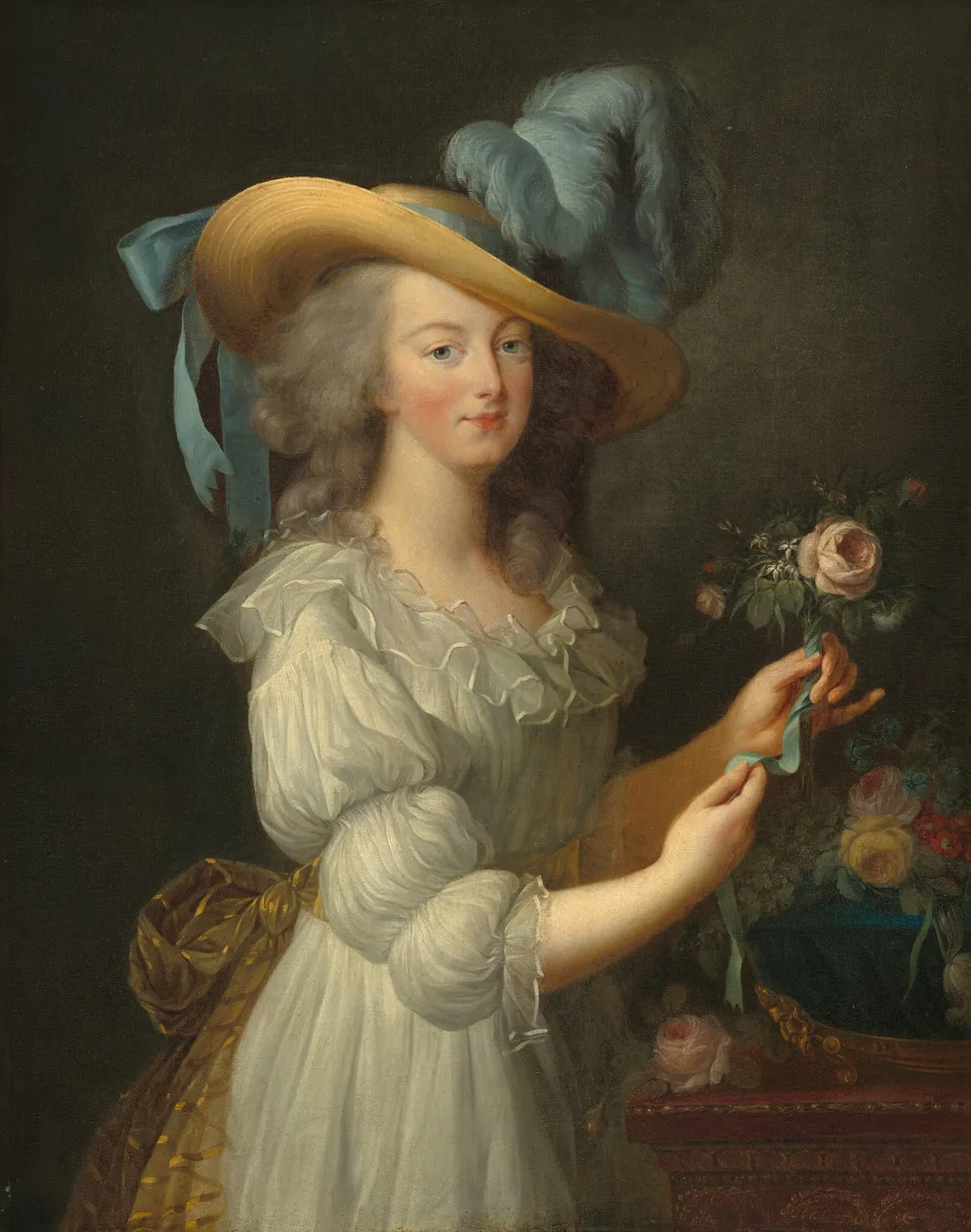
Marie-Antoinette is an oil painting by the Rococo painting artist after Élisabeth-Louise Vigée Le Brun. It dates from 1783 and is held in the collection of the National Gallery of Art.
About this work
Subject & Meaning
Created in 1783, this oil-on-canvas portrait depicts Marie Antoinette as its sole subject.
Created in 1783, this oil-on-canvas portrait depicts Marie Antoinette as its sole subject. The work functions as a reproductive piece, executed by an anonymous artist based on Élisabeth Louise Vigée Le Brun's renowned composition, Marie Antoinette in a Muslin Dress. While the specific iconographic details of the queen's attire or setting are not explicitly described in the available records, the painting's primary significance lies in its derivation from Vigée Le Brun's original, which historically represented a shift toward a more informal, naturalistic royal image.
Consequently, this canvas serves as a disseminated version of that royal representation, preserving the likeness of the French queen for later collectors, including the Timken family, before entering the National Gallery of Art's collection.
Technique & Style
Created in 1783, this portrait of Marie-Antoinette is executed in oil paint on a canvas support. The work is classified as a painting within the portrait genre and is attributed to an unknown artist working after a composition by Élisabeth Louise Vigée Le Brun. Specifically, it is based on the subject matter of Marie-Antoinette in a Muslin dress.
The physical dimensions of the canvas measure 92.7 cm in height and 73.1 cm in width. The medium consists of standard oil pigments applied to the textile surface, a common technique for formal portraiture of the late eighteenth century. The painting is currently held in the collection of the National Gallery of Art in Washington, D.C.
History & Provenance
The portrait of Marie-Antoinette is dated 1783 and executed in oil on canvas. It depicts the queen in a muslin dress and is attributed to an anonymous artist who worked after a composition by Élisabeth Louise Vigée Le Brun. Provenance records show the work passed from Comte Charles de Damas and Comte Arthur de Vogüé through the Saint collection, Wildenstein & Co., Reinhardt Galleries, and William R. Timken, who owned it by 1928; it then descended by inheritance to Timken's widow, Lillian Guyer Timken, and was bequeathed to the National Gallery of Art in 1960.
The painting was lent by the Timkens to a New York exhibition in 1928. Its commission and original creation context remain undocumented.
Overview
This oil painting, titled Marie-Antoinette, depicts the queen standing within a garden setting. The artist, whose identity remains unknown, rendered her in a pale blue gown adorned with white lace. Soft illumination highlights her features, creating a luminous effect, while the surrounding foliage is suggested with subtle strokes of green and brown.
Context
Stylistically, this painting shares characteristics with works found in collections such as the National Gallery of Art in Washington. Such comparisons can help art historians understand the artistic conventions and prevailing styles of the period in which it was created, even when the artist's identity is unknown.
Artist & collection

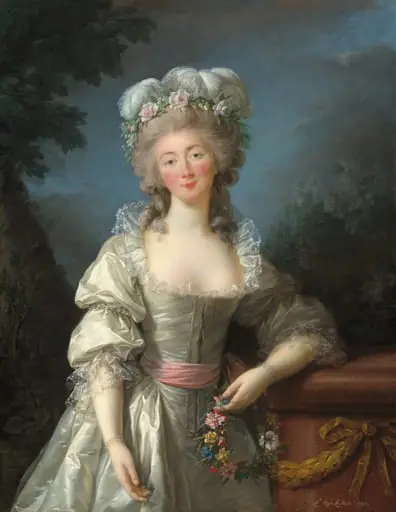 Madame du Barry
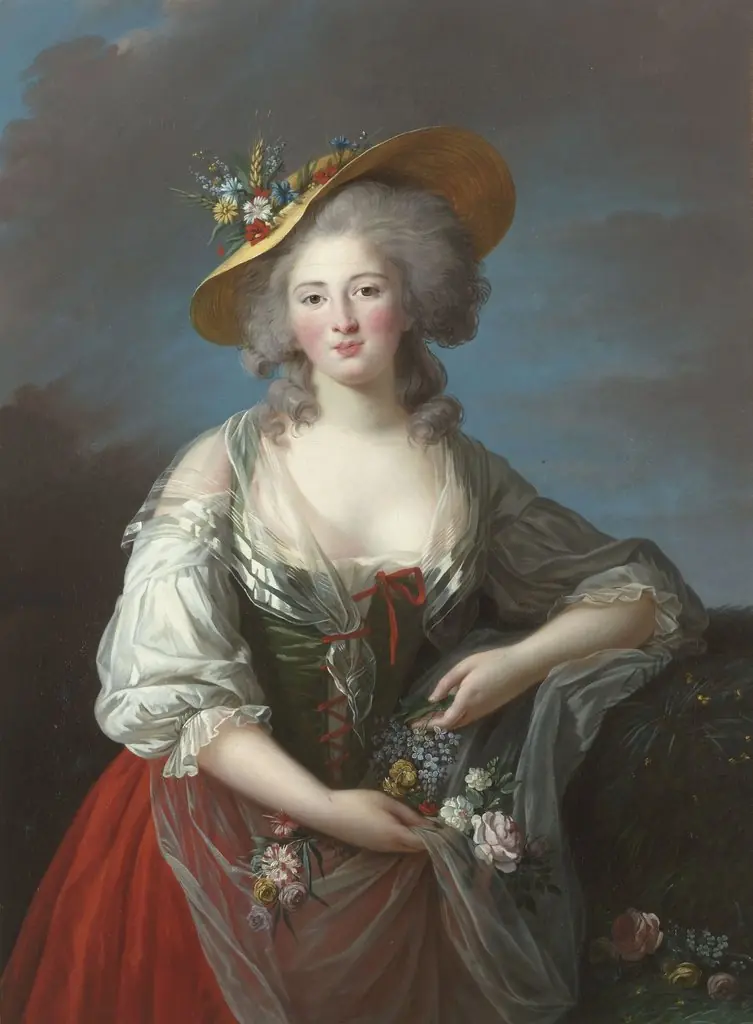 Elisabeth-Philippe-Marie-Hélène de France, dite Madame Elisabeth
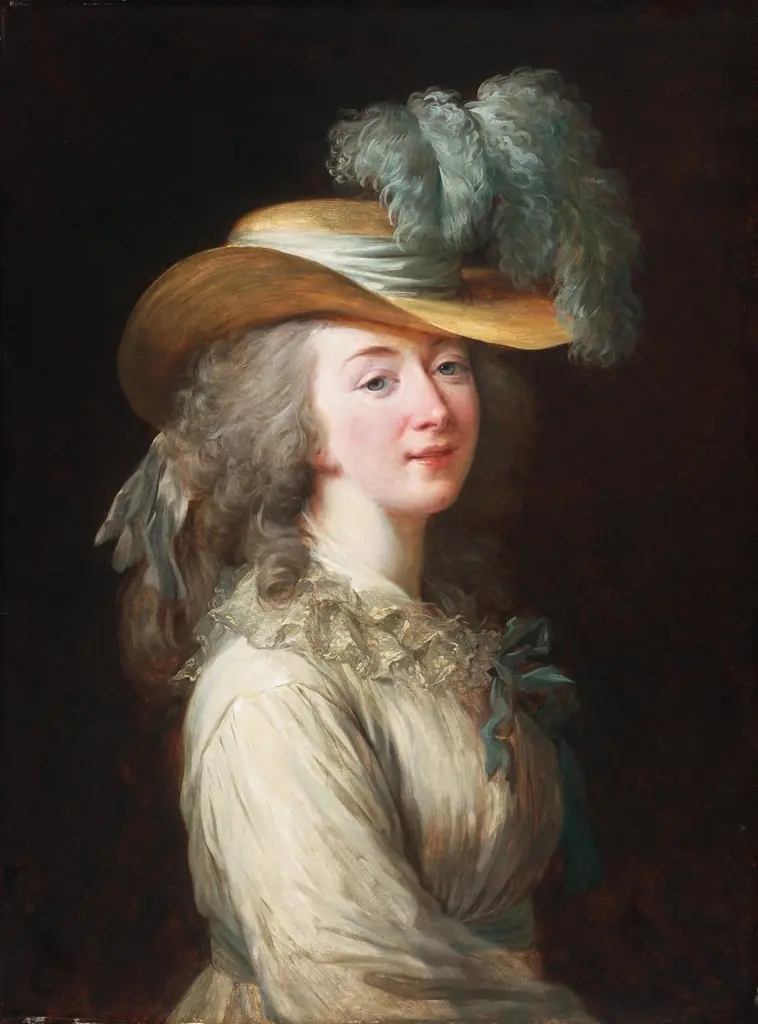 Portrait of Madame Du Barry
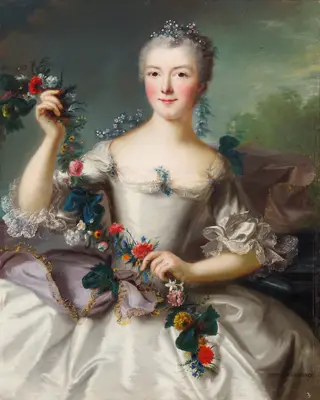 Louise Margarethe (1730-1820) Prinzessin Arenberg, Dreiviertelporträt
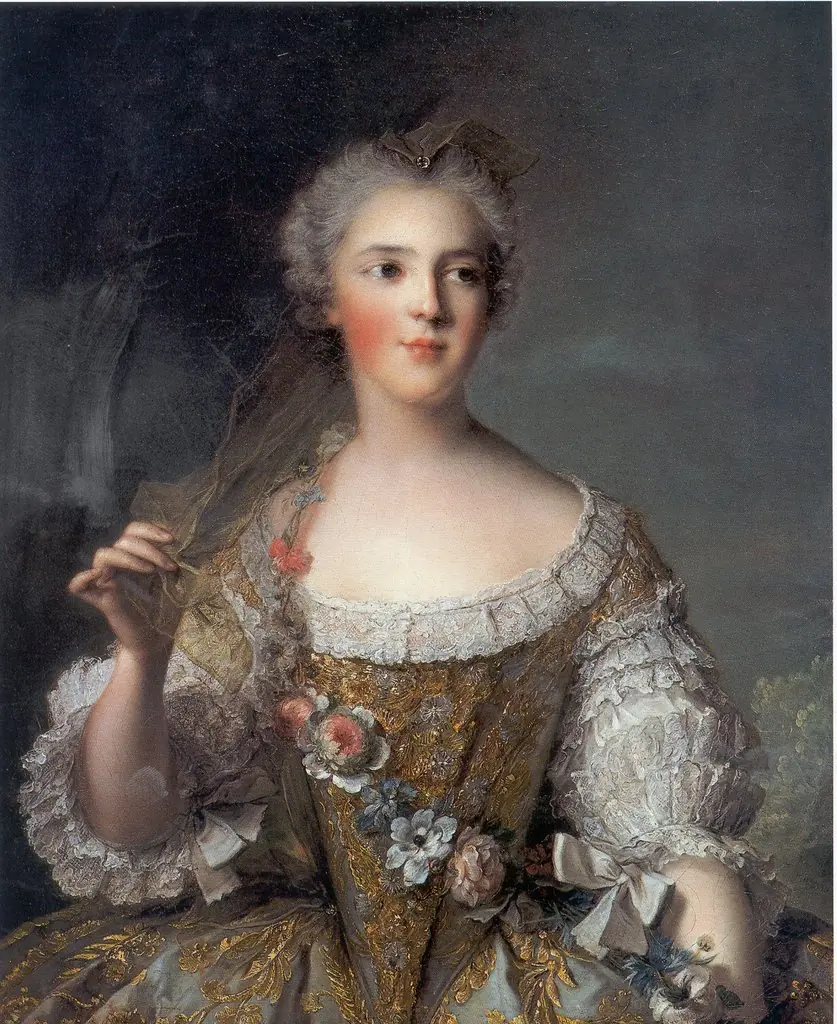 Madame Sophie of France
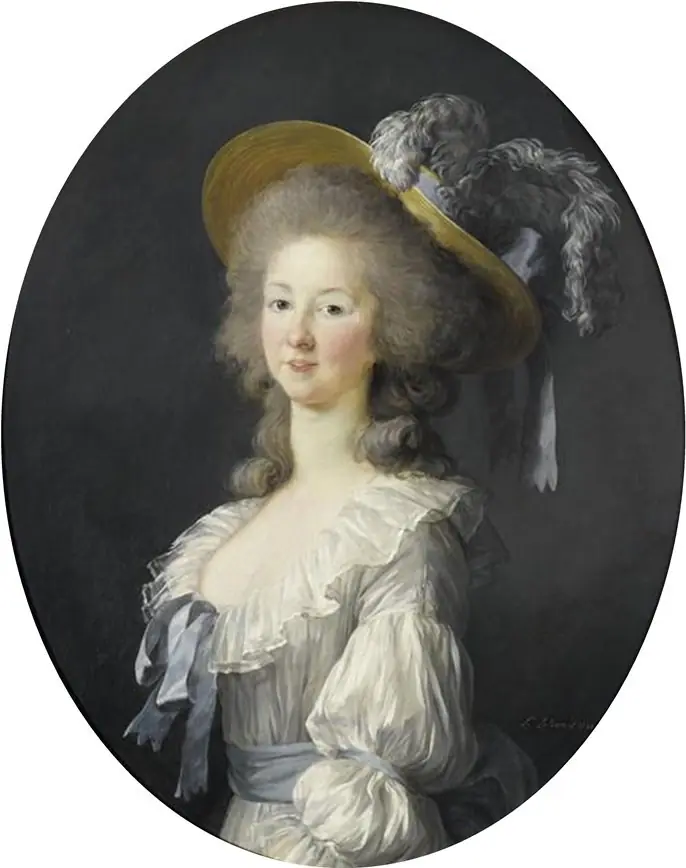 Portrait of Marie-Thérèse-Louise de Savoie-Carignan, Princess of Lamballe
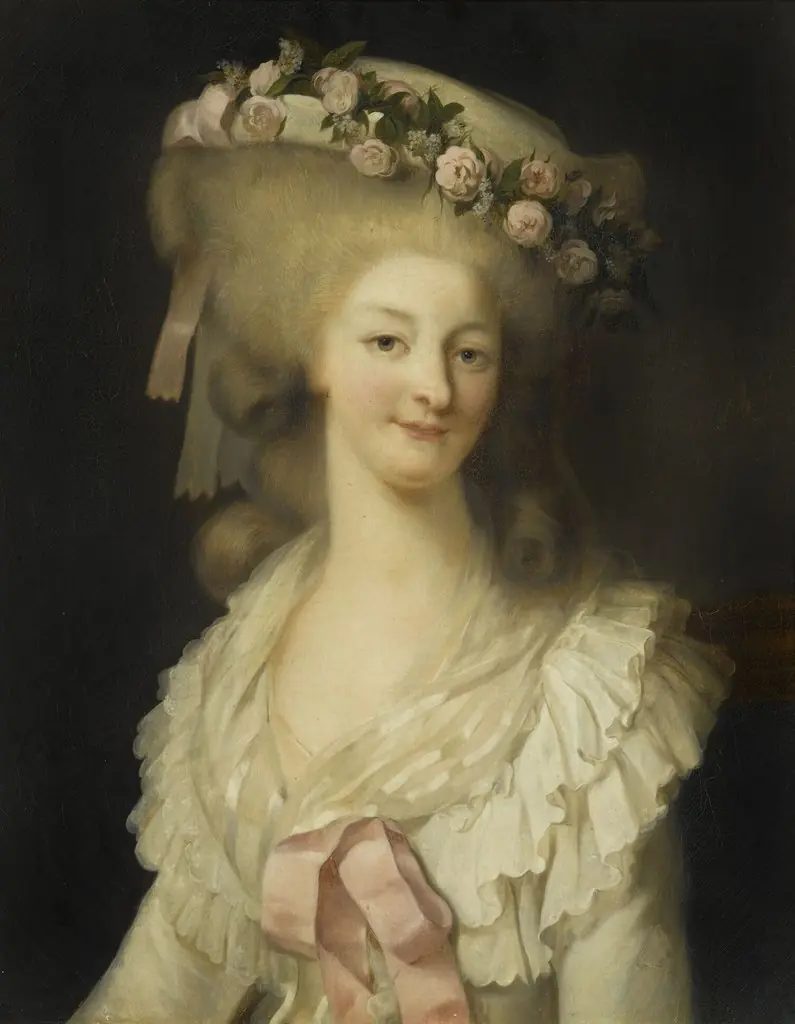 Marie-Thérèse-Louise de Savoie-Carignan, Princess of Lamballe
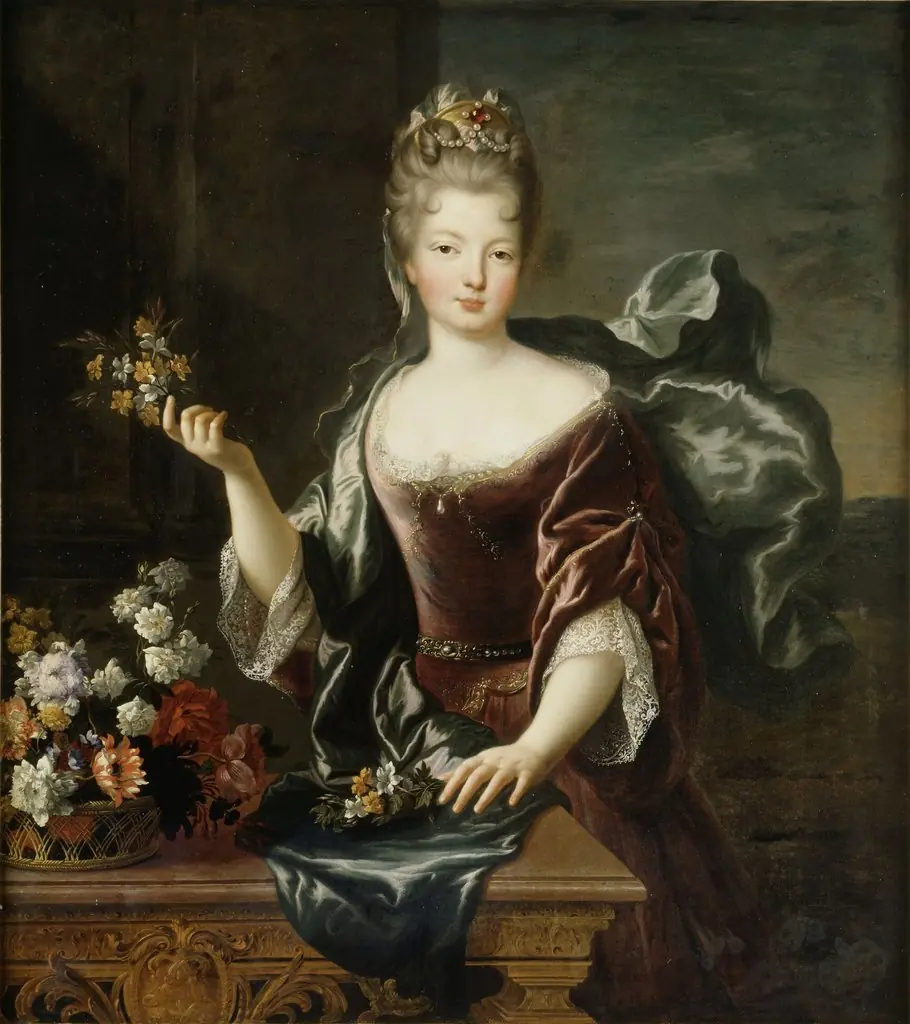 Françoise-Marie de Bourbon, Mademoiselle de Blois, Duchess of Orleans
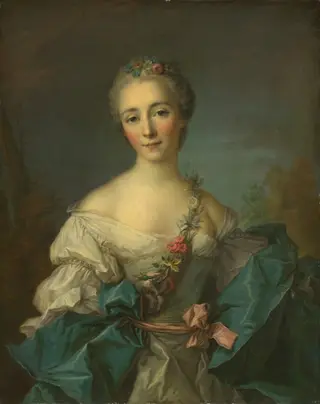 Portrait of a Young Woman