Artwork
Pope Innocent X
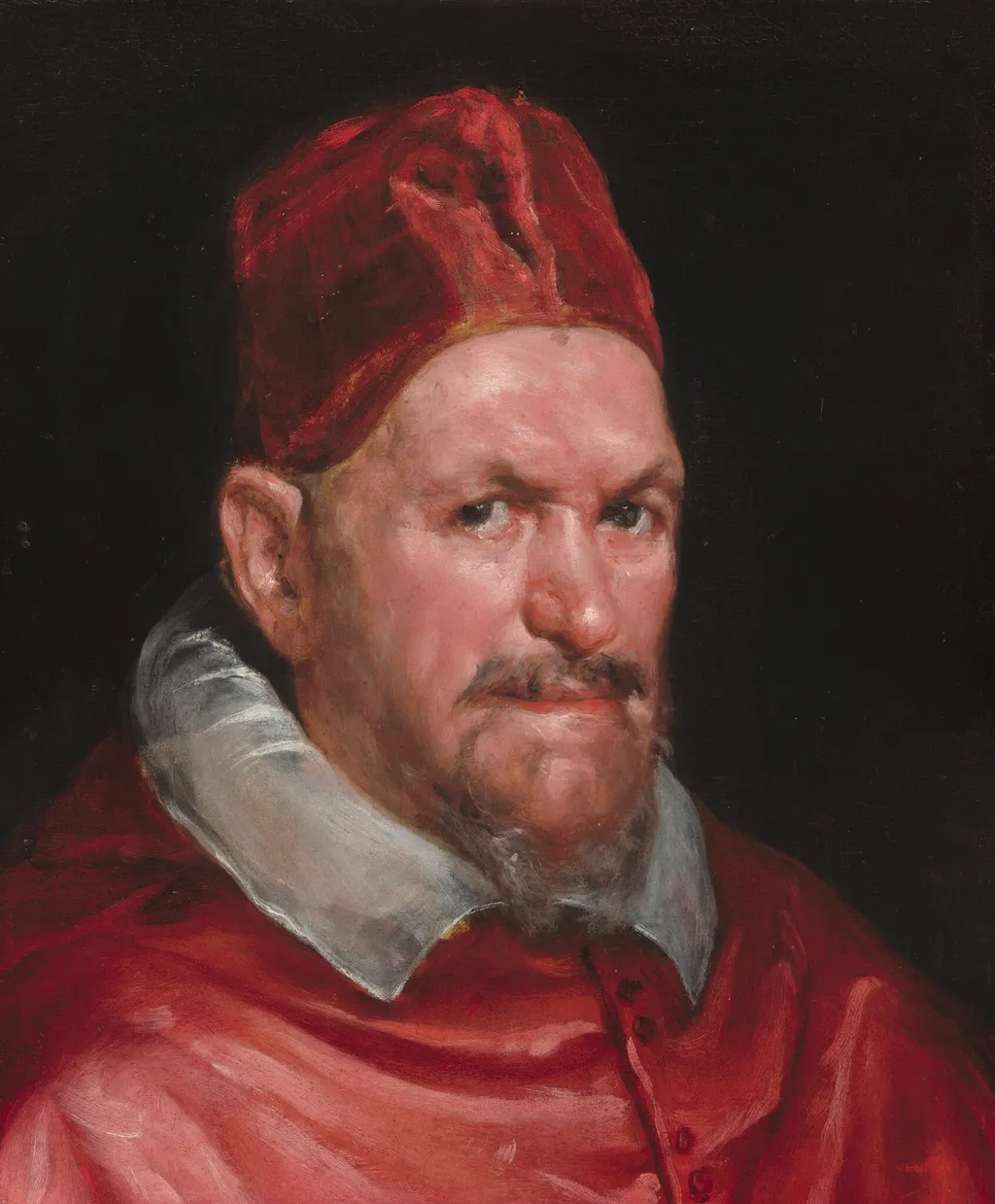
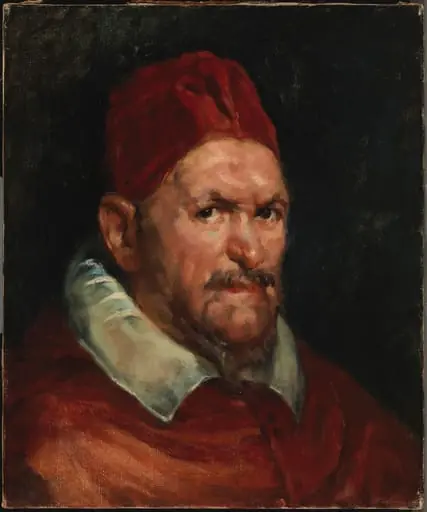
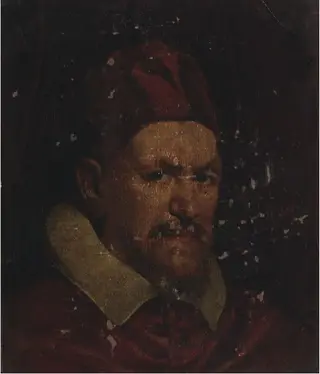
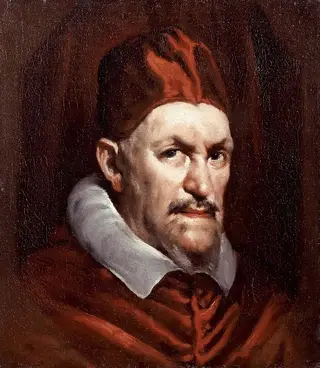
Pope Innocent X is an oil painting by the Baroque artist Circle of Diego Velázquez. It dates from 1650 and is held in the collection of the National Gallery of Art.
About this work
Technique & Style
3 centimeters, the work reflects the handling and stylistic qualities associated with the circle of Diego Velázquez, though not definitively attributed to him.
The Pope Innocent X (1650) is executed in oil on canvas, a medium and support typical of seventeenth-century European portraiture. Measuring 49.2 by 41.3 centimeters, the work reflects the handling and stylistic qualities associated with the circle of Diego Velázquez, though not definitively attributed to him. The technique demonstrates controlled brushwork, emphasizing subtle tonal transitions to model the pope’s features and drapery.
The palette is restrained, relying on deep reds, whites, and flesh tones to convey authority and realism. The composition adheres to formal portrait conventions, centering the subject in a three-quarter view with meticulous attention to facial expression and textile detail. Condition details remain unspecified, but the work’s survival in major collections suggests stable preservation.
History & Provenance
The work titled Pope Innocent X is an oil on canvas portrait dated 1650. It shows the 17th‑century pope and is attributed to the circle of Diego Velázquez; the artist is recorded as unknown. Its early ownership passed through the Walpole family, Sir Robert Walpole, then his sons, until 1779 when it was sold to Russian ambassador Count Aleksei Semonovich Musin‑Pushkin, who presented it to Catherine II.
The painting entered the Imperial Hermitage Gallery (inventory 418) and remained there until 1930, when it was sold through Berlin’s Matthiesen Gallery, London’s P. & D. Colnaghi, and New York’s M. Knoedler to Andrew W. Mellon. Mellon transferred it to his trust in 1932, and it was gifted to the National Gallery of Art in 1937.
The portrait of Pope Innocent X is presently displayed at the National Gallery of Art in Washington, D.C., having entered the museum as a gift in 1937. Its accession is listed under the institution’s collection numbering, while it previously carried the Hermitage inventory number 418. The work has been included in exhibitions devoted to Diego Velázquez, most recently appearing in the 2022 Velázquez retrospective at the National Gallery, which highlighted the painting’s significance within the artist’s oeuvre and its historical journey from European collections to the United States.
Overview
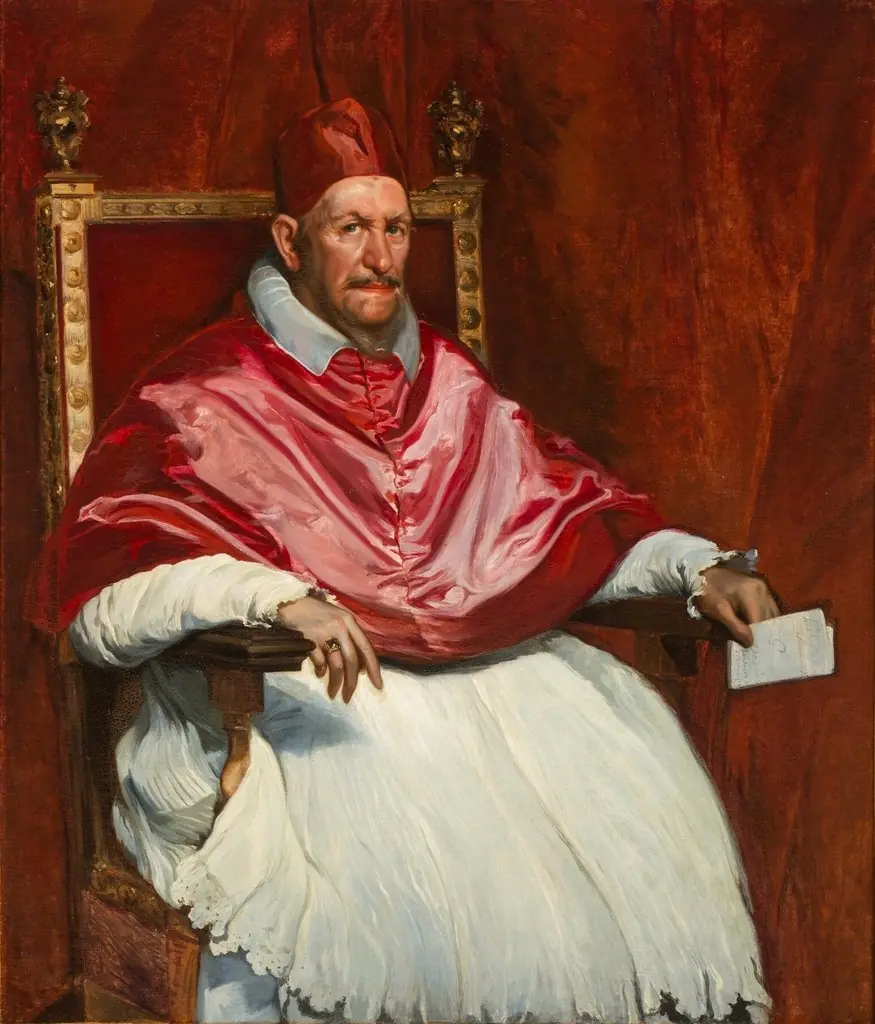
This oil on canvas portrait depicts Pope Innocent X seated, adorned in elaborate ecclesiastical vestments. The artist rendered the pontiff with a striking degree of realism, capturing a serious and commanding presence. The work is notable for its meticulous attention to detail, particularly in the rendering of the sitter's facial features and the rich textures of his attire, making it a significant example of portraiture from its era.
Subject & Meaning
The central figure of this painting is Giovanni Battista Pamphilj, who reigned as Pope Innocent X from 1644 to 1655. The artist chose to present him with a grave and authoritative demeanor, a common approach in papal portraiture intended to convey the power and solemnity of the office. This portrayal likely aimed to solidify the Pope's image as a resolute and influential leader during his pontificate.
Artist & collection
Artist