Artwork
Queen Victoria
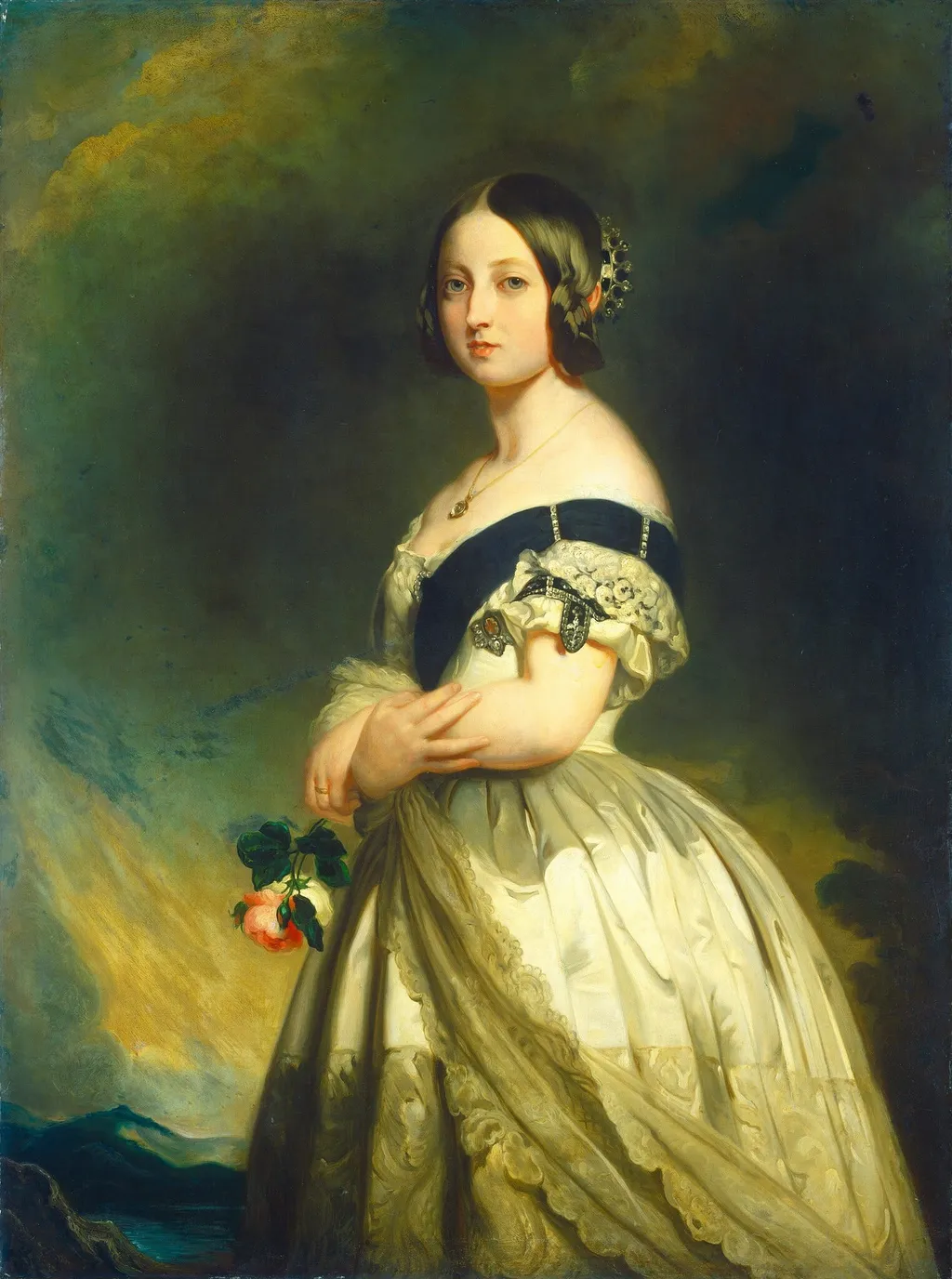
Queen Victoria is an oil painting by the British Romanticist artist Studio of Franz Xaver Winterhalter. It dates from 1843 and is held in the collection of the National Gallery of Art.
About this work
Queen Victoria sits in a fine dress and crown. The painting dates to 1843, when photography was on the rise, so the choice to paint her says something about the standing of traditional art and its use to show power and status. Now at the National Gallery of Art, Washington.
Technique & Style
The work is executed in oil paint on canvas, a standard support for mid-nineteenth-century European portraiture.
The work is executed in oil paint on canvas, a standard support for mid-nineteenth-century European portraiture. Measuring 128 cm in height by 95.9 cm in width, the canvas provides a vertical, single-figure format suited to a formal sitter portrait. The painting is held in the collection of the National Gallery of Art in Washington, D.C., and is classified as a portrait.
While credits the work to an unknown artist, attributes it to an anonymous artist associated with Franz Xaver Winterhalter, a portraitist whose refined academic handling and polished surfaces are characteristic of court portraiture of the period. The provenance traces from William Henry Donner of Montreux to his children and then by gift to the NGA in 1954, indicating the canvas has been preserved within stable private and institutional custody.
History & Provenance
The painting was executed in 1843 in oil on canvas. Its early ownership history prior to the mid-twentieth century is not documented in the available records. The work subsequently passed into the collection of William Henry Donner (1864–1953) of Montreux, Switzerland.
After his death, it was held by his three children, Robert Donner, Elizabeth Donner Hanson, and Dora Donner Ide. In 1954, the siblings jointly donated the painting to the National Gallery of Art in Washington, D.C., where it remains held in the collection.
The 1843 oil on canvas portrait of Queen Victoria is held in the collection of the National Gallery of Art in Washington, D.C. Its provenance traces back to William Henry Donner of Montreux, Switzerland, who possessed the work until his death in 1953. Following his passing, the painting remained with his children, Robert Donner, Elizabeth Donner Hanson, and Dora Donner Ide, before they gifted it to the museum in 1954. While the artwork measures 128 by 95.9 centimeters and depicts the monarch, the provided records do not list specific inventory accession numbers or detail any public exhibitions in which the piece has been displayed.
Context
The 1843 oil portrait of Queen Victoria, housed in the National Gallery of Art, exemplifies mid‑nineteenth‑century British royal portraiture and has been studied as part of the evolution of Victorian visual culture. Scholarship, drawing on catalogues and the work’s Wikidata entry, attributes the painting to Franz Xaver Winterhalter, situating it within his prolific court portraiture. Its provenance traces from William Henry Donner’s collection to a 1954 gift to the NGA, reflecting a documented chain of ownership.
As a portrait, the work functions both as a state icon and as a technical study of oil on canvas, underscoring the intersection of artistic practice and imperial symbolism in the period.
Overview
This oil on canvas portrait depicts Queen Victoria seated within an interior setting. The monarch is shown adorned in ceremonial attire and a crown, conveying her royal status. Created as a painting during an era when photography was gaining prominence, the artwork reflects the enduring significance of traditional artistic mediums for official representation. It serves as a visual testament to the power and status associated with the British monarchy.
Subject & Meaning
The depiction of Queen Victoria in opulent dress and regalia serves to underscore her authority and position. Such portraits were instrumental in projecting the monarch's power and stability across the British Empire. The formal composition and rich details contribute to an image of sovereignty and tradition, reinforcing the established order and the Queen's central role within it.
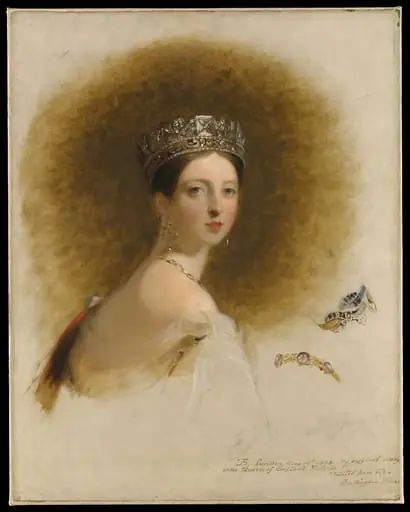
Artist & collection

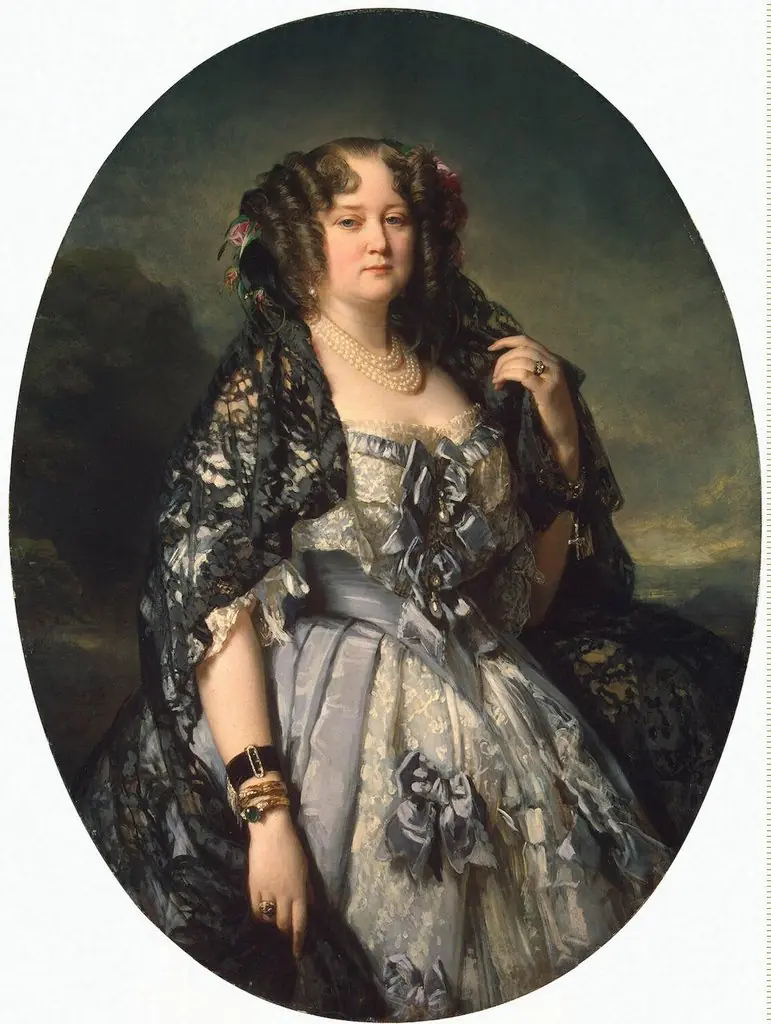 Portrait of Princess Sophia Radzivil
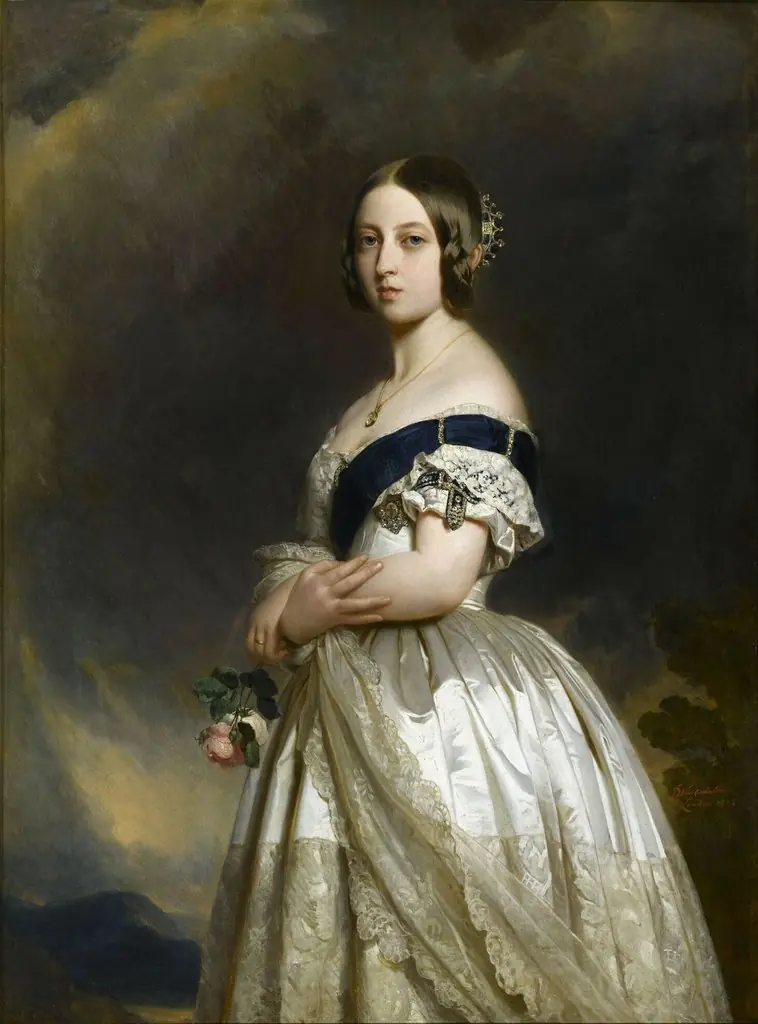 Victoria I, Queen of Great Britain (1819–1901)
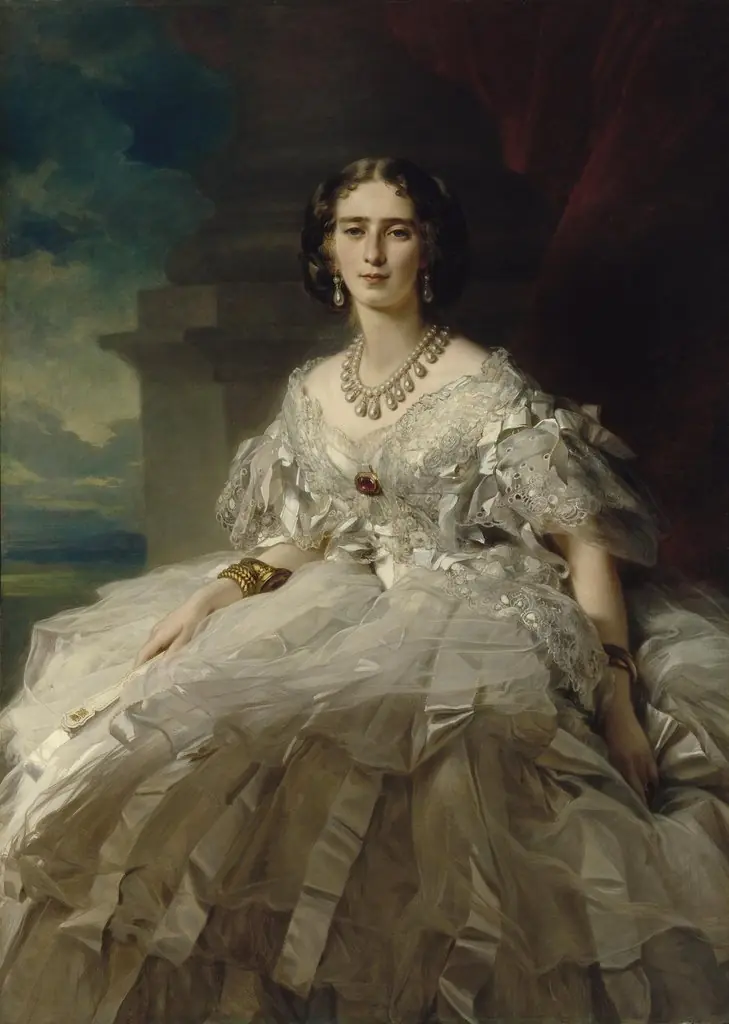 Portrait of Princess Tatyana Alexandrovna Yusupova
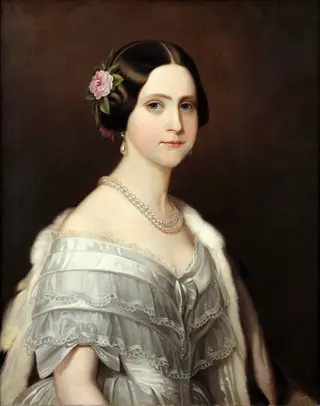 Princess Maria Amélia of Brazil
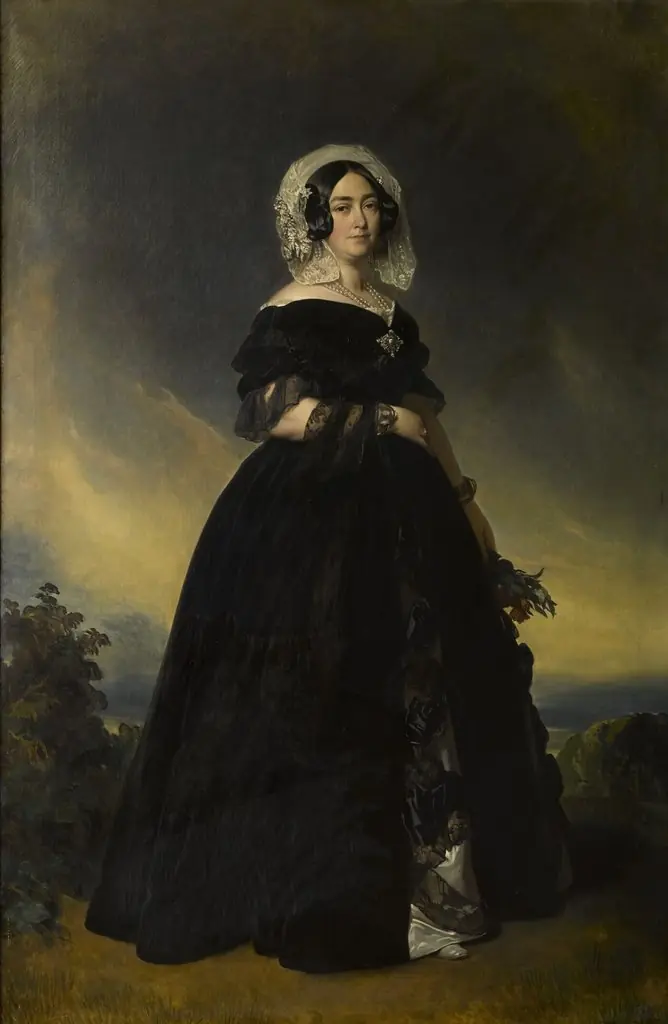 Marie Louise Victoria of Saxe-Coburg-Saafeld, Duchess of Kent (1786–1861)
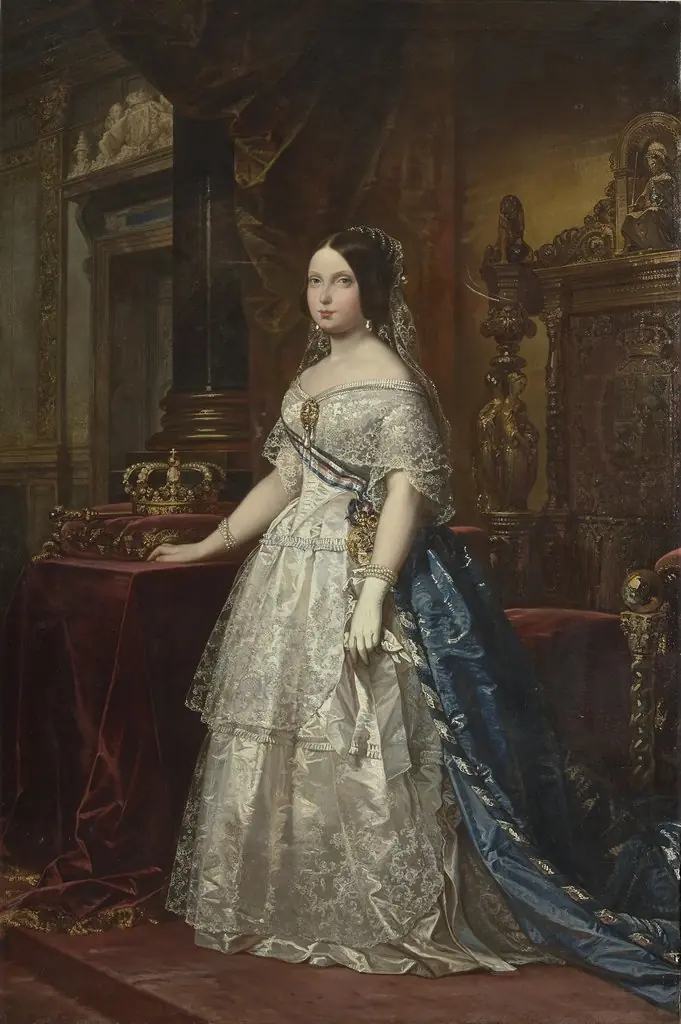 Isabel II
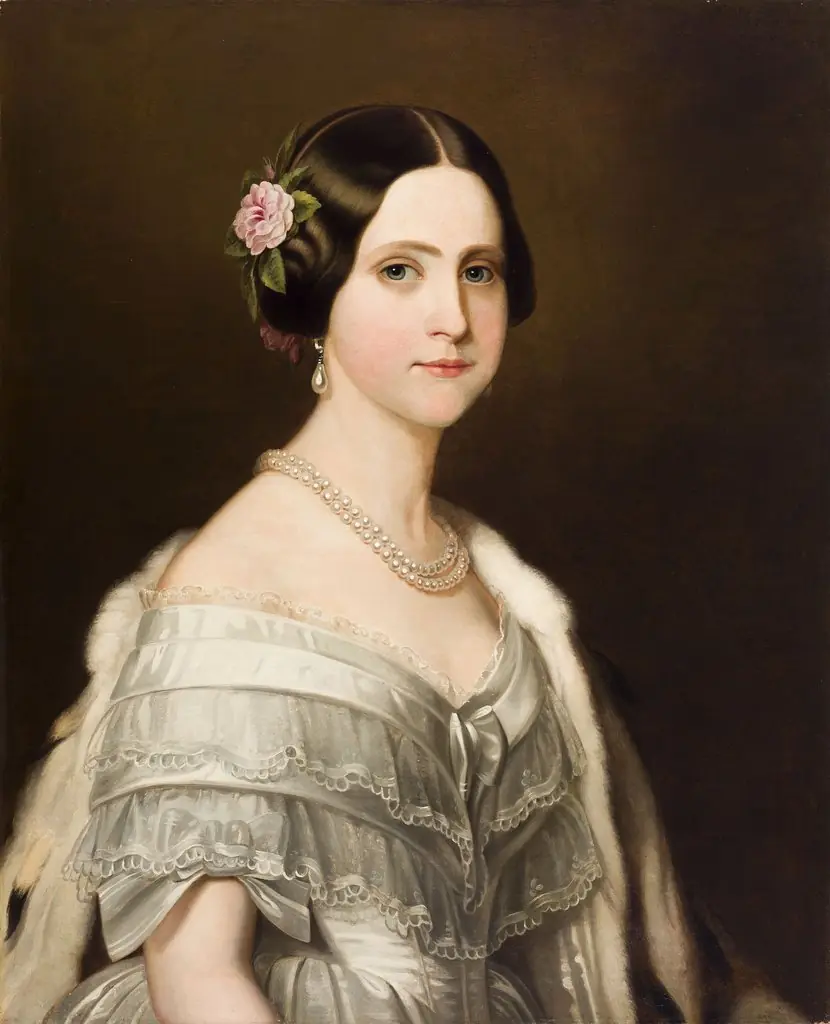 Portrait de S. A. I. Mme. la Princesse Dona Marie Amélie du Brésil
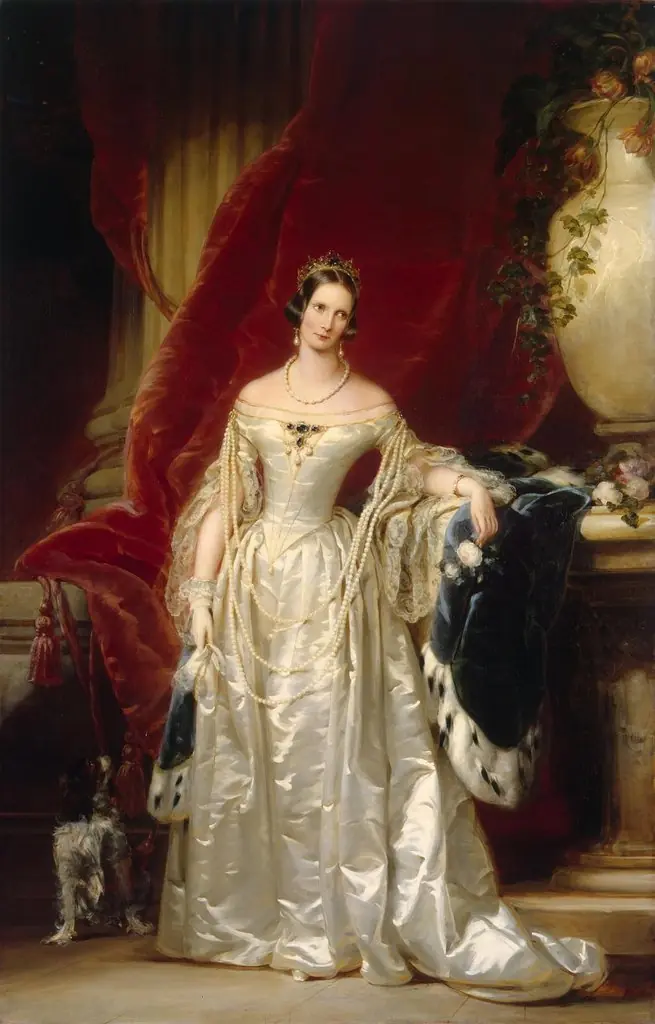 Portrait of Empress Alexandra Fyodorovna
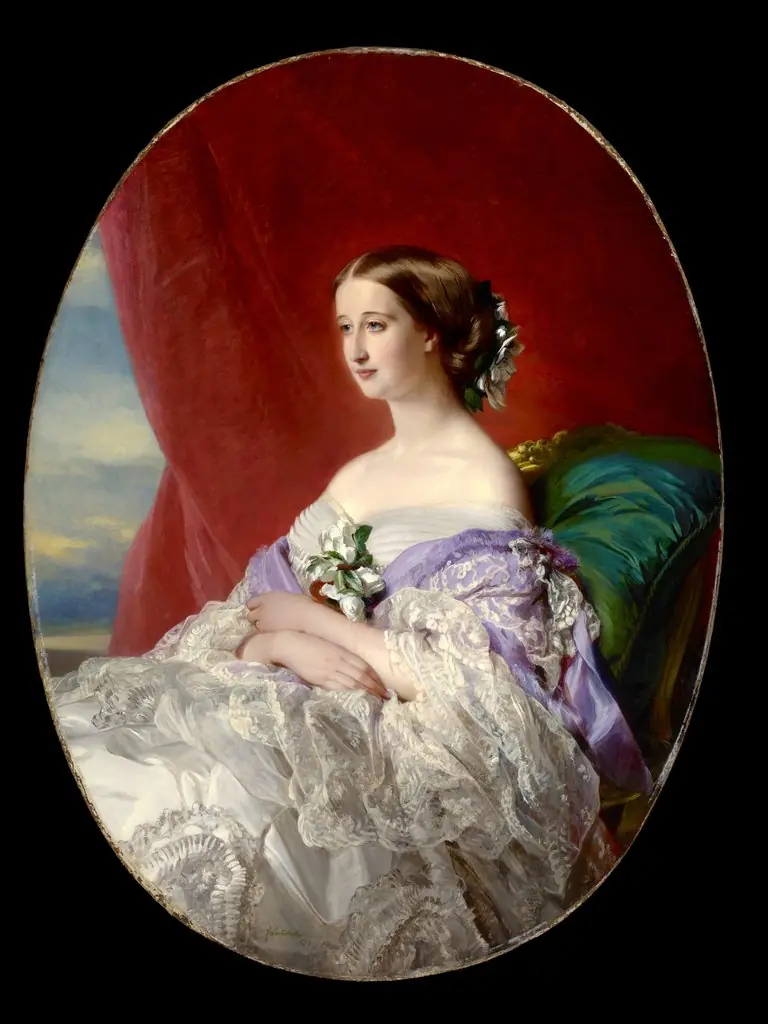 Empress Eugénie
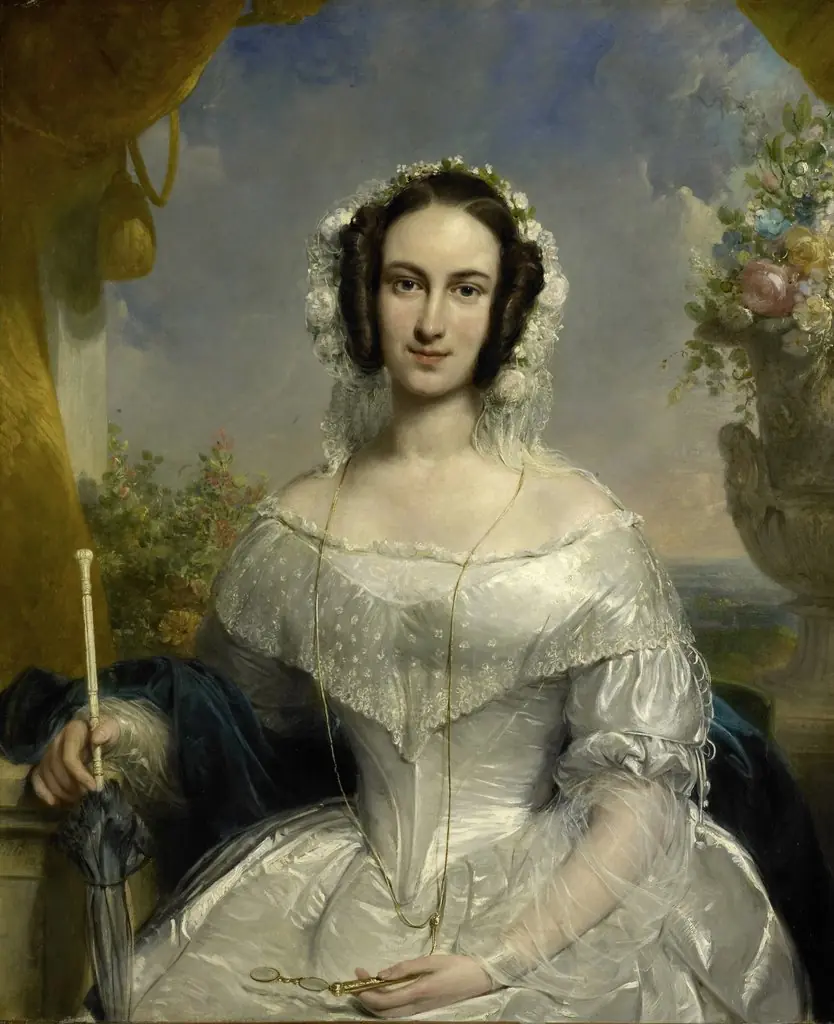 Agatha Petronella Hartsen (1814-78). In bruidstoilet ter gelegenheid van haar huwelijk met Jan van der Hoop op 17 maart 1841