Artwork
Agatha Petronella Hartsen (1814-78). In bruidstoilet ter gelegenheid van haar huwelijk met Jan van der Hoop op 17 maart 1841
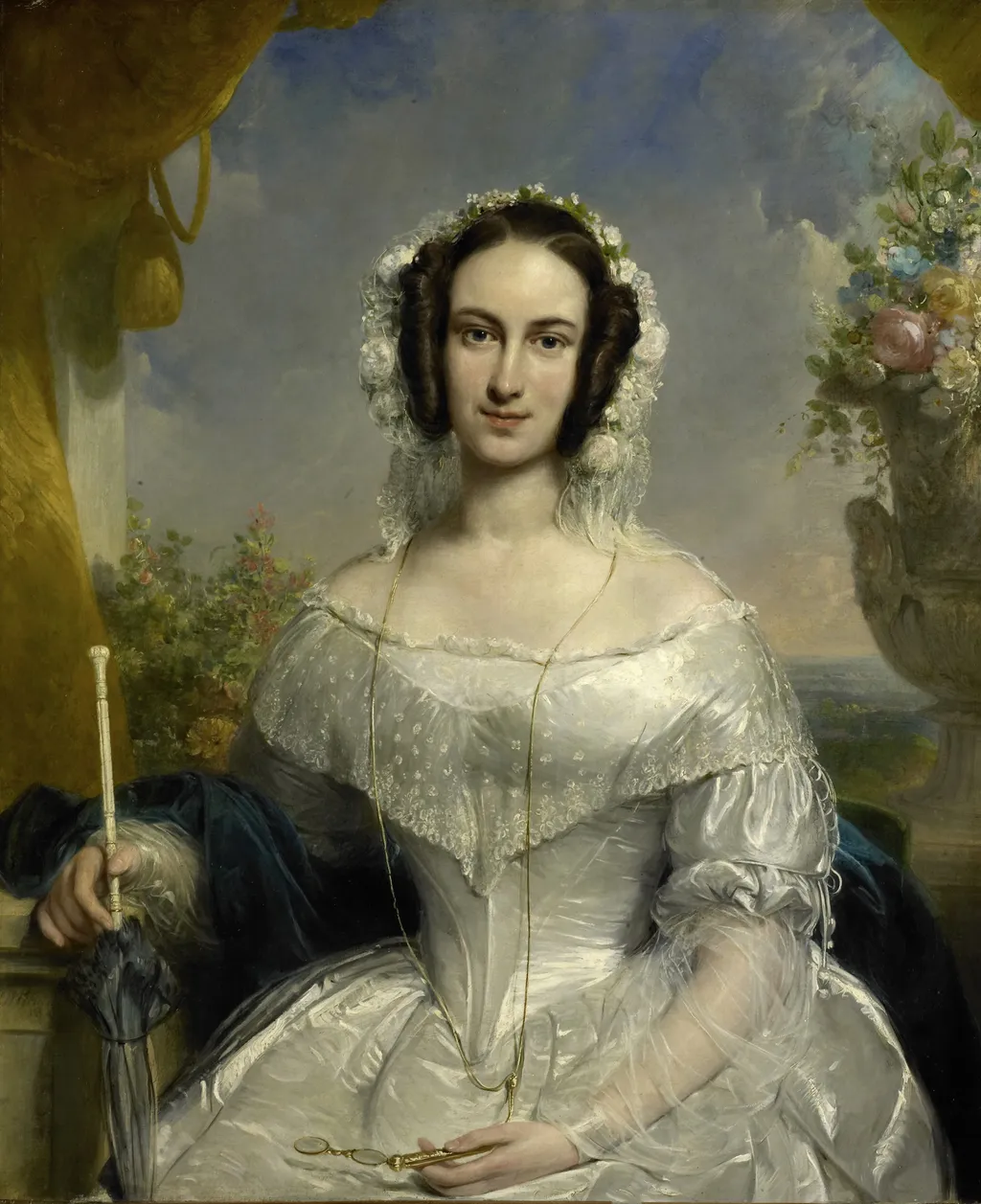
Agatha Petronella Hartsen (1814-78). In bruidstoilet ter gelegenheid van haar huwelijk met Jan van der Hoop op 17 maart 1841 is an oil painting by the Biedermeier artist Jan Willem Pieneman. It dates from 1841 and is held in the collection of the Rijksmuseum.
About this work
Technique & Style
The medium is classified simply as oil paint, and the genre is portraiture, consistent with Jan Willem Pieneman's practice of formal commissioned likenesses.
The work is an oil painting executed on canvas, a standard support for mid-nineteenth-century Dutch portraiture. According to the catalogue record, it measures 107.5 cm in height by 89 cm in width, an upright format well suited to a full-length bridal portrait. The medium is classified simply as oil paint, and the genre is portraiture, consistent with Jan Willem Pieneman's practice of formal commissioned likenesses.
No additional information is documented regarding specific handling, surface condition, or stylistic characteristics beyond these basic technical classifications.
History & Provenance
The oil painting titled "Agatha Petronella Hartsen (1814-78). In bruidstoel ter gelegenheid van haar huwelijk met Jan van der Hoop" was created in 1841 by Dutch artist Jan Willem Pieneman. It was commissioned to commemorate the marriage of Agatha Petronella Hartsen and Jan van der Hoop on 17 March 1841.
The work is part of the Rijksmuseum's collection in Amsterdam, where it remains on display. The painting measures 107.5 cm in height and 89 cm in width and is executed on canvas using oil paint.
Overview
Jan Willem Pieneman’s 1841 oil portrait captures Agatha Petronella Hartsen (1814‑1878) on the occasion of her marriage to Jan van der Hoop on 17 March 1841. The work is part of the Rijksmuseum’s collection and presents the bride in a formal, seated pose within an intimate interior setting.
Subject & Meaning
Hartsen is shown in a white wedding dress, her veil framing her face and a floral crown resting on dark hair. She holds a gold object in her right hand, perhaps a wedding token, while her left arm rests on a dark blue drapery, emphasizing the ceremony’s solemnity and personal significance.
Context
Created during the early‑mid‑19th‑century Dutch portrait tradition, the work reflects contemporary conventions for matrimonial portraiture, combining personal representation with idealized elegance. Pieneman, known for historical and genre scenes, applied his academic training to this intimate domestic commission.
Own this work as a print
Artist & collection

 The Battle of Waterloo
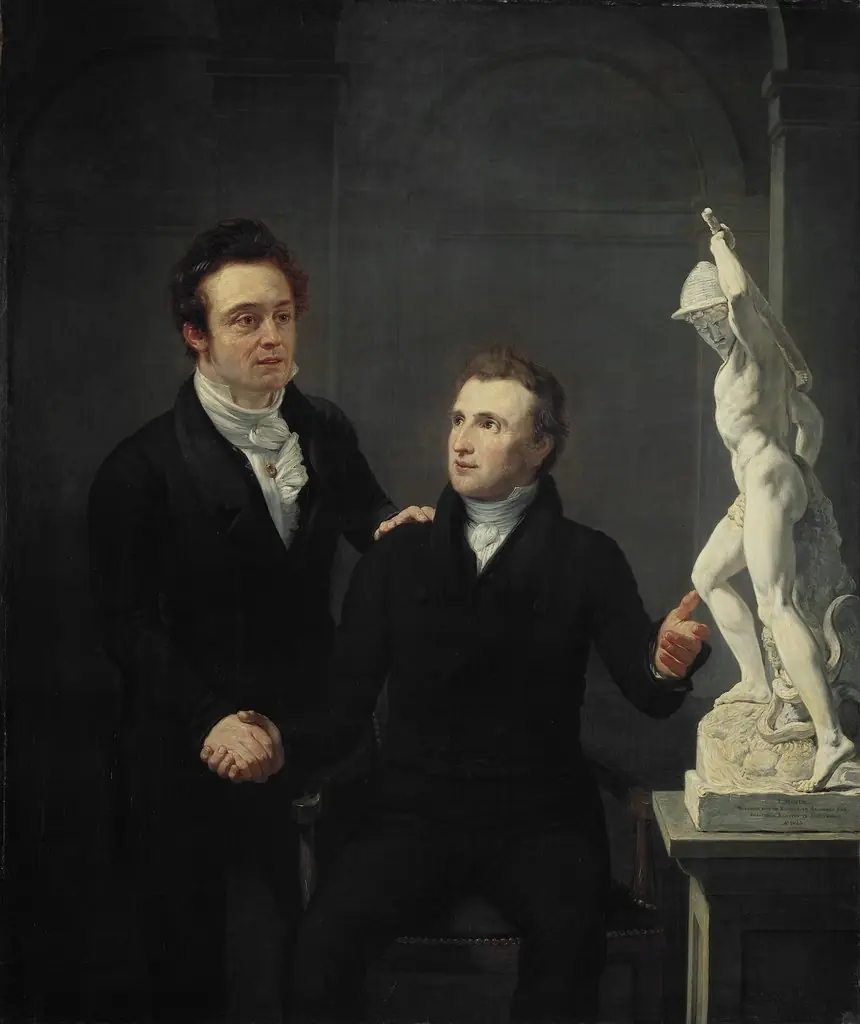 Louis Royer, sculptor, and Albertus Bernardus Roothaan, stockbroker, friend of the arts, and patron of the sciences
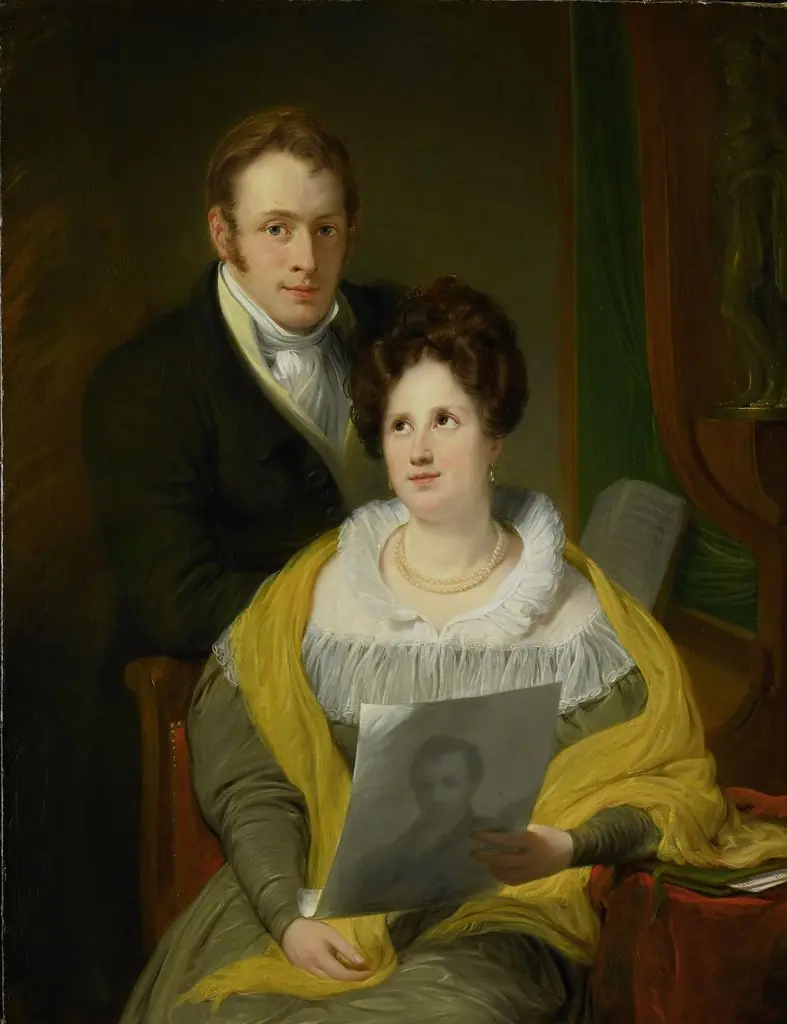 Portrait of a Woman and a Man
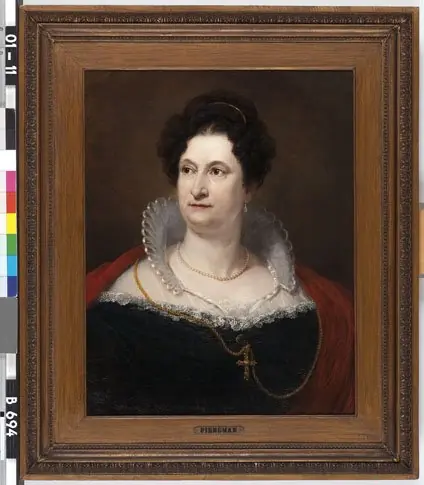 Joanna Cornelia Ziesenis-Wattier (1762–1827). Toneelspeelster
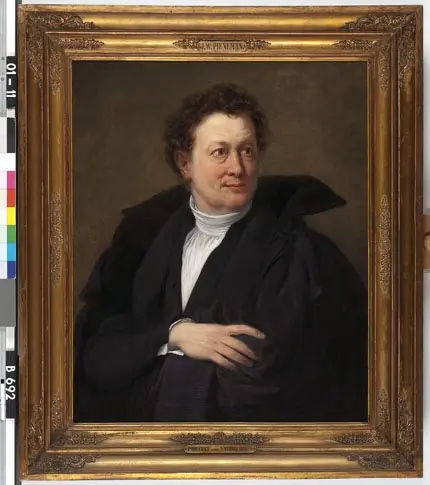 Andries Snoek (1766–1829). Toneelspeler
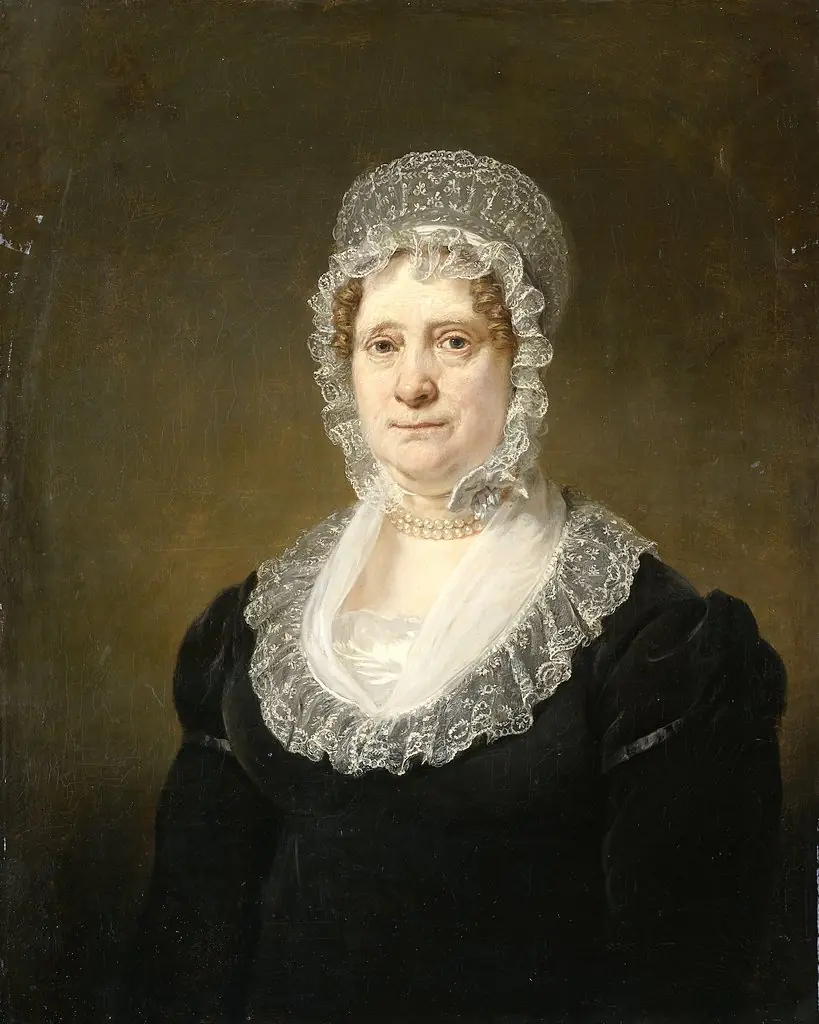 Portrait of Sara de Haan, Widow of the Amsterdam Underwriter Cornelis Hartsen
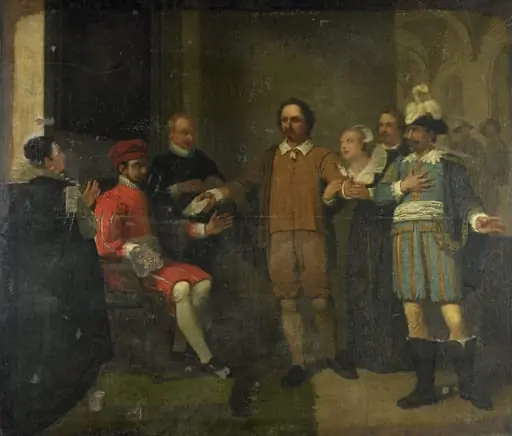 Jacob Simonsz de Rijk getting the Spanish Governor-General Requesens to Release Marnix van Sint Aldegonde, 1575
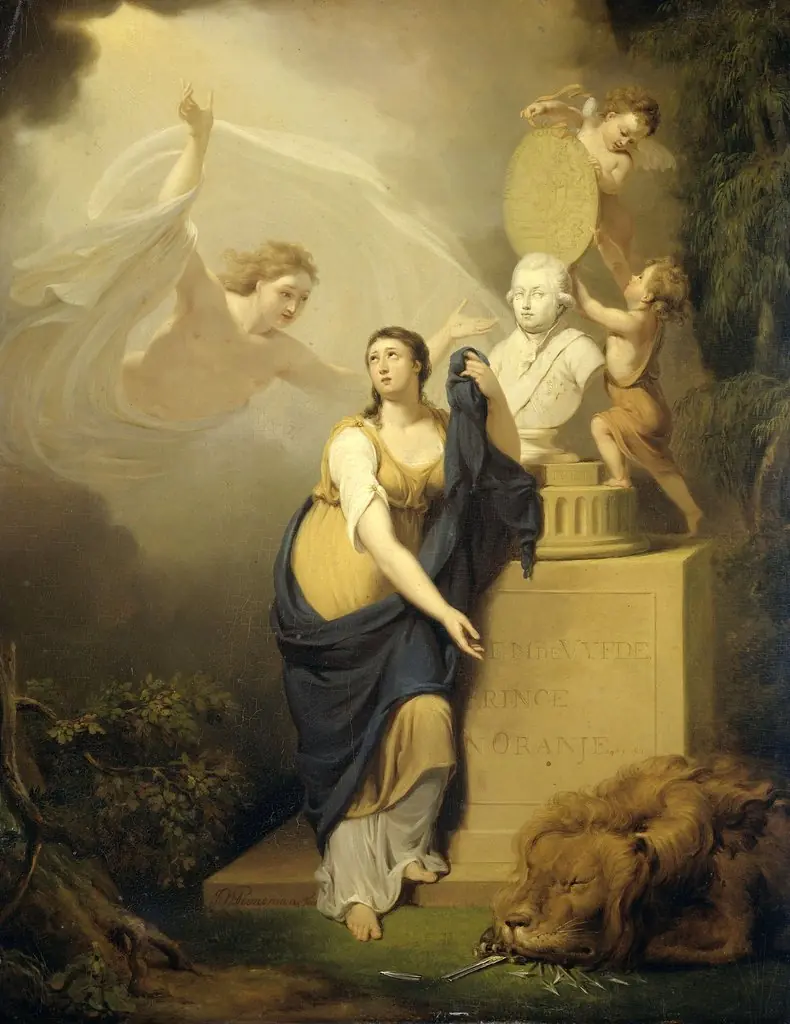 Allegory of the Death of Prince William V, 1806
- Portrait de S. A. I. Mme. la Princesse Dona Marie Amélie du Brésil
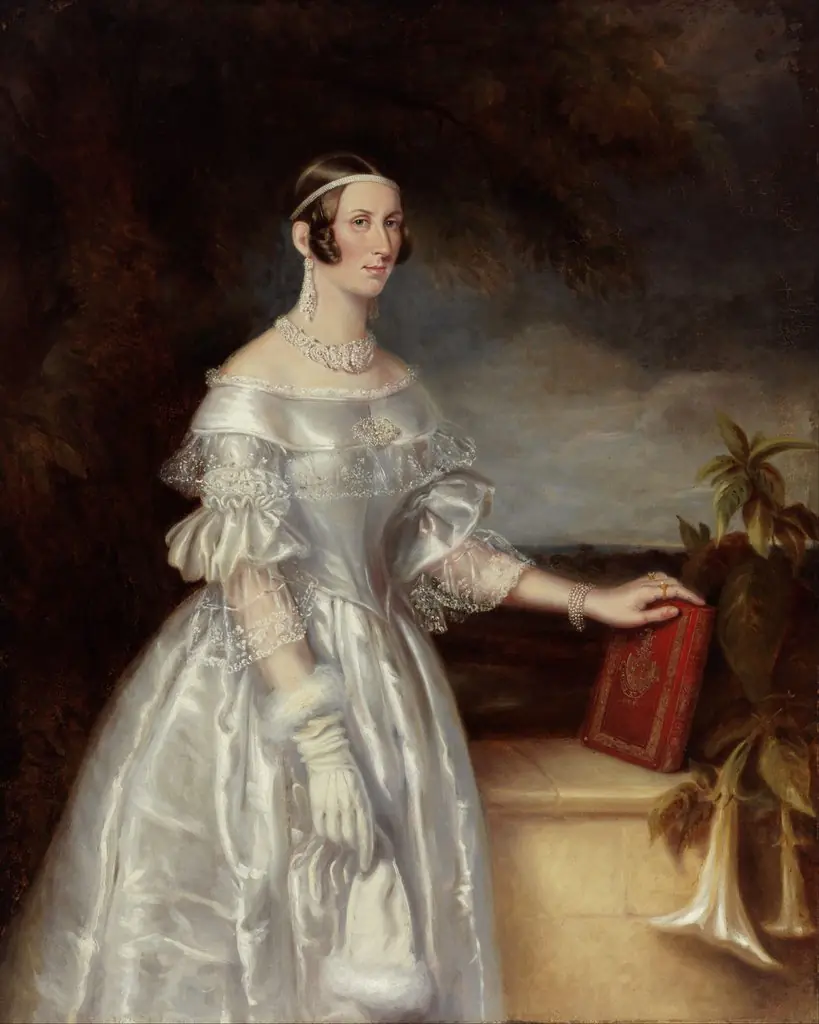 Portrait of Mrs Alexander Spark
 Marie Louise Victoria of Saxe-Coburg-Saafeld, Duchess of Kent (1786–1861)
 Portrait of Princess Tatyana Alexandrovna Yusupova
 Hannah Fry, Mrs Harris Prendergast (1814 - 1859)
 Portrait of Anna von Minarelli-Fitzgerald
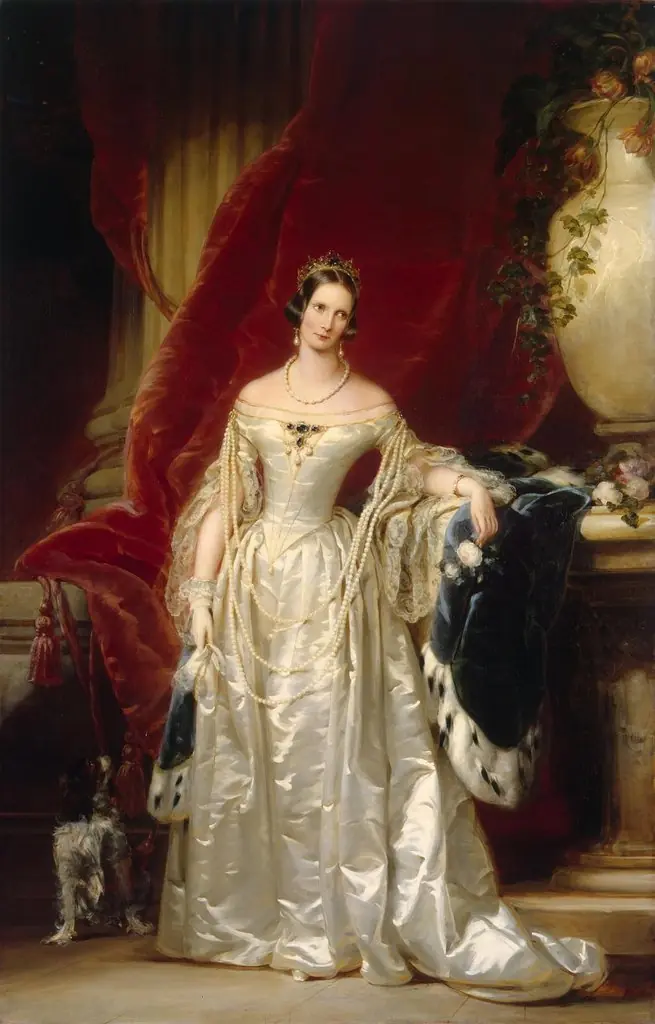 Portrait of Empress Alexandra Fyodorovna
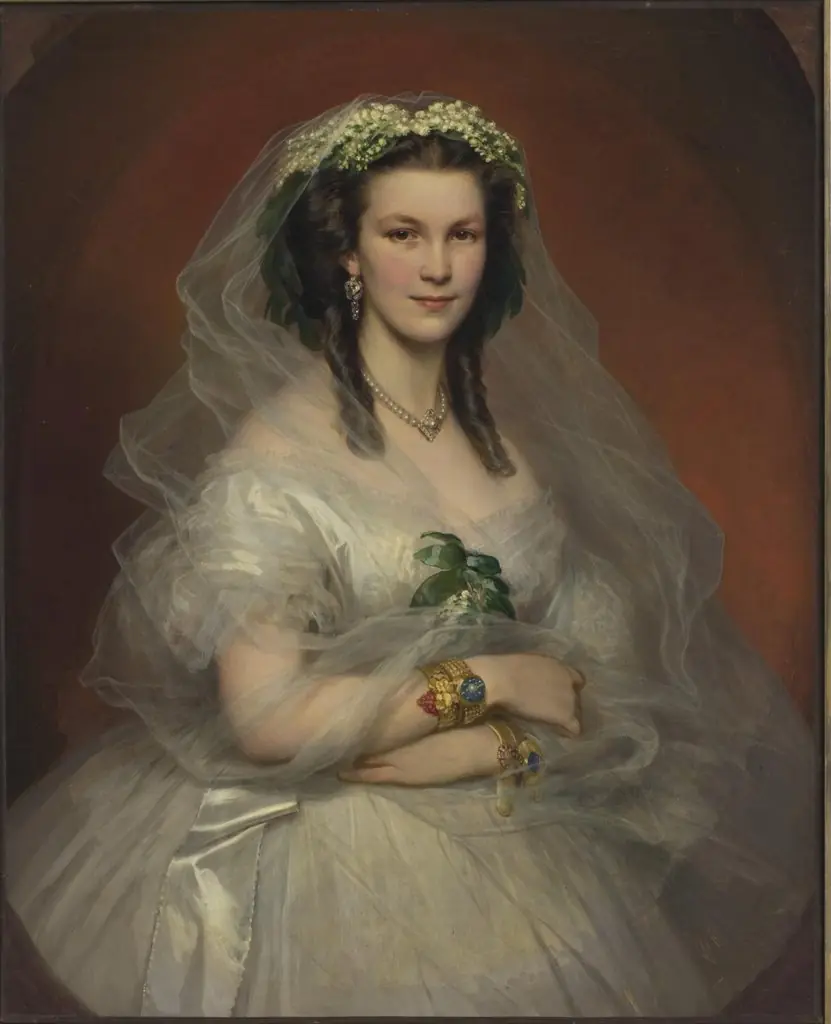 Portrait of an Unknown Young Lady as a Bride
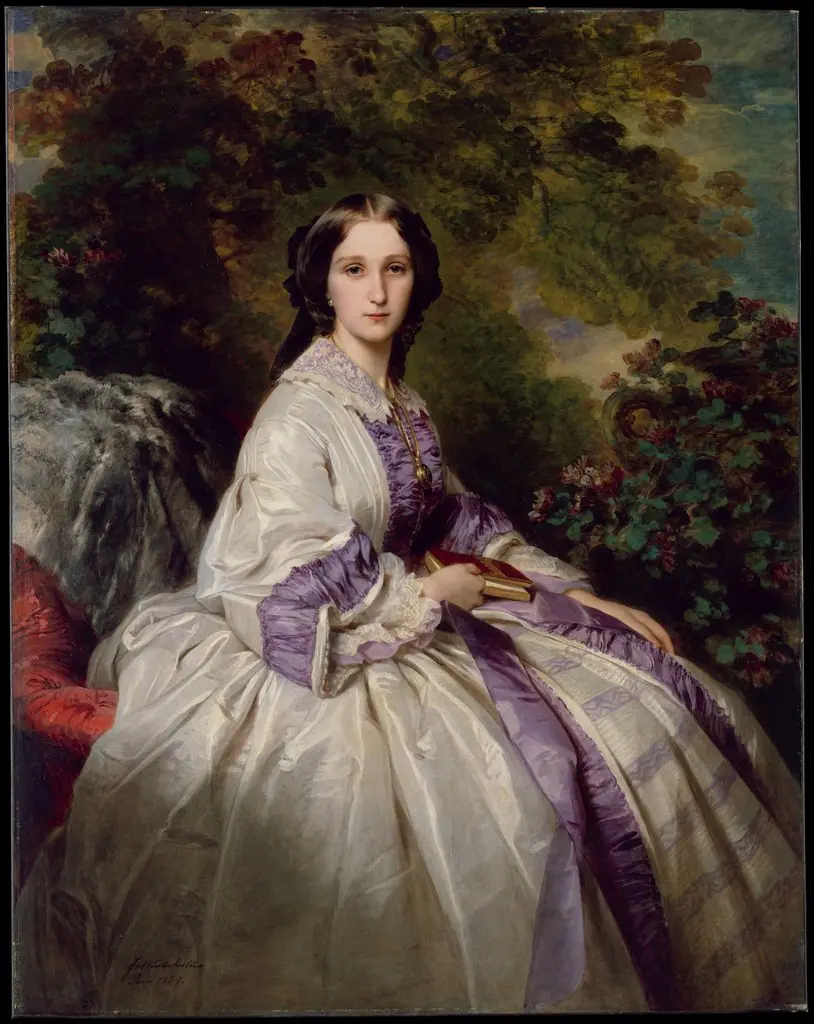 Portrait of Countess Alexander Nikolaevitch Lamsdorff
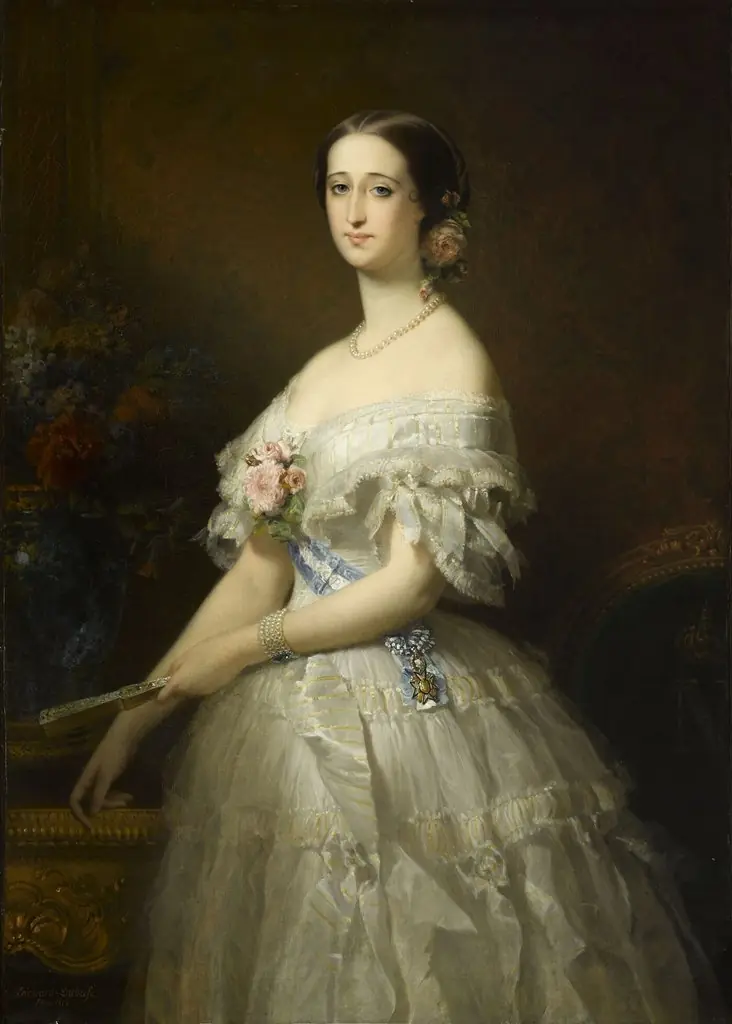 Portrait of the Empress Eugenie
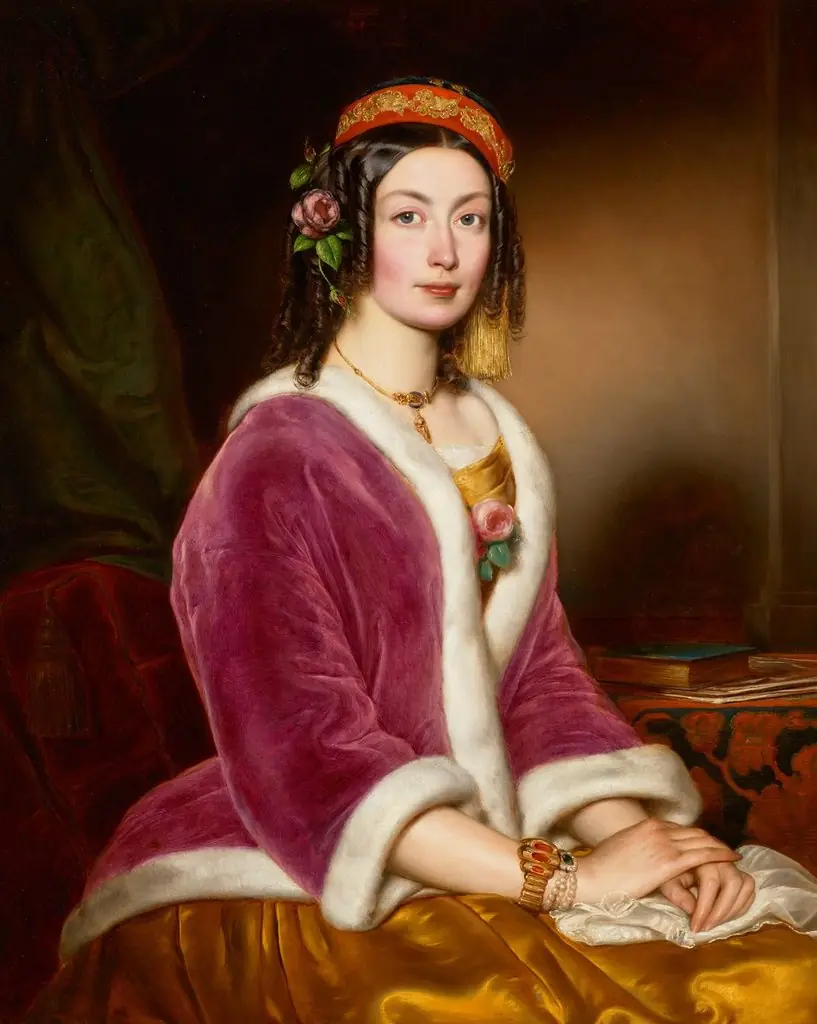 Portrait of a Woman in Velvet Pelisse
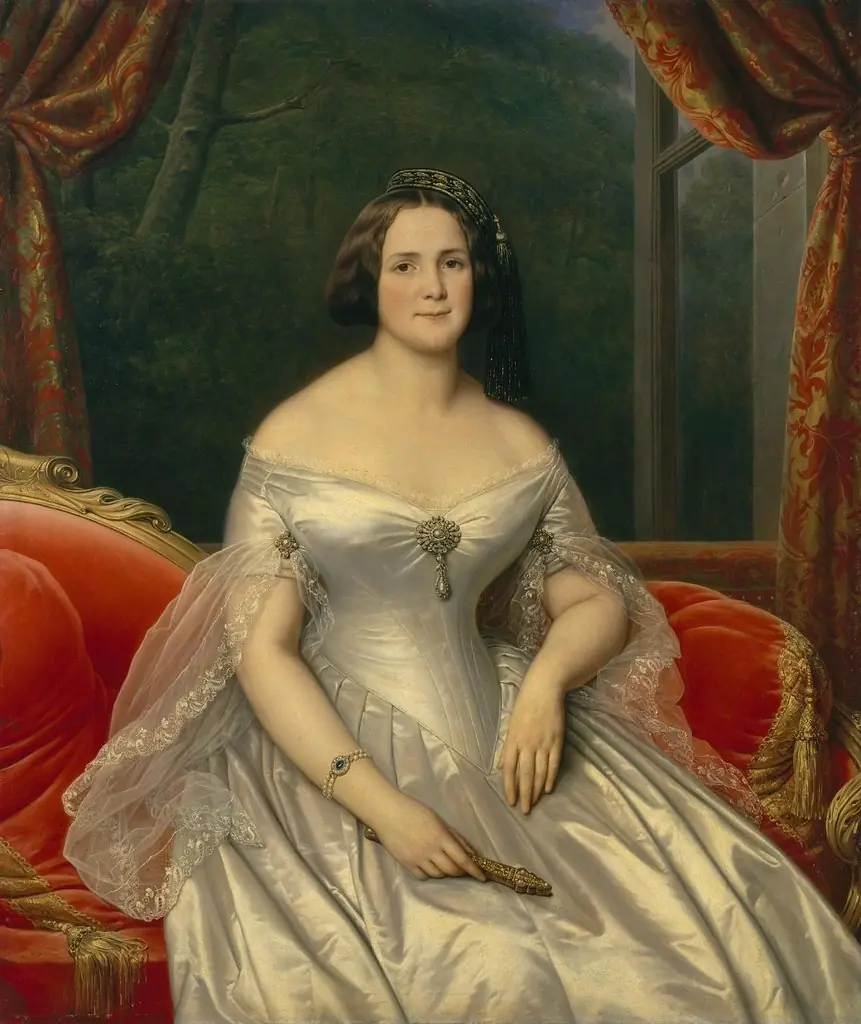 Portrait of Anna Benardaki