Artwork
Study of Birds and Monkey
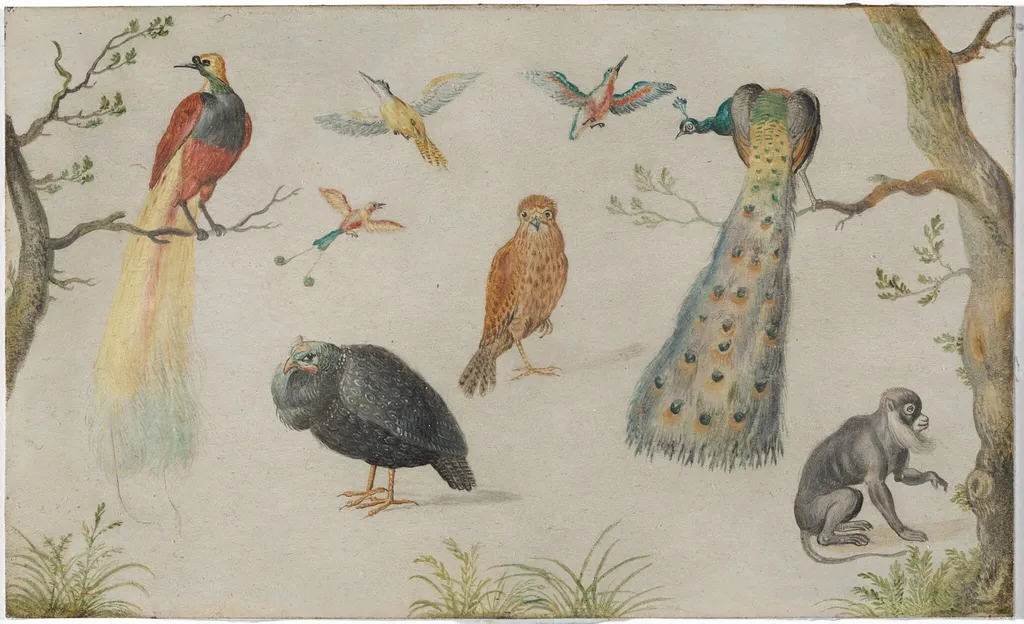
Study of Birds and Monkey is an oil painting by the Baroque artist Circle of Jan van Kessel the Elder. It dates from 1665 and is held in the collection of the National Gallery of Art. The work is a small oil painting executed on a copper support, depicting a lively natural tableau.
About this work
Technique & Style
Created in 1665, the painting belongs to the still life genre and demonstrates the precise handling associated with studies of fauna.
Study of Birds and Monkey is executed in oil paint on a copper support, a medium choice characteristic of the artist's detailed approach to natural history subjects. The work measures 10.5 cm in height and 17.2 cm in width, indicating a small-scale panel intended for close inspection. Created in 1665, the painting belongs to the still life genre and demonstrates the precise handling associated with studies of fauna.
The copper ground likely contributes to the luminosity and fine detail observed in the depiction of the birds and monkey.
History & Provenance
Created in 1665, the oil-on-copper painting Study of Birds and Monkey is attributed to an unknown artist, though some records associate it with Jan van Kessel. The work's documented ownership begins with a private collection in Germany. It was subsequently offered for sale at Galerie Fischer in Lucerne during November 1972, where it was cataloged as a pair with another specific artwork.
Following this auction, the painting entered the collection of John Dimick in Chevy Chase, Maryland. The final transfer of ownership occurred in 1983 when Dimick gifted the piece to the National Gallery of Art in Washington, D.C., where it remains part of the permanent collection.
The painting is held in the collection of the National Gallery of Art in Washington, D.C. It entered the museum's holdings in 1983 as a gift from John Dimick of Chevy Chase, Maryland. Prior to this acquisition, the work was part of a private collection in Germany and was offered at auction by Galerie Fischer in Lucerne during November 1972, where it was cataloged as lot 2536 and sold as a pair with another work now also in the National Gallery of Art.
No specific exhibition history for this individual work is documented in the available sources.
Overview
The work is a small oil painting executed on a copper support, depicting a lively natural tableau. Central to the composition is a vividly colored bird, its plumage a mix of red, black and yellow, perched on a branch, while additional avian figures are shown in flight or at rest. Below, a monkey crouches on the ground, gazing upward toward the birds.
Subject & Meaning
The scene brings together two animal groups, birds and a primate, in a moment of quiet observation. The juxtaposition may suggest a study of interspecies curiosity, with the monkey’s upward glance implying attention to the aerial creatures. The bright coloration of the primary bird draws focus, emphasizing its role as the visual anchor of the composition.
Context
Works on copper were popular among painters seeking durability and a bright, reflective ground, especially in the 17th‑century Baroque period. The choice of a small, detailed study aligns with the era’s interest in natural history and the observation of exotic fauna, often commissioned for private collections or scholarly interest.
Artist & collection

 Ansichten aus den vier Weltteilen mit Szenen von Tieren: St. Merryn
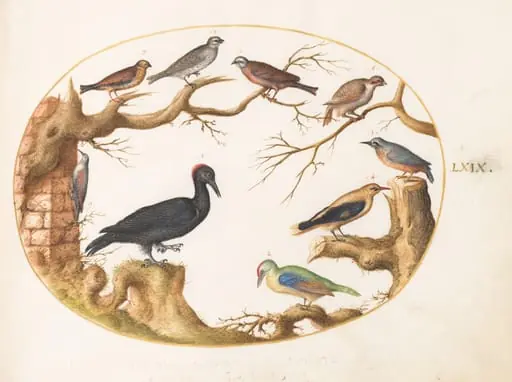 Plate 69: Black Woodpecker, European Green Woodpecker, Nuthatch, and Other Birds
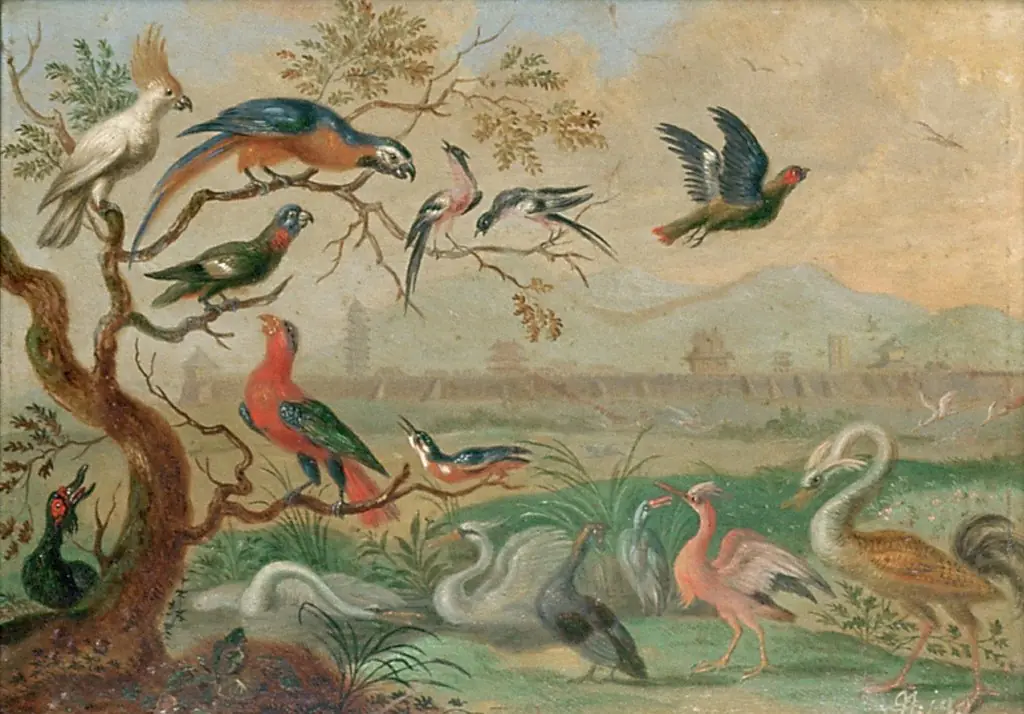 Ansichten aus den vier Weltteilen mit Szenen von Tieren: Peking
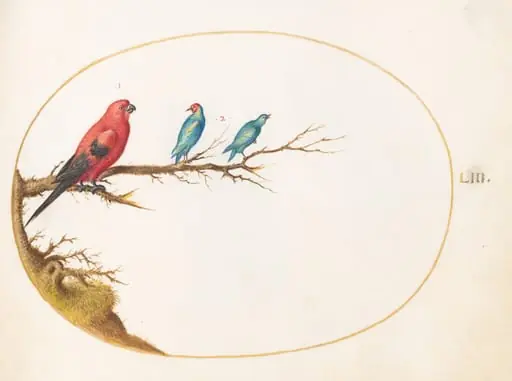 Plate 53: Three Brightly Colored Birds, including a Brazilian Tanager(?)
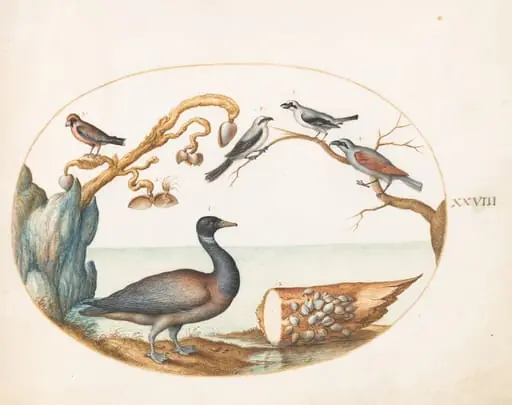 Plate 28: Barnacle Goose with Shrikes and Other Birds
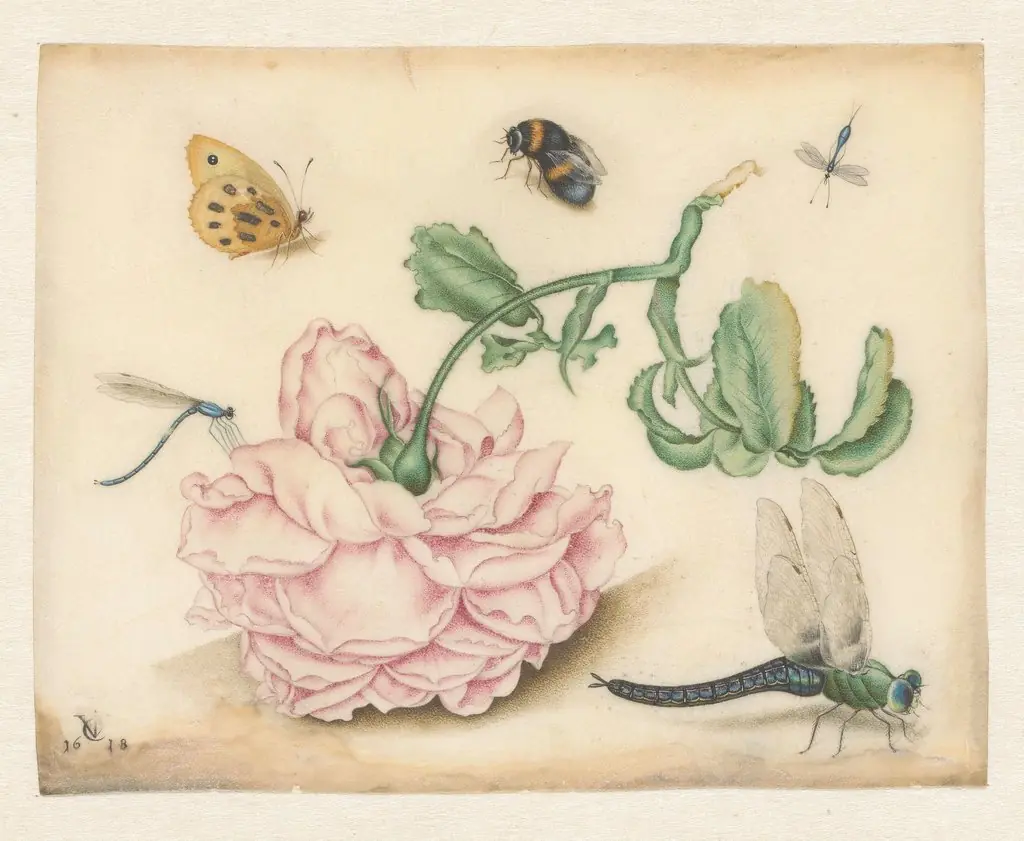 A Rose and Five Insects
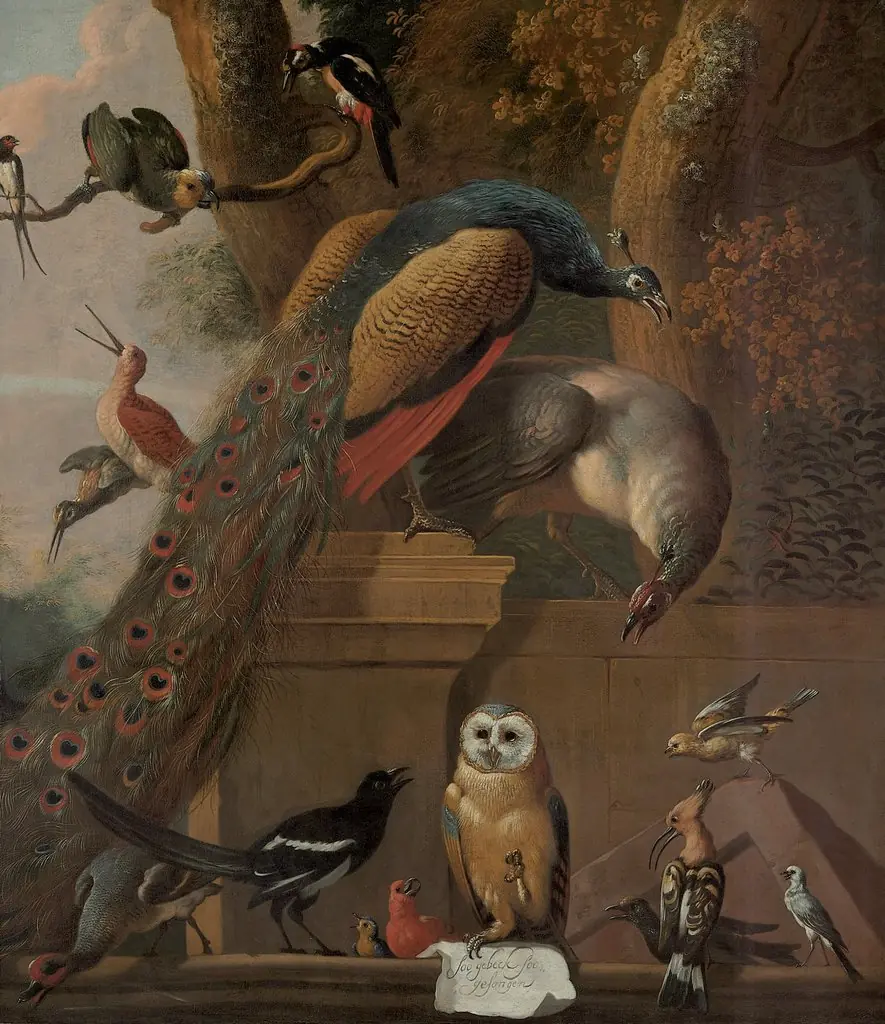 Bird Concert
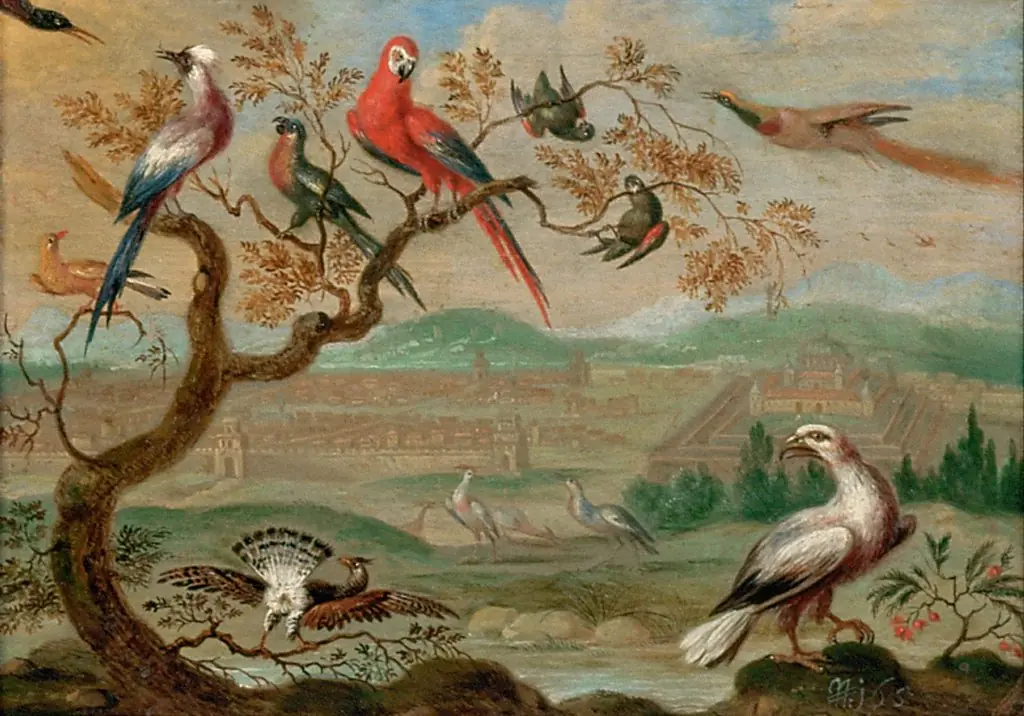 Ansichten aus den vier Weltteilen mit Szenen von Tieren: Cusco
 One of seven details of pietra-dura work showing flowers and birds on the walls of the Diwan-i Am, Delhi , Palace and fort
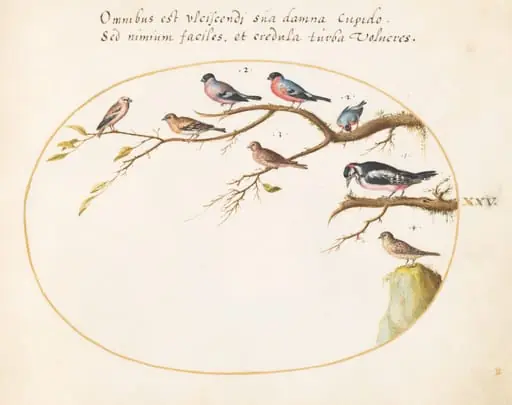 Plate 25: Great Spotted Woodpecker, Bullfinches, Sparrows, and Other Birds
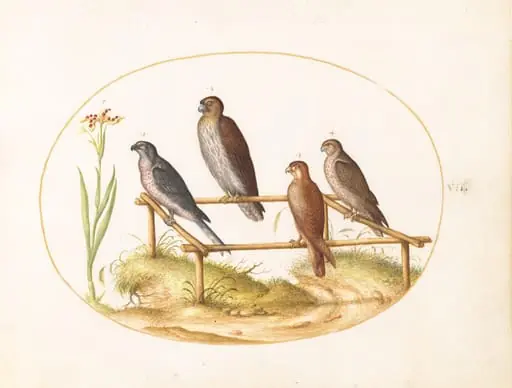 Plate 7: Four Birds of Prey on a Wooden Frame