Artwork
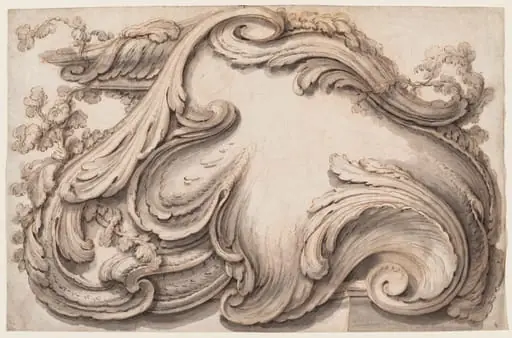
Rocaille Cartouche with an Eagle
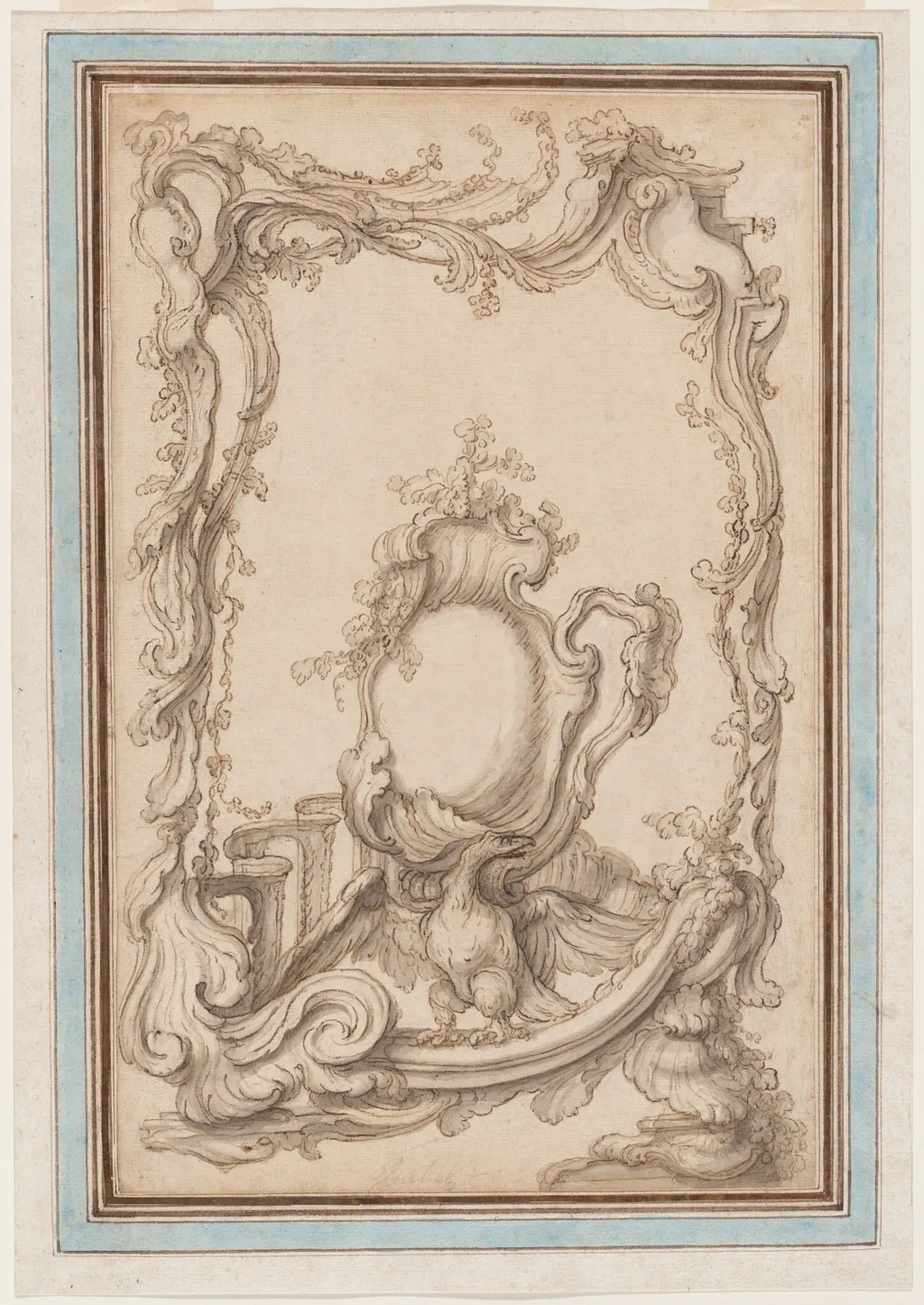
Rocaille Cartouche with an Eagle is a graphite drawing by the Baroque artist Pierre-Edme Babel. It dates from 1748 and is held in the collection of the National Gallery of Art.
- Inscription
- Inscribed:by later hand, lower center in graphite: Babel f.
About this work
Overview
Pierre-Edme Babel's Rocaille Cartouche with an Eagle (1748) is a drawing executed in gray wash, pen and brown ink, and traces of graphite on laid paper, now mounted on an old support. The work is part of the collection at the National Gallery of Art in Washington.
Subject & Meaning
The drawing features a vacant, shield-shaped cartouche encircled by undulating, leafy vines and clouds. An eagle, positioned at the base, perches on a rock with slightly outstretched wings. The empty shield was likely intended for the insertion of a coat of arms or crest, a common practice in decorative art of the period.
Technique & Style
Characterized by loose, flowing lines reminiscent of cursive script, the drawing exhibits a light, airy quality, creating an illusion of weightlessness. The interplay of gray wash, ink, and graphite contributes to the piece's dynamic yet ethereal appearance.
History & Provenance
Created in 1748, the work's provenance prior to its acquisition by the National Gallery of Art in Washington is not detailed here. It is currently part of the gallery's collection.
Context
While the drawing's specific inspiration is not noted, its style reflects the broader artistic tendencies of its time, with the suggested comparison to Baroque styles highlighting the evolution of decorative arts towards more fluid, rococo-inspired forms.
Legacy
The legacy of Rocaille Cartouche with an Eagle is not explicitly outlined in the provided information, though its presence in a national gallery collection implies recognition of its artistic or historical value within the context of 18th-century French decorative drawing.
Own this work as a print
Artist & collection