Artwork
Grape Vines and Fruit, with Three Wagtails
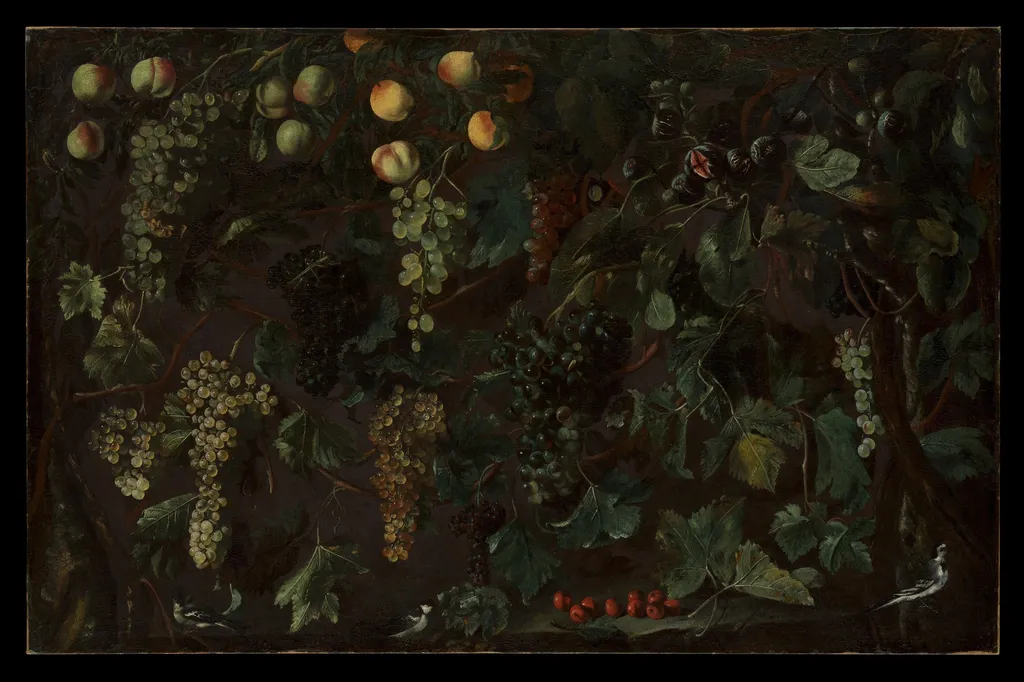
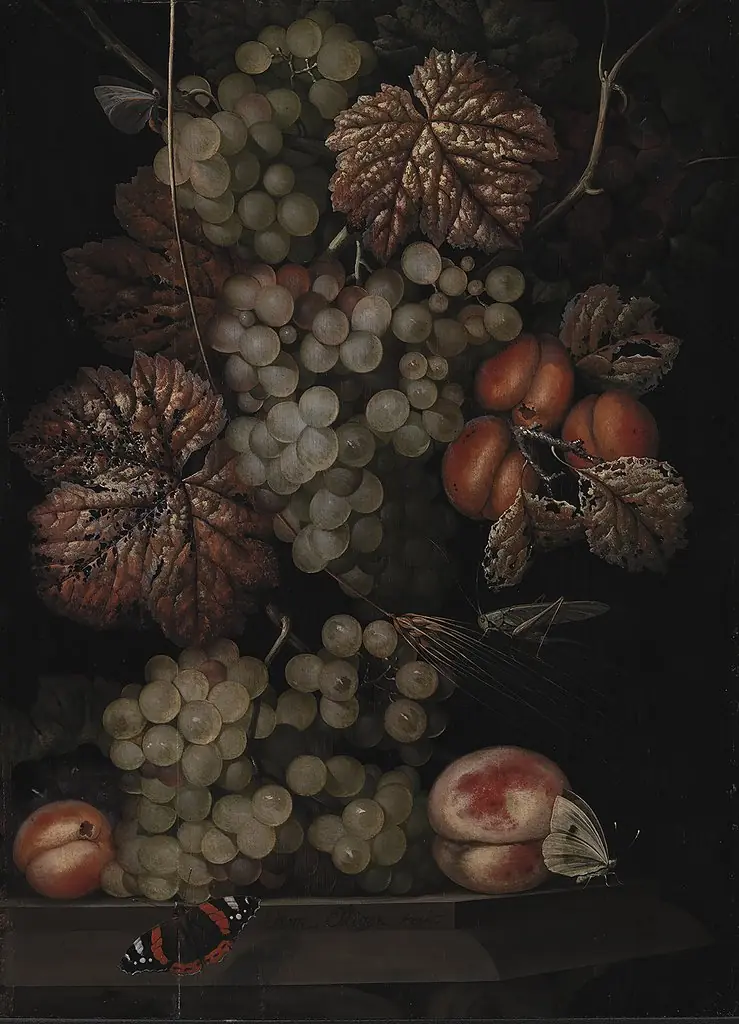
Grape Vines and Fruit, with Three Wagtails is an oil painting by the Early Baroque Italian artist Bartolomeo Cavarozzi. It dates from 1616 and is held in the collection of the Metropolitan Museum of Art.
About this work
Subject & Meaning
As a work of the still-life genre created in 1616, the composition centers on these natural elements without narrative figures or architectural settings.
The painting depicts a still-life arrangement featuring grape vines, various fruits, and three wagtails. As a work of the still-life genre created in 1616, the composition centers on these natural elements without narrative figures or architectural settings. The specific inclusion of birds alongside the ripening fruit and vines establishes a direct representation of nature's bounty.
While the sources confirm the presence of these specific subjects, birds, grapes, vines, and fruit, they do not provide explicit historical interpretations regarding deeper symbolic meanings or specific iconographic traditions associated with this particular combination of elements in Cavarozzi's oeuvre.
Technique & Style
Painted in oil on canvas in 1616, the work depicts a still-life arrangement of grape vines, fruit and three wagtails. The composition is organized along a diagonal axis formed by the vine and stems, echoed by the alignment of the birds, giving the still life a quietly dynamic rhythm. The palette favors deep greens and warm ochres against the lighter accents of the fruit.
History & Provenance
Grape Vines and Fruit, with Three Wagtails is dated to 1616. The painting, attributed to Bartolomeo Cavarozzi and executed in oil on canvas, entered the collection of the Metropolitan Museum of Art in New York, where it remains located. While the available records confirm its current location and its classification as a still life depicting birds, grapes, and vines, specific inventory or accession numbers are not provided in the source data. No details regarding the work's exhibition history are contained within the provided references.
Context
Bartolomeo Cavarozzi painted Grape Vines and Fruit, with Three Wagtails in 1616, an oil on canvas still-life now held by the Metropolitan Museum of Art. The work is classified as a still-life and depicts grapes, vines, fruit, and three wagtails, reflecting the naturalistic detail characteristic of the period. Its presence in the Met's collection situates it within the evolution of European still-life painting.
Overview
Grape Vines and Fruit, with Three Wagtails is an oil painting that presents a rich still life composition. Against a deep, dark background, an abundance of fruits and foliage is depicted, punctuated by the presence of three small birds. The artist's focus on illuminating individual elements creates a sense of depth and vibrancy, drawing the viewer's eye across the detailed natural scene.
Own this work as a print
Artist & collection
Artist
Bartolomeo Cavarozzi (1587–1625), occasionally referred to as Bartolomeo Crescenzi, was an Italian caravaggisti painter of the Baroque period.


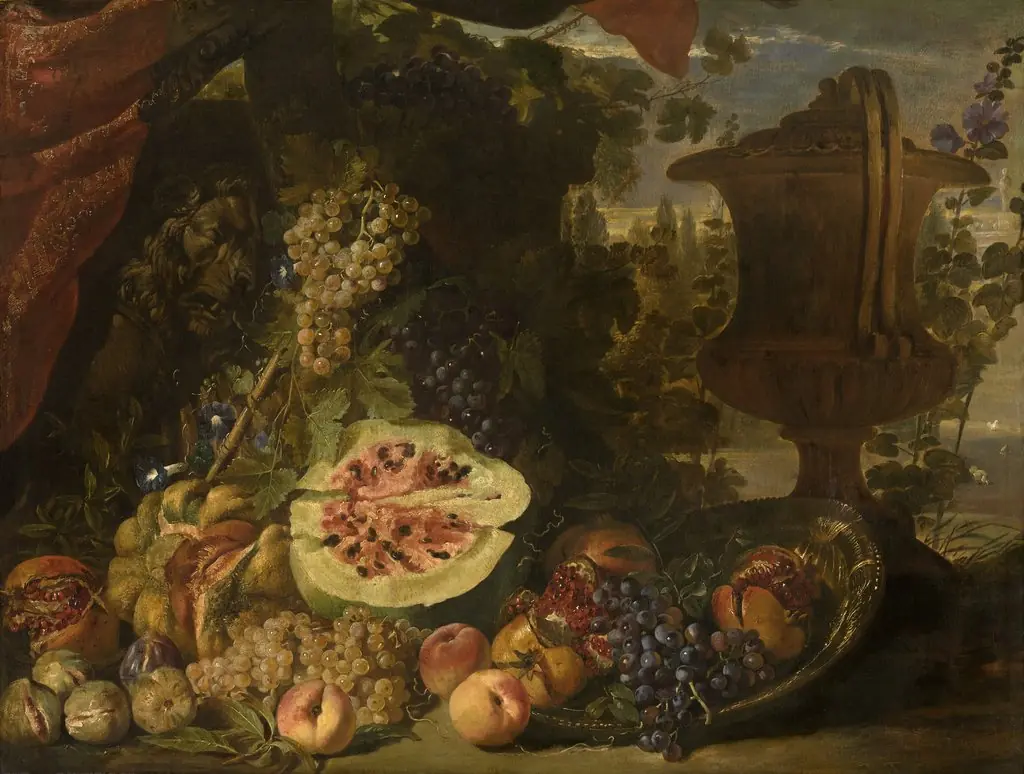 Fruit still life of pumpkin, melon, grapes, peaches and pomegranates; right a garden vase, left a sarcophagus
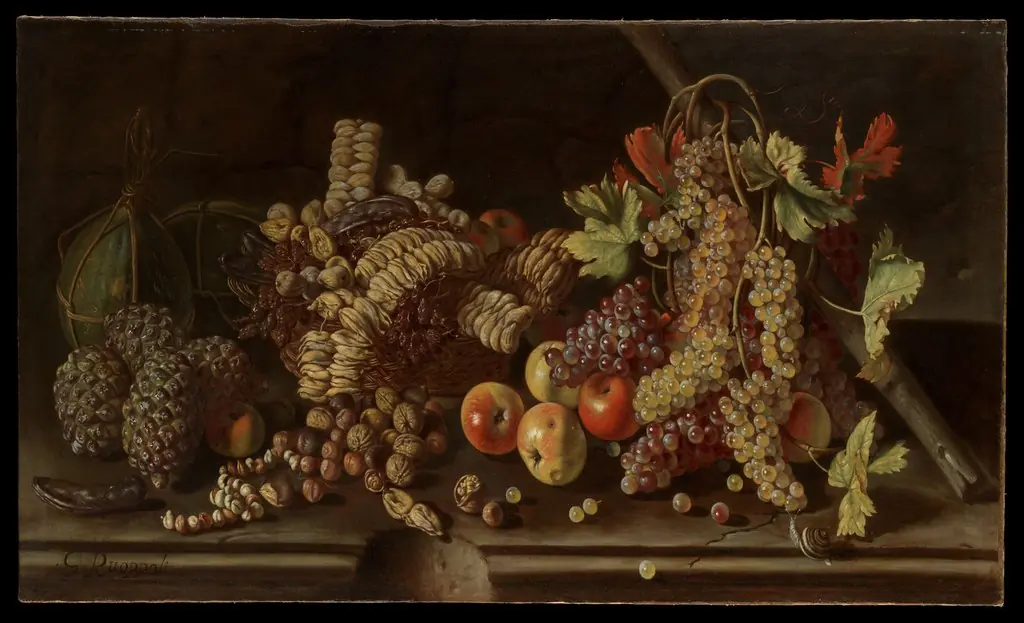 Still Life of Fruit and Nuts
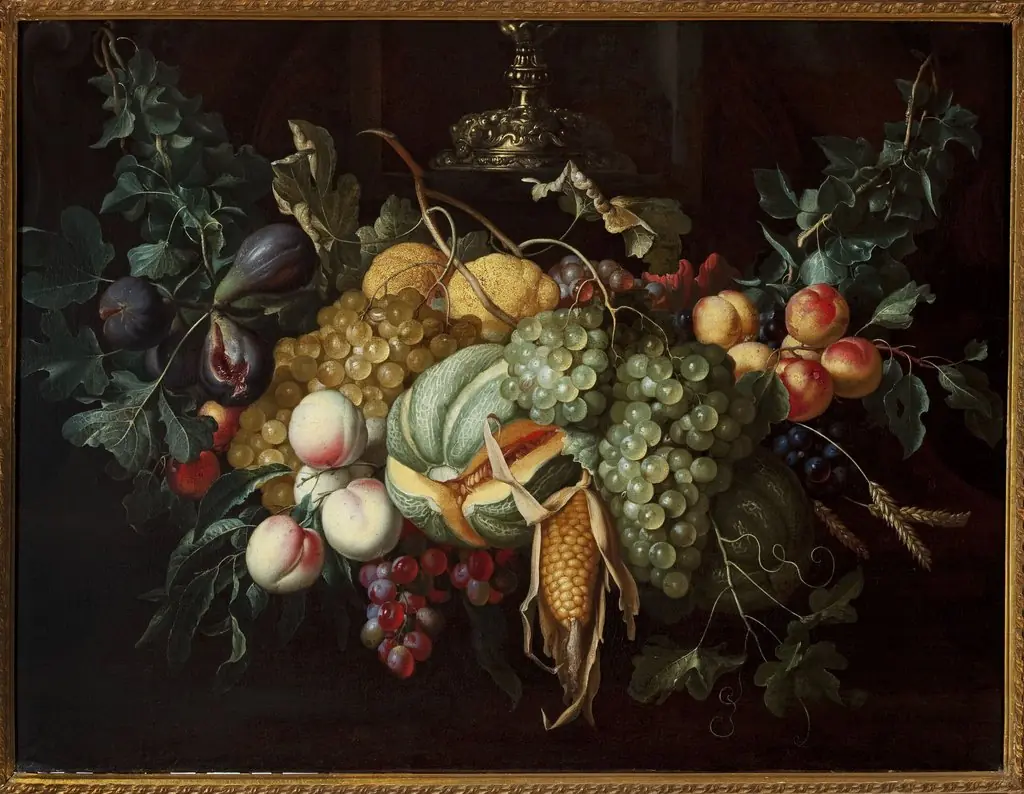 Still life with fruits and corn
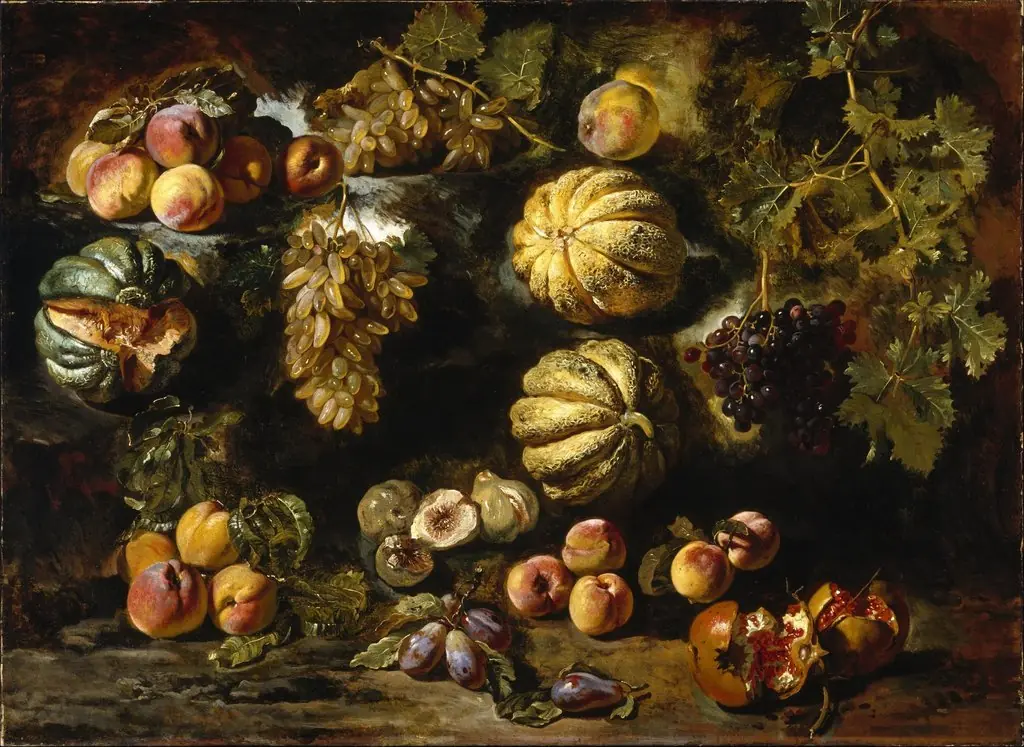 Still Life with Melons, Peaches, Figs, and Grapes
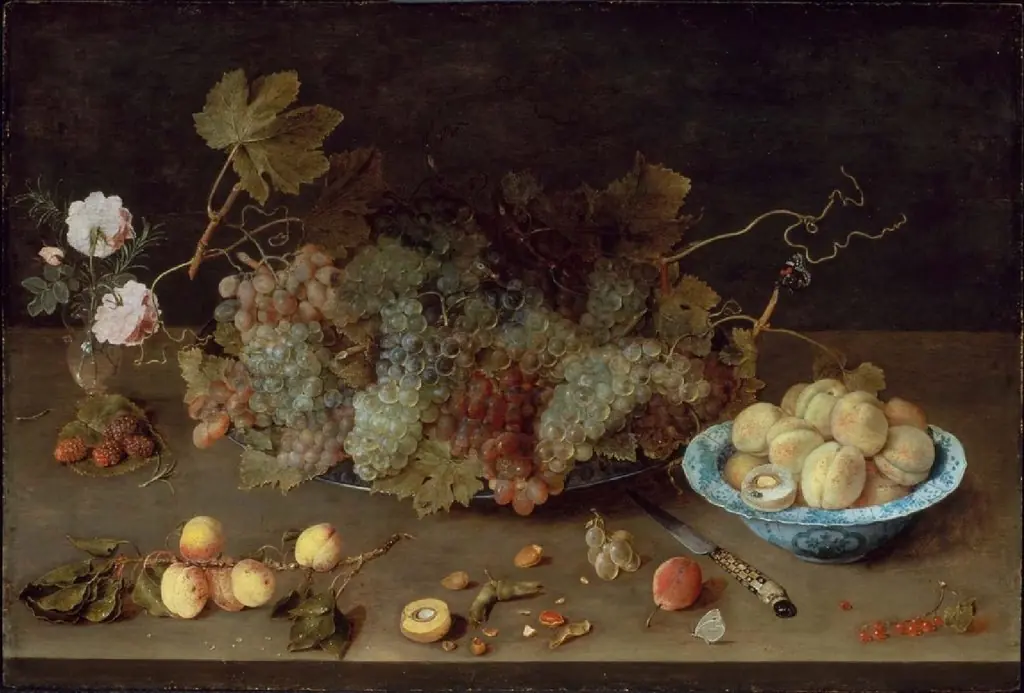 Still Life with Grapes on a Platter
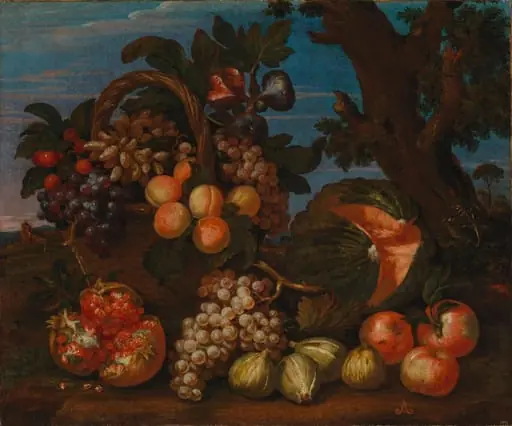 Hedelmäasetelma
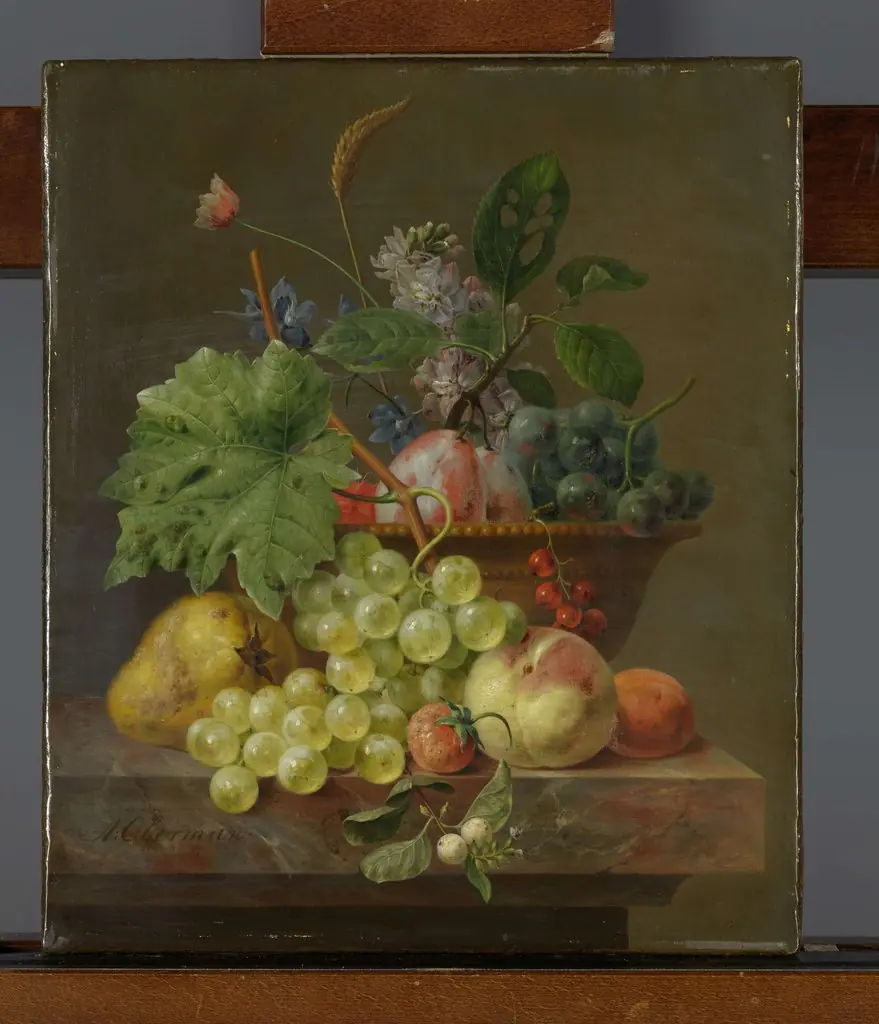 Still Life with Fruit in a Terracotta Dish
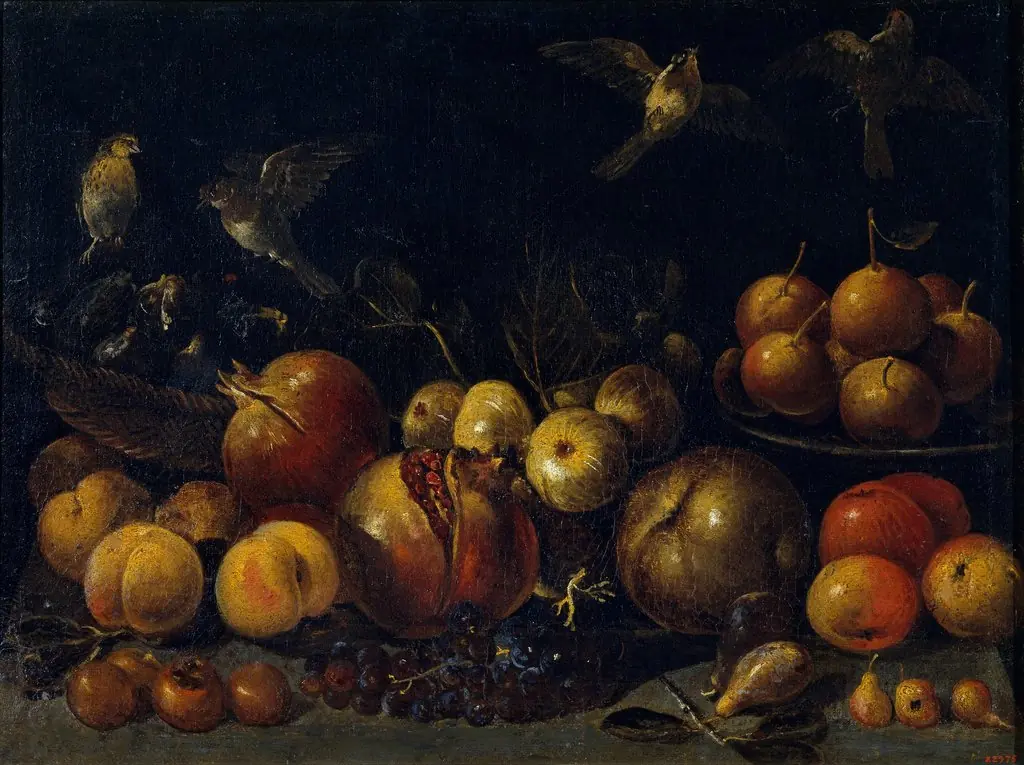 Still Life with Pomegranates, Apples, Pears, Grapes, Figs and Birds
 Still Life