Artwork
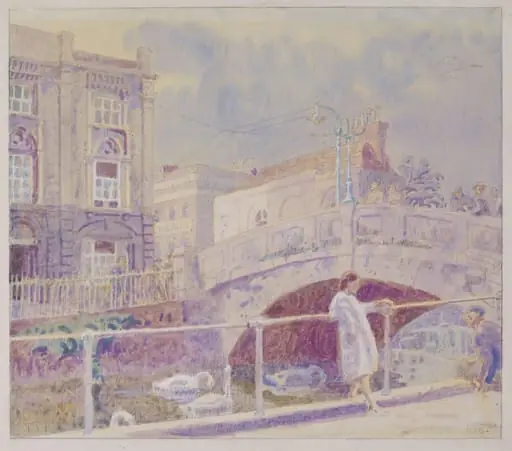
The Gateway, Royal Naval College, Greenwich
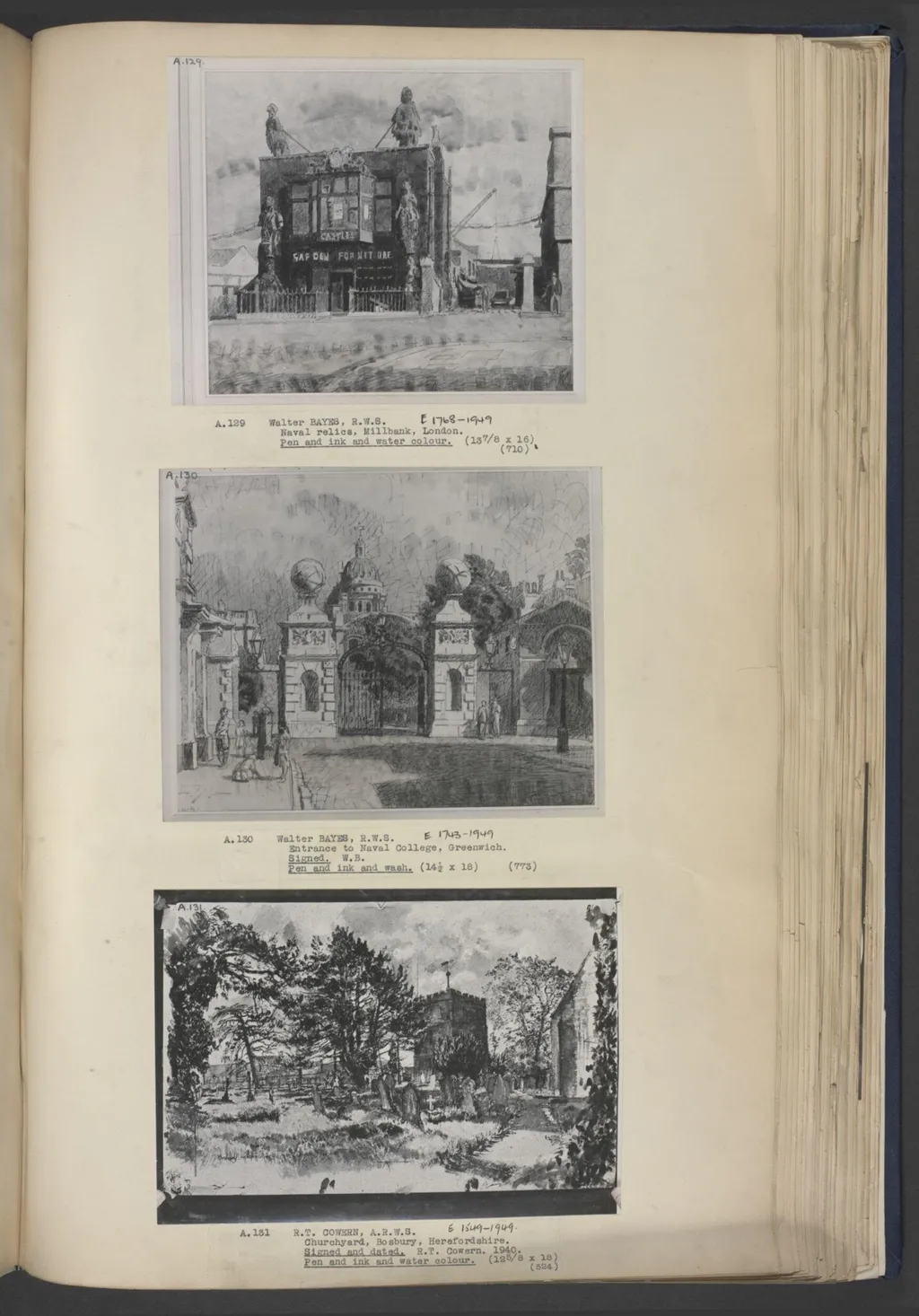
The Gateway, Royal Naval College, Greenwich is a watercolor work on paper by the Impressionist artist Bayes. It dates from 1940 and is held in the collection of the Victoria and Albert Museum.
About this work
Overview
The Gateway, Royal Naval College, Greenwich is a 1940 watercolour by Bayes, created as part of the Recording Britain project, an initiative to document Britain's landscapes and architecture during World War II.
Subject & Meaning
The painting depicts the grand stone gate at the Royal Naval College in Greenwich, with a domed building behind it, capturing the gate's heavy stonework and the play of light on its surface.
Technique & Style
The watercolour features loose yet precise lines, giving it a sketchy, hurried feel, with attention to the uneven light on the gate's stonework and the surrounding trees and figures.
History & Provenance
The work was produced as part of the Recording Britain project, directed by Sir Kenneth Clark, which employed 97 artists to document English scenes, resulting in over 1,500 works.
Context
The project aimed to preserve a record of places and traditions at risk from wartime damage or modernization, focusing on historic buildings and rural settings.
Artist & collection
Artist
Walter John Bayes was an English painter and illustrator who was a founder member of both the Camden Town Group and the London Group and also a renowned art teacher and critic.

 Classical composition
 Poole Harbour
 Walton-on-Thames
 Colin Glen near Belfast
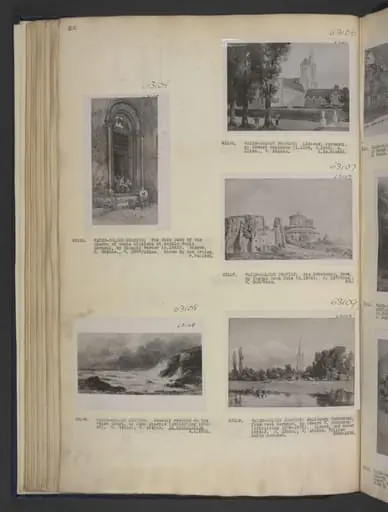 The Side Door of the Church of Santa Giuliana at Aquila Degli Abruzzi
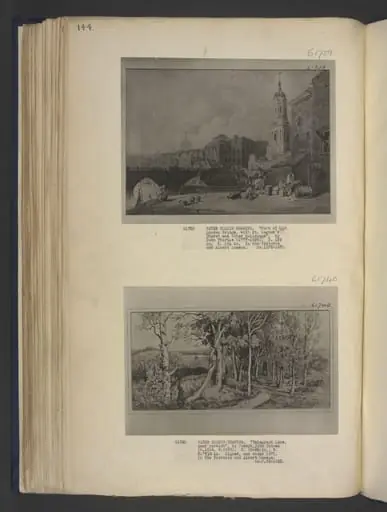 Telegraph Lane, near Norwich
 A Devonshire Cottage
 Temple at Nasik, on the Godavery
 The Deanery, Westminster
 Ben Nevis from above Navin
 Landscape : Evening
 The choir, Ely Cathedral