Artwork
Arlington Mill
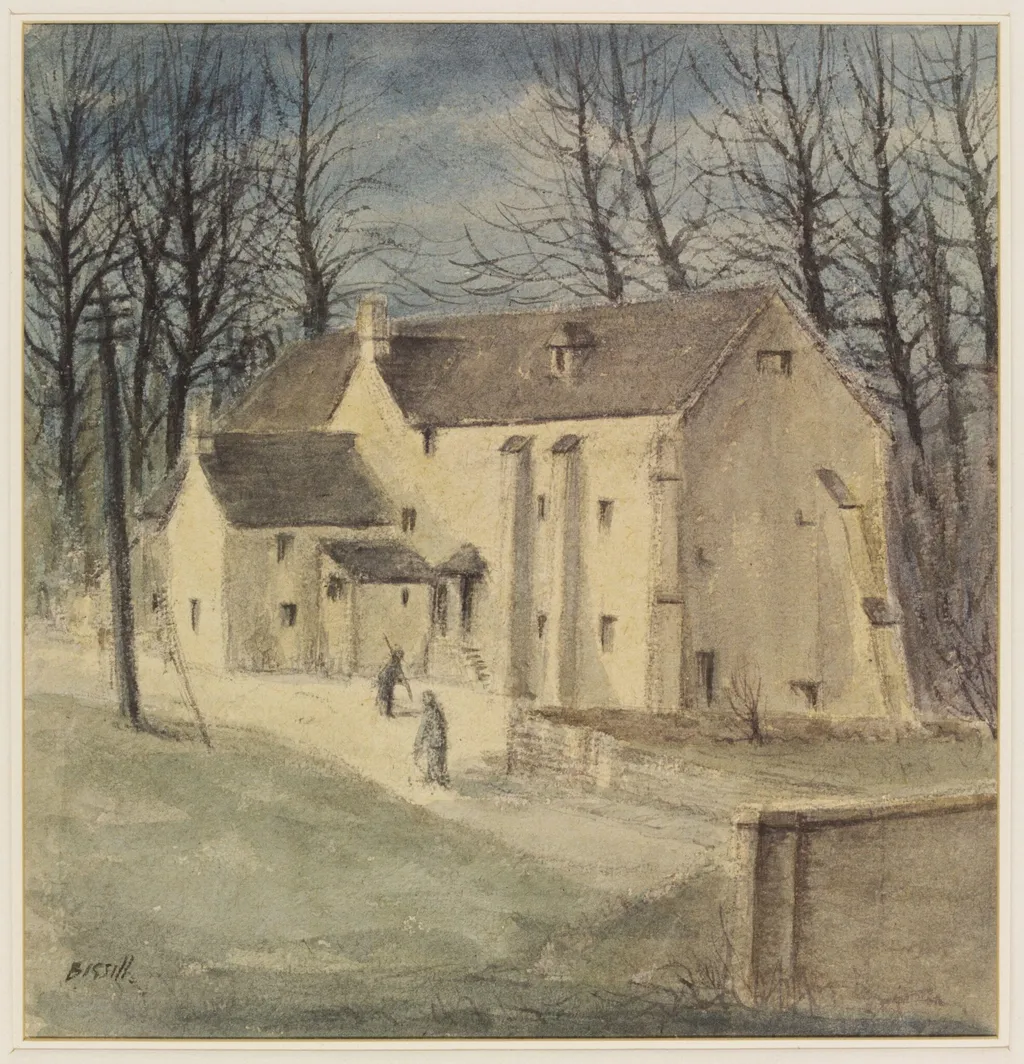
Arlington Mill is a watercolor work on paper by the Regionalist artist George William Bissill. It dates from 1940 and is held in the collection of the Victoria and Albert Museum.
About this work
Overview
Arlington Mill is a 1940 watercolour painting by George William Bissill, created as part of the 'Recording Britain' initiative during World War II.
Subject & Meaning
The painting depicts a white mill house at Bibury, Gloucestershire, set against dark trees and a blue-grey sky. The work documents the British landscape and national identity, reflecting concerns about wartime destruction.
Technique & Style
Executed in watercolour, the painting features soft, gentle washes and a predominantly light colour palette, capturing the mill house and its surroundings.
History & Provenance
Commissioned as part of a government scheme to employ artists in recording the British landscape during World War II, the work is part of the 'Recording Britain' collection.
Context
The 'Recording Britain' initiative aimed to preserve traditional art forms and document the British landscape amidst wartime changes and destruction.
Artist & collection
Artist
George Bissill painted wartime landscapes and quiet countryside scenes in watercolor.

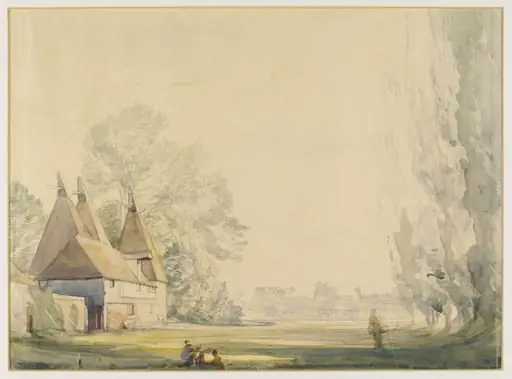 Oast House, Littlebourne
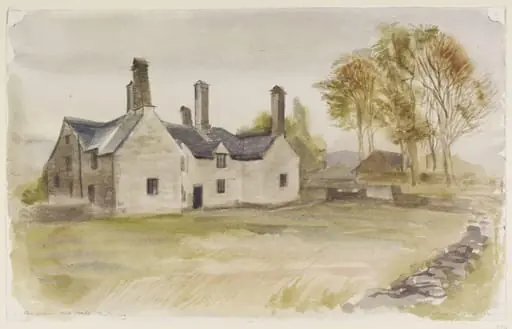 Pengwern Old Hall, Festiniog, Merionethshire
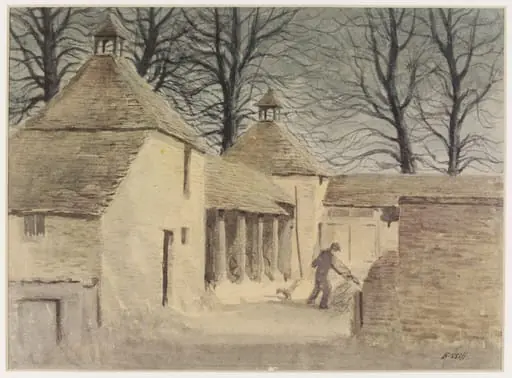 Double Dovecot, Williamstrip, Coln St. Aldwyn
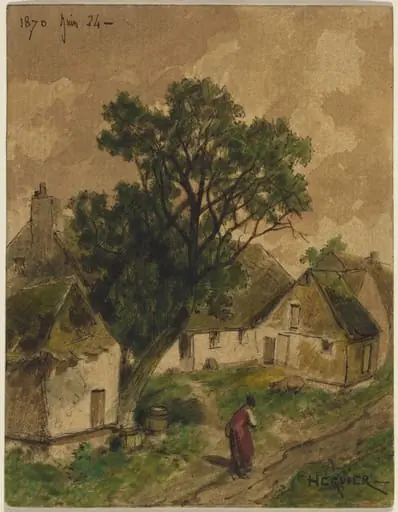 Farmyard
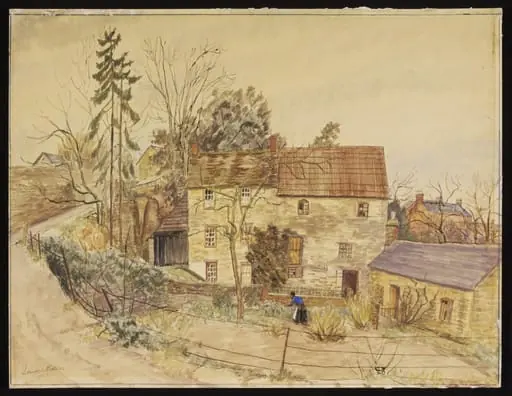 Mill and Millhouse, Malmesbury
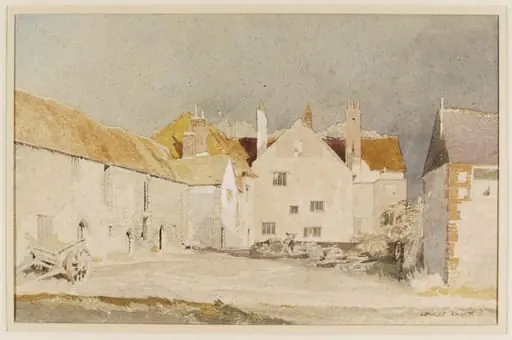 Hangleton Manor, near Brighton
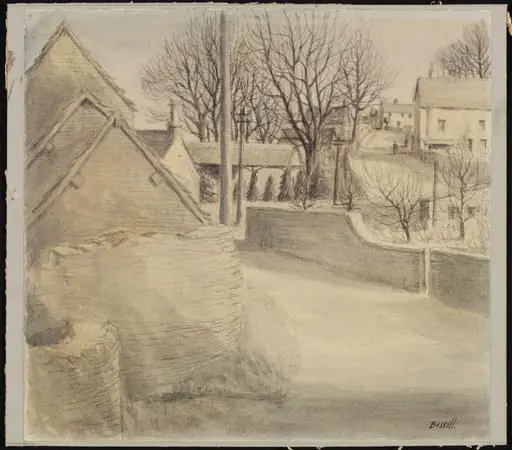 Quenington Village
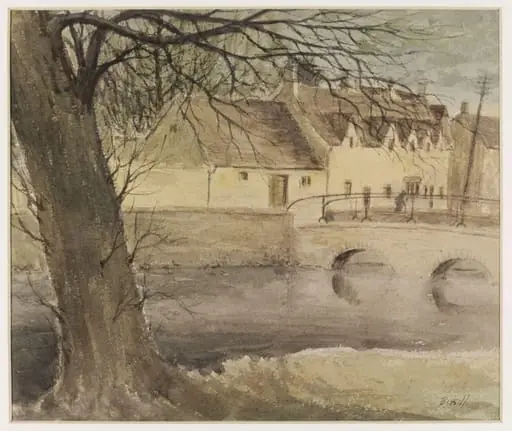 The River Coln at Bibury
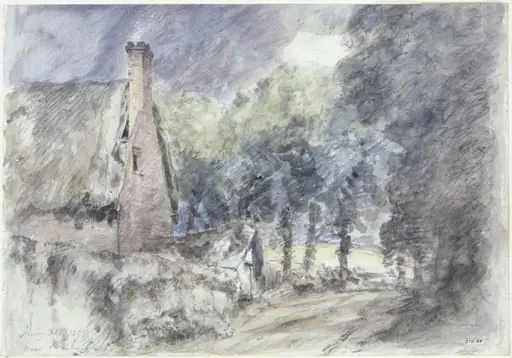 A cottage and Trees near Salisbury
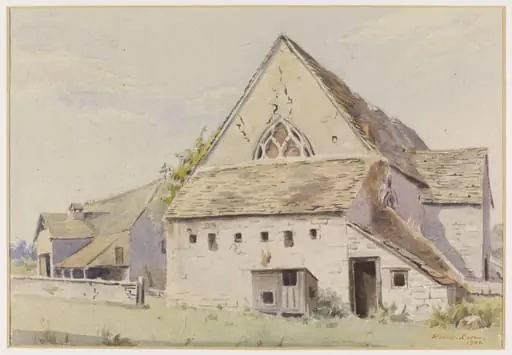 The Old Church (now a barn), Leonard Stanley
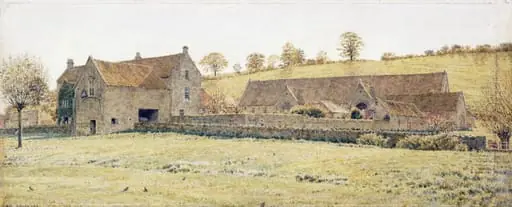 Tithe Barn, Bradford-on-Avon
 Barbizon: La maison de garde