Artwork
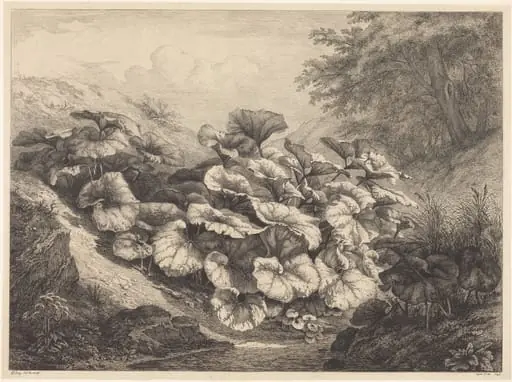
Au ravin de la faille, Auvergne (The Ravine at Auvergne)
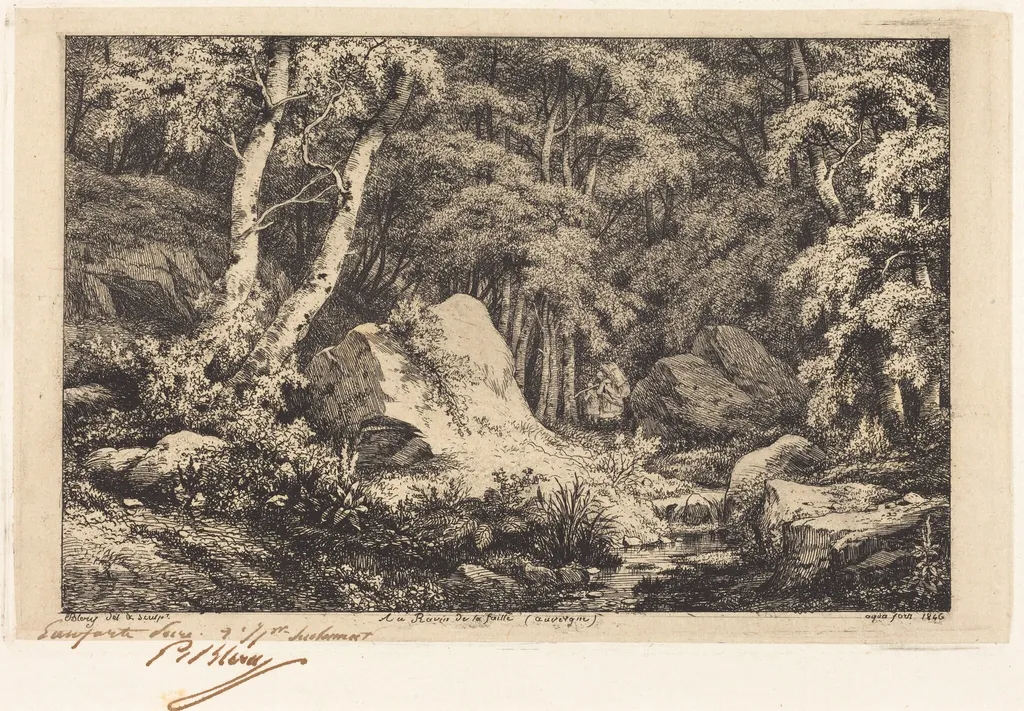
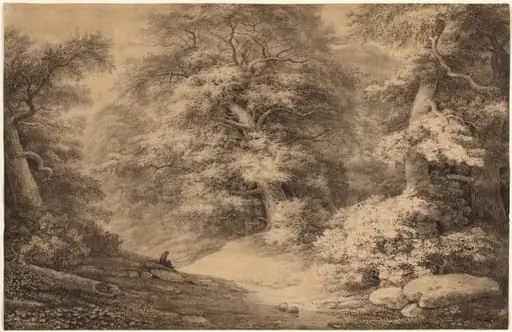
Au ravin de la faille, Auvergne (The Ravine at Auvergne) is an ink print by the Romanticist artist Eugène Bléry. It dates from 1846 and is held in the collection of the National Gallery of Art.
- Inscription
- Inscribed:lower left in brown ink on chine applique and plate mark: Eauforte Pure. (undeciphered) Seulement / E.Blery; lower left in plate: Blery del & Sculpt; lower center in plate: Au Ravin de la faille (auvergne); lower right in plate: aqua forte 1846; all other inscriptions by later hand in graphite, lower left: 61 cori au verso; upper left verso: Catalogue (undeciphered) / 16 66 (undeciphered); lower left verso: 24040; lower right verso: 154103
About this work
Overview
Eugène Bléry’s 1846 print titled Au ravin de la faille, Auvergne presents a monochrome view of a secluded woodland. The composition centers on a rocky ledge framed by dense foliage, with a damp, uneven ground that suggests a shallow watercourse. Shadows dominate the scene, giving the forest a muted, contemplative atmosphere.
Subject & Meaning
The image depicts a rugged ravine in the Auvergne region of central France, emphasizing the natural wildness of the landscape. By focusing on the interplay of stone, trees, and undergrowth, the work invites reflection on the solitude and enduring character of the French countryside, rather than any overt narrative.
Technique & Style
Bléry employed an etching on chine appliqué, a method that combines traditional copperplate engraving with a paper collage base. Fine, closely spaced lines render individual leaves, bark texture, and tangled roots, producing a sketch‑like precision. The limited tonal range relies on delicate hatching to suggest depth and the faint penetration of light.
History & Provenance
Created in 1846, this proof print is part of Bléry’s early output, when he was exploring French regional scenes. The work has remained within private collections and has occasionally appeared in exhibitions of 19th‑century French printmaking, illustrating the artist’s interest in documenting remote natural settings.
Own this work as a print
Artist & collection


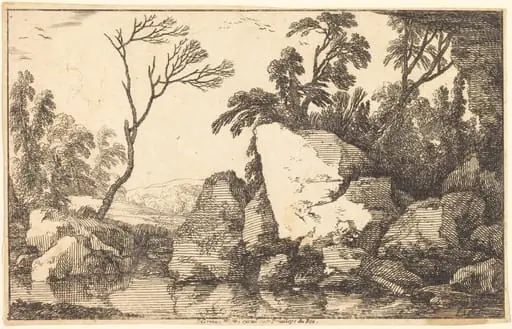 A Rocky Pond
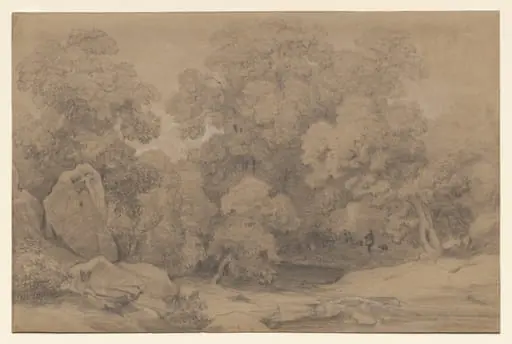 Landscape
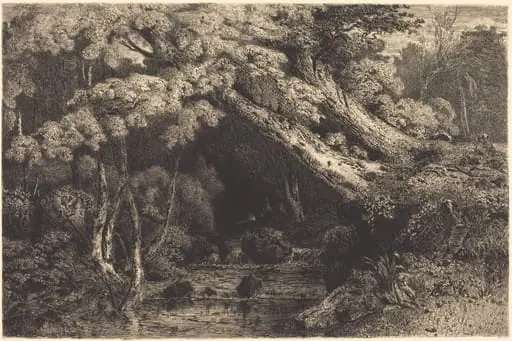 Saint-Pierre Stream near Pierrefond (Ruisseaude Saint-Pierre, pres Pierrefond)
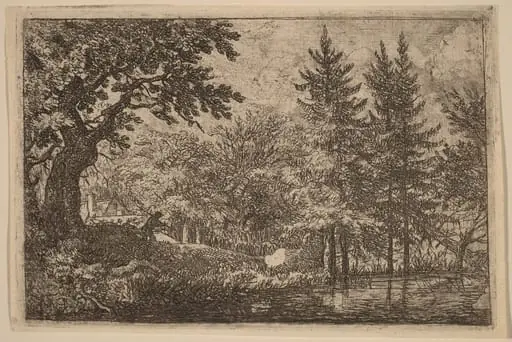 Fir Trees at the Water
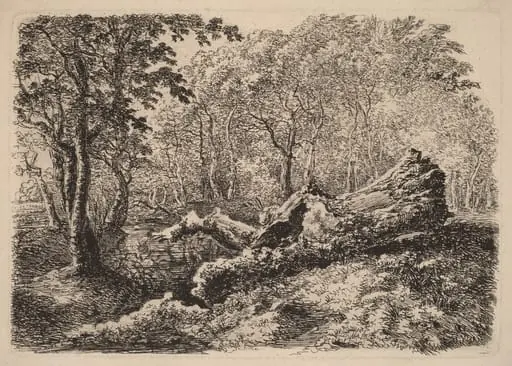 Mouldering Tree Trunk
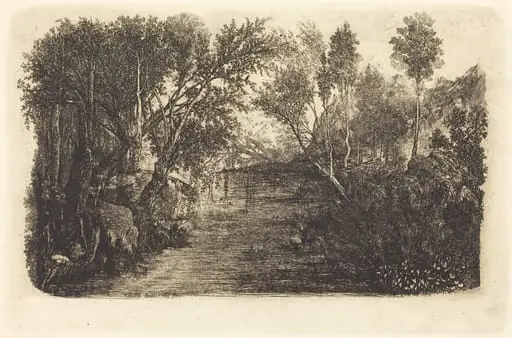 The Water's Course
 Jason
Jason Heroic Landscape: The Satyr Playing the Flute
 A Waterfall between Rocky Cliffs
 Selva (Woods)
 A Beech Wood with a Resting Traveler
- Rock Oaks